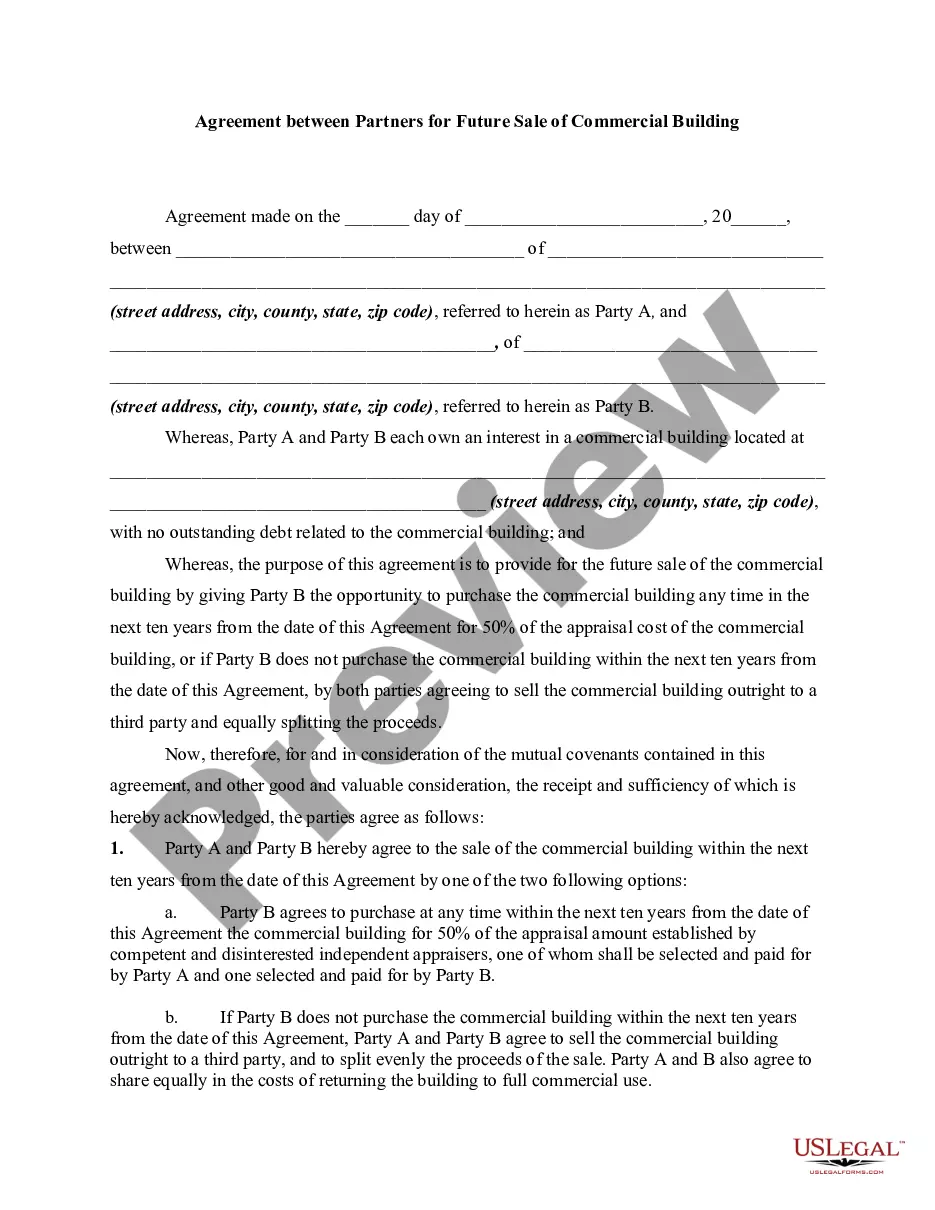
Utah Warranty Deed for Separate Property of one Spouse to both as Joint Tenants
What is this form?
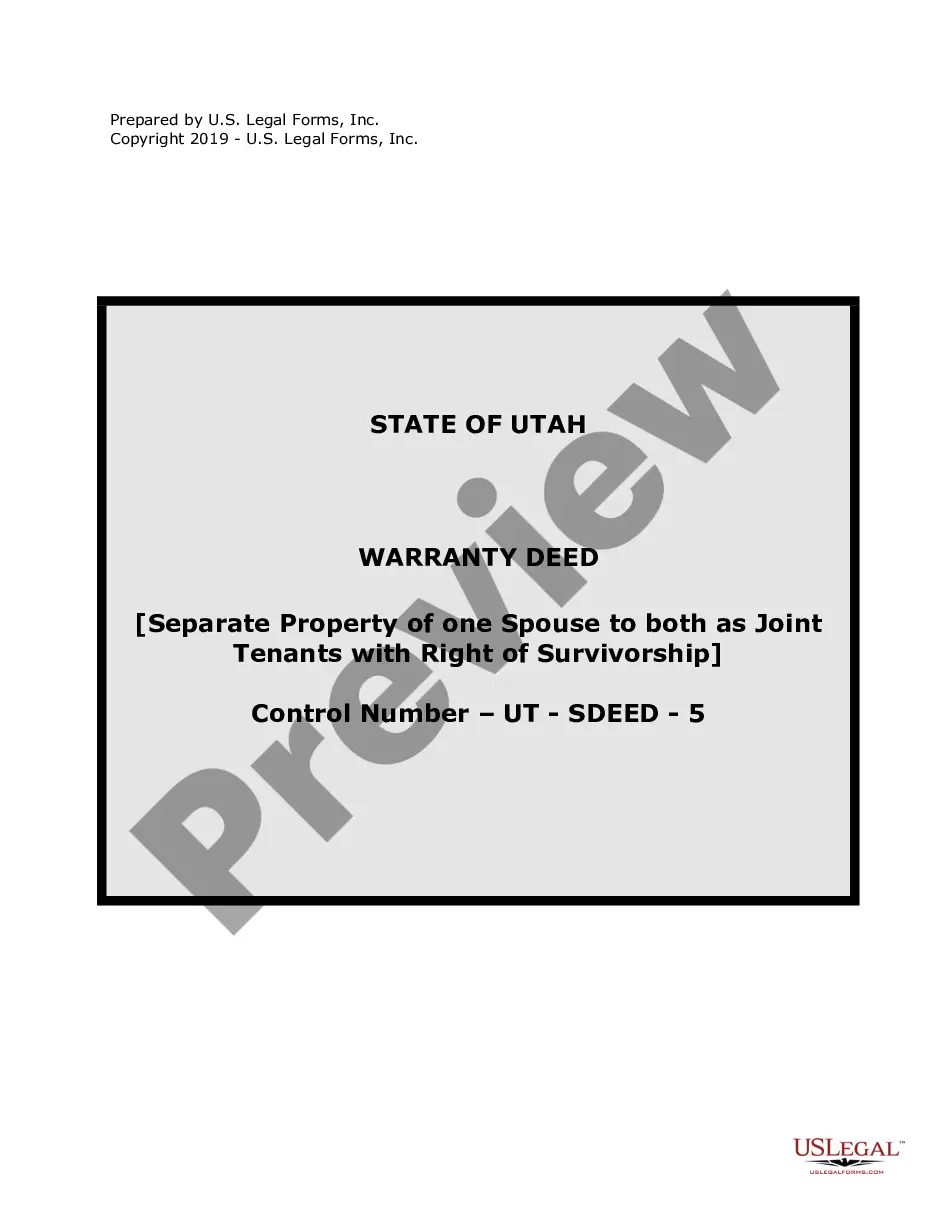
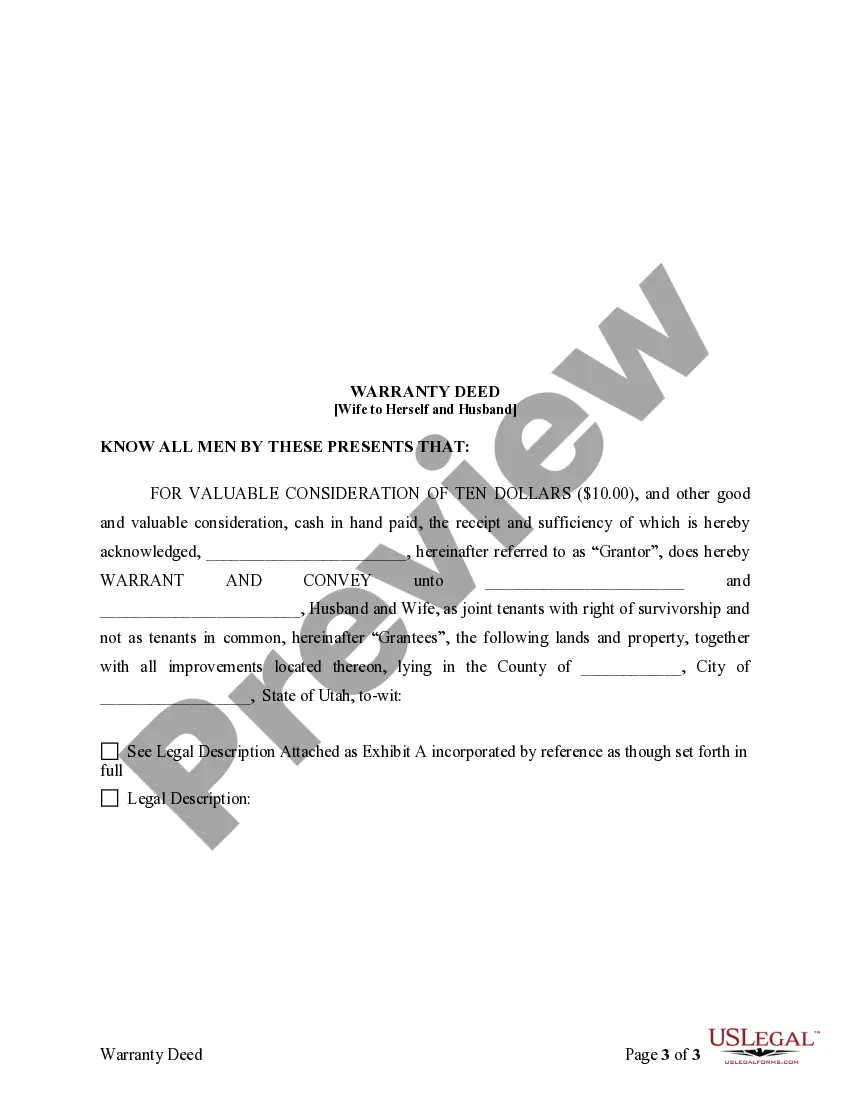
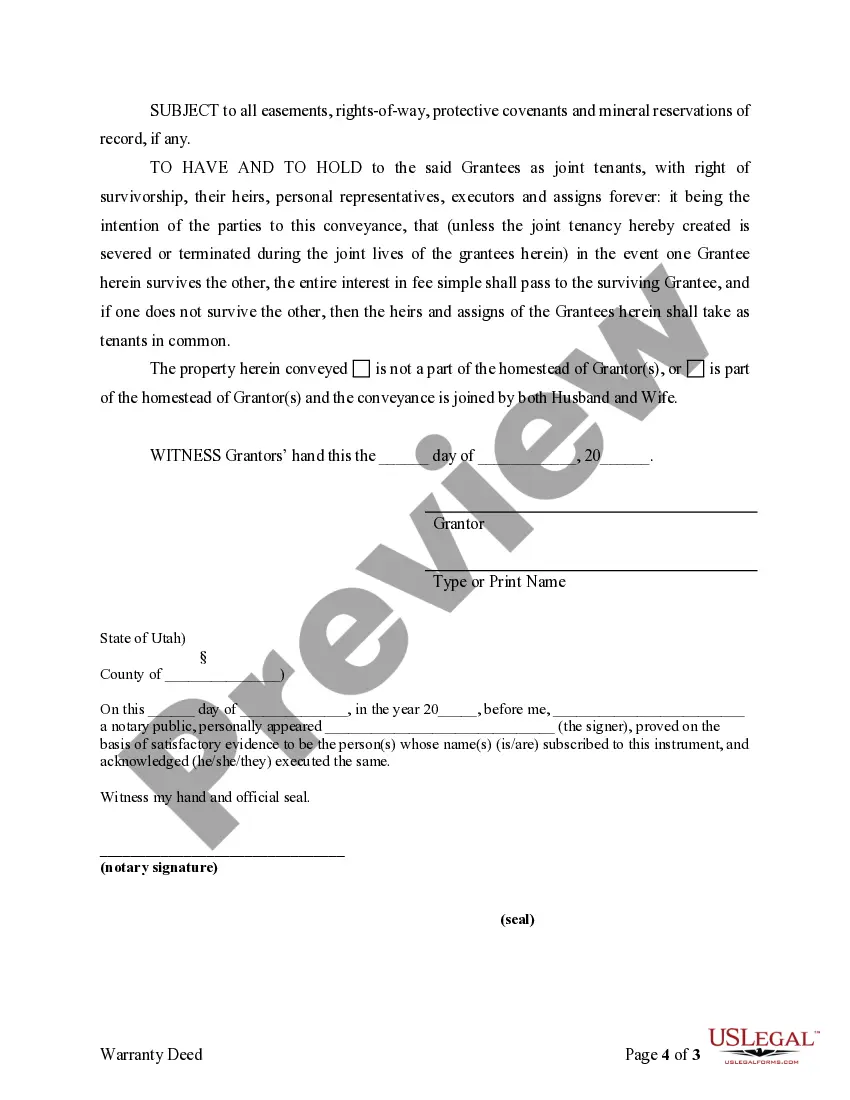
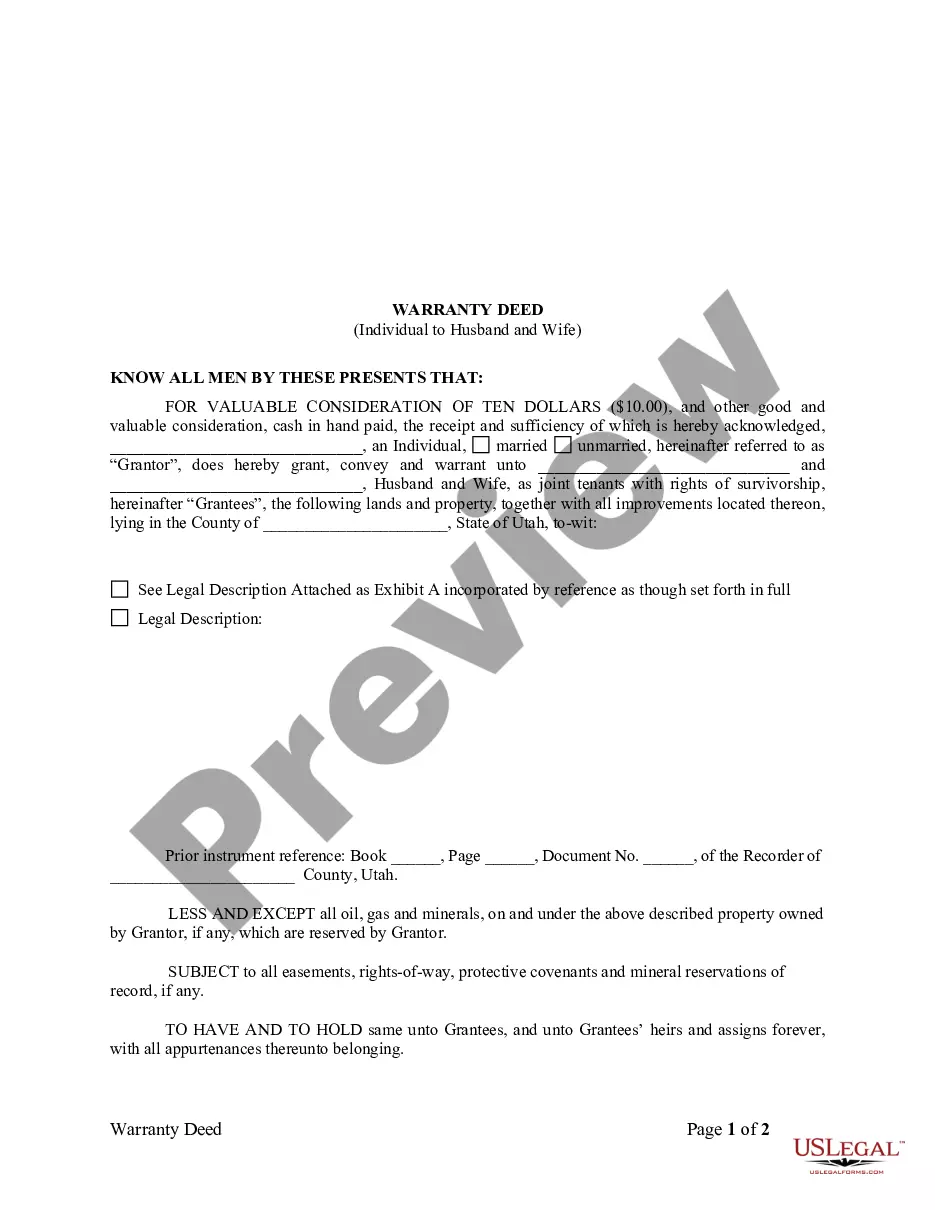
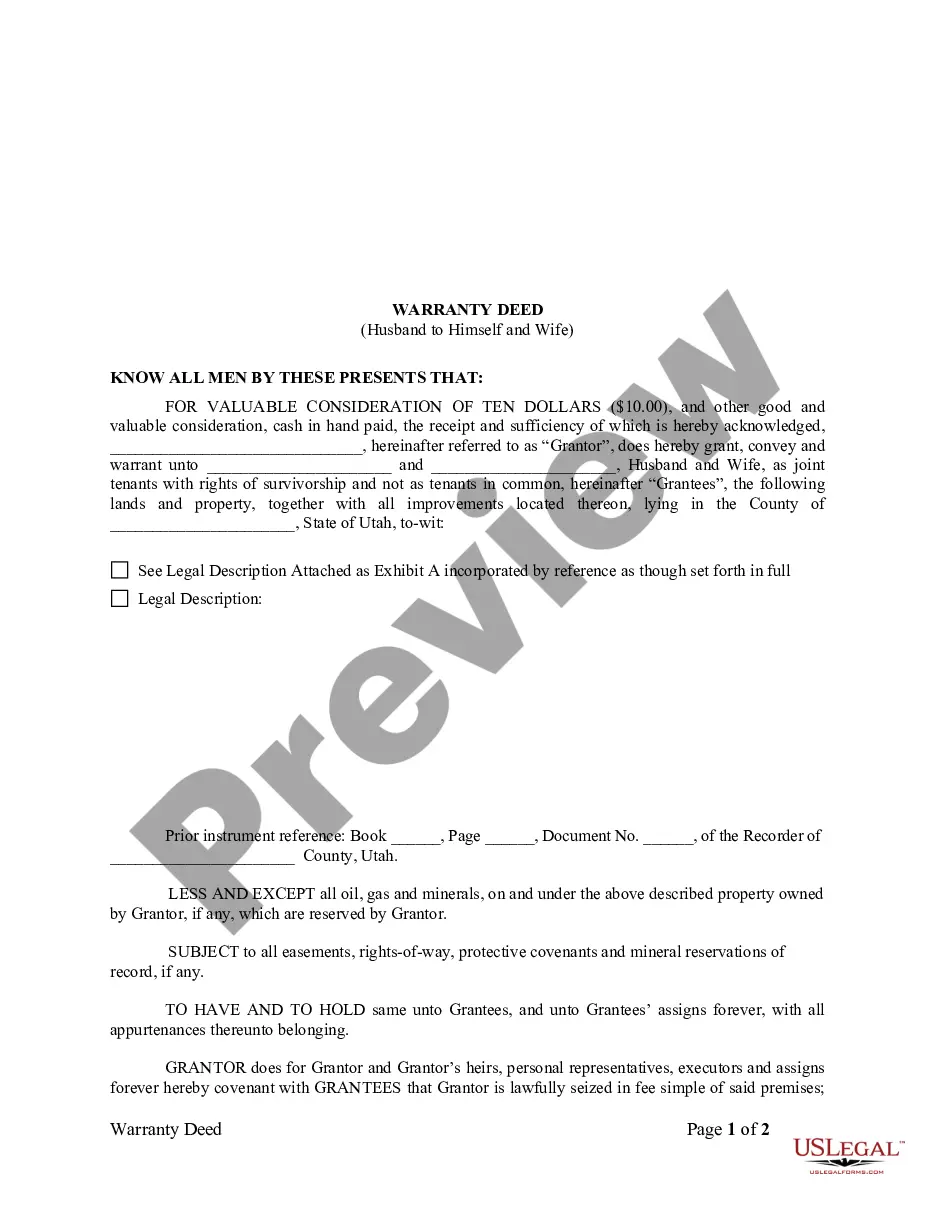
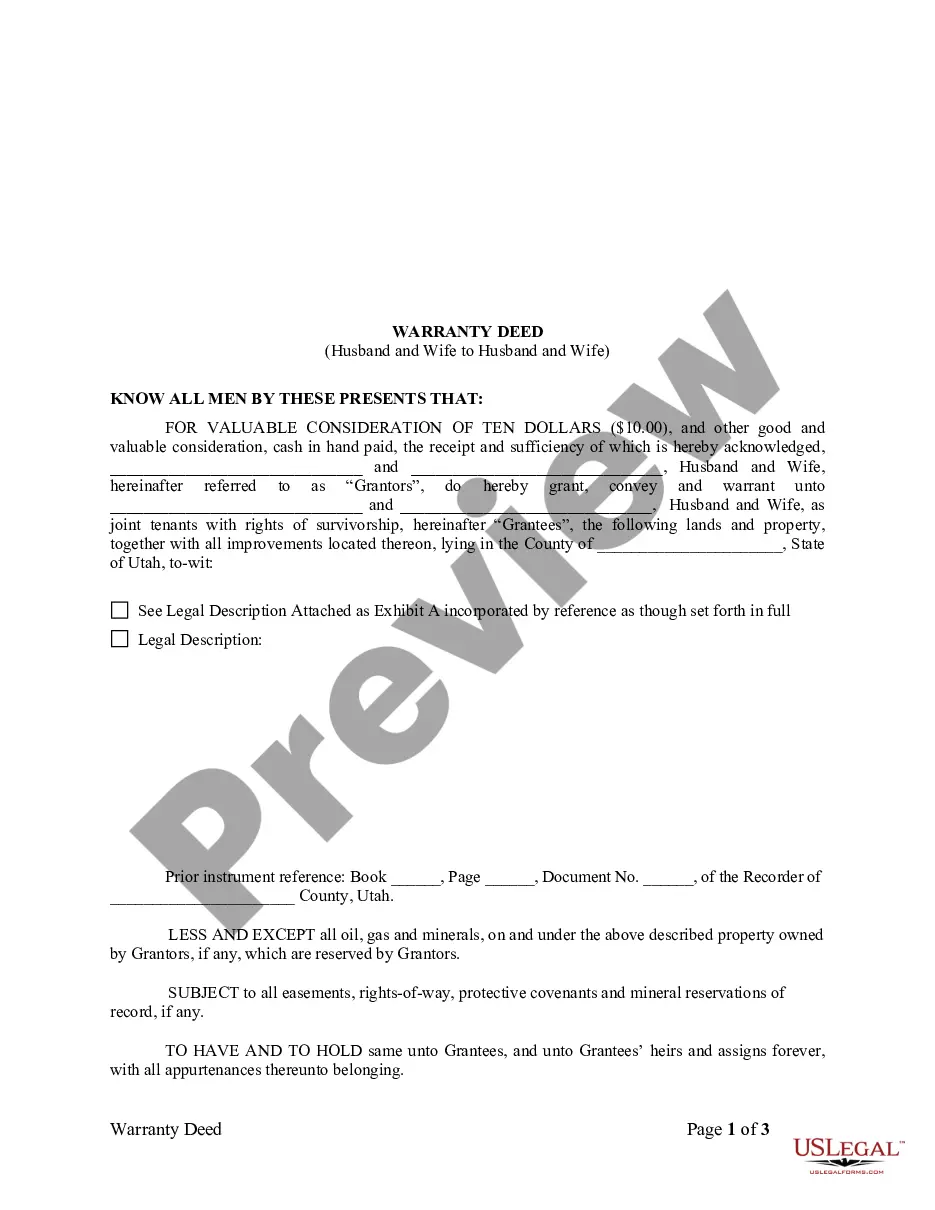
This Warranty Deed is a legal document that allows a wife to transfer her separate property to herself and her husband, creating a joint tenancy with rights of survivorship. This means that both spouses share equal ownership, and should one spouse pass away, the other automatically inherits the property. It differs from a regular deed as it specifically addresses the transfer of separate property and establishes joint tenancy, ensuring both parties have equal control over the property during their lifetimes.
Form components explained
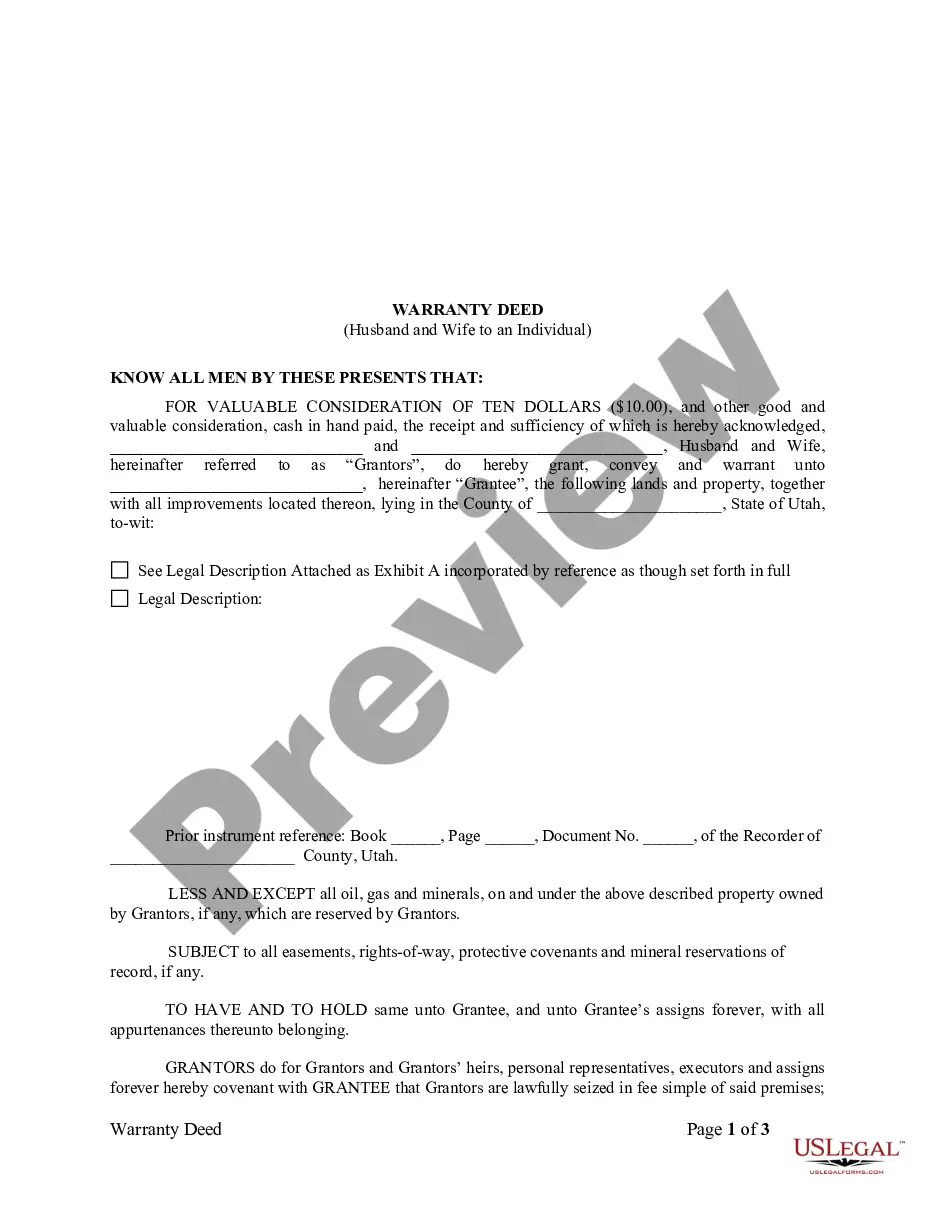
- Grantor and Grantees: Identifies the party transferring the property and the parties receiving it.
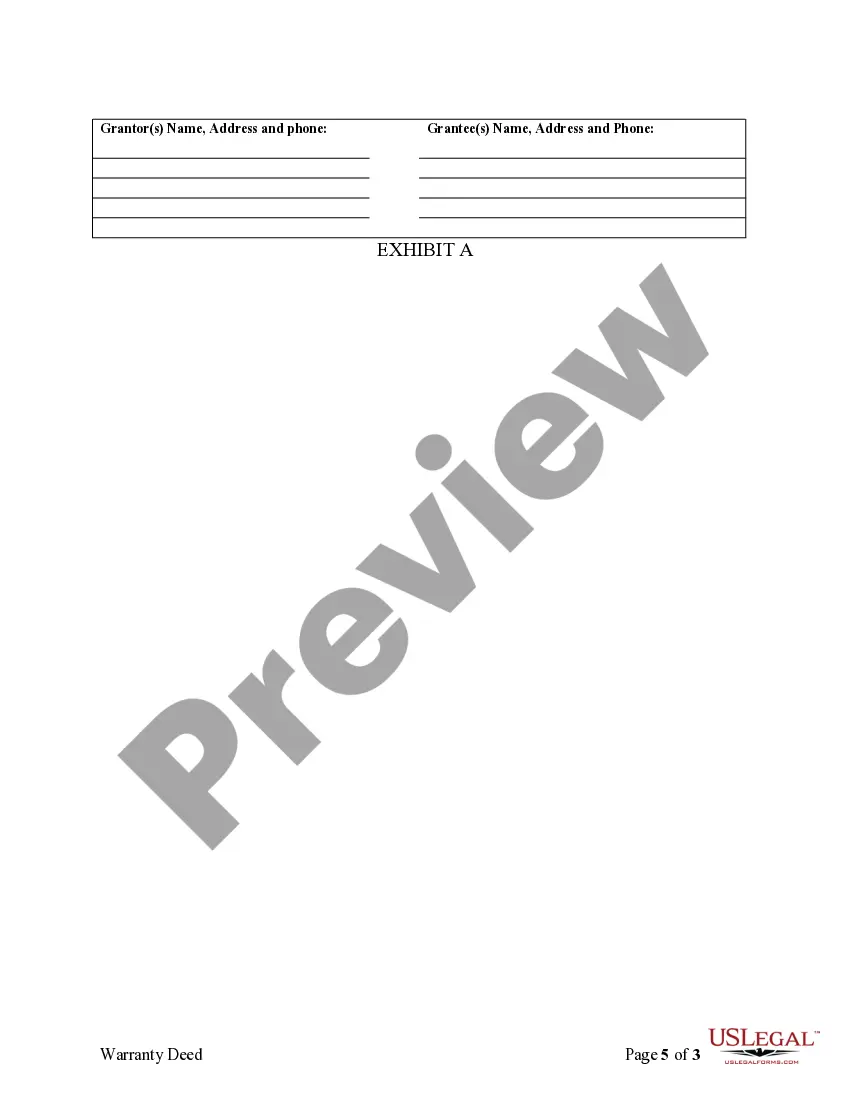
- Property Description: Includes details about the property being transferred.
- Consideration Clause: States the value exchanged for the property, typically set at ten dollars.
- Survivorship Clause: Specifies that the property is held as joint tenants with right of survivorship.
- Date and Signatures: Requires the date of transfer and signatures of the involved parties.
When this form is needed
This form is typically used when a married couple wishes to consolidate property ownership under joint tenancy. It is ideal for situations where one spouse owns property separately and wants to ensure that both spouses hold the property together, enhancing estate planning and simplifying the transfer of property upon one spouse's death.
Intended users of this form
This form is suitable for:
- Married couples where one spouse holds property individually.
- Individuals looking to simplify property ownership for estate planning purposes.
- Homeowners in Utah wanting to establish joint ownership with a right of survivorship.
Steps to complete this form
- Identify the parties: Enter the names of the grantor (the wife) and grantees (the husband and wife).
- Specify the property: Include a legal description of the property being transferred.
- Enter the consideration: State the amount for which the property is being transferred.
- Sign and date: Both spouses must sign the document and provide the date of transfer.
- Confirm joint tenancy: Ensure the form states the property is held as joint tenants with right of survivorship.
Notarization requirements for this form
Yes, this form must be notarized to be legally valid. Notarization adds a layer of authenticity, ensuring that the signatures are verified and that the document is properly executed. U.S. Legal Forms offers integrated online notarization, allowing you to complete this process securely via video call without the need for travel.
Get your form ready online
Our built-in tools help you complete, sign, share, and store your documents in one place.
Make edits, fill in missing information, and update formatting in US Legal Forms—just like you would in MS Word.
Download a copy, print it, send it by email, or mail it via USPS—whatever works best for your next step.
Sign and collect signatures with our SignNow integration. Send to multiple recipients, set reminders, and more. Go Premium to unlock E-Sign.
If this form requires notarization, complete it online through a secure video call—no need to meet a notary in person or wait for an appointment.
We protect your documents and personal data by following strict security and privacy standards.

Make edits, fill in missing information, and update formatting in US Legal Forms—just like you would in MS Word.

Download a copy, print it, send it by email, or mail it via USPS—whatever works best for your next step.

Sign and collect signatures with our SignNow integration. Send to multiple recipients, set reminders, and more. Go Premium to unlock E-Sign.

If this form requires notarization, complete it online through a secure video call—no need to meet a notary in person or wait for an appointment.

We protect your documents and personal data by following strict security and privacy standards.
Mistakes to watch out for
- Failing to provide a complete legal description of the property.
- Not signing and dating the form correctly.
- Using the wrong names for grantor and grantees.
- Overlooking the requirement for mutual ownership language.
Benefits of completing this form online
- Convenience: Download and fill out the form from the comfort of your home.
- Editability: Make corrections easily before finalizing your document.
- Quick access: Immediate access to a legally compliant form tailored for Utah.
Looking for another form?


Form popularity
FAQ
Adding someone to your house deed requires the filing of a legal form known as a quitclaim deed. When executed and notarized, the quitclaim deed legally overrides the current deed to your home. By filing the quitclaim deed, you can add someone to the title of your home, in effect transferring a share of ownership.
California married couples generally have three options to take title to their community (vs separate) property real estate: community property, joint tenancy or Community Property with Right of Survivorship. The latter coming into play in California July of 2001.
In cases where a couple shares a home but only one spouse's name is on it, the home will not automatically pass to the surviving pass, if his or her name is not on the title.
The names on the mortgage show who's responsible for paying back the loan, while the title shows who owns the property. You can put your spouse on the title without putting them on the mortgage; this would mean that they share ownership of the home but aren't legally responsible for making mortgage payments.
To hold a real estate property in joint tenancy, you and the co-owners have to write the abbreviation for joint tenants with the right of survivorship, or JTWROS, on the official real estate deed or title. This creates a legally binding joint tenancy.
It's often easier to qualify for a joint mortgage, because both spouses can contribute income and assets to the application. However, if one spouse can qualify for a mortgage based on his own income and credit, the mortgage does not need to be in both spouses' names unless you live in a community property state.
When you opt to co-own an asset with another individual, you can enter into a legal ownership agreement known as joint tenants with rights of survivorship or JTWROS. Upon the death of one of the owners, the surviving owner automatically becomes sole owner of the property, whether it's a vacation home, a plane, or
If you've recently married and already own a home or other real estate, you may want to add your new spouse to the deed for your property so the two of you own it jointly. To add a spouse to a deed, all you have to do is literally fill out, sign and record a new deed in your county recorder's office.
In California, all property bought during the marriage with income that was earned during the marriage is deemed "community property." The law implies that both spouses own this property equally, regardless of which name is on the title deed.