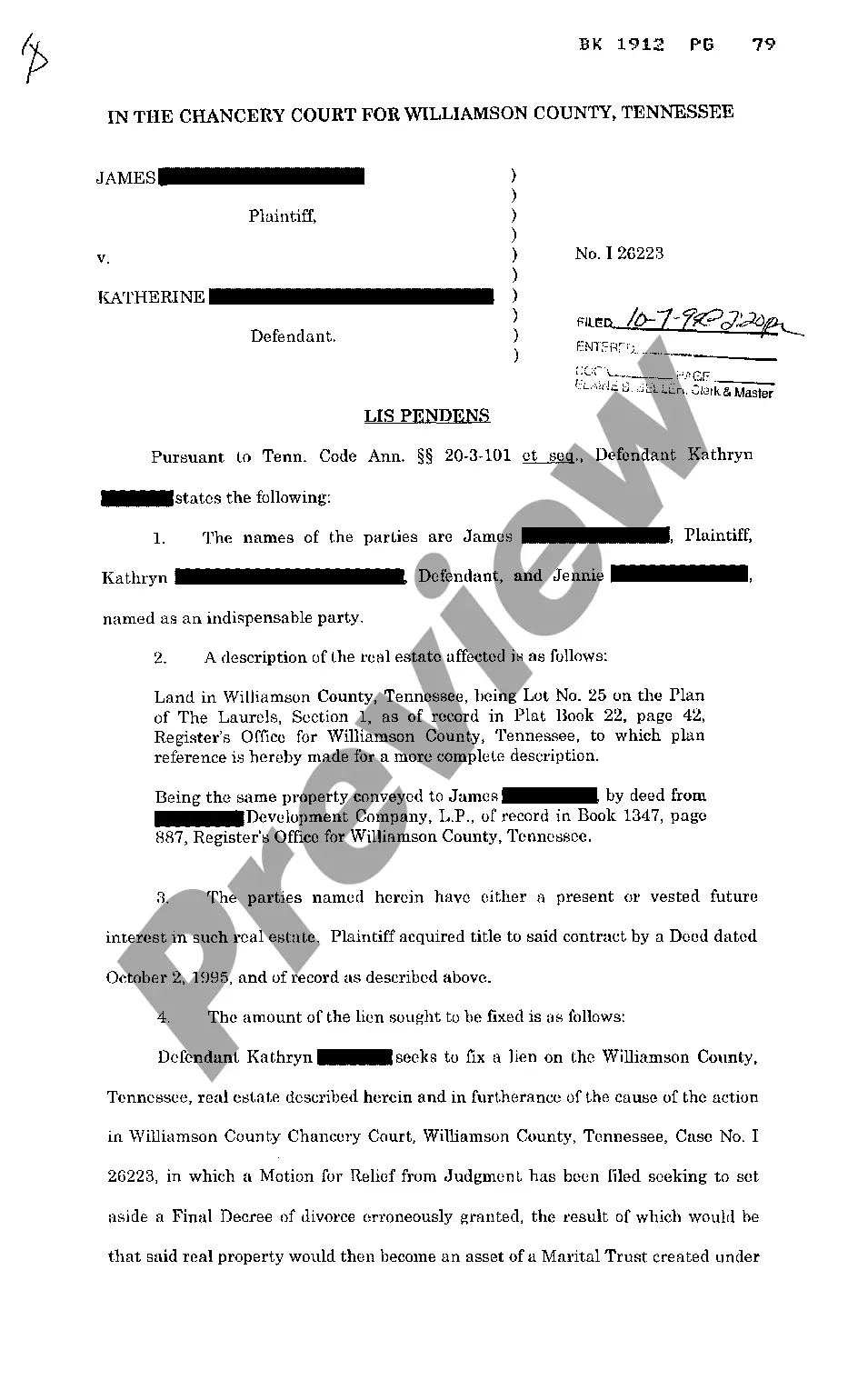
Utah Foreign Judgment Enrollment
About this form
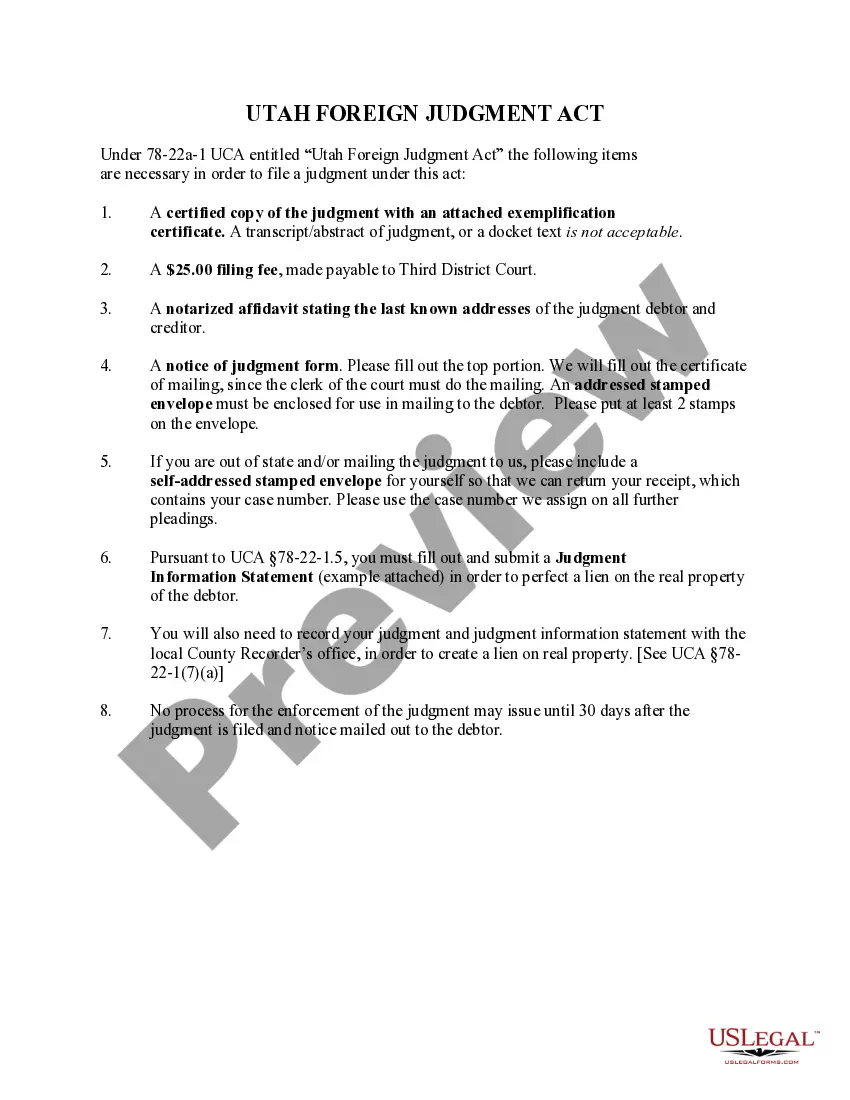
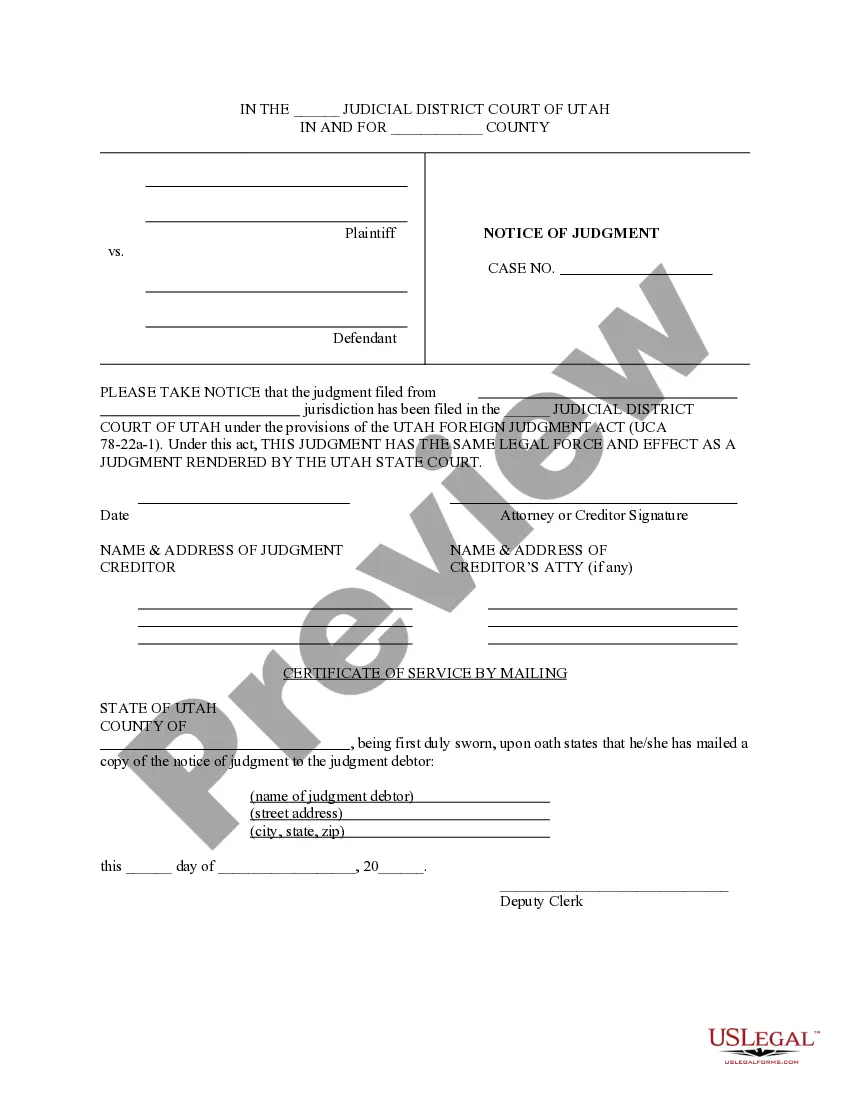
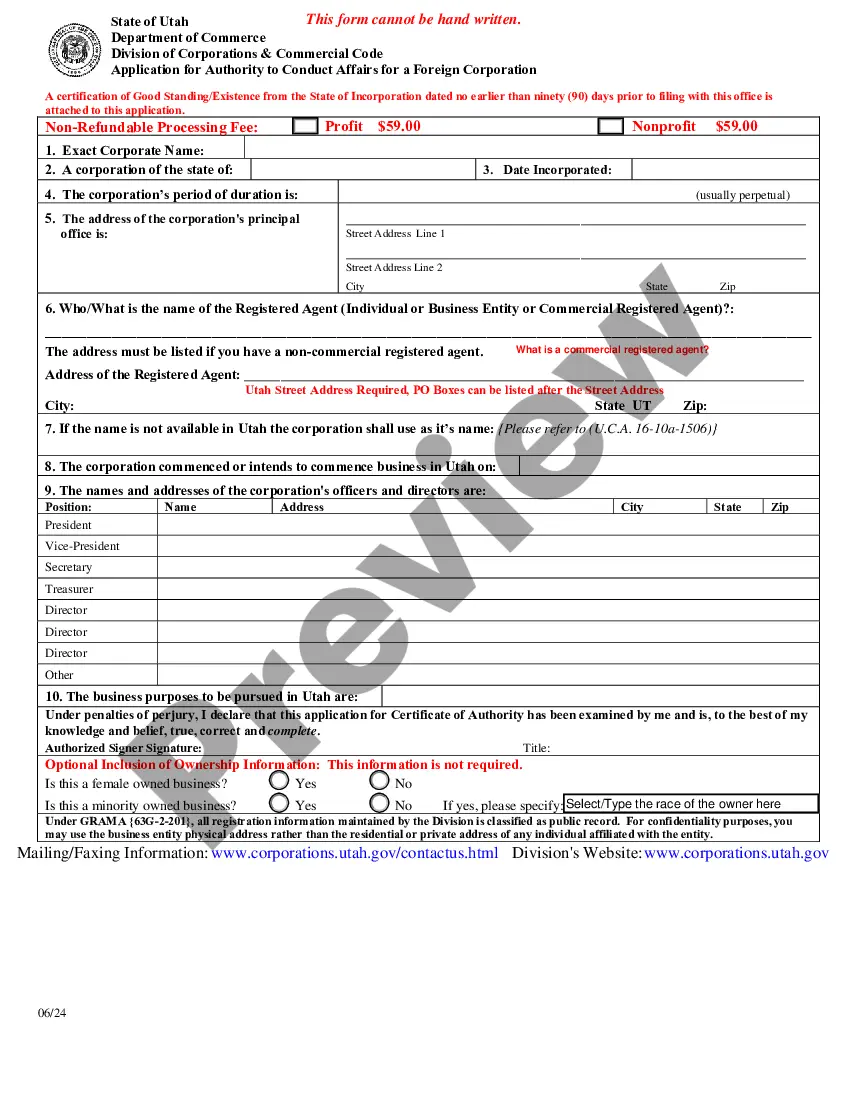
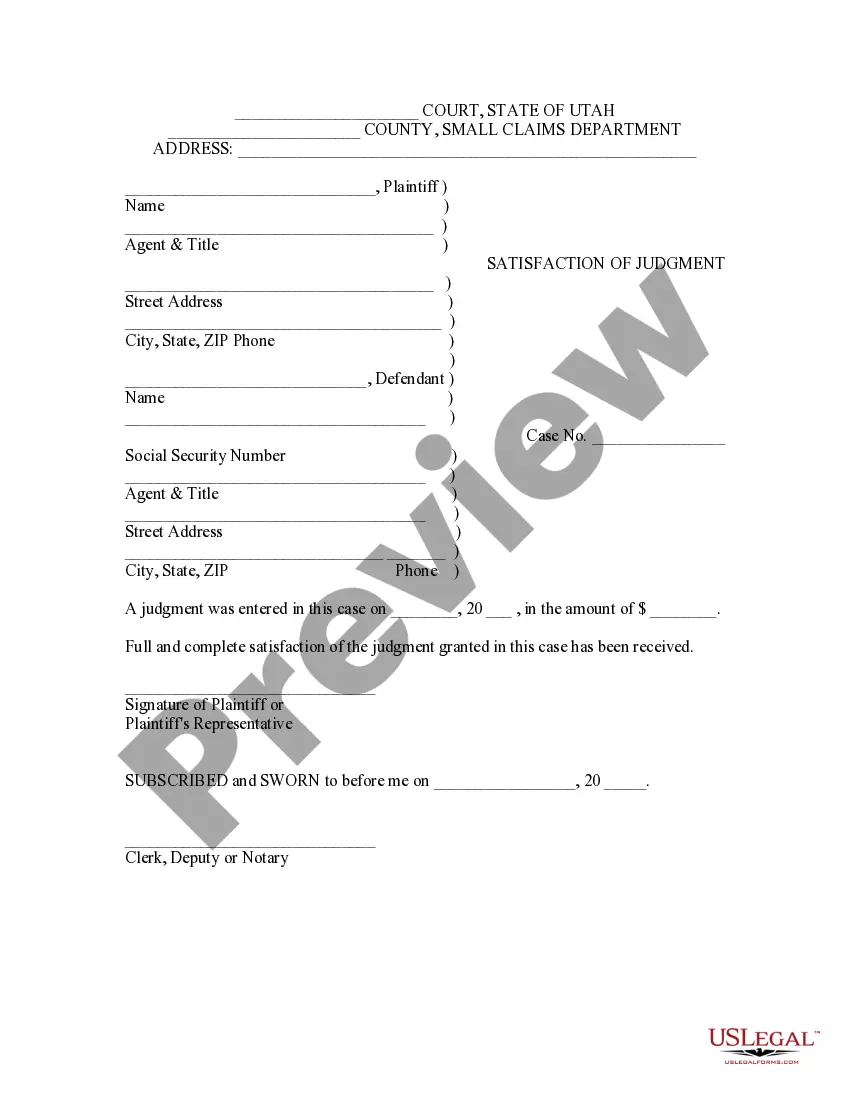
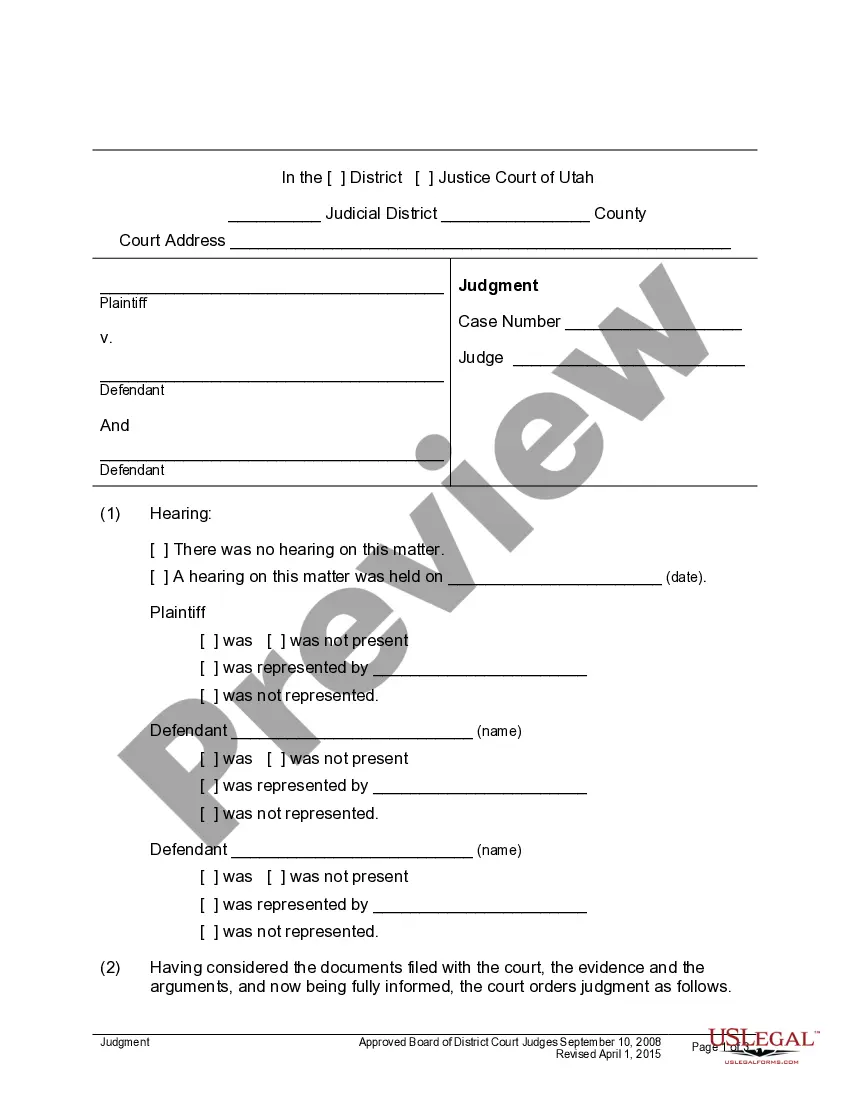
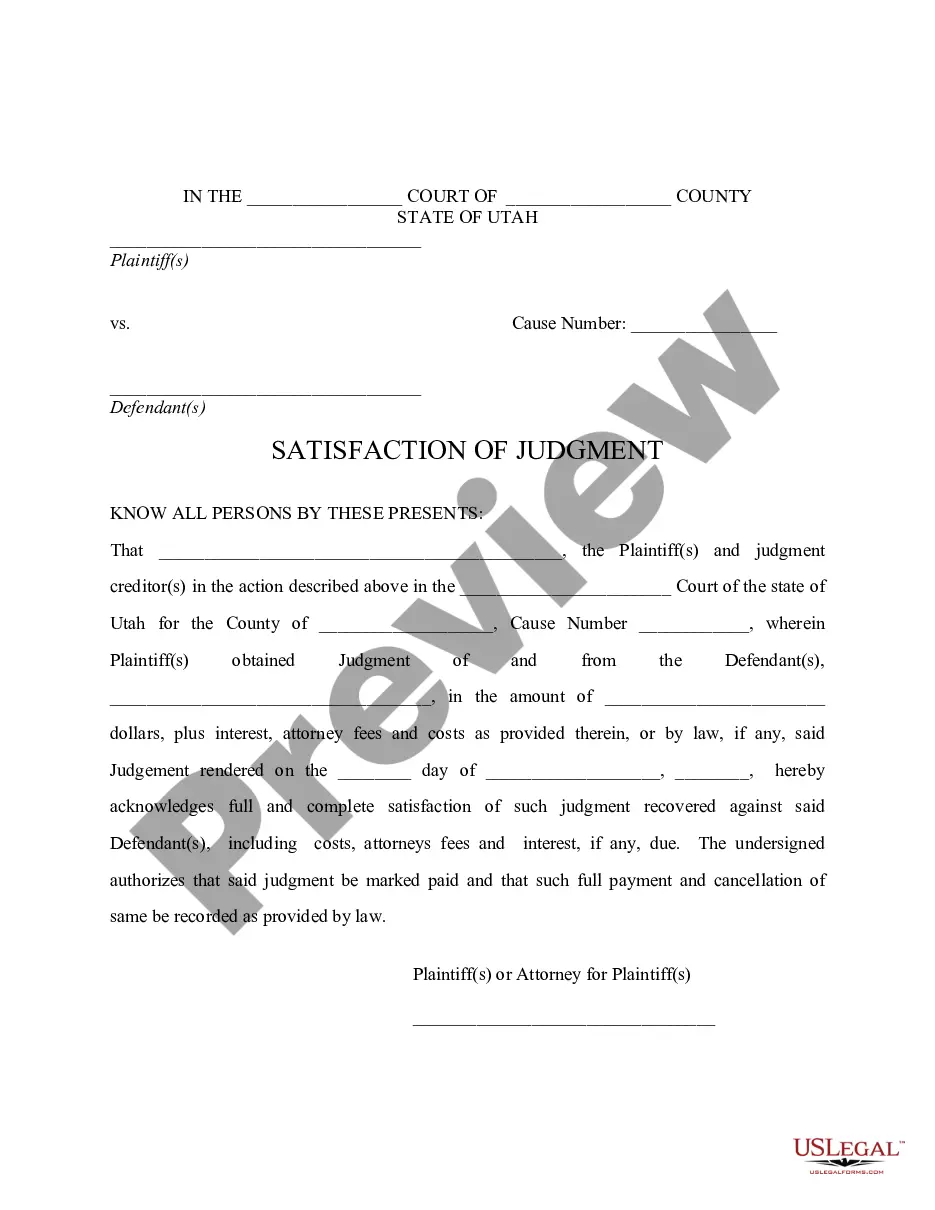
The Utah Foreign Judgment Enrollment form is a legal document used to enroll a judgment issued by a court in another state so that it can be enforced in Utah. This form allows the judgment creditor to create a judgment lien against the property of the judgment debtor, enabling enforcement of the judgment in a new jurisdiction. It is essential for anyone holding a foreign judgment who wishes to pursue collection within Utah.
What’s included in this form
- Instructions for completing the enrollment process.
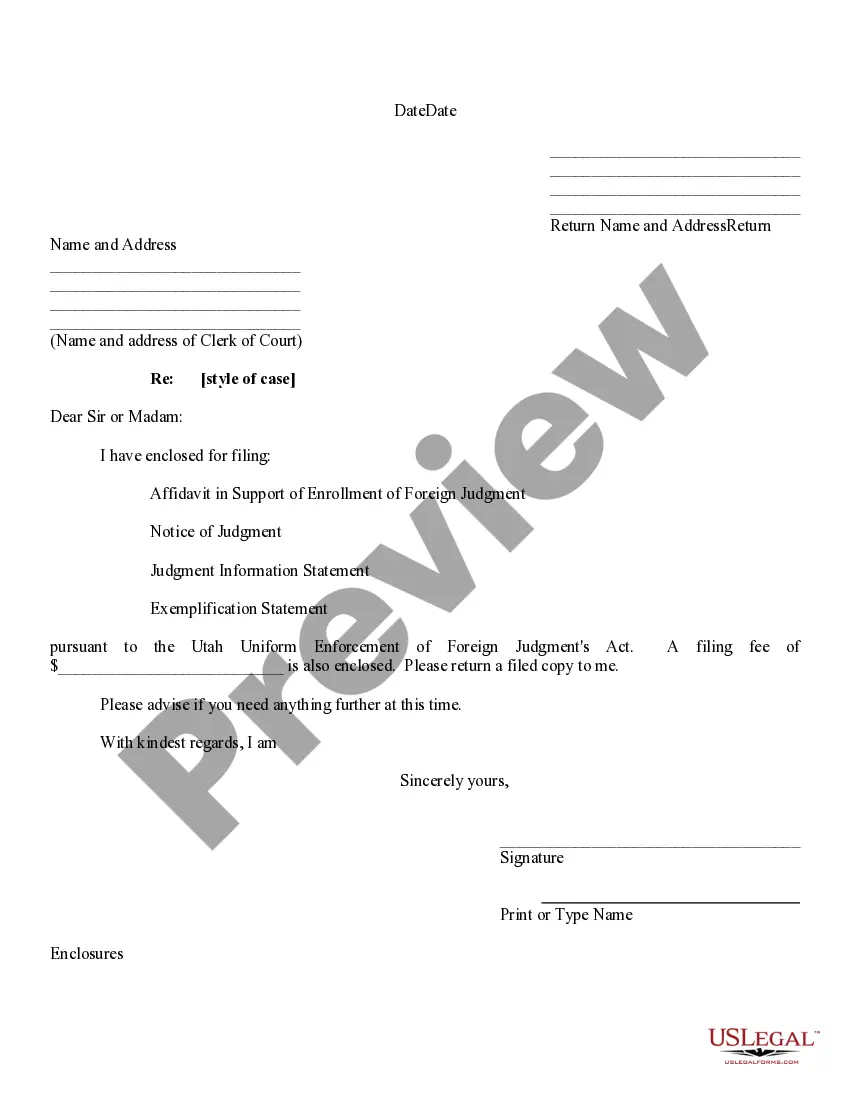
- Form to submit the certified foreign judgment.
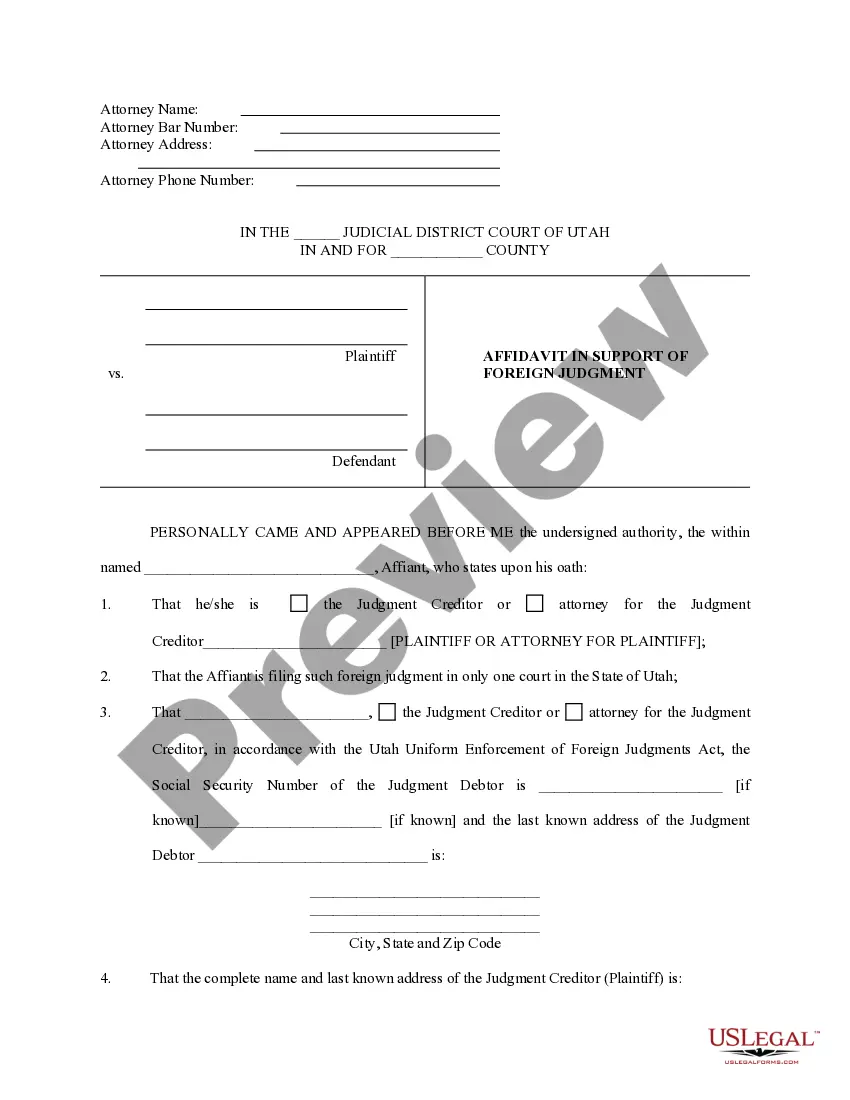
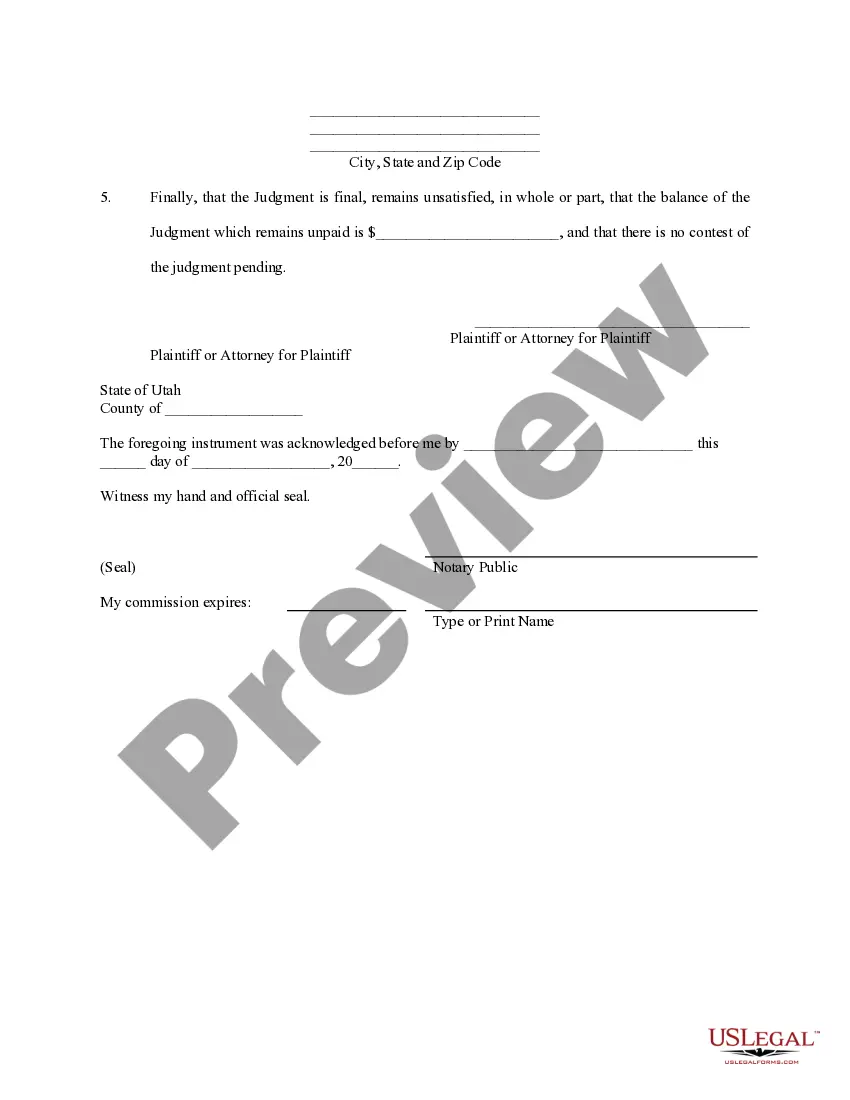
- Affidavit stating the last known addresses of the judgment creditor and debtor.
- Payment details, including the filing fee.
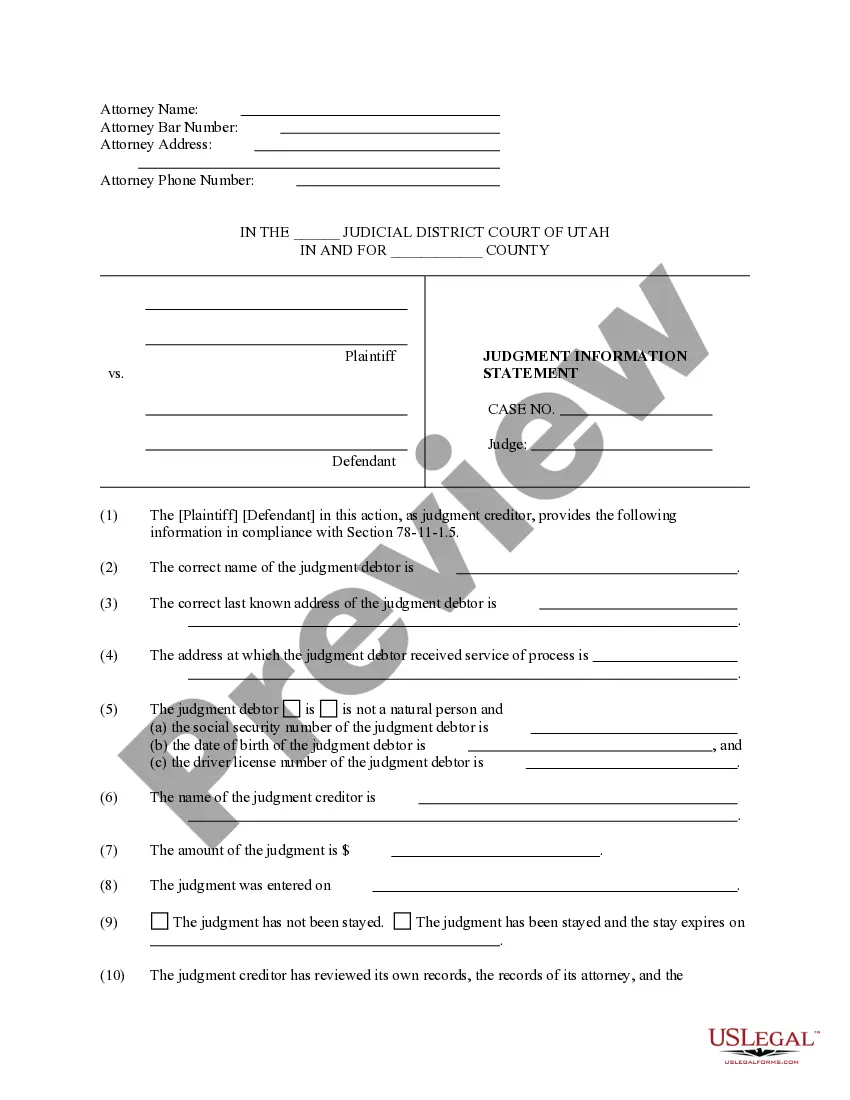
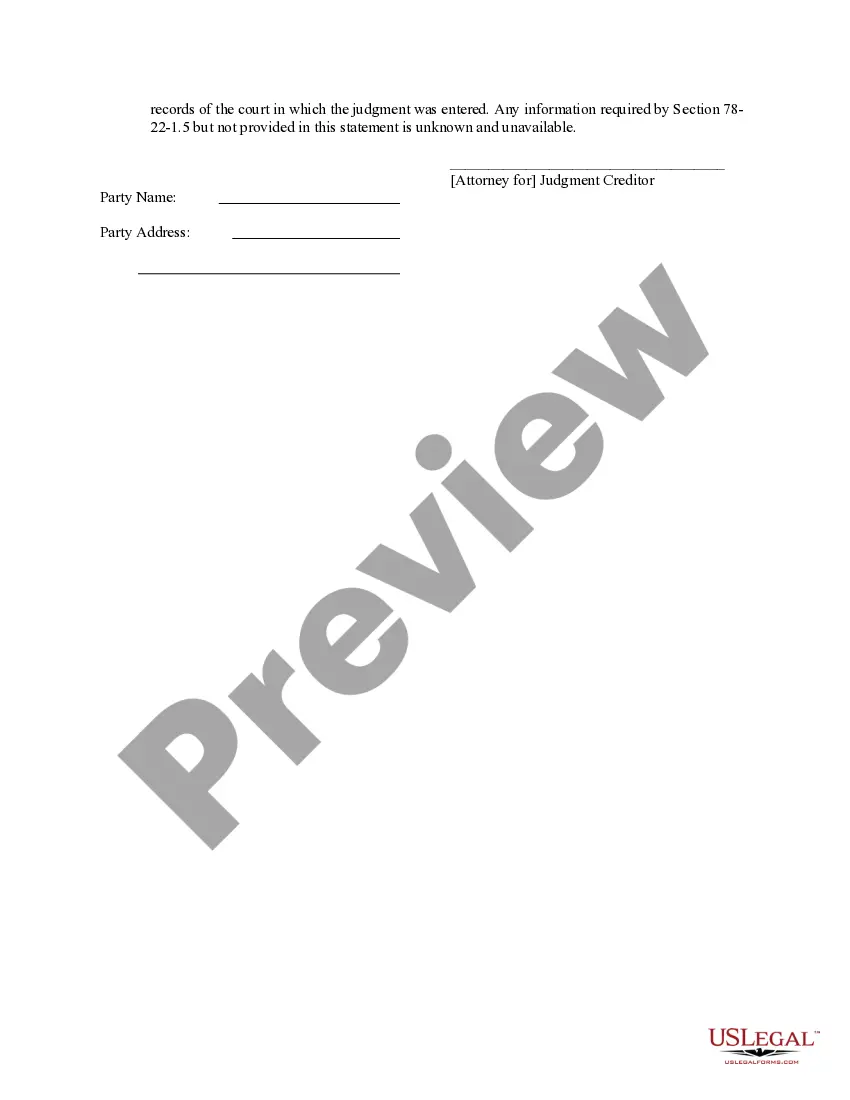
- Judgment Information Statement for creating a lien on real property.

When to use this document
This form should be used when you have obtained a judgment in another state and need to enforce it in Utah. It is necessary to file this form to create a legal avenue for collection, allowing you to place a lien on the debtor's property and pursue enforcement through Utah courts.
Who this form is for
- Judgment creditors seeking to enforce a foreign judgment in Utah.
- Attorneys representing clients with foreign judgments.
- Individuals or entities that have obtained a judgment in another state and wish to pursue it in Utah.
Steps to complete this form
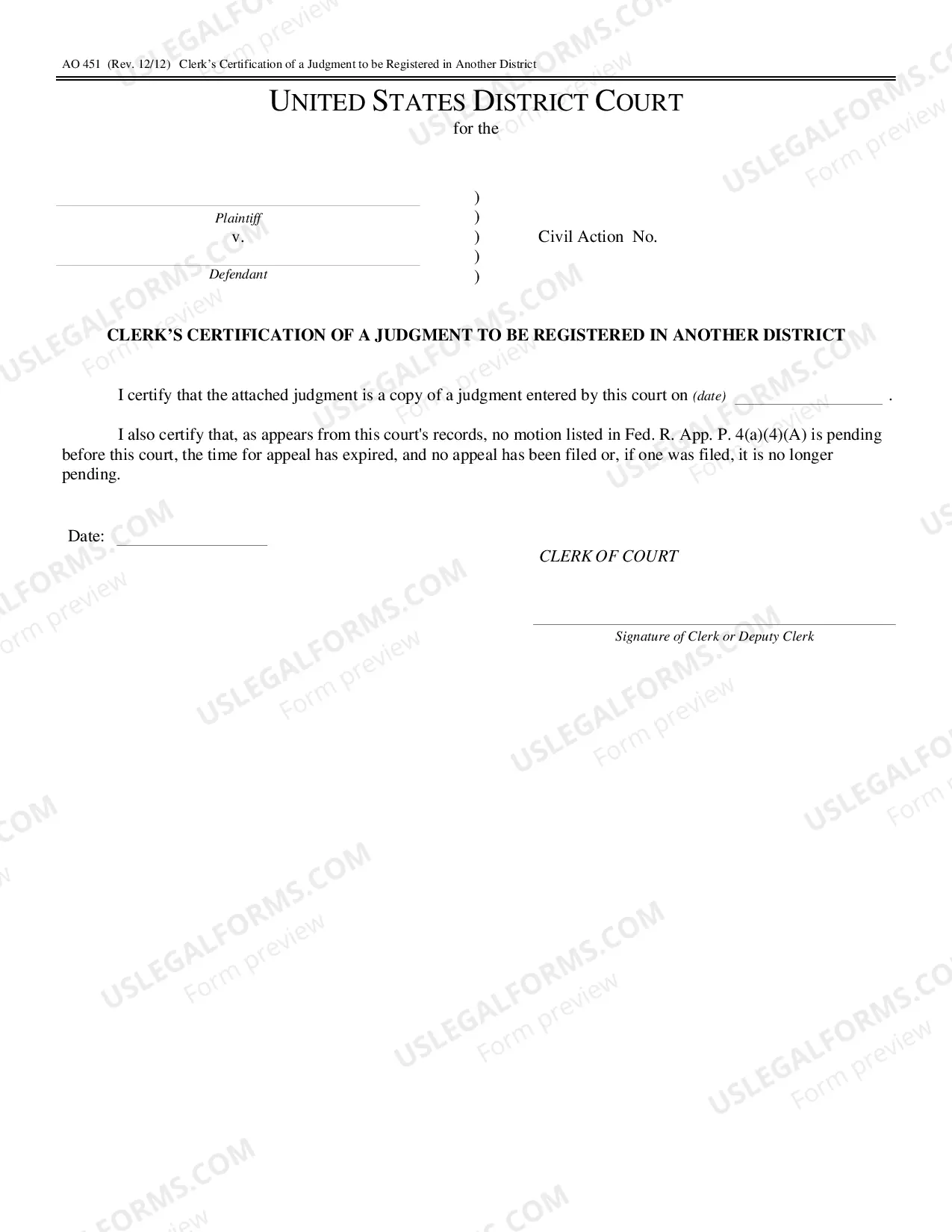
- Obtain a certified copy of the foreign judgment along with the exemplification certificate.
- Complete the affidavit with accurate addresses for both the judgment creditor and debtor.
- Prepare the notice of judgment form and include an addressed stamped envelope for mailing.
- Pay the required filing fee, typically around $25, made out to the Third District Court.
- Record the Judgment Information Statement at the local County Recorder's office.
Notarization requirements for this form
This document requires notarization to meet legal standards. US Legal Forms provides secure online notarization powered by Notarize, allowing you to complete the process through a verified video call, available 24/7.
Get your form ready online
Our built-in tools help you complete, sign, share, and store your documents in one place.
Make edits, fill in missing information, and update formatting in US Legal Forms—just like you would in MS Word.
Download a copy, print it, send it by email, or mail it via USPS—whatever works best for your next step.
Sign and collect signatures with our SignNow integration. Send to multiple recipients, set reminders, and more. Go Premium to unlock E-Sign.
If this form requires notarization, complete it online through a secure video call—no need to meet a notary in person or wait for an appointment.
We protect your documents and personal data by following strict security and privacy standards.

Make edits, fill in missing information, and update formatting in US Legal Forms—just like you would in MS Word.

Download a copy, print it, send it by email, or mail it via USPS—whatever works best for your next step.

Sign and collect signatures with our SignNow integration. Send to multiple recipients, set reminders, and more. Go Premium to unlock E-Sign.

If this form requires notarization, complete it online through a secure video call—no need to meet a notary in person or wait for an appointment.

We protect your documents and personal data by following strict security and privacy standards.
Common mistakes
- Failing to provide a certified copy of the judgment or necessary exemplification certificate.
- Not including the required filing fee or payment information.
- Omitting the last known addresses in the affidavit.
- Submitting forms without proper notarization if required by local rules.
Advantages of online completion
- Convenience of downloading the form anytime without needing a visit to a law office.
- Editable fields that allow for easy entry of information directly on your computer.
- Access to comprehensive instructions and summaries to assist in the filing process.
Legal use & context
- Enrolling a foreign judgment creates a legal lien against the debtor's property in Utah.
- The form must be completed correctly to ensure enforceability in Utah courts.
- Compliance with all local statutes is required to avoid disputes over the judgment's validity.
What to keep in mind
- The Utah Foreign Judgment Enrollment form is crucial for enforcing out-of-state judgments within Utah.
- Incorrectly completed forms can lead to delays or rejections in the enrollment process.
- Always ensure notarization and inclusion of all required documents to facilitate a smooth filing.
Looking for another form?
Form popularity
FAQ
The "recognition" of a foreign judgment occurs when the court of one country or jurisdiction accepts a judicial decision made by the courts of another "foreign" country or jurisdiction, and issues a judgment in substantially identical terms without rehearing the substance of the original lawsuit.
Canadian courts start from the general proposition that neither foreign nor domestic judgments will be enforced if obtained by fraud.85 In Beals, the Supreme Court identified two types of fraud that provide a defence to enforcement: fraud going to jurisdiction and fraud going to the merits.
Without following the strict requirements of the UEFJA, and properly domesticating the foreign judgment, the judgment is nothing more than a piece of paper. Domestication is the process that allows a creditor to attach the judgment as a lien to the debtor's property, and otherwise enforce it.
Hence, a decree passed by a superior court of a foreign country cannot be enforced in India if it contravenes an earlier conclusive judgment passed by a competent court in a suit between the same parties, as it is enforced as a domestic decree.
The process requires registering a certified copy of the foreign judgment with the clerk of the court in the jurisdiction where you want to enforce the judgment. You will also need to file an affidavit attesting to certain facts, as specified in the court's procedural rules.
Generally, U.S. judgments cannot be enforced in a foreign country without first being recognized by a court in that foreign country.It can generally be said that non-default judgments not involving tort claims or punitive damages are more likely to be enforced.
A foreign judgment cannot be enforced in the US before being recognised by a US court. The 1962 and 2005 Model Acts deal with the recognition of judgments.
The statute of limitations for renewing a judgment is 8 years from the date of the judgment. Utah Code Section 78B-2-311.
A Utah money judgment lasts for 8 years and then expires. You can renew a Utah money judgment for another 8 years, if the judgment creditor files a motion to renew within the original 8 year statute of limitations.