Utah Salary Verification form for Potential Lease
What this document covers
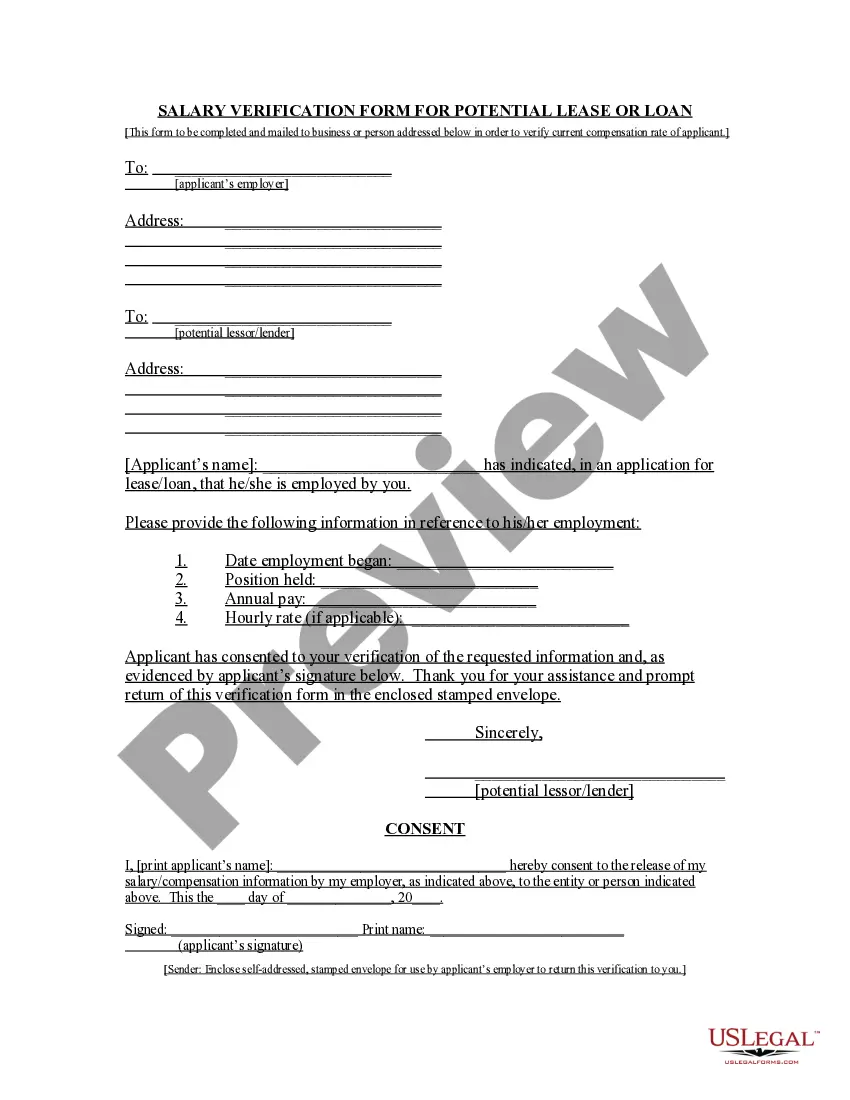
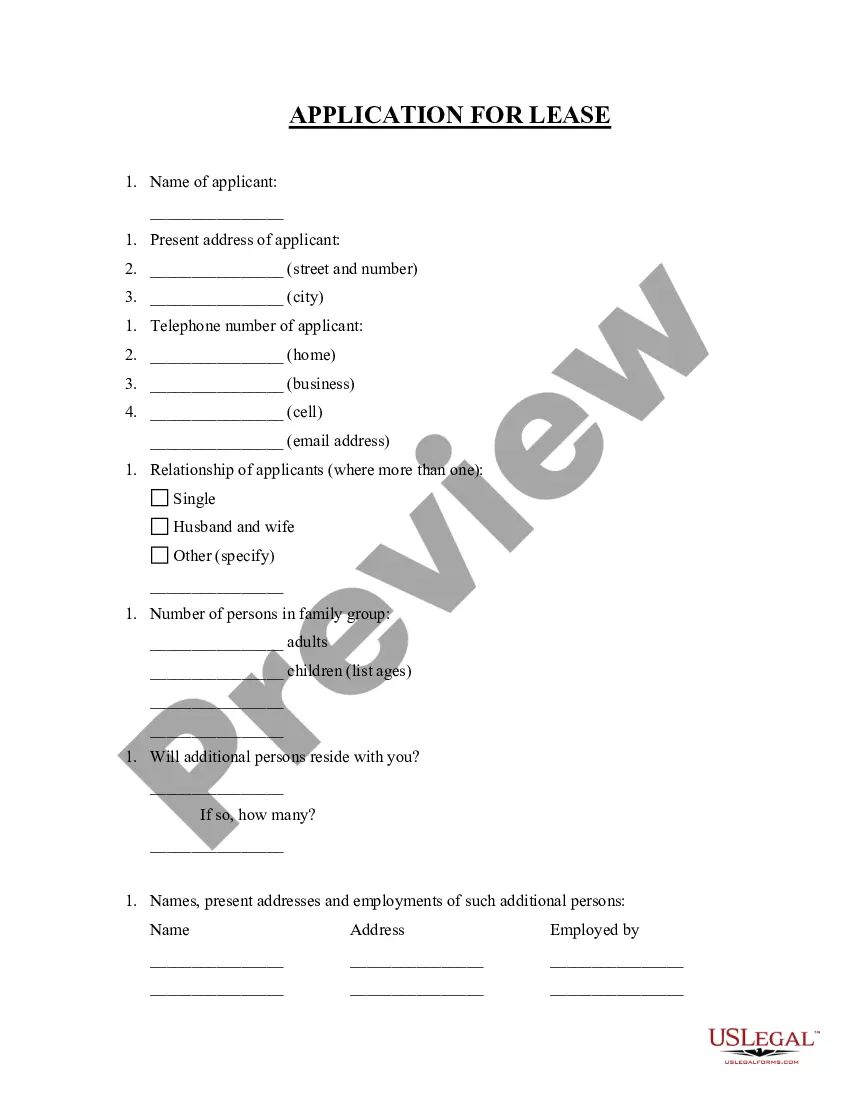
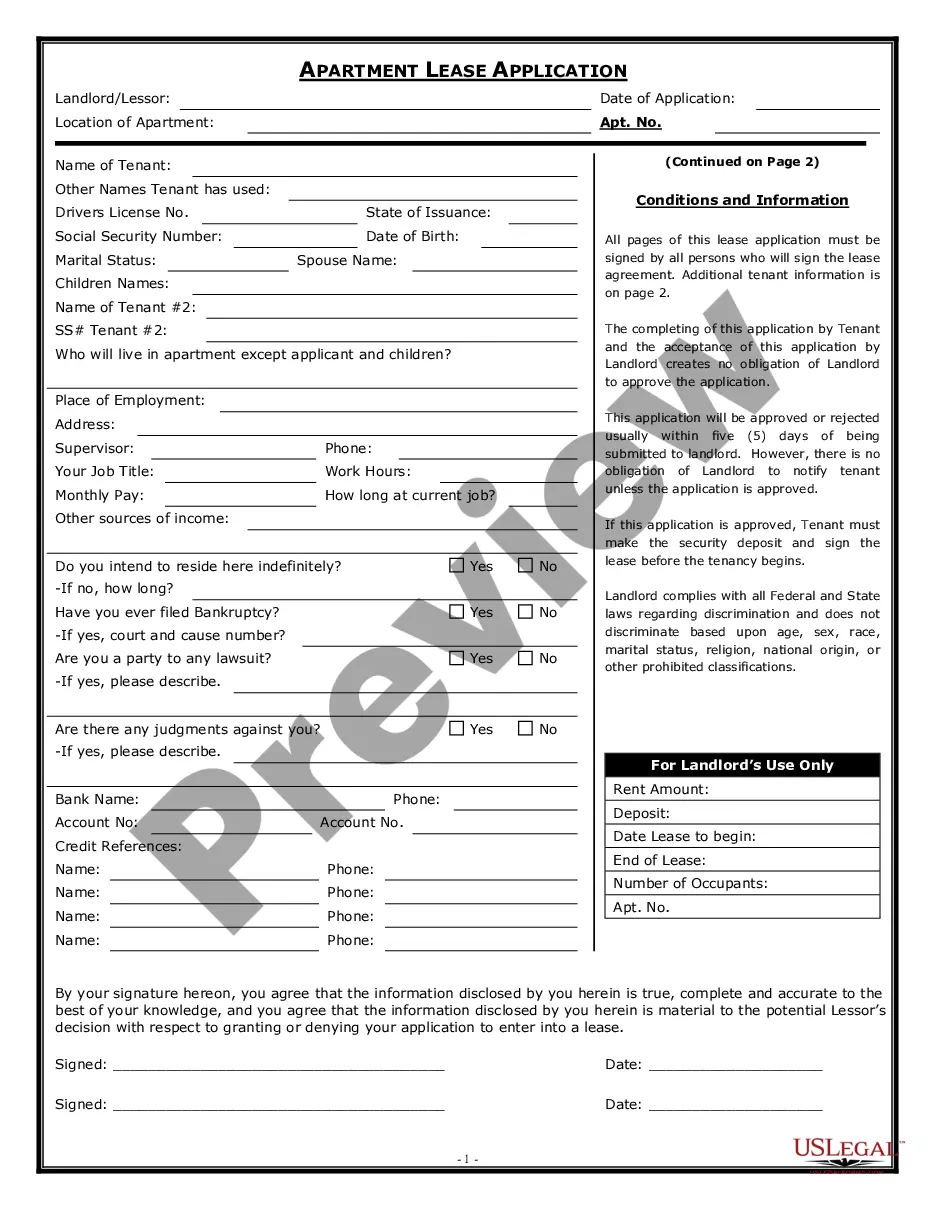
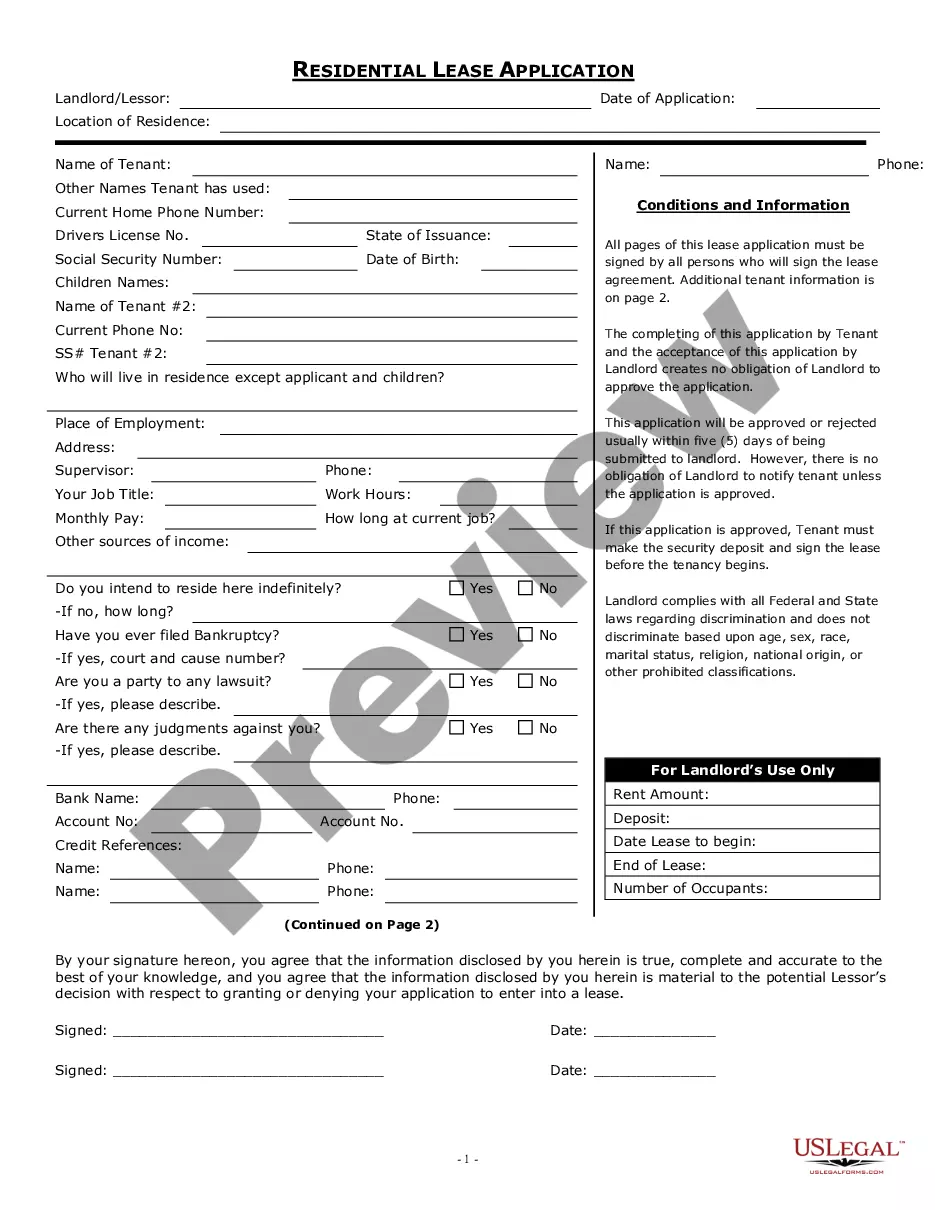
The Salary Verification form for Potential Lease is a document used by landlords to confirm the income of a prospective tenant. It must be completed by the tenant's employer based on the income details provided in the rental application. This form ensures landlords have accurate information before leasing property, distinguishing it from other tenant-related forms, such as the Application for Residential Lease.
Key parts of this document
- Employer information: Details about the tenant's current employer.
- Employment dates: The start date of the tenant's employment.
- Position held: The job title of the tenant.
- Annual pay: Total income per year as reported by the employer.
- Hourly rate: The tenant's hourly wage, if applicable.
- Tenant consent: A signed declaration from the tenant allowing verification of their salary details.

When to use this document
This form is typically used during the rental application process when a tenant is seeking to lease a residential property. Landlords require this verification to confirm that the applicant can meet rental payment obligations based on their stated income.
Who can use this document
- Landlords who need to verify the income of potential tenants.
- Property management companies handling tenant lease applications.
- Employers requested to provide income verification for employees seeking rental property.
Steps to complete this form
- Fill in the employer's name and address where the form should be sent.
- Provide the date employment began and the tenant's current position.
- State the annual pay and, if relevant, the hourly wage of the tenant.
- Ensure the tenant has signed the consent section allowing verification of their salary information.
- Send the completed form along with a self-addressed, stamped envelope for the employer's return.
Does this form need to be notarized?
This form does not typically require notarization unless specified by local law. It is recommended to verify if any local guidelines apply to ensure the validity of the document.
Get your form ready online
Our built-in tools help you complete, sign, share, and store your documents in one place.
Make edits, fill in missing information, and update formatting in US Legal Forms—just like you would in MS Word.
Download a copy, print it, send it by email, or mail it via USPS—whatever works best for your next step.
Sign and collect signatures with our SignNow integration. Send to multiple recipients, set reminders, and more. Go Premium to unlock E-Sign.
If this form requires notarization, complete it online through a secure video call—no need to meet a notary in person or wait for an appointment.
We protect your documents and personal data by following strict security and privacy standards.

Make edits, fill in missing information, and update formatting in US Legal Forms—just like you would in MS Word.

Download a copy, print it, send it by email, or mail it via USPS—whatever works best for your next step.

Sign and collect signatures with our SignNow integration. Send to multiple recipients, set reminders, and more. Go Premium to unlock E-Sign.

If this form requires notarization, complete it online through a secure video call—no need to meet a notary in person or wait for an appointment.

We protect your documents and personal data by following strict security and privacy standards.
Mistakes to watch out for
- Forgetting to include the tenant's signed consent.
- Providing incomplete employer information.
- Not specifying the employment position and dates clearly.
- Failing to provide clear instructions for returning the completed form.
Why use this form online
- Easy access to downloadable templates drafted by licensed attorneys.
- Time-saving process as the form can be completed quickly online.
- Ability to edit and customize the form based on specific needs.
- Secure and reliable method for obtaining necessary information.
Looking for another form?
Form popularity
FAQ
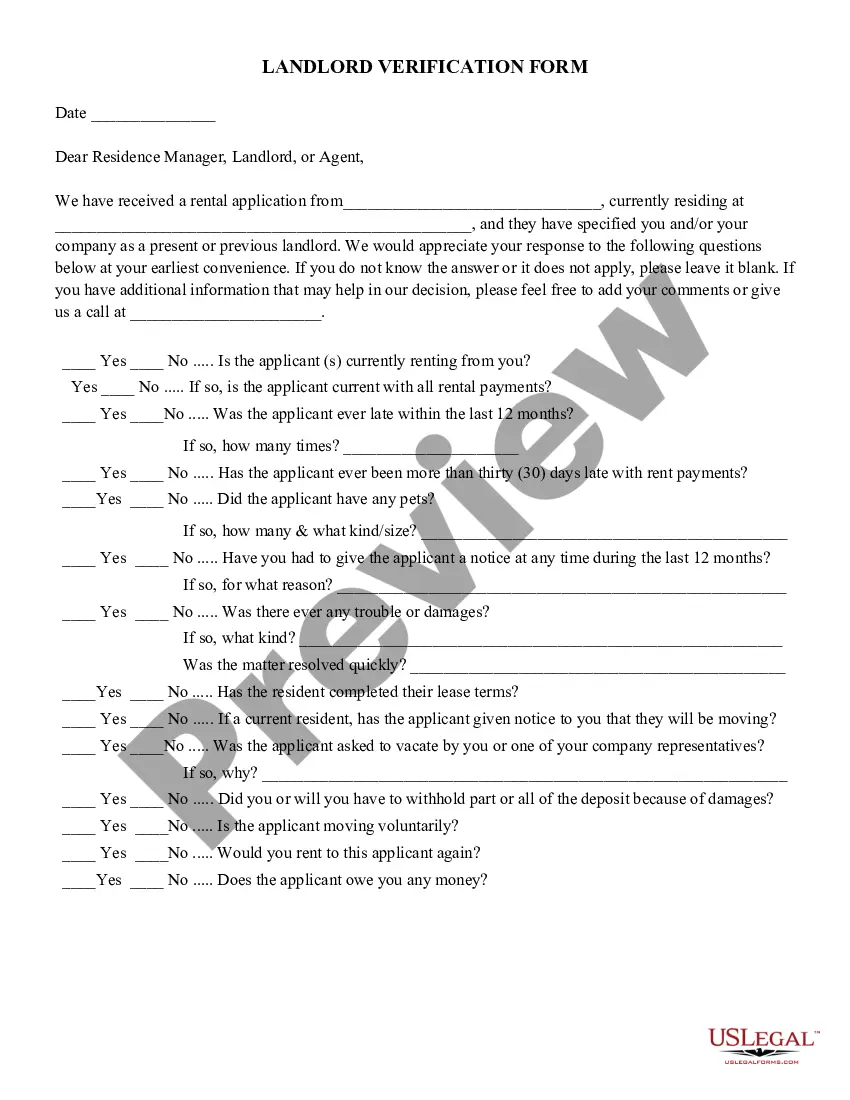
The landlord verification form is a document used by a landlord when verifying the previous rental information of an applicant for tenancy. The requesting landlord must send the form to the applicant's current or past landlord in order to obtain all details related to the tenancy of the individual.
Tenant's Name. Tenant's Address, Including Unit Number. Date of Move-In. Date of Move-Out (When Occurs). Date of Move-In Inspection. Date of Move-Out Inspection.
A rental verification form is an authorization form that a tenant applicant will sign to give permission to the landlord to perform a background check. This also includes the ability to call the current employer, previous landlord, and current landlord. Many applications have this built right into the app.
The first sentence should explain who is writing the letter and why. It should also give the name of the tenant, so the purpose of the letter is clear. The writer may be a property manager or the owner of the property. The landlord can include, if applicable, a statement on the character of the tenant.
Pay Stubs. Renters with a full-time or part-time job can obtain this document from their employer. W-2. Tax Returns. 1099 Form. Bank Statements. Letters from an Employer. Social Security Benefits Statement. Pension Distribution Statements.
State the purpose of the letter. In the first paragraph, explain that you are writing to verify that the tenants live on your property. Also include the address where they live. For example, you can write, I am writing to confirm that Mr.
The tenant should fill his original name with father name, permanent address, and other essential information in the given form. It verifies a tenant and makes it easy for the landlord to involve the police in case of a dispute.
Typically, your letter should state the person's full name, relation to you, and the confirmation that he or she lives with you. Since a letter of this kind will also require you to prove that the person you are writing it for is self-sufficient, you may need to prove that he or she helps pay bills as well.