Utah Paternity Law and Procedure Handbook
What is this form?
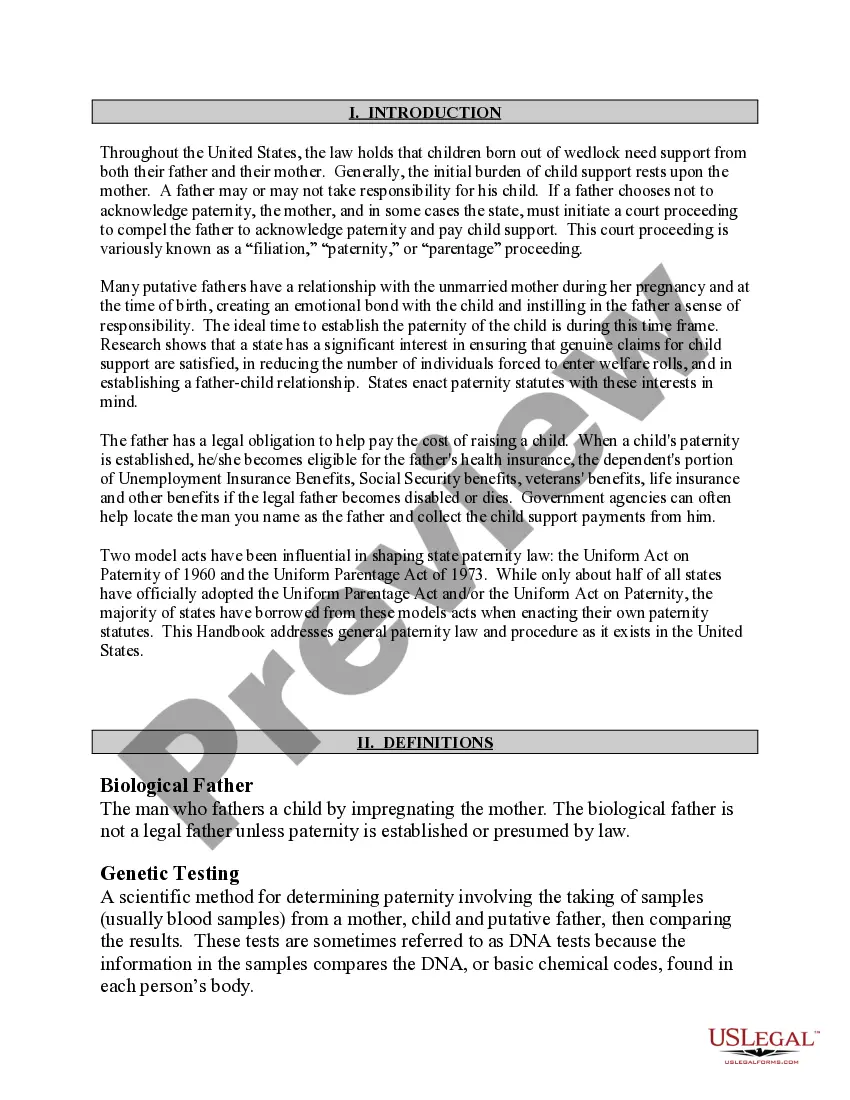
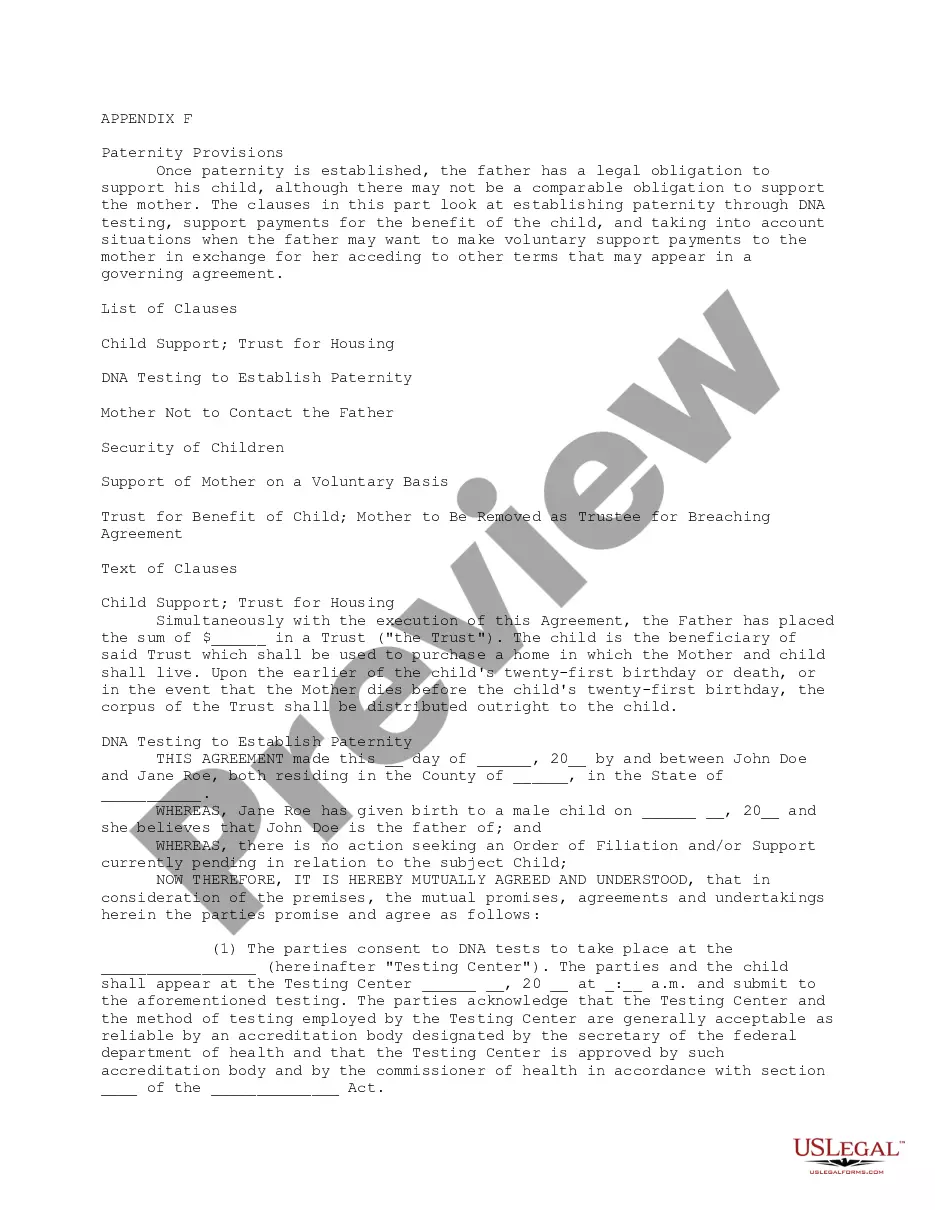
The Paternity Law and Procedure Handbook is a comprehensive guide aimed at individuals navigating the complexities of establishing paternity in the United States. It contains state-specific resources and outlines the legal obligations of both parents, particularly focusing on voluntary paternity establishment and the processes involved in court action. This handbook is essential for understanding paternity laws and provides clarity on steps to take, ensuring parents can effectively support their children.
Form components explained
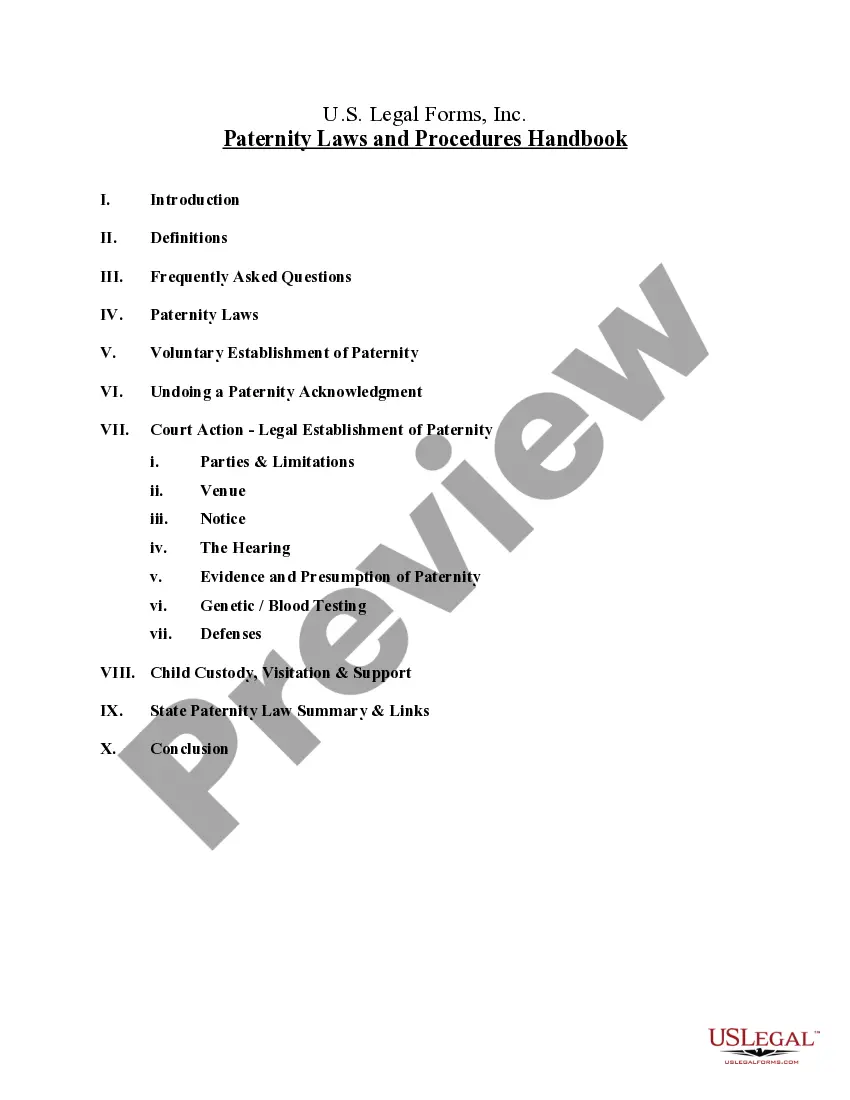
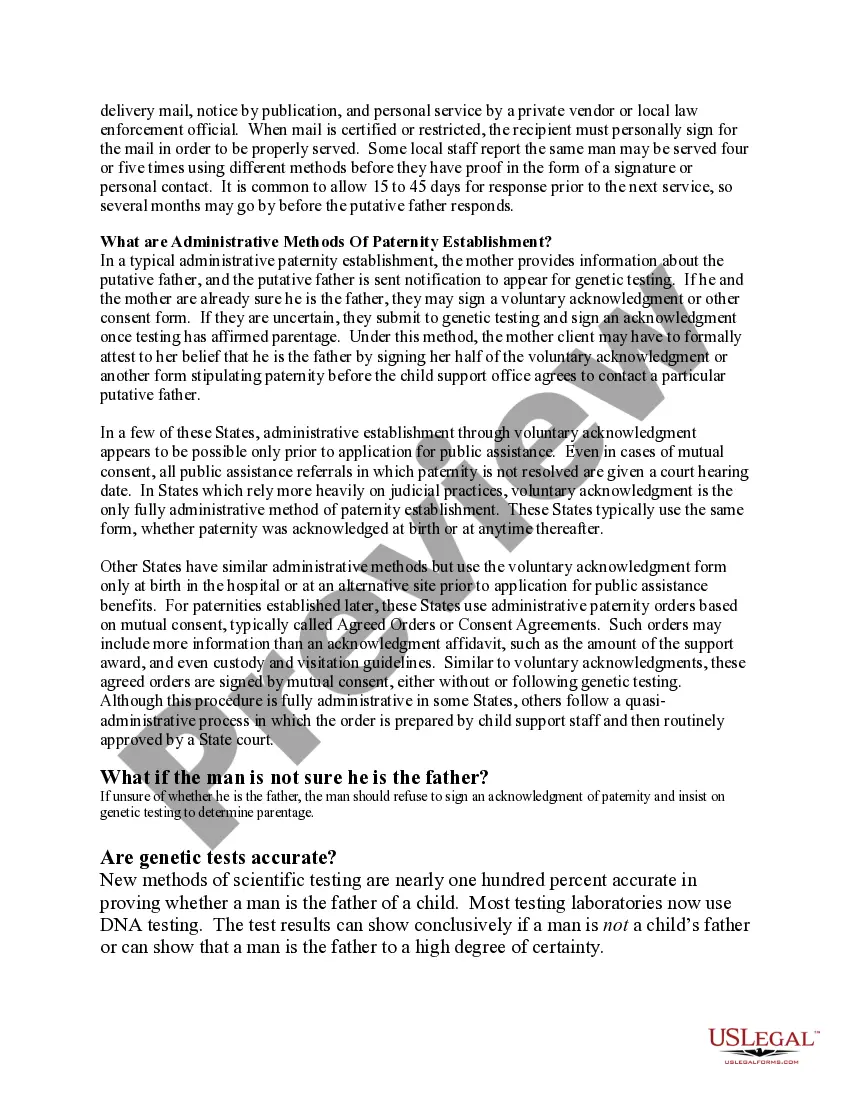
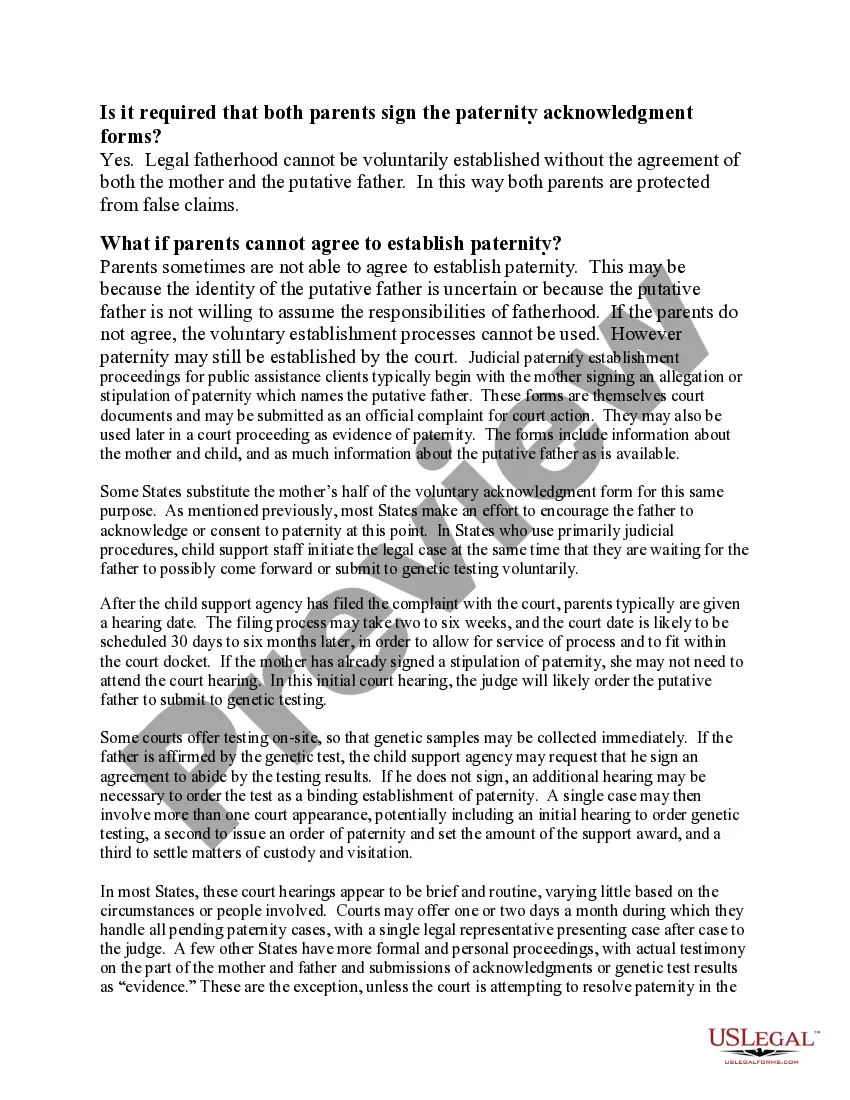
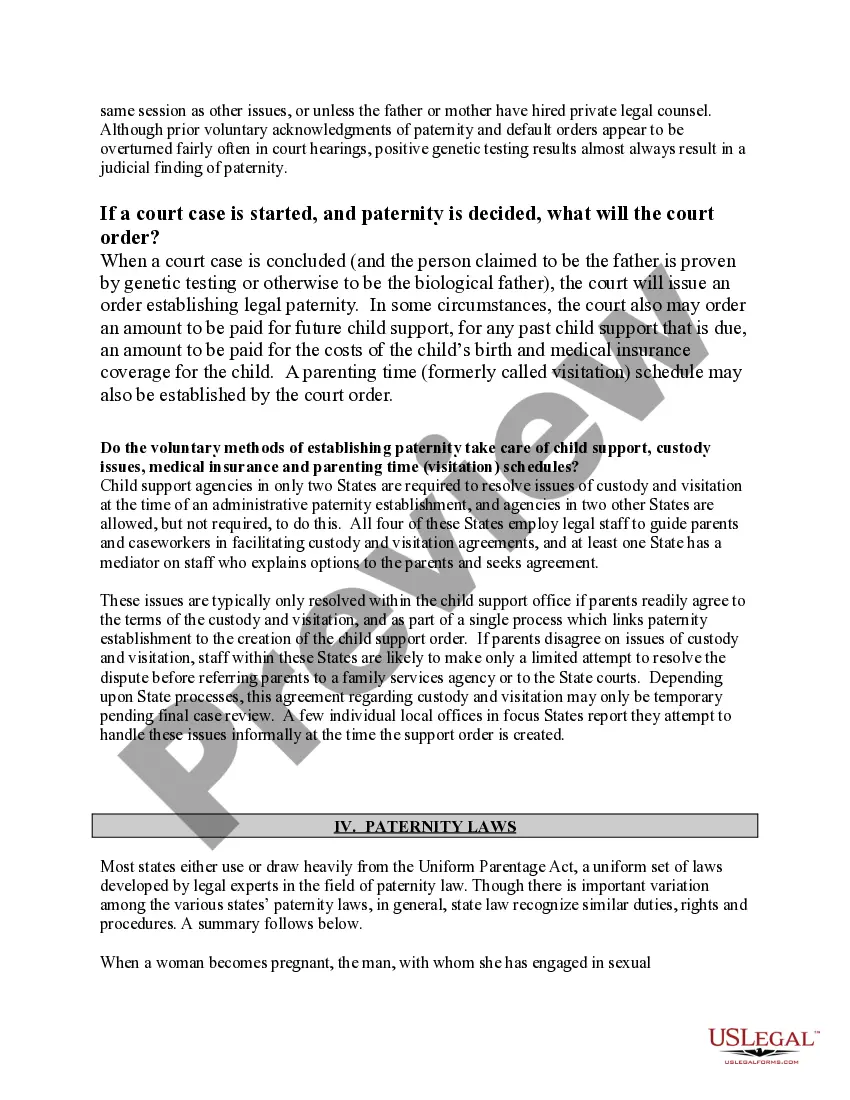
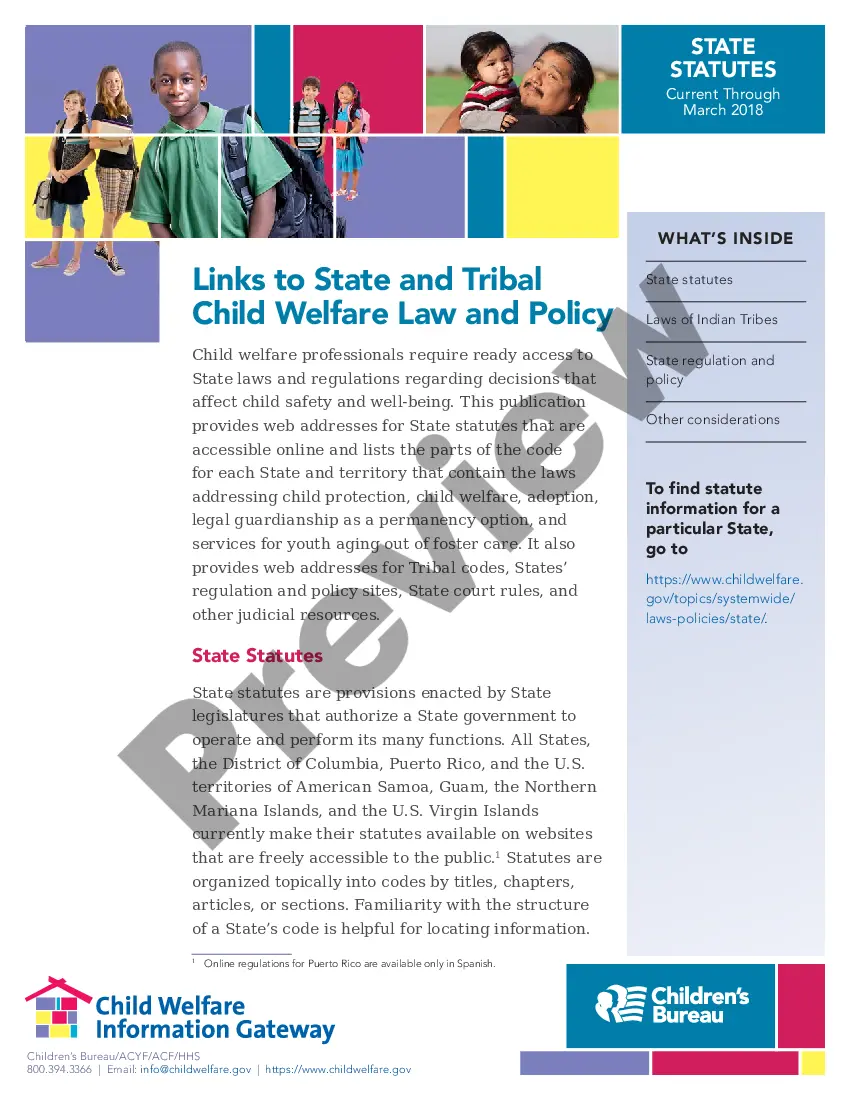
- Introduction to the importance of establishing paternity.
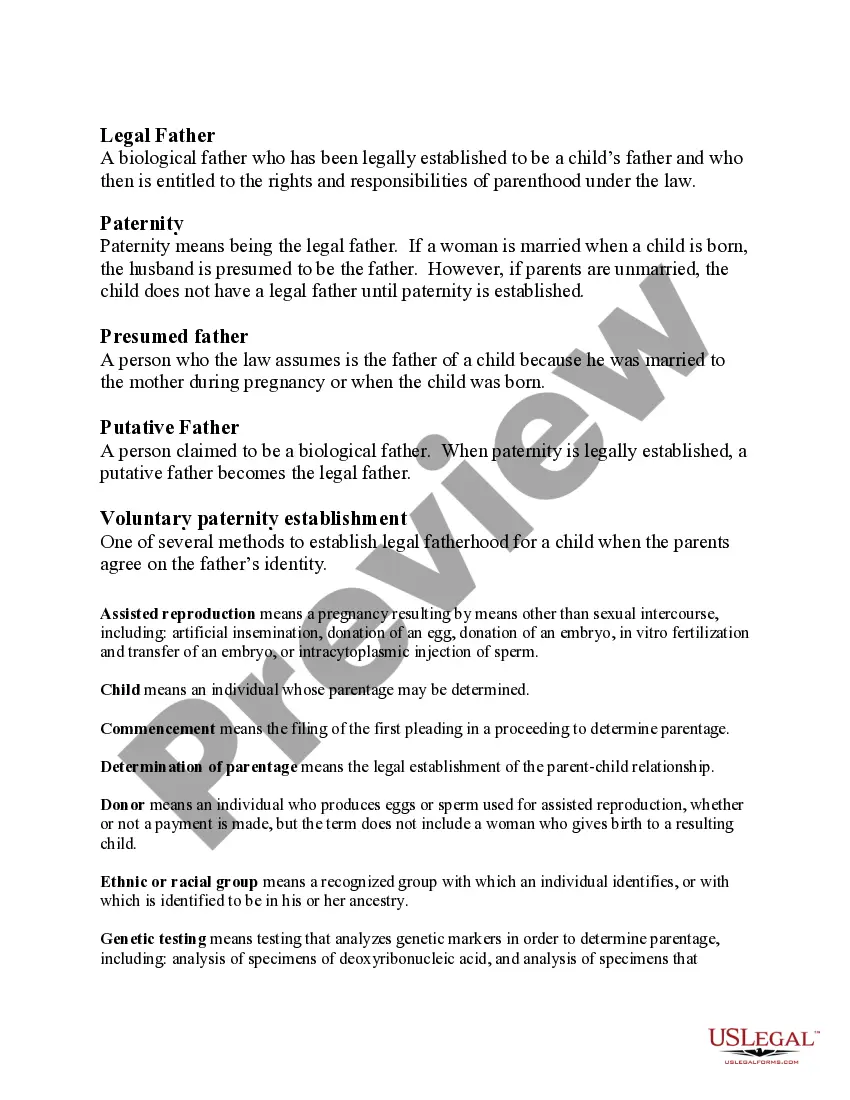
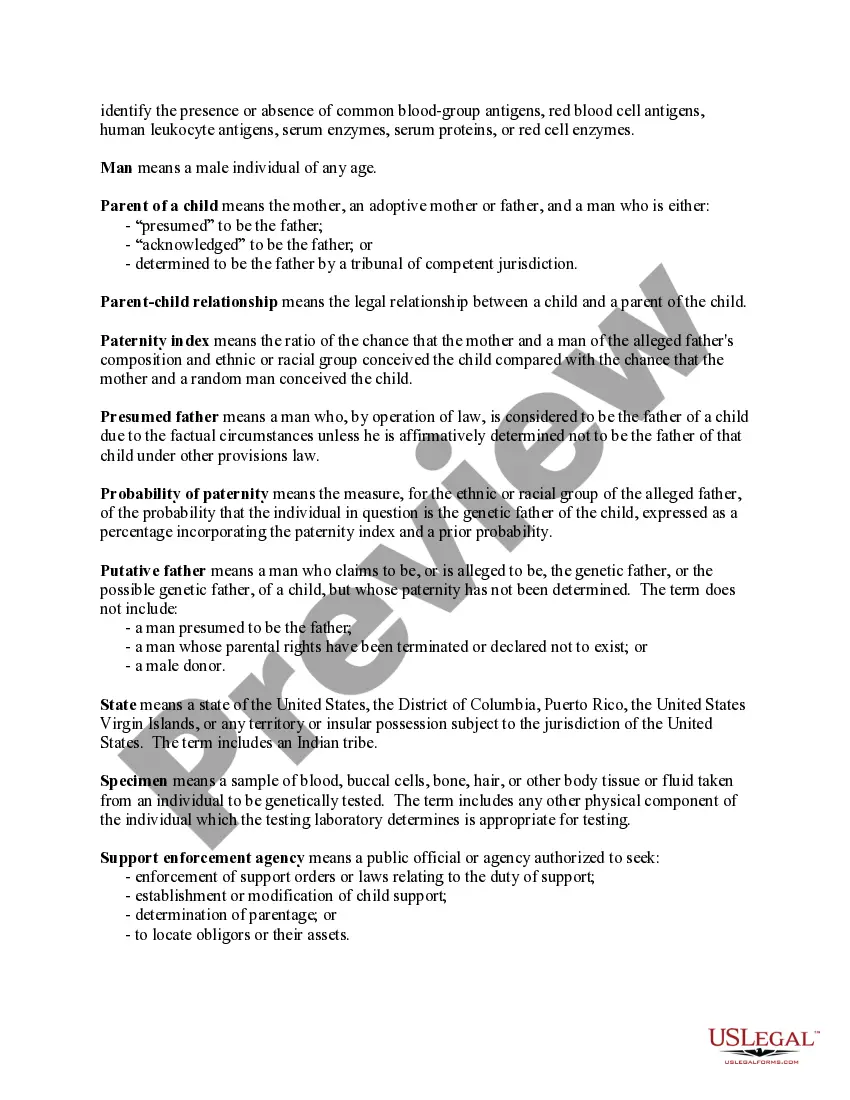
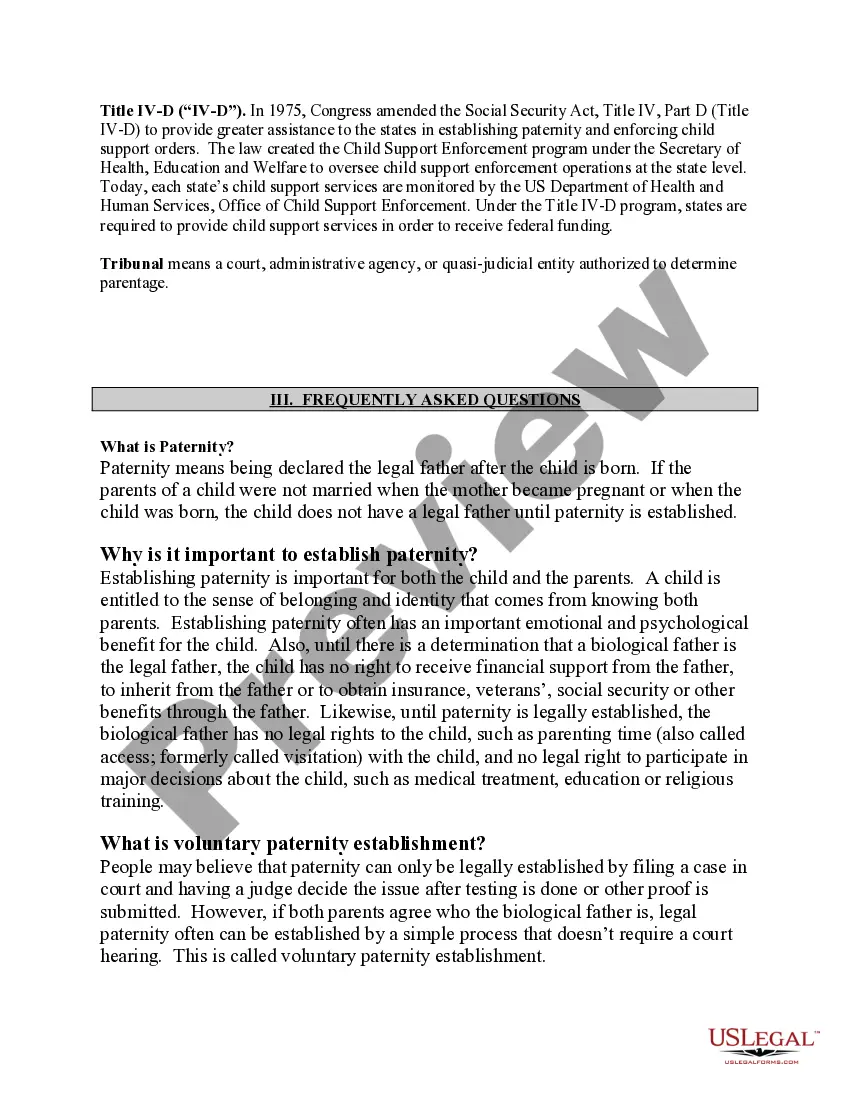
- Definitions of key terms related to paternity.
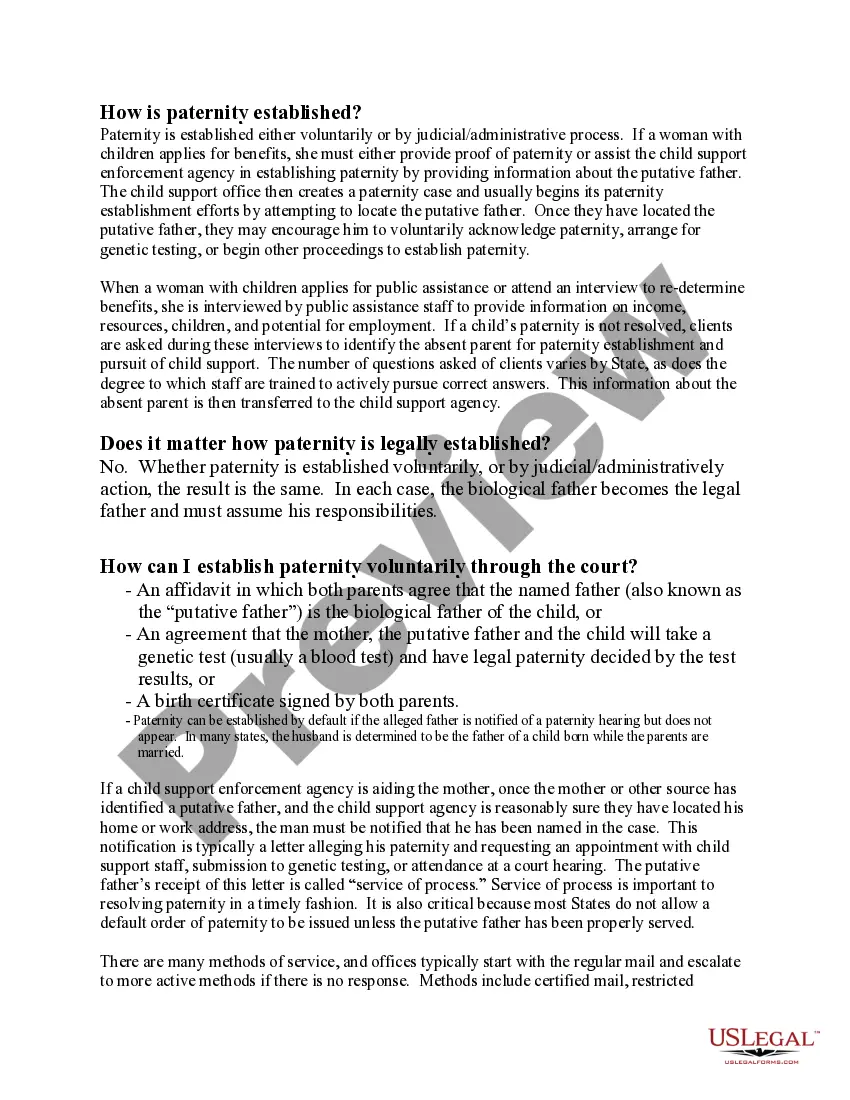
- Guidelines for voluntary paternity establishment.
- Information on undoing a paternity acknowledgment.
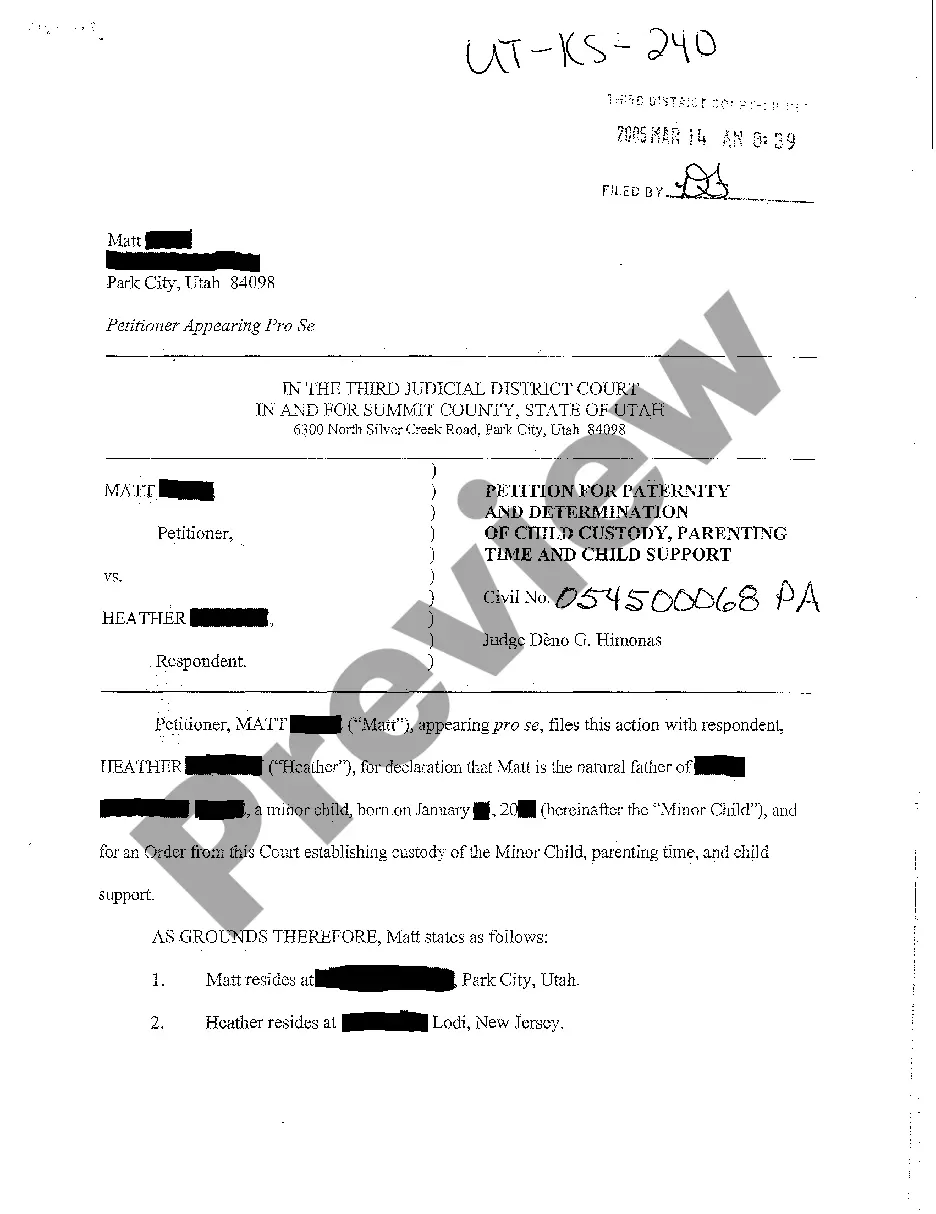
- Procedures for court action to legally establish paternity.
- Child custody, visitation, and support considerations.
- Summary of state-specific paternity laws.

Situations where this form applies
This handbook is useful for potential fathers who need confirmation of their legal relationship to a child, mothers seeking recognition of paternity for support purposes, and anyone involved in disputes over paternity. It serves as a resource for understanding both voluntary and court-based methods of establishing paternity and provides guidance on what steps to take when navigating these processes.
Intended users of this form
- Unmarried parents looking to establish legal paternity.
- Individuals seeking to understand their rights and responsibilities regarding paternity.
- Families involved in child support or custody disputes.
- Legal professionals seeking a reference for paternity laws.
Steps to complete this form
- Read through the introduction to understand the importance of paternity.
- Familiarize yourself with definitions of terms like "legal father" and "putative father."
- Explore options for voluntary paternity establishment and gather necessary documents.
- If opting for court action, determine the appropriate venue and prepare the associated paperwork.
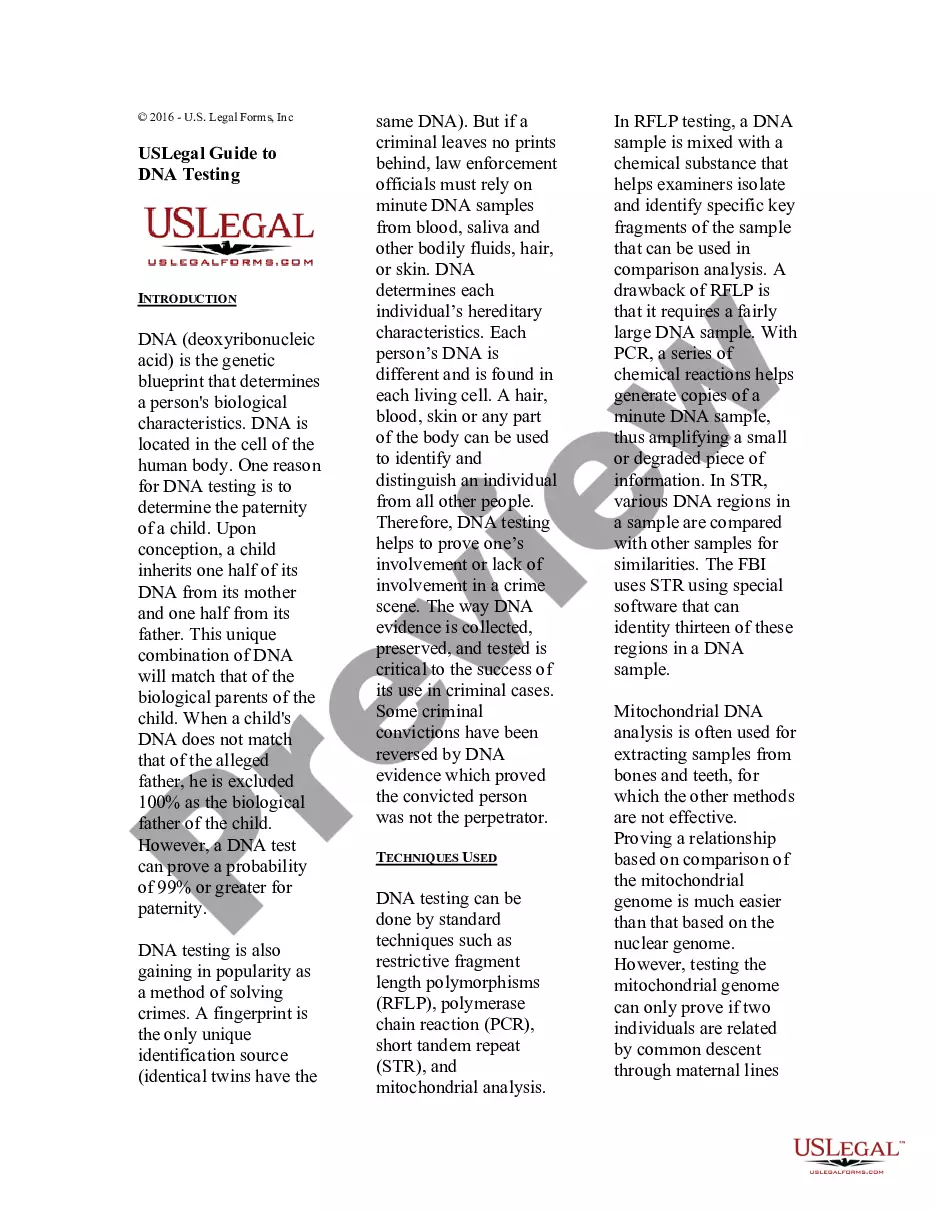
- Follow the guidelines for submitting genetic testing if applicable, as outlined in the document.
Notarization requirements for this form
Notarization is not commonly needed for this form. However, certain documents or local rules may make it necessary. Our notarization service, powered by Notarize, allows you to finalize it securely online anytime, day or night.
Get your form ready online
Our built-in tools help you complete, sign, share, and store your documents in one place.
Make edits, fill in missing information, and update formatting in US Legal Forms—just like you would in MS Word.
Download a copy, print it, send it by email, or mail it via USPS—whatever works best for your next step.
Sign and collect signatures with our SignNow integration. Send to multiple recipients, set reminders, and more. Go Premium to unlock E-Sign.
If this form requires notarization, complete it online through a secure video call—no need to meet a notary in person or wait for an appointment.
We protect your documents and personal data by following strict security and privacy standards.
Make edits, fill in missing information, and update formatting in US Legal Forms—just like you would in MS Word.
Download a copy, print it, send it by email, or mail it via USPS—whatever works best for your next step.
Sign and collect signatures with our SignNow integration. Send to multiple recipients, set reminders, and more. Go Premium to unlock E-Sign.

If this form requires notarization, complete it online through a secure video call—no need to meet a notary in person or wait for an appointment.
We protect your documents and personal data by following strict security and privacy standards.
Common mistakes
- Failing to understand the difference between voluntary and court-established paternity.
- Not completing the acknowledgment form correctly or timely.
- Assuming paternity can be established without legal documentation.
- Ignoring the need for genetic testing when paternity is disputed.
Why use this form online
- Convenient access to essential legal guidance at any time.
- Editable templates allow for easy personalization.
- Reliability of professionally drafted materials ensures legal compliance.
Legal use & context
- This handbook is a general guide and should not replace legal advice tailored to specific circumstances.
- Establishing paternity is crucial for securing child support and related benefits.
Quick recap
- The Paternity Law and Procedure Handbook offers valuable insights into establishing paternity.
- Understanding paternity is crucial for both the emotional and financial wellbeing of the child.
- Various methods exist to establish paternity; the handbook explains each approach clearly.
- Consultation with local legal resources can help clarify specific state laws and procedures.
Looking for another form?

Form popularity
FAQ
If you get married after the child is born, it can establish paternity retroactively. This is not an automatic process, and it is in you and your child's best interest to work with a family lawyer to establish paternity in this way. Both parents can sign an Affidavit of Paternity, which establishes paternity.
You must send an original notarized Paternity Testing Request Form to the OME along with a processing fee of $25 (make check made payable to the Utah Department of Health). The request must be made by an immediate family member of the deceased or by a court order signed by a judge of a Utah court.
If you would like to formally establish paternity, you should begin by asking the father of your child to voluntarily acknowledge paternity.The birth father can voluntarily acknowledge paternity in two ways: He can be present at the birth of your child and sign a Declaration of Paternity.
Get on the birth certificate. Once your child is born, the easiest way to establish paternity is by getting your name on the birth certificate. Get an order through an administrative agency. Get a court order.
Birth certificate. If a birth certificate declares the father and he signs it, this is a legally binding qualification of paternity. DNA test. Court order.
In Utah, paternity can be established either voluntarily by signing a Voluntary Declaration of Paternity form or involuntarily through a court or administrative order. When the mother and father agree that the father is in fact the biological father, paternity can be established voluntarily.
Establishing paternity ensures a father's legal rights and various rights and privileges for their children, such as rights to inheritance, father's medical and life insurance benefits, and Social Security and veterans' benefits, plus access to paternal family health history.
In the state of Utah, married fathers are automatically given parental rights on the birth of their children, provided a court has not decided otherwise. An unmarried father must go through the process of proving his paternity before he can ask the court to grant him visitation rights with the child.