Utah Mutual Wills or Last Will and Testaments for Man and Woman living together, not Married with Minor Children
Overview of this form
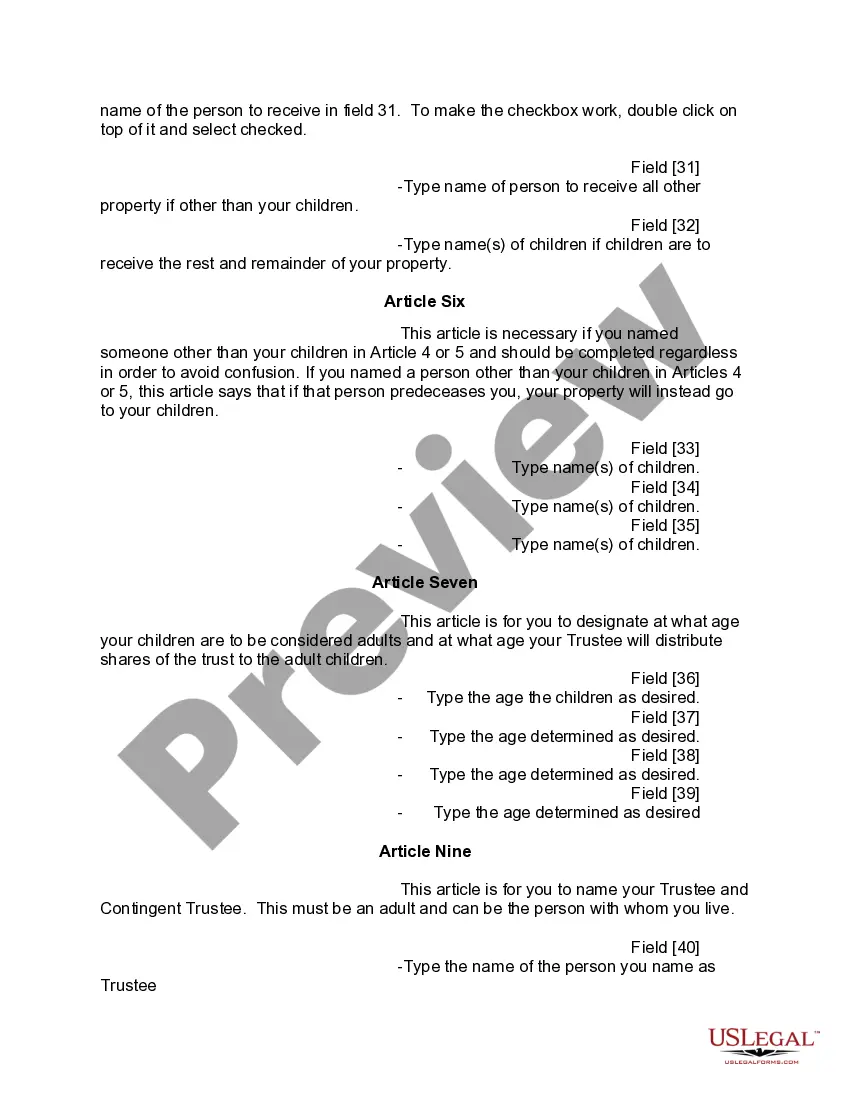
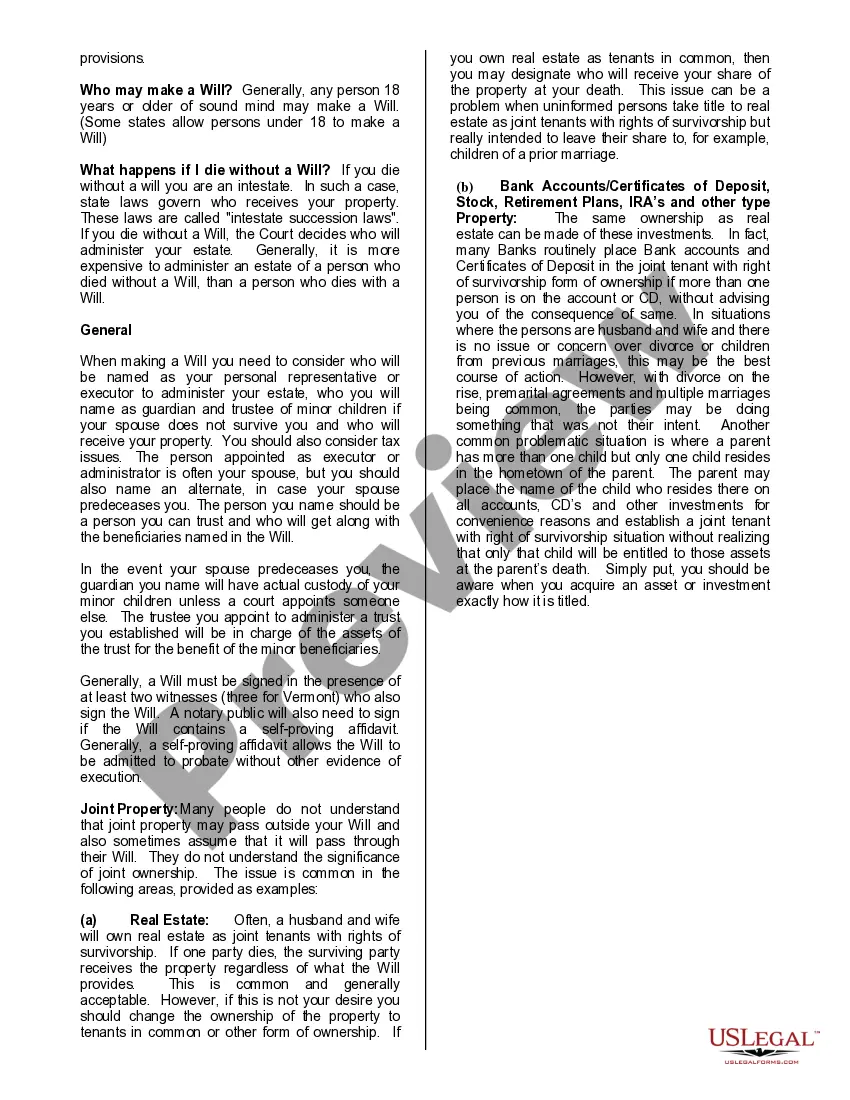
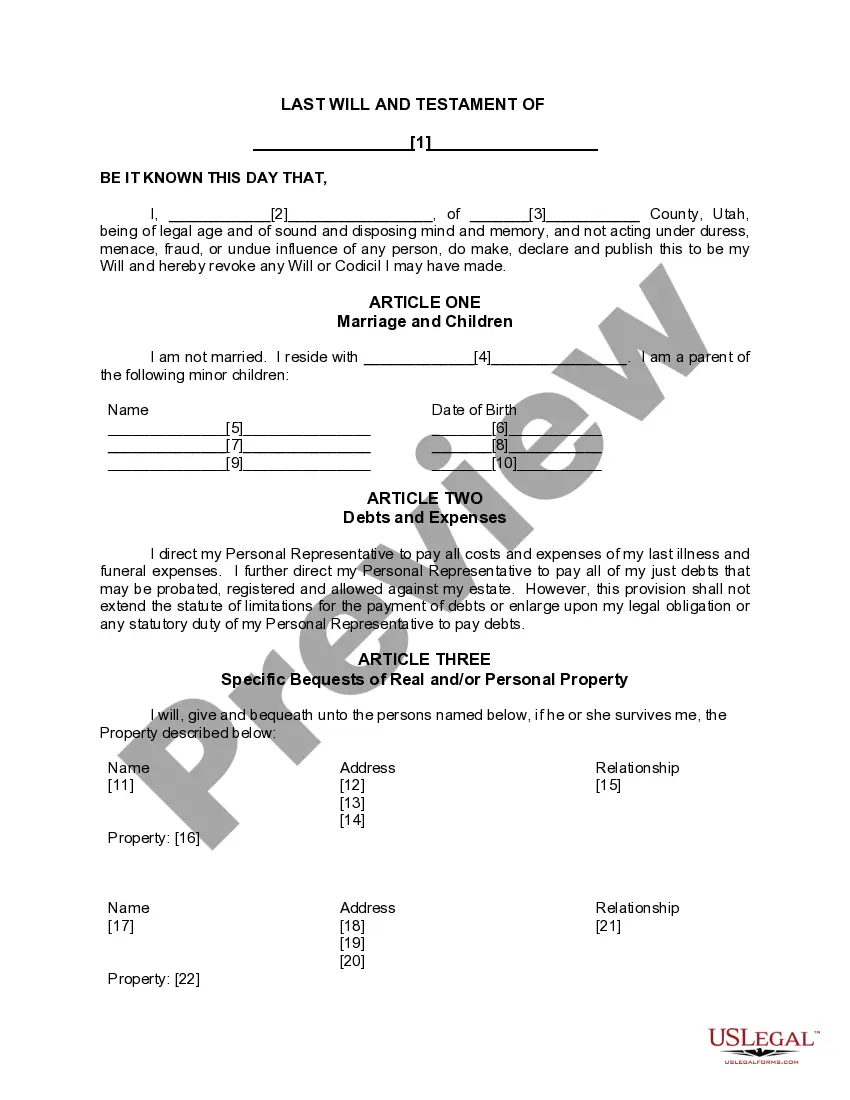
The Mutual Wills or Last Will and Testaments for Man and Woman living together, not Married with Minor Children is a legal document that allows an unmarried couple with minor children to create mutual wills. This type of will is specifically designed for partners who wish to leave property to each other and plan for the care of their minor children after their death. It differs from standard wills in that it is mutual, meaning that both parties agree to the terms concerning the distribution of their assets and the guardianship of their children.
Key parts of this document
- Identification of the parties and their minor children.
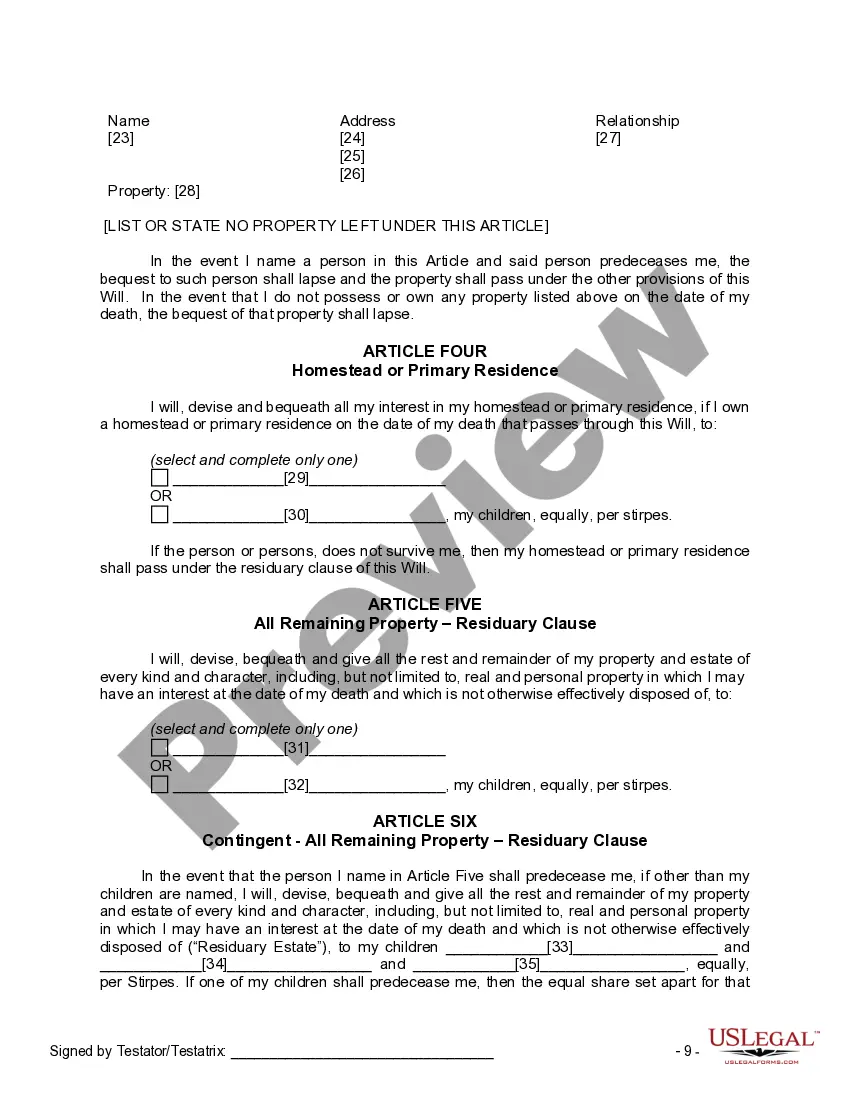
- Specific bequests of property to designated beneficiaries.
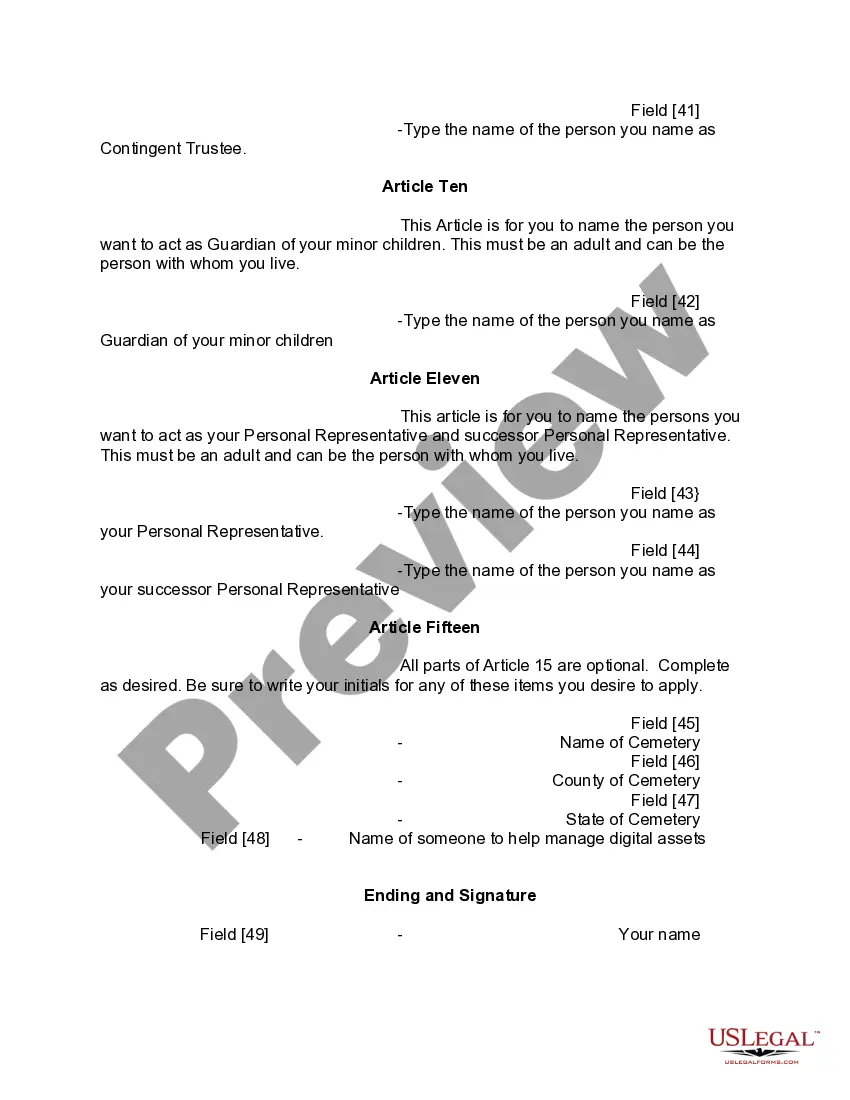
- Appointment of a guardian for minor children.
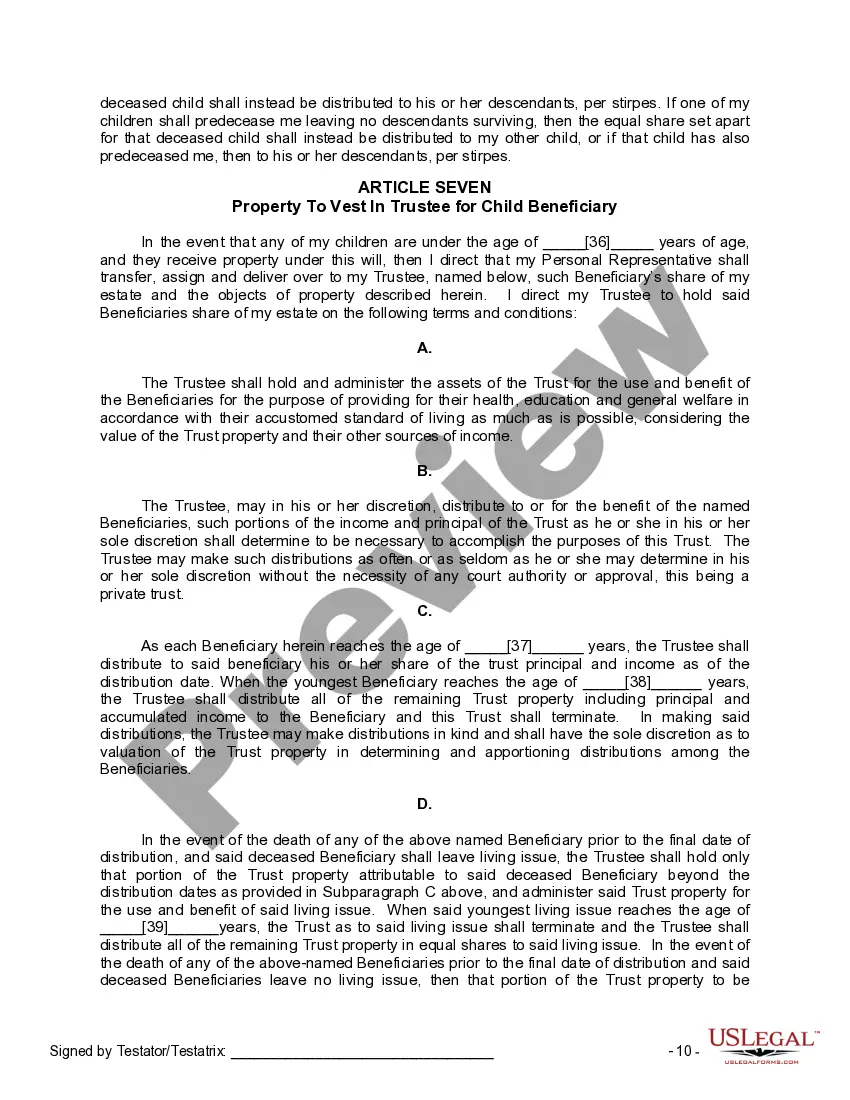
- Establishment of a trustee for child beneficiaries until they reach adulthood.
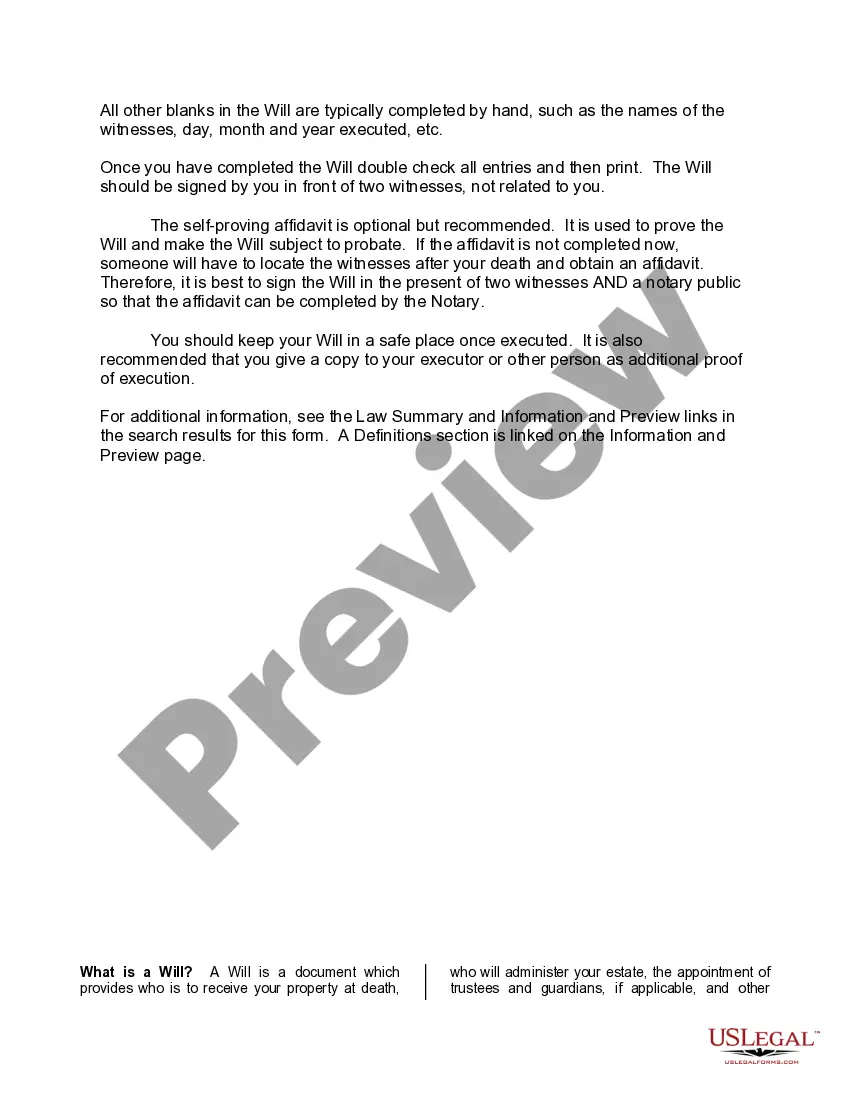
- Instructions for signing and witnessing the will.


When to use this document
This form should be used when an unmarried couple who lives together wants to ensure that their wishes regarding property distribution and child guardianship are legally recognized. It is particularly relevant for those with minor children and is beneficial for couples who want to provide for each other and establish clear plans for their children's future in the event of their passing.
Who can use this document
- Unmarried couples living together with minor children.
- Partners who wish to ensure mutual rights over asset distribution.
- Individuals looking to appoint guardians for their children in the event of their death.
- Couples seeking to avoid legal disputes regarding asset distribution after death.
Completing this form step by step
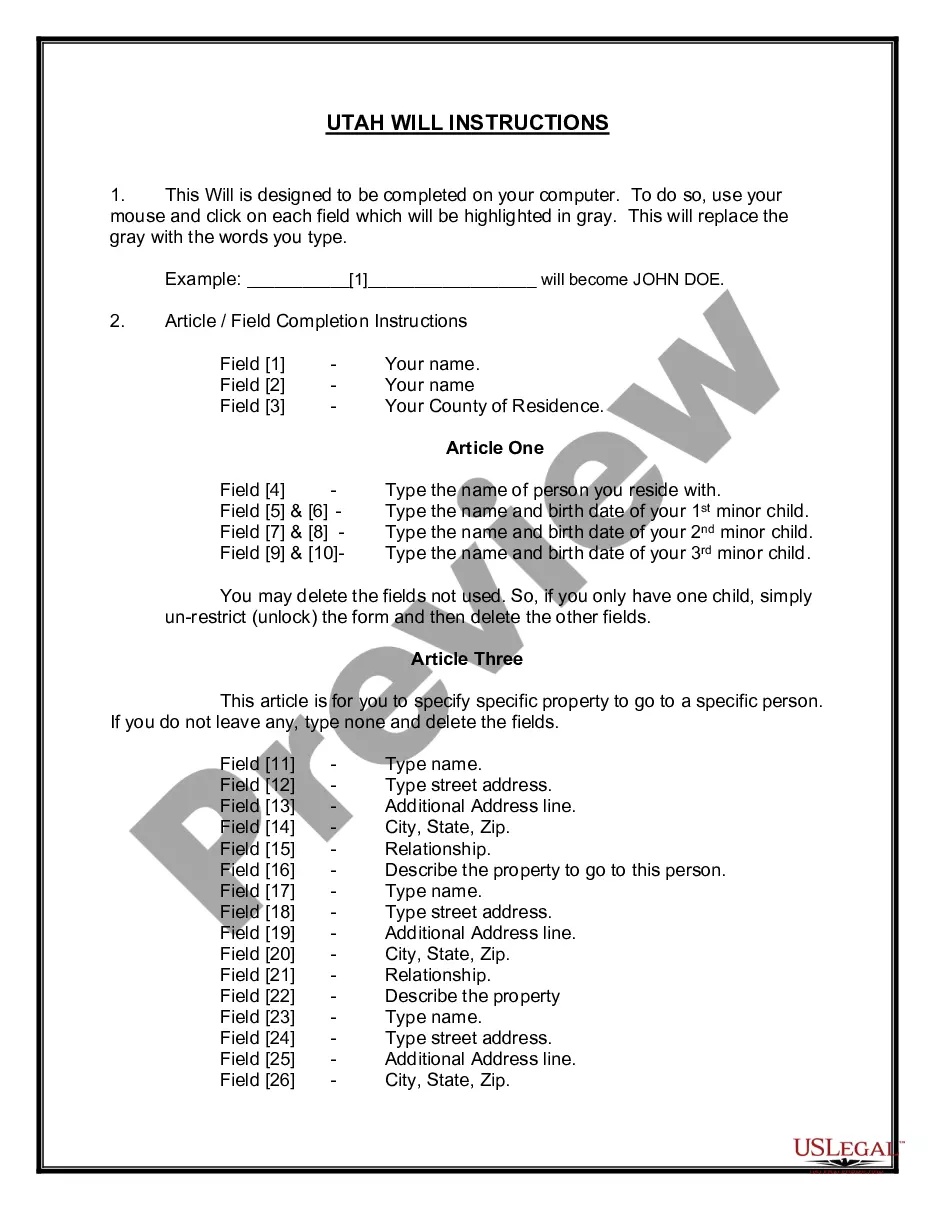
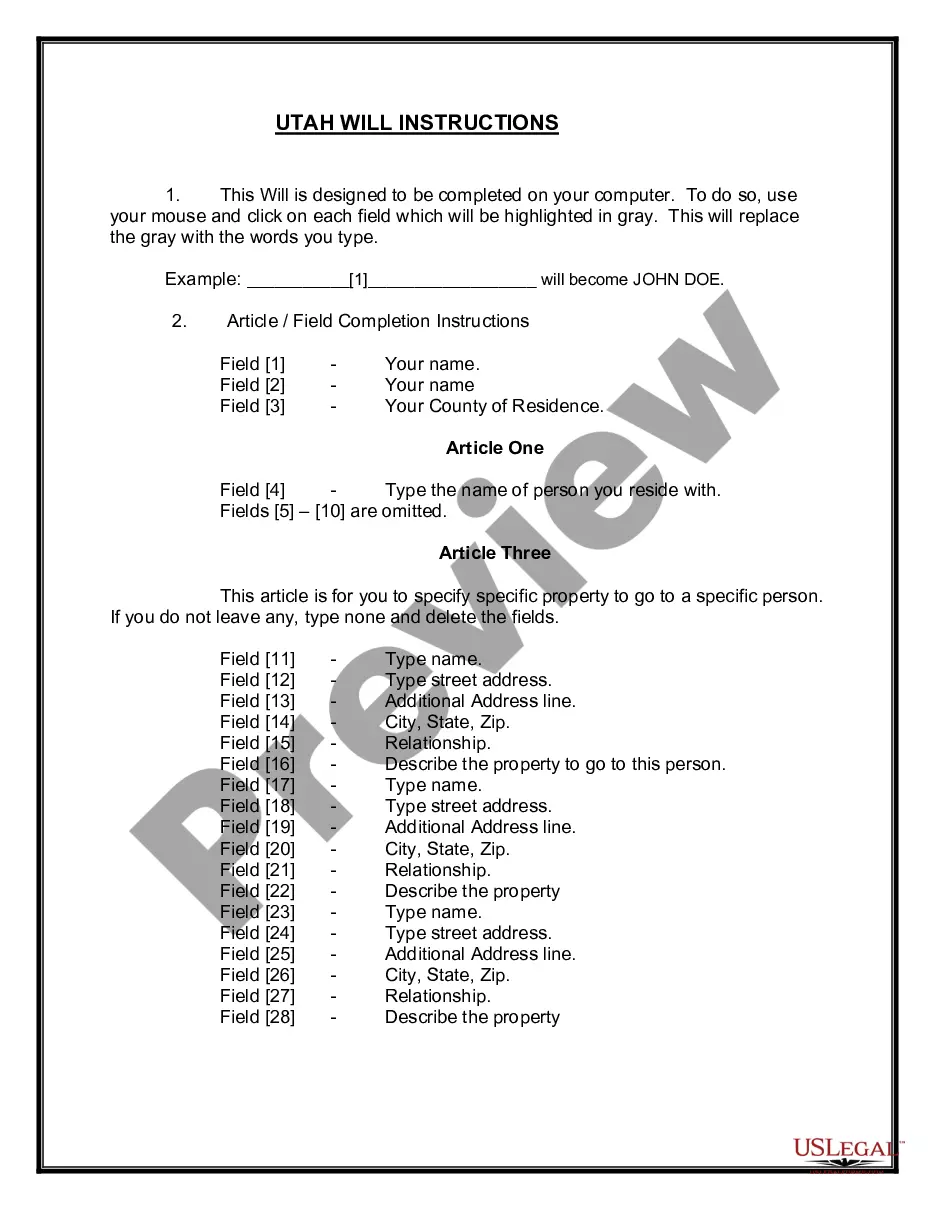
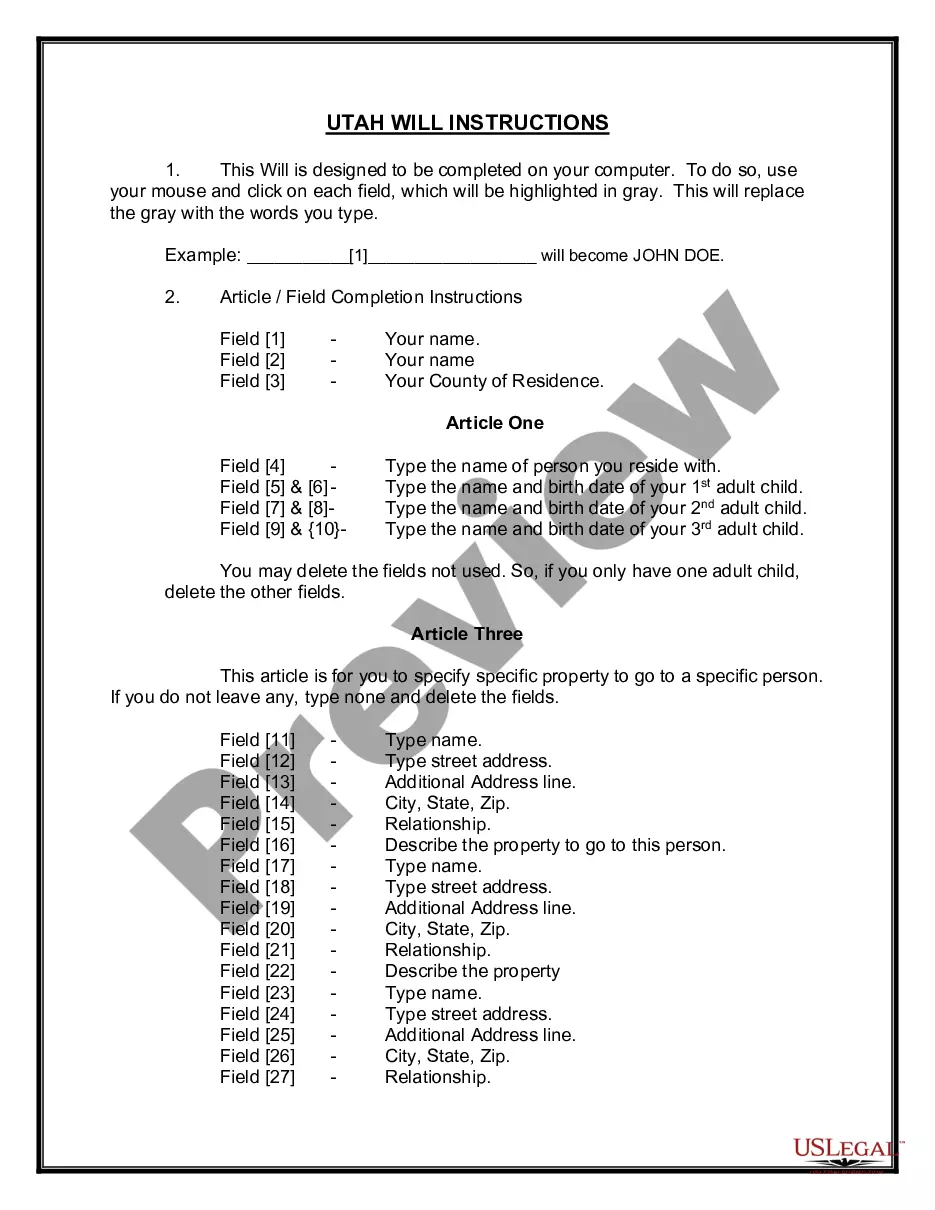
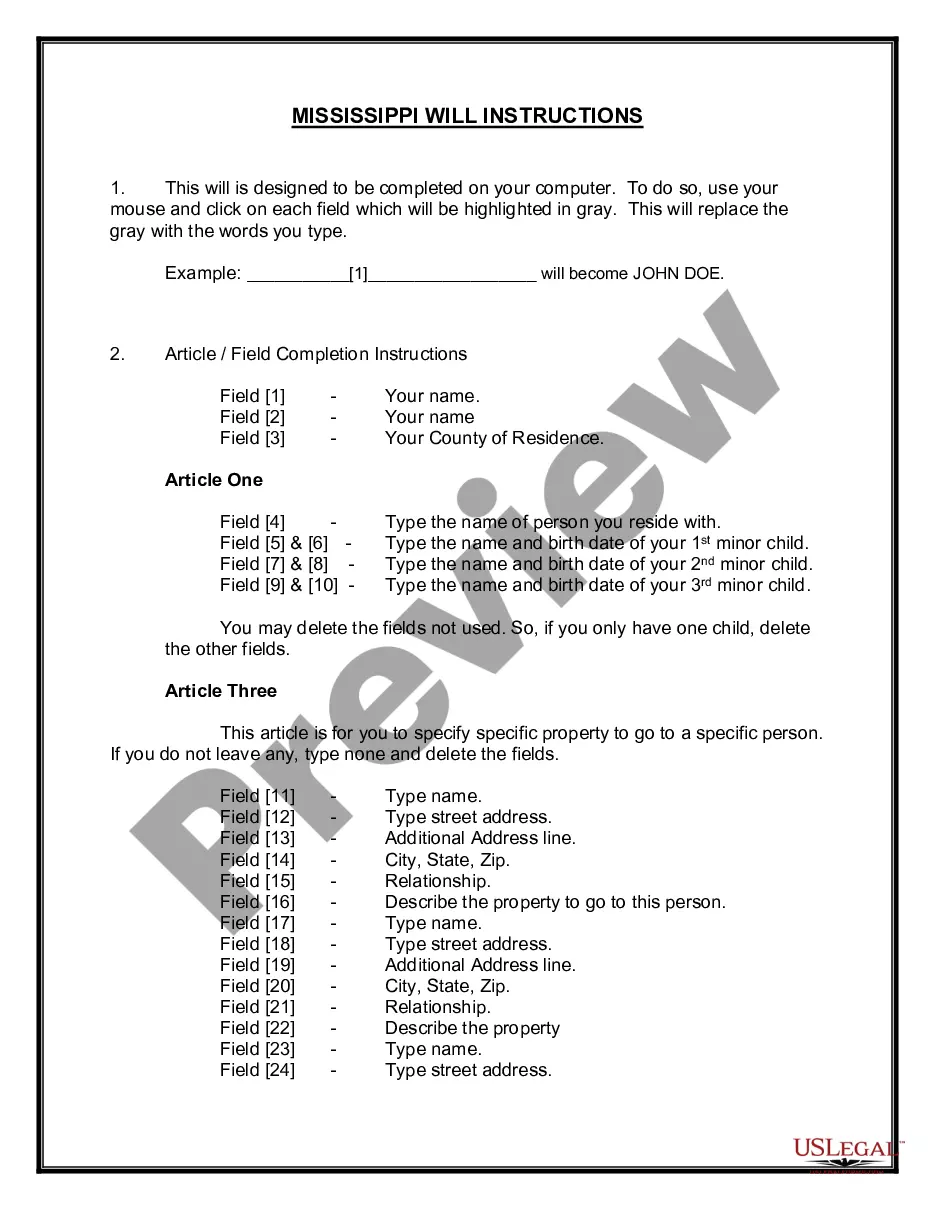
- Begin by entering your names and the county of residence in the designated fields.
- List the names and birth dates of your minor children, ensuring all applicable fields are filled out.
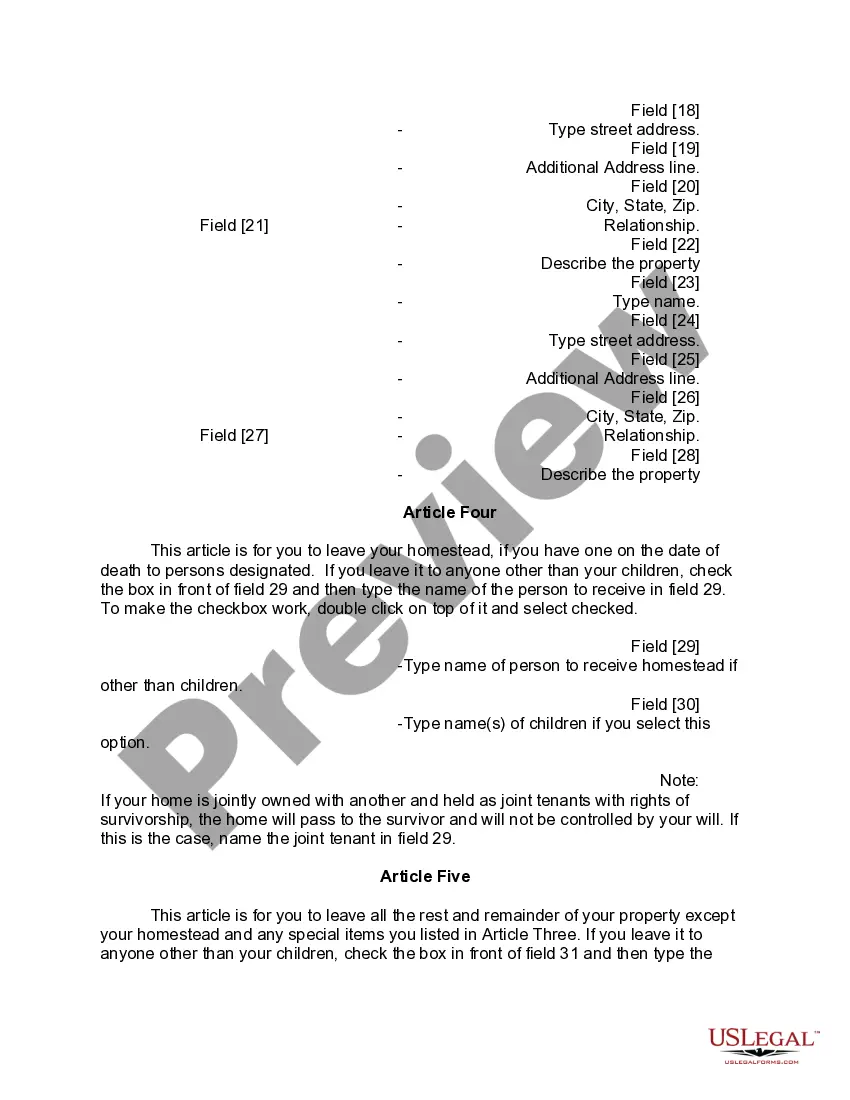
- Identify specific property to be bequeathed to designated individuals, if applicable.
- Appoint a guardian for any minor children and a trustee, if necessary.
- Complete the will by having it signed in front of two unrelated witnesses and, if required, a notary public to ensure its validity.
Is notarization required?
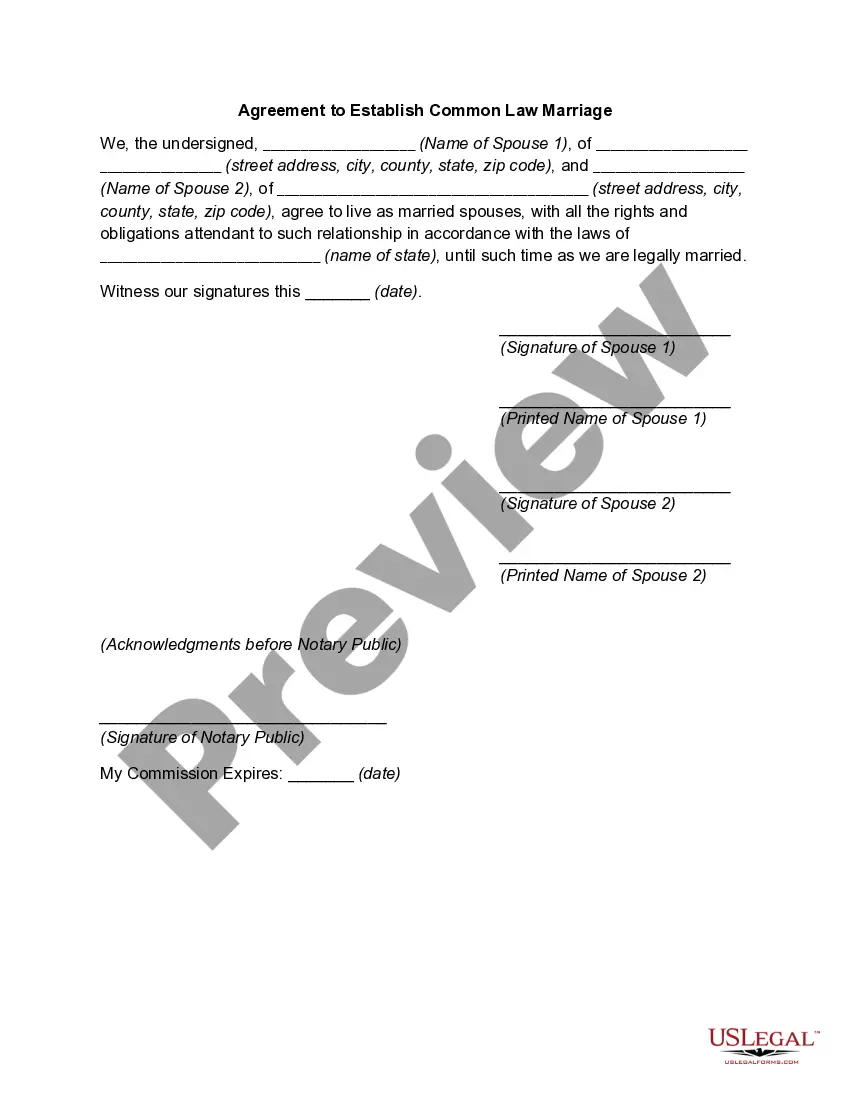
Yes, this form must be notarized to be legally valid. The notarization process enables the authenticity of the signatures and can simplify the probate process. US Legal Forms provides an integrated online notarization service available 24/7, ensuring a secure and convenient process without the need for in-person visits.
Get your form ready online
Our built-in tools help you complete, sign, share, and store your documents in one place.
Make edits, fill in missing information, and update formatting in US Legal Forms—just like you would in MS Word.
Download a copy, print it, send it by email, or mail it via USPS—whatever works best for your next step.
Sign and collect signatures with our SignNow integration. Send to multiple recipients, set reminders, and more. Go Premium to unlock E-Sign.
If this form requires notarization, complete it online through a secure video call—no need to meet a notary in person or wait for an appointment.
We protect your documents and personal data by following strict security and privacy standards.
Make edits, fill in missing information, and update formatting in US Legal Forms—just like you would in MS Word.
Download a copy, print it, send it by email, or mail it via USPS—whatever works best for your next step.
Sign and collect signatures with our SignNow integration. Send to multiple recipients, set reminders, and more. Go Premium to unlock E-Sign.

If this form requires notarization, complete it online through a secure video call—no need to meet a notary in person or wait for an appointment.

We protect your documents and personal data by following strict security and privacy standards.
Typical mistakes to avoid
- Failing to have the will signed by two witnesses.
- Not specifying guardians for minor children.
- Leaving out essential information about minor children or property.
- Assuming the will is valid without checking state-specific requirements.
Benefits of using this form online
- Convenient access to customizable templates from your computer or device.
- Easy editing and filling of information without the need for paper forms.
- Secure storage options for completing the will process without needing physical copies.
Looking for another form?

Form popularity
FAQ
Anyone who is an immediate family member of the deceased, whether or not he or she is listed in the will, is legally entitled to view a copy.Those are the primary parties who may request access to a will, but there are other less groups of people that also have a legal right to view and receive copies of the document.
The reality is, however, that both you and your spouse should each have your own will, and it should be planned as soon as possible. Some couples think that they can have one joint will together, but this is not a sound approach.
If one partner dies without leaving a will, the surviving partner will not automatically inherit anything unless the couple owned property jointly.If you inherit money or property from an unmarried partner, you are not exempt from paying inheritance tax, as married couples are.
For starters, in California children do not have a right to inherit any property from a parent. In other words, a parent can disinherit a child, leaving them nothing.You can either challenge your parent's Will or you may be classified as an omitted child.
A surviving unmarried partner can make a claim against a deceased partner's estate under the Inheritance (Provision for Family and Dependants) Act 1975 if there is no Will.However, there are no guarantees to entitlement and the process can be time consuming and expensive it is much simpler to have a Will in place.
"It would become part of the probate estate." One option is to make sure both of you are named as joint owners on the deed, "with rights of survivorship." In that case, generally speaking, you each equally own the house and are entitled to assume full ownership upon the death of the other.
If one partner dies without leaving a will, the surviving partner will not automatically inherit anything unless the couple owned property jointly. As an unmarried couple, you need to make wills if you wish to make sure that the other partner inherits.
If your child inherits property or money of substantial value, the court may appoint a guardian or custodian to hold and manage the inheritance for the child until they reach the age of majority.However, in some states the age of majority could be 21 years old, depending on the amount of the inheritance.
What happens to the death benefit if you name a minor as a beneficiary? If your beneficiary is under the age of majority when you die, the death benefit will be given to a custodian of the funds to hold on to. This guardian can be court-appointed, but the court will most likely choose the surviving parent.