Utah Quitclaim Deed - Two Individuals to Two Individuals
Understanding this form
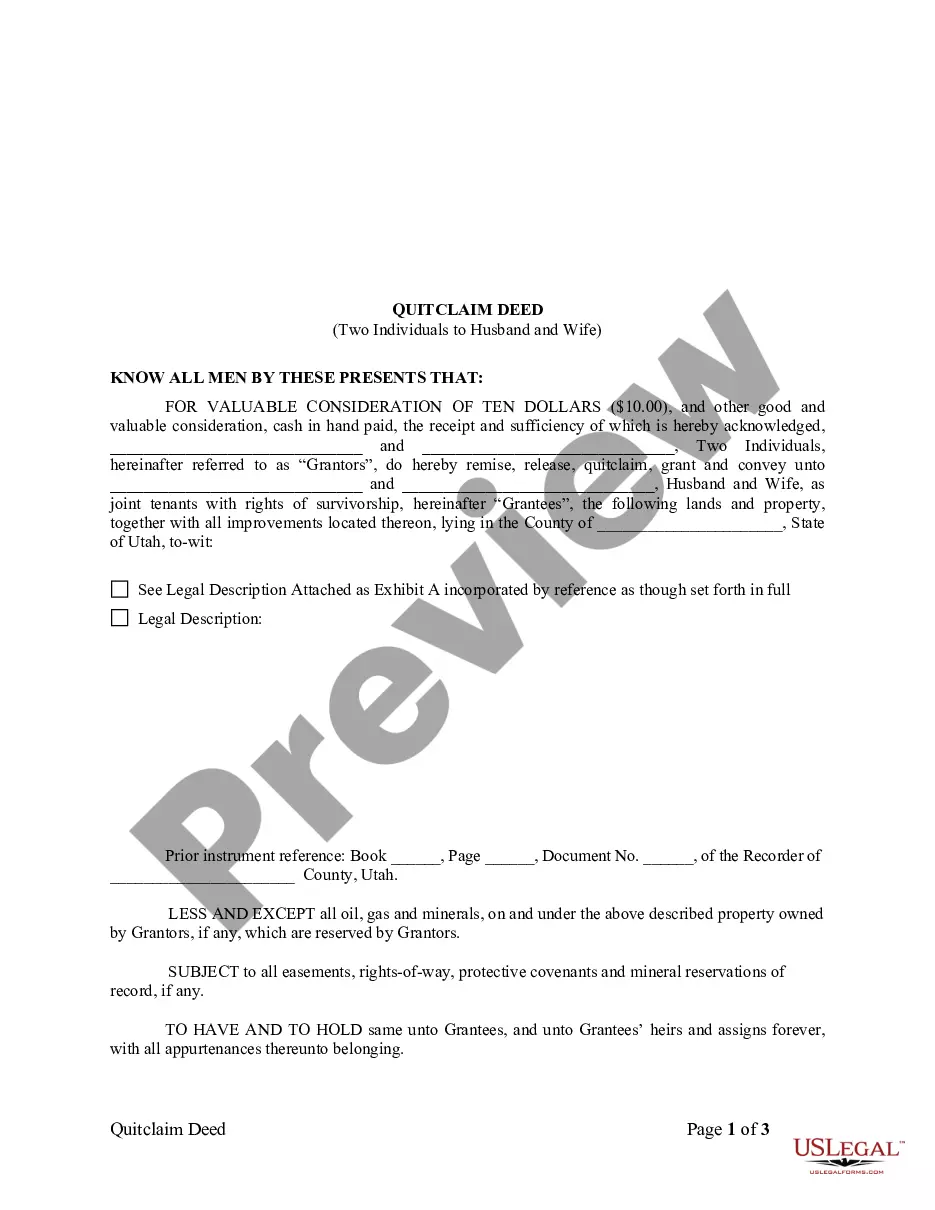
The Quitclaim Deed - Two Individuals to Two Individuals is a legal document that allows two individuals (the Grantors) to transfer their ownership interest in a property to another two individuals (the Grantees). Unlike other deeds, a quitclaim deed does not guarantee that the Grantors have legal title to the property; it merely conveys whatever interest they may have. This form is especially relevant when transferring property between family members or friends, ensuring clarity on joint tenancy with the right of survivorship or tenancy in common.
Form components explained
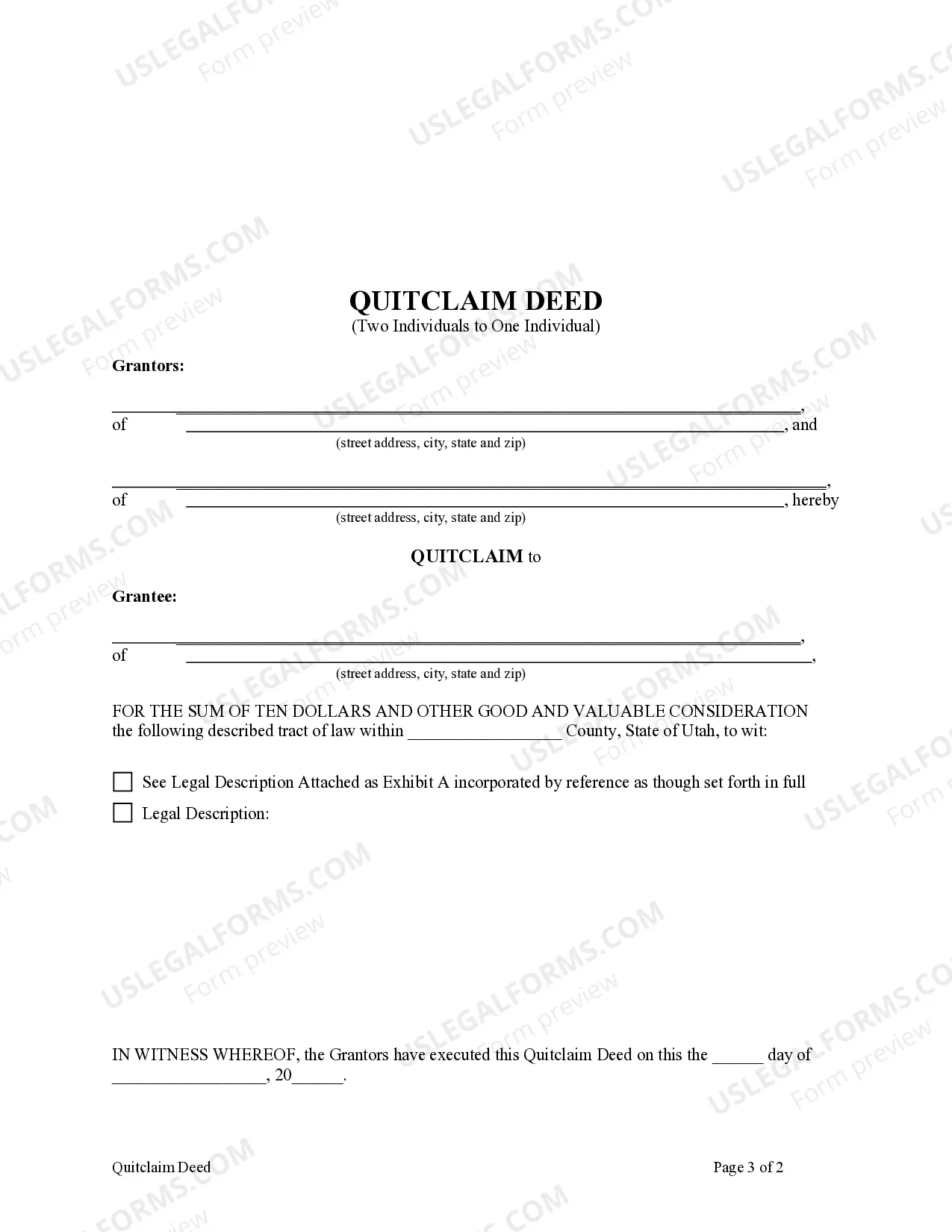
- Identification of the Grantors and Grantees involved in the transfer.
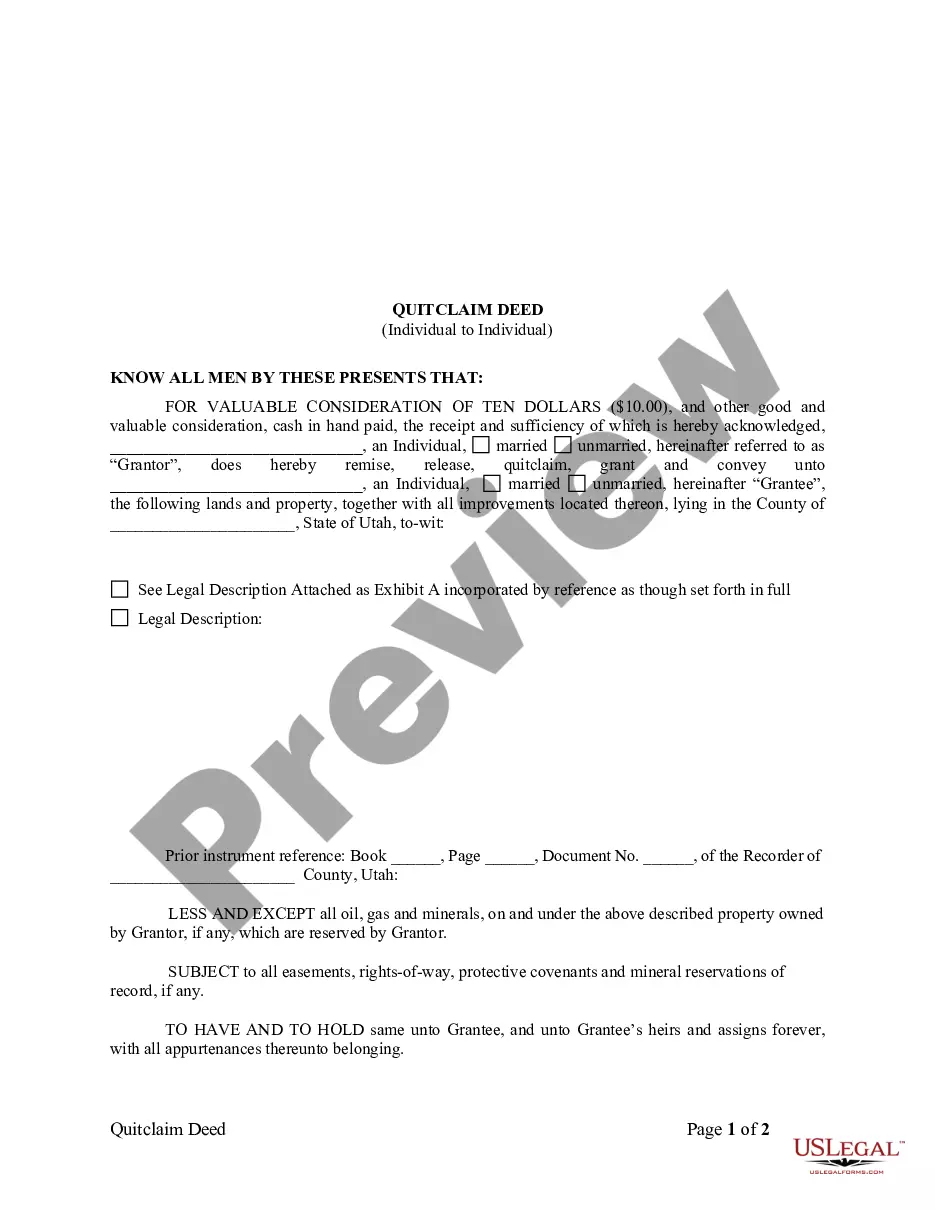
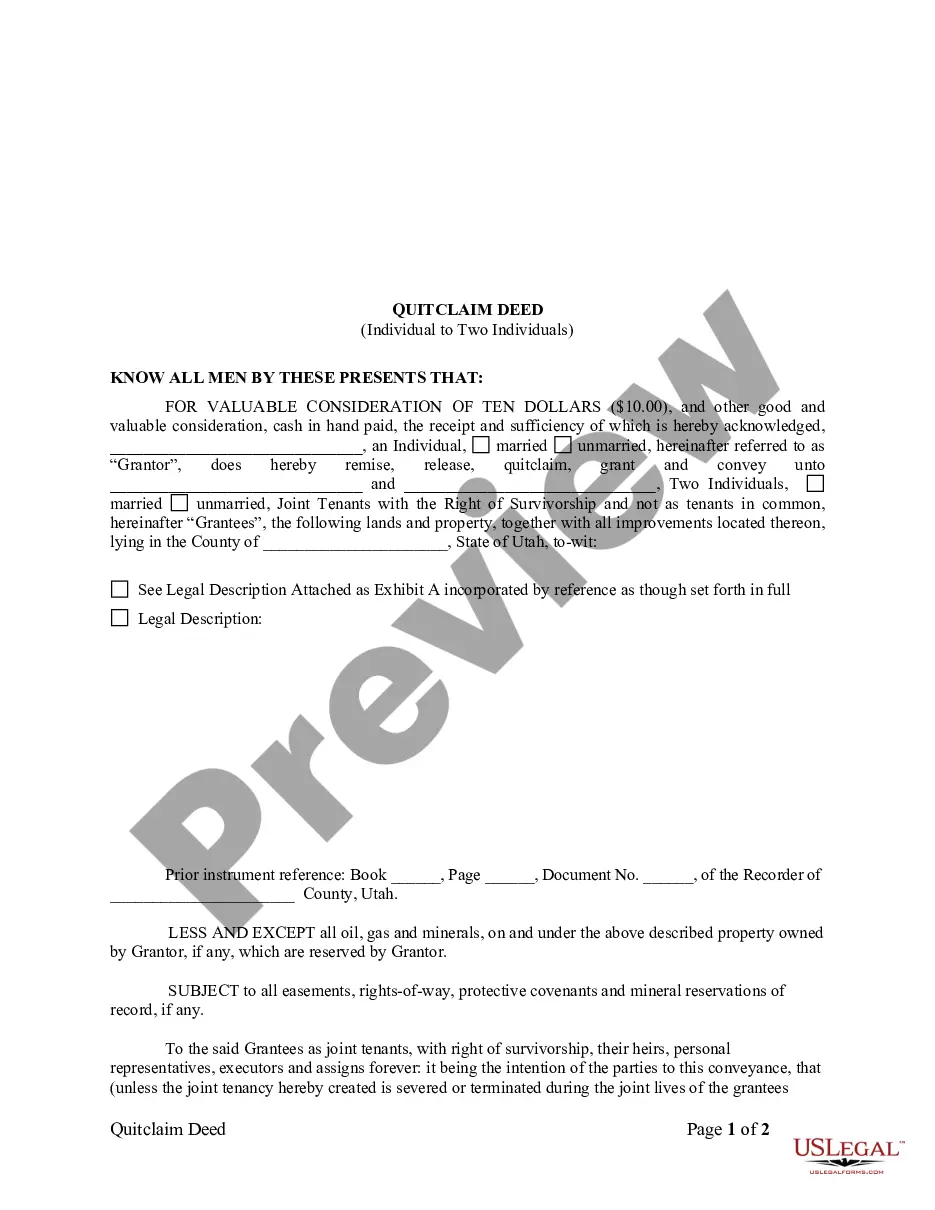
- Description of the property being transferred, including a legal description.
- Language confirming the type of ownership: joint tenants with rights of survivorship or tenants in common.
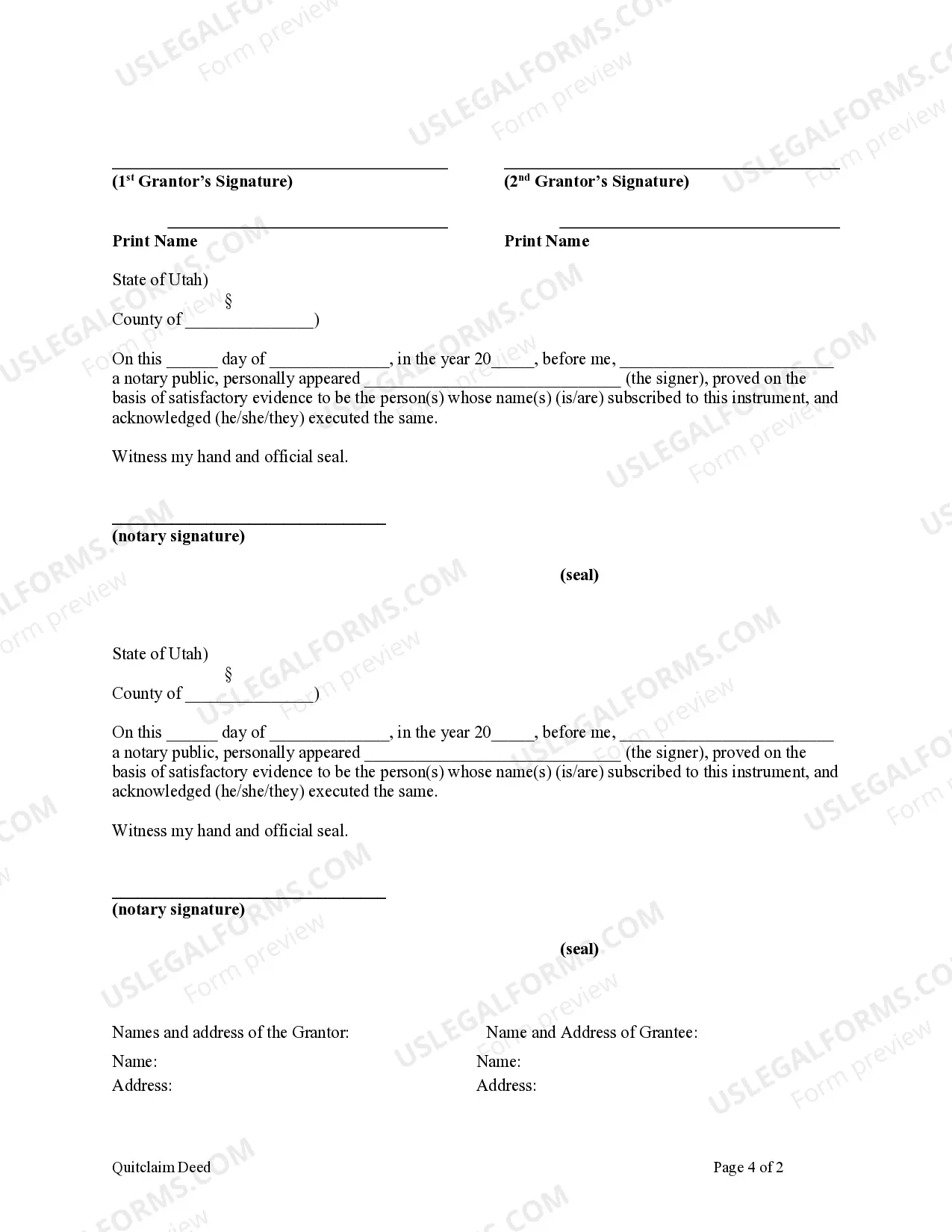
- Signatures of all parties involved, which are crucial for the validity of the deed.
- Compliance with state-specific statutory laws, particularly for the State of Utah.



When to use this document
This form should be used when two individuals wish to transfer ownership of a property to two other individuals. Common scenarios include family members gifting property to each other, or co-owners deciding to change how they hold title to a property. It's also beneficial during estate planning or when simplifying property ownership arrangements.
Who should use this form
- Individuals transferring property between family members or friends.
- Co-owners of real estate who want to change their ownership structure.
- Anyone involved in informal property transfers without the need for a warranty deed.
- Individuals seeking to clarify joint ownership or tenancy arrangements.
Instructions for completing this form
- Identify the Grantors and Grantees by full names and addresses.
- Provide a detailed legal description of the property being transferred.
- Specify whether the Grantees will hold the property as joint tenants with the right of survivorship or as tenants in common.
- Have all parties sign the document in the designated signature fields.
- Consider notating the date of the transfer for record-keeping purposes.
Does this document require notarization?
To make this form legally binding, it must be notarized. Our online notarization service, powered by Notarize, lets you verify and sign documents remotely through an encrypted video session.
Get your form ready online
Our built-in tools help you complete, sign, share, and store your documents in one place.
Make edits, fill in missing information, and update formatting in US Legal Forms—just like you would in MS Word.
Download a copy, print it, send it by email, or mail it via USPS—whatever works best for your next step.
Sign and collect signatures with our SignNow integration. Send to multiple recipients, set reminders, and more. Go Premium to unlock E-Sign.
If this form requires notarization, complete it online through a secure video call—no need to meet a notary in person or wait for an appointment.
We protect your documents and personal data by following strict security and privacy standards.

Make edits, fill in missing information, and update formatting in US Legal Forms—just like you would in MS Word.

Download a copy, print it, send it by email, or mail it via USPS—whatever works best for your next step.

Sign and collect signatures with our SignNow integration. Send to multiple recipients, set reminders, and more. Go Premium to unlock E-Sign.

If this form requires notarization, complete it online through a secure video call—no need to meet a notary in person or wait for an appointment.

We protect your documents and personal data by following strict security and privacy standards.
Mistakes to watch out for
- Failing to include complete information for all parties involved.
- Not providing a sufficient legal description of the property.
- Omitting signatures from all necessary parties.
- Incorrectly indicating the type of ownership arrangement.
- Not recording the deed in the appropriate local government office after completion.
Benefits of using this form online
- Convenient access to legal form templates drafted by licensed attorneys.
- Edit and fill the form digitally, ensuring clarity and accuracy.
- Instant download and printing options, allowing immediate use.
- Compliance with state laws, minimizing risks associated with improper paperwork.
Looking for another form?

Form popularity
FAQ
A person who signs a quitclaim deed to transfer property they do not own results in no title at all being transferred since there is no actual ownership interest. The quitclaim deed only transfers the type of title you own.
To use a Quitclaim Deed to add someone to a property deed or title, you would need to create a Quitclaim Deed and list all of the current owners in the grantor section. In the grantee section, you would list all of the current owners as well as the person you would like to add.
Discuss property ownership interests. Access a copy of your title deed. Complete, review and sign the quitclaim or warranty form. Submit the quitclaim or warranty form. Request a certified copy of your quitclaim or warranty deed.
There will be a $30 recording fee. If you prepare a quitclaim deed using the Do-It-Yourself Quitclaim Deed (after Divorce) tool, detailed instructions on what to do next will print out along with the deed.
But you might be wondering if an owner can transfer a deed to another person without a real estate lawyer. The answer is yes. Parties to a transaction are always free to prepare their own deeds.A quitclaim deed, for example, is far simpler than a warranty deed.
Step 1: Download a free Quit Claim Deed form online or pick up one from your local county recorder's office. Step 2: Completely fill in the names, addresses, and contact information of the seller and the buyer using black ink. Step 3: Include the full legal description of the property.
The Quit Claim Deed form uses the terms of Grantor (Seller or Owner of said property) and Grantee (Buyer of said property) for the two parties involved. First, the parties must fill in the date. Then, write in the name of the county and state in which the property is located.
The only way to forcibly change the ownership status is through a legal action and the resultant court order. However, if an owner chooses to be removed from the deed, it is simply a matter of preparing a new deed transferring that owner's interest in the property.