Interstate Transmission of a Demand for Ransom for Return of a Kidnapped Person
What this document covers
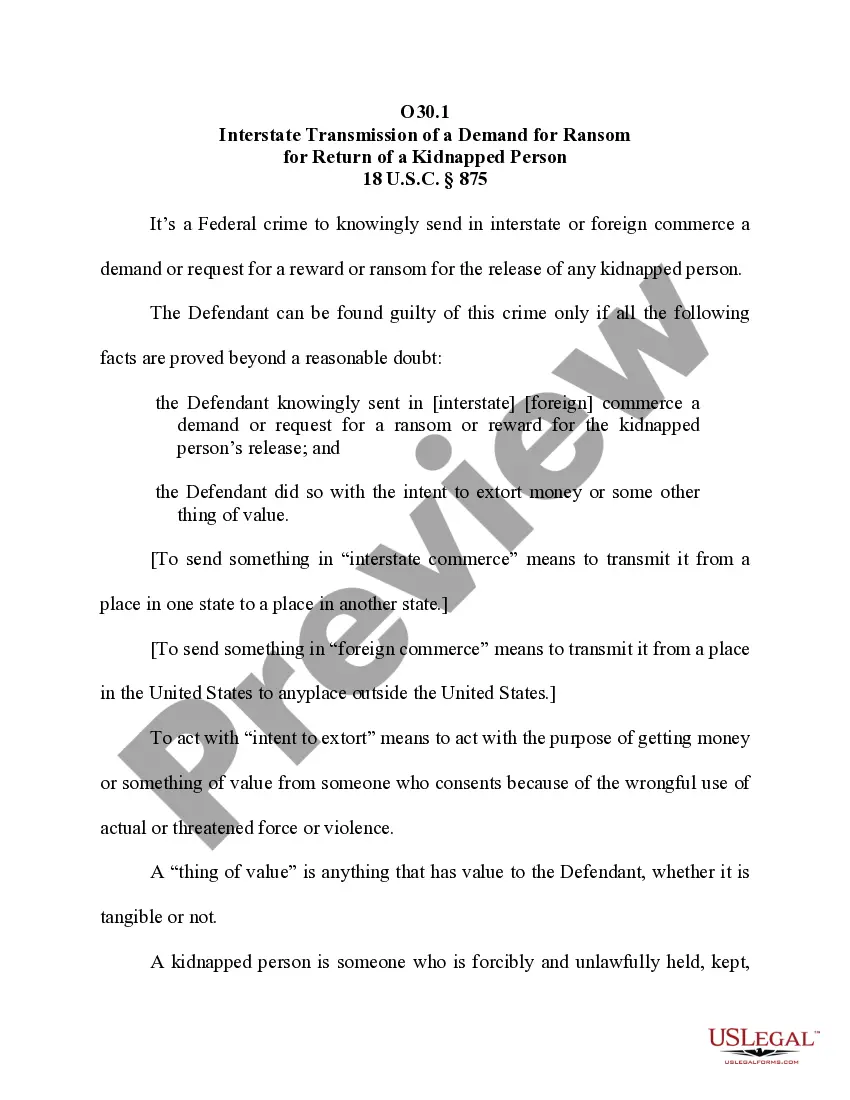
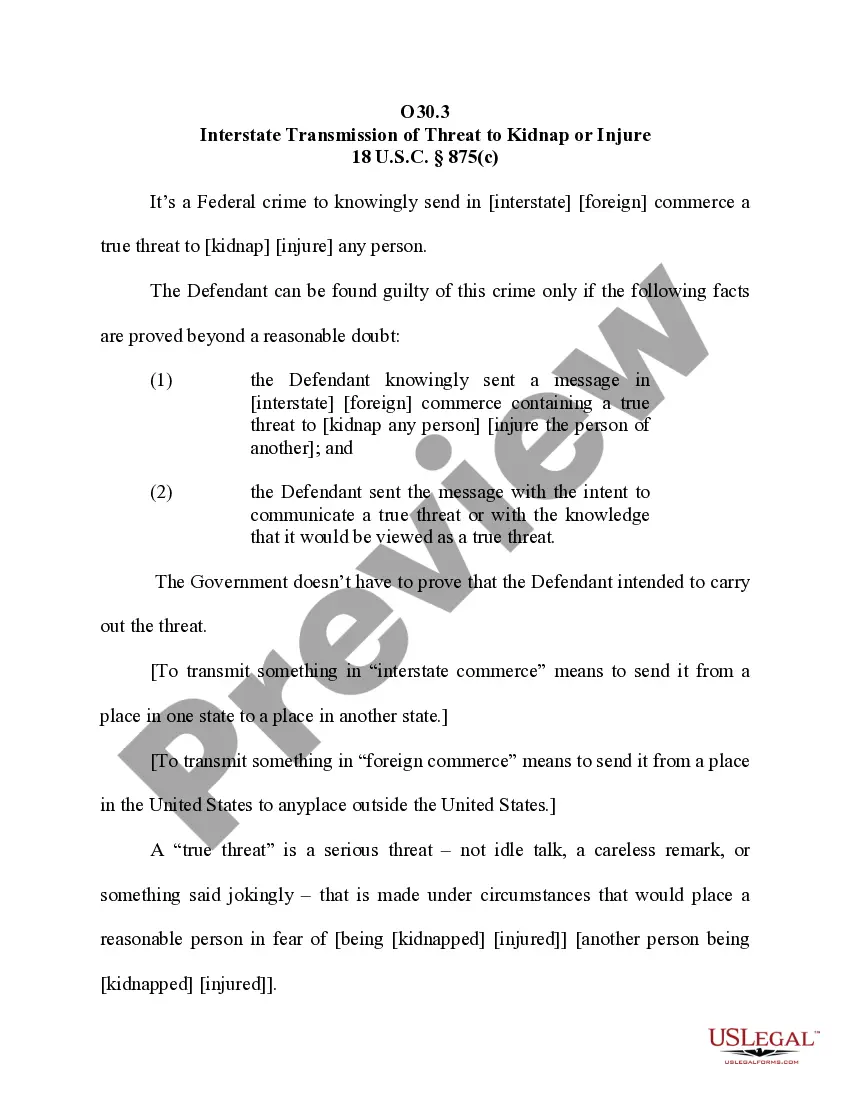
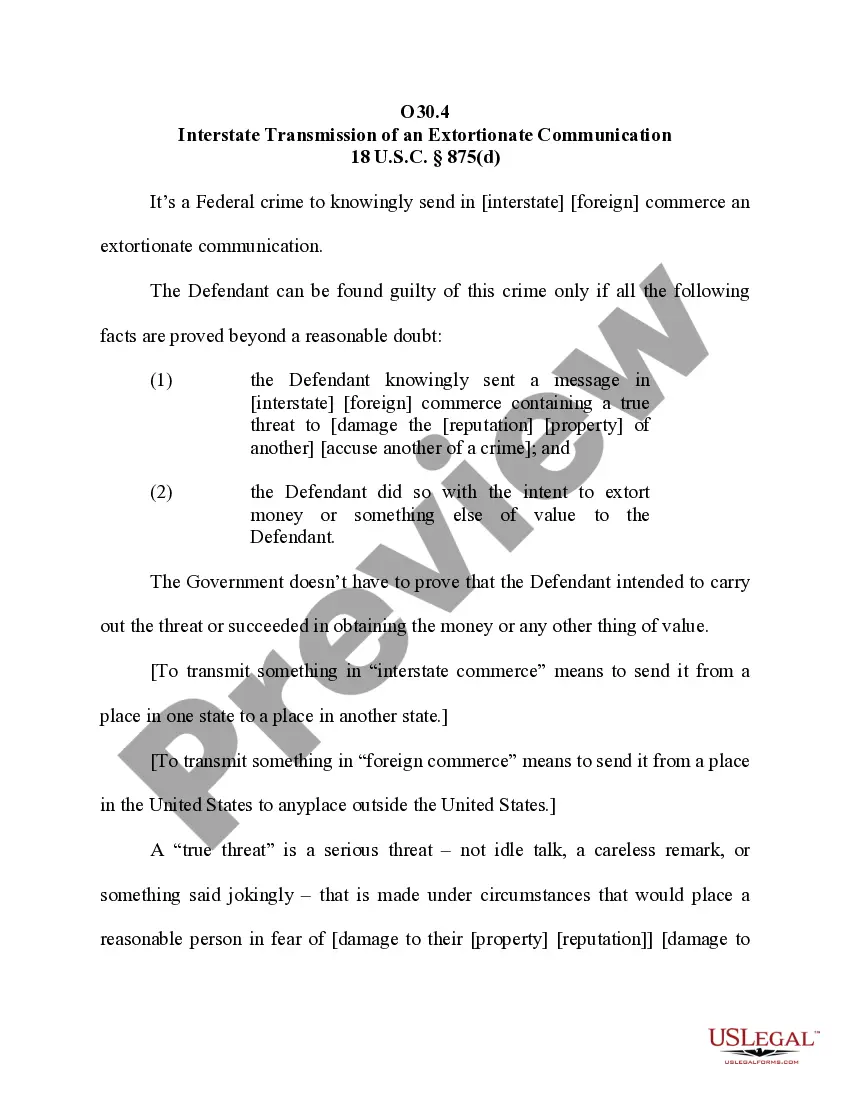
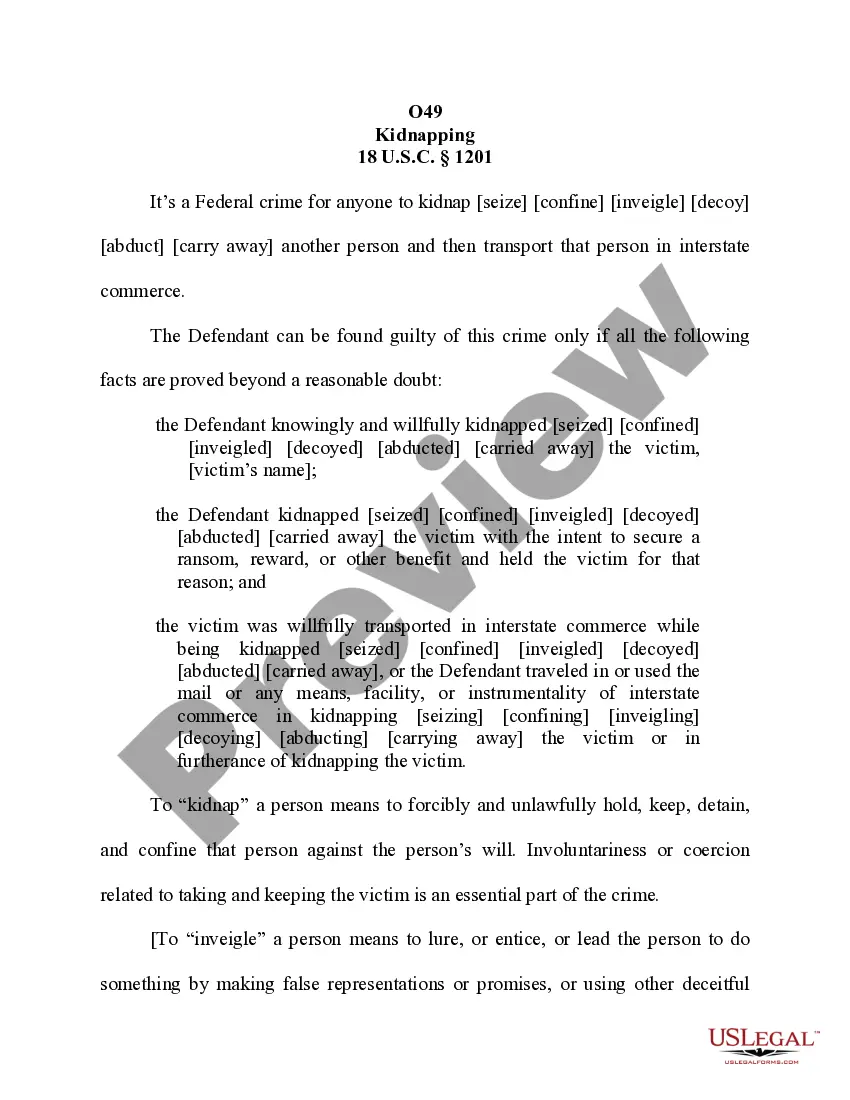
The Interstate Transmission of a Demand for Ransom for Return of a Kidnapped Person form is a legal document used in the context of federal law addressing ransom demands related to kidnappings. This form outlines the elements that must be proven for a defendant to be found guilty of extorting a ransom across state or international borders. It is distinct from other legal forms related to kidnapping or extortion because it specifically focuses on the communication of ransom demands and the requirements for establishing intent to extort.
Form components explained
- Definitions of key terms such as "Interstate commerce," "foreign commerce," and "intent to extort."
- Requirements for proving that the defendant knowingly sent a ransom demand.
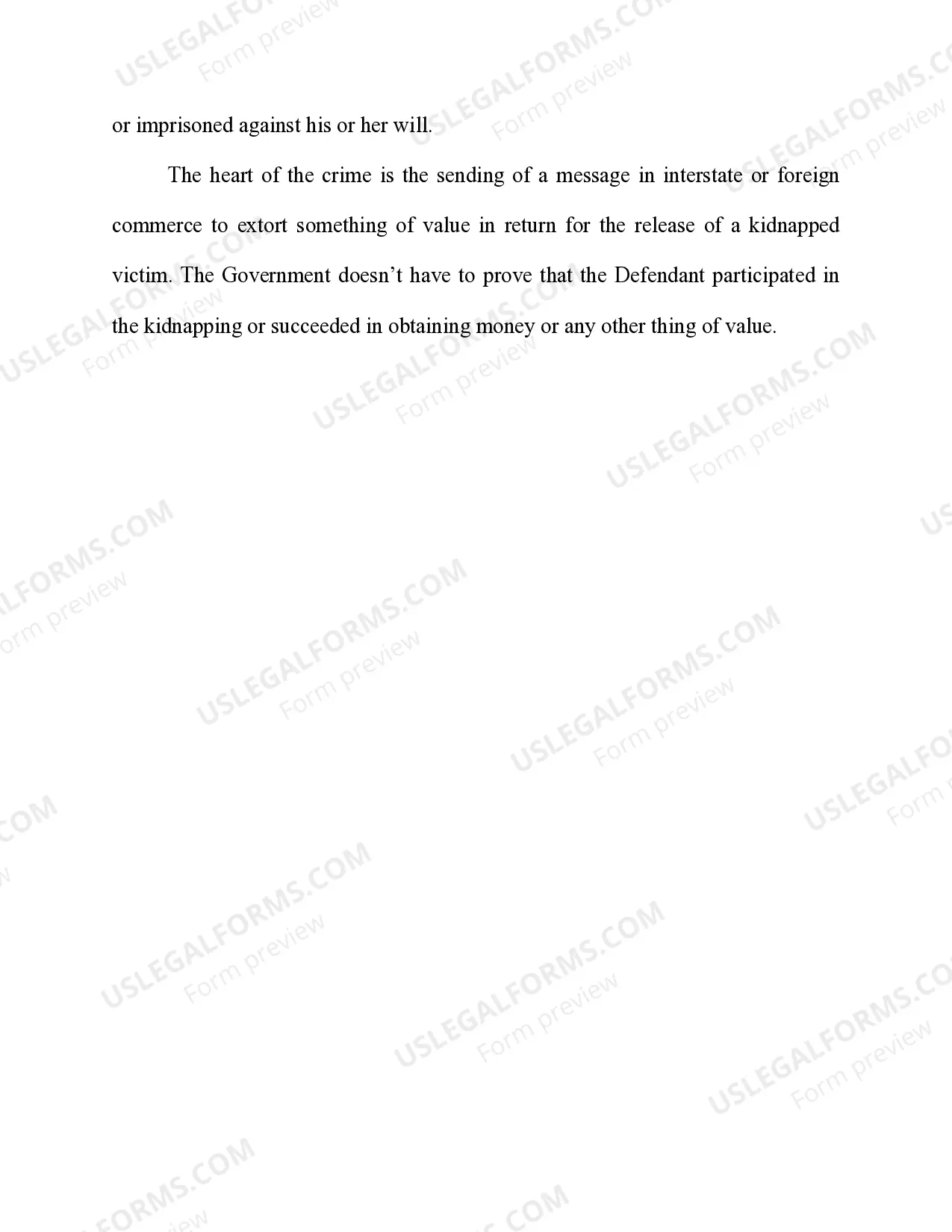
- Clarification on what constitutes a "thing of value" and a "kidnapped person."
- Explanation of the legal responsibility of the government in proving the defendant's guilt.
When this form is needed
This form is applicable in situations involving a ransom demand for the release of a kidnapped individual. It is typically used when a person has been unlawfully detained, and there is intent to extort funds or valuables for their release. If you are involved in a case where such a demand has been made or received, this form will help clarify the legal implications of the actions taken.
Who can use this document
- Legal professionals representing clients in cases related to kidnapping and extortion.
- Individuals who have been accused of making a ransom demand or are involved in investigations related to kidnapping cases.
- Law enforcement agencies seeking to understand the legal framework surrounding ransom demands in kidnapping cases.
How to prepare this document
- Identify the parties involved in the case, including the defendant and the kidnapped victim.
- Specify whether the ransom demand was sent in interstate or foreign commerce.
- Clearly state the content of the demand, ensuring it reflects intent to extort.
- Confirm the definitions of key terms as provided in the form.
- Review the requirements to understand the elements necessary for a legal interpretation.
Notarization requirements for this form
This form does not typically require notarization to be legally valid. However, some jurisdictions or document types may still require it. US Legal Forms provides secure online notarization powered by Notarize, available 24/7 for added convenience.
Get your form ready online
Our built-in tools help you complete, sign, share, and store your documents in one place.
Make edits, fill in missing information, and update formatting in US Legal Forms—just like you would in MS Word.
Download a copy, print it, send it by email, or mail it via USPS—whatever works best for your next step.
Sign and collect signatures with our SignNow integration. Send to multiple recipients, set reminders, and more. Go Premium to unlock E-Sign.
If this form requires notarization, complete it online through a secure video call—no need to meet a notary in person or wait for an appointment.
We protect your documents and personal data by following strict security and privacy standards.

Make edits, fill in missing information, and update formatting in US Legal Forms—just like you would in MS Word.

Download a copy, print it, send it by email, or mail it via USPS—whatever works best for your next step.

Sign and collect signatures with our SignNow integration. Send to multiple recipients, set reminders, and more. Go Premium to unlock E-Sign.

If this form requires notarization, complete it online through a secure video call—no need to meet a notary in person or wait for an appointment.

We protect your documents and personal data by following strict security and privacy standards.
Common mistakes
- Failing to establish clear intent to extort in the ransom demand.
- Misunderstanding the definitions of interstate and foreign commerce.
- Omitting key details about the kidnapping that could affect the case.
Why complete this form online
- Easy access and immediate download, allowing for quick preparation of the form.
- Editability to customize the form as per unique case requirements.
- Reliability, as the form is drafted by licensed attorneys to ensure legal compliance.
Legal use & context
- Federal law governs the offense of making a ransom demand across state lines.
- Failure to comply with the legal requirements outlined may result in different legal consequences.
Quick recap
- This form addresses the nuances of interstate ransom demands in kidnapping cases.
- Understanding key legal definitions is essential for proper use.
- It's crucial to establish intent and the nature of the communications involved.
Legal terms and meanings
- Interstate commerce: The movement of goods or messages between different states.
- Foreign commerce: Trade or communication that occurs between the United States and other countries.
- Intent to extort: The purpose of obtaining money or another type of value through threats or actual force.
- Thing of value: Any item or benefit that has worth to the party involved in the transaction.
- Kidnapped person: An individual unlawfully confined or held against their will.
Looking for another form?


Form popularity
FAQ
Threatening the president of the United States is a federal felony under United States Code Title 18, Section 871. It consists of knowingly and willfully mailing or otherwise making "any threat to take the life of, to kidnap, or to inflict great bodily harm upon the president of the United States".
Section 875 of Title 18 prohibits the transmission in interstate or foreign commerce of: (1) any demand or request for ransom or reward for the release of any kidnapped person; (2) a threat to kidnap or injure any person, either with or without the intent to extort; or (3) with intent to extort, a threat to injure the
Threatening the government officials of the United States is a felony under federal law. Threatening the president of the United States is a felony under 18 U.S.C. § 871, punishable by up to 5 years of imprisonment, that is investigated by the United States Secret Service.
The term ?interstate communication? or ?interstate transmission? means communication or transmission (A) from any State, Territory, or possession of the United States (other than the Canal Zone), or the District of Columbia, to any other State, Territory, or possession of the United States (other than the Canal Zone),
Interstate communications. (a) Whoever transmits in interstate or foreign commerce any communication containing any demand or request for a ransom or reward for the release of any kidnapped person, shall be fined under this title or imprisoned not more than twenty years, or both.
Section 875 of Title 18 prohibits the transmission in interstate or foreign commerce of: (1) any demand or request for ransom or reward for the release of any kidnapped person; (2) a threat to kidnap or injure any person, either with or without the intent to extort; or (3) with intent to extort, a threat to injure the
875(c), which provides that any individual who "transmits in interstate or foreign commerce any communication containing any threat to ? injure the person of another" is guilty of a felony and faces up to five years in prison.