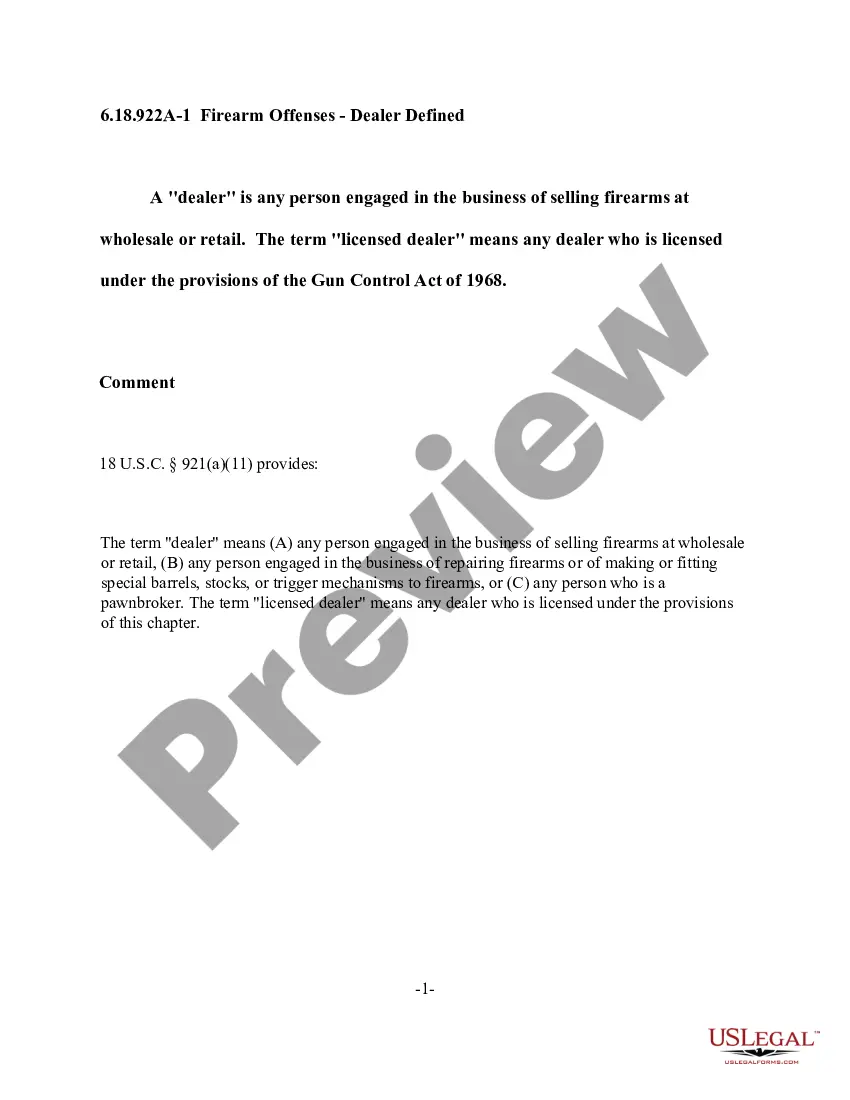
Firearm Offenses - Dealer Defined
What this document covers
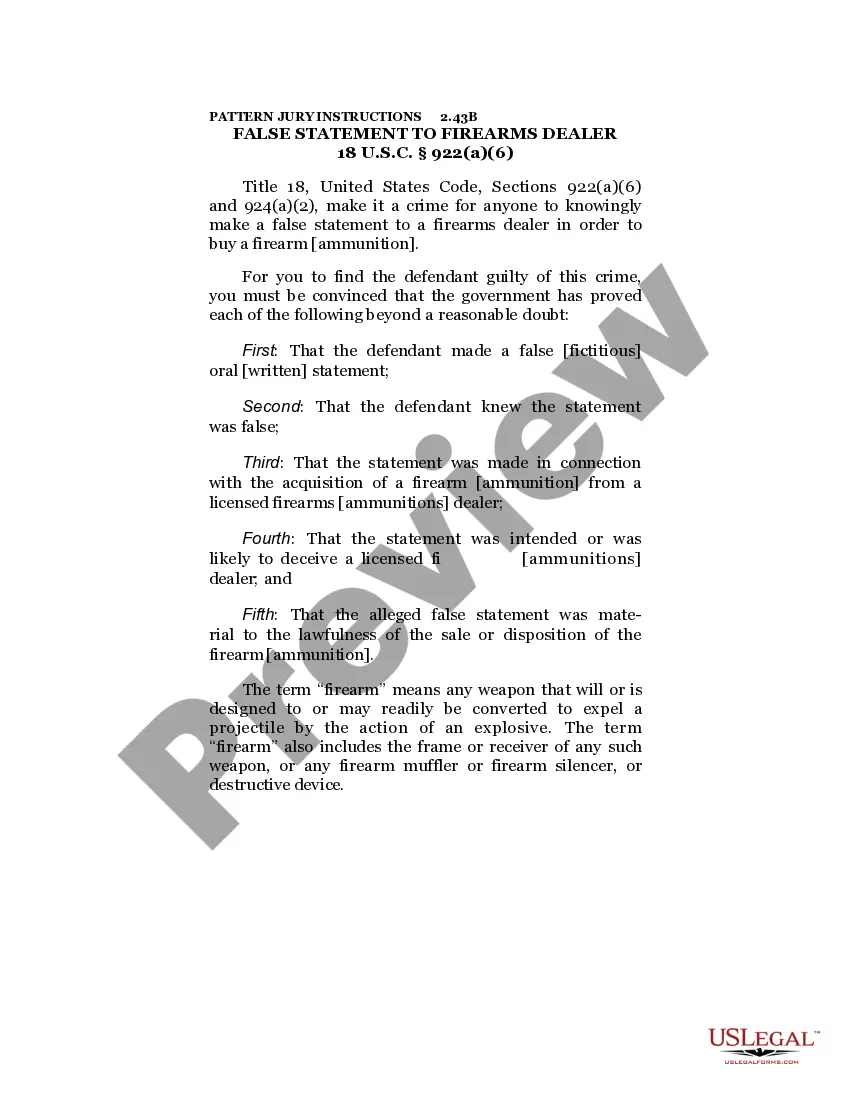
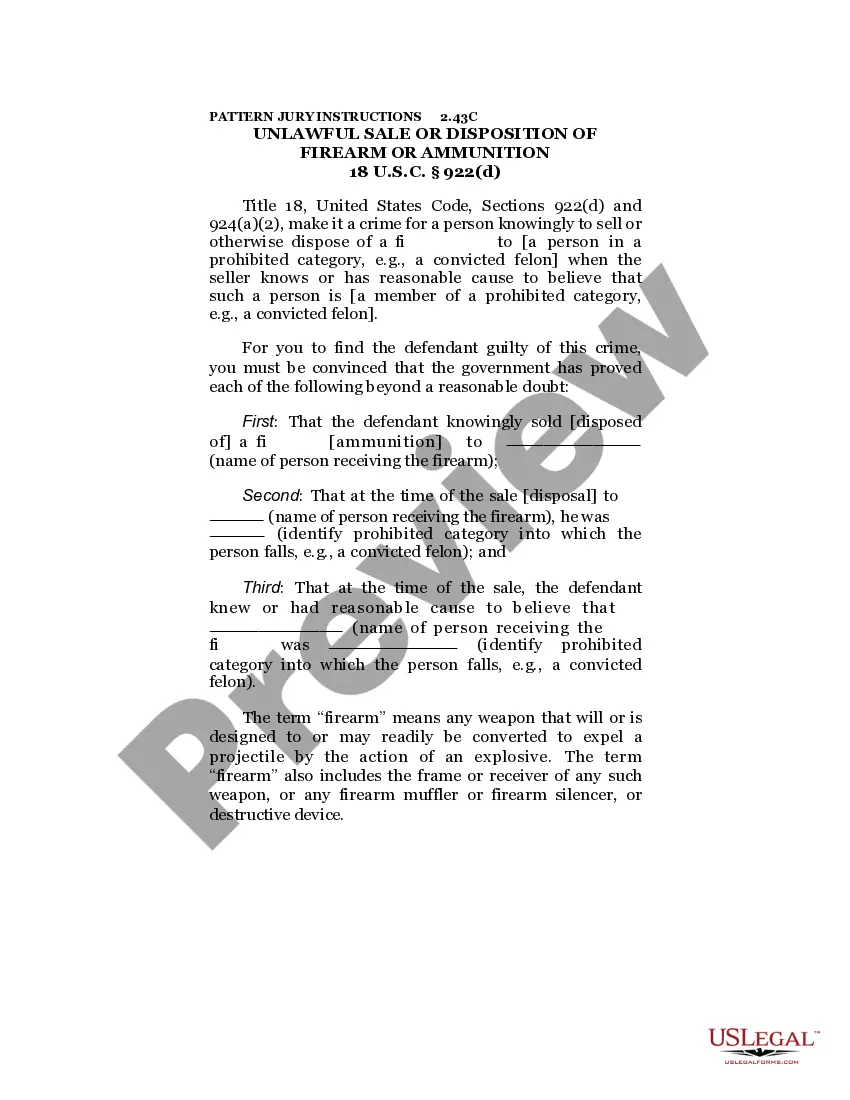
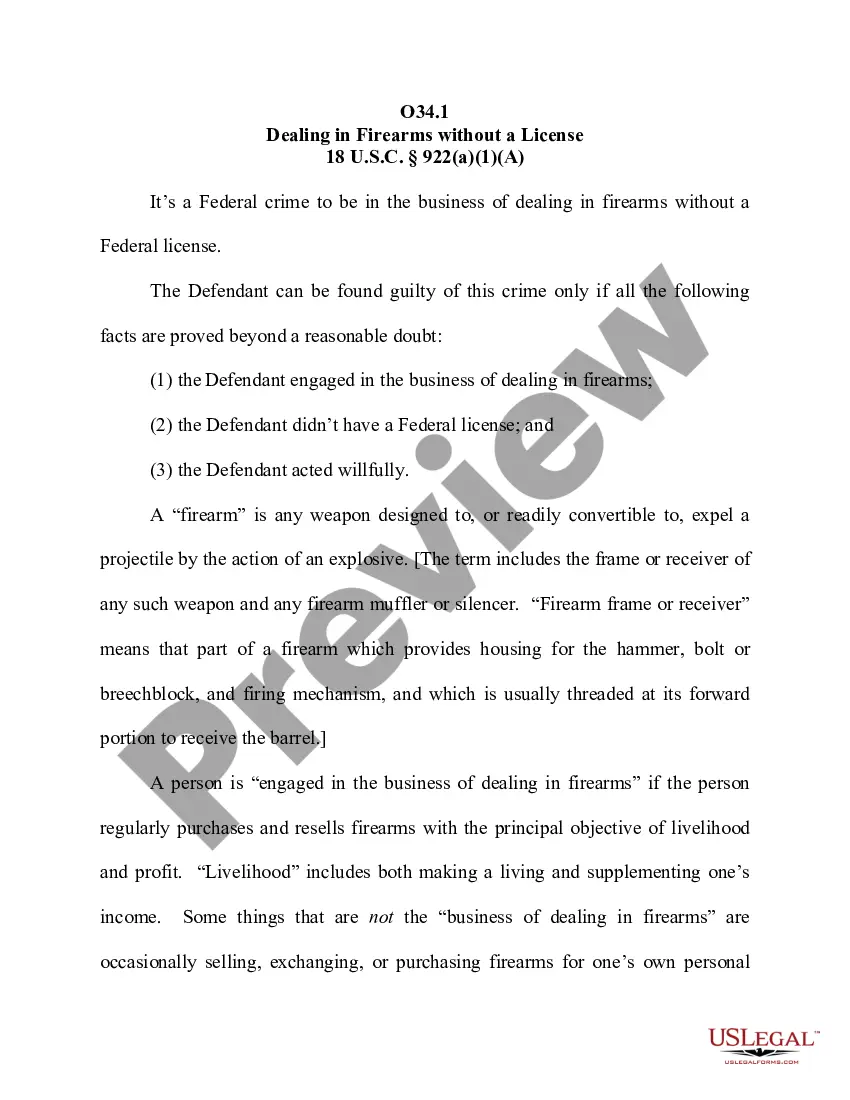
The Firearm Offenses - Dealer Defined form clarifies the legal definition of a "dealer" in the context of firearm sales. This form is important for ensuring compliance with the Gun Control Act of 1968. It distinguishes between licensed and unlicensed dealers and outlines the responsibilities associated with these classifications. It is vital for individuals and businesses engaged in selling or repairing firearms to understand these definitions to avoid legal issues.
Key parts of this document
- Definition of a "dealer" as per federal law.
- Clarification of responsibilities for licensed dealers under the Gun Control Act.
- Specifications about who qualifies as a dealer, including pawnbrokers and those engaged in repairs.
When to use this form
This form should be used in situations where clarification of the dealer status is necessary, such as when applying for a firearms dealer license, or when ensuring compliance with federal regulations regarding the sale and repair of firearms. It is particularly relevant for individuals or businesses planning to enter the firearms sales industry.
Who should use this form
- Individuals seeking to obtain a firearms dealer license.
- Business owners planning to engage in the wholesale or retail sale of firearms.
- Pawnbrokers who deal with firearm transactions.
- Gunsmiths and repairers of firearms.
Instructions for completing this form
- Read the definition of "dealer" and ensure understanding.
- Determine if your business or activity meets the criteria outlined.
- Identify whether you need to apply for a license based on your classification.
- Gather any required documents for the licensing process.
- Consult local laws for any additional requirements you may need to fulfill.
Does this form need to be notarized?
Notarization is generally not required for this form. However, certain states or situations might demand it. You can complete notarization online through US Legal Forms, powered by Notarize, using a verified video call available anytime.
Get your form ready online
Our built-in tools help you complete, sign, share, and store your documents in one place.
Make edits, fill in missing information, and update formatting in US Legal Forms—just like you would in MS Word.
Download a copy, print it, send it by email, or mail it via USPS—whatever works best for your next step.
Sign and collect signatures with our SignNow integration. Send to multiple recipients, set reminders, and more. Go Premium to unlock E-Sign.
If this form requires notarization, complete it online through a secure video call—no need to meet a notary in person or wait for an appointment.
We protect your documents and personal data by following strict security and privacy standards.

Make edits, fill in missing information, and update formatting in US Legal Forms—just like you would in MS Word.

Download a copy, print it, send it by email, or mail it via USPS—whatever works best for your next step.

Sign and collect signatures with our SignNow integration. Send to multiple recipients, set reminders, and more. Go Premium to unlock E-Sign.

If this form requires notarization, complete it online through a secure video call—no need to meet a notary in person or wait for an appointment.

We protect your documents and personal data by following strict security and privacy standards.
Common mistakes
- Failing to verify if the business qualifies as a dealer under federal law.
- Not understanding the differences between licensed and unlicensed dealers.
- Ignoring state regulations that may apply in addition to federal definitions.
Why use this form online
- Convenient access to accurate legal definitions.
- Easy to download and store for personal records.
- Updated to reflect current laws, ensuring legal reliability.
Legal use & context
- This form provides clarity on definitions crucial for compliance with federal firearms laws.
- Understanding the dealer classification helps to avoid legal penalties associated with unlicensed sales.
Key takeaways
- The Firearm Offenses - Dealer Defined form outlines the legal responsibilities of firearm dealers.
- Understanding these definitions is critical for licenses and compliance.
- Always verify local state regulations alongside federal law.
Looking for another form?
Form popularity
FAQ
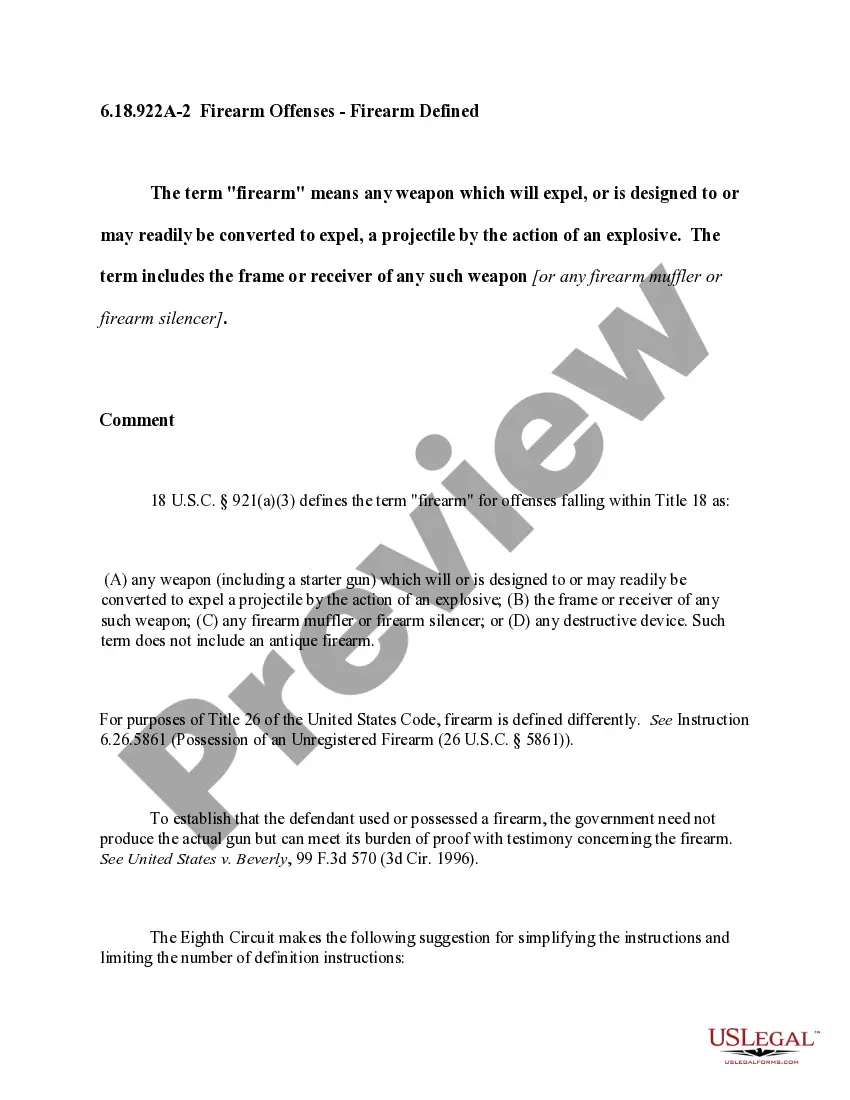
The term ?firearm? means (A) any weapon (including a starter gun) which will or is designed to or may readily be converted to expel a projectile by the action of an explosive; (B) the frame or receiver of any such weapon; (C) any firearm muffler or firearm silencer; or (D) any destructive device.
The crime of unlawful possession of a firearm or ammunition is punishable by imprisonment in the house of correction for not more than 2 years or a fine of not more than $500.
What are weapons offenses? Weapons offenses are violations of statutes or regulations that control deadly weapons. Deadly weapons include firearms and their ammunition, silencers, explosives, and certain knives. About 2% of arrests nation- wide in 1993 were for weapons offenses.
Weapons offenses are violations of statutes or regulations that control deadly weapons. Deadly weapons include firearms and their ammunition, silencers, explosives, and certain knives.
A first offense for a weapons violation carried a jail sentence of six months to 2.5 years in a house of correction or 2.5 to five years in state prison. That said, if you do not have any prior felony convictions on your record, the court does not need to impose any mandatory jail time.
And Explosives (ATF) is the federal agency that administers. and enforces the GCA and licenses FFLs. Section. 921(a)(11) of the GCA defines the term ?dealer? to mean. (A) any person engaged in the business of selling.
Some individuals who illegally possess a firearm in California may be subject to misdemeanor charges. These charges can include up to $1,000 in fines and no more than a year spent in county jail. Individuals illegally possessing a gun may also face a more serious felony charge.
(i) It shall be unlawful for any person to transport or ship in interstate or foreign commerce, any stolen firearm or stolen ammunition, knowing or having reasonable cause to believe that the firearm or ammunition was stolen.