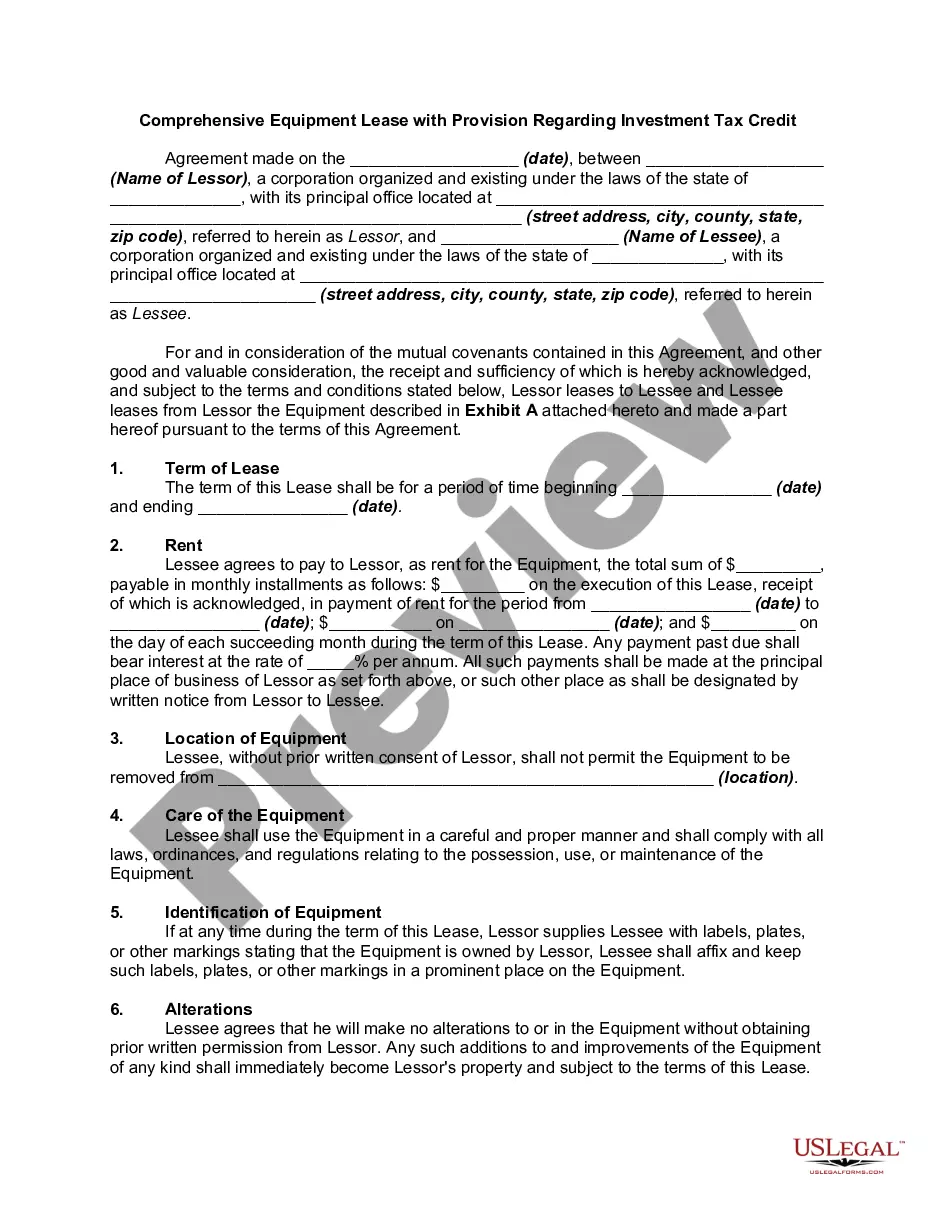
Texas Revocable Living Trust for Husband and Wife with No Children
Overview of this form
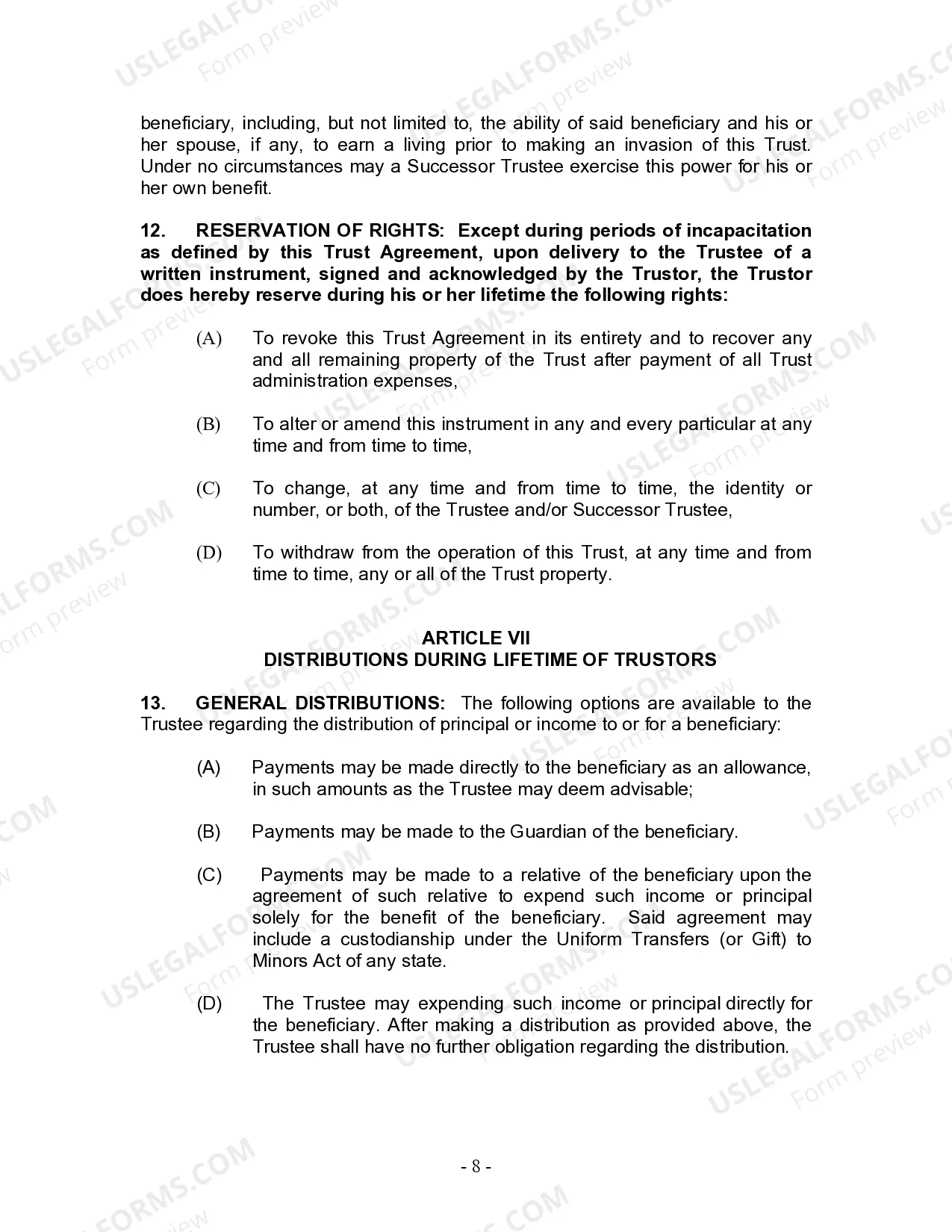
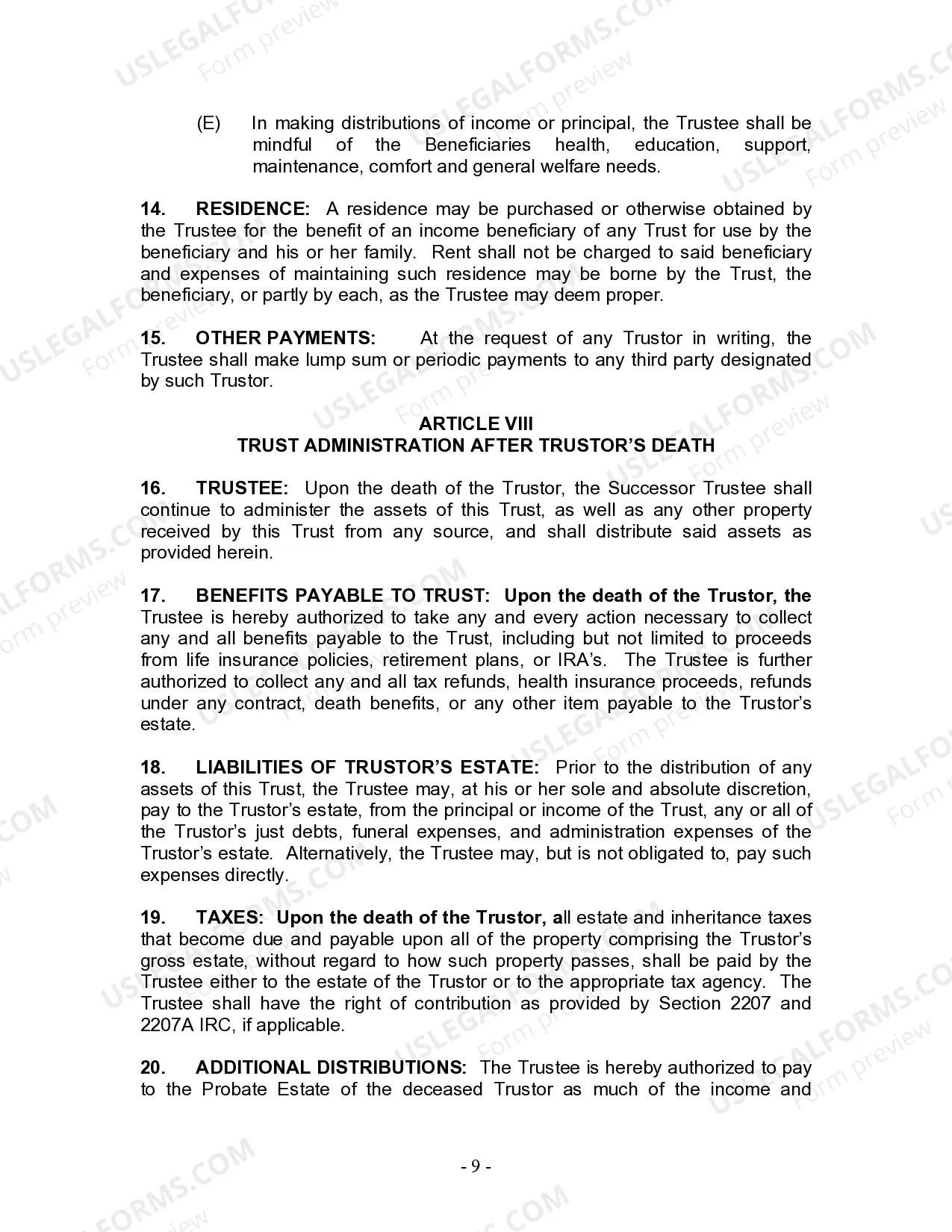
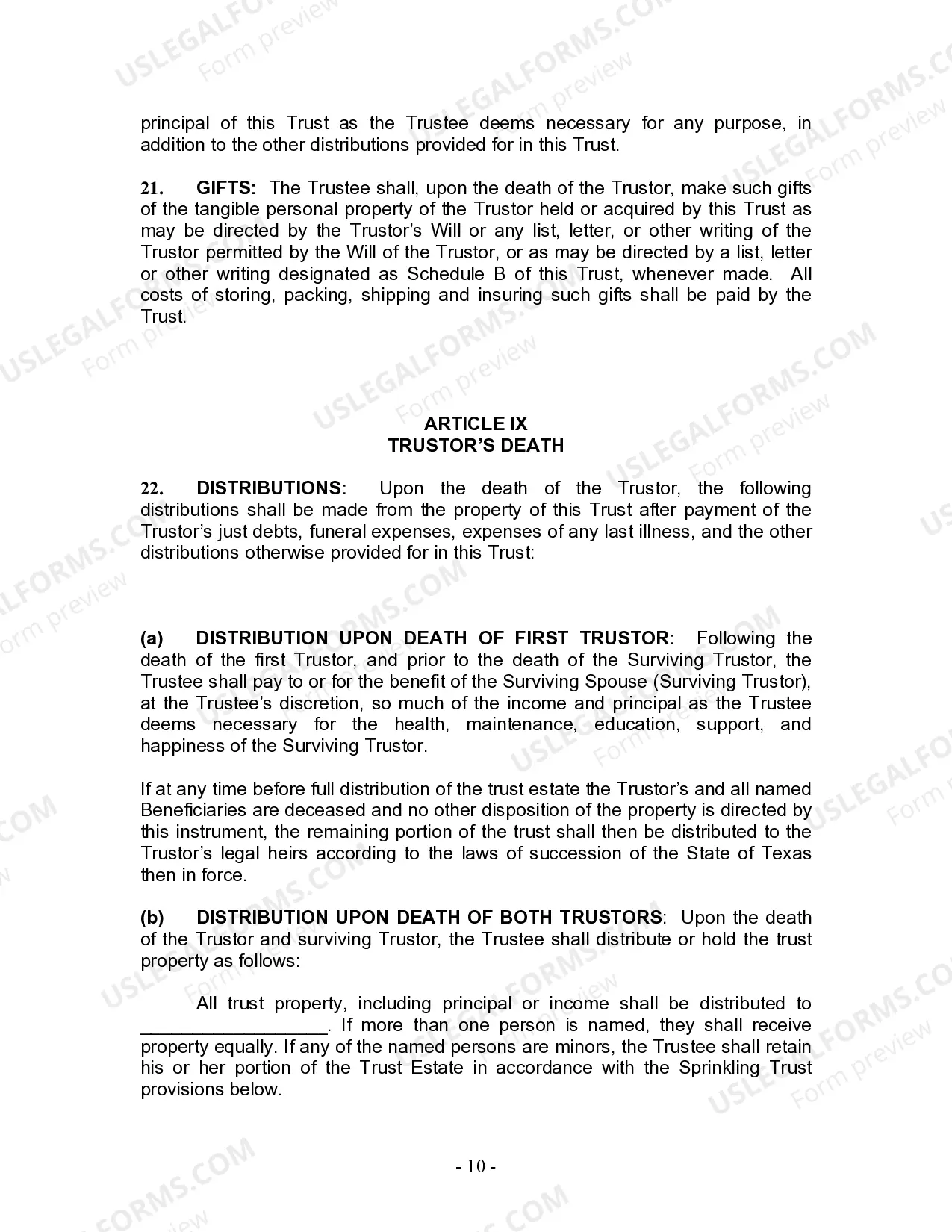
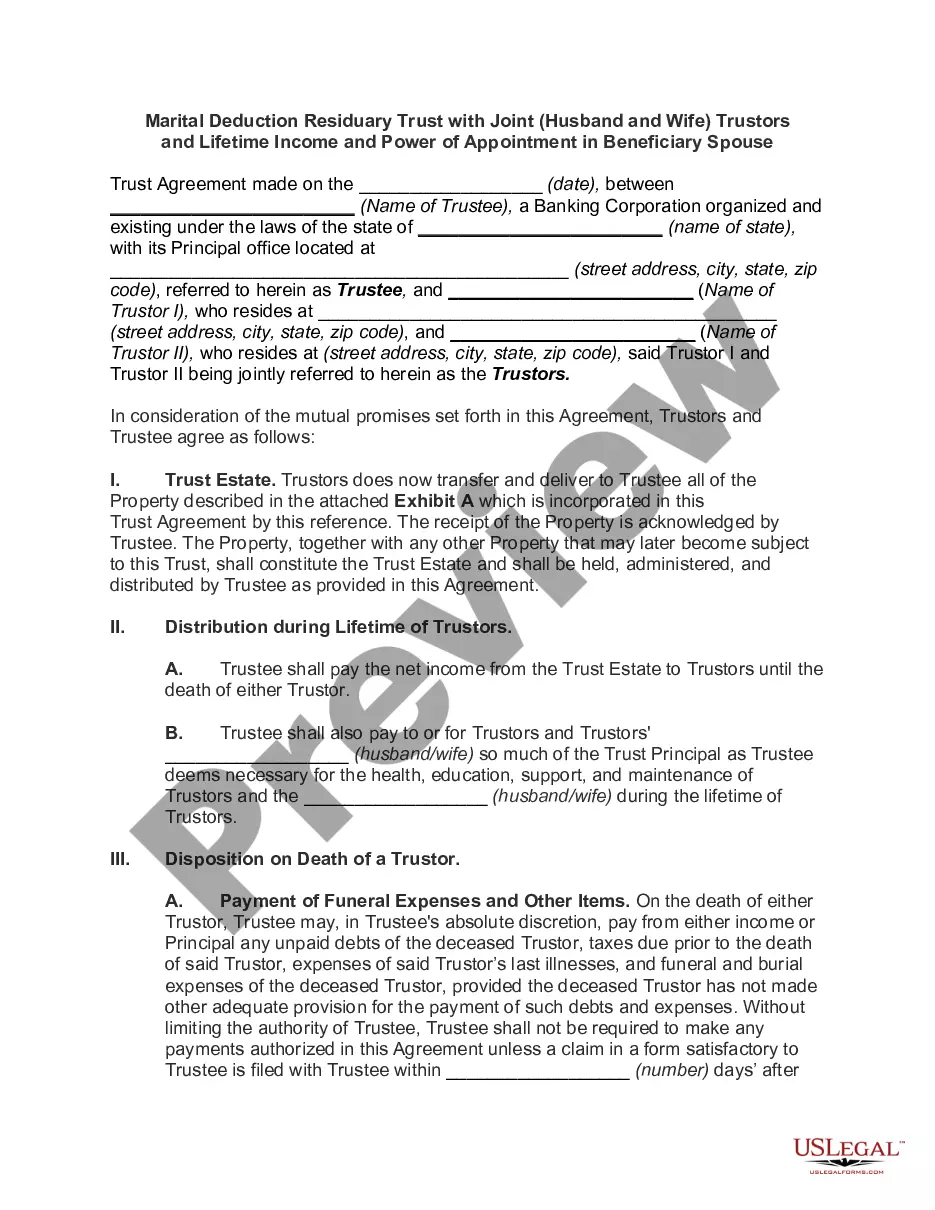
The Revocable Living Trust for Husband and Wife with No Children is a legal document that facilitates estate planning for married couples without children. This living trust allows couples to place their assets into a trust during their lifetime, which they can manage and control while avoiding probate after death. It differs from a last will and testament by providing a more efficient way to manage and distribute assets without court intervention when the trustor passes away.
Main sections of this form
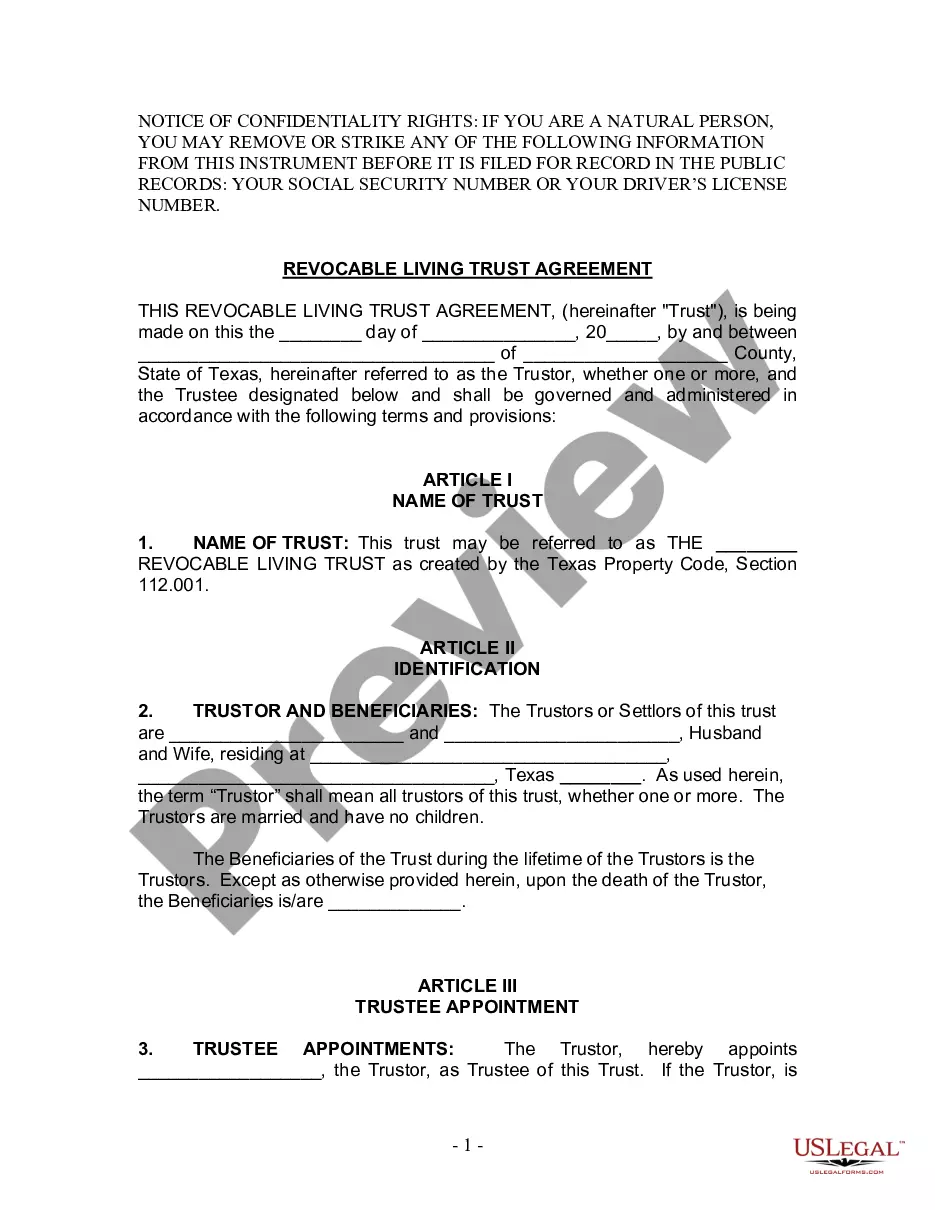
- Name of the trust and identification of trustors
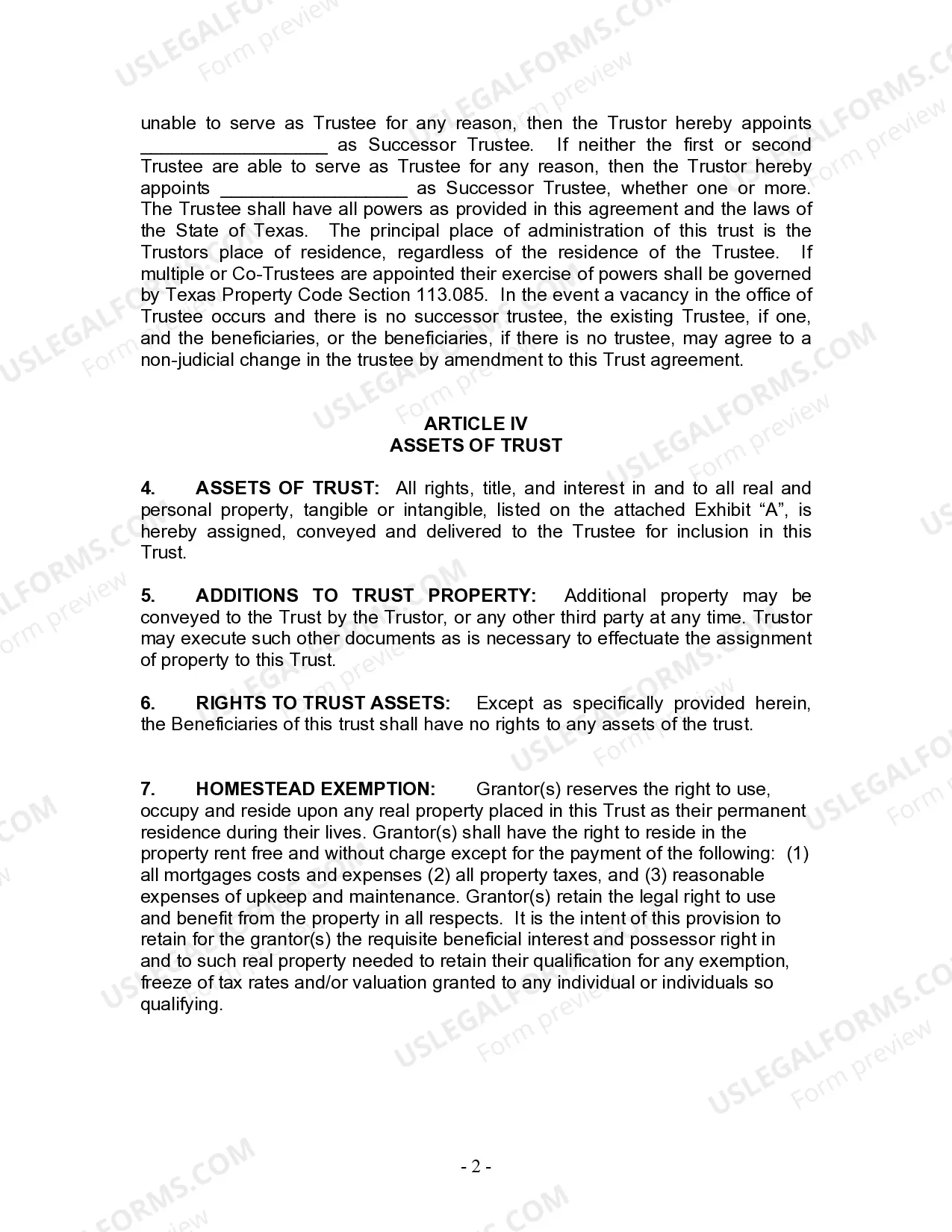
- Appointment of the trustee and successor trustees
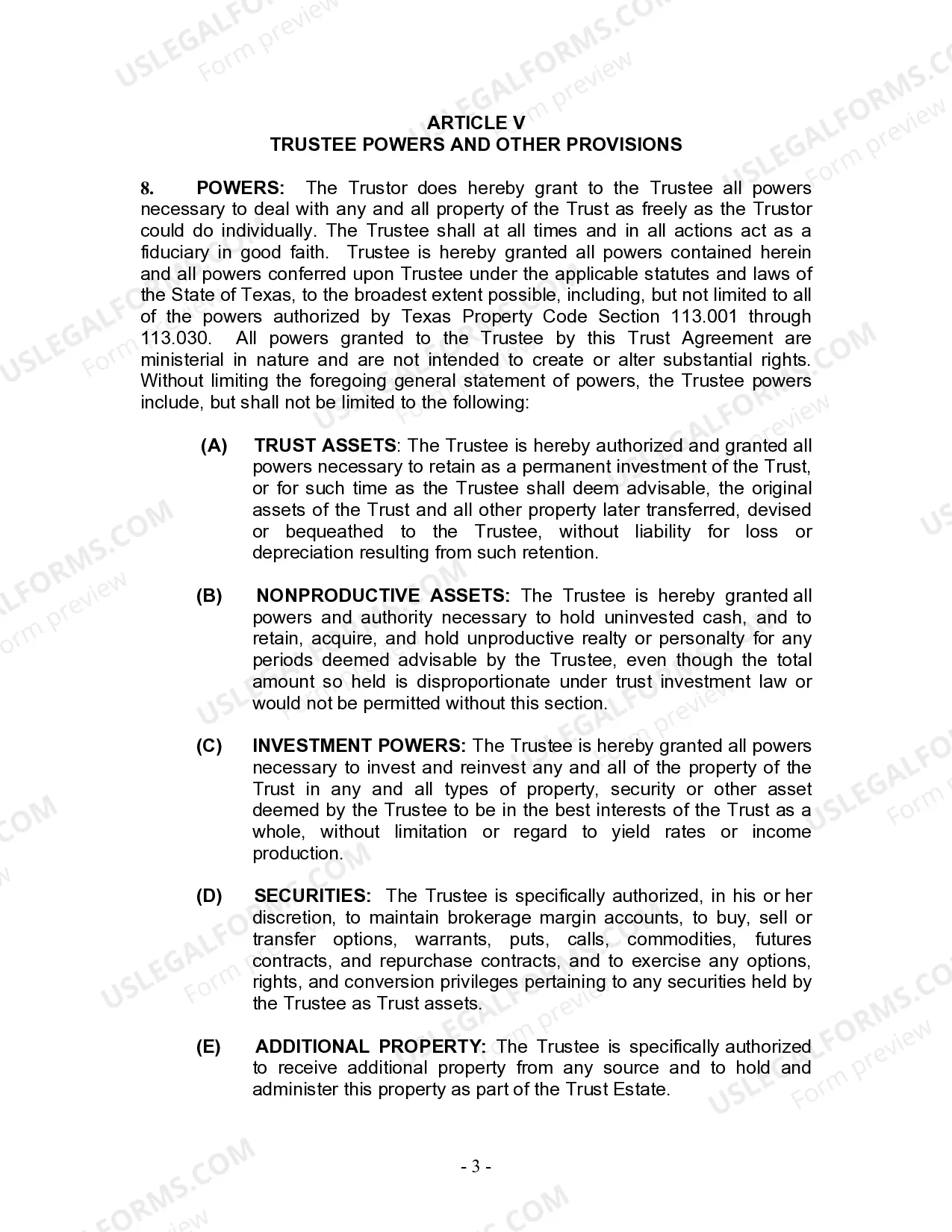
- Detailed descriptions of trust assets
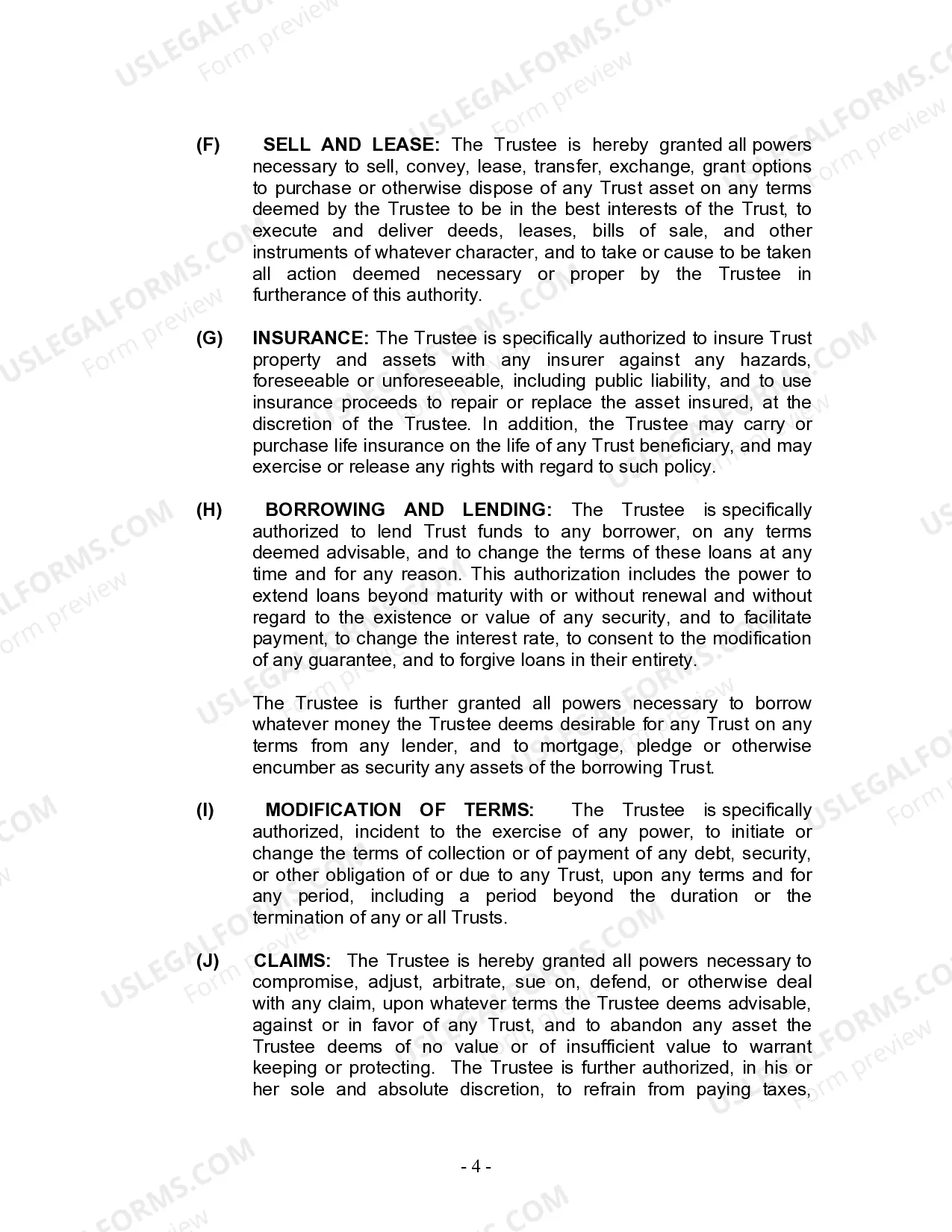
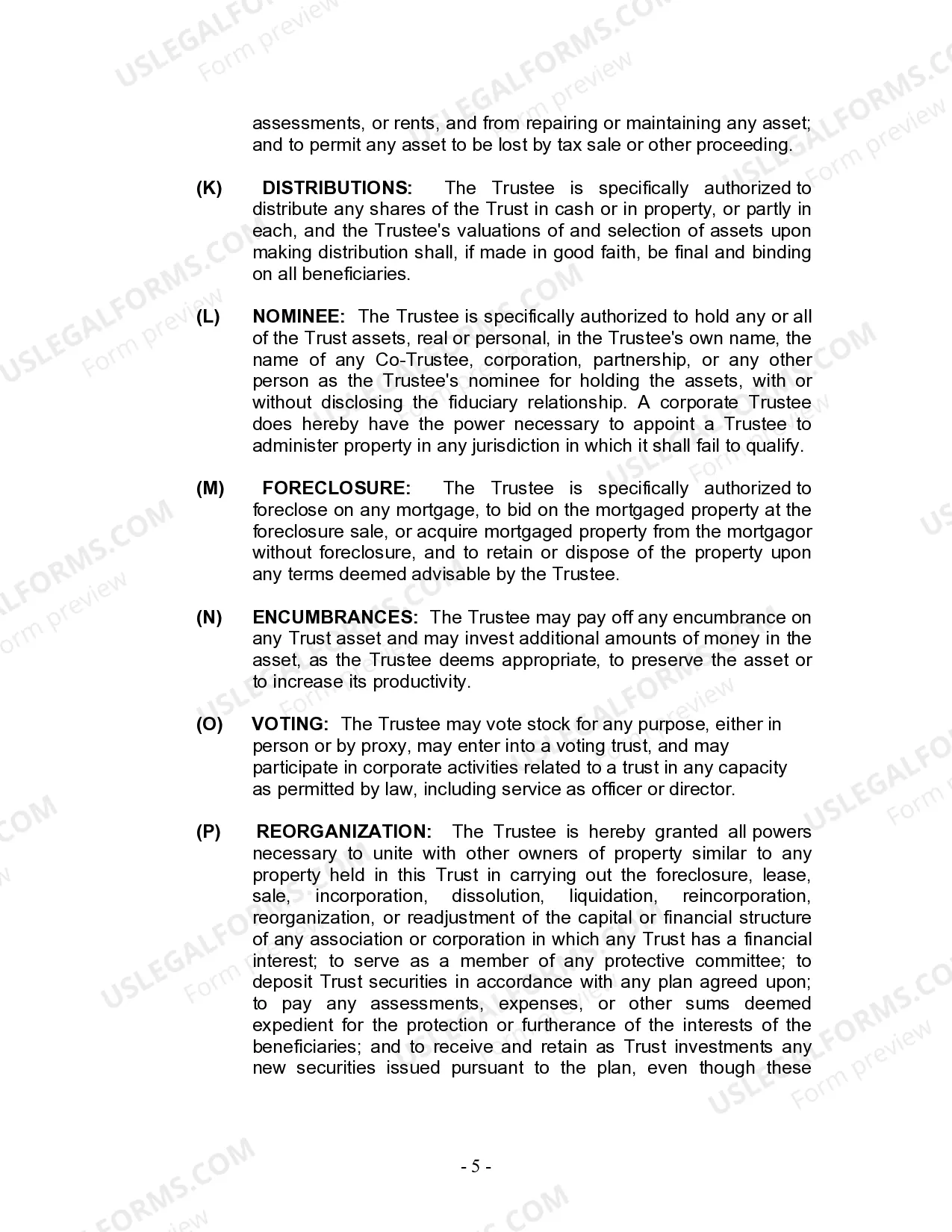
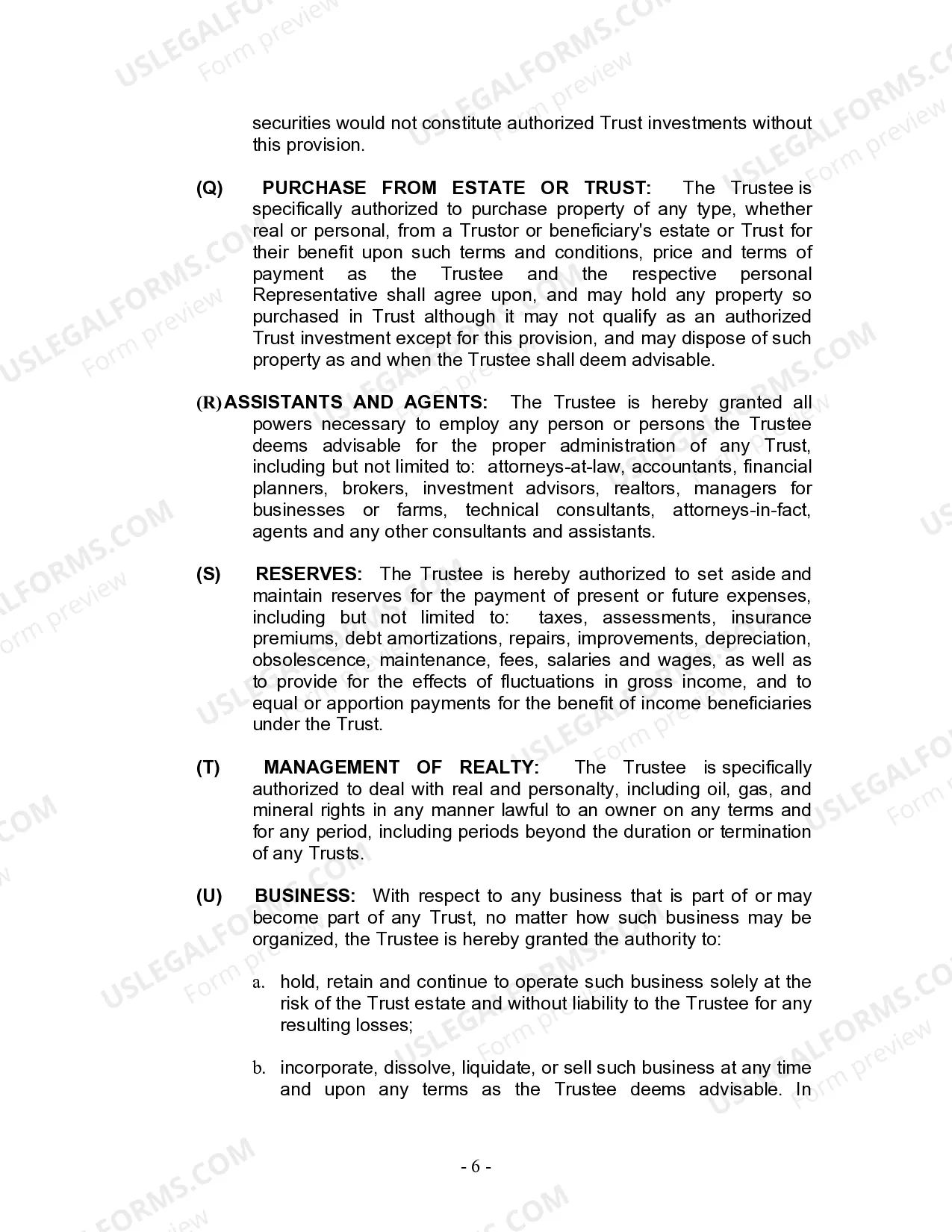
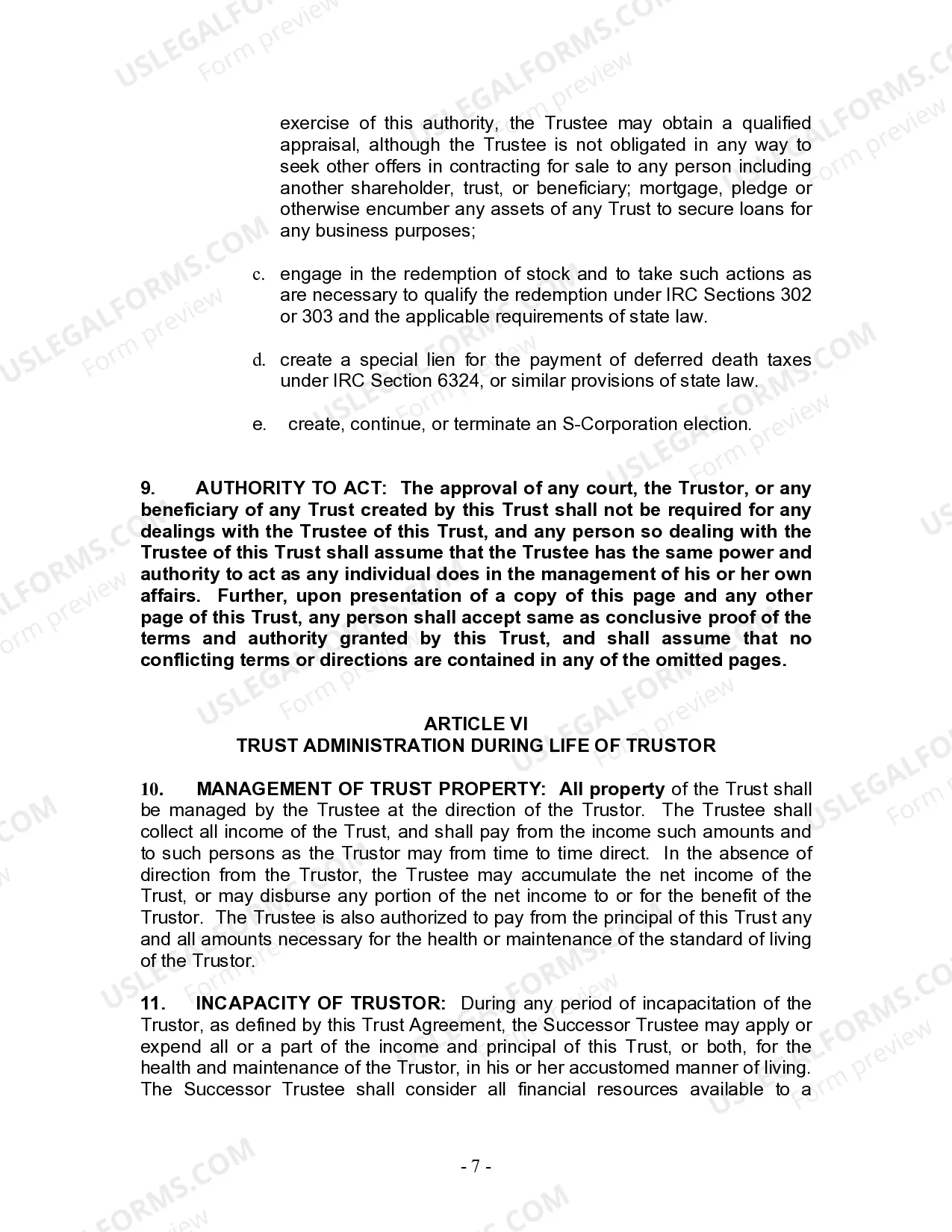
- Trustee powers and administrative guidelines
- Provisions for distributions to beneficiaries





When to use this form
This form is ideal for married couples who want to manage their assets and plan for the future without facing the complexities of probate. It is particularly useful for couples looking to simplify estate planning and ensure a smooth transfer of their assets after death.
Who can use this document
- Married couples with no children
- Individuals seeking to avoid probate for their assets
- Couples looking to maintain control over their assets during their lifetimes
- Those wanting to provide a clear framework for asset distribution upon death
Steps to complete this form
- Identify the parties: Enter the names of the husband and wife as Trustors.
- Designate a trustee: Assign a primary trustee and any successor trustees.
- List the trust assets: Specify the property that will be included in the trust.
- Outline trustee powers: Ensure you understand the powers granted to the trustee for managing the trust.
- Sign and date the document: Both Trustors must sign to validate the trust agreement.
Notarization requirements for this form
To make this form legally binding, it must be notarized. Our online notarization service, powered by Notarize, lets you verify and sign documents remotely through an encrypted video session.
Get your form ready online
Our built-in tools help you complete, sign, share, and store your documents in one place.
Make edits, fill in missing information, and update formatting in US Legal Forms—just like you would in MS Word.
Download a copy, print it, send it by email, or mail it via USPS—whatever works best for your next step.
Sign and collect signatures with our SignNow integration. Send to multiple recipients, set reminders, and more. Go Premium to unlock E-Sign.
If this form requires notarization, complete it online through a secure video call—no need to meet a notary in person or wait for an appointment.
We protect your documents and personal data by following strict security and privacy standards.

Make edits, fill in missing information, and update formatting in US Legal Forms—just like you would in MS Word.

Download a copy, print it, send it by email, or mail it via USPS—whatever works best for your next step.

Sign and collect signatures with our SignNow integration. Send to multiple recipients, set reminders, and more. Go Premium to unlock E-Sign.

If this form requires notarization, complete it online through a secure video call—no need to meet a notary in person or wait for an appointment.

We protect your documents and personal data by following strict security and privacy standards.
Typical mistakes to avoid
- Failing to list all essential assets in the trust.
- Not designating a reliable successor trustee.
- Forgeting to update the trust when major life changes occur (like acquiring new assets).
- Neglecting to sign and date the document correctly.
Benefits of using this form online
- Convenience of downloading and accessing the document anytime.
- Editability allows for personalization to fit specific needs.
- Access to professionally drafted forms prepared by licensed attorneys.
- It simplifies the process of creating a trust without the need for in-person consultations.
Looking for another form?

Form popularity
FAQ
The laws in Texas surrounding intestate wills for married individuals without children are much simpler. The surviving spouse automatically receives all community property.If there are no surviving parents, siblings or descendants of siblings, the spouse gets the remainder of the estate's separate real property.
If the deceased person dies without a will and is not survived by a spouse, descendants, parents, or siblings, then the deceased person's property will pass to nieces and nephews, if any; otherwise to grandparents, aunts or uncles, great aunts or uncles, cousins of any degree; or the children, parents, or siblings of a
Children - if there is no surviving married or civil partnerIf there is no surviving partner, the children of a person who has died without leaving a will inherit the whole estate. This applies however much the estate is worth. If there are two or more children, the estate will be divided equally between them.
The term usually means your nearest blood relative. In the case of a married couple or a civil partnership it usually means their husband or wife. Next of kin is a title that can be given, by you, to anyone from your partner to blood relatives and even friends.
Next of kin are generally defined in Texas as the closest members of one's family, and are limited to those people living who are the closest blood relatives to the person in question.
How Is Next of Kin Determined? To determine next of kin in California, go down the list until someone exists in the category listed.For example, if decedent had no surviving spouse or registered domestic partner, but was survived by adult children, then the adult children would be next of kin.
If you die without a will in Texas, your children will receive an intestate share of your property. The size of each child's share depends on how many children you have, whether or not you are married, and whether your spouse is also your children's parent.