Texas Property Manager Agreement
What this document covers
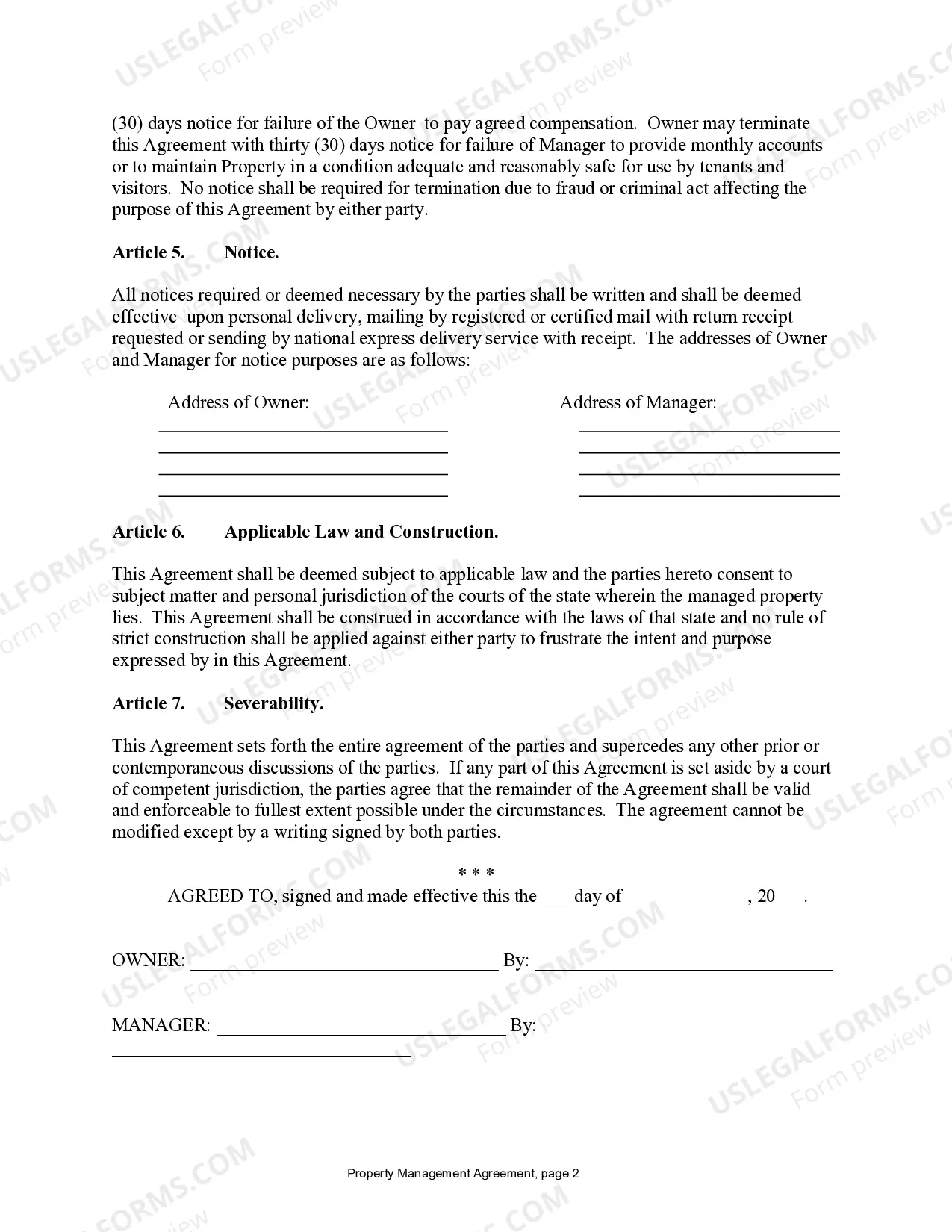
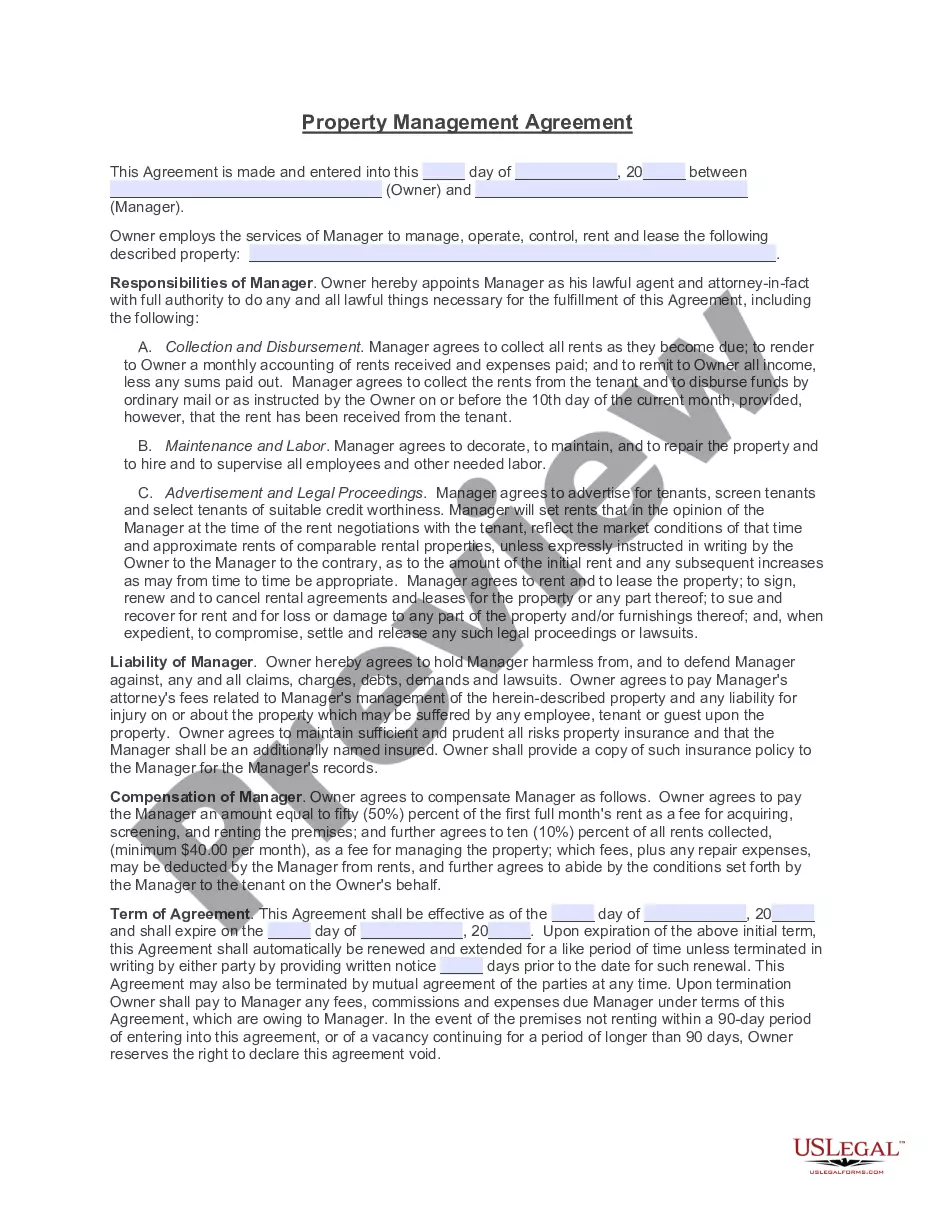
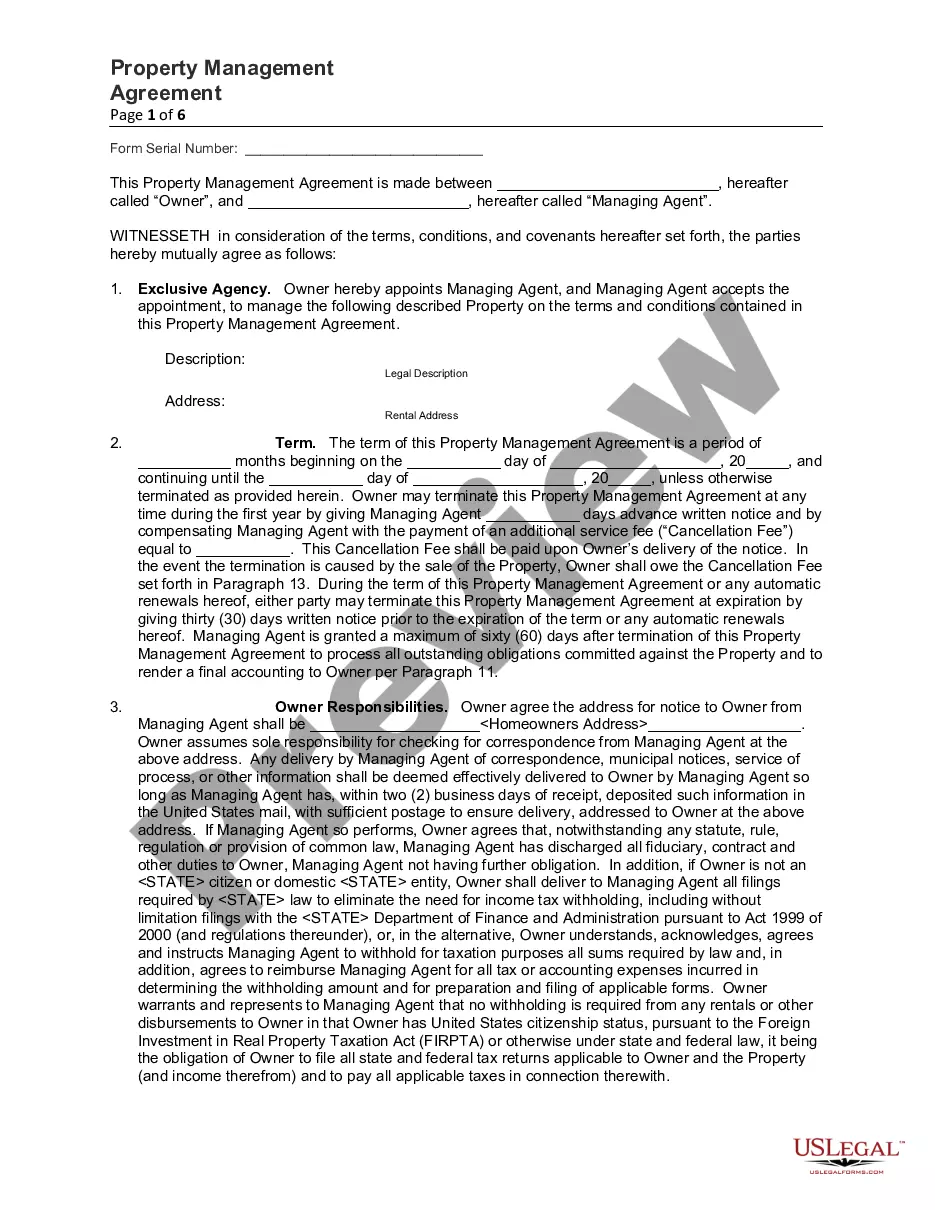
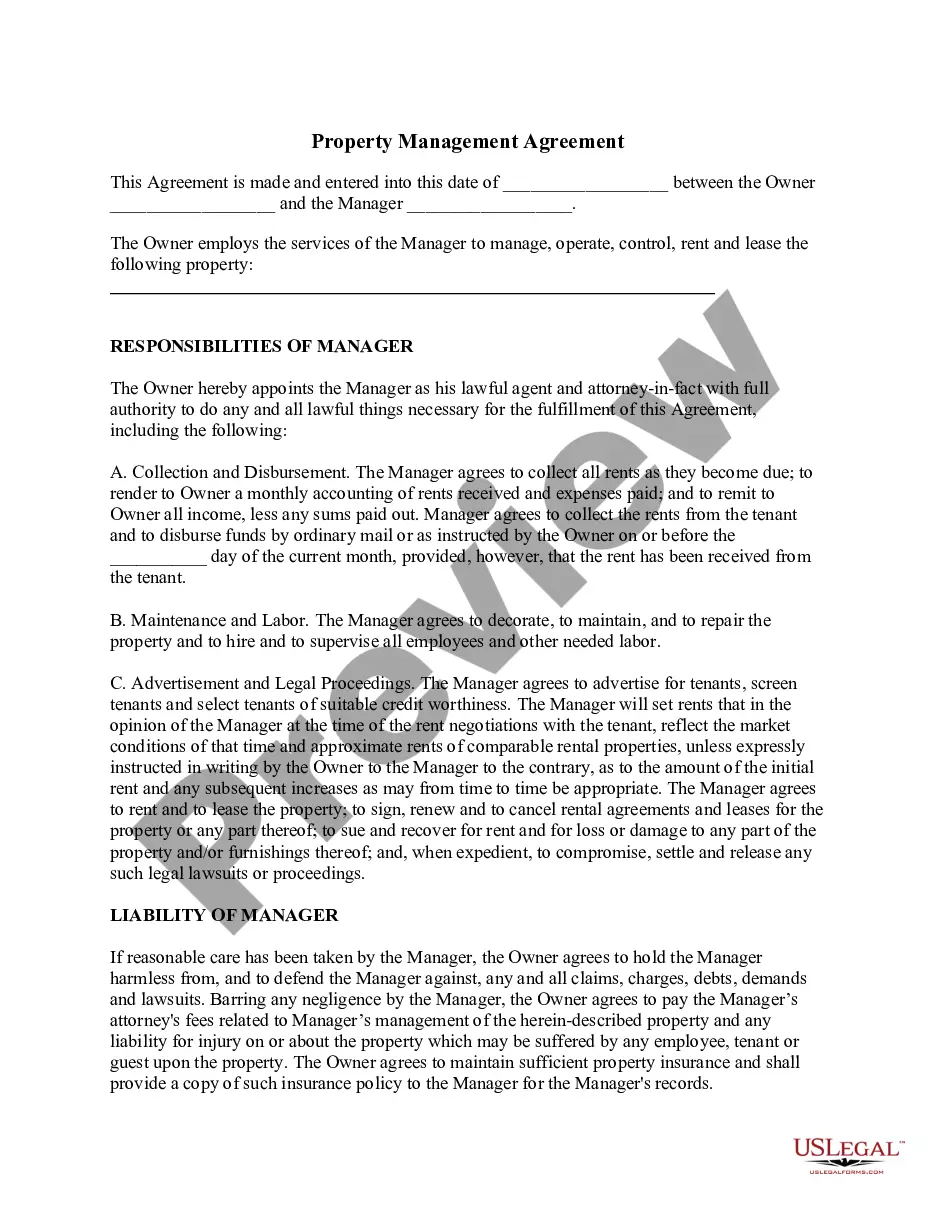
The Property Manager Agreement is an employment contract that outlines the terms and conditions for hiring a property manager to oversee rental property operations. Unlike simple rental agreements, this form specifically details the responsibilities and expectations of the property manager, making it essential for property owners looking to establish a clear professional relationship with their appointed manager.
Main sections of this form
- Parties involved: Identifies the property owner and the property manager.
- Description of property: Details the rental property being managed.
- Term of agreement: Specifies the duration of the contract and renewal conditions.
- Termination clauses: Outlines the conditions under which either party may terminate the agreement.
- Maintenance obligations: Stipulates the manager's duties related to property upkeep and safety.
When this form is needed
This form should be used when a property owner wants to hire a property manager to oversee their rental property. It is especially useful in situations where the property owner lacks the time or expertise to manage the property independently. Scenarios may include managing multiple rental units, ensuring compliance with local rental laws, and maintaining tenant relations.
Who needs this form
- Property owners seeking professional management for their rental properties.
- Real estate investors looking to hire a property manager to handle their assets.
- Landlords wanting to formalize the employment of a property manager.
Completing this form step by step
- Identify the parties by entering the names of the property owner and the property manager.
- Specify the property by providing the legal description of the rental property.
- Enter the term of the agreement, including the start date and renewal conditions.
- Review and fill in termination clauses as necessary based on your needs.
- Ensure all parties sign the form to make it effective.
Does this document require notarization?
This form does not typically require notarization unless specified by local law. It is recommended to consult your state regulations to confirm if notarization is necessary.
Get your form ready online
Our built-in tools help you complete, sign, share, and store your documents in one place.
Make edits, fill in missing information, and update formatting in US Legal Forms—just like you would in MS Word.
Download a copy, print it, send it by email, or mail it via USPS—whatever works best for your next step.
Sign and collect signatures with our SignNow integration. Send to multiple recipients, set reminders, and more. Go Premium to unlock E-Sign.
If this form requires notarization, complete it online through a secure video call—no need to meet a notary in person or wait for an appointment.
We protect your documents and personal data by following strict security and privacy standards.

Make edits, fill in missing information, and update formatting in US Legal Forms—just like you would in MS Word.

Download a copy, print it, send it by email, or mail it via USPS—whatever works best for your next step.

Sign and collect signatures with our SignNow integration. Send to multiple recipients, set reminders, and more. Go Premium to unlock E-Sign.

If this form requires notarization, complete it online through a secure video call—no need to meet a notary in person or wait for an appointment.

We protect your documents and personal data by following strict security and privacy standards.
Typical mistakes to avoid
- Failing to specify the property description accurately.
- Not clearly outlining the maintenance responsibilities.
- Leaving out termination notice periods, which can lead to misunderstandings.
Advantages of online completion
- Convenience of filling out and downloading the agreement at your own pace.
- Editability, allowing you to customize the agreement to fit your specific needs.
- Access to templates drafted by licensed attorneys, ensuring legal compliance.
Legal use & context
- Provides clarity and protection for both the property owner and the property manager.
- Ensures enforceability of the terms outlined in the agreement.
- Limits liability for both parties by clearly defining roles and responsibilities.
What to keep in mind
- The Property Manager Agreement is essential for formalizing the relationship between property owners and managers.
- Careful attention to detail and legal compliance helps avoid future disputes.
- Understanding the key sections of the agreement ensures a smoother management process.
Looking for another form?
Form popularity
FAQ
The general rule is that owners don't need a real estate license to manage their own property. Furthermore, in most states, owners are free to hire someone to take care of property management issues on their behalf, without a license.You can personally manage properties your corporation owns.
The property manager can provide full leasing services. They effectively negotiate leases with tenants and prepare those leases for signature. They make suggestions regarding the tenant mix and prospective tenants.
Fees and services. The exact breakdown and total of all services and associated fees should be included in the property management contract. The responsibilities of the property owner. Equal opportunity housing. Liability. Contract duration. Termination clause.
Property Management Agencies Must Have an Active Real Estate Broker's License. Property management companies in Texas are required to have an active real estate broker's license.
Be a member of Texas REALTORS® Complete the Texas Residential Leasing Specialist (TRLS) certification. Six three-hour courses: Complete the application, which includes verification of 200 unit-years of experience acquired cumulatively over a minimum of two consecutive years.
A property management agreement is a contract between a property owner and the company or person hired to manage the property.A well-drafted agreement includes a clause about the type of insurance coverage a building owner must carry for the building.
Property Management Agencies Must Have an Active Real Estate Broker's License. Property management companies in Texas are required to have an active real estate broker's license.
This is usually a set fee of between $50 and $350, depending on the number of properties you have. Management Fee This is the most common fee. It can be a flat fee or a percentage based on the value of the rent that's coming in. Expect to pay between 8 and 12 percent and as high as 15 percent in some markets.