Tennessee Revocable Living Trust for Husband and Wife with No Children
What is this form?
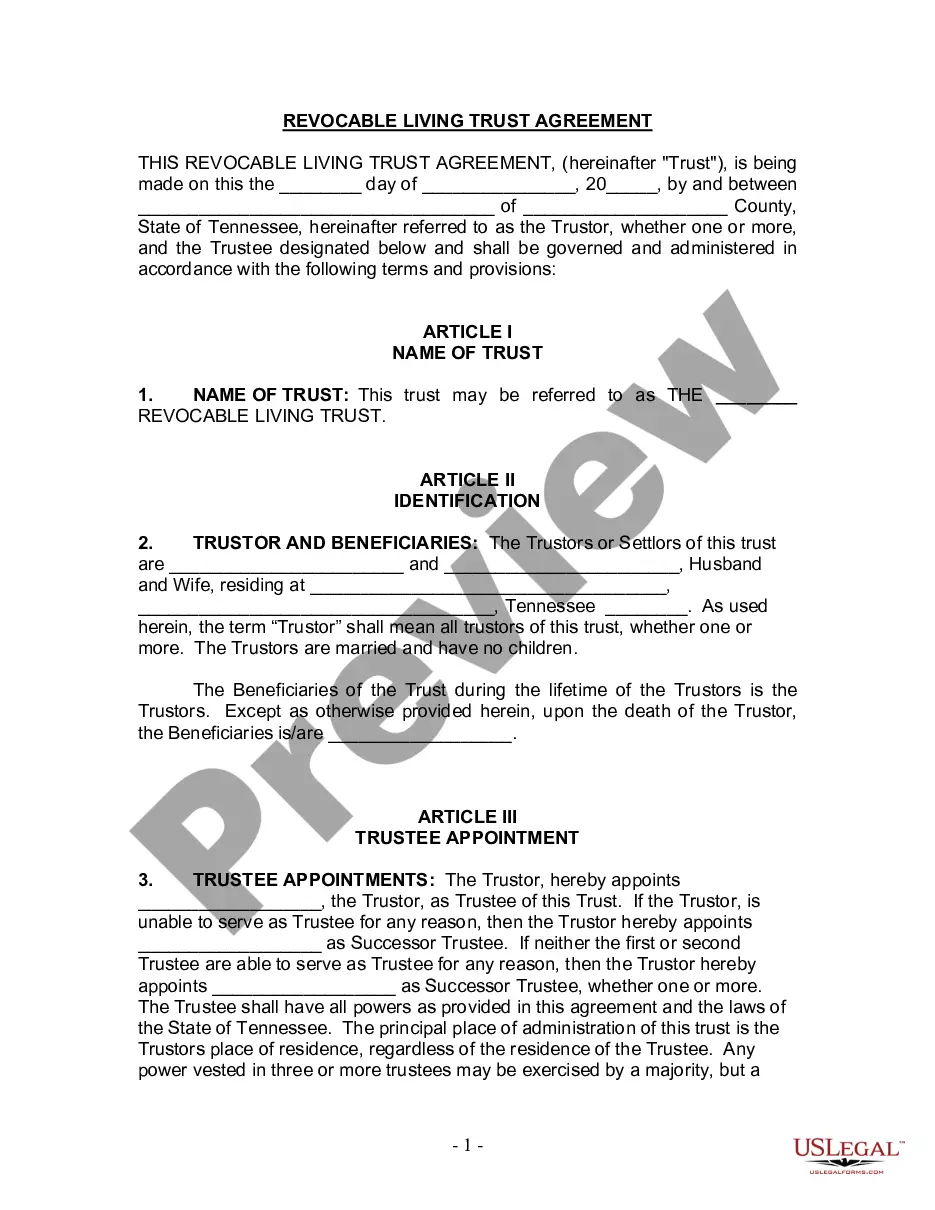
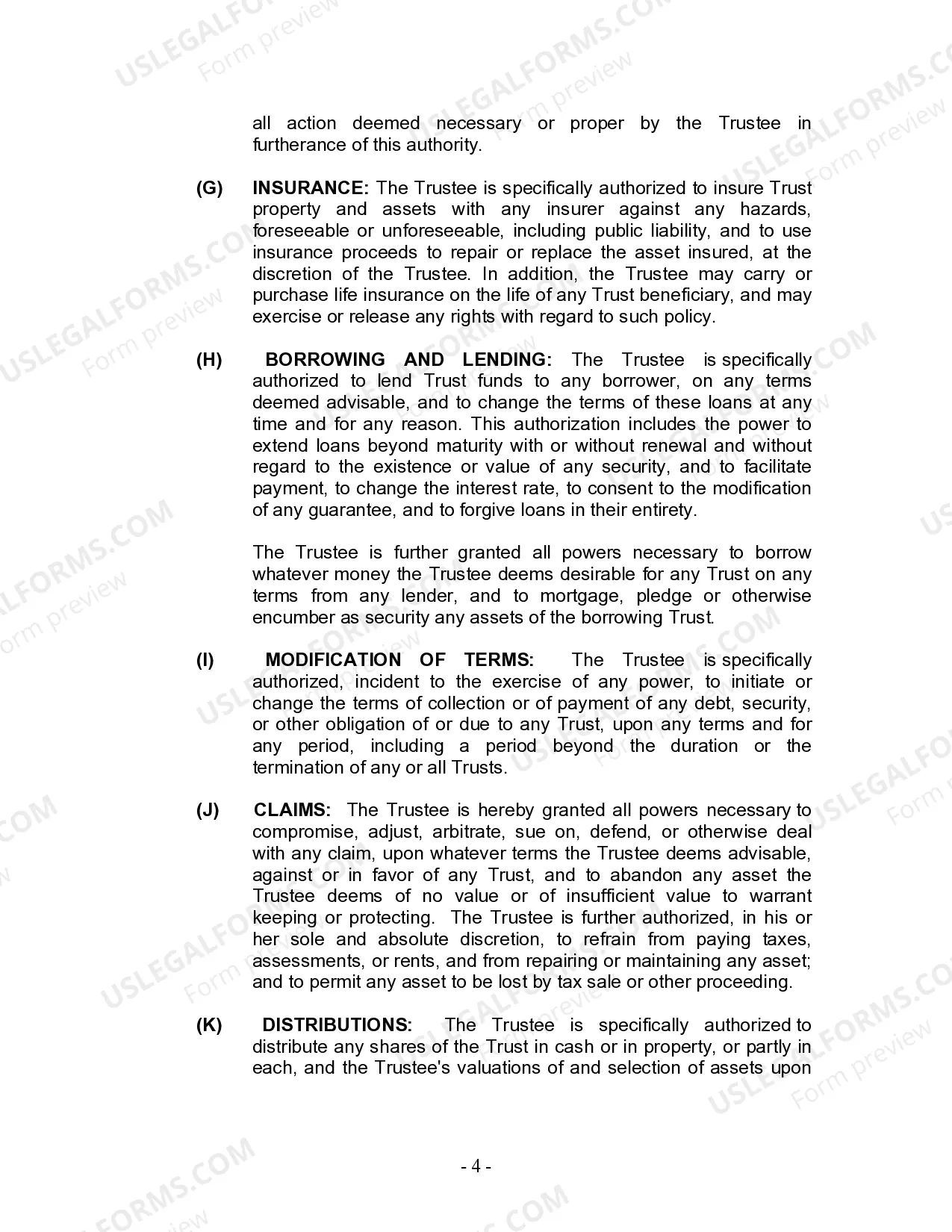
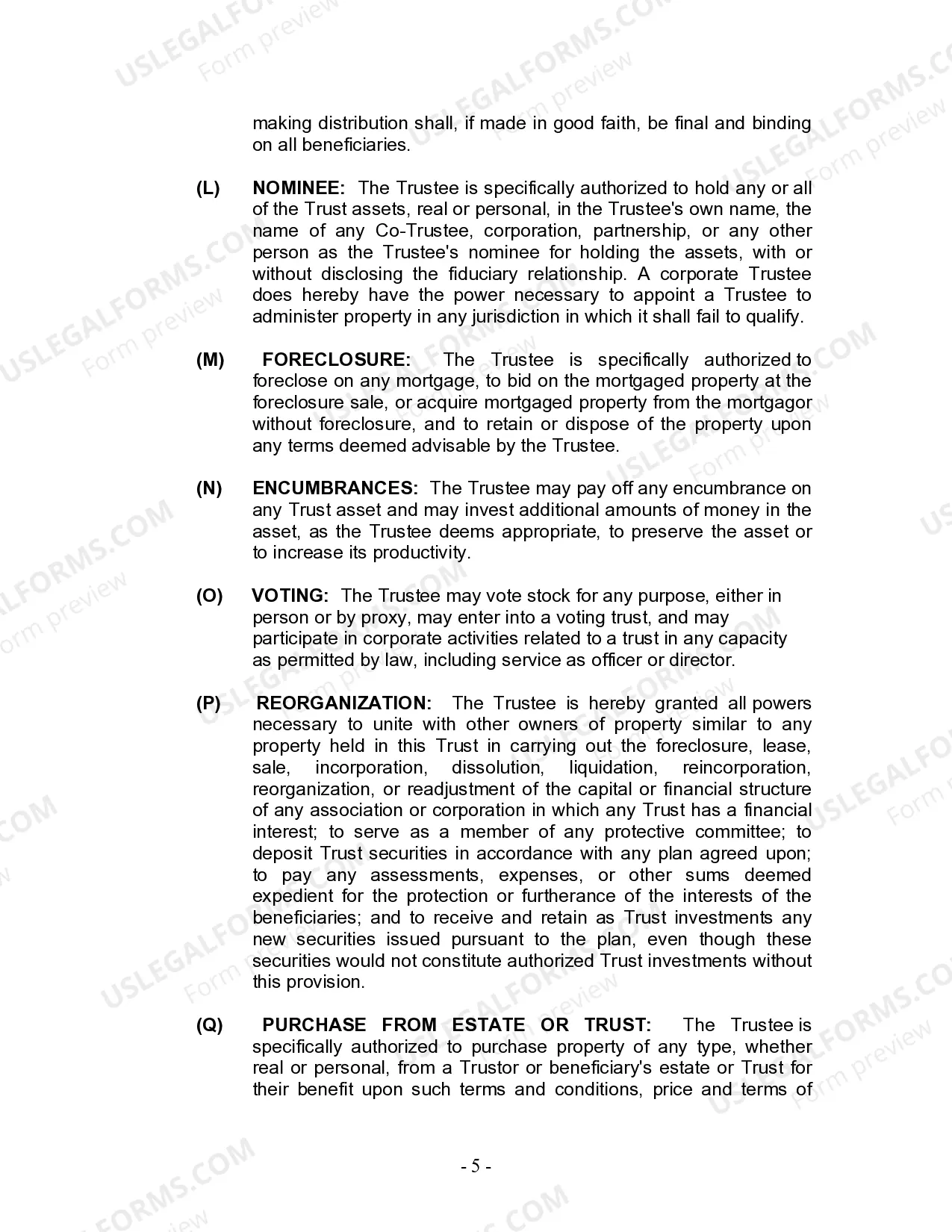
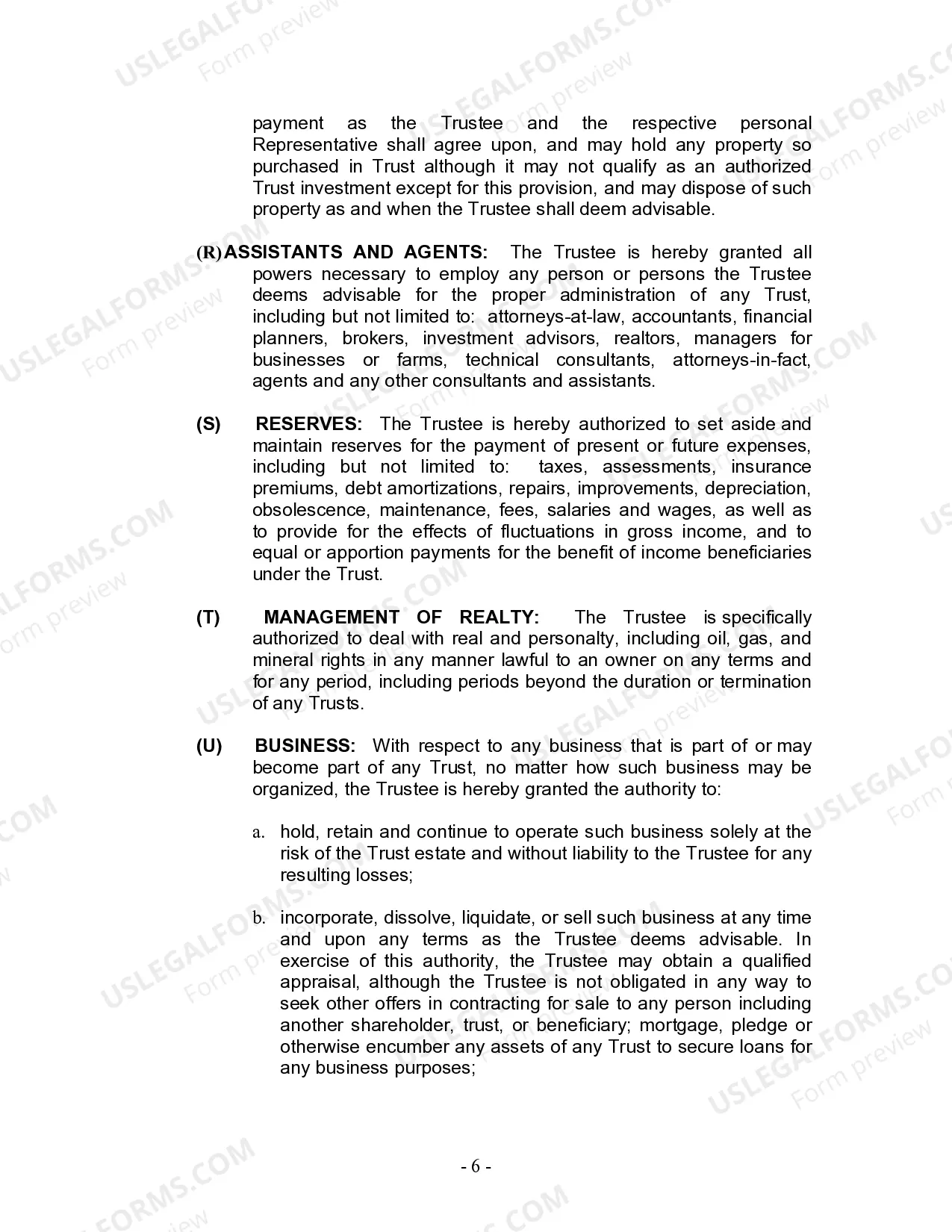
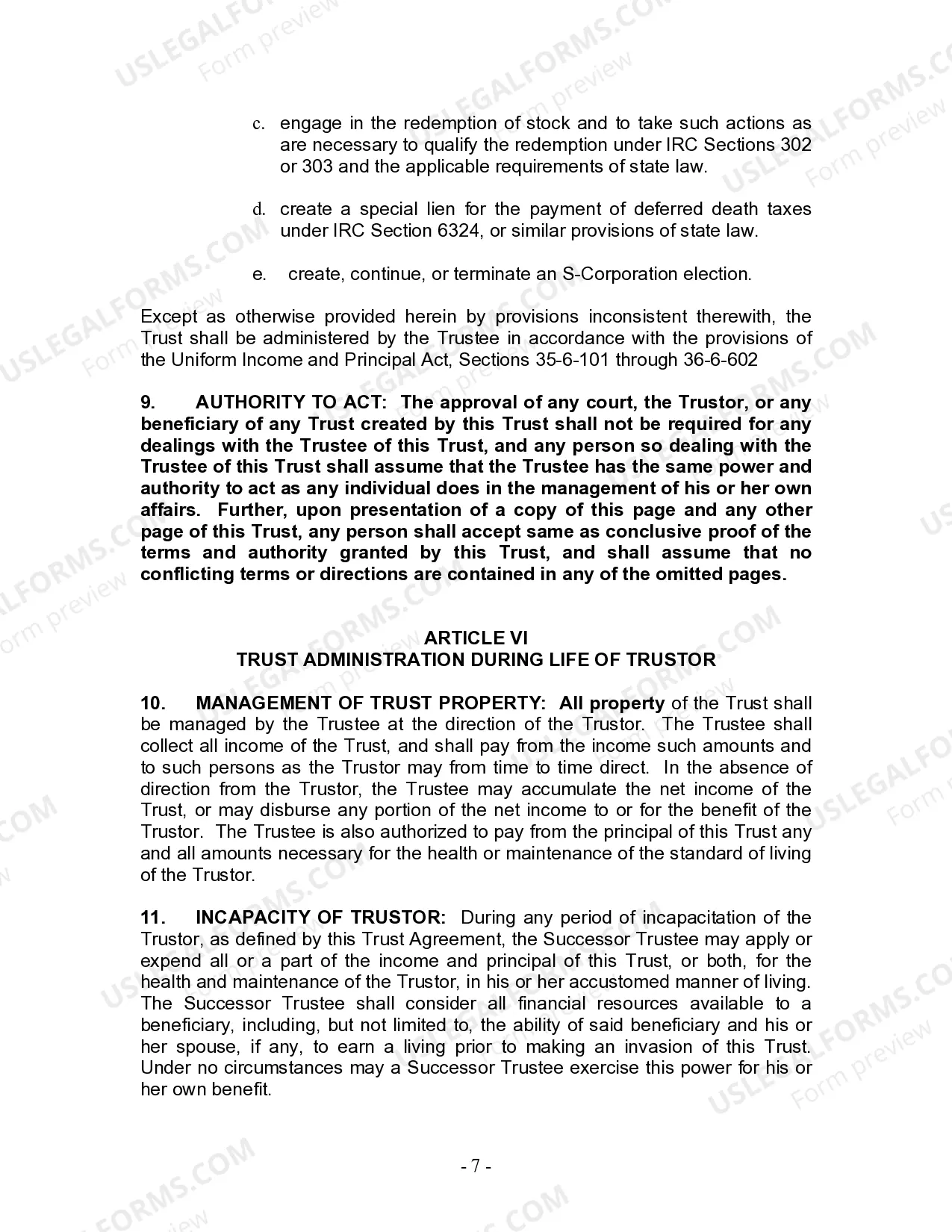
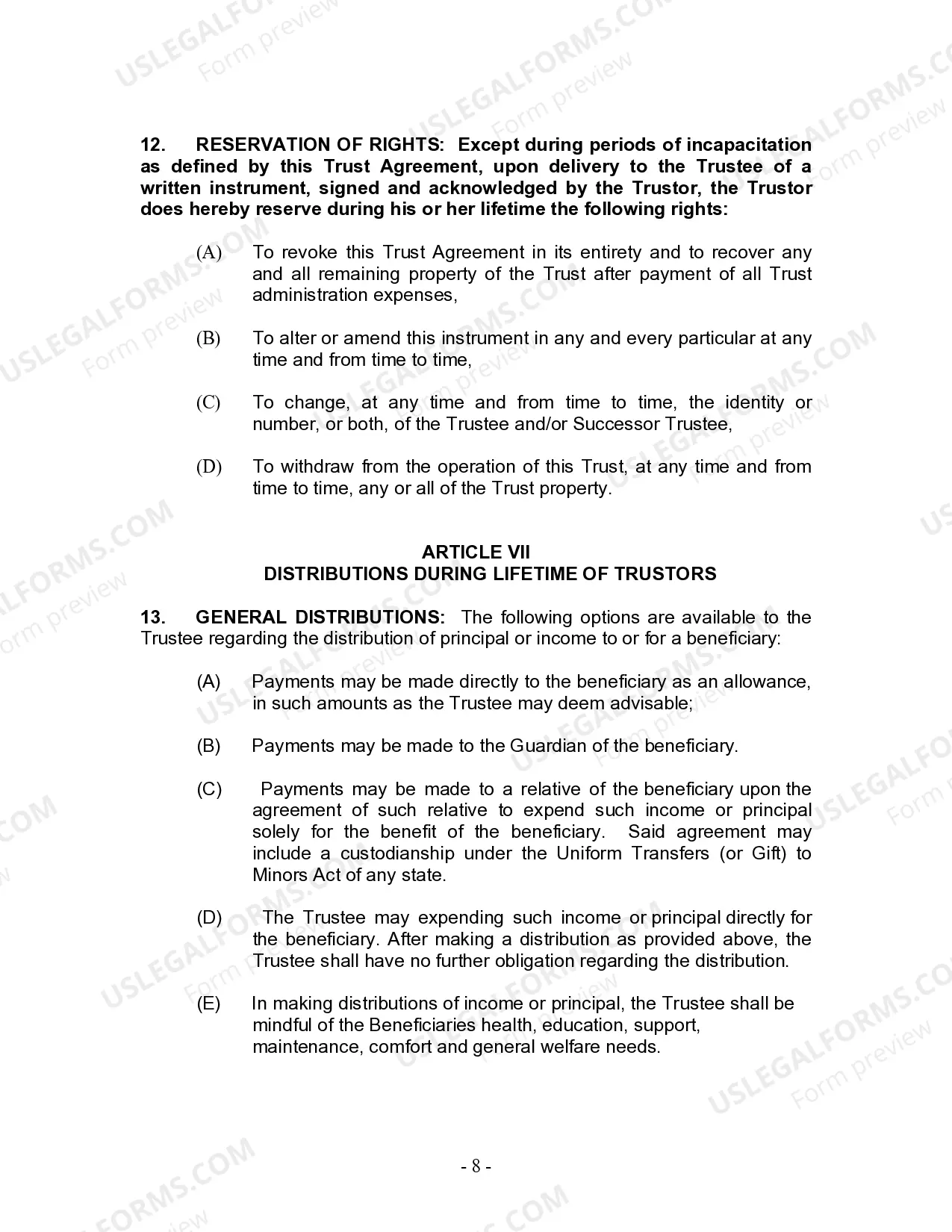
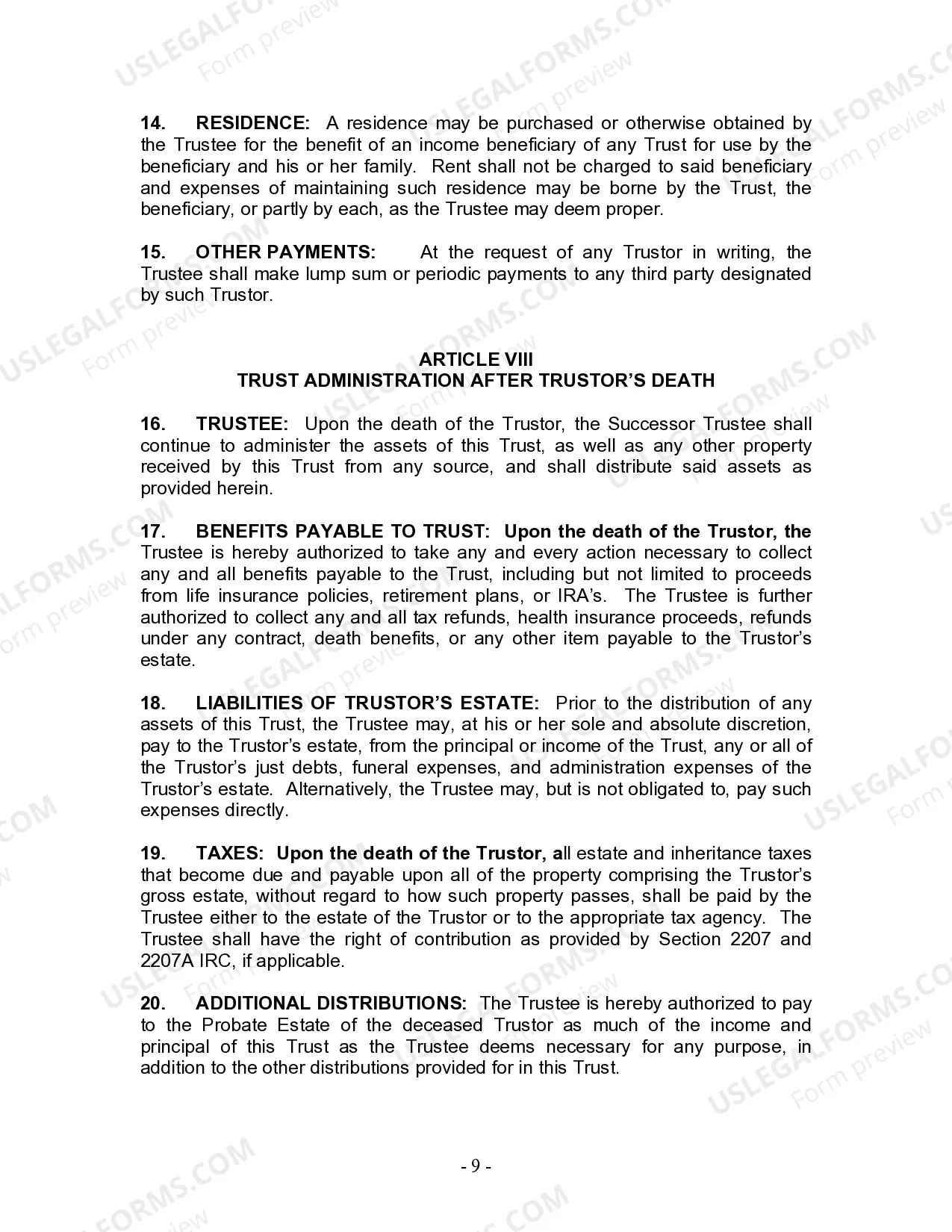
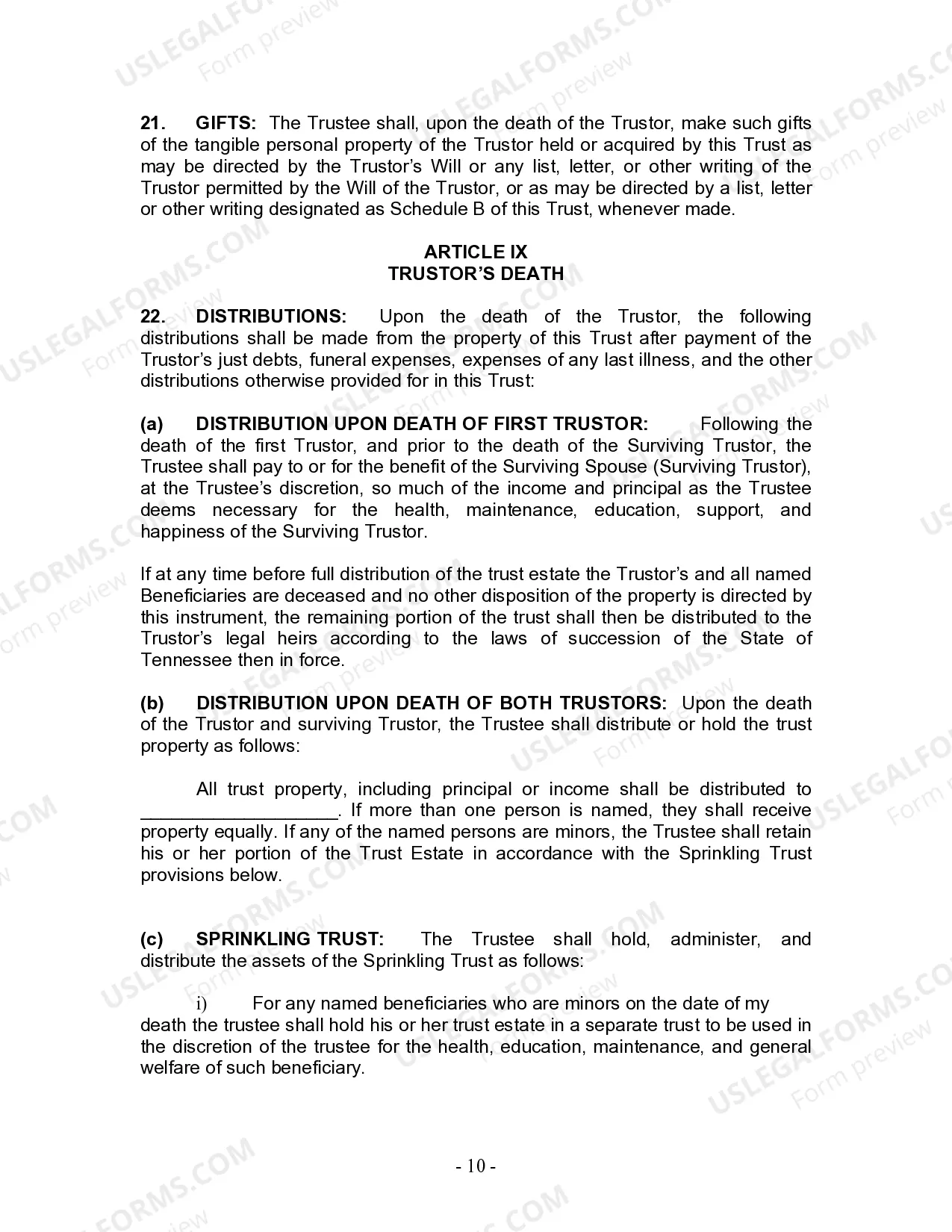
The Revocable Living Trust for Husband and Wife with No Children is a legal document used to create a trust during the lifetime of the trustors (the husband and wife). It allows the couple to manage and control their assets while they are alive and ensures a smooth transfer of their properties upon their passing without going through probate. This form is specifically designed for couples without children, distinguishing it from other living trusts that may include provisions for children or dependents.
Main sections of this form
- Name of the Trust: This section includes the title of the trust.
- Trustors: Identification of the husband and wife establishing the trust.
- Trustee Appointment: Designation of the trustee who will manage the trust assets.
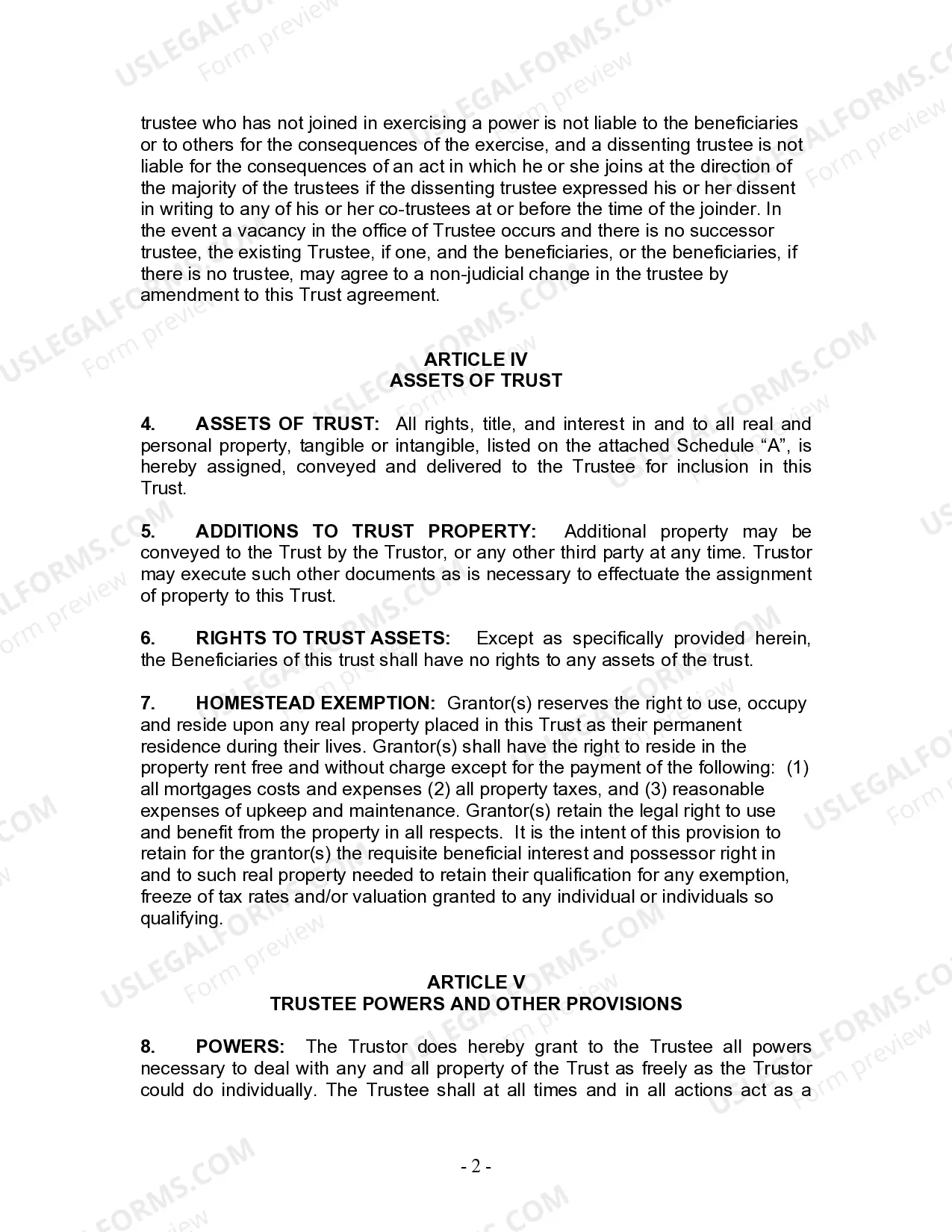
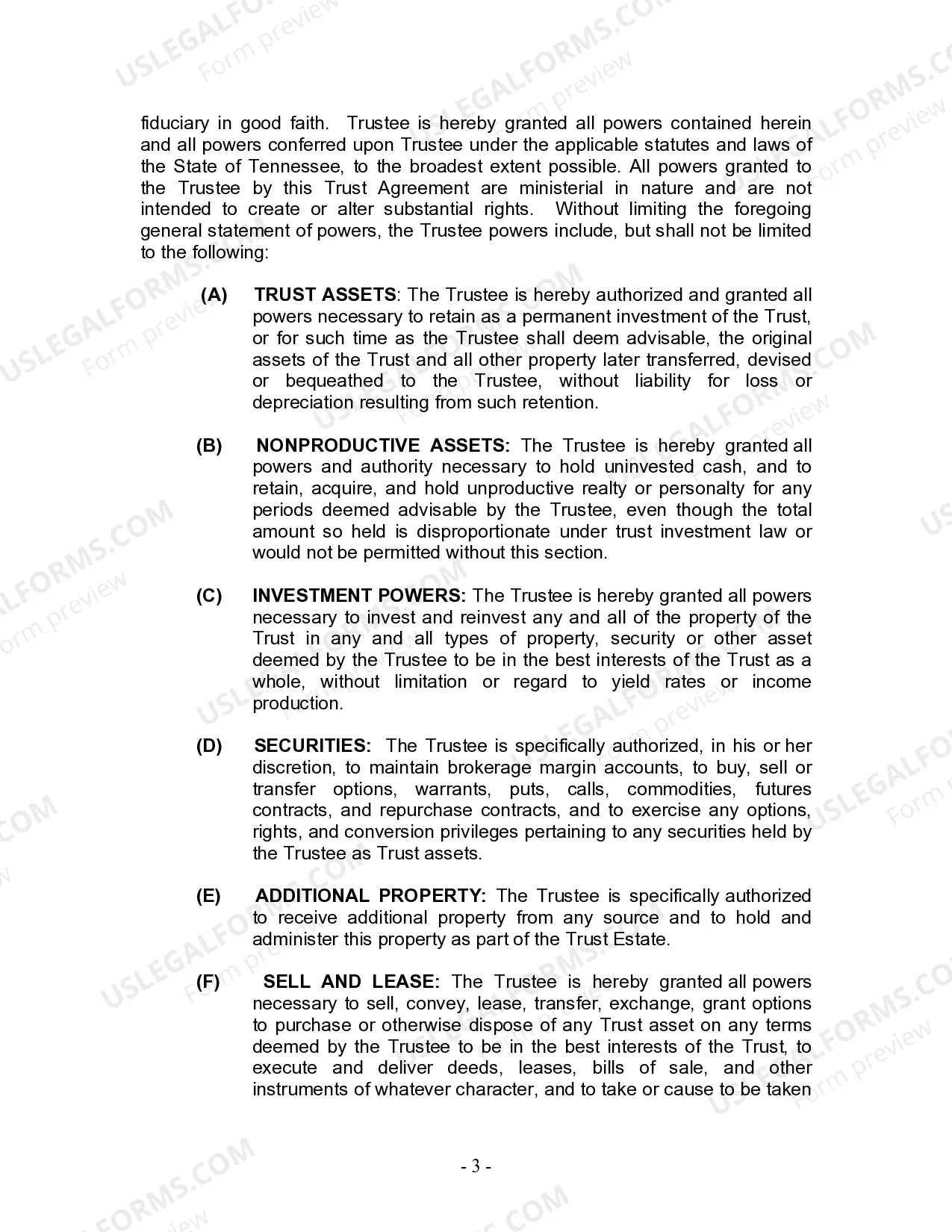
- Asset Management: Outlines how assets will be managed and the rights of the trustors during their lifetime.
- Distributions After Death: Specifies how trust assets will be distributed following the death of the trustors.





When to use this form
This form is ideal for couples (husband and wife) who want to manage their assets during their lifetime and ensure these assets are transferred according to their wishes after they pass away. It is particularly useful for those without children, as it allows the couple to designate beneficiaries easily and potentially simplify the distribution process. This trust also aids in avoiding the lengthy probate process.
Who needs this form
This form is intended for:
- Husbands and wives with no children seeking to manage their estate through a living trust.
- Couples looking to avoid probate and streamline their estate planning.
- Individuals wanting to maintain control over their assets while alive, with a clear plan for distribution after death.
Completing this form step by step
- Identify the trustors: Enter the names and residence of the husband and wife creating the trust.
- Designate a trustee: Specify who will manage the trust during the lifetime of the trustors.
- List trust assets: Fill in the property and assets that will be placed into the trust.
- Outline distribution plans: Detail how assets will be distributed upon the death of the trustors.
- Sign and notarize: Both trustors must sign the document in the presence of a notary public to ensure it is legally binding.
Does this form need to be notarized?
Yes, this form must be notarized to be legally valid. US Legal Forms provides integrated online notarization options available 24/7 for secure video calls, ensuring your document meets all legal requirements without the need for travel.
Get your form ready online
Our built-in tools help you complete, sign, share, and store your documents in one place.
Make edits, fill in missing information, and update formatting in US Legal Forms—just like you would in MS Word.
Download a copy, print it, send it by email, or mail it via USPS—whatever works best for your next step.
Sign and collect signatures with our SignNow integration. Send to multiple recipients, set reminders, and more. Go Premium to unlock E-Sign.
If this form requires notarization, complete it online through a secure video call—no need to meet a notary in person or wait for an appointment.
We protect your documents and personal data by following strict security and privacy standards.

Make edits, fill in missing information, and update formatting in US Legal Forms—just like you would in MS Word.

Download a copy, print it, send it by email, or mail it via USPS—whatever works best for your next step.

Sign and collect signatures with our SignNow integration. Send to multiple recipients, set reminders, and more. Go Premium to unlock E-Sign.

If this form requires notarization, complete it online through a secure video call—no need to meet a notary in person or wait for an appointment.

We protect your documents and personal data by following strict security and privacy standards.
Common mistakes
- Failing to list all significant assets in the trust.
- Not naming a successor trustee in case the primary trustee is unable to serve.
- Leaving out necessary signatures or not having the document notarized.
- Inaccurately designating beneficiaries, which can lead to disputes later.
Why use this form online
- Convenient access to the form from anywhere at any time.
- Editable formats make it easy to customize the trust to meet specific needs.
- Documents prepared by licensed attorneys ensure legal compliance.
- Efficient completion and storage of important legal documents.
Quick recap
- A Living Trust is essential for married couples without children to manage their assets and avoid probate.
- The trust allows for flexible management and distribution of assets during and after the couple's lifetime.
- Proper completion and notarization of the trust is critical to ensure its validity.
Looking for another form?
Form popularity
FAQ
Many married couples own most of their assets jointly with the right of survivorship. When one spouse dies, the surviving spouse automatically receives complete ownership of the property. This distribution cannot be changed by Will.
If you die intestate and you do not have either a spouse or descendants, the State of Tennessee dictates that the subsequent relative to inherit your estate is any surviving parents. If your parents survive you, your estate is distributed to them in equal parts.
This law states that no matter what your will says, your spouse has a right to inherit one-third or one-half (depending on the state and sometimes depending on the length of the marriage) of your total estate. To exercise this right, your spouse has to petition the probate court to enforce the law.
The term usually means your nearest blood relative. In the case of a married couple or a civil partnership it usually means their husband or wife. Next of kin is a title that can be given, by you, to anyone from your partner to blood relatives and even friends.
Federal law prohibits enforcement of a due on sale clause in certain cases, such as where the transfer is to a relative upon the borrower's death. Even if your name was not on the mortgage, once you receive title to the property and obtain lender consent, you may assume the existing loan.
Tennessee inheritance laws protect the inheritance rights of any children who were conceived prior to their parent's death, but were born following it. However, that child must have lived for at least 120 hours and been born in the 10-month window that comes after the parent's death.
How Is Next of Kin Determined? To determine next of kin in California, go down the list until someone exists in the category listed.For example, if decedent had no surviving spouse or registered domestic partner, but was survived by adult children, then the adult children would be next of kin.
If a person dies intestate without any children, the spouse recovers the entire estate. If the person left a spouse and children, the surviving spouse will receive either one-third of the entire estate or a child's share of the estate, whichever is greater.
Community Property in California Inheritance LawsCalifornia is a community property state, which is a policy that only applies to spouses and domestic partners.The only property that doesn't become community property automatically are gifts and inheritances that one spouse receives.