Tennessee Mutual Wills containing Last Will and Testaments for Man and Woman living together not Married with No Children
Overview of this form
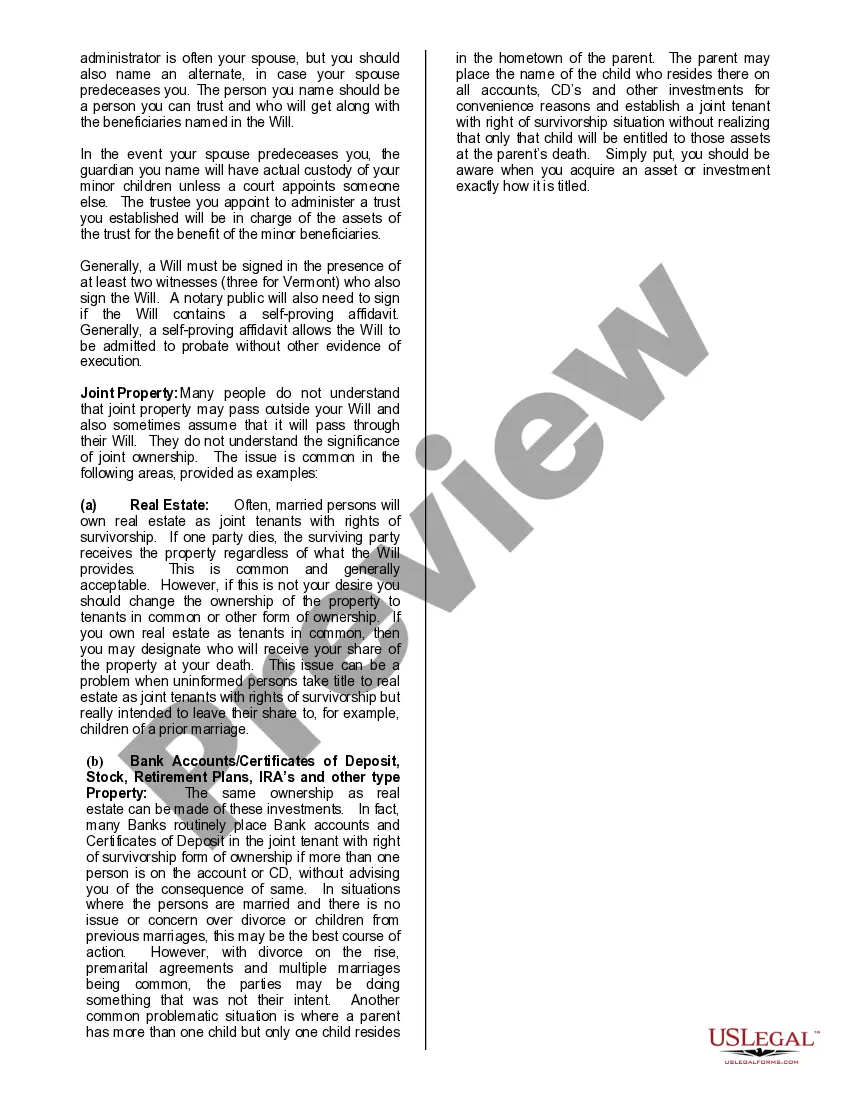
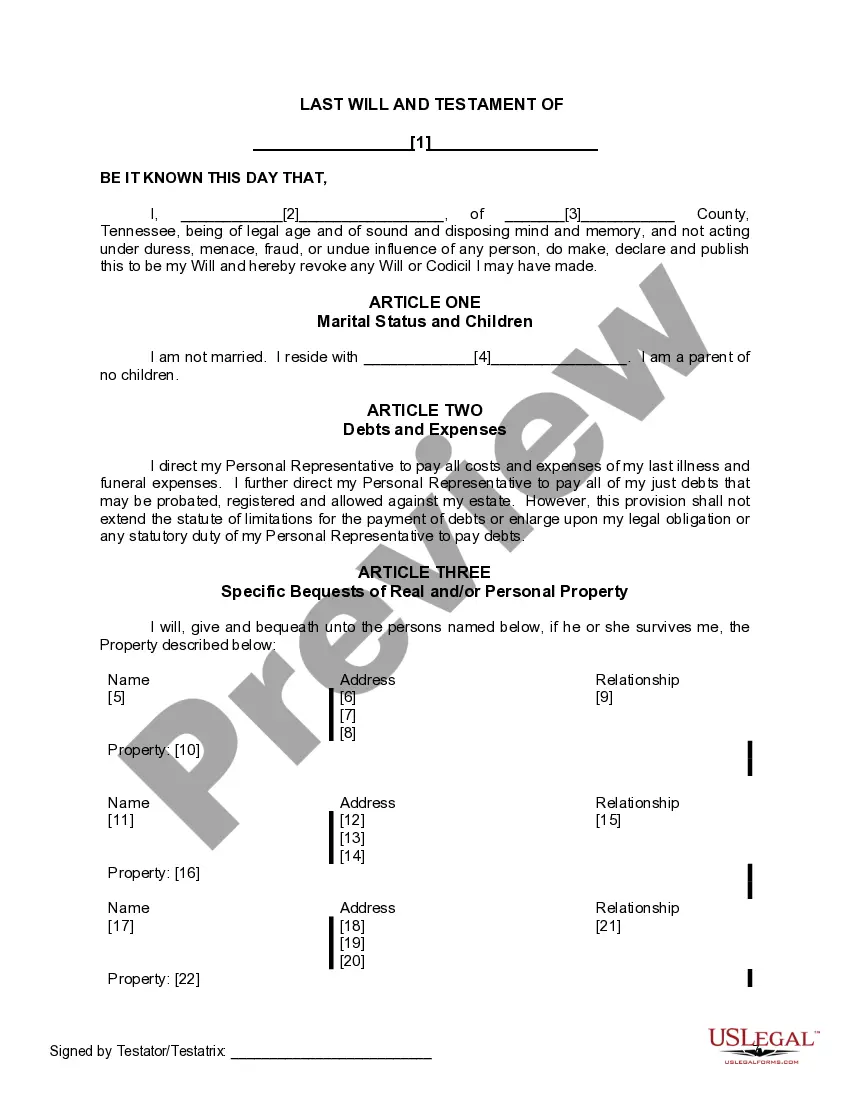
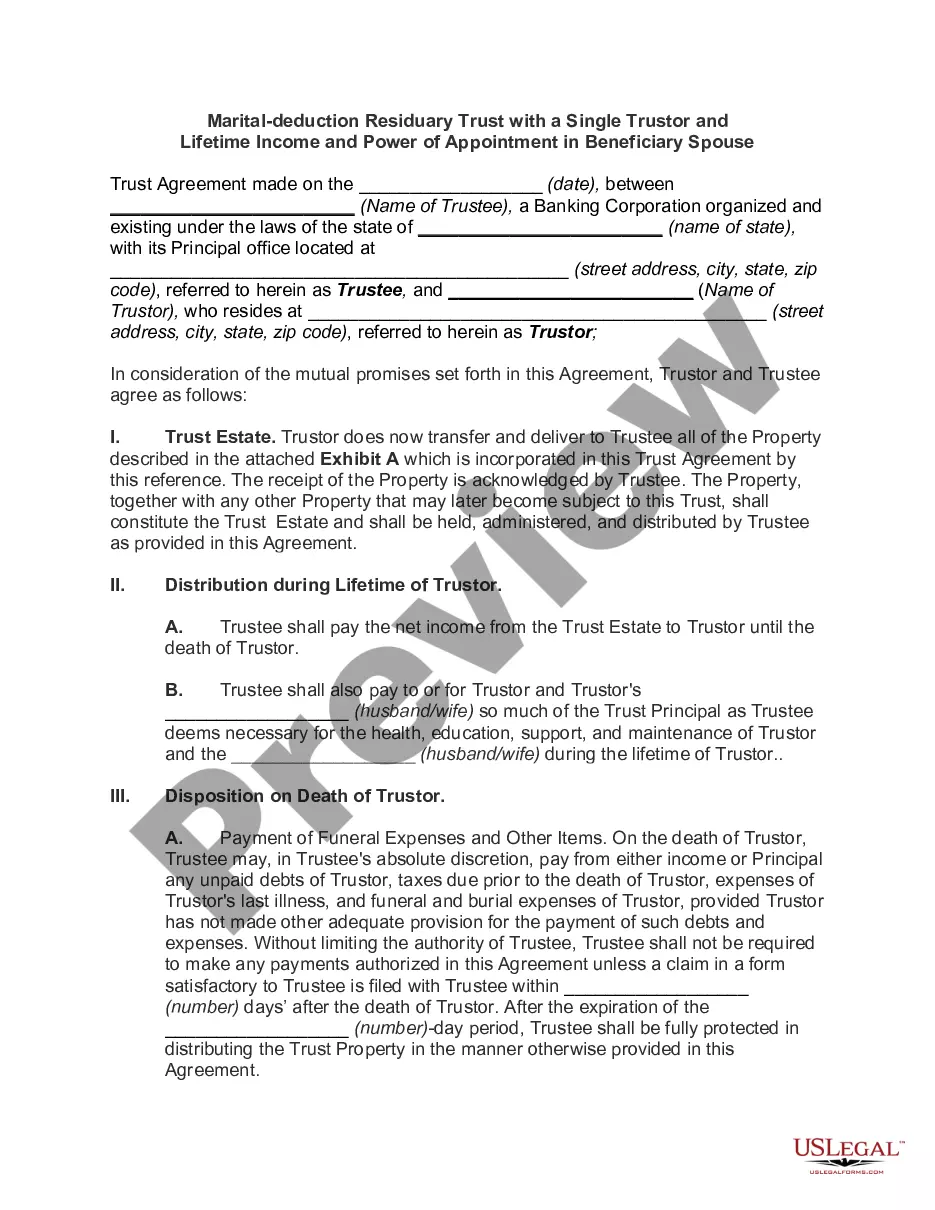
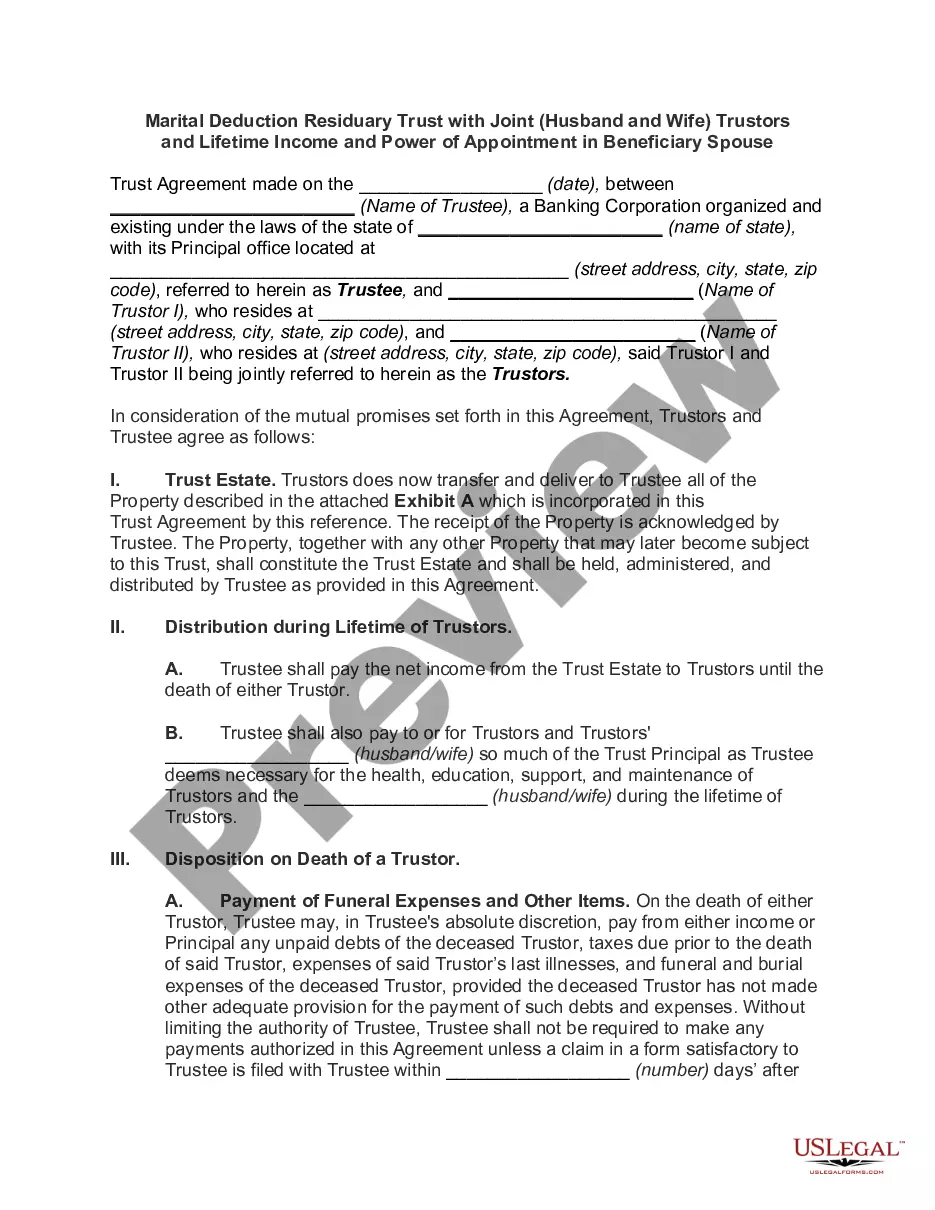
This Mutual Will package is designed for a man and woman living together who are not married and have no children. It includes two separate Last Will and Testament forms that allow both parties to leave property to one another. Unlike standard wills, these mutual wills express a shared intent to benefit each other, ensuring that the wishes of both partners are respected after death.
Main sections of this form
- Identification of both parties' names and their county of residence.
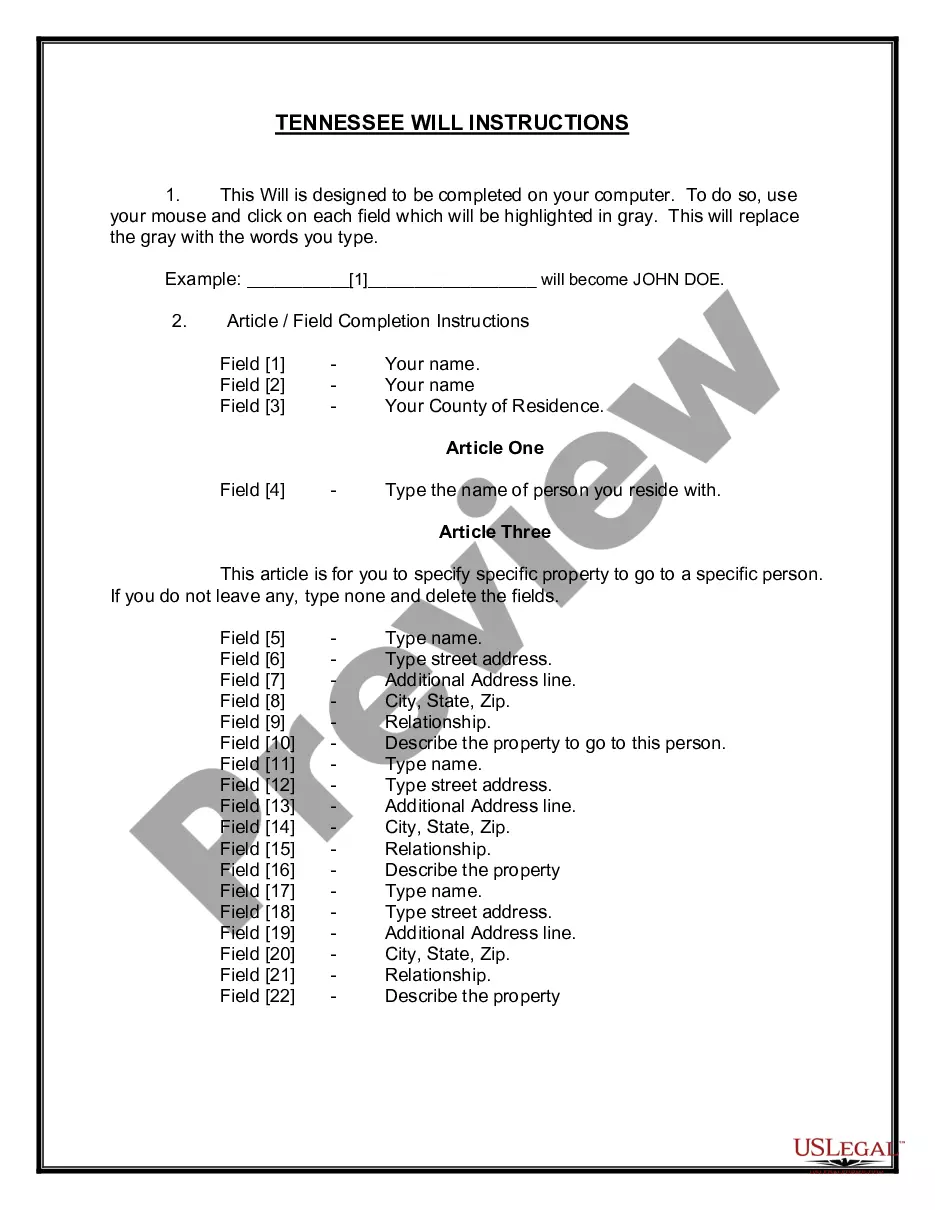
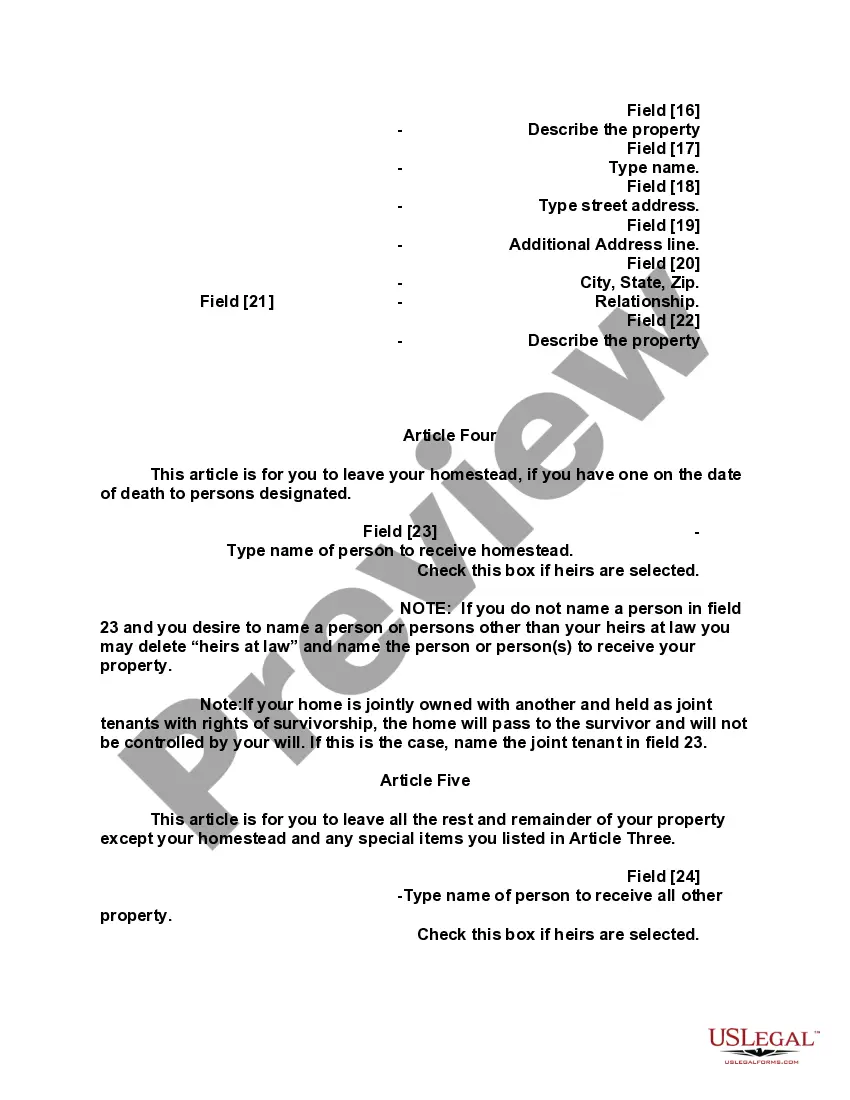
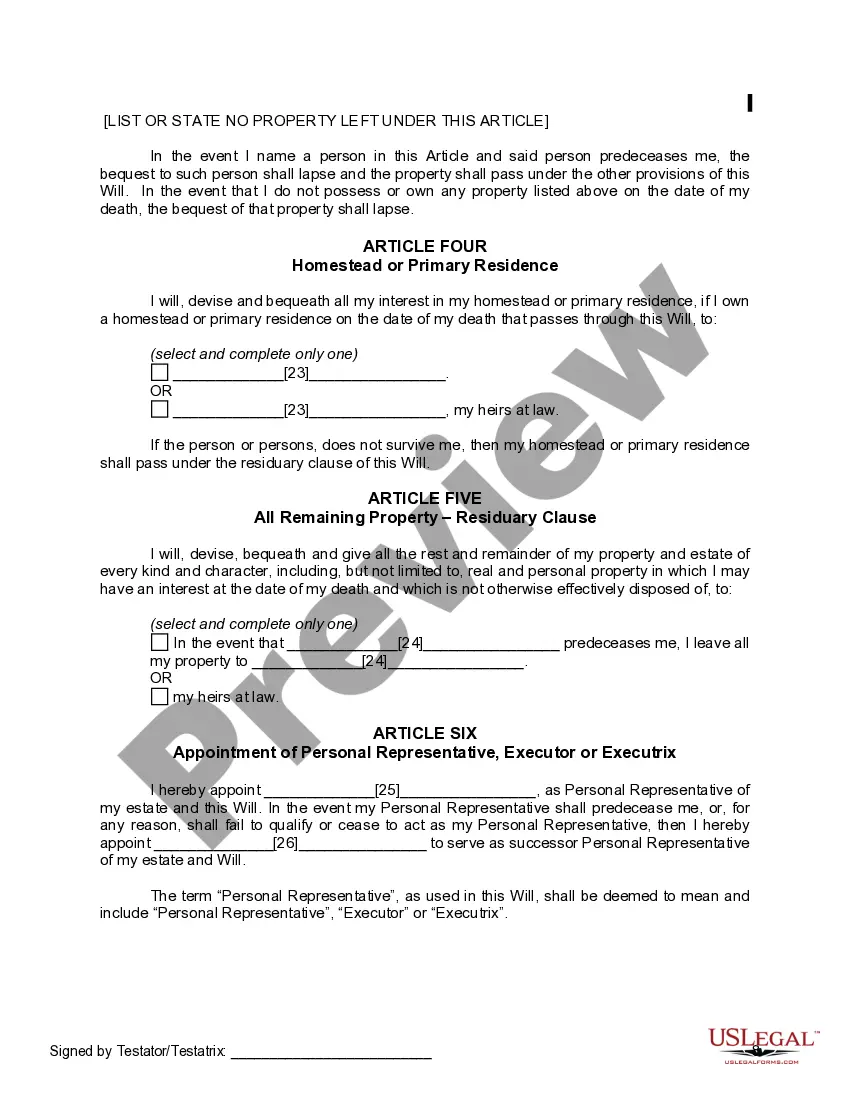
- Instructions for designating specific property and how it should be distributed.
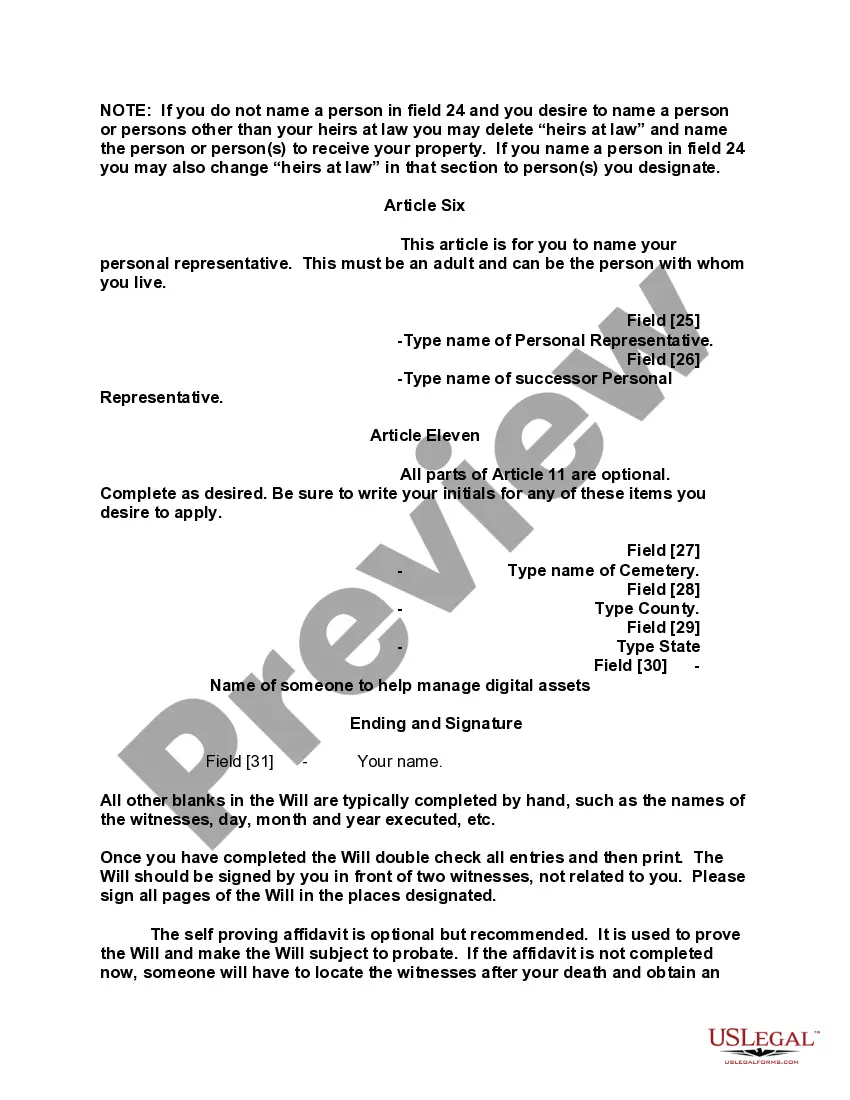
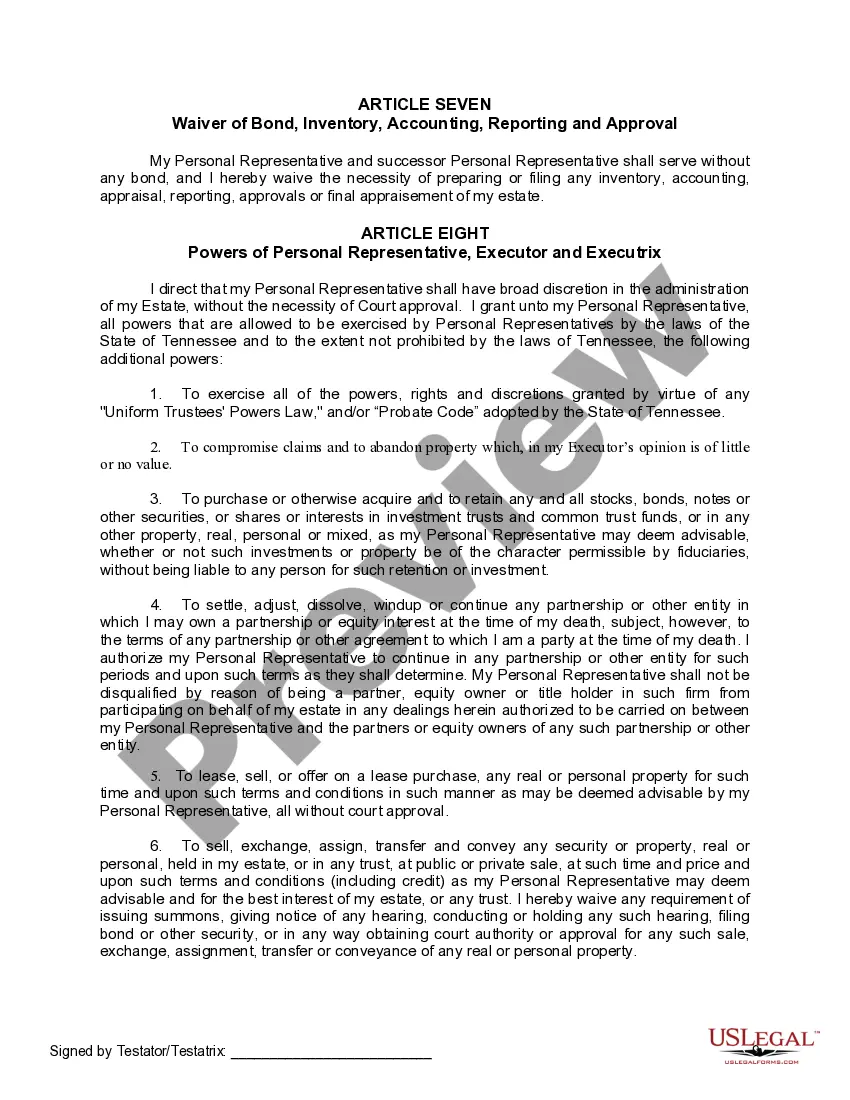
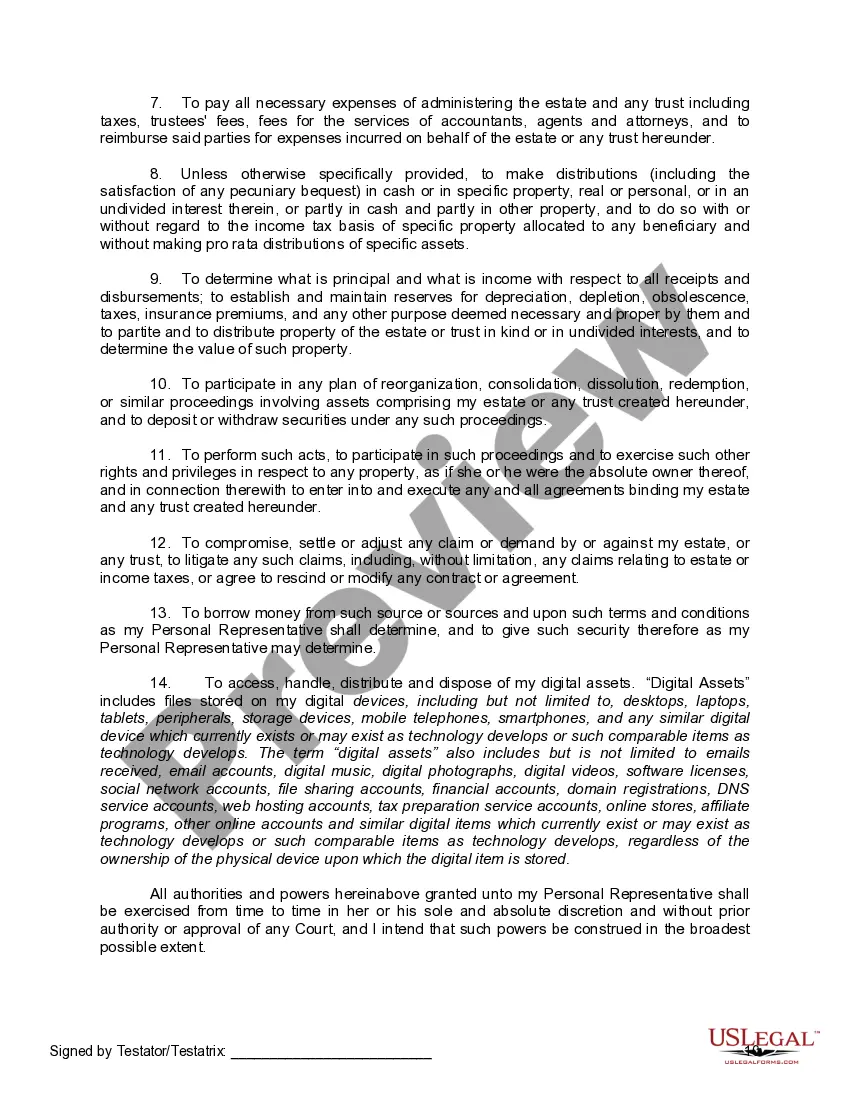
- Designation of a personal representative to manage the estate.
- Provisions for debts, expenses, and funeral arrangements.
- Opportunity to include a self-proving affidavit for easier probate.



Situations where this form applies
This form should be used when a couple, who are living together but not legally married, wishes to ensure their assets are passed to one another upon death. It is particularly useful for partners who want to make clear their intentions regarding the distribution of their property and to avoid potential disputes among family members.
Who can use this document
This Mutual Wills package is intended for:
- Unmarried couples living together.
- Couples who wish to designate each other as beneficiaries.
- Individuals with specific property they want to bequeath to their partner.
- Couples with no children looking to simplify their estate planning.
Steps to complete this form
- Open the form on your computer and fill in your name, the other partyâs name, and your county of residence.
- Specify the property you wish to leave to your partner by completing the designated fields for specifics.
- Designate a personal representative to manage your estate and ensure all debts and expenses are handled.
- Include any additional optional provisions as desired, such as burial instructions.
- Print the completed forms and sign them in front of two legal witnesses.
Is notarization required?
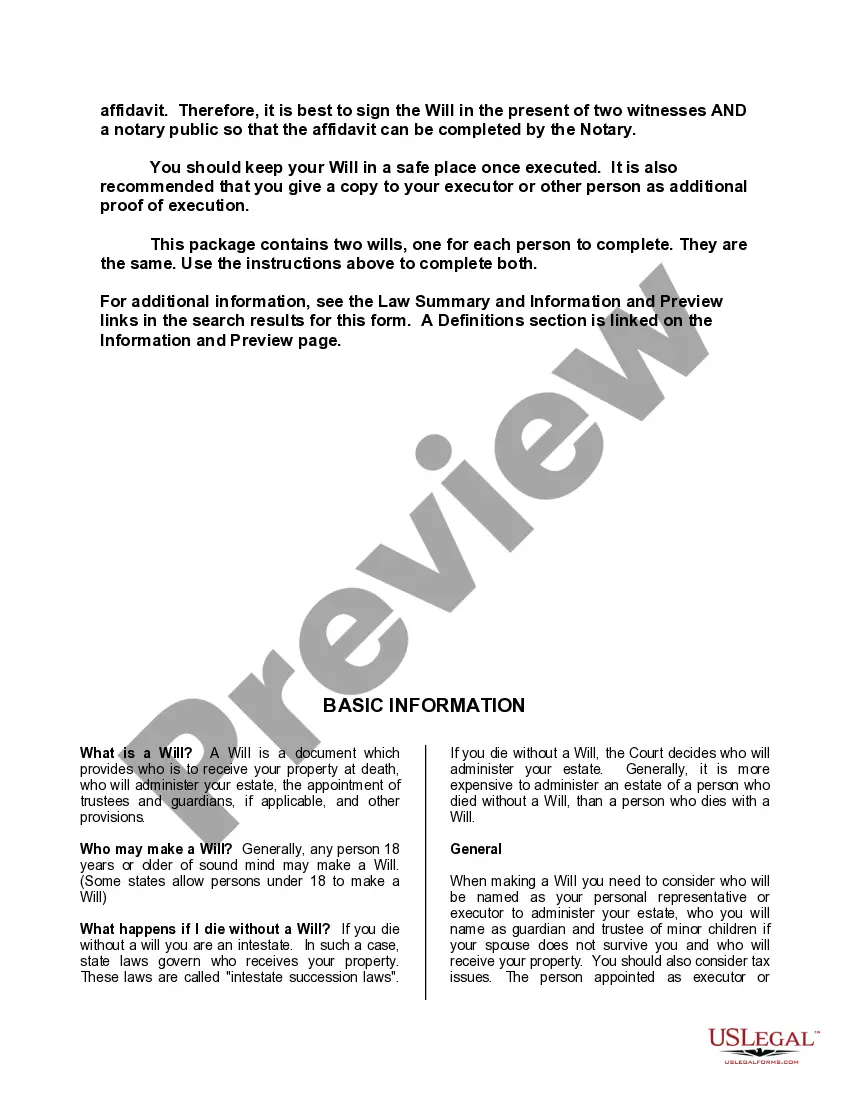
Yes, this form must be notarized to be legally valid. It is recommended to have a notary public present during the signing of the wills. US Legal Forms provides integrated online notarization services for convenience, allowing you to complete the process securely from home.
Get your form ready online
Our built-in tools help you complete, sign, share, and store your documents in one place.
Make edits, fill in missing information, and update formatting in US Legal Forms—just like you would in MS Word.
Download a copy, print it, send it by email, or mail it via USPS—whatever works best for your next step.
Sign and collect signatures with our SignNow integration. Send to multiple recipients, set reminders, and more. Go Premium to unlock E-Sign.
If this form requires notarization, complete it online through a secure video call—no need to meet a notary in person or wait for an appointment.
We protect your documents and personal data by following strict security and privacy standards.
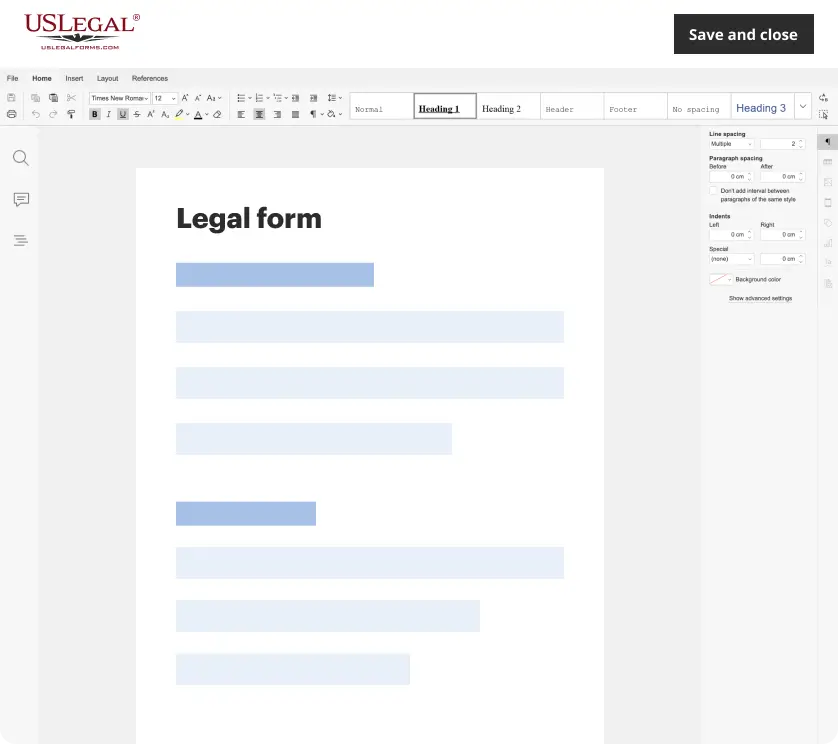
Make edits, fill in missing information, and update formatting in US Legal Forms—just like you would in MS Word.
Download a copy, print it, send it by email, or mail it via USPS—whatever works best for your next step.
Sign and collect signatures with our SignNow integration. Send to multiple recipients, set reminders, and more. Go Premium to unlock E-Sign.

If this form requires notarization, complete it online through a secure video call—no need to meet a notary in person or wait for an appointment.

We protect your documents and personal data by following strict security and privacy standards.
Common mistakes
- Not having the will signed by two witnesses and a notary, if required.
- Failing to specify property or beneficiaries clearly.
- Not updating the wills if circumstances change, such as acquiring new property.
- Overlooking the requirement for notarization in states that mandate it.
Why use this form online
- Convenient access to legal documents from anywhere at any time.
- Editable format ensures that you can customize the will to fit your specific needs.
- Drafted by licensed attorneys to ensure it meets legal standards and requirements.
- Print and execute the documents quickly without the need for an attorney consultation.
What to keep in mind
- A Mutual Will is essential for cohabiting partners to ensure their property passes to one another.
- The form includes clear instructions for each step, making it user-friendly.
- Legal notarization is required to reinforce the validity of the document.
Looking for another form?
Form popularity
FAQ
The mutual wills can be revoked during the lifetimes of both testators, but, on the first death, the survivor is prevented from making a new will in the future.
Only assets that the deceased person owned in his or her own name, alone, must go through probate. All other assets pass to new owners without oversight from the probate court. Assets that go through probate make up what's called the probate estate.
Choose an online legal services provider or locate a will template. Carefully consider your distribution wishes. Identify a personal representative/executor. Understand the requirements to make your will legal. Make sure someone else knows about your will. Consult a lawyer if you have a more complicated estate.
Married couples often execute wills which are identical in their provisions, frequently giving the estate to the surviving spouse or if the spouse does not survive to the children.However, not every mirror will is a "mutual will", indeed very few mirror wills are mutual wills.
A joint will is a legal document executed by two (or more) people, which merges their individual wills into a single, combined last will and testament. Like most wills, a joint will lets the will-makers name who will get their property and assets after they die. Joint wills are usually created by married couples.
A mutual Will is where two (or more) testators make Wills which mirror the contents of the other(s). However, mutual Wills cannot be altered upon the death of one of the testators.
A joint will is a legal document executed by two (or more) people, which merges their individual wills into a single, combined last will and testament. Like most wills, a joint will lets the will-makers name who will get their property and assets after they die. Joint wills are usually created by married couples.
Choose an online legal services provider or locate a will template. Carefully consider your distribution wishes. Identify a personal representative/executor. Understand the requirements to make your will legal. Make sure someone else knows about your will. Consult a lawyer if you have a more complicated estate.
There have been examples of joint wills being upheld by the law, but it is on the basis that they are two wills, separately proved; and the second person is at liberty to change the will anyway (unless it is a valid mutual will).