South Dakota Last Will and Testament for Divorced Person Not Remarried with No Children
What is this form?
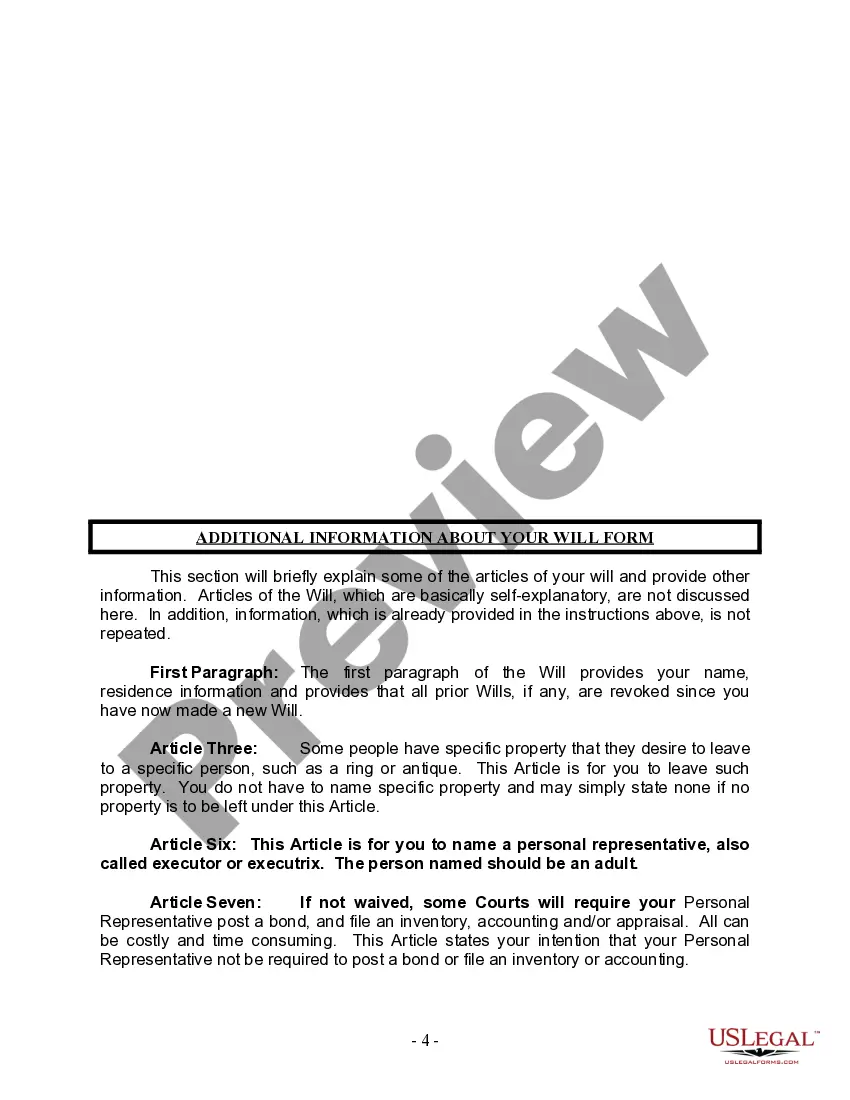
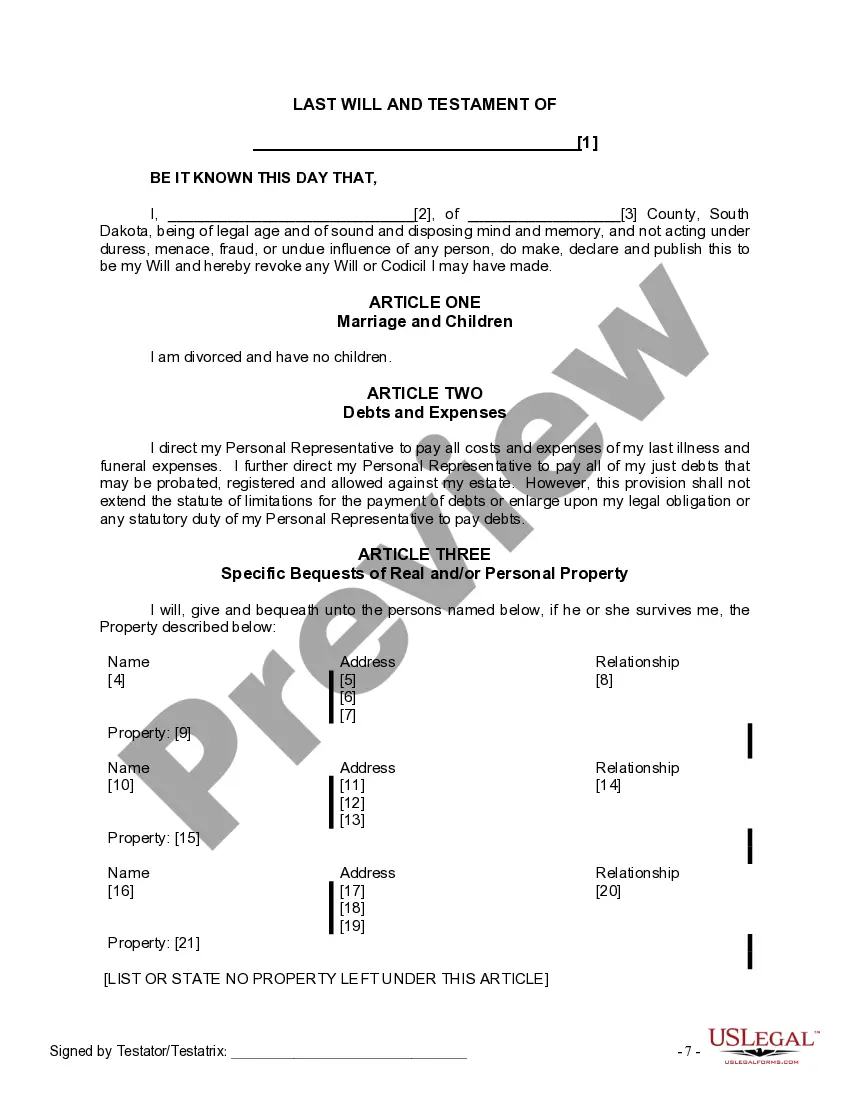
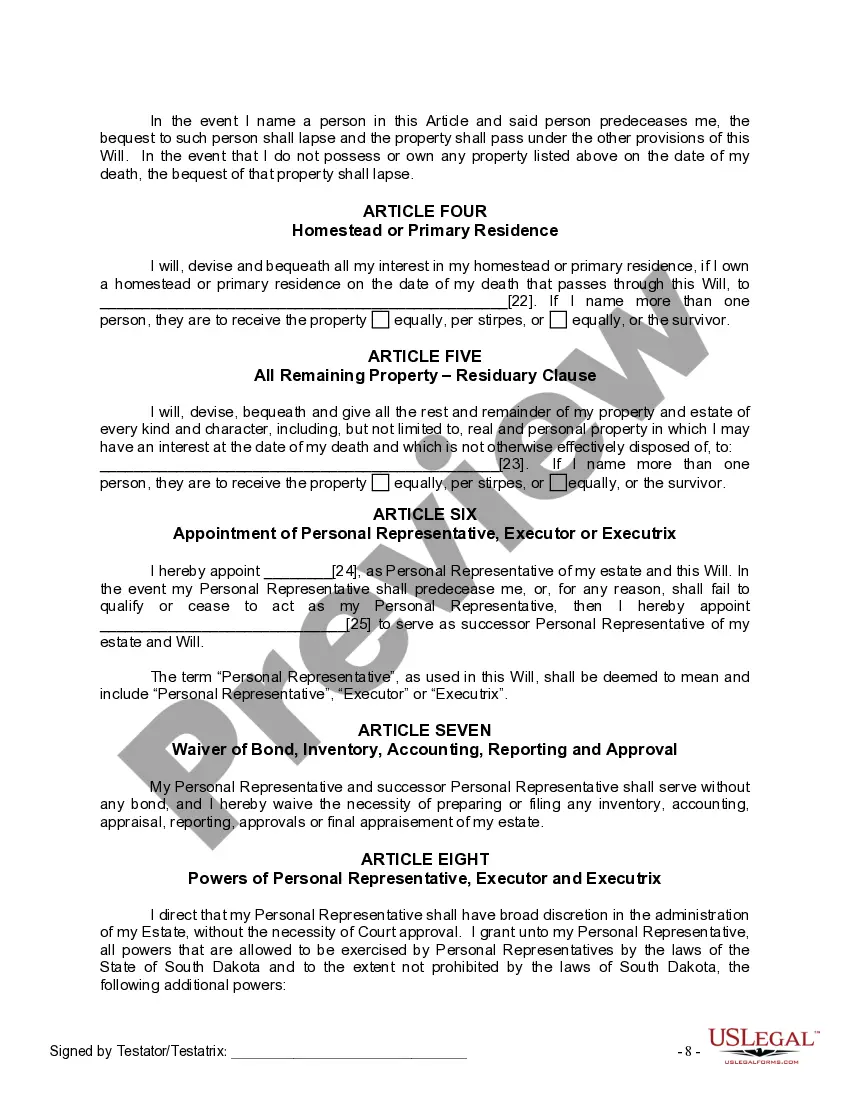
This Last Will and Testament is a legal document specifically designed for divorced individuals who have not remarried and do not have children. It allows you to designate who will receive your property after your death and to appoint a personal representative to administer your estate. This form ensures your wishes are documented and provides a clear structure for distributing your assets, tailored to your unique situation as a divorced person.
Key components of this form
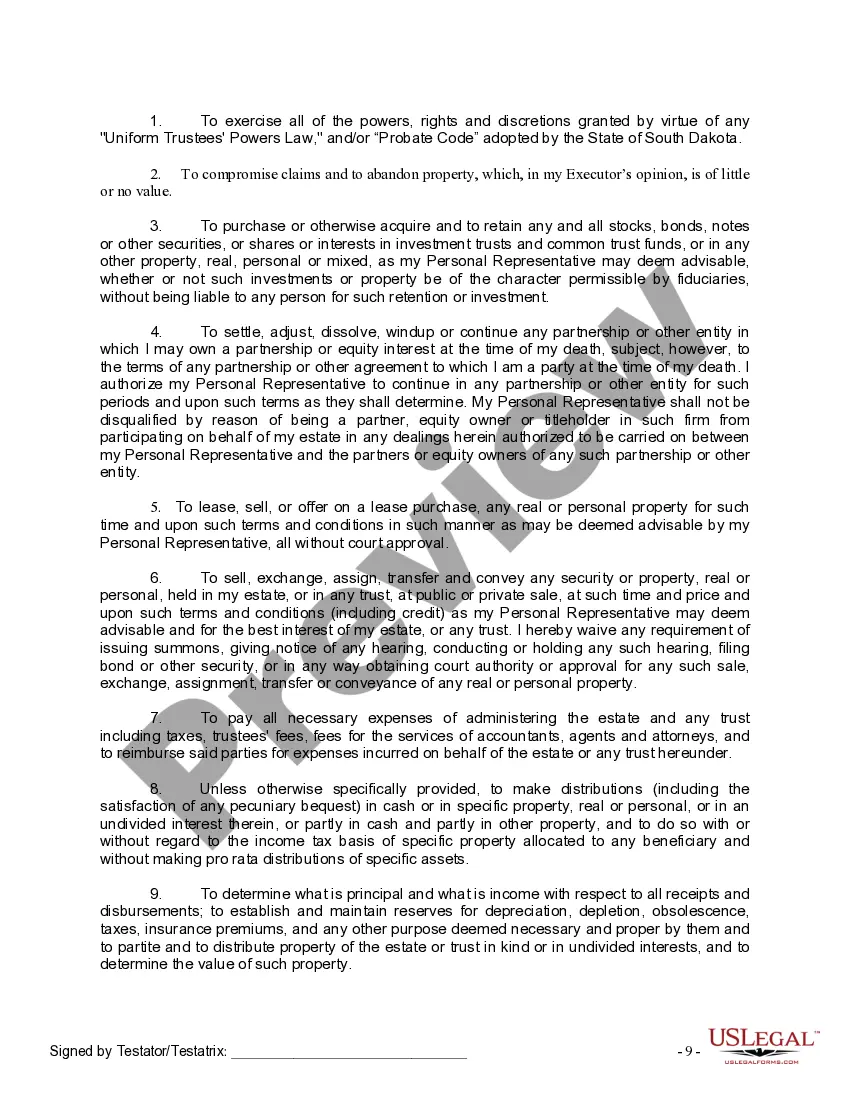
- Appointment of a personal representative or executor
- Specific bequests of property to named individuals
- Provisions for the distribution of your homestead
- Residue clause for remaining assets
- Legal declarations regarding debts and funeral expenses
- Signature requirements for validation in front of witnesses



When to use this document
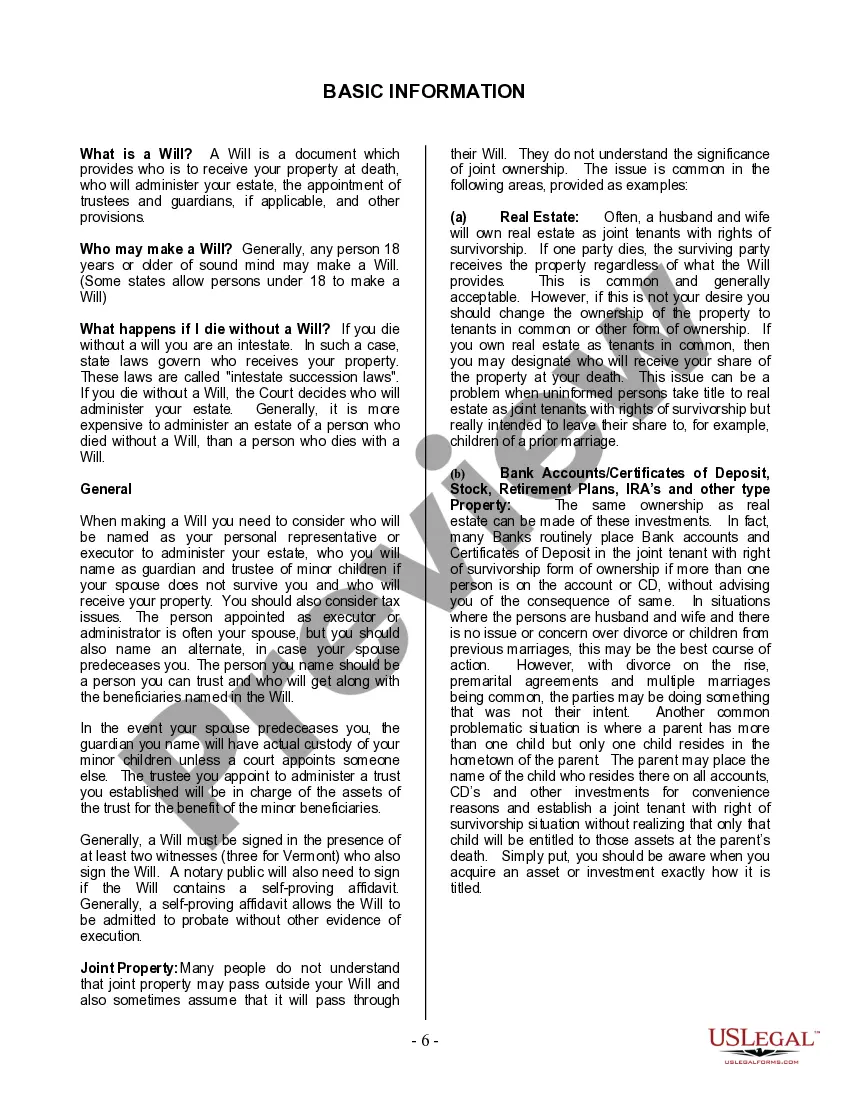
This form is useful if you are a divorced person with no children looking to establish how your assets will be distributed after your death. It is important to use this form if you wish to ensure that your specific wishes are documented, particularly if your circumstances have changed since any prior wills or if you have particular people you want to receive your property.
Who this form is for
- Individuals who are divorced and not remarried
- Persons with no children
- Anyone needing to establish a will that reflects their unique family status
- Individuals wishing to clearly designate their property distribution wishes
Steps to complete this form
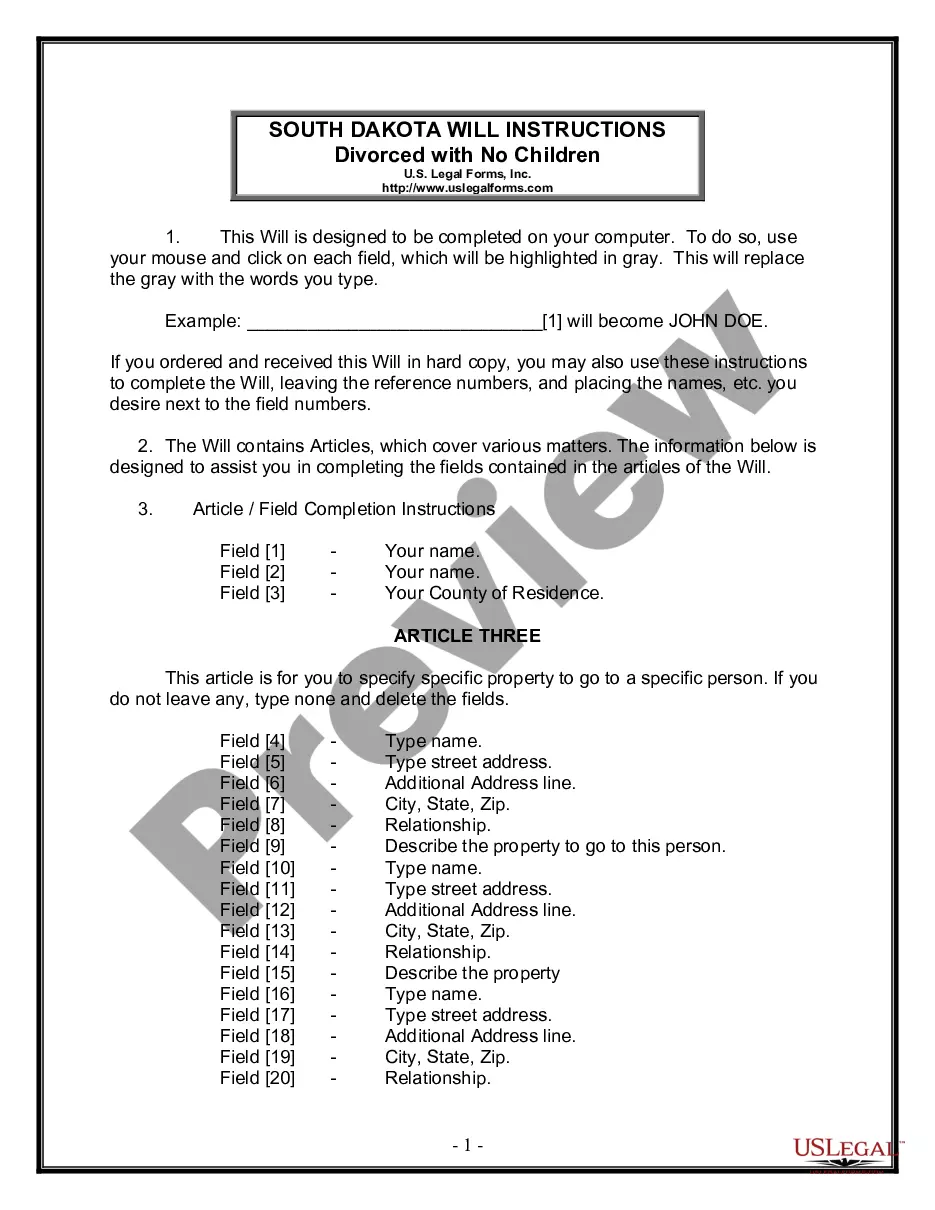
- Begin by entering your full name and county of residence in the specified fields.
- Designate specific individuals to receive particular items of property that you own.
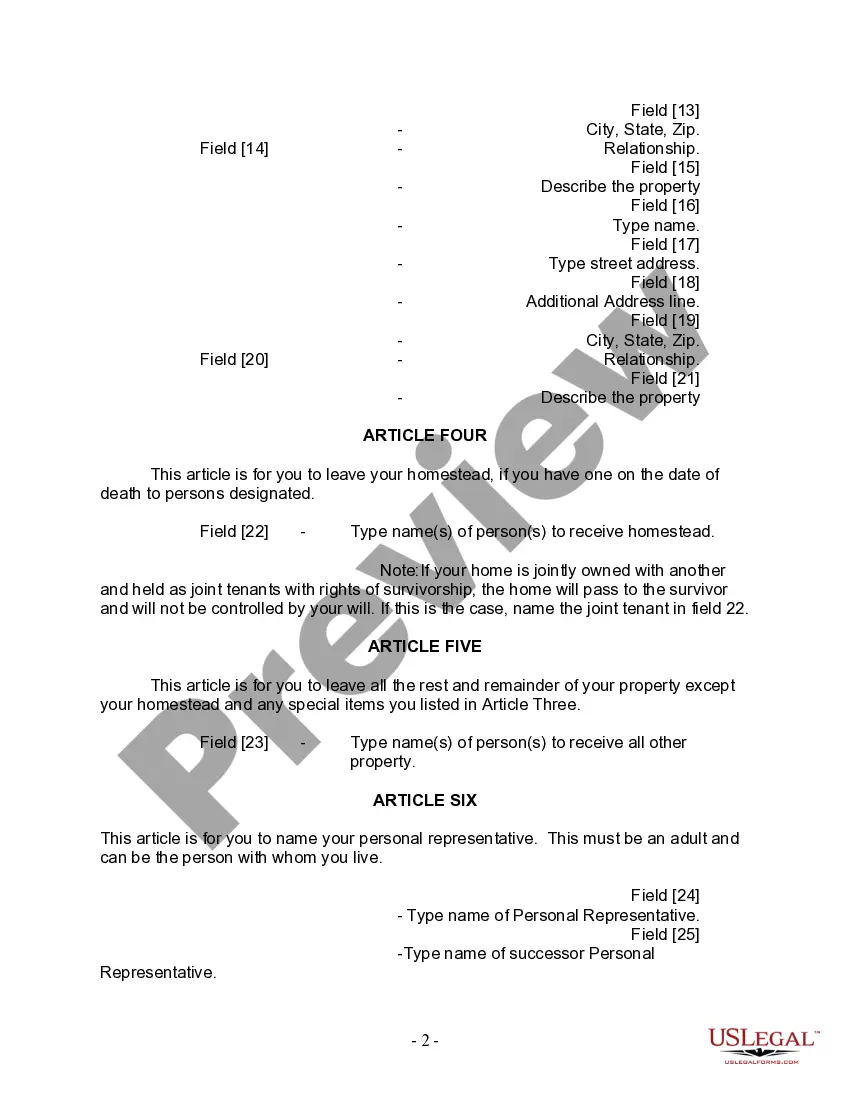
- Identify who will receive your homestead if applicable.
- Appoint a personal representative who will manage your estate.
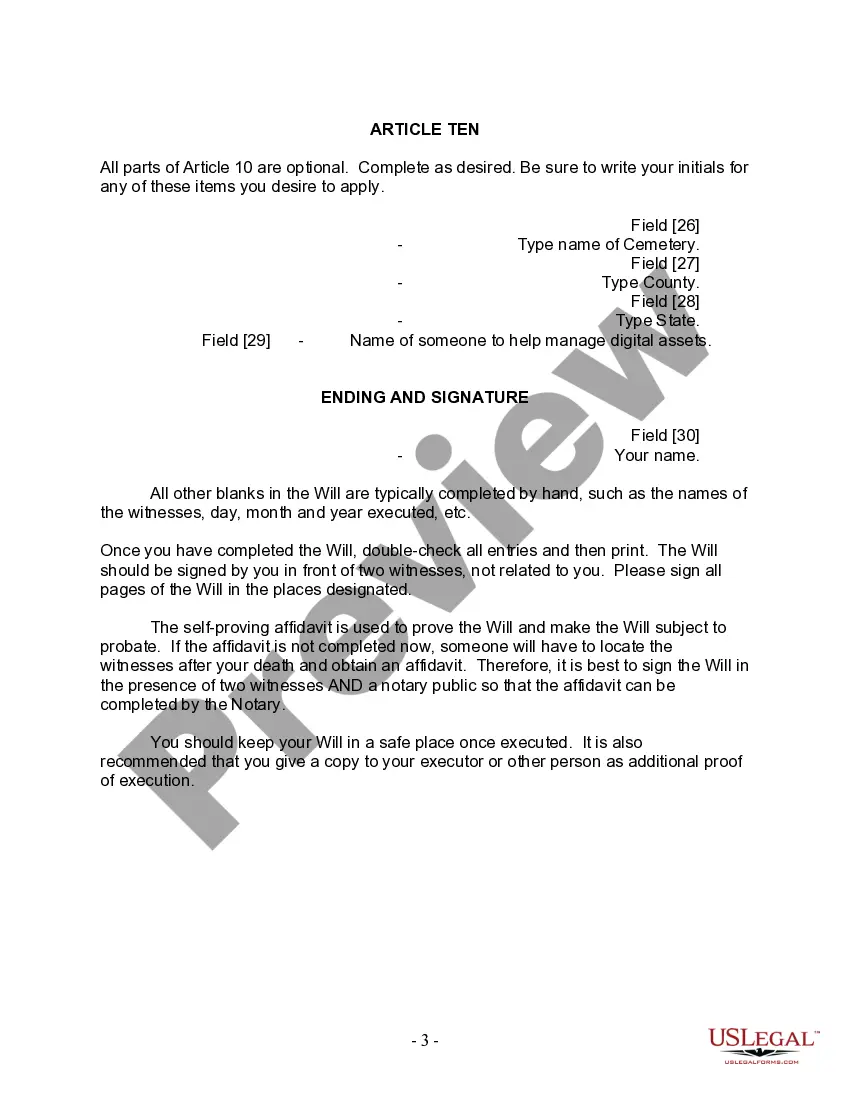
- Ensure to sign the document in the presence of two witnesses.
- Consider notarizing your will for the self-proving affidavit if required.
Is notarization required?
This form must be notarized to be legally valid. US Legal Forms provides secure online notarization powered by Notarize, allowing you to complete the process through a verified video call.
Get your form ready online
Our built-in tools help you complete, sign, share, and store your documents in one place.
Make edits, fill in missing information, and update formatting in US Legal Forms—just like you would in MS Word.
Download a copy, print it, send it by email, or mail it via USPS—whatever works best for your next step.
Sign and collect signatures with our SignNow integration. Send to multiple recipients, set reminders, and more. Go Premium to unlock E-Sign.
If this form requires notarization, complete it online through a secure video call—no need to meet a notary in person or wait for an appointment.
We protect your documents and personal data by following strict security and privacy standards.

Make edits, fill in missing information, and update formatting in US Legal Forms—just like you would in MS Word.

Download a copy, print it, send it by email, or mail it via USPS—whatever works best for your next step.

Sign and collect signatures with our SignNow integration. Send to multiple recipients, set reminders, and more. Go Premium to unlock E-Sign.

If this form requires notarization, complete it online through a secure video call—no need to meet a notary in person or wait for an appointment.

We protect your documents and personal data by following strict security and privacy standards.
Avoid these common issues
- Failing to have the will signed in front of the required witnesses.
- Not designating a personal representative or failing to appoint a successor.
- Leaving out important property that you wish to bequeath.
- Not reviewing and updating the will after significant life changes.
Benefits of completing this form online
- Convenient access from anywhere, allowing for easy updates and modifications.
- Editability to tailor the document according to personal preferences.
- Immediate availability of legal templates designed by licensed attorneys.
- No need to schedule in-person appointments for form completion.
Key takeaways
- Ensures secure distribution of your assets post-death.
- Appoints a personal representative to manage your estate.
- Tailored specifically for divorced individuals with no children.
Looking for another form?
Form popularity
FAQ
If there is no surviving spouse and no descendants, then the intestacy law usually dictates that the property is to be distributed to the closest living relative, based upon the Table of Consanguinity.When a person dies intestate and without heirs, then the property could escheat to the state.
Bank accounts. Brokerage or investment accounts. Retirement accounts and pension plans. A life insurance policy.
If the natural parents die intestatewithout a willthe court appoints a guardian.Alternatively, a third party, such as a family friend, can petition the court to be appointed guardian. If the child has no surviving family members, they could become a ward of the state and enter the foster care system.
Most single people should have a will. A will can help you determine who will get your property (including your home, business, pets, and digital assets), name guardians for your children, and name an executor. A will also puts your wishes in writing so there's no confusion about your intentions.