South Dakota Bankruptcy Guide and Forms Package for Chapters 7 or 13
What is this form?
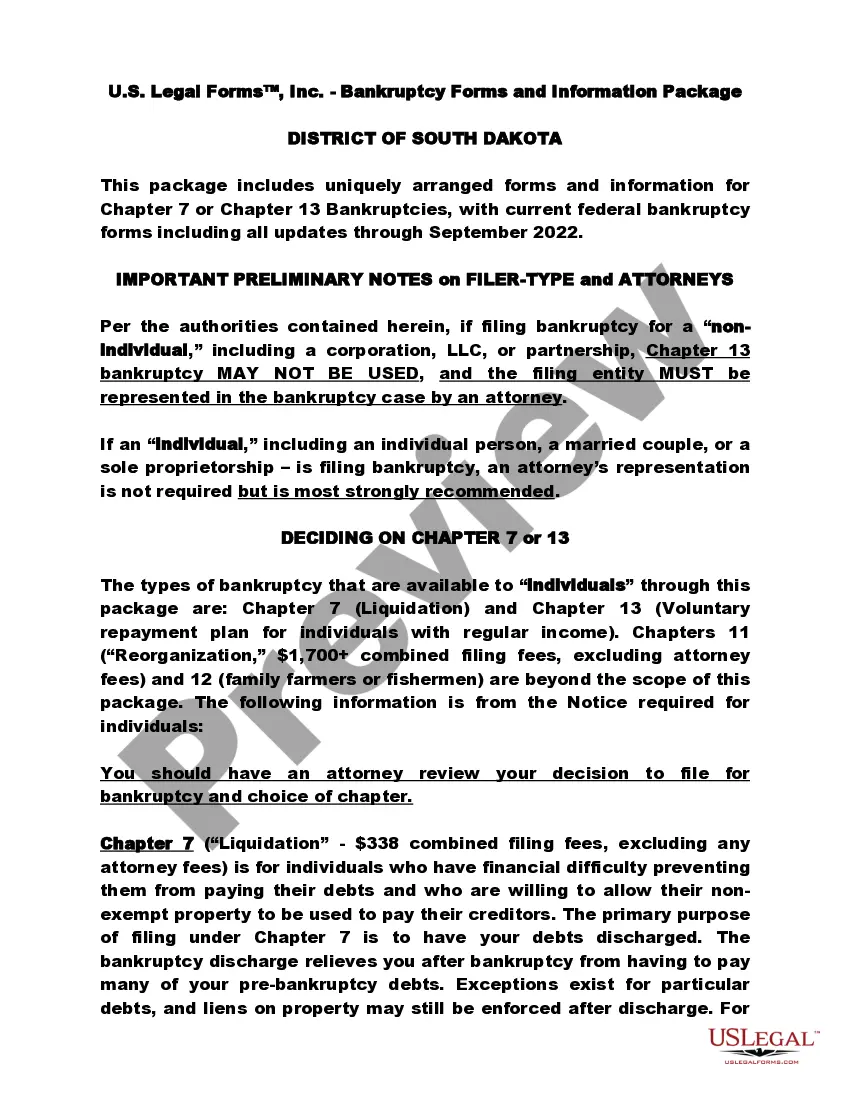
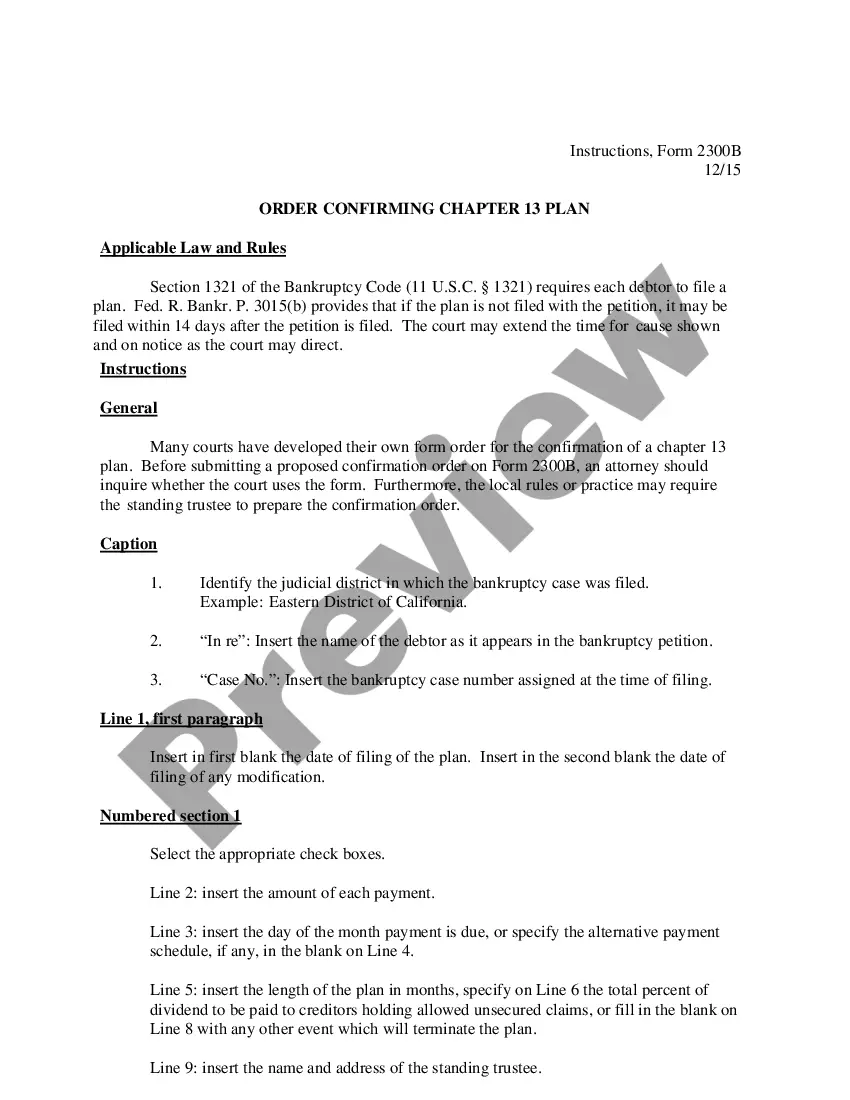
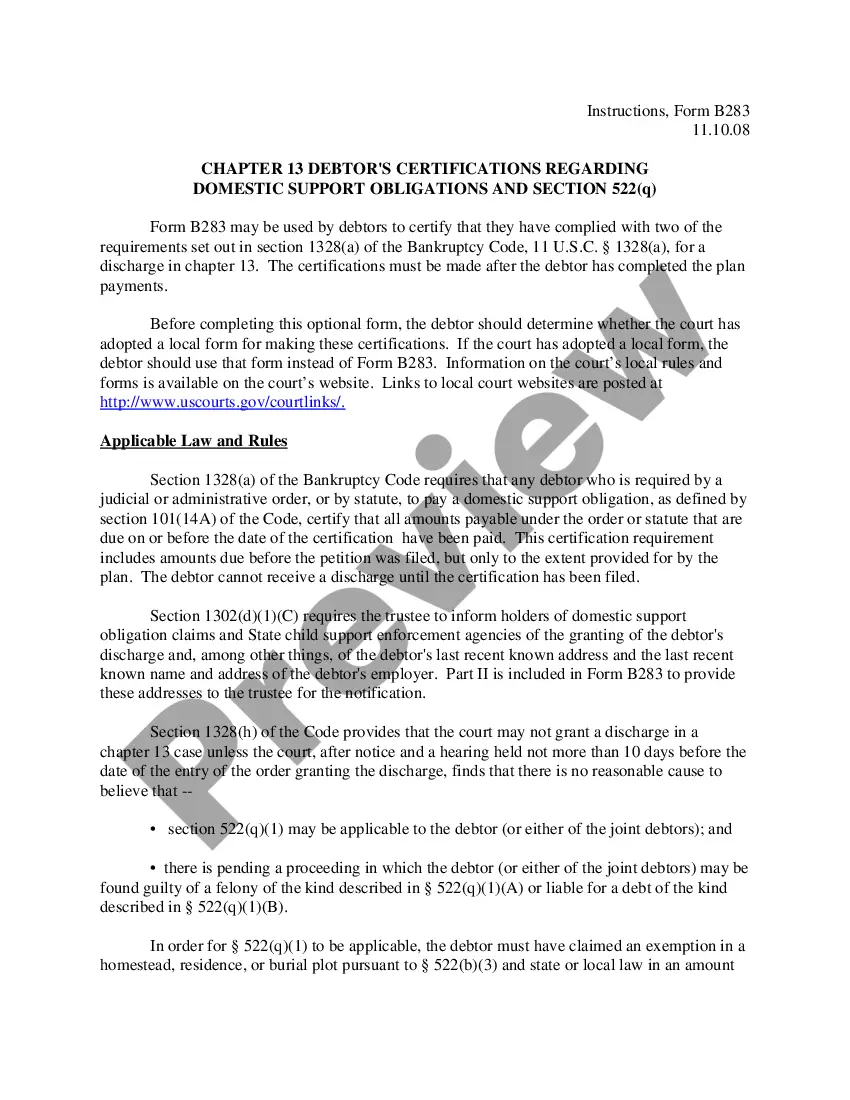
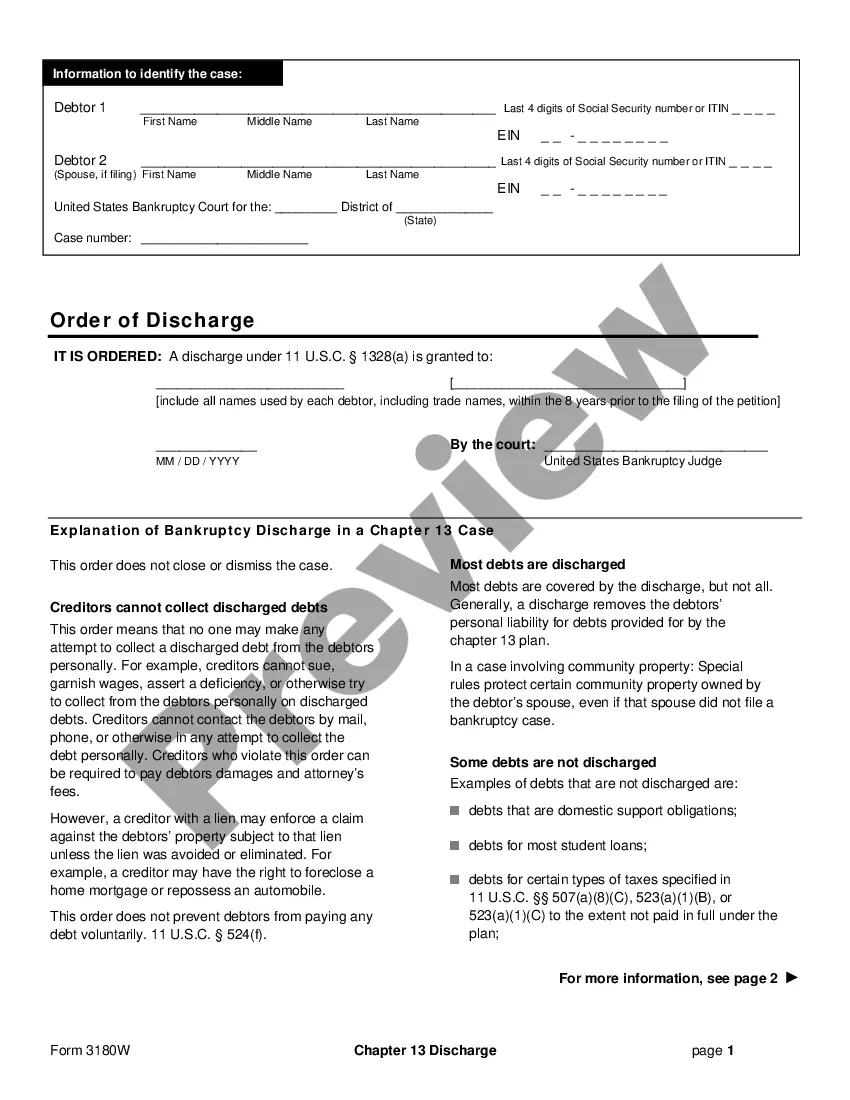
The South Dakota Bankruptcy Guide and Forms Package for Chapters 7 or 13 provides essential legal documents and instructions necessary for individuals seeking to file for bankruptcy. This package is tailored for Chapter 7 (Liquidation) and Chapter 13 (Voluntary Repayment Plan) bankruptcies, distinguishing itself by offering detailed guidance and resources to navigate the bankruptcy process effectively.
What’s included in this form
- Guidance for deciding between Chapter 7 and Chapter 13 bankruptcy.
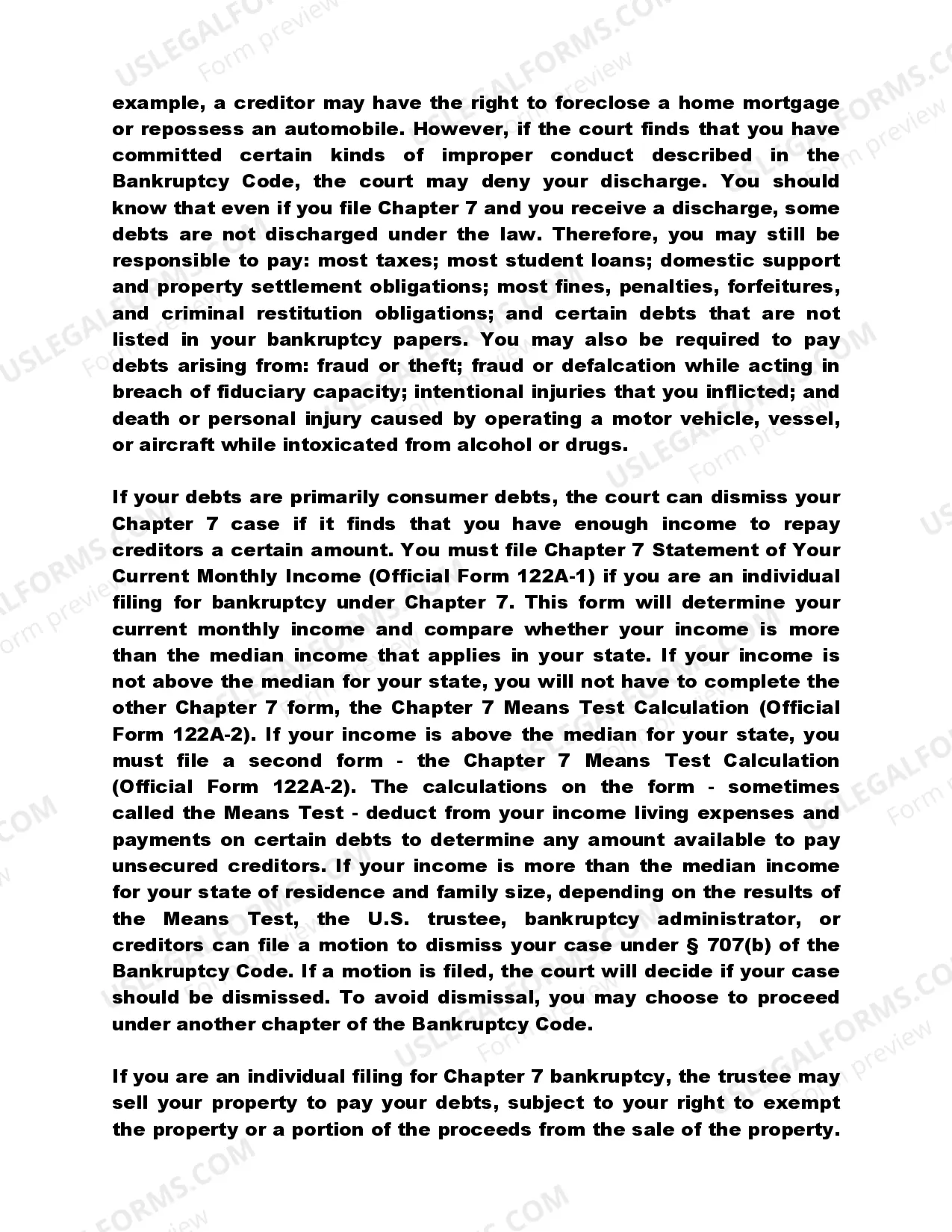
- Instructions for completing the necessary forms, including the Chapter 7 Statement of Your Current Monthly Income and Chapter 7 Means Test Calculation.
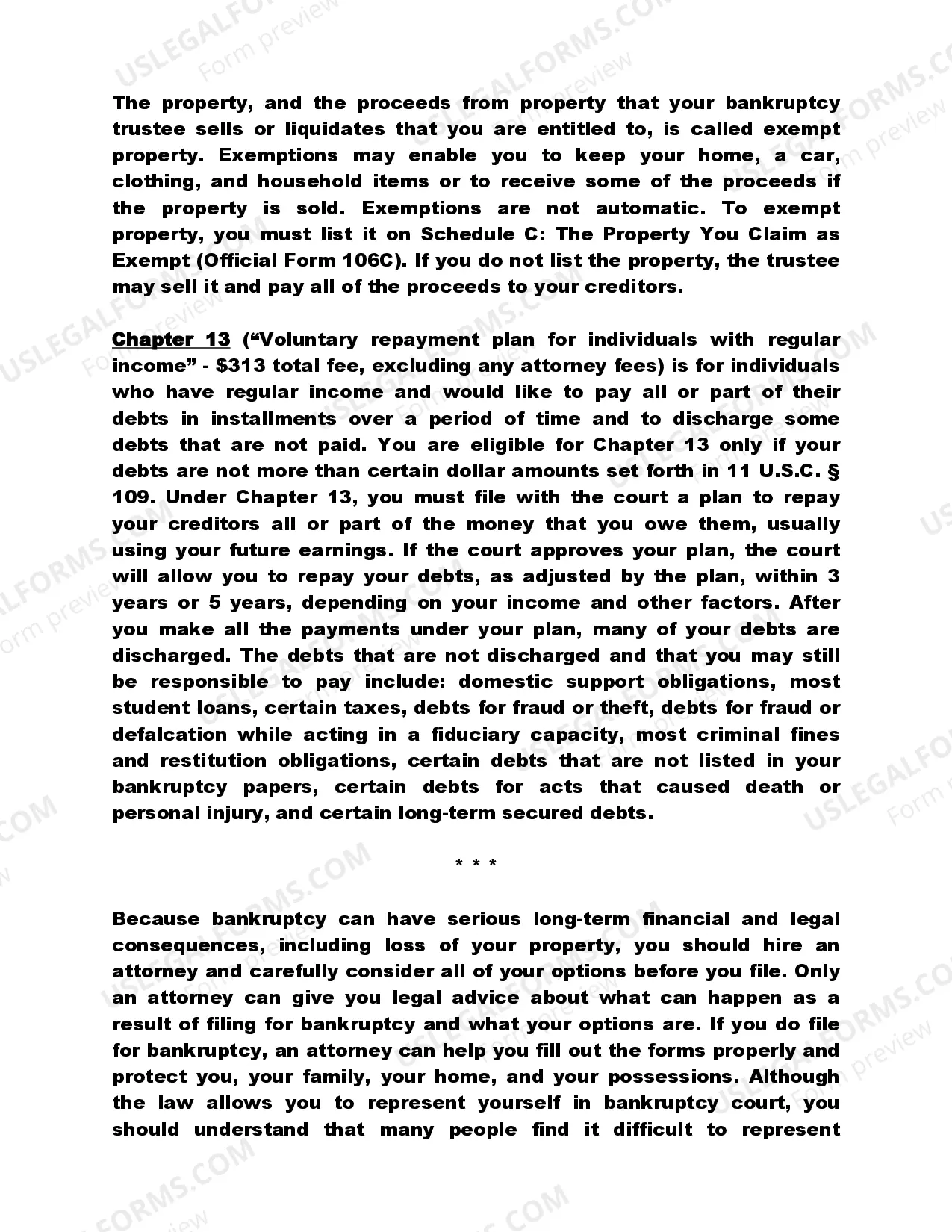
- Information on the kinds of debts discharged and those that remain after filing.
- Details on the filing process and important considerations regarding property exemptions.
- Login information for accessing the forms package online.
Situations where this form applies
This form is needed when individuals are facing financial difficulties and are unable to repay their debts. If you are considering bankruptcy, this package will help determine whether to file under Chapter 7 or Chapter 13 while providing the necessary forms and instructions to file correctly.
Who this form is for
- Individuals facing severe financial hardship.
- Married couples wanting to file for bankruptcy together.
- Sole proprietors eligible for individual bankruptcy filing.
- Individuals whose debts qualify for either Chapter 7 or Chapter 13 protections.
How to complete this form
- Determine if you are an individual or a business entity; businesses must be represented by an attorney when filing under Chapter 13.
- Decide between filing Chapter 7 or Chapter 13 based on your financial situation.
- Complete the Chapter 7 Statement of Your Current Monthly Income and Chapter 7 Means Test Calculation if filing Chapter 7.
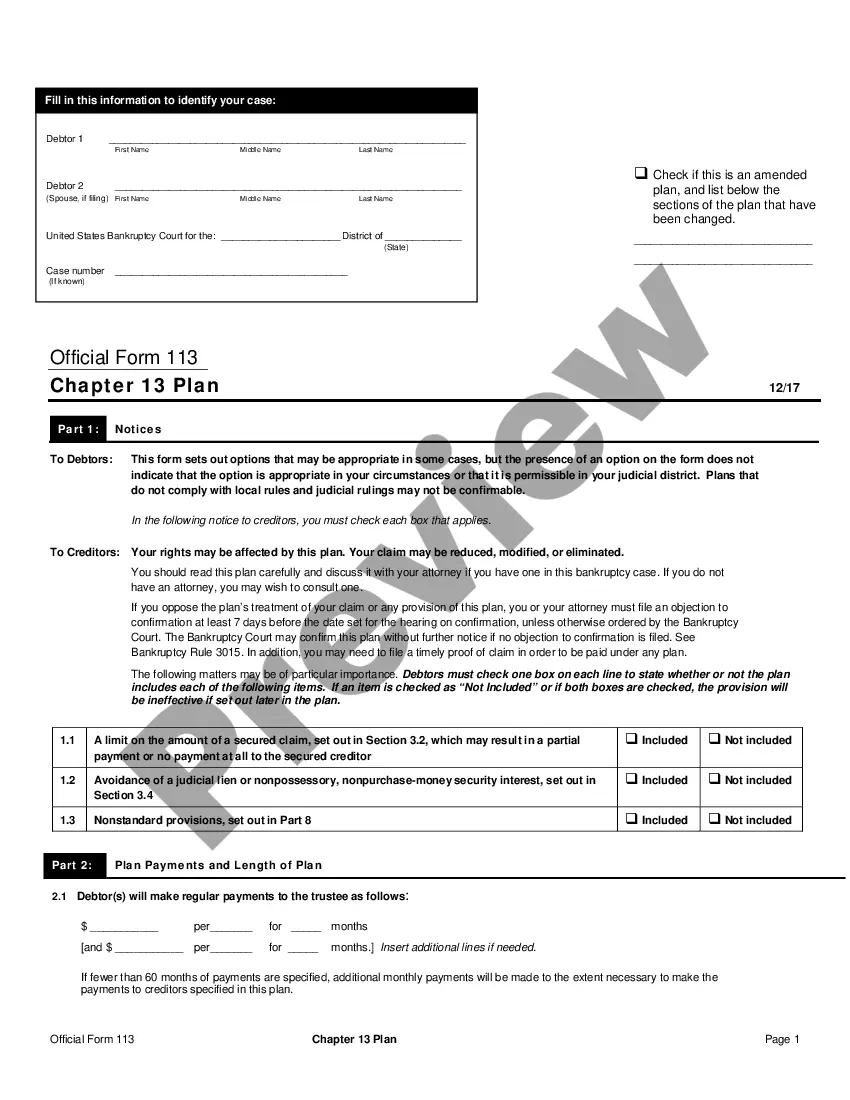
- If opting for Chapter 13, develop a repayment plan based on your income and submit it with your forms.
- Gather necessary documentation and ensure that you understand the exemptions applicable to your property.
Does this document require notarization?
Notarization is generally not required for this form. However, certain states or situations might demand it. You can complete notarization online through US Legal Forms, powered by Notarize, using a verified video call available anytime.
Get your form ready online
Our built-in tools help you complete, sign, share, and store your documents in one place.
Make edits, fill in missing information, and update formatting in US Legal Forms—just like you would in MS Word.
Download a copy, print it, send it by email, or mail it via USPS—whatever works best for your next step.
Sign and collect signatures with our SignNow integration. Send to multiple recipients, set reminders, and more. Go Premium to unlock E-Sign.
If this form requires notarization, complete it online through a secure video call—no need to meet a notary in person or wait for an appointment.
We protect your documents and personal data by following strict security and privacy standards.

Make edits, fill in missing information, and update formatting in US Legal Forms—just like you would in MS Word.

Download a copy, print it, send it by email, or mail it via USPS—whatever works best for your next step.

Sign and collect signatures with our SignNow integration. Send to multiple recipients, set reminders, and more. Go Premium to unlock E-Sign.

If this form requires notarization, complete it online through a secure video call—no need to meet a notary in person or wait for an appointment.

We protect your documents and personal data by following strict security and privacy standards.
Avoid these common issues
- Failing to complete all required forms accurately.
- Not understanding the implications of choosing Chapter 7 over Chapter 13 or vice versa.
- Overlooking specific exemptions that allow certain assets to be retained.
- Submitting incomplete or incorrect income statements which can lead to dismissal.
Benefits of completing this form online
- Immediate access to the latest legal forms drafted by licensed attorneys.
- Convenient download options that allow you to access and edit the forms at your own pace.
- Clear instructions and resources that assist in understanding the bankruptcy process.
Legal use & context
- Bankruptcy filings must comply with federal and state laws to be enforceable.
- Some debts, including tax obligations and student loans, generally cannot be discharged regardless of the bankruptcy chapter chosen.
- It's advised to seek legal counsel to navigate potential complexities and exceptions in bankruptcy law.
Key takeaways
- The South Dakota Bankruptcy Guide and Forms Package offers necessary documentation for Chapter 7 and Chapter 13 bankruptcy filings.
- Understanding which chapter to file under is crucial based on individual financial circumstances.
- Proper completion of forms and knowledge of exemptions can significantly affect the outcome of a bankruptcy proceeding.
Looking for another form?
Form popularity
FAQ
Because a chapter 7 discharge is subject to many exceptions, debtors should consult competent legal counsel before filing to discuss the scope of the discharge. Generally, excluding cases that are dismissed or converted, individual debtors receive a discharge in more than 99 percent of chapter 7 cases.
Let's start with some bankruptcy basics: Chapter 7 bankruptcy is called a liquidation bankruptcy because the United States Bankruptcy Code empowers the trustee to sell nonexempt property to pay the filer's unsecured debt (like credit cards and medical bills).
A Chapter 7 bankruptcy will generally discharge your unsecured debts, such as credit card debt, medical bills and unsecured personal loans. The court will discharge these debts at the end of the process, generally about four to six months after you start.
Debts Never Discharged in Bankruptcy Alimony and child support. Certain unpaid taxes, such as tax liens. However, some federal, state, and local taxes may be eligible for discharge if they date back several years. Debts for willful and malicious injury to another person or property.
A bankruptcy dismissal closes your bankruptcy case, and if it occurs before you receive a discharge, it will mean that: you've lost the protection of the automatic stay (the order that prohibits creditors from collecting debts), and. you'll continue to be liable for your debts.
What Are Exemptions? All states have designated certain types of property as exempt, or free from seizure, by judgment creditors. For example, clothing, basic household furnishings, your house, and your car are commonly exempt, as long as they're not worth too much.
But less than 1% of bankruptcy applications are rejected by the Insolvency Service, so you need to stop worrying and find out the facts. What happens if a bankruptcy application is refused? Do you have a better alternative?
There are only a handful of reasons a chapter 7 bankruptcy will be dismissed by the court. However, what it usually boils down to is that the client didn't go to the hearing, finish the financial management course, or didn't tell the attorney about a valuable asset or stream of income..
After filing for Chapter 7, your property will go into a bankruptcy estate held by the Chapter 7 bankruptcy trustee appointed to your case. However, you don't lose everything because you can remove (exempt) property reasonably necessary to maintain a home and employment.