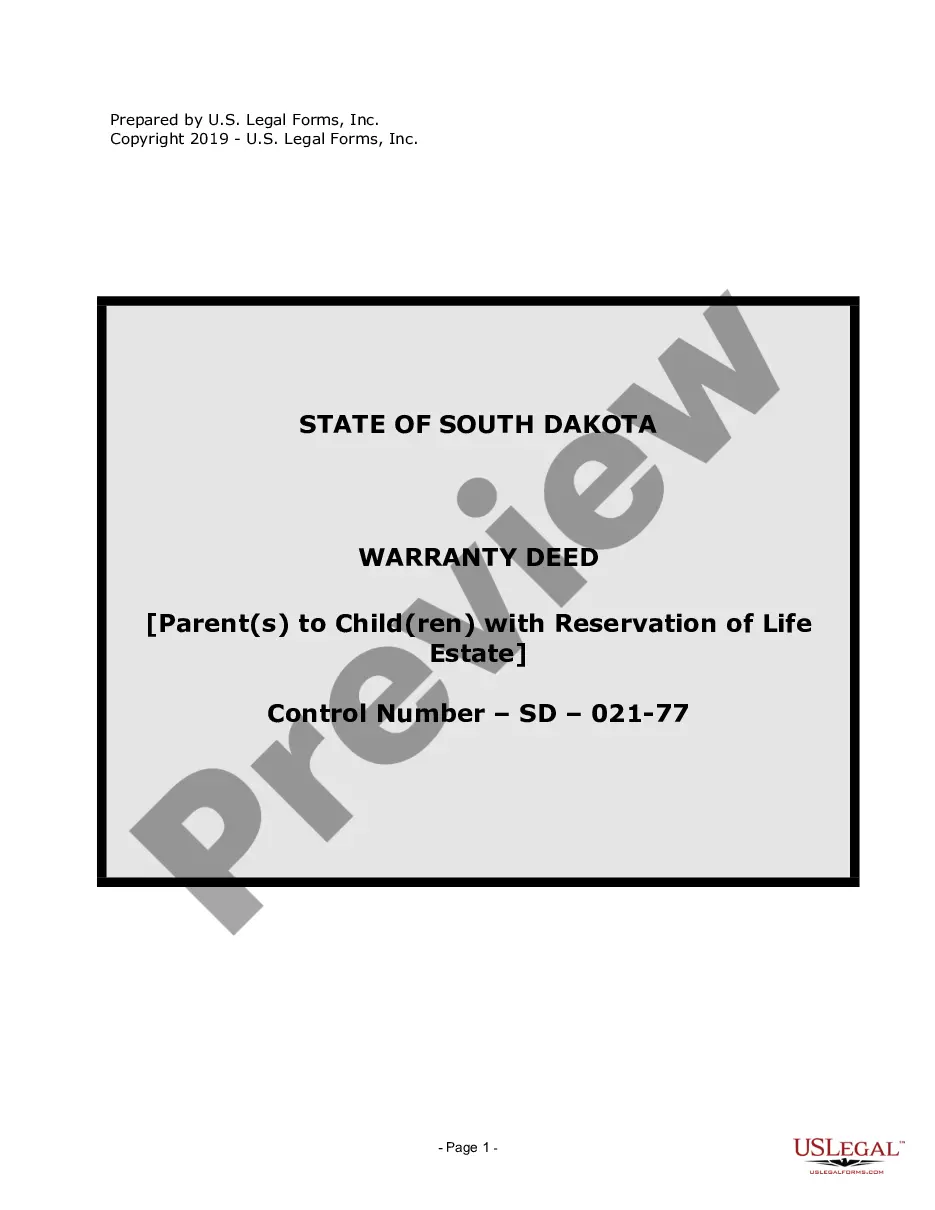
South Dakota Warranty Deed to Child Reserving a Life Estate in the Parents
What is this form?
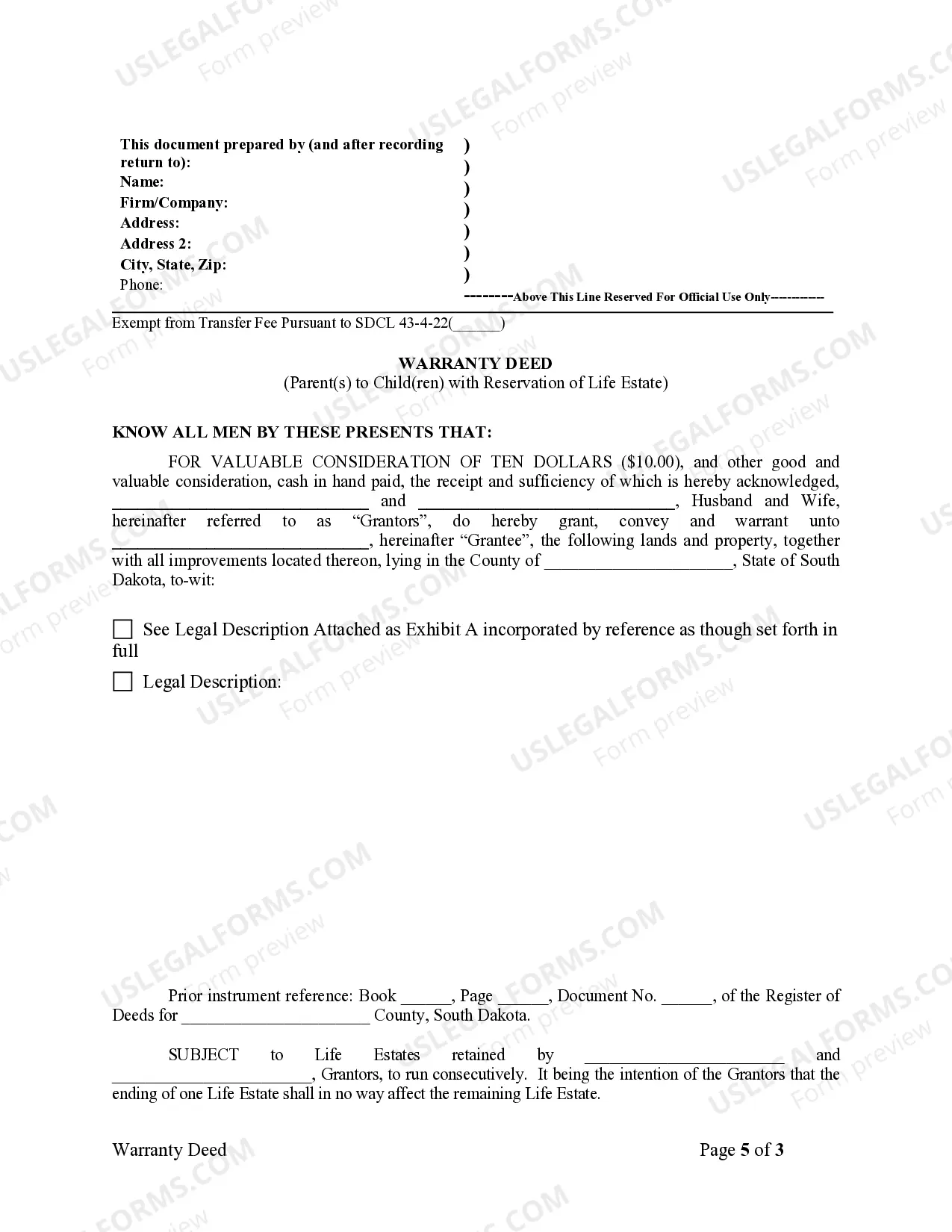
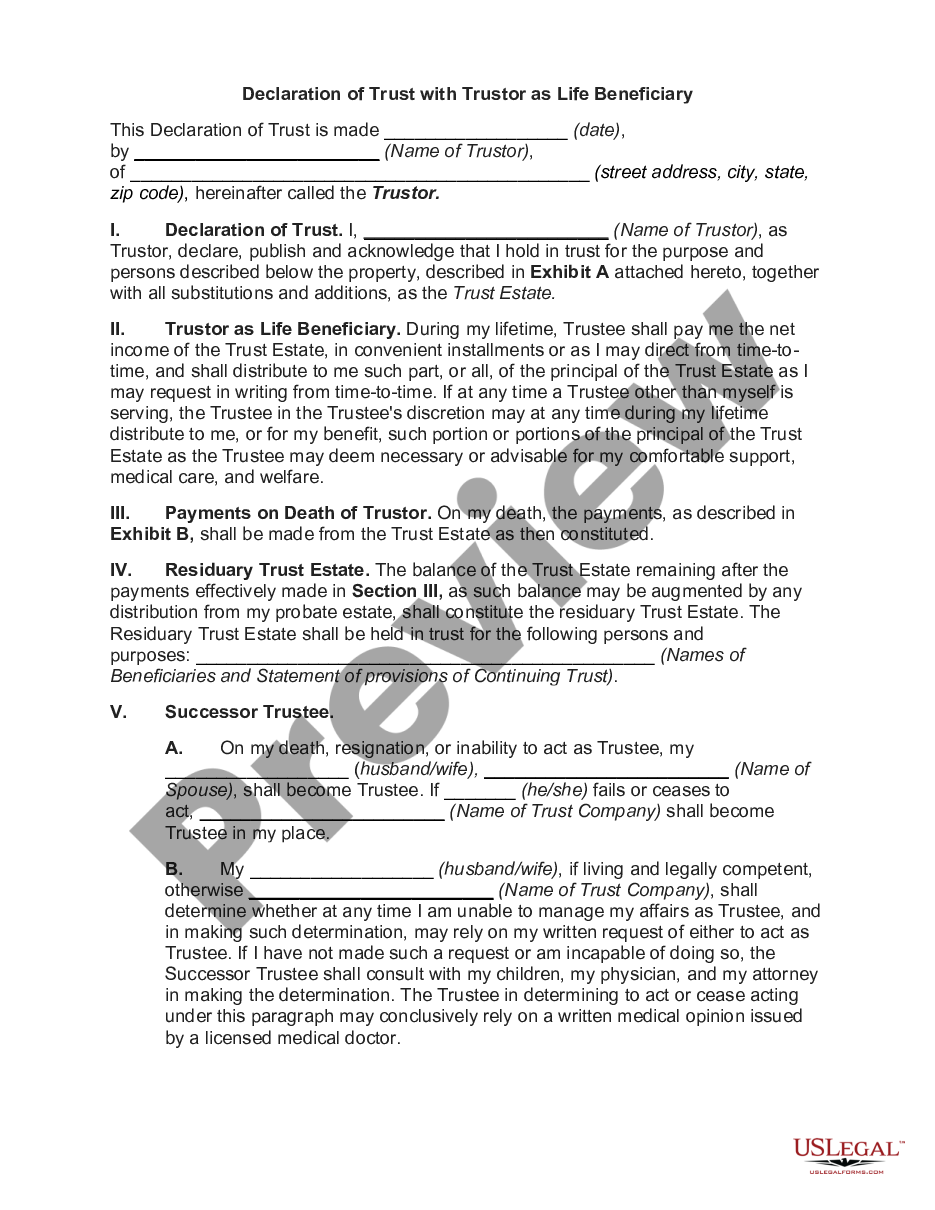
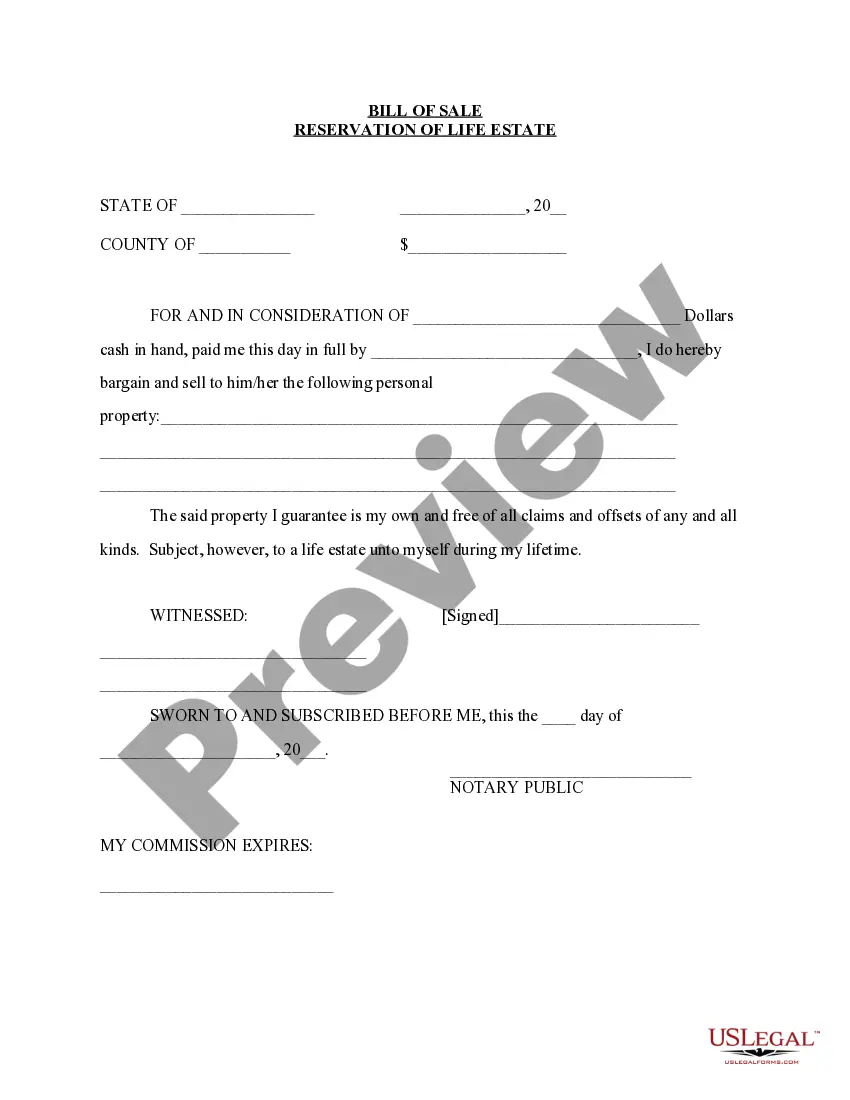
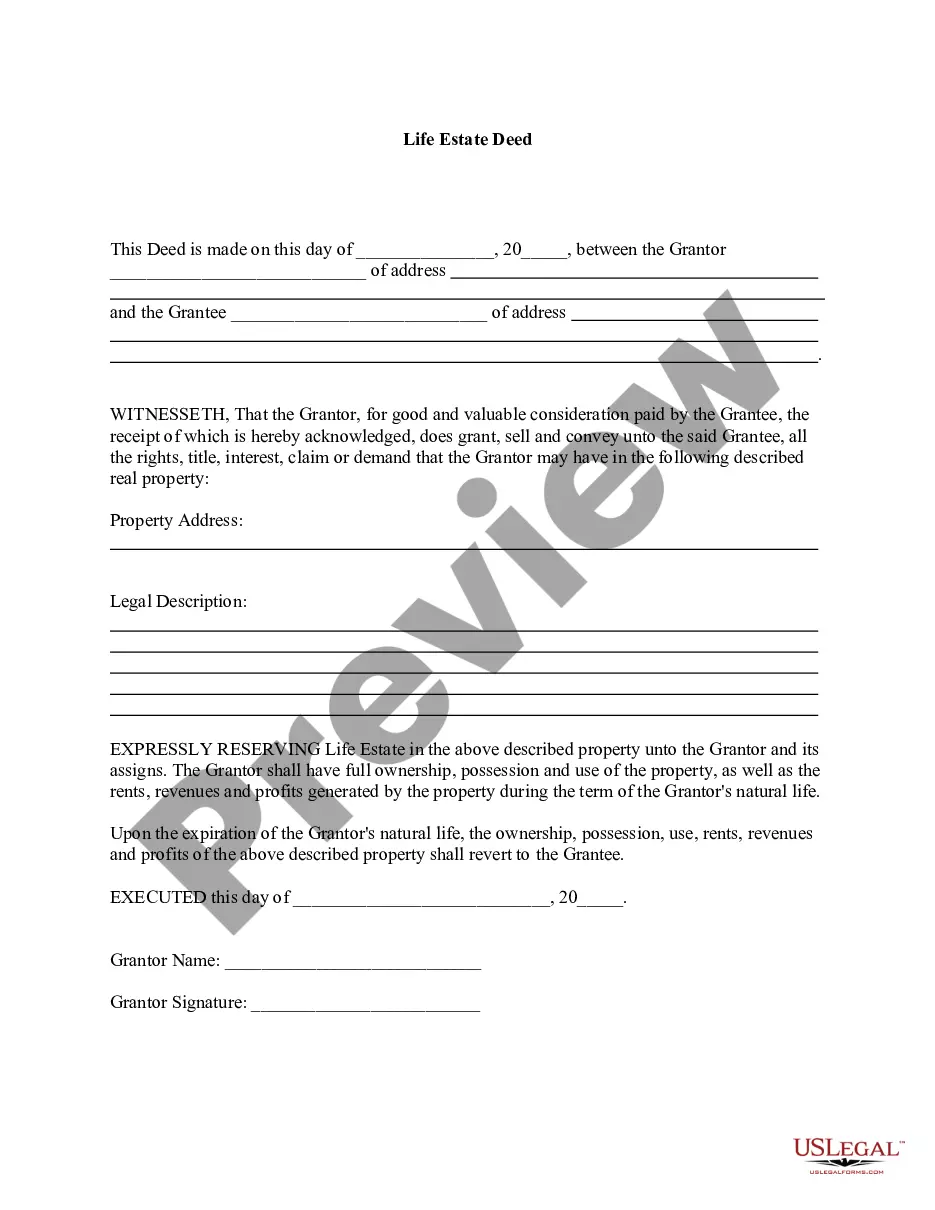
This Warranty Deed to Child Reserving a Life Estate in the Parents is a legal document that allows parents to convey property ownership to their child while retaining a life estate. This means the parents can continue to live on and use the property for the duration of their lives, after which the ownership fully transfers to the child. This form differs from standard warranty deeds because it reserves certain rights for the parents, ensuring they maintain an interest in the property even after the transfer takes place.
Key components of this form
- Identification of Grantors and Grantee: Names and roles of the parents (grantors) and child (grantee).
- Legal Description: Detailed description of the property being transferred.
- Reservation of Life Estate: Clause specifying the parents' right to use the property for life.
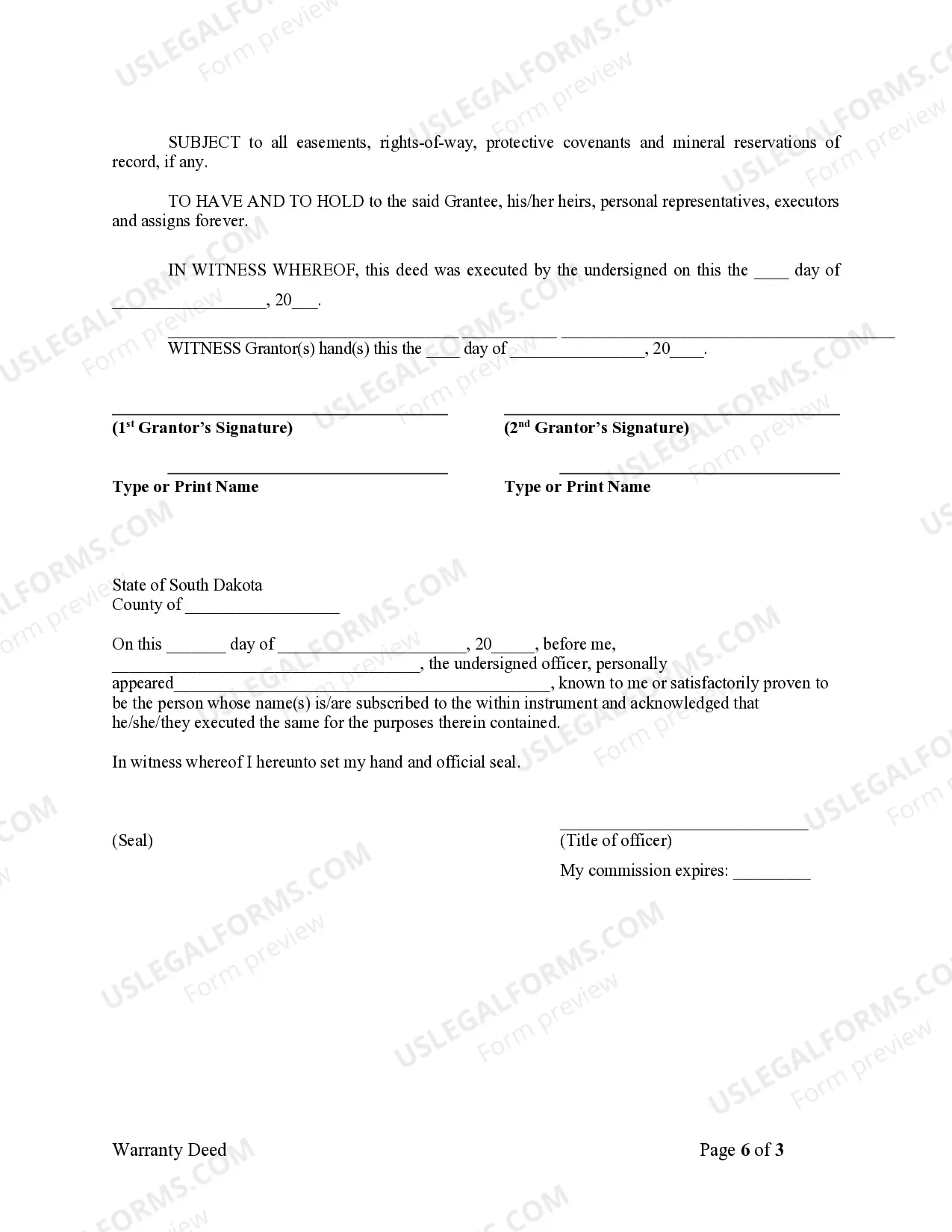
- Signature Lines: Areas for signatures from both grantors and witnesses.
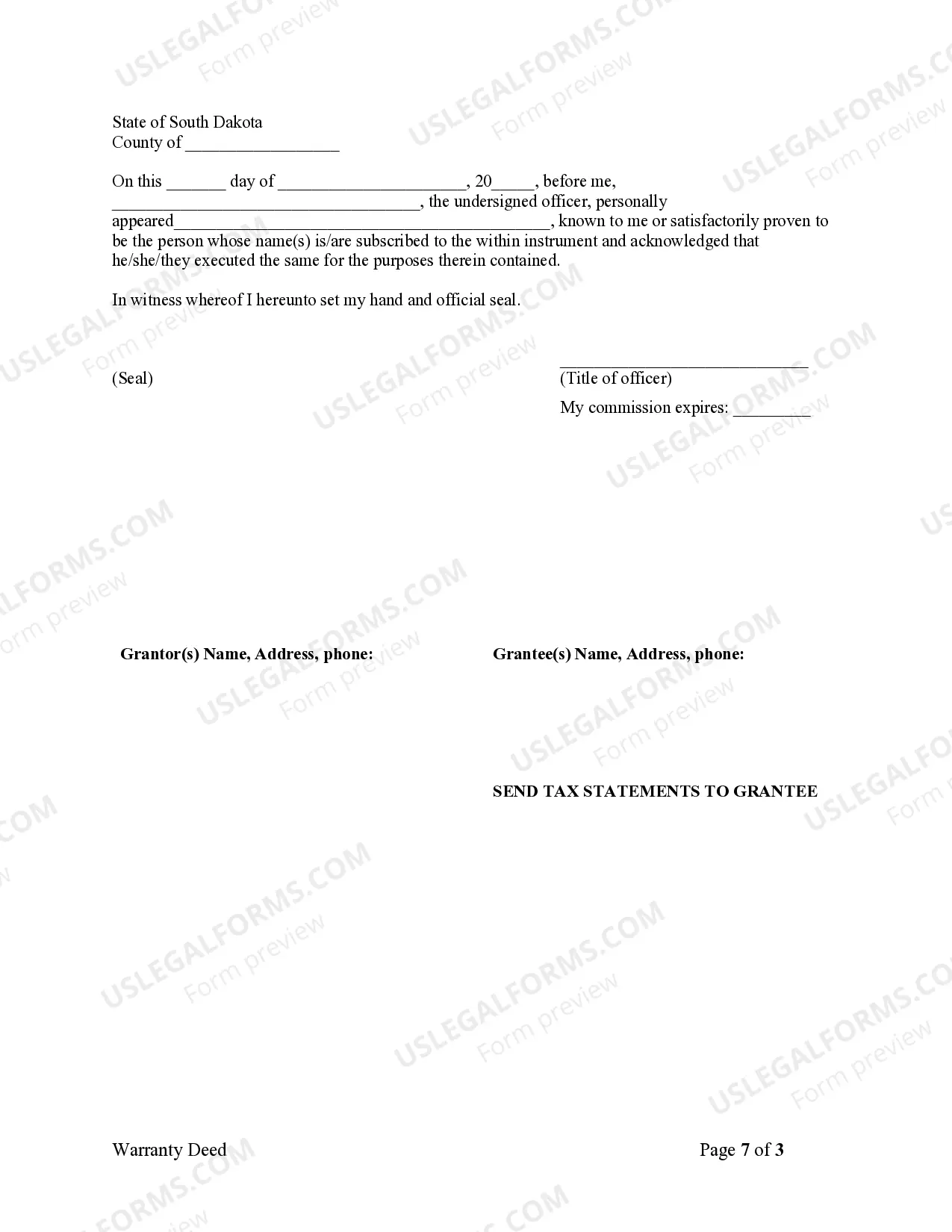
- Notarization Section: Indication of whether the deed needs to be notarized.



When this form is needed
This form is commonly used when parents want to pass on property to their child while still retaining the right to live on or utilize the property during their lifetimes. It is particularly relevant in estate planning scenarios where parents wish to manage their assets and provide for their children without entirely relinquishing control over their property.
Who can use this document
- Parents intending to transfer property ownership to their adult children.
- Individuals planning their estates and seeking to retain an interest in their property.
- Families looking to avoid probate complications by transferring property while retaining control.
How to prepare this document
- Identify the parties involved in the transfer: enter the names of the parents and child.
- Specify the property being transferred: include the complete legal description of the property.
- Detail the reservation of life estate: clearly state the right of the parents to use the property for their lifetime.
- Gather signatures: ensure both grantors sign the deed, along with any necessary witnesses.
- Complete any required notarization: verify if the document needs to be notarized according to local laws.
Notarization requirements for this form
Yes, this form must be notarized to be legally valid. It is recommended to arrange for notarization, as it adds an essential layer of legal protection to the deed. US Legal Forms offers online notarization services, allowing you to securely complete this process via a video call at your convenience.
Get your form ready online
Our built-in tools help you complete, sign, share, and store your documents in one place.
Make edits, fill in missing information, and update formatting in US Legal Forms—just like you would in MS Word.
Download a copy, print it, send it by email, or mail it via USPS—whatever works best for your next step.
Sign and collect signatures with our SignNow integration. Send to multiple recipients, set reminders, and more. Go Premium to unlock E-Sign.
If this form requires notarization, complete it online through a secure video call—no need to meet a notary in person or wait for an appointment.
We protect your documents and personal data by following strict security and privacy standards.

Make edits, fill in missing information, and update formatting in US Legal Forms—just like you would in MS Word.

Download a copy, print it, send it by email, or mail it via USPS—whatever works best for your next step.

Sign and collect signatures with our SignNow integration. Send to multiple recipients, set reminders, and more. Go Premium to unlock E-Sign.

If this form requires notarization, complete it online through a secure video call—no need to meet a notary in person or wait for an appointment.

We protect your documents and personal data by following strict security and privacy standards.
Mistakes to watch out for
- Failing to include the correct legal description of the property.
- Not obtaining the required signatures from all parties involved.
- Overlooking the notarization requirement if applicable.
- Leaving out the reservation of life estate clause, which is crucial for maintaining rights.
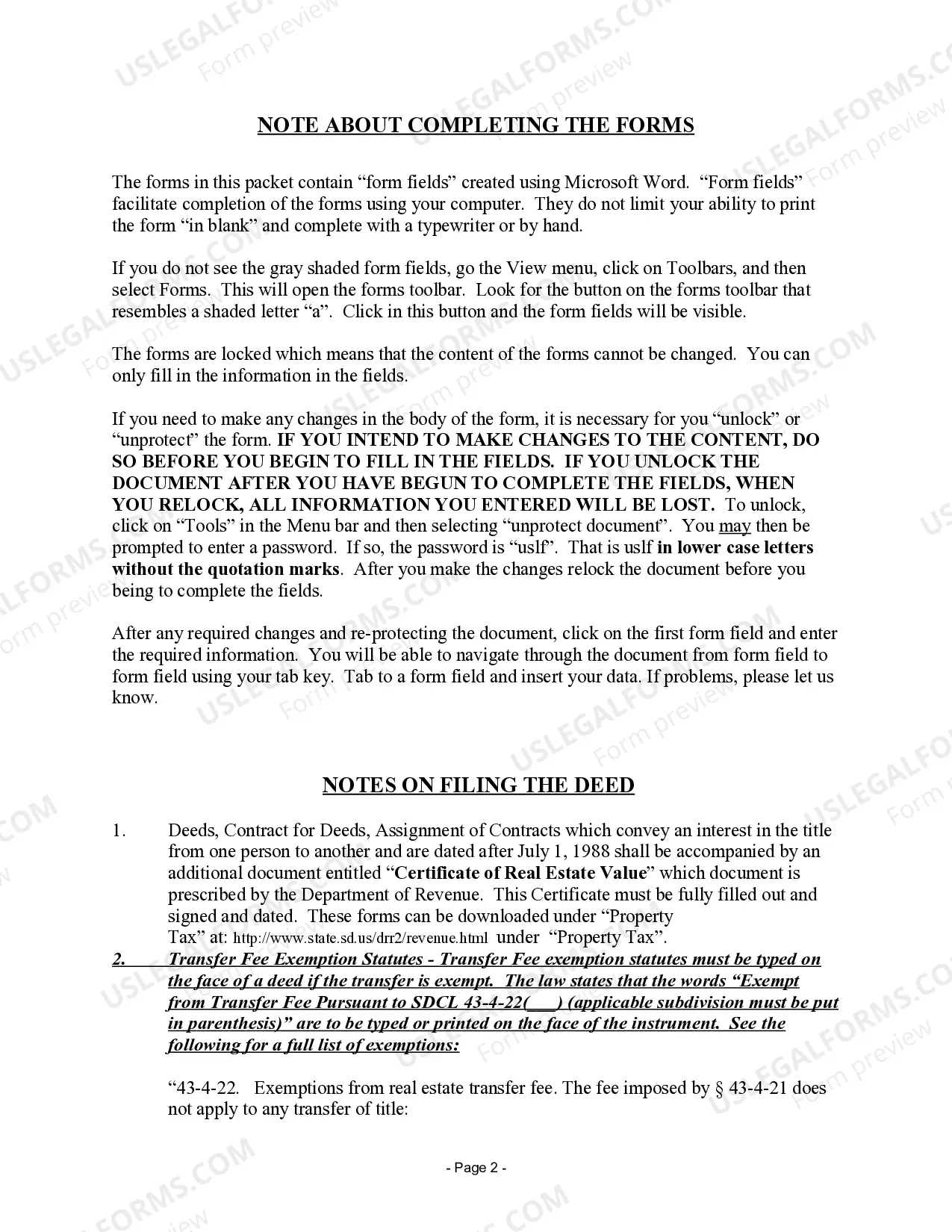
- Not completing the necessary Certificate of Real Estate Value if required in South Dakota.
Why complete this form online
- Convenient access to legal forms that can be filled out easily.
- Editable format allows customization to fit specific needs.
- Guidance provided helps ensure compliance with state requirements.
- Immediate download capability allows for quick utilization and processing.
Looking for another form?
Form popularity
FAQ
In legal terms, it is an estate in real property that ends at death when ownership of the property may revert to the original owner, or it may pass to another person. The owner of a life estate is called a "life tenant".
For example, life tenants retain the Income Tax Deduction for Real Estate Taxes. As the owner of the property by virtue of the life estate, a life tenant may continue to deduct the real estate taxes he pays on his federal income tax return.
Can a life estate deed be changed? It is challenging to modify or change a life estate deed. The grantor cannot change the life estate as he or she has no power to do so after creating the life estate deed unless all of the future tenants agree. It requires the permission or consent of every one of the beneficiaries.
A person owns property in a life estate only throughout their lifetime. Beneficiaries cannot sell property in a life estate before the beneficiary's death. One benefit of a life estate is that property can pass when the life tenant dies without being part of the tenant's estate.
What happens to a life estate after someone dies? Upon the life tenant's death, the property passes to the remainder owner outside of probate.They can sell the property or move into and claim it as their primary residence (homestead). Property taxes will not be reassessed.
Can a life estate deed be changed? It is challenging to modify or change a life estate deed. The grantor cannot change the life estate as he or she has no power to do so after creating the life estate deed unless all of the future tenants agree. It requires the permission or consent of every one of the beneficiaries.
A life estate deed permits the property owner to have full use of their property until their death, at which point the ownership of the property is automatically transferred to the beneficiary.In the right situations, it can be a streamlined and easy way to transfer ownership.
The person holding the life estate -- the life tenant -- possesses the property during his or her life. The other owner -- the remainderman -- has a current ownership interest but cannot take possession until the death of the life estate holder.