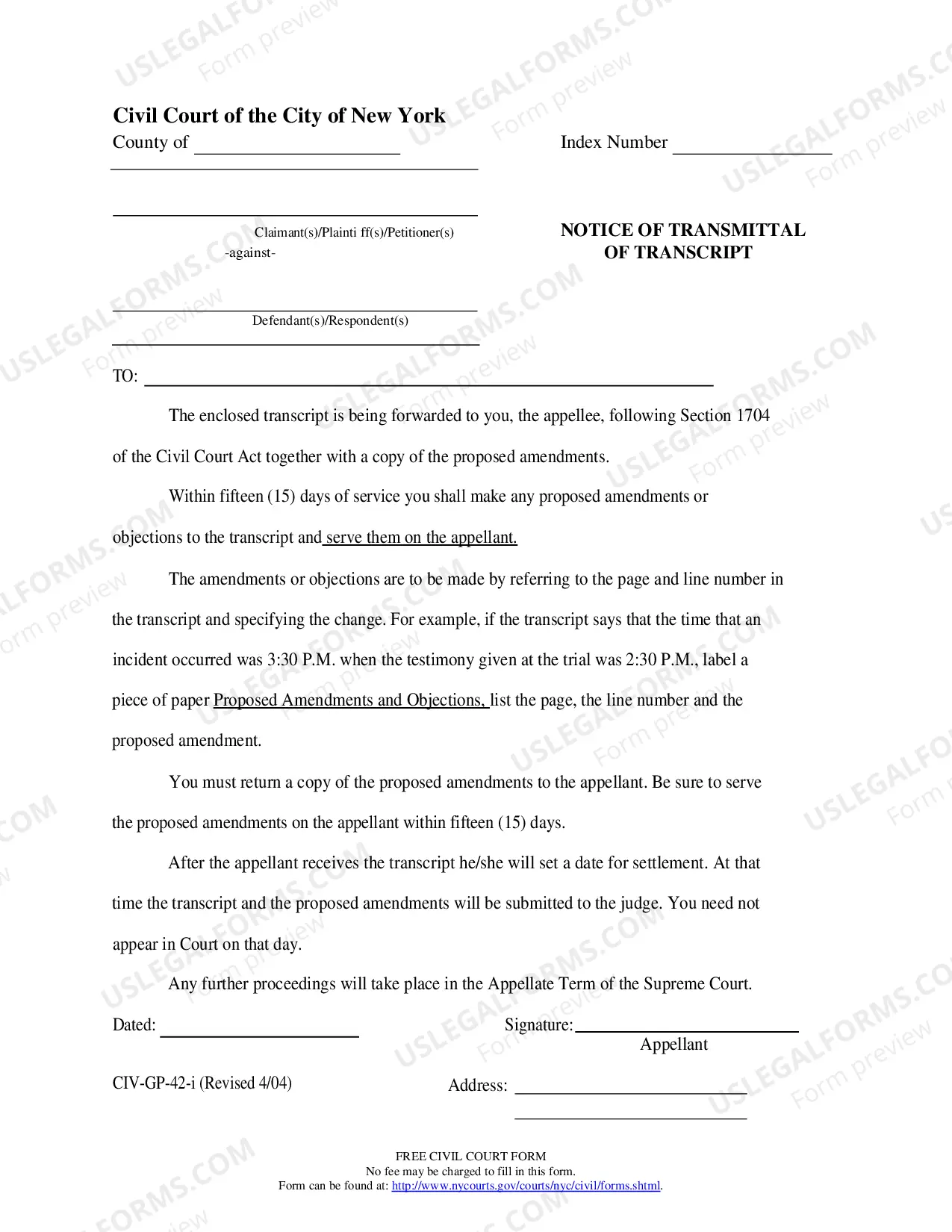
South Carolina Last Will for a Widow or Widower with no Children
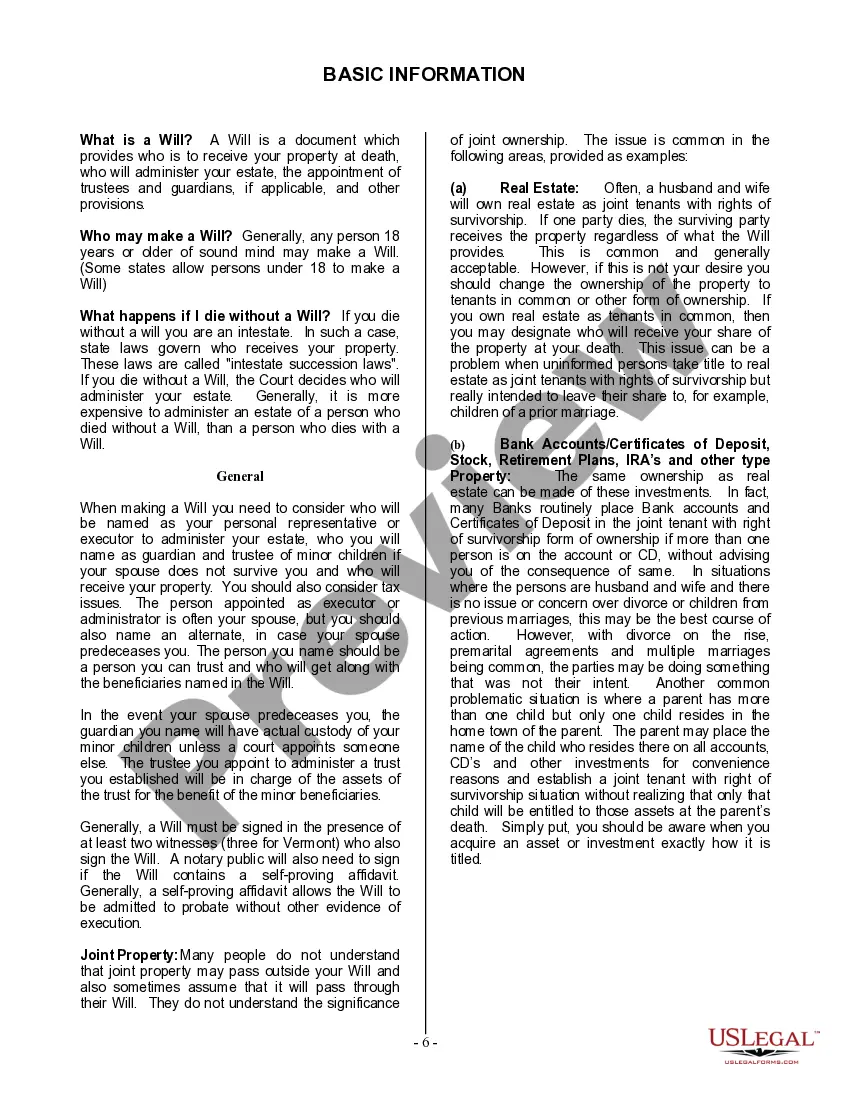
Overview of this form
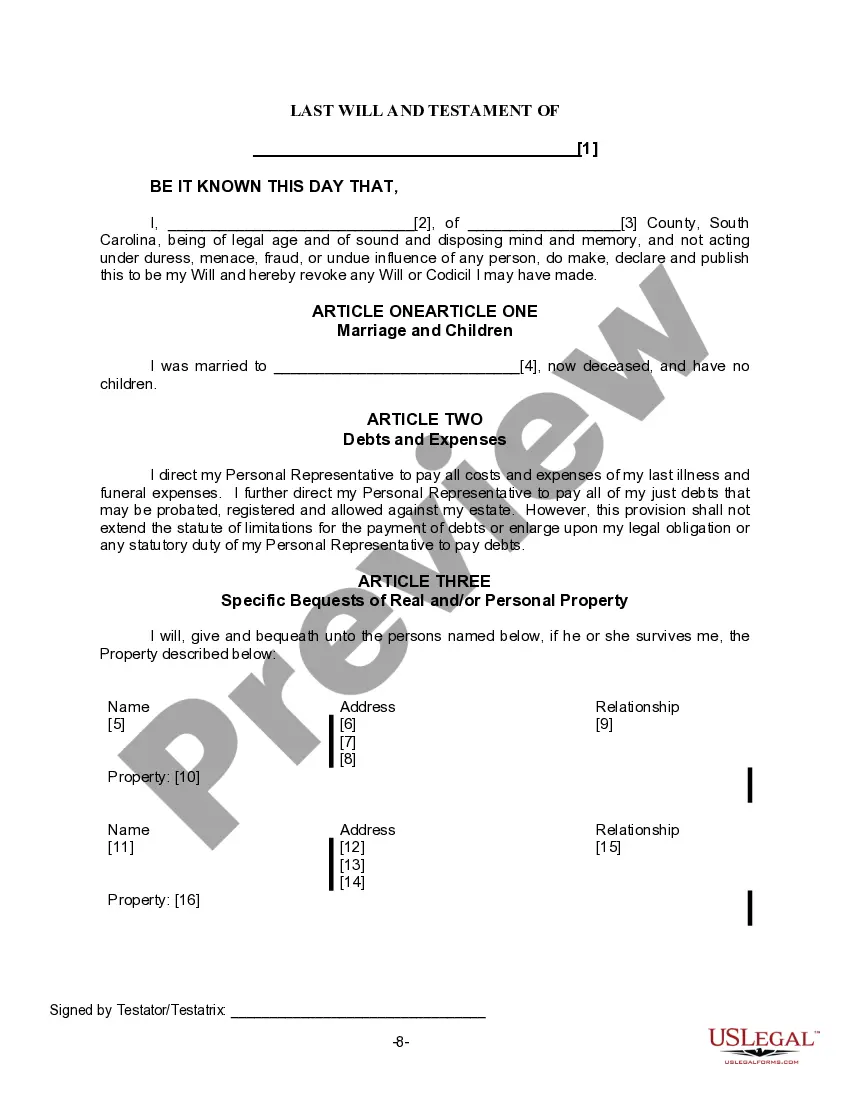
This Last Will and Testament is specifically designed for a widow or widower who has no children. This form allows you to designate who will inherit your property, appoint a personal representative, and express your final wishes. It includes provisions that cater to your particular circumstances, distinguishing it from general wills that might include children or broader heirs.
Main sections of this form
- Your name and county of residence
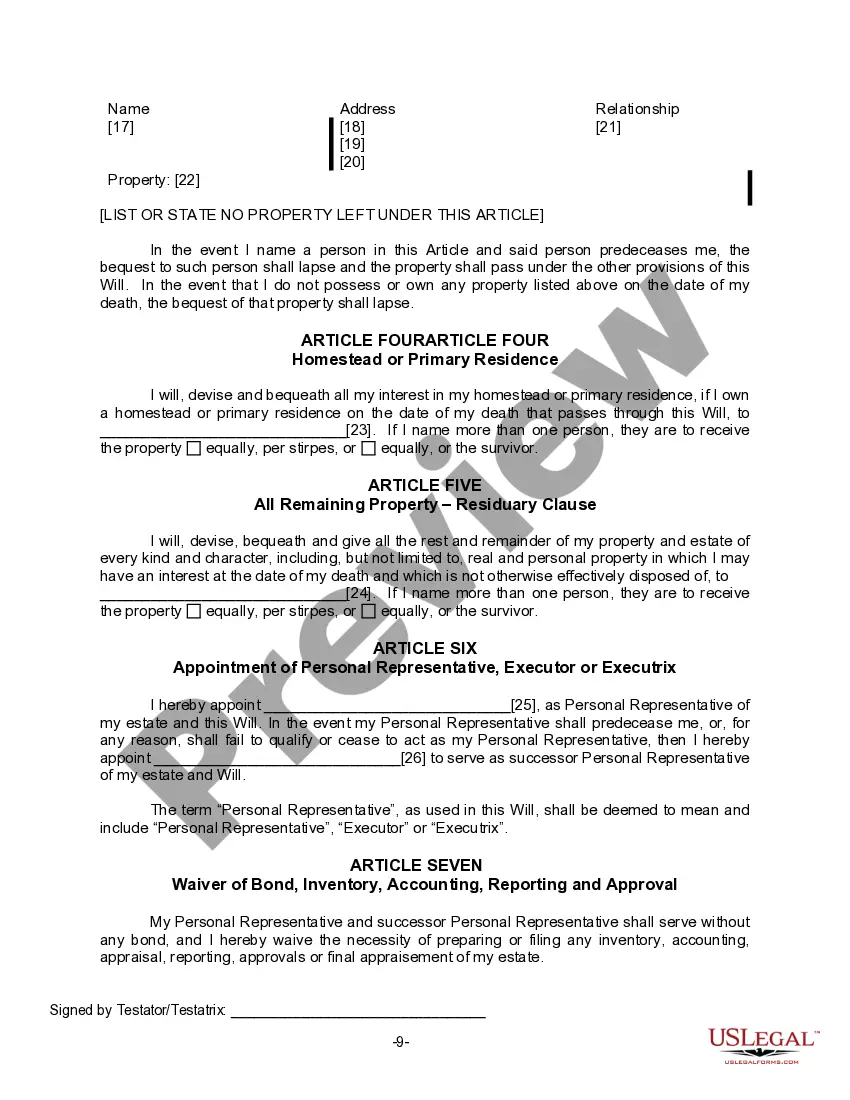
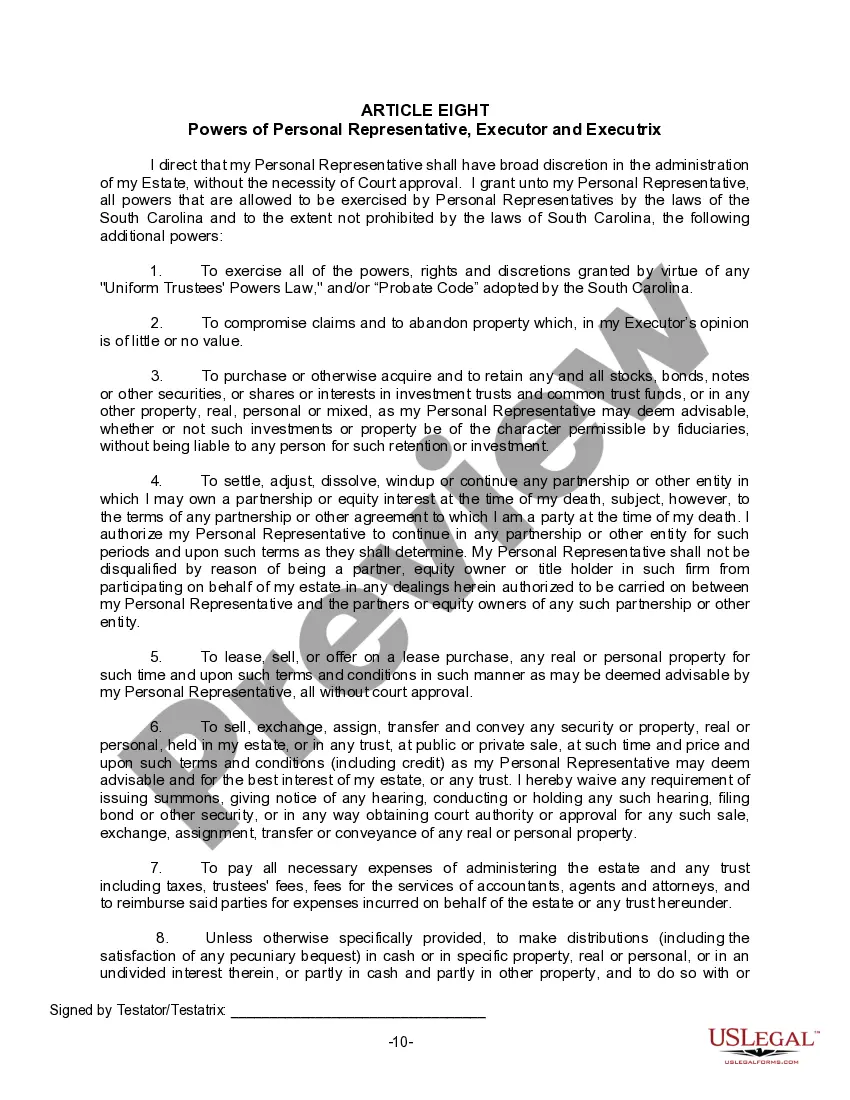
- Designation of a personal representative (executor)
- Specific bequests of property to named individuals
- Allocation of your homestead and remaining property
- Witness and notarization requirements


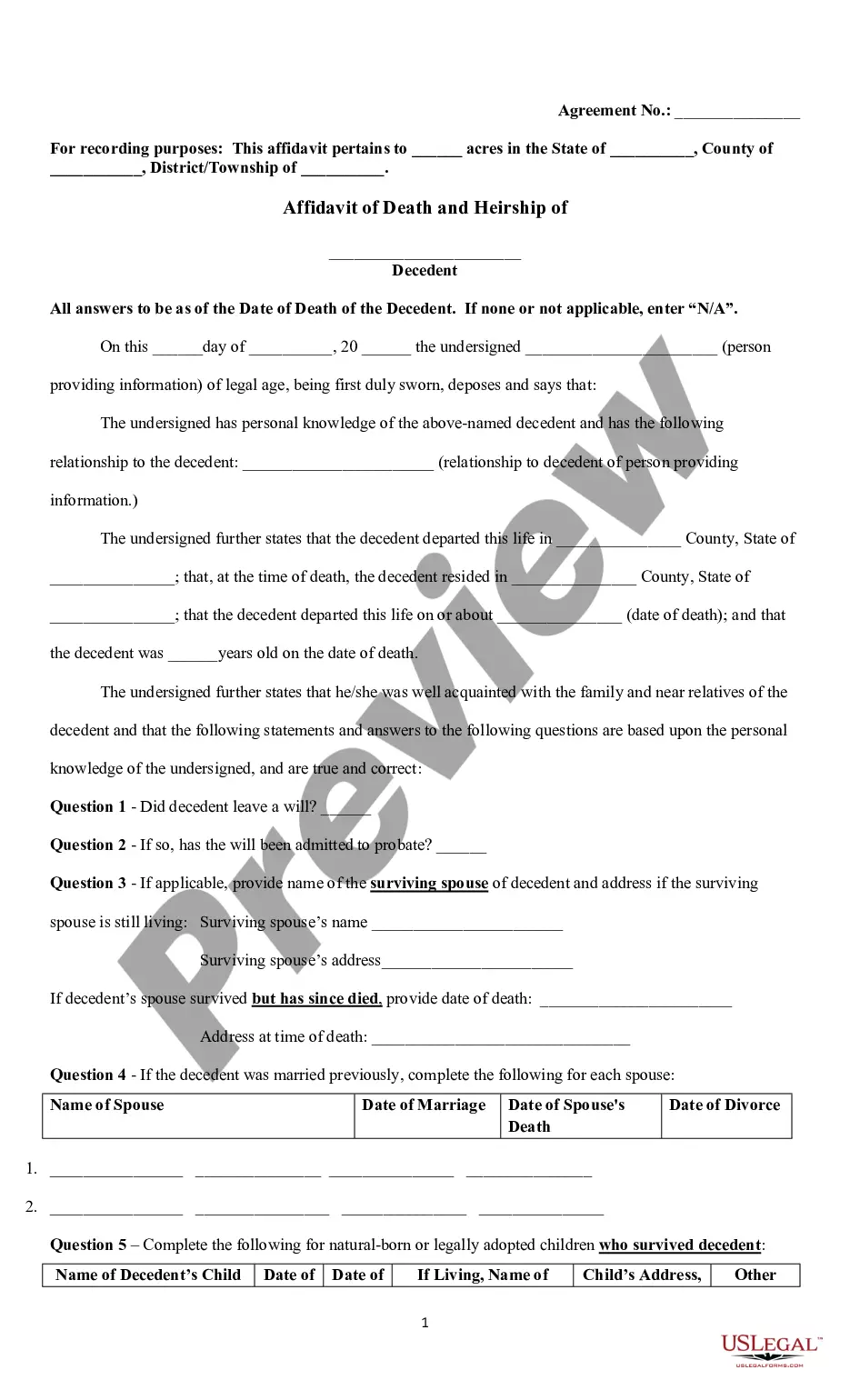


Common use cases
This form should be used when a widow or widower wishes to outline their final wishes regarding property distribution, especially if they do not have children or direct heirs. It is essential to have a clear, legally binding document to ensure that your possessions are distributed according to your desires, rather than being subject to state intestacy laws.
Who can use this document
- Individuals who are widowed or widowers without children
- Those wishing to specify the distribution of their property after death
- Anyone seeking to name a personal representative for their estate
- Persons with specific wishes regarding the management of their estate
How to complete this form
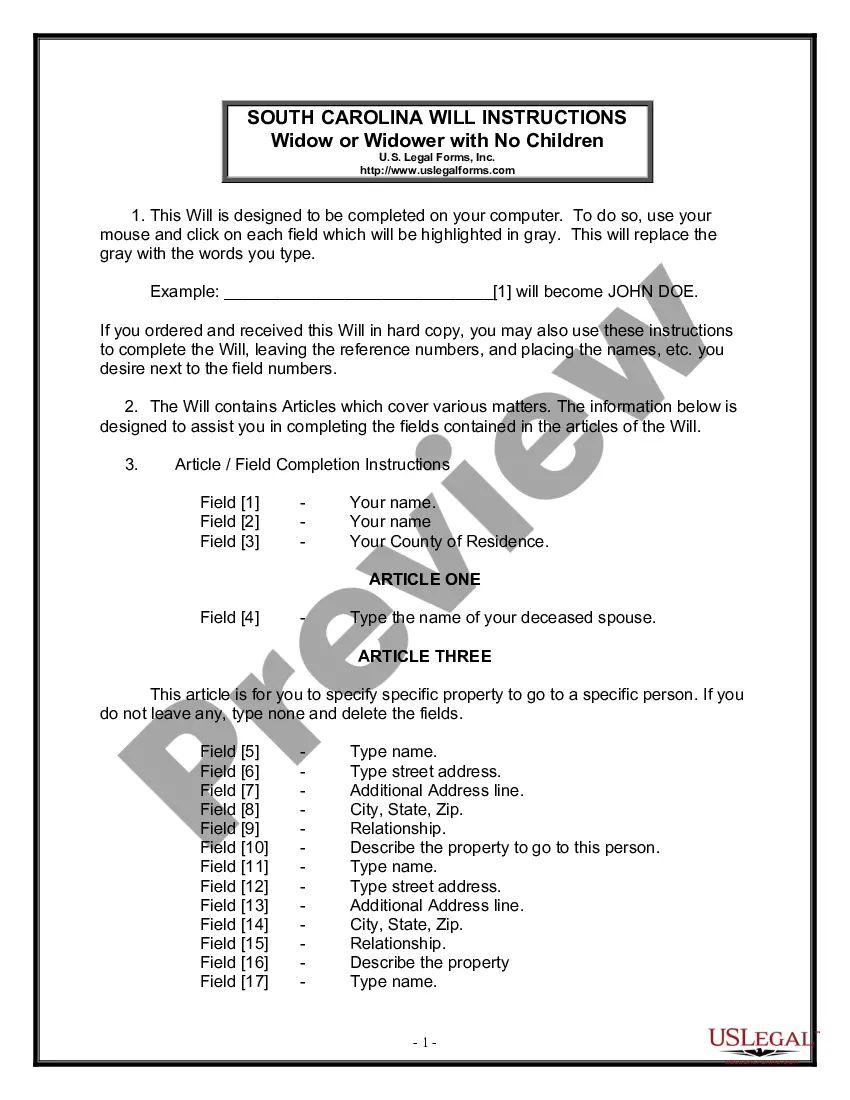
- Enter your full name and county of residence at the beginning of the form.
- Name your deceased spouse in the specified article.
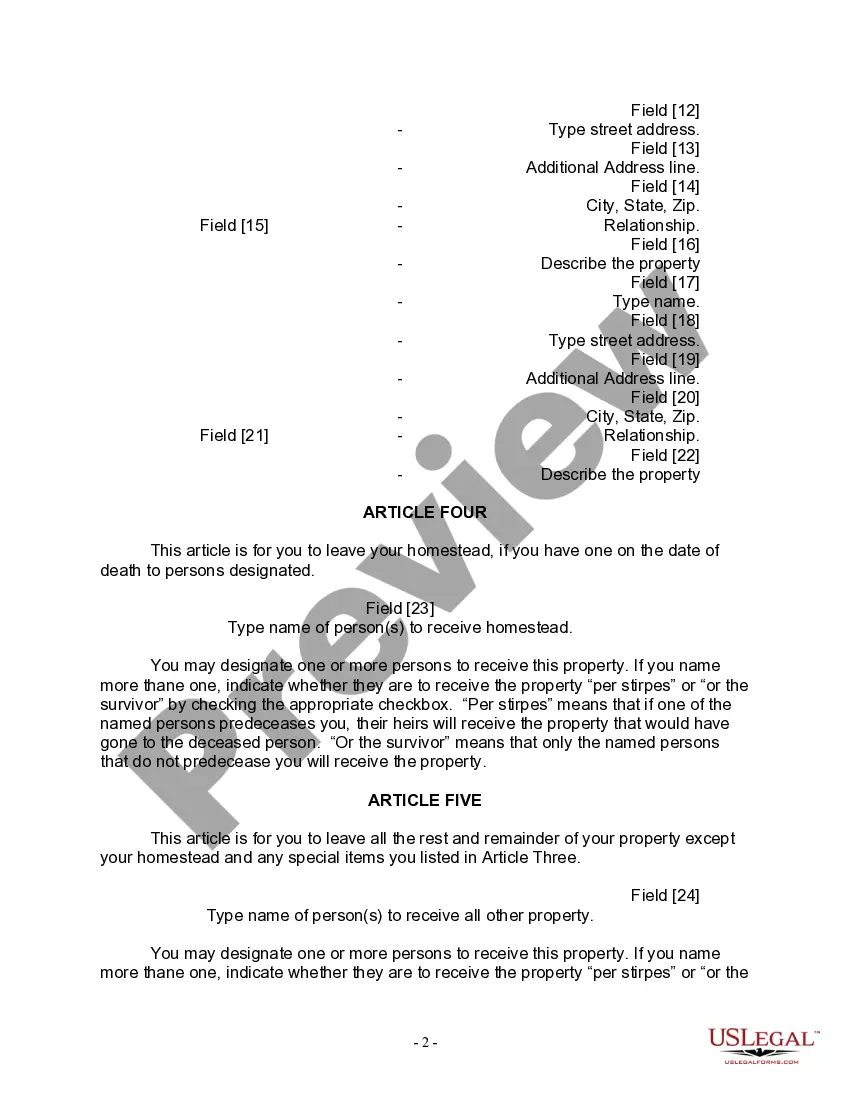
- List any specific bequests of property in the appropriate fields.
- Designate who will receive your homestead or primary residence and any remaining assets.
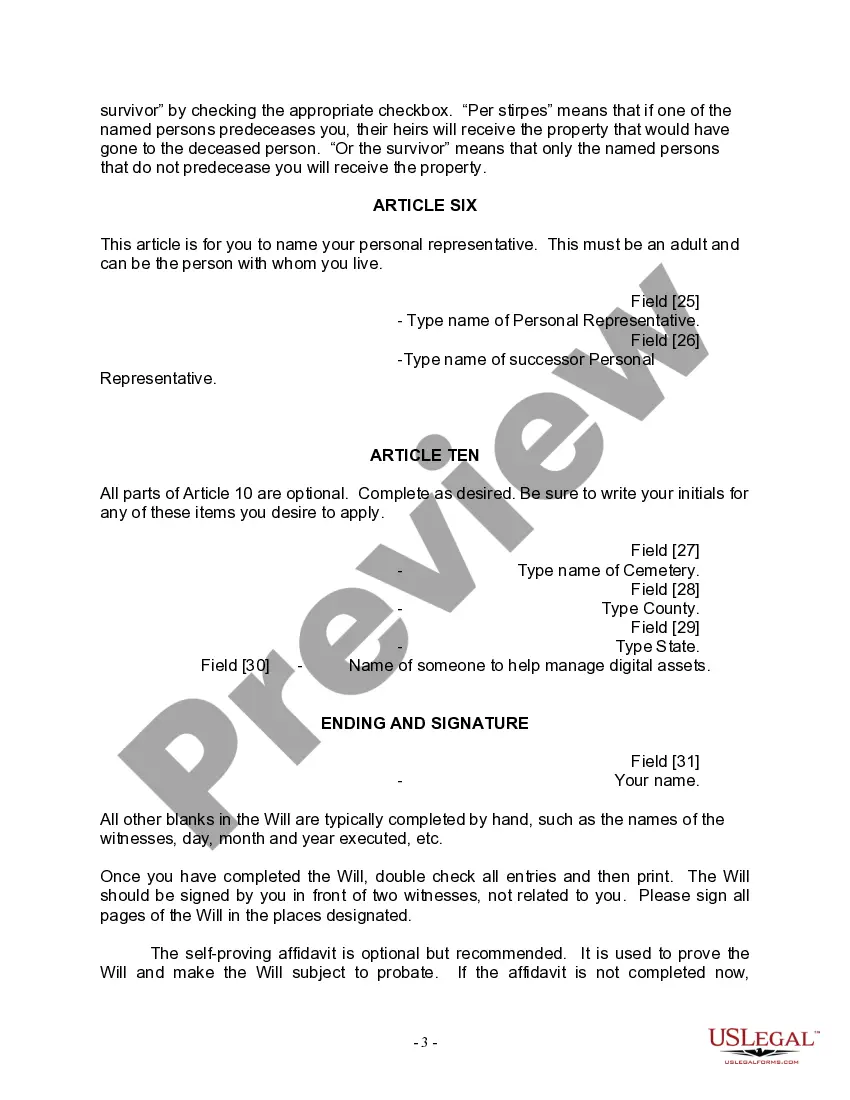
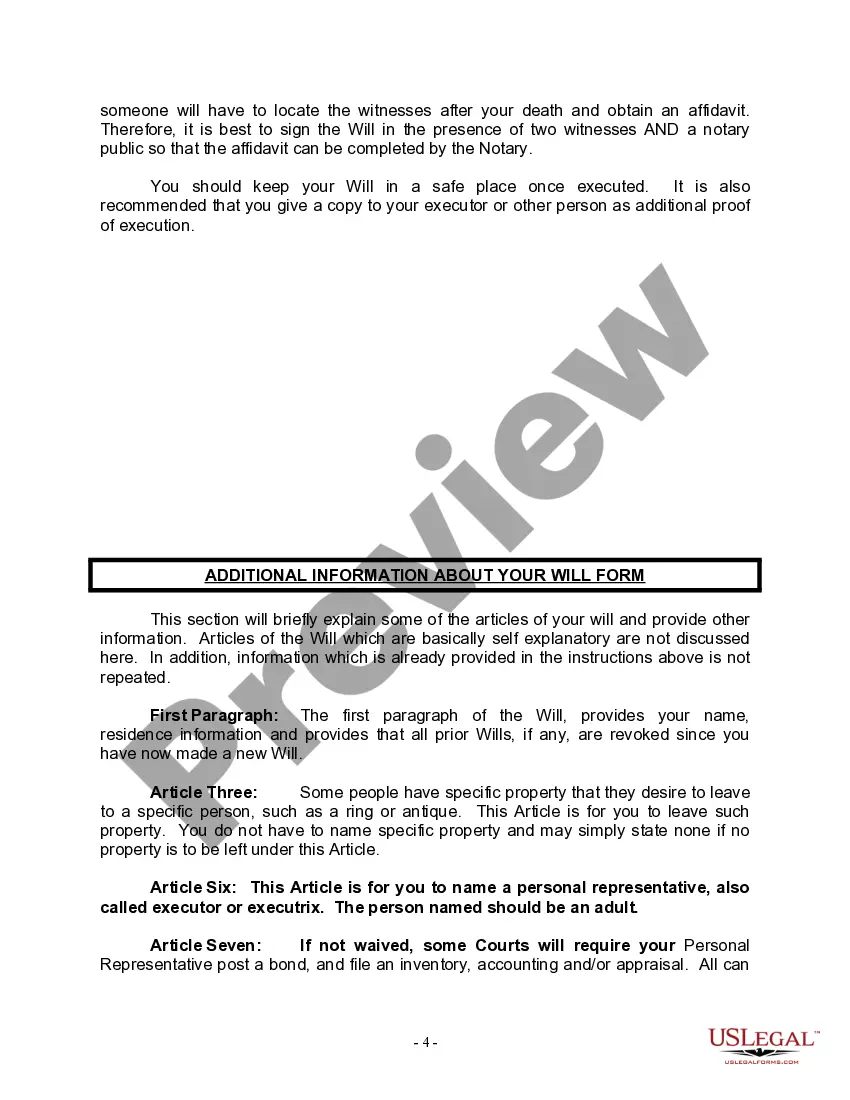
- Sign the document in front of two witnesses who are not mentioned in the will.
- Consider obtaining notarization for the self-proving affidavit, if applicable.
Does this document require notarization?
Yes, this form must be notarized to be legally valid. Completing the self-proving affidavit with a notary public helps confirm the authenticity of the will and streamlines the probate process. US Legal Forms provides options for online notarization 24/7, allowing you to complete this step easily and securely.
Get your form ready online
Our built-in tools help you complete, sign, share, and store your documents in one place.
Make edits, fill in missing information, and update formatting in US Legal Forms—just like you would in MS Word.
Download a copy, print it, send it by email, or mail it via USPS—whatever works best for your next step.
Sign and collect signatures with our SignNow integration. Send to multiple recipients, set reminders, and more. Go Premium to unlock E-Sign.
If this form requires notarization, complete it online through a secure video call—no need to meet a notary in person or wait for an appointment.
We protect your documents and personal data by following strict security and privacy standards.

Make edits, fill in missing information, and update formatting in US Legal Forms—just like you would in MS Word.

Download a copy, print it, send it by email, or mail it via USPS—whatever works best for your next step.

Sign and collect signatures with our SignNow integration. Send to multiple recipients, set reminders, and more. Go Premium to unlock E-Sign.

If this form requires notarization, complete it online through a secure video call—no need to meet a notary in person or wait for an appointment.

We protect your documents and personal data by following strict security and privacy standards.
Common mistakes
- Failing to have witnesses sign the will
- Not naming an alternate personal representative
- Leaving out specific assets or beneficiaries
- Not reviewing state-specific requirements
- Failing to securely store the completed will
Advantages of online completion
- Easy to complete directly on your computer
- Customizable to fit your unique circumstances
- Access to legal guidance through the associated instructions
- Safe and secure storage options for your completed will
What to keep in mind
- This Last Will is specifically tailored for widows or widowers with no children.
- Clear instructions are provided for filling out each section of the form.
- A valid Will requires signatures from two witnesses, and notarization is recommended.
- Using this form can help avoid legal disputes and ensure your final wishes are honored.
Looking for another form?
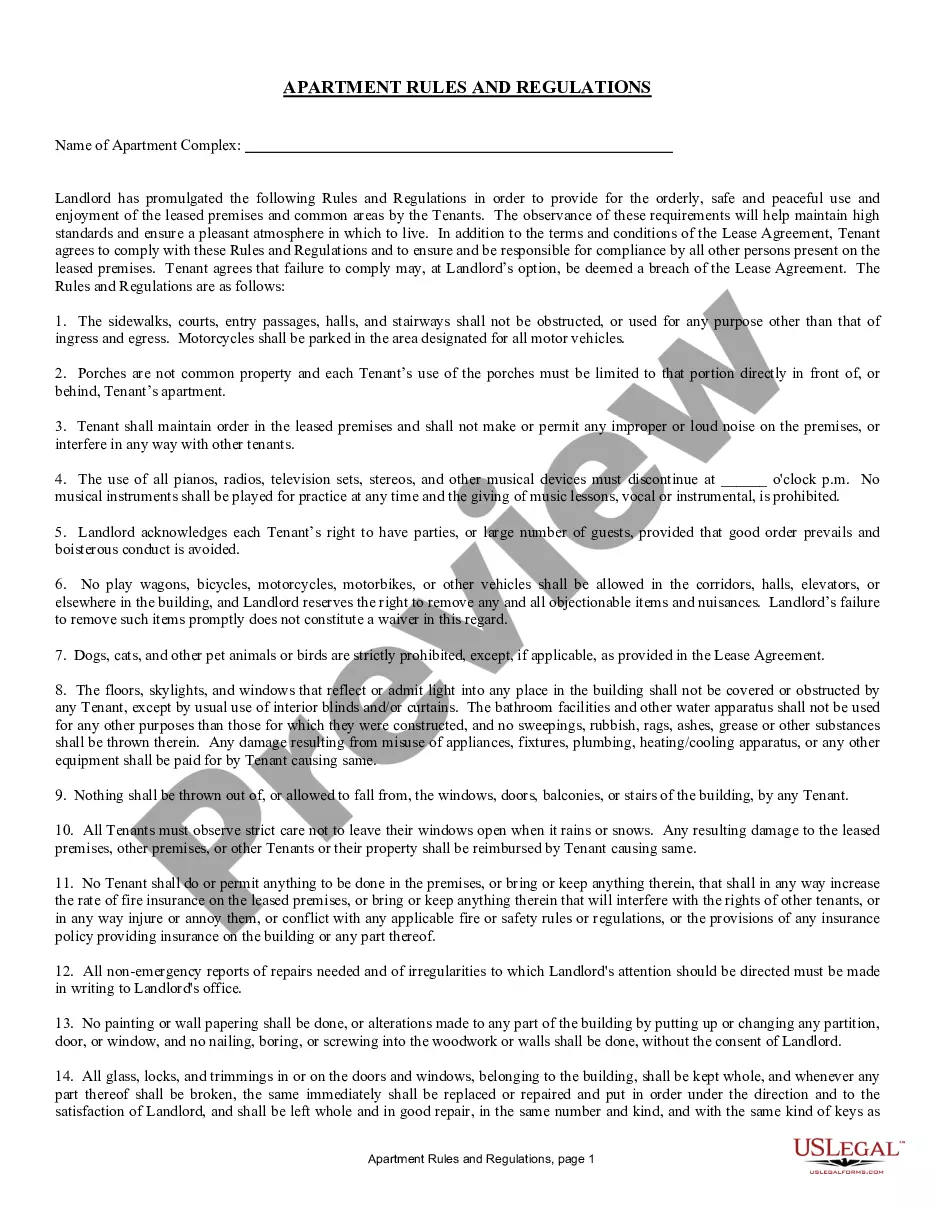
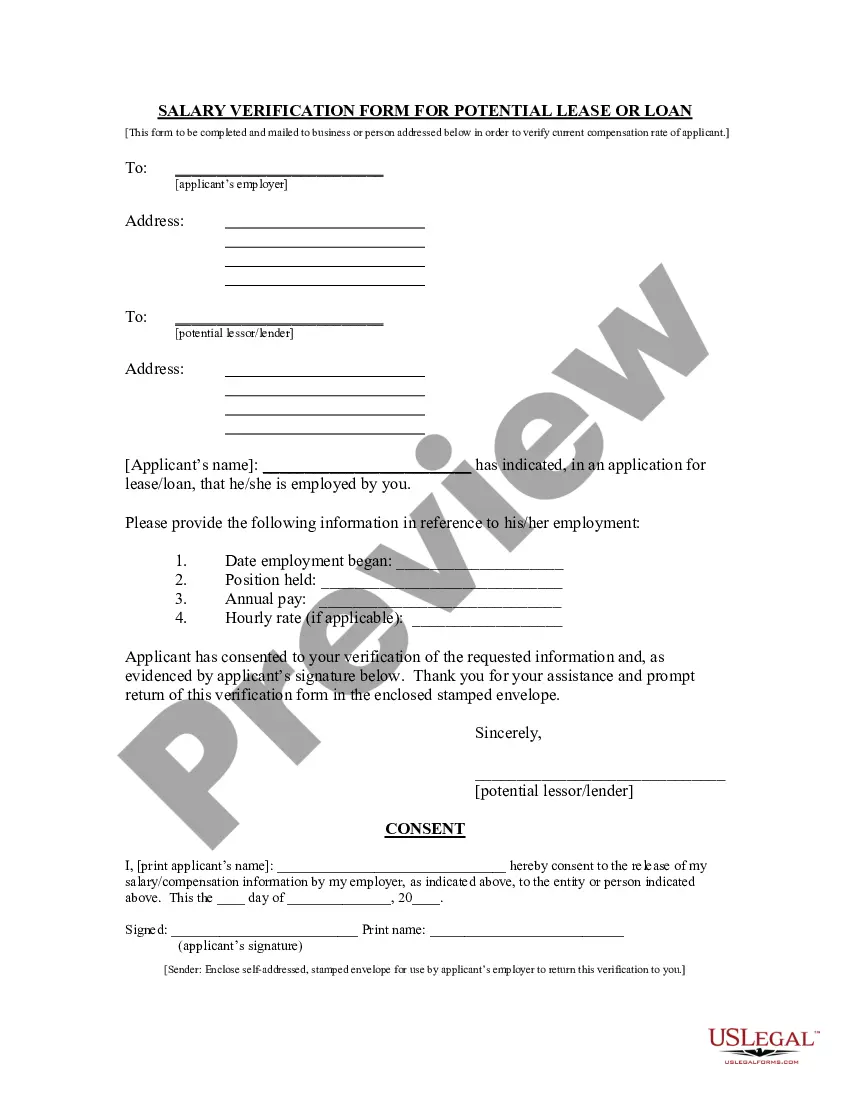
Form popularity
FAQ
Probate is the process by which assets are transferred from the decedent to his or her heirs or devisees. If I have someone's original will, what do I do with it? South Carolina law requires that you deliver the will to the Probate Court within thirty (30) days after the person's death.
Contrary to popular belief, you do not need to have an attorney draft a will for you. Anyone can write this document on their own, and as long as it meets all of the legal requirements of the state, courts will recognize one you wrote yourself.
A. You don't have to have a lawyer to create a basic will you can prepare one yourself. It must meet your state's legal requirements and should be notarized.A do-it-yourself will that's poorly drafted can save you money but create a mess for your heirs when you're gone.
In most situations, a will template is an easy and inexpensive way to make sure your wishes are known and carried out. Most people can get everything they need by using a will template, with little cost or hassle.
You can make your own will in South Carolina, using Nolo's do-it-yourself will software or online will programs. However, you may want to consult a lawyer in some situations. For example, if you think that your will might be contested or if you want to disinherit your spouse, you should talk with an attorney.
The Free Last Will and Testament Template for Word is compatible with Word 2003 or later versions.
All wills must be property signed and witnessed to be effective. For example, South Carolina requires two witnesses for a will to be valid. A notary is not sufficient, or even required.Another reason is that having an interested witness may invalidate the bequest to the beneficiary who serves as a witness.
Handwritten wills prepared in South Carolina are not legal. However, a holographic will created in another state may be valid in South Carolina.
Create the initial document. Start by titling the document Last Will and Testament" and including your full legal name and address. Designate an executor. Appoint a guardian. Name the beneficiaries. Designate the assets. Ask witnesses to sign your will. Store your will in a safe place.