South Carolina Limited Power of Attorney where you Specify Powers with Sample Powers Included
Understanding this form
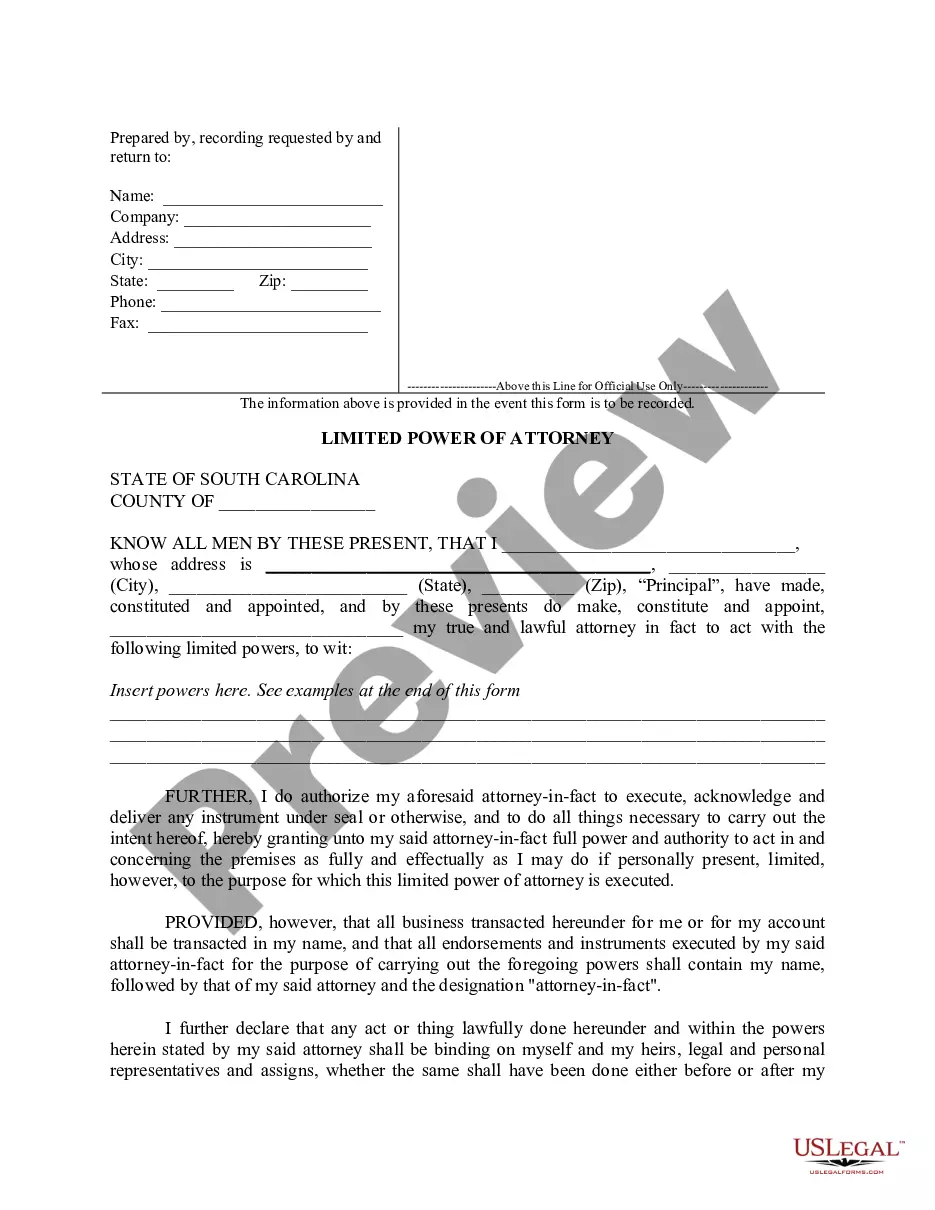
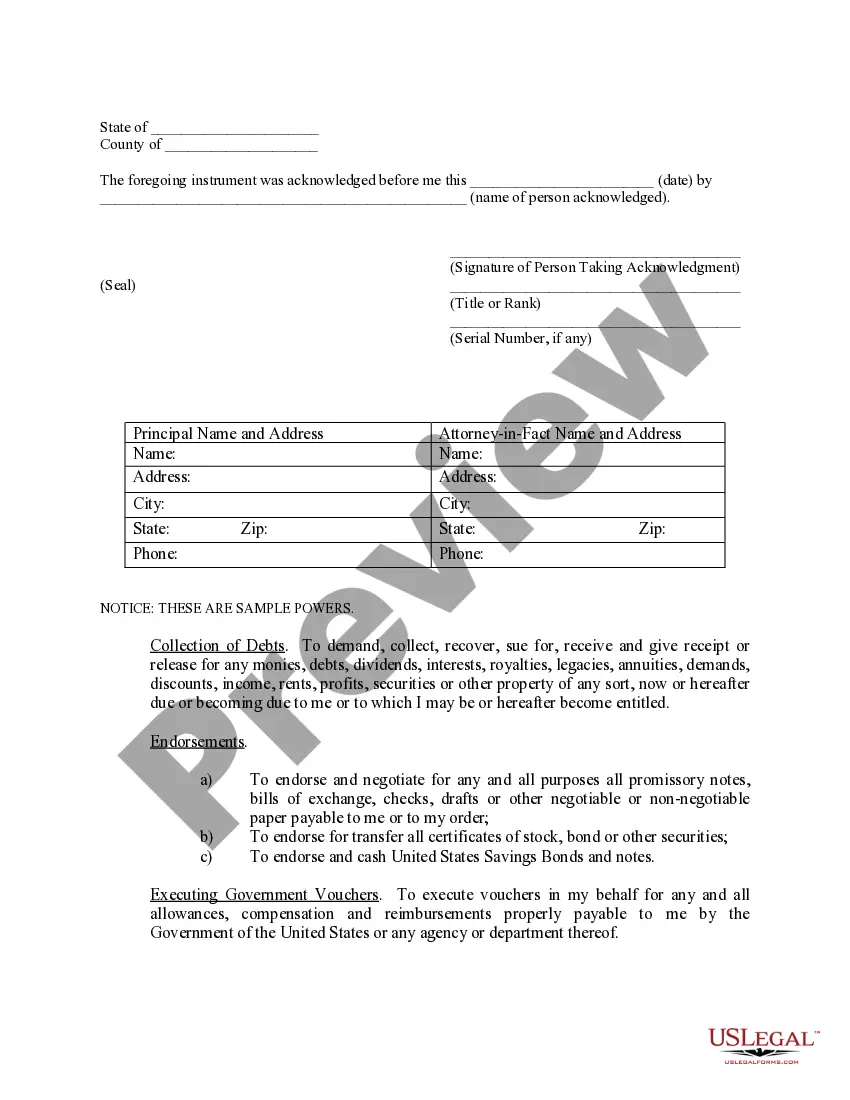
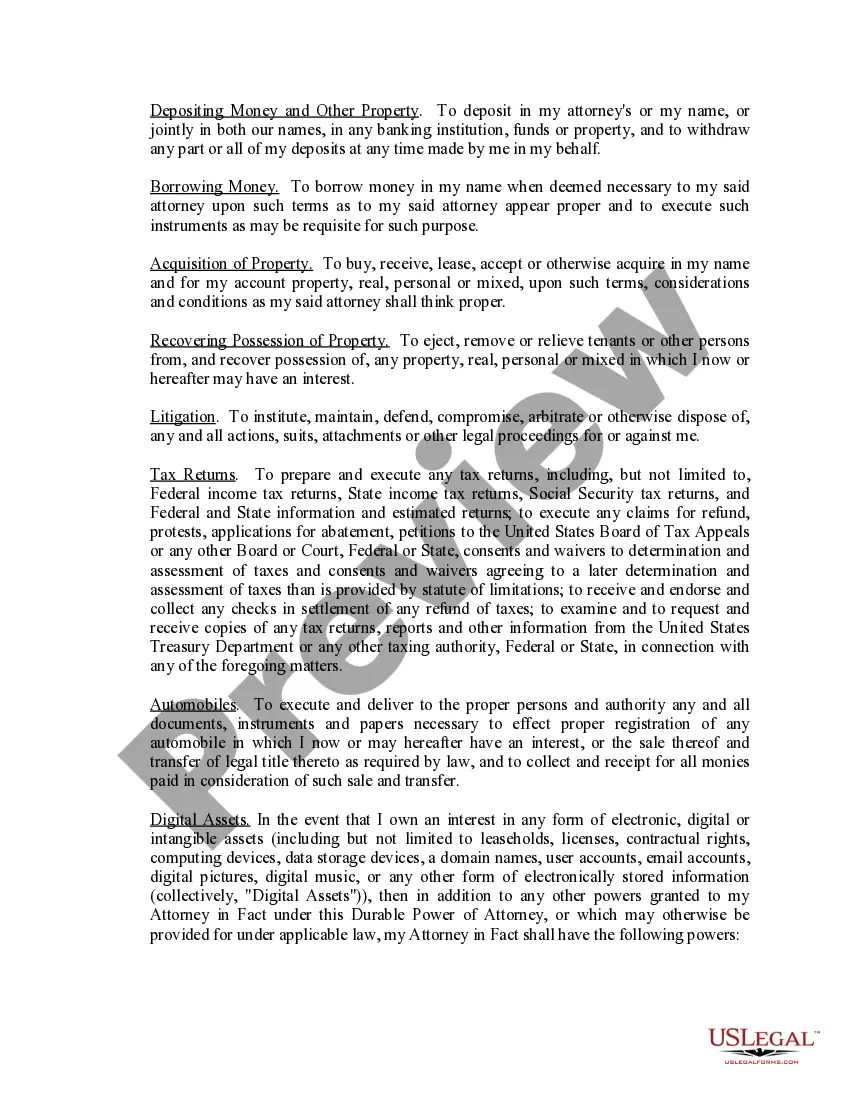
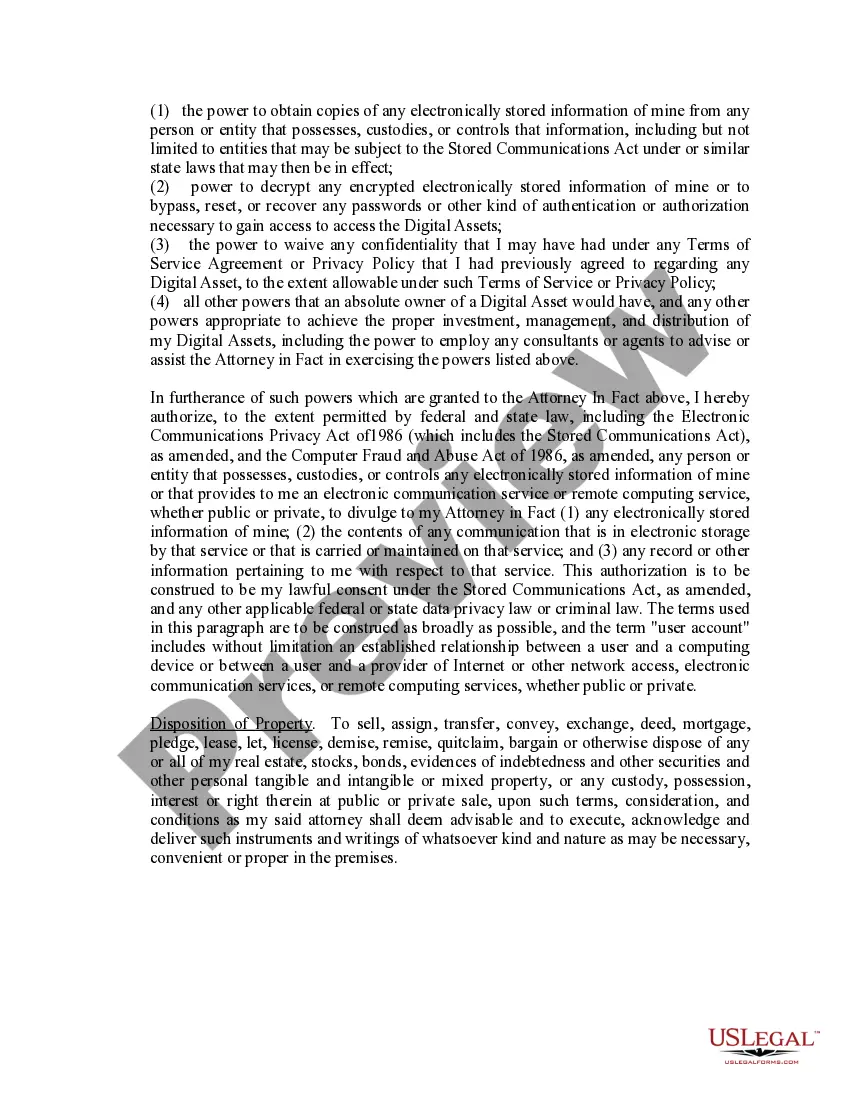
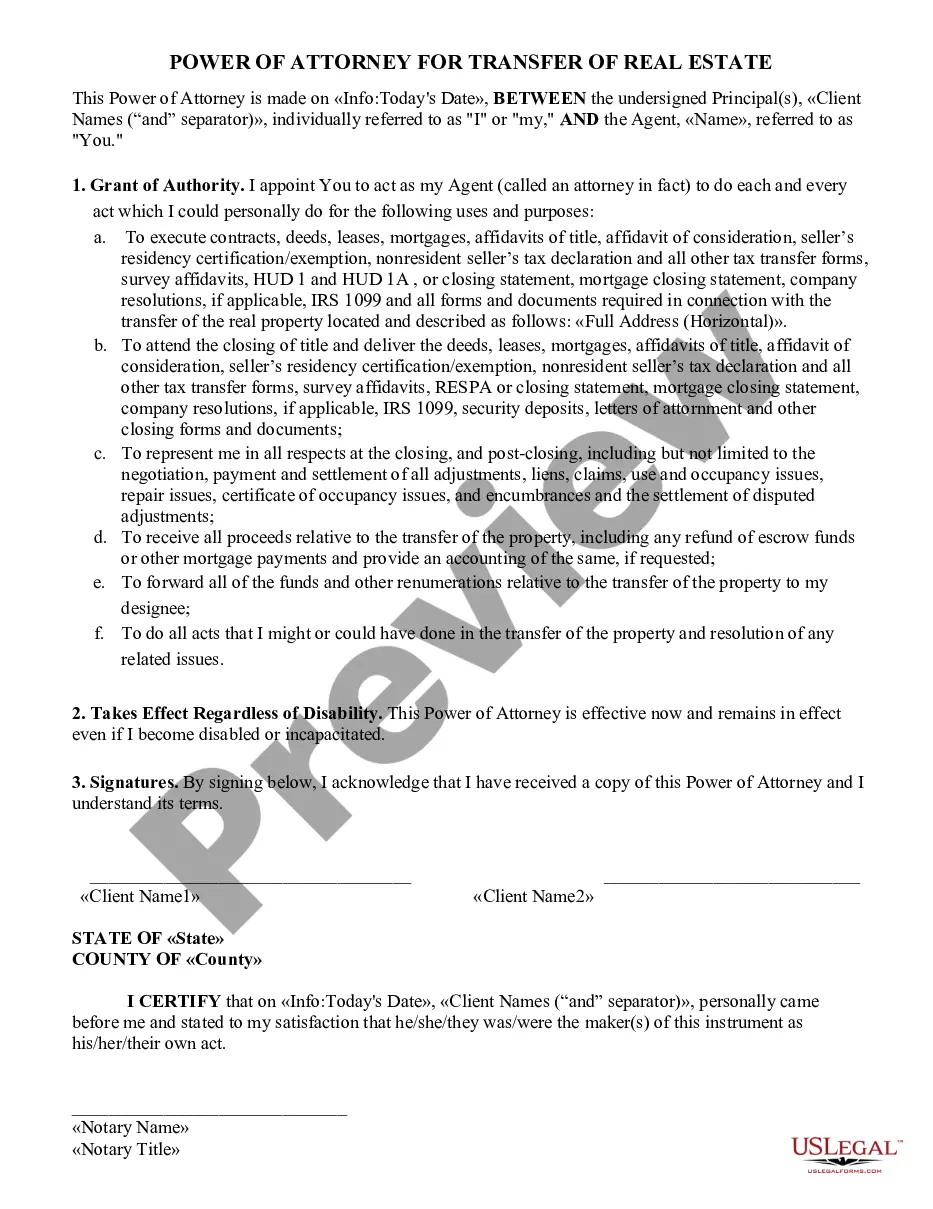
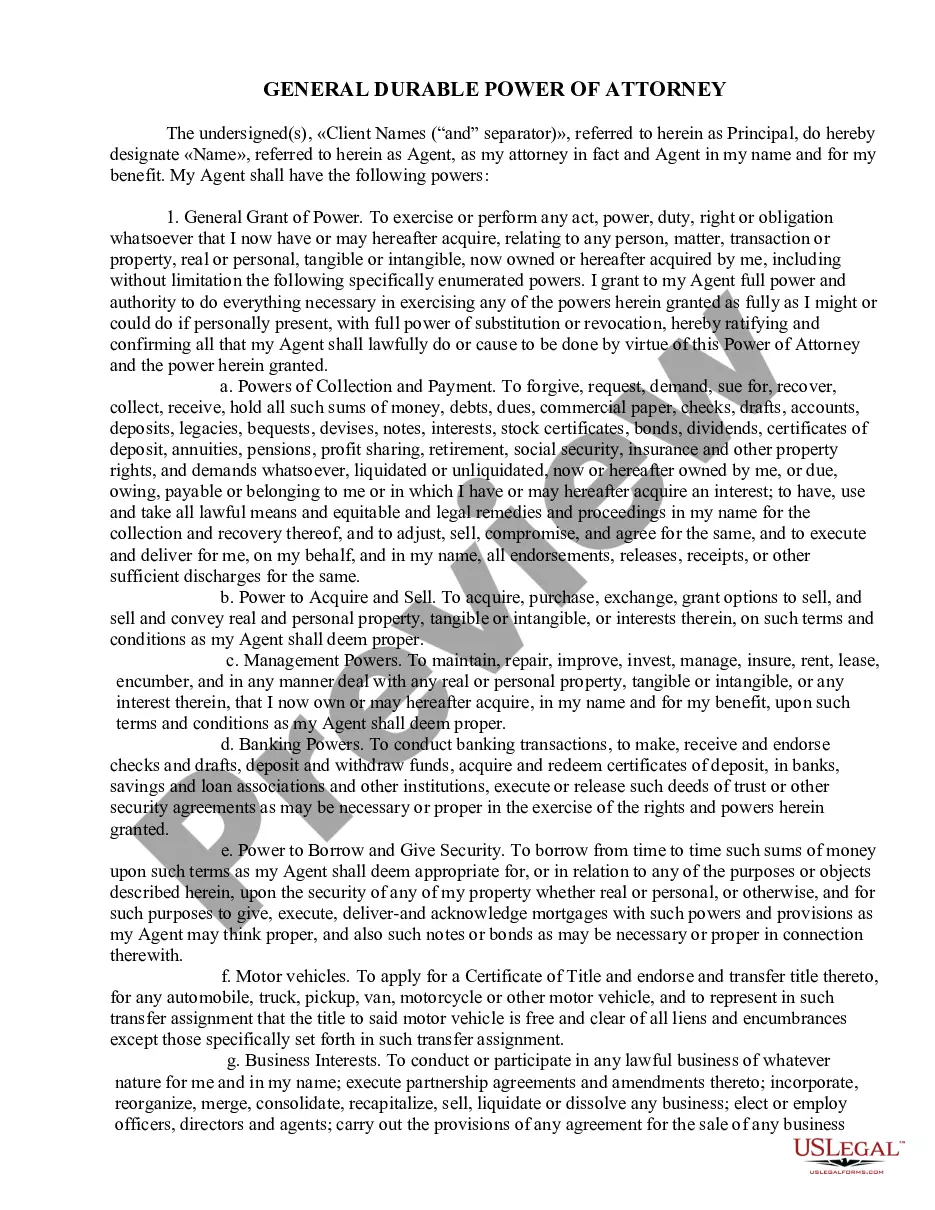
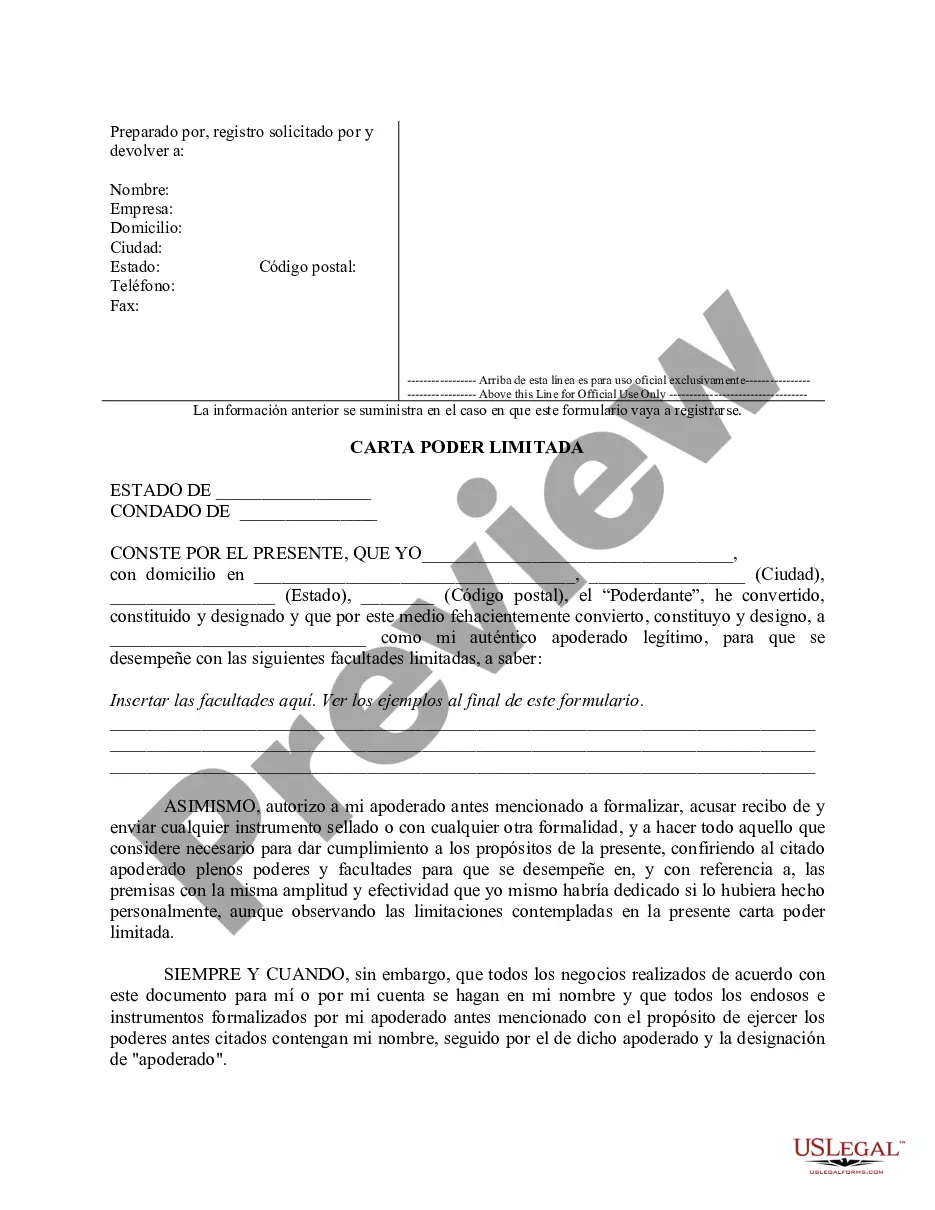
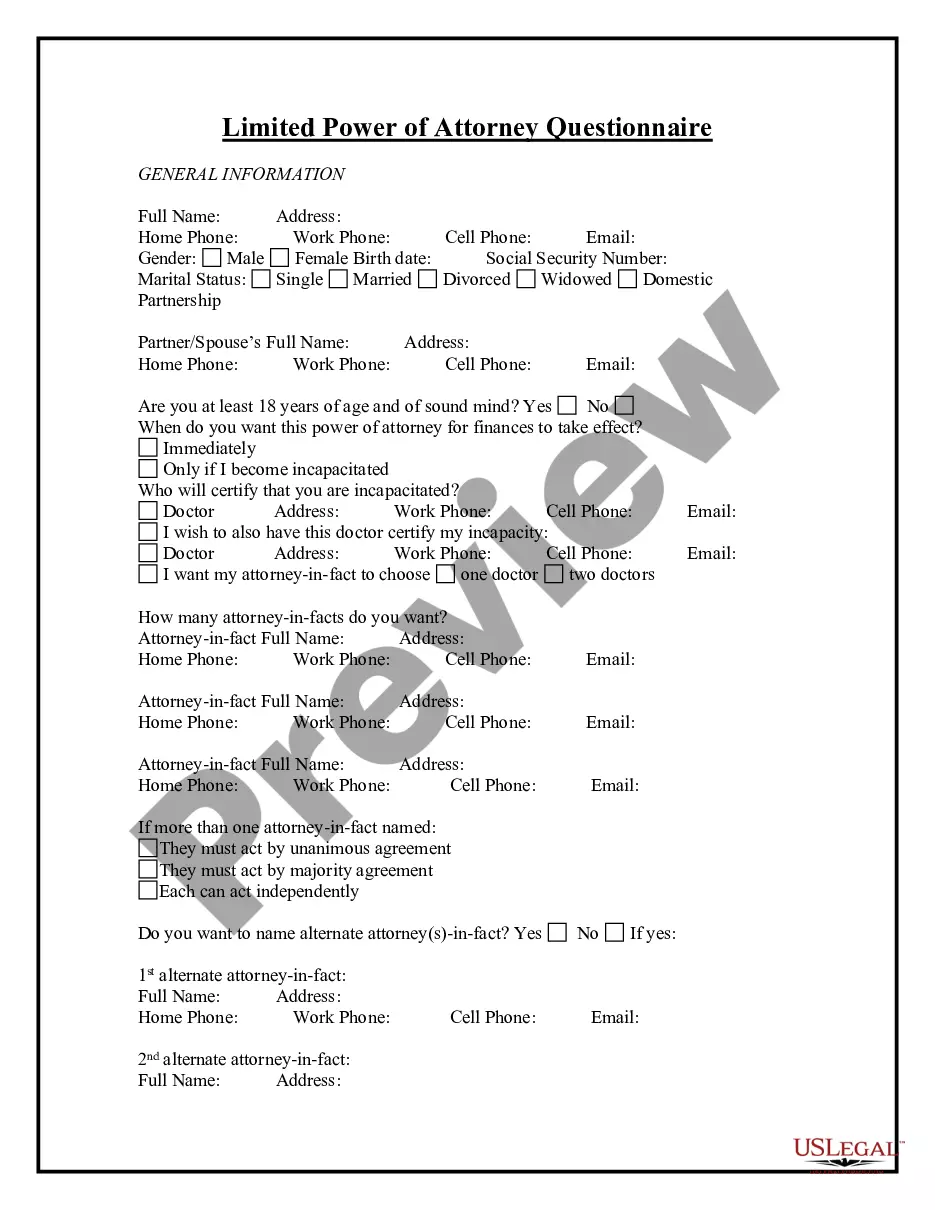
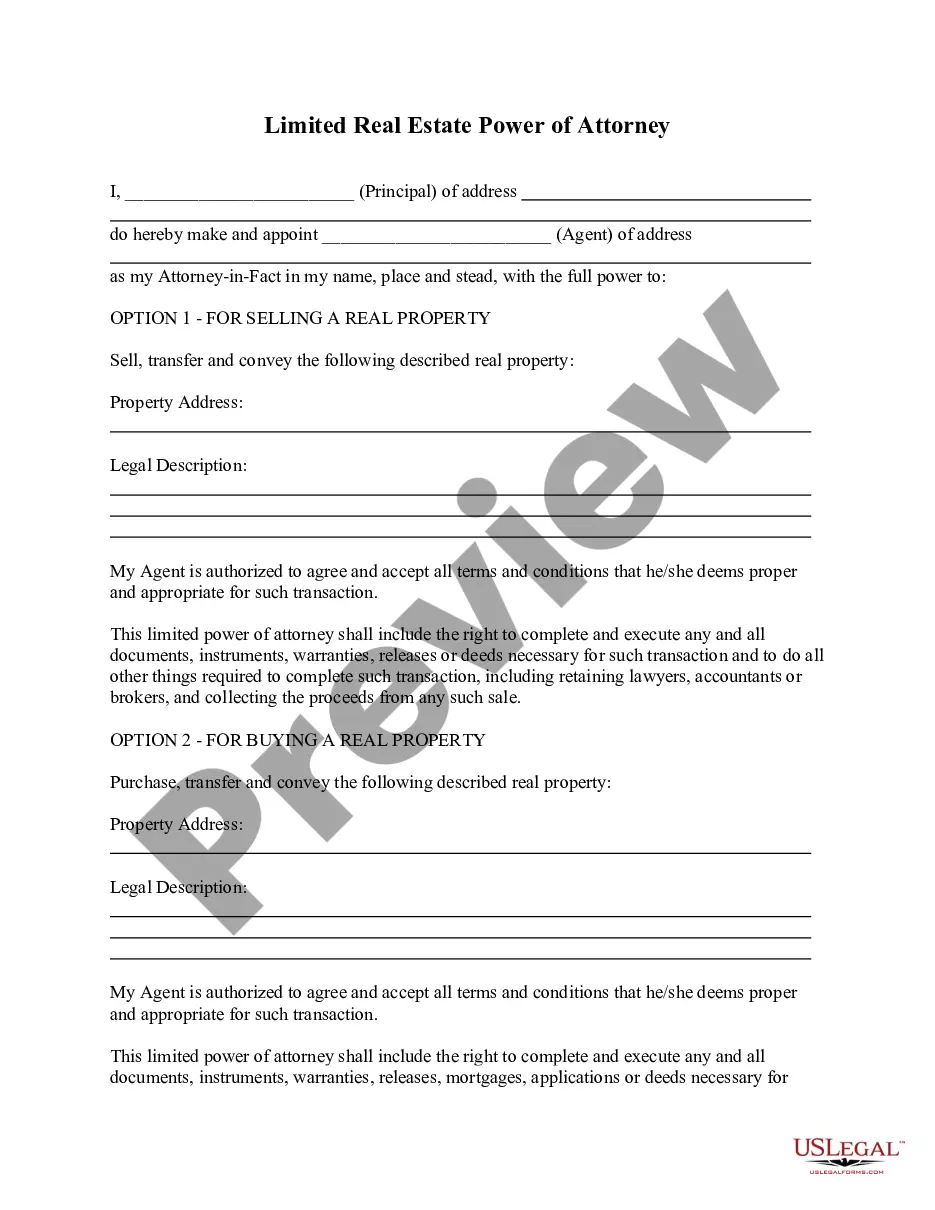
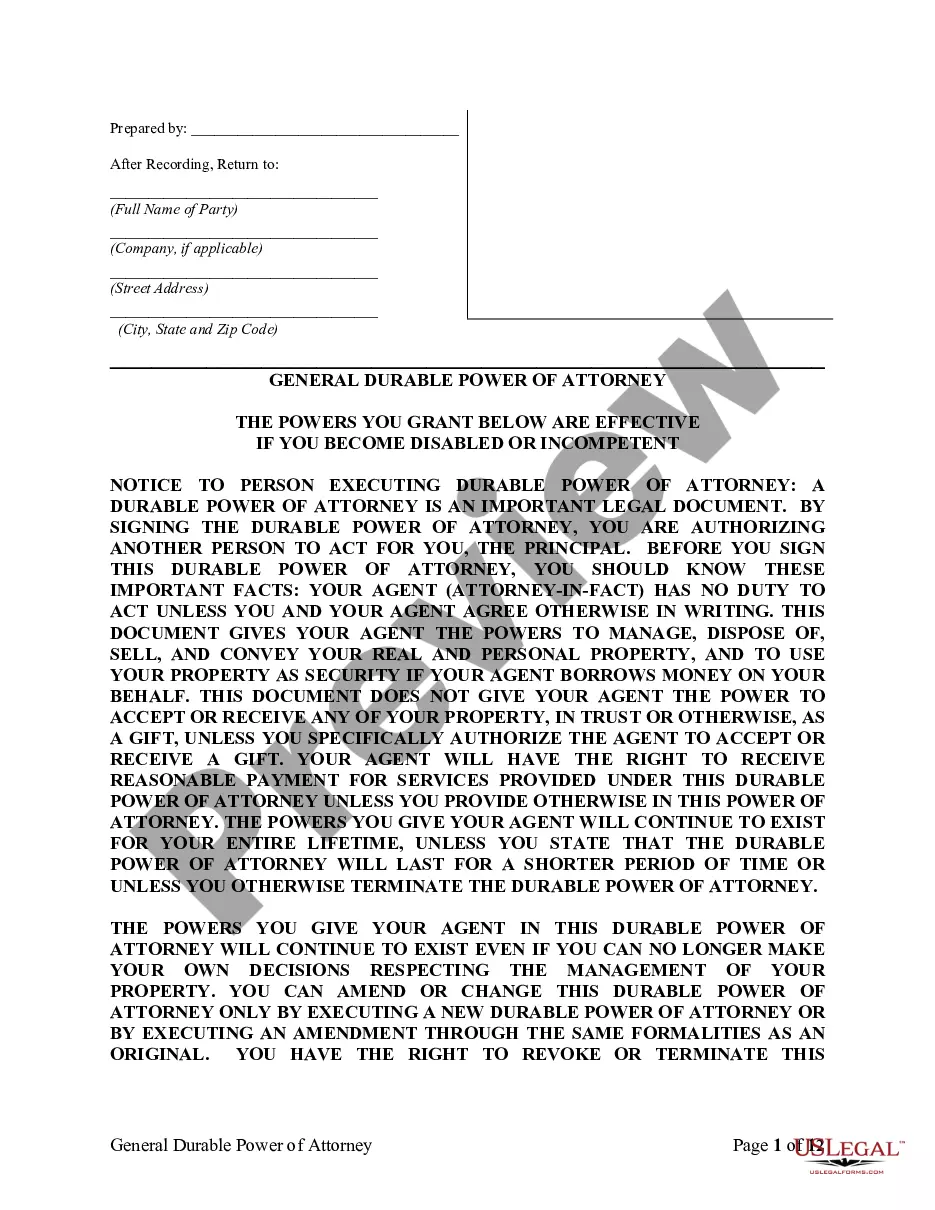
This Limited Power of Attorney form allows you to designate specific powers to an agent of your choice in the State of South Carolina. Unlike a general power of attorney, this document is tailored to grant limited authority, meaning you can specify exactly what powers you wish to delegate. Sample powers are included to assist you, but these should be customized to meet your individual needs.
Main sections of this form
- Principal information: Includes fields for the principal's name and address.
- Agent designation: A section to appoint an attorney-in-fact to act on behalf of the principal.
- Specified powers: An area where you can specifically outline the powers granted to your agent.
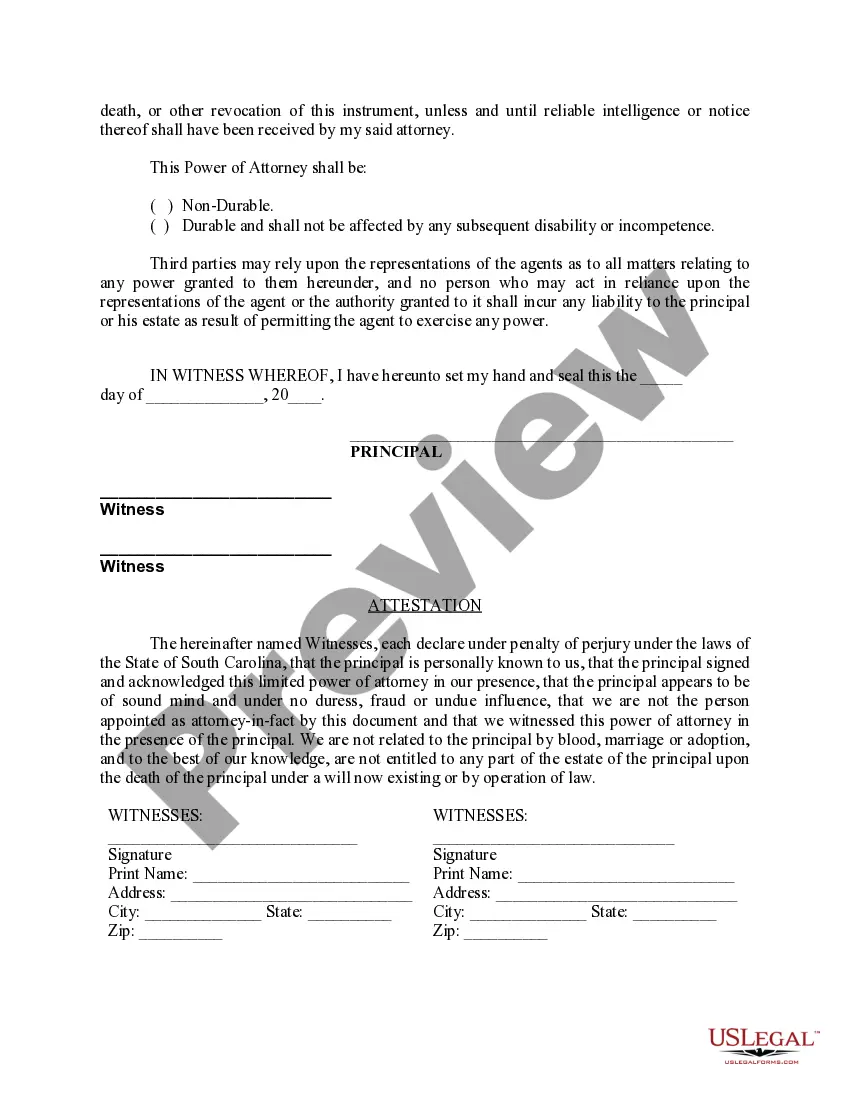
- Durability clause: Options to indicate whether the power of attorney is durable or non-durable.
- Witness signatures: Requires the signatures of witnesses to validate the document.
- Notary acknowledgment: A section for notarization if required.
When to use this document
You should use this Limited Power of Attorney when you want to delegate specific authority to someone else for temporary tasks. Common scenarios include managing financial matters, signing documents for real estate transactions, or handling business affairs while you are unavailable, such as during travel or medical procedures.
Who needs this form
- Individuals needing to appoint someone to manage specific affairs temporarily.
- Family members or friends acting on behalf of the principal.
- Anyone who wants to ensure their interests are managed in their absence for particular tasks.
Instructions for completing this form
- Identify the parties: Enter the full names and addresses of the principal and the agent.
- Specify the powers: Clearly outline the powers you wish to grant your agent by referring to the sample powers or by writing your own.
- Indicate durability: Choose whether you want the power of attorney to remain effective if you become incapacitated.
- Sign the document: The principal must sign the form in the presence of witnesses.
- Gather witness signatures: Ensure that two witnesses sign the document and provide their details.
- Seek notarization: If required, have the form notarized to finalize the process and add legal validity.
Is notarization required?
Yes, this form must be notarized to be legally valid. Notarization provides an extra layer of authenticity, ensuring that the document is properly executed. US Legal Forms offers integrated online notarization services that are available 24/7 through secure video calls, making it easy to complete the process without the need for travel.
Get your form ready online
Our built-in tools help you complete, sign, share, and store your documents in one place.
Make edits, fill in missing information, and update formatting in US Legal Forms—just like you would in MS Word.
Download a copy, print it, send it by email, or mail it via USPS—whatever works best for your next step.
Sign and collect signatures with our SignNow integration. Send to multiple recipients, set reminders, and more. Go Premium to unlock E-Sign.
If this form requires notarization, complete it online through a secure video call—no need to meet a notary in person or wait for an appointment.
We protect your documents and personal data by following strict security and privacy standards.
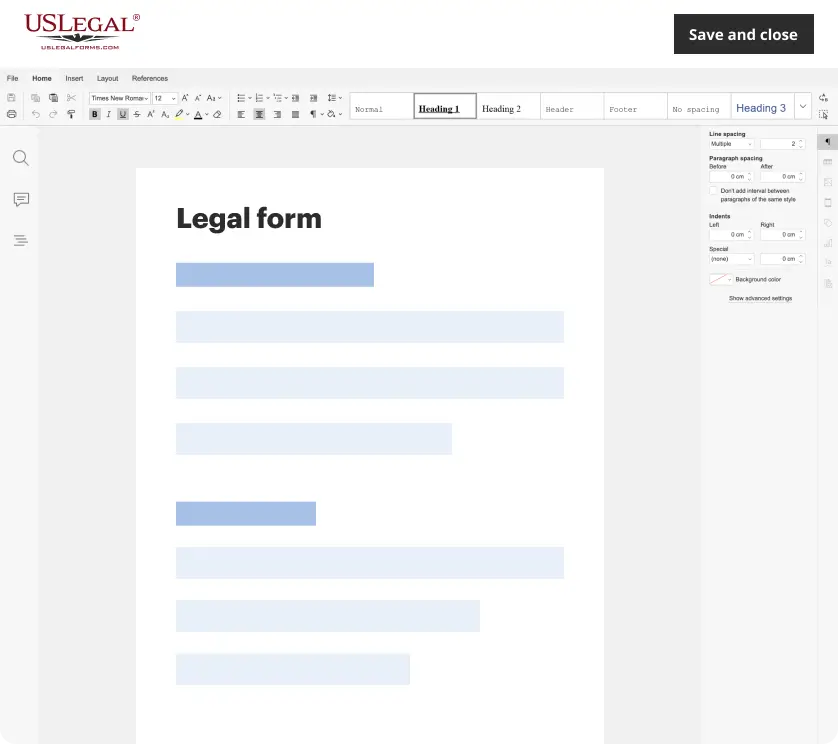
Make edits, fill in missing information, and update formatting in US Legal Forms—just like you would in MS Word.
Download a copy, print it, send it by email, or mail it via USPS—whatever works best for your next step.
Sign and collect signatures with our SignNow integration. Send to multiple recipients, set reminders, and more. Go Premium to unlock E-Sign.

If this form requires notarization, complete it online through a secure video call—no need to meet a notary in person or wait for an appointment.
We protect your documents and personal data by following strict security and privacy standards.
Typical mistakes to avoid
- Failing to specify the powers clearly, which can lead to misunderstandings.
- Not having the required number of witnesses present at the signing.
- Omitting to notarize the document if it is required for certain transactions.
- Leaving any fields blank, which might affect the enforceability of the form.
Benefits of using this form online
- Convenient access: Download and complete the form from the comfort of your home.
- Editable templates: Customize the form to meet your specific needs easily.
- Instant availability: Get the form when you need it without waiting for legal consultations.
- Peace of mind: Form templates are drafted by licensed attorneys, ensuring legal compliance.
Summary of main points
- The Limited Power of Attorney allows you to specify the powers granted to your agent.
- This form is tailored for use in South Carolina, ensuring adherence to local laws.
- Proper completion and notarization of the form are crucial for legal enforceability.
Looking for another form?
Form popularity
FAQ
Yes, South Carolina requires that Powers of Attorney are witnessed and notarized.
General Power of Attorney. Durable Power of Attorney. Special or Limited Power of Attorney. Springing Durable Power of Attorney.
Limited Power of Attorney (LPOA) is an authorization that permits a portfolio manager to perform specific functions on behalf of the account owner. In general, the LPOA allows the manager to execute an agreed-upon investment strategy and take care of routine related business without contacting the account holder.
A limited power of attorney grants the representative that you choose (the agent or attorney-in-fact) the power to act on your behalf under limited circumstances.Under a general power of attorney, the agent or attorney-in-fact can do anything that you can do.
1. Durable Power of Attorney. A durable power of attorney, or DPOA, is effective immediately after you sign it (unless stated otherwise), and allows your agent to continue acting on your behalf if you become incapacitated.
A general power of attorney is comprehensive and gives your attorney-in-fact all the powers and rights that you have yourself. For example, a general power of attorney may give your attorney-in-fact the right to sign documents for you, pay your bills, and conduct financial transactions on your behalf.
Can the Power of Attorney be used by the agent to take my money or property without my permission? Unfortunately, you can run the risk that the agent you choose to give your Power of Attorney could abuse the power by spending your money or taking your money without your knowledge or worse without your permission.
When you give someone the POA, there are important limitations to the power the agent has. First, your agent must make decisions within the terms of the legal document and can't make decisions that break the agreement, and the agent can be held liable for any fraud or negligence.