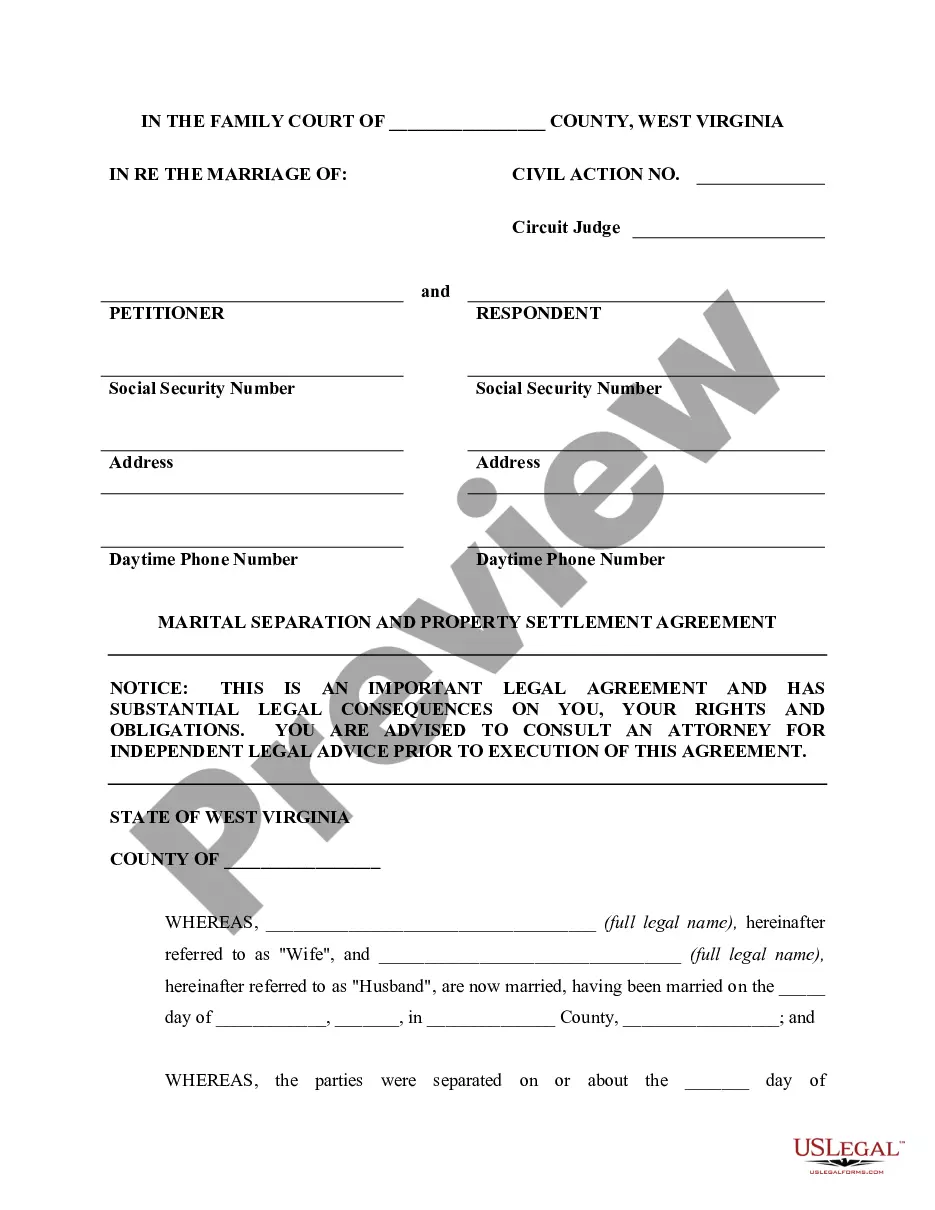
Rhode Island Notice of Breach of Written Lease for Violating Specific Provisions of Lease with Right to Cure for Nonresidential Property from Landlord to Tenant
Overview of this form
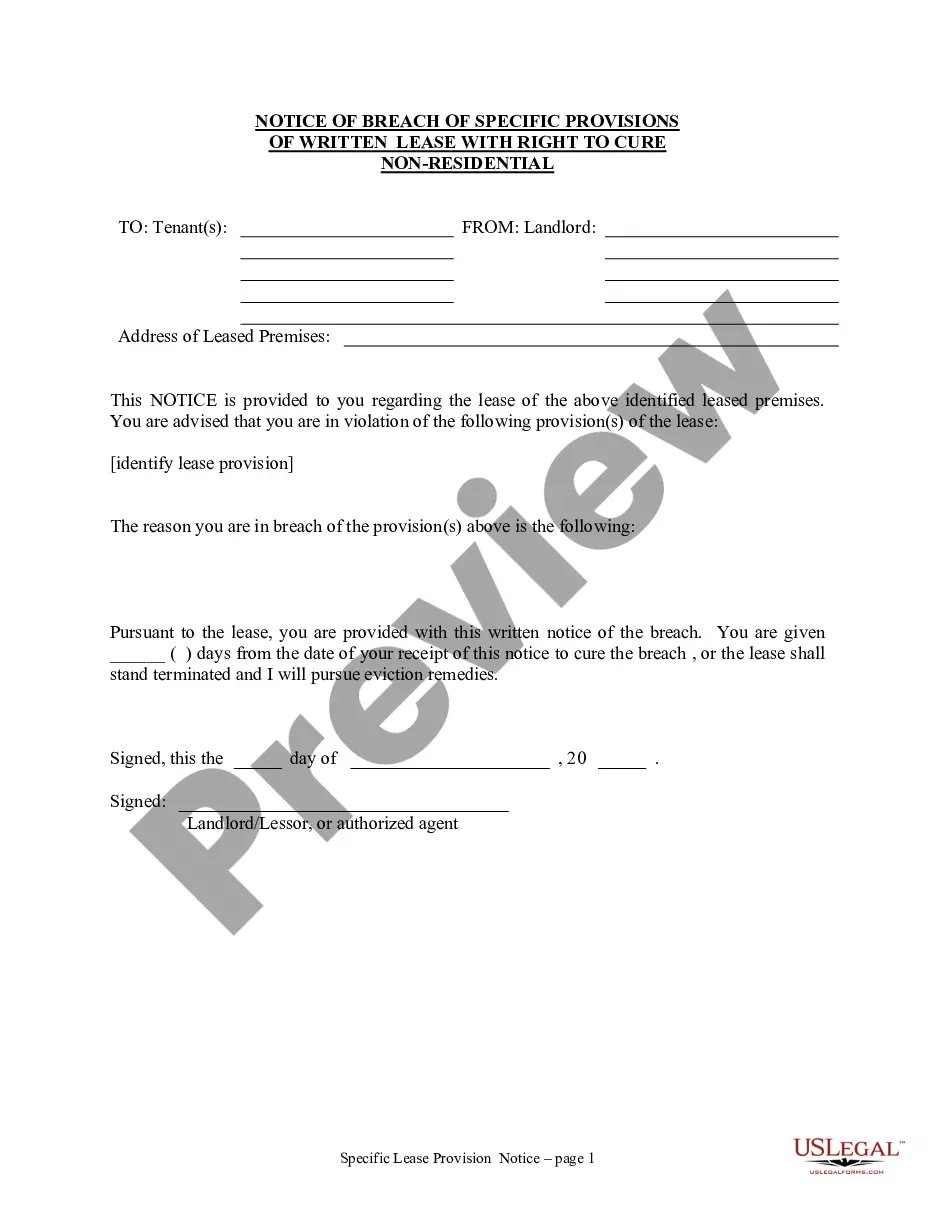
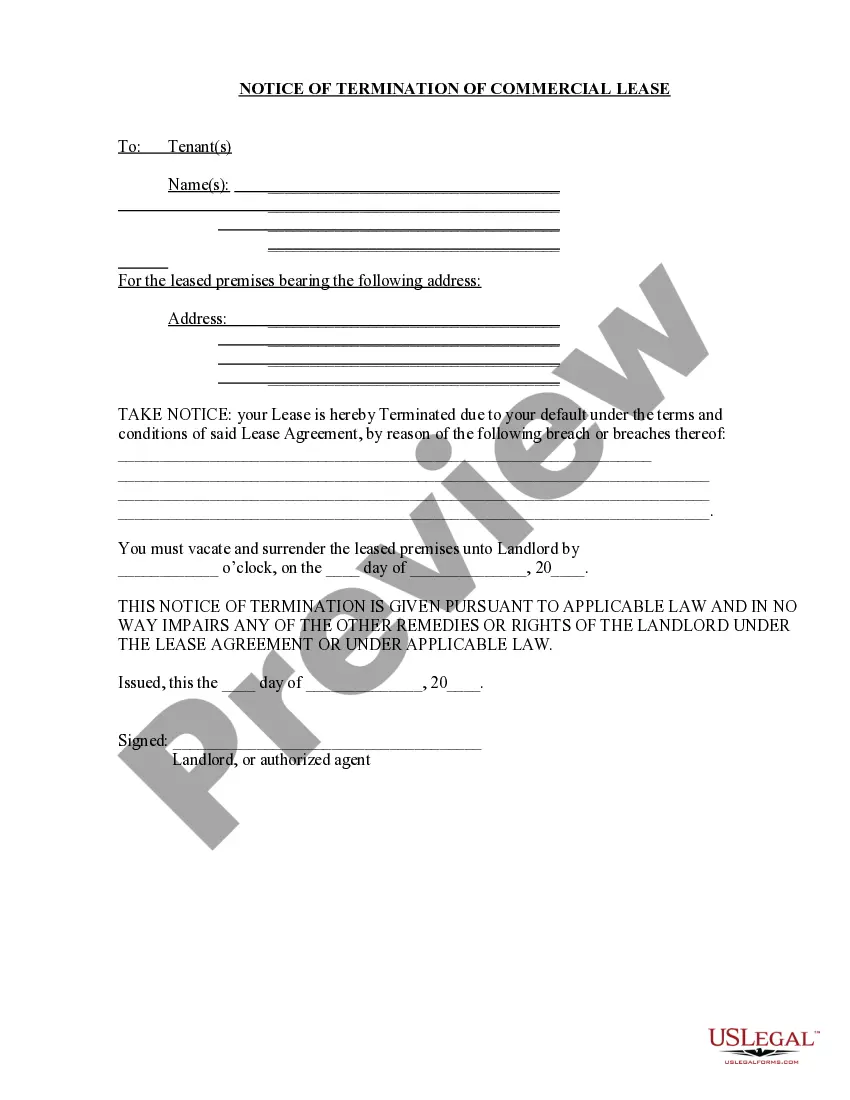
The Notice of Breach of Written Lease for Violating Specific Provisions of Lease with Right to Cure for Nonresidential Property is a formal notification from a landlord to a tenant. It is used when a tenant is in breach of their written lease agreement regarding specific provisions. This form provides the tenant with a clear opportunity to correct the violation, known as the "right to cure," before the lease is terminated. Unlike other lease forms, this document focuses specifically on breaches and remedies, ensuring both parties are aware of their rights and responsibilities.
What’s included in this form
- Identification of the landlord and tenant, including their address.
- Clear statement of the specific lease provision that has been violated.
- Description of the reason for the breach.
- Deadline for the tenant to correct the breach.
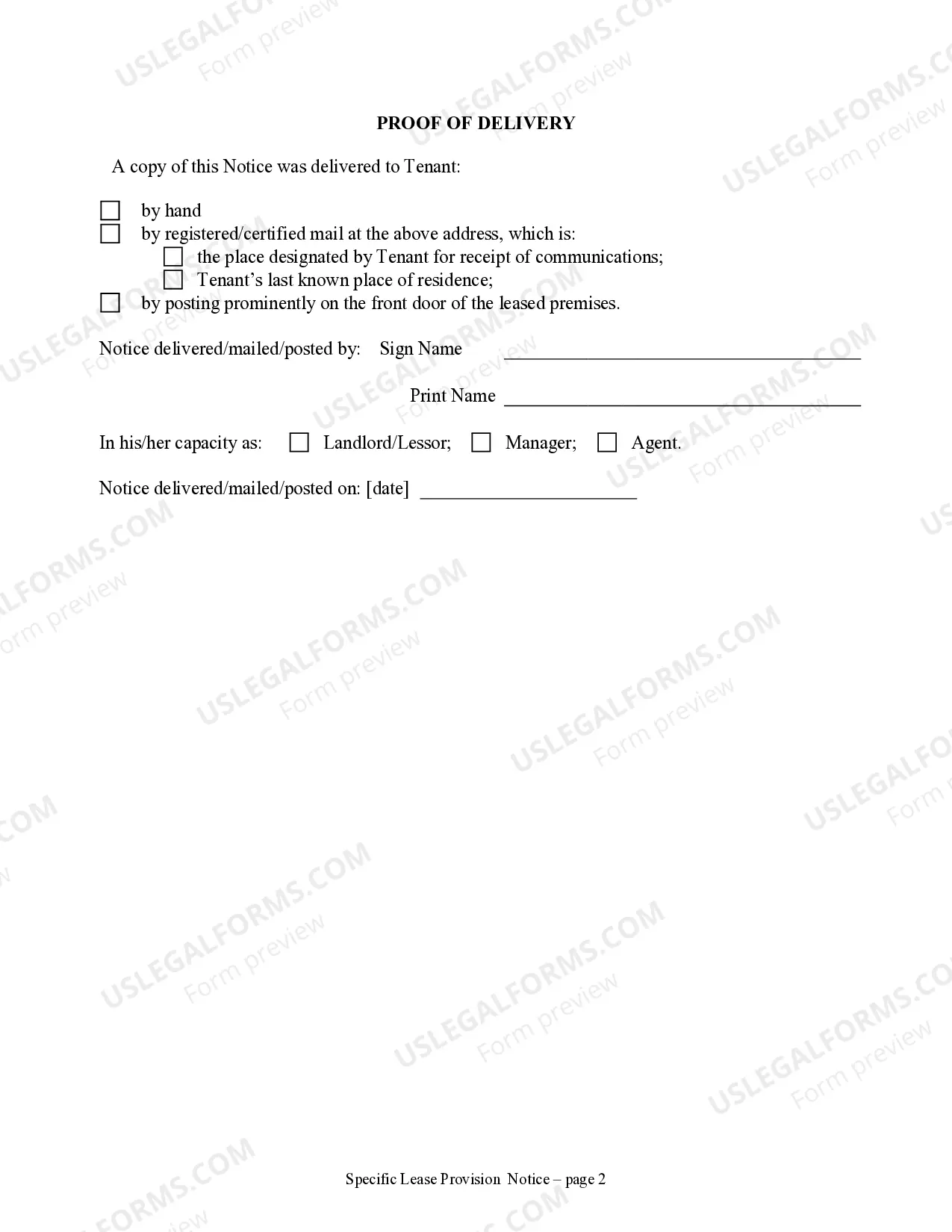
- Instructions for proof of delivery of the notice.
- Signature field for the landlord or authorized agent.



Common use cases
This form should be used when a landlord identifies that a tenant has violated a specific provision in a non-residential lease. Examples include non-payment of rent, unauthorized alterations to the leased property, or failure to maintain the premises. It is an essential tool for landlords who wish to formally address a lease breach and provide the tenant with a chance to cure the violation before moving forward with eviction procedures.
Who should use this form
- Landlords of non-residential properties seeking to notify tenants of lease breaches.
- Property managers acting on behalf of landlords.
- Tenants who wish to understand their rights in the event of a lease breach notice.
Instructions for completing this form
- Identify the parties involved by entering the landlord's and tenant's names and addresses.
- Specify the property address of the leased premises in question.
- Clearly identify the specific lease provision that has been violated.
- Provide a detailed description of the reason for the breach.
- State the number of days the tenant has to cure the breach.
- Sign and date the notice, and record the method of delivery to the tenant.
Does this document require notarization?
Notarization is not commonly needed for this form. However, certain documents or local rules may make it necessary. Our notarization service, powered by Notarize, allows you to finalize it securely online anytime, day or night.
Get your form ready online
Our built-in tools help you complete, sign, share, and store your documents in one place.
Make edits, fill in missing information, and update formatting in US Legal Forms—just like you would in MS Word.
Download a copy, print it, send it by email, or mail it via USPS—whatever works best for your next step.
Sign and collect signatures with our SignNow integration. Send to multiple recipients, set reminders, and more. Go Premium to unlock E-Sign.
If this form requires notarization, complete it online through a secure video call—no need to meet a notary in person or wait for an appointment.
We protect your documents and personal data by following strict security and privacy standards.

Make edits, fill in missing information, and update formatting in US Legal Forms—just like you would in MS Word.

Download a copy, print it, send it by email, or mail it via USPS—whatever works best for your next step.

Sign and collect signatures with our SignNow integration. Send to multiple recipients, set reminders, and more. Go Premium to unlock E-Sign.

If this form requires notarization, complete it online through a secure video call—no need to meet a notary in person or wait for an appointment.

We protect your documents and personal data by following strict security and privacy standards.
Mistakes to watch out for
- Failing to specify the exact lease provision that has been violated.
- Not providing a clear description of the reason for the breach.
- Neglecting to indicate the correct deadline for curing the breach.
- Not including proof of delivery, which can invalidate the notice.
Why use this form online
- Convenient access to the form anytime, from anywhere.
- Editability allows landlords to customize the form to their specific situations.
- Reliable legal language drafted by licensed attorneys, ensuring compliance with applicable laws.
Looking for another form?
Form popularity
FAQ
In some circumstances, a tenant can break a fixed-term agreement early without penalty. A tenant can give 14 days' written notice to end an agreement early without penalty if: they have accepted an offer of social housing (e.g. from DCJ Housing)
If a resident fails to abide by the agreed-upon terms, legal action can be taken. If an eviction is the end-result of this action, it will stay listed on the resident's record for up to seven years. The most common reason evictions are requested involves failure to pay rent.
The rental property address, including unit number (if applicable) The names of all tenants on the lease agreement. The date the lease violation notice was written. The specific reason for the notice. The time and date the violation occurred (if applicable)
A tenant must pay the rent up to and including the day their termination notice period ends and they vacate the property. If a tenant does not owe the landlord money at the end of their tenancy and there is no damage to the property, the bond paid at the beginning of the tenancy should be refunded in full.
If a tenant fails to pay rent, breaks a rule, or significantly damages the property, then it is considered breach of contract and you have grounds for eviction. If there are people living in the unit that are not on the lease, then that is also breach of contract and you have grounds to evict them.
If you pay all outstanding charges before moving, including any back rent and fees, breaking a lease won't hurt your credit score. However, breaking a lease can damage your credit if it results in unpaid debt.Landlords generally don't report unpaid rent to credit bureaus.
If you break a lease without legal grounds to do so, you may: Be required to pay the rent for the remaining months on your lease. Be subject to legal action from your landlord, and/or. Receive a negative mark on your credit report.
In many cases, the lease may give the tenant the option to pay an early termination fee. If this is the case, tenants can expect to pay one to two months' rent in order to exit the lease agreement.
If a tenant breaches a tenancy agreement it is possible that their landlord will try and evict them from the property. The sort of breaches of tenancy which result in a landlord seeking a court order for possession include:Damage to the property (eg broken windows)