Pennsylvania Grant of Easement for Sidewalk Site
Overview of this form
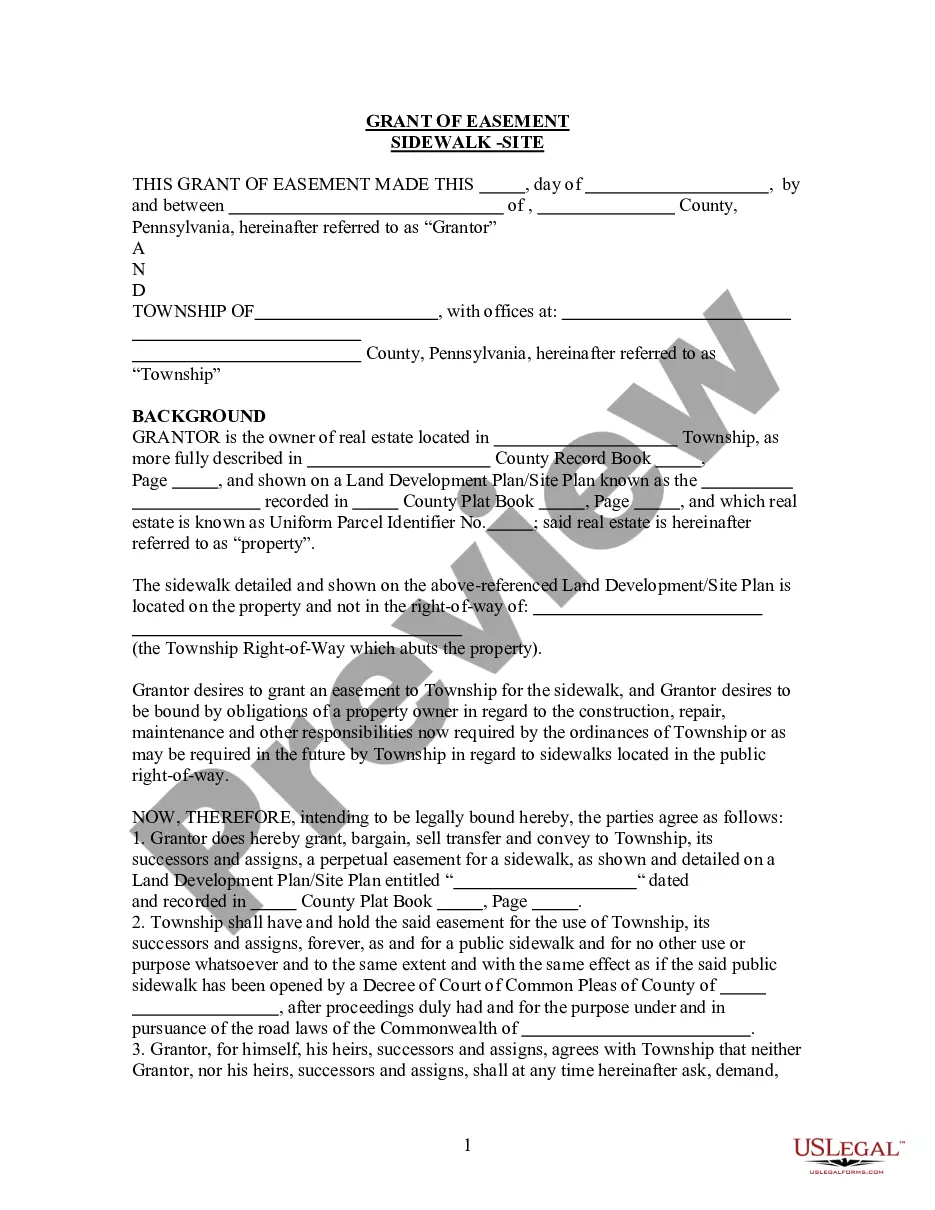
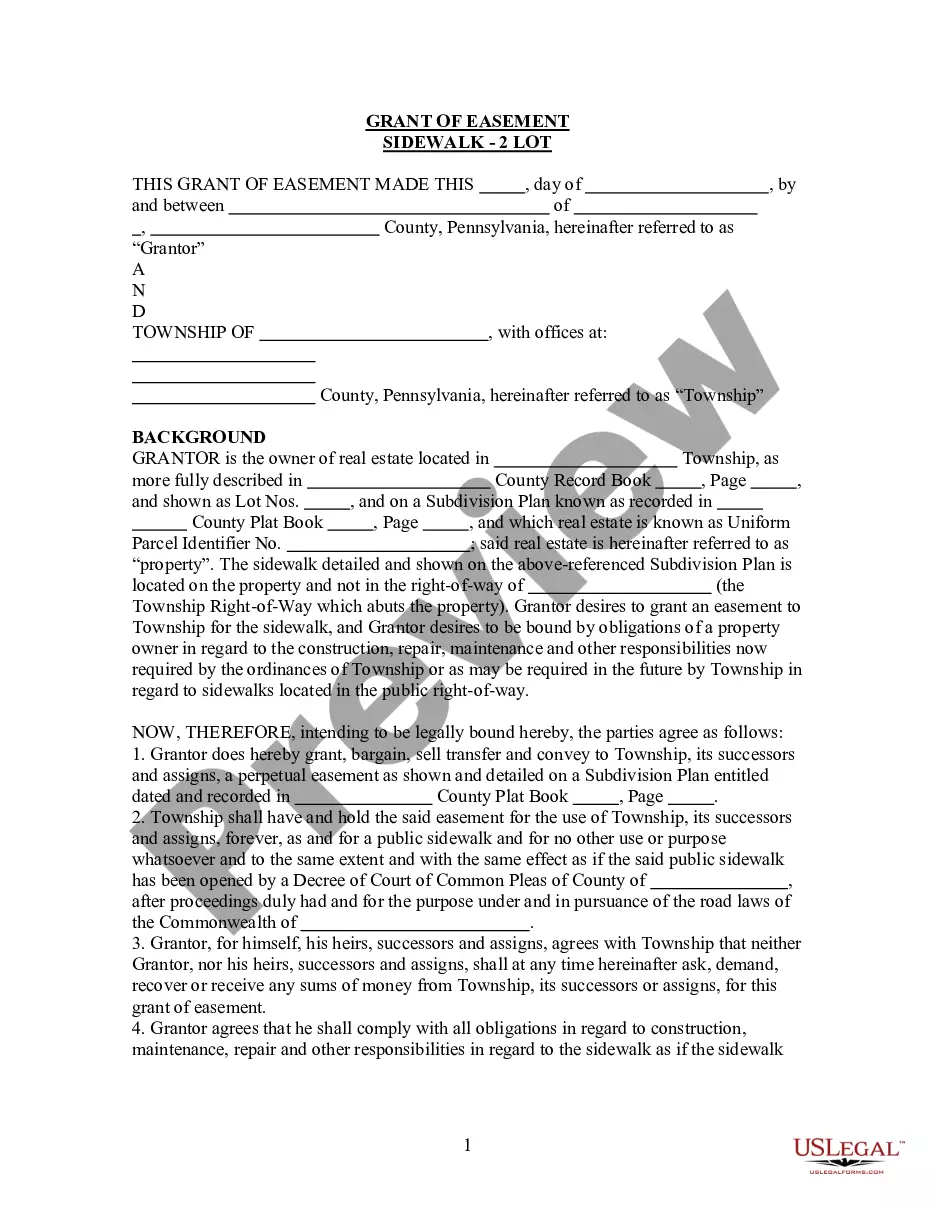
The Grant of Easement for Sidewalk Site is a legal document that allows one party to perform activities related to sidewalks on another party's property. This form specifically addresses the construction, repair, and maintenance of sidewalks in accordance with local ordinances. Unlike other easement forms, this one focuses on sidewalk-related responsibilities, ensuring compliance with township regulations and providing a clear understanding of the rights and obligations of each party involved.
Main sections of this form
- Identification of the granting party (Grantor) and the recipient (Township).
- Details on the easement's purpose, specifically for sidewalk construction and maintenance.
- Obligations of the Grantor regarding compliance with township ordinances.
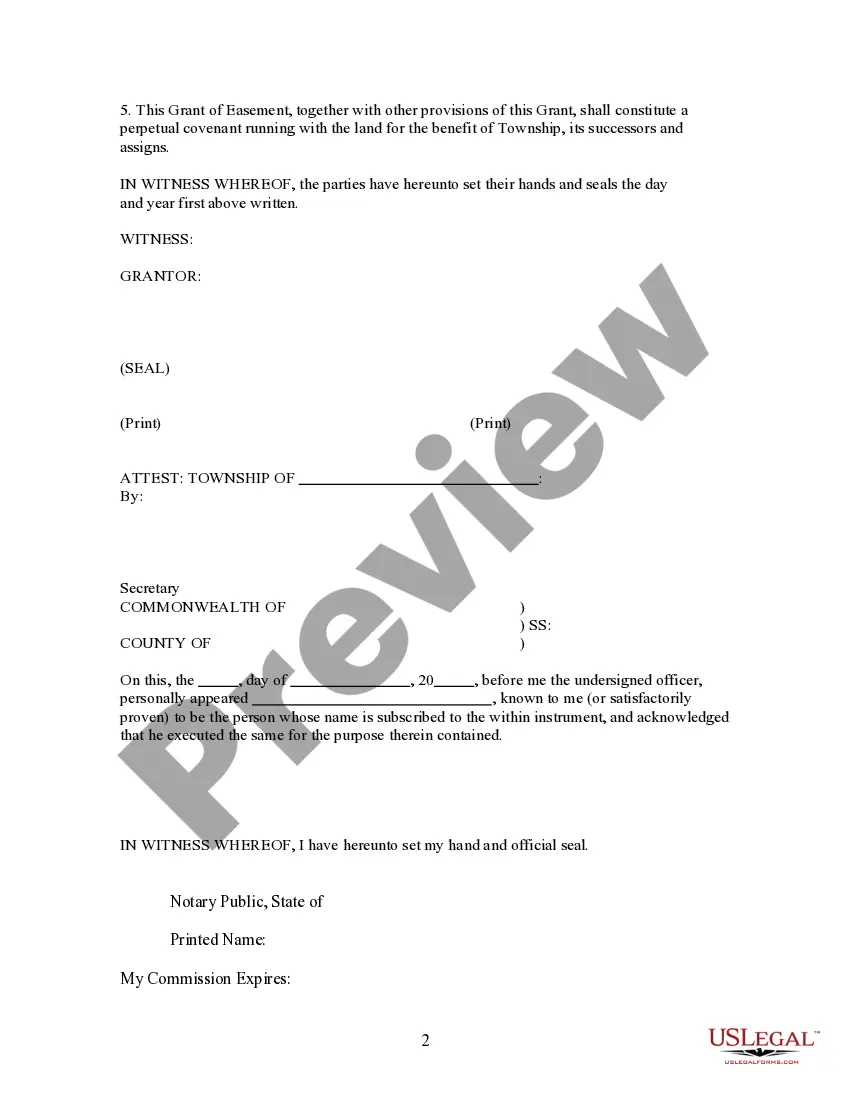
- Provisions regarding the perpetual nature of the easement.
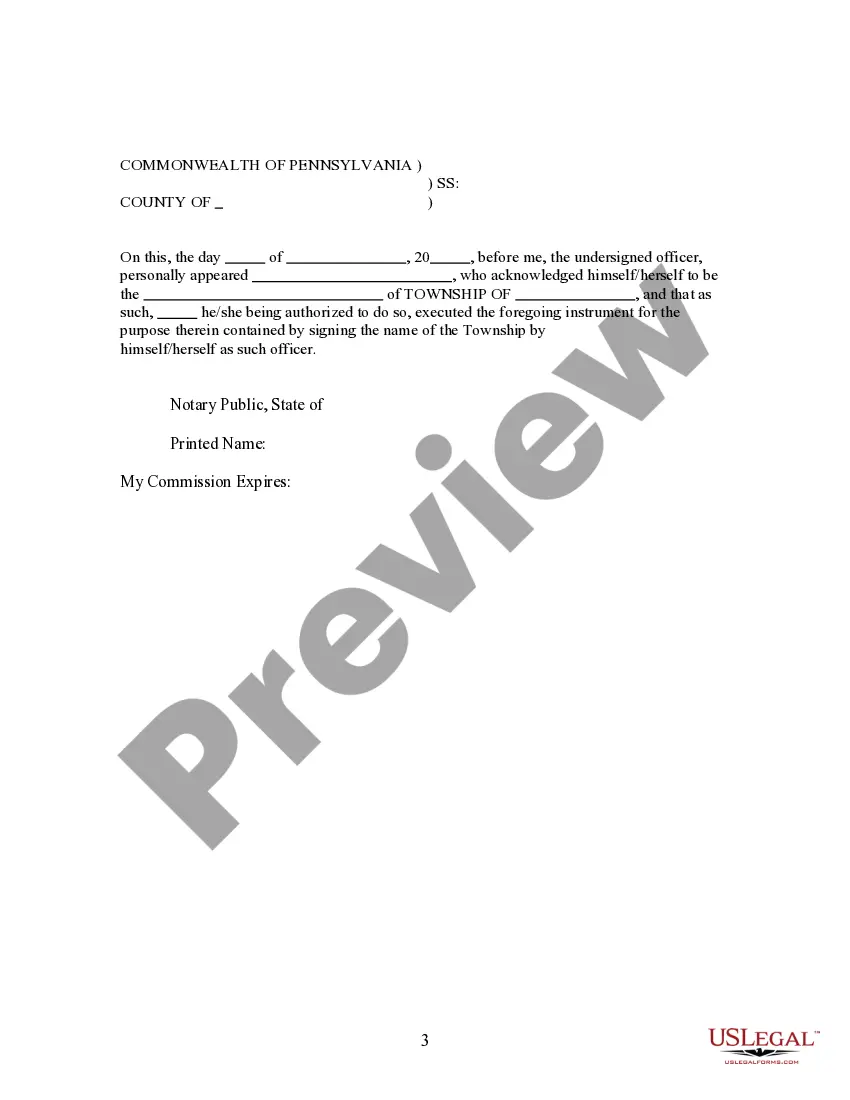
- Spaces provided for signatures of both parties, indicating their agreement.
Situations where this form applies
This form should be used when a property owner needs to grant permission for the construction, repair, or maintenance of a sidewalk on their property, typically by the township. You may need this easement if local government plans to improve public access, comply with community safety standards, or address existing sidewalk damage. It's essential to have this document prepared to formally recognize the rights of the township while ensuring that responsibilities are clear for both parties.
Who can use this document
- Property owners who wish to grant an easement for sidewalk construction to their local township.
- Local government officials responsible for sidewalk projects within their jurisdiction.
- Real estate professionals advising clients on property developments involving easements.
- Attorneys representing clients in matters related to easements and property use.
Steps to complete this form
- Identify the parties by entering the full names and addresses of both the Grantor and the Township.
- Specify the location of the property where the sidewalk easement will be granted.
- Clearly describe the purpose of the easement, including construction and maintenance details.
- Include any obligations that the Grantor will have concerning the sidewalk, as per township ordinances.
- Have both parties sign and date the document to finalize the easement agreement.
Does this form need to be notarized?
Notarization is required for this form to take effect. Our online notarization service, powered by Notarize, lets you verify and sign documents remotely through an encrypted video session, available 24/7.
Get your form ready online
Our built-in tools help you complete, sign, share, and store your documents in one place.
Make edits, fill in missing information, and update formatting in US Legal Forms—just like you would in MS Word.
Download a copy, print it, send it by email, or mail it via USPS—whatever works best for your next step.
Sign and collect signatures with our SignNow integration. Send to multiple recipients, set reminders, and more. Go Premium to unlock E-Sign.
If this form requires notarization, complete it online through a secure video call—no need to meet a notary in person or wait for an appointment.
We protect your documents and personal data by following strict security and privacy standards.

Make edits, fill in missing information, and update formatting in US Legal Forms—just like you would in MS Word.

Download a copy, print it, send it by email, or mail it via USPS—whatever works best for your next step.

Sign and collect signatures with our SignNow integration. Send to multiple recipients, set reminders, and more. Go Premium to unlock E-Sign.

If this form requires notarization, complete it online through a secure video call—no need to meet a notary in person or wait for an appointment.

We protect your documents and personal data by following strict security and privacy standards.
Common mistakes
- Failing to accurately describe the location or dimensions of the easement.
- Not including specific obligations required by the township ordinances.
- Leaving sections blank, such as names, signatures, or dates.
- Not having the correct parties sign the form, leading to potential legal issues.
Why use this form online
- Convenient access: Download and complete the form at your own pace anytime.
- Editability: Make necessary changes easily before finalizing the document.
- Reliability: Forms are created by licensed attorneys, ensuring legal compliance and accuracy.
Looking for another form?


Form popularity
FAQ
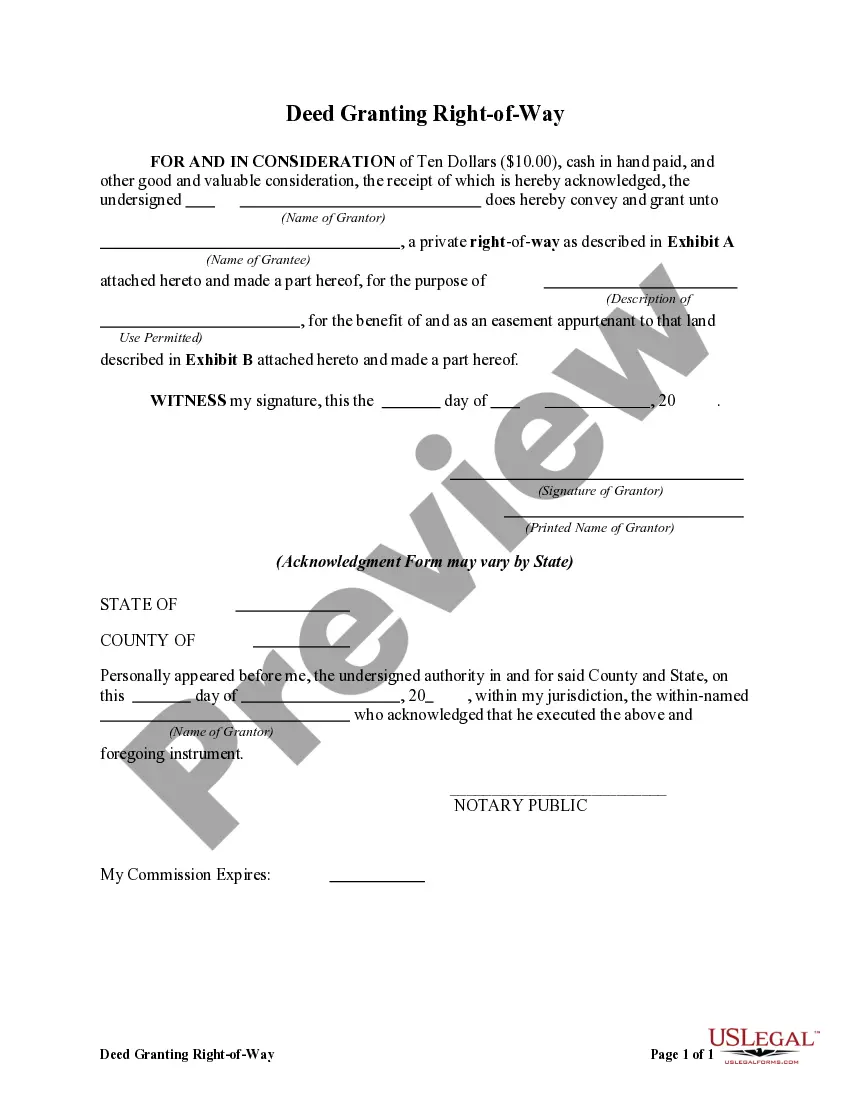
An easement deed allows a party that is not the owner to use a portion of the land. It is a written agreement between two parties that spells out what part of the property is available for access and how it may be used. Since you are granting an easement to your land, you can set any terms and conditions you like.
Rights of way (similar to the driveway example, but also including walkways or pathways); Public utilities, such as gas, electricity or water and sewer mains; Parking areas; Access to light and air; and. Shared walls.
A property easement is generally written and recorded with the local assessor's office. The documented easement will show up when a title search is conducted and it stays there indefinitely, unless both parties agree to remove it.
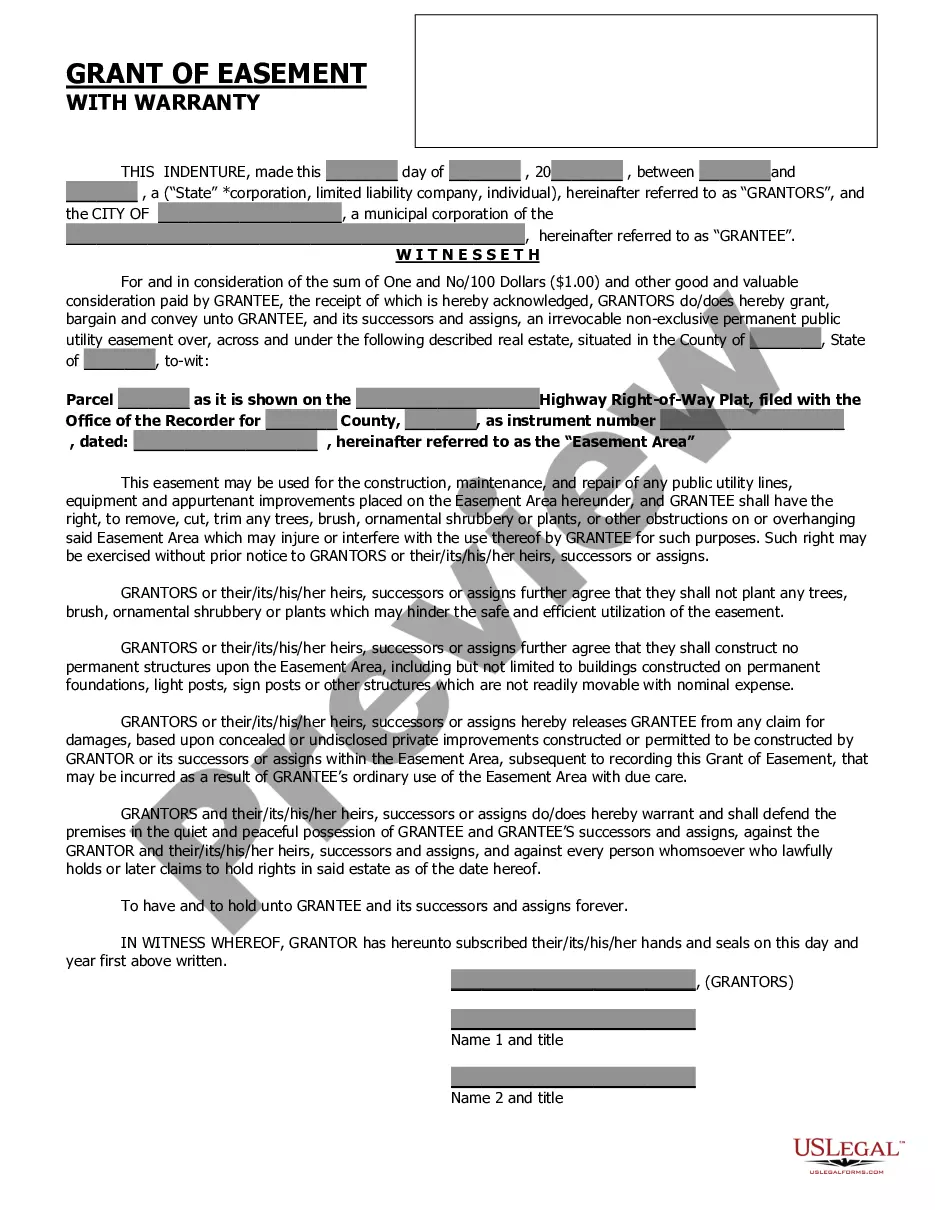
Give the document a simple title: Grant of Easement is sufficient. Identify the parties. You need to explain who the parties are to the agreement. The person granting the easement to his property is the Grantor and the person gaining access to the property is the Grantee.
An easement is a nonpossessory right to use and/or enter onto the real property of another without possessing it. It is "best typified in the right of way which one landowner, A, may enjoy over the land of another, B".
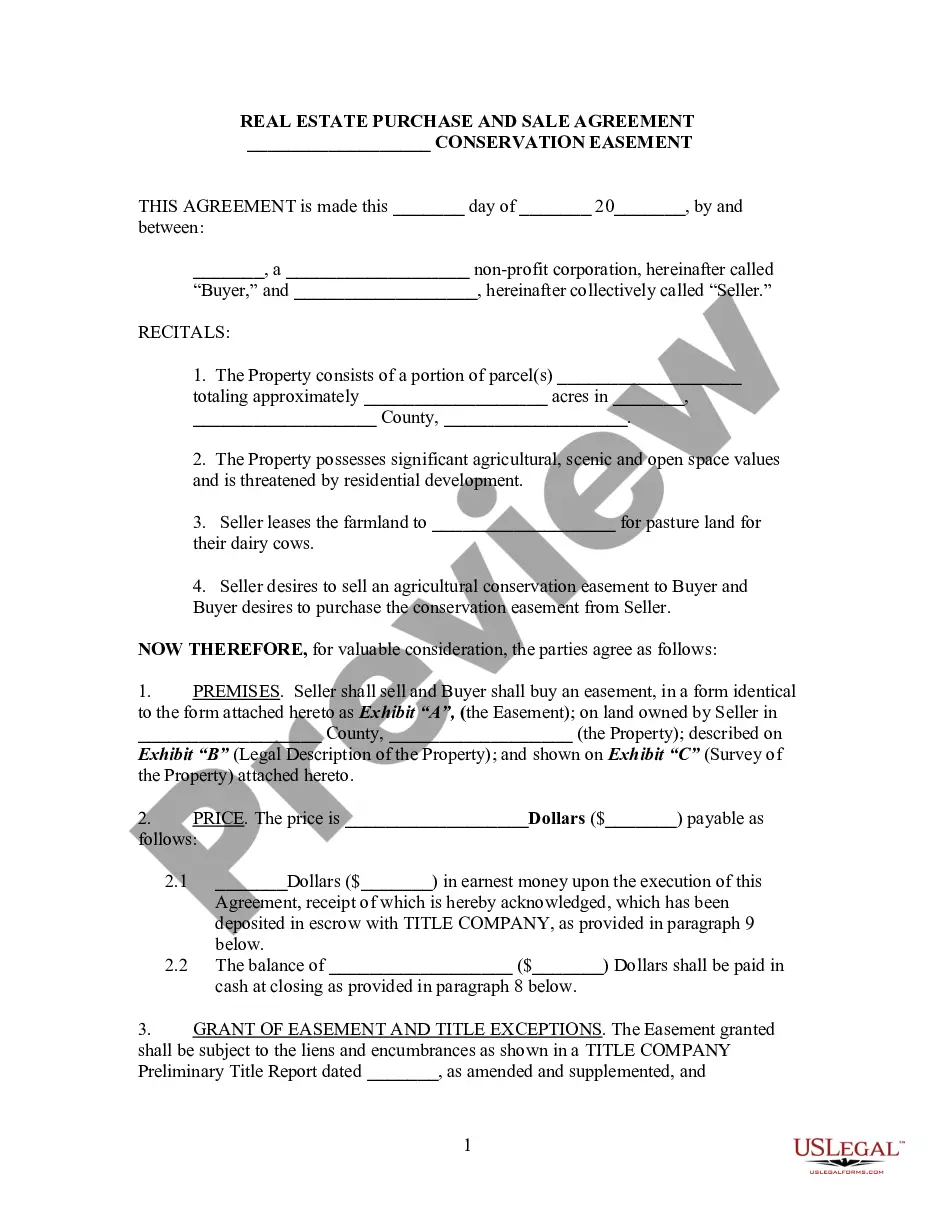
An easement is a limited right to use another person's land for a stated purpose. Examples of easements include the use of private roads and paths, or the use of a landowner's property to lay railroad tracks or electrical wires.
There must be a dominant and servient tenement. The easement must accommodate the dorminant tenement. The dorminant and servient tenements must be owned or occupied by different persons. The easement must be capable of forming the subject matter of the grant e.g. there must be a capable grantor or grantee.
An easement may be created by means of an appropriate dealing registered in NSW LRS or by the inclusion in a Section 88B instrument lodged with a new deposited plan.