Pennsylvania Living Trust for Husband and Wife with Minor and or Adult Children
About this form
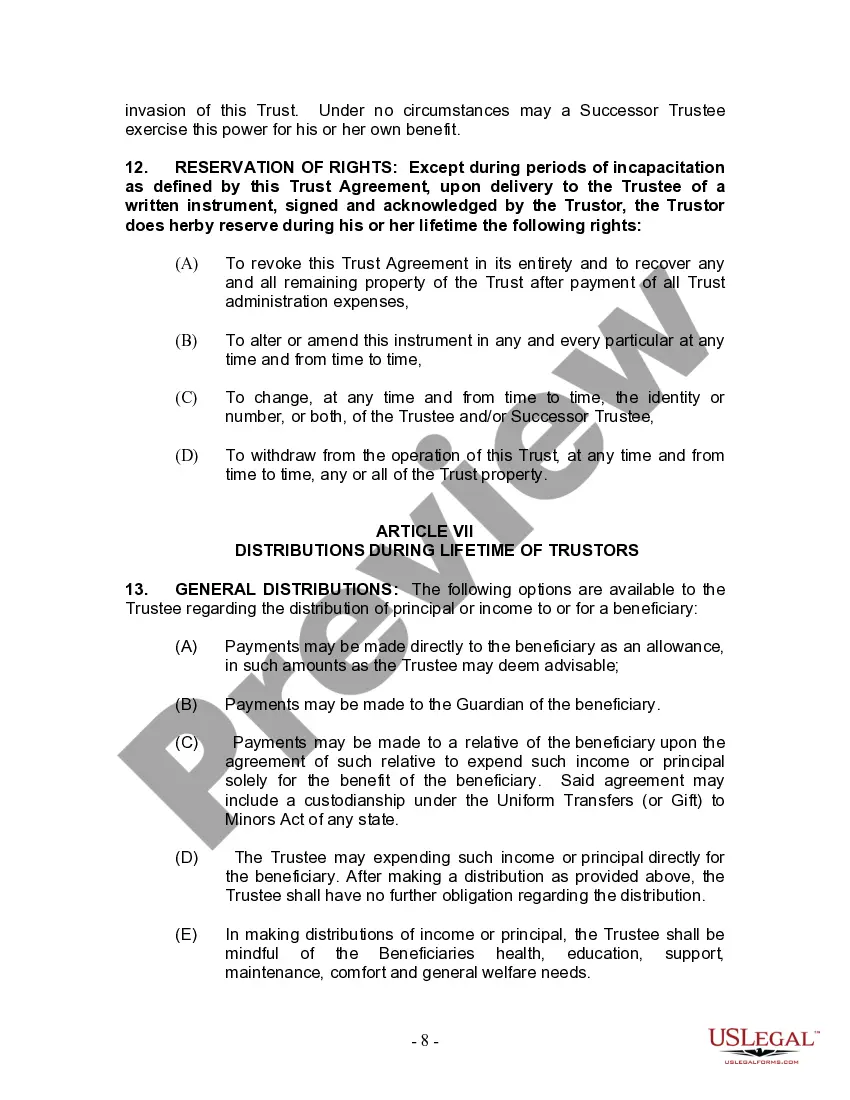
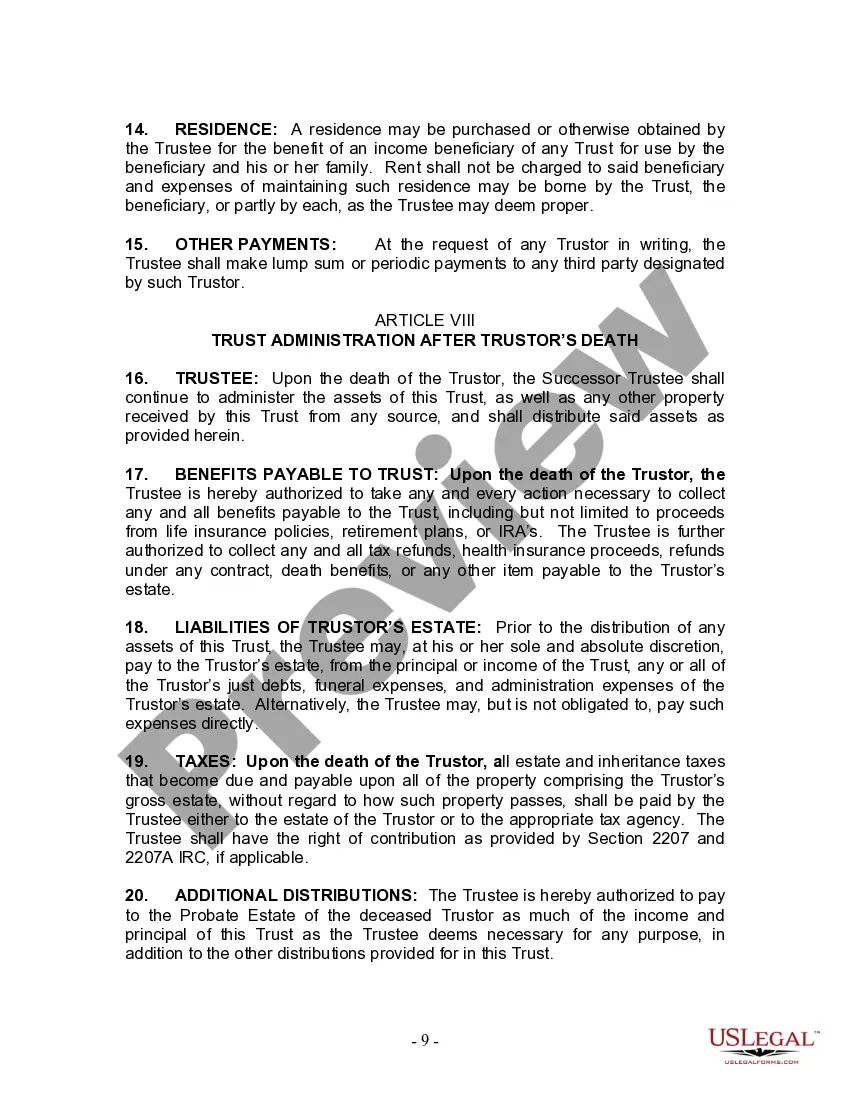
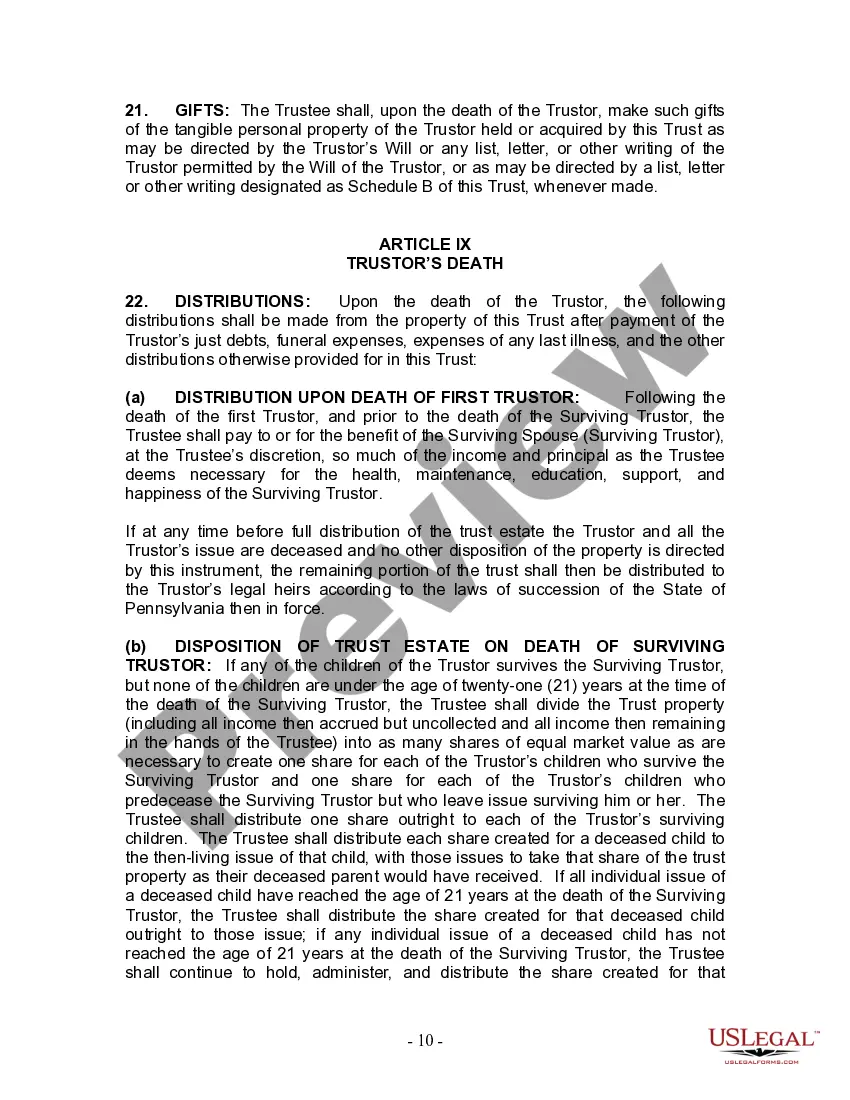
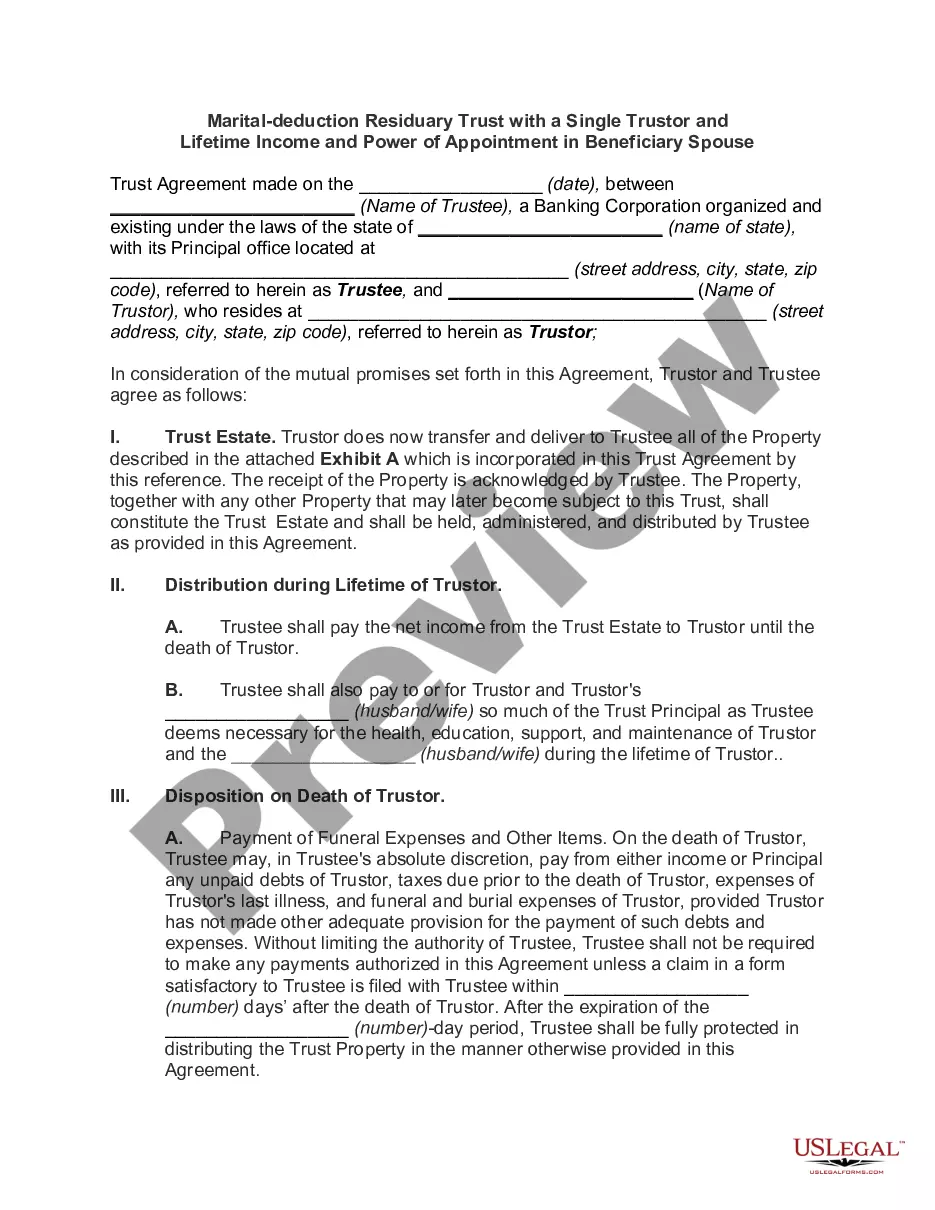
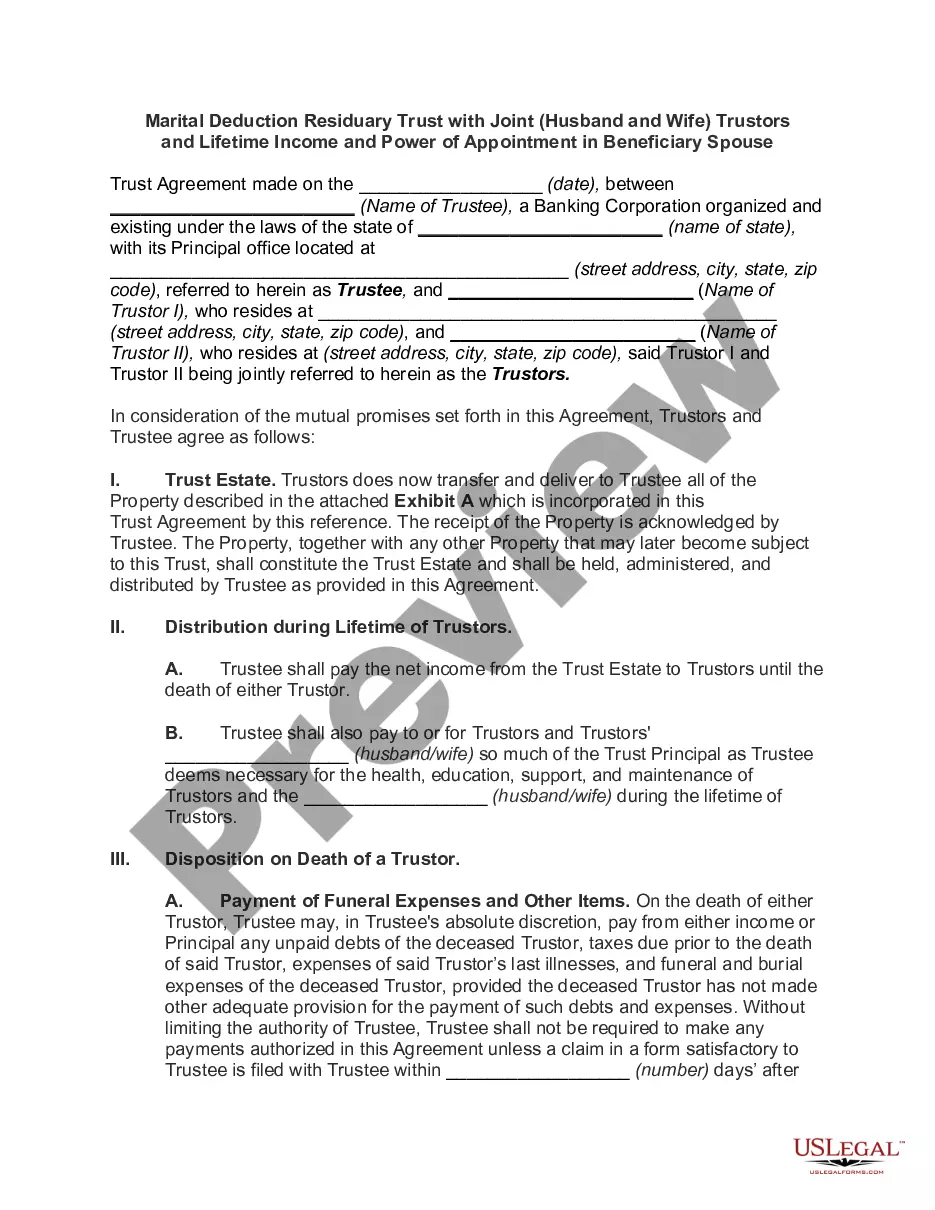
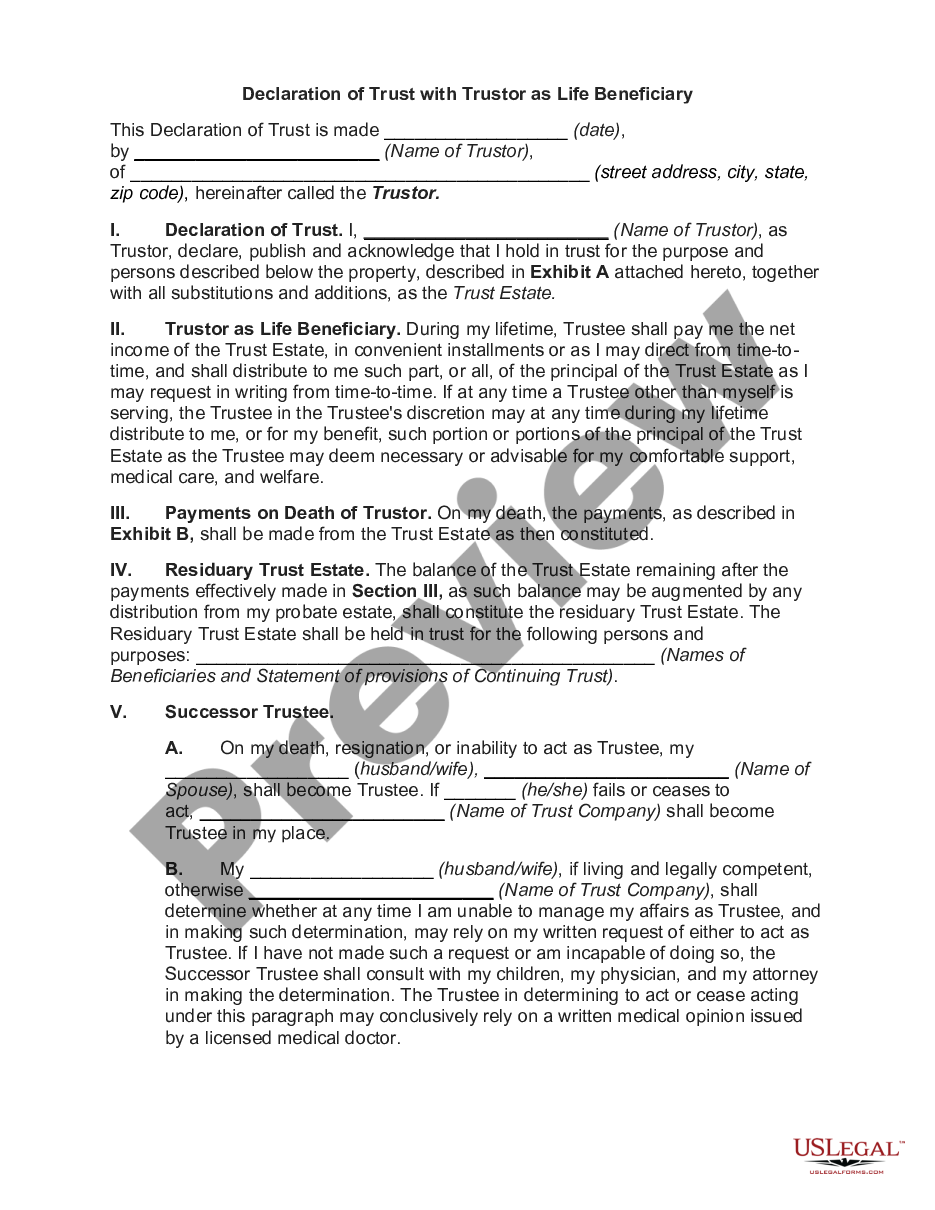
This Living Trust for Husband and Wife with Minor and/or Adult Children is a legal document that establishes a revocable trust during the lifetime of the trustorsâtypically spouses. This type of trust allows them to manage their assets and property while ensuring that their estate is distributed according to their wishes upon their death, without the need for probate. It is specifically designed for couples who want to include provisions for their children, making it distinct from other types of trusts that may not address family dynamics or provide for beneficiaries in the same way.
Key components of this form
- Trustor Identification: Names and addresses of both trustors, establishing ownership and intent.
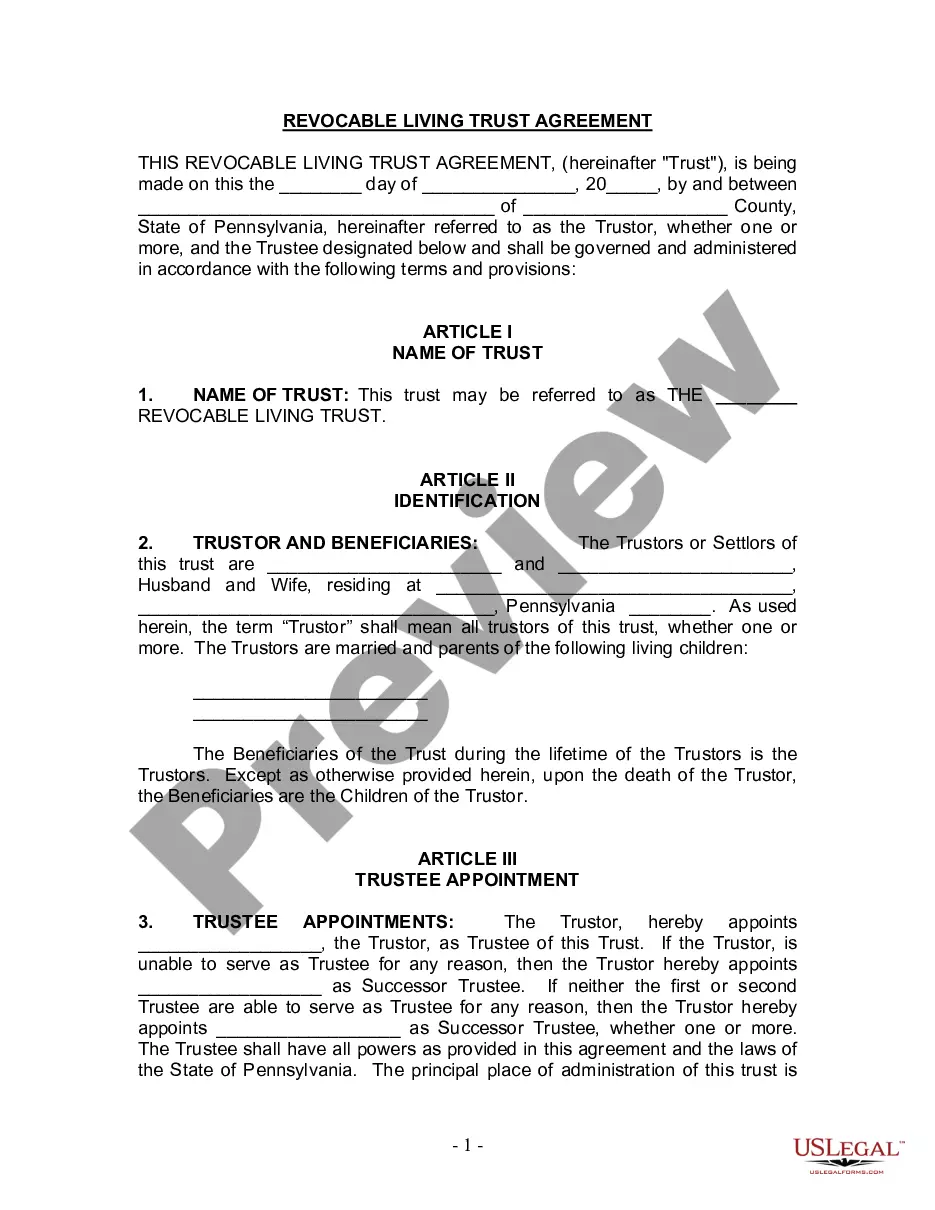
- Trustee Appointment: Designation of one or more trustees to manage the trust.
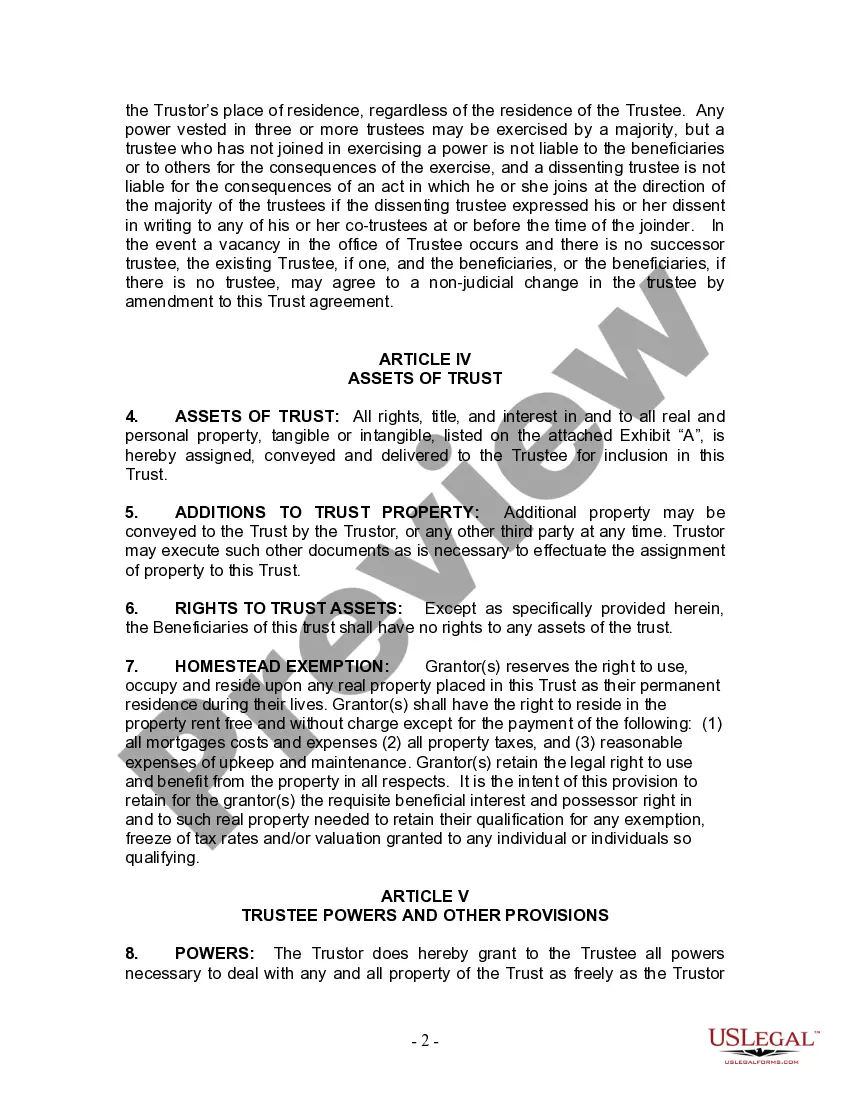
- Assets of the Trust: Description of assets and property being transferred into the trust.
- Beneficiary Designation: Outline of how the trust's assets will be distributed during and after the trustors' lifetimes.
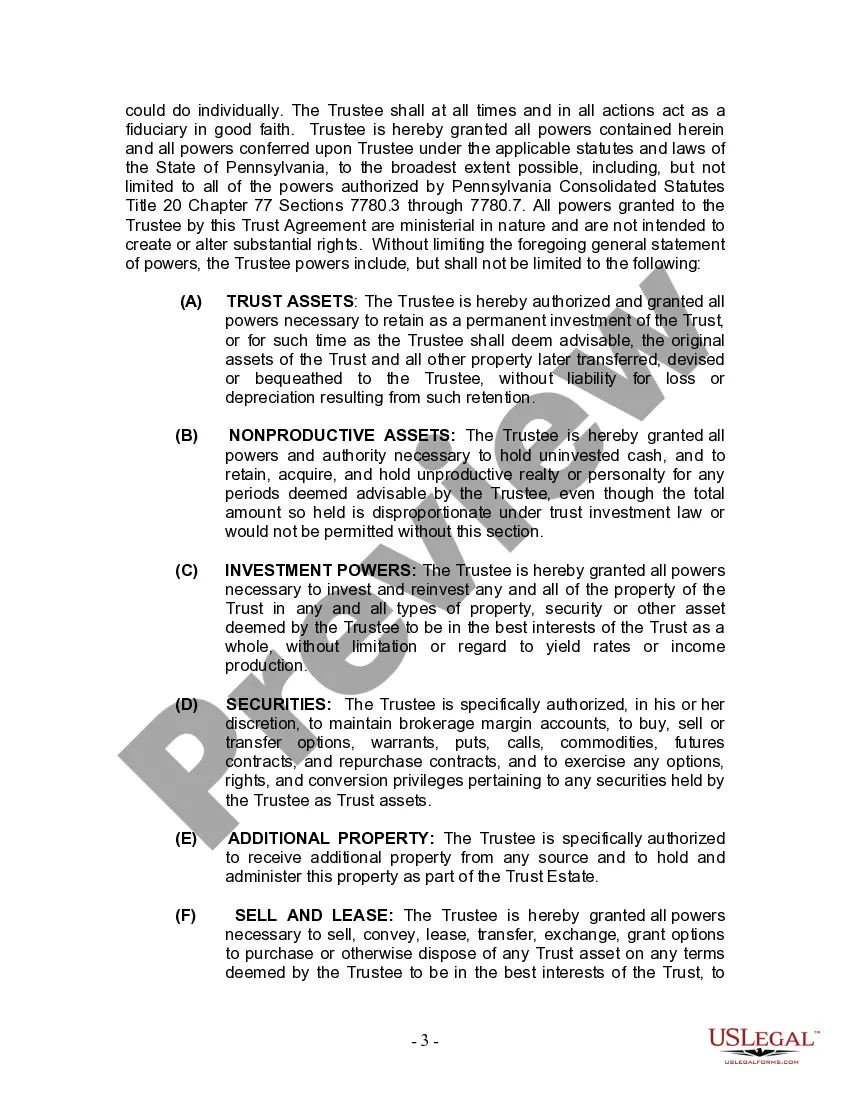
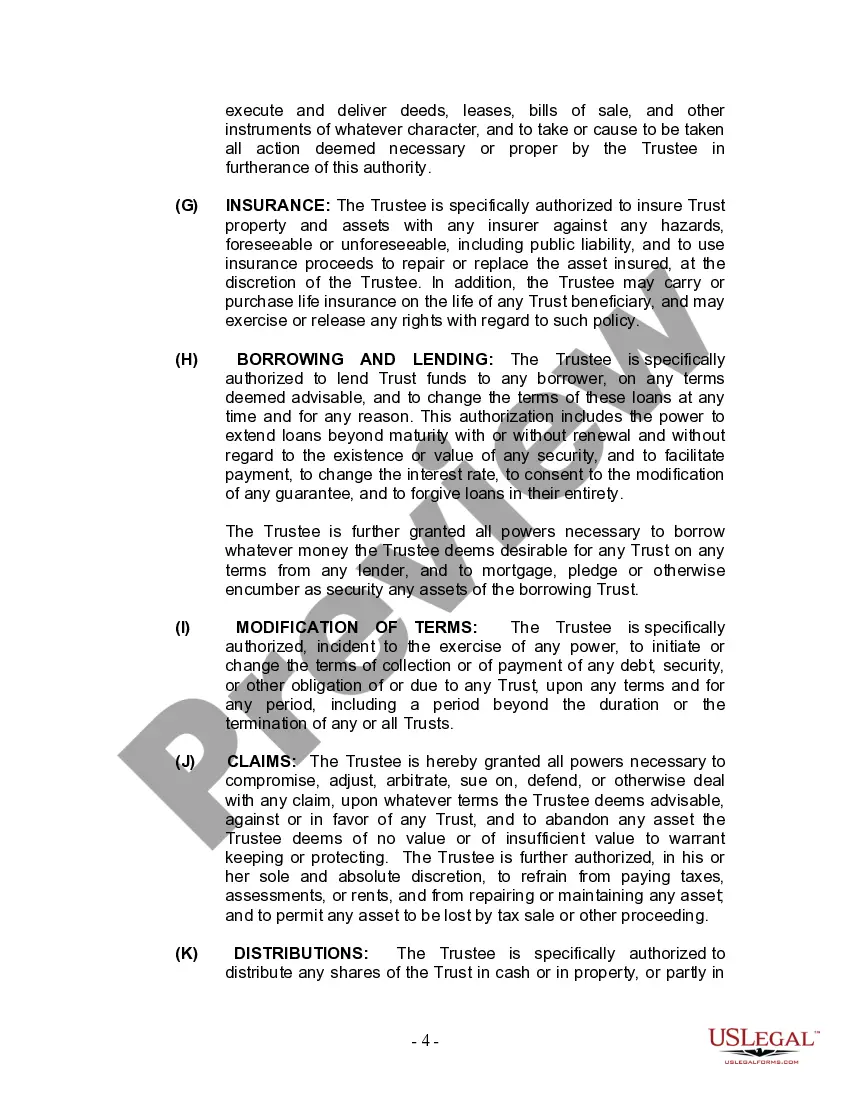
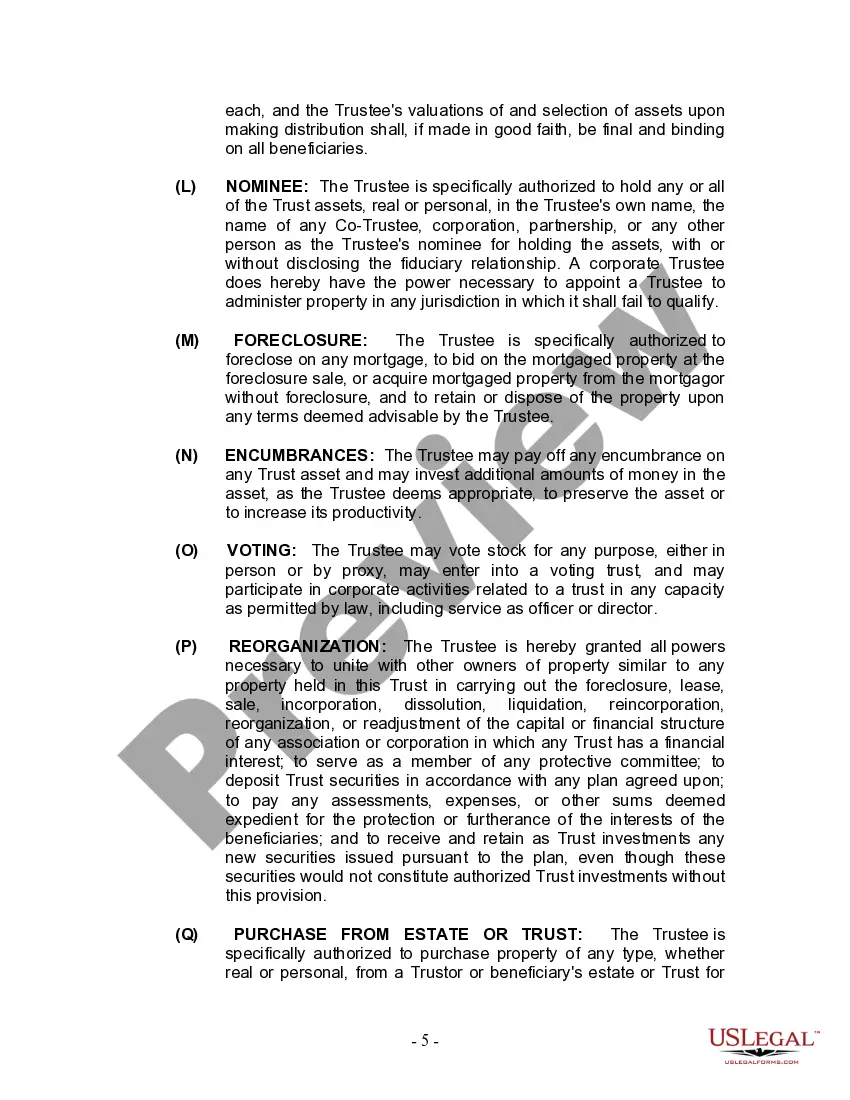
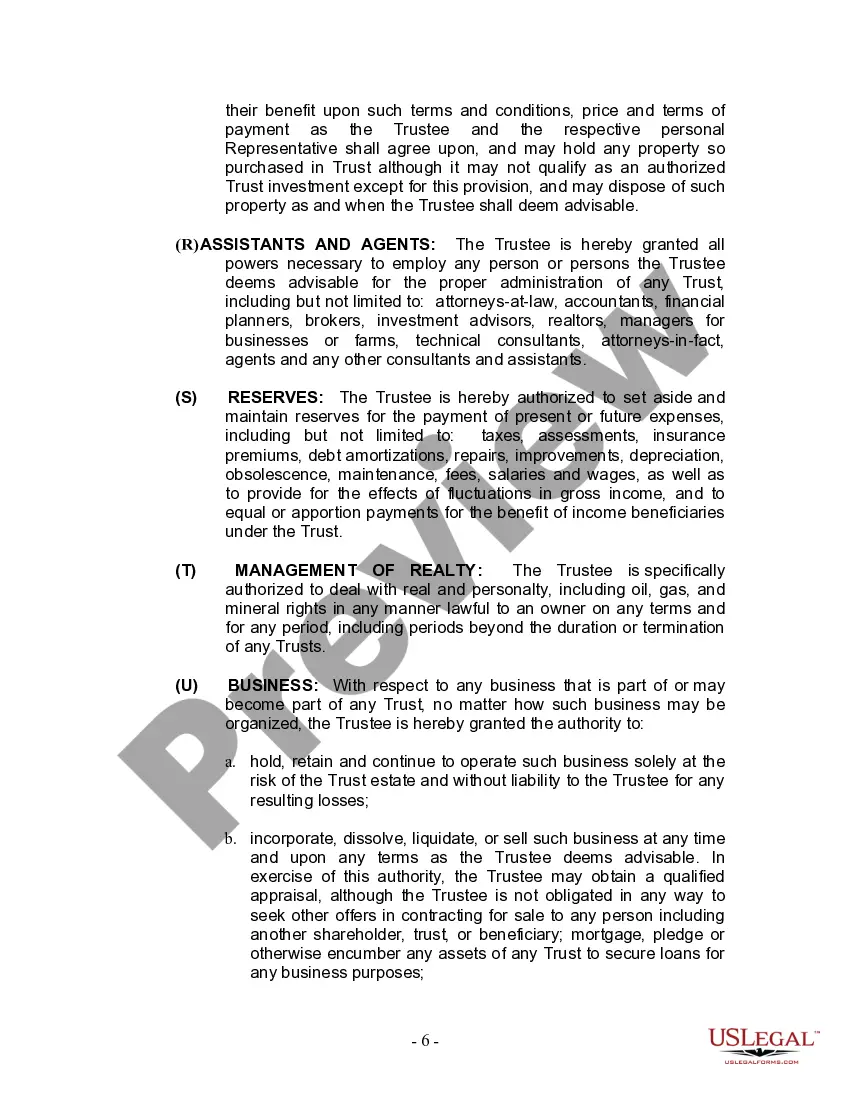
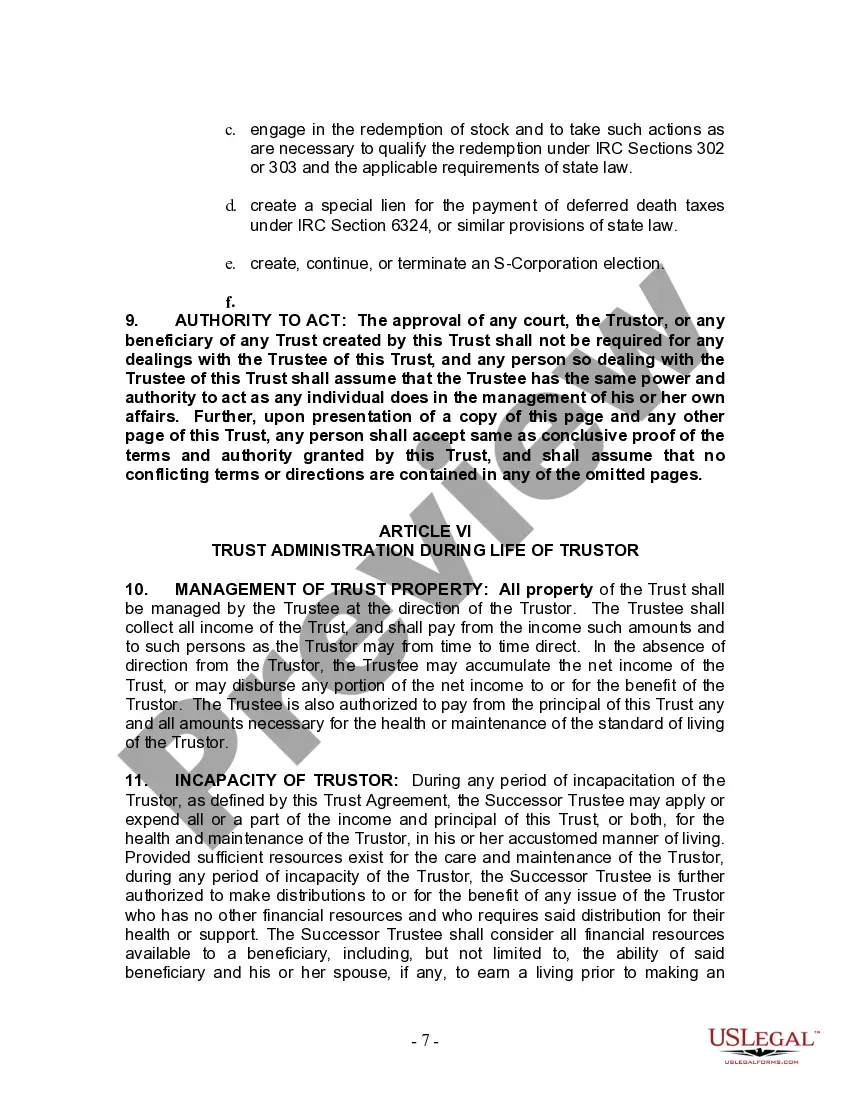
- Powers of the Trustee: Detailed authority given to the trustee regarding management and distribution of trust assets.



Common use cases
This form is ideal for couples who want to establish a living trust to protect their assets and ensure a smooth transition of wealth to their children upon their deaths. Use this form if you have minor or adult children and wish to provide for their needs after your passing, avoid probate, or facilitate asset management in the event of incapacity. It is also beneficial for couples seeking to reduce estate taxes and streamline the estate planning process.
Who this form is for
- Married couples wishing to establish a trust jointly.
- Parents with minor or adult children looking to secure their financial future.
- Individuals seeking to simplify their estate planning process.
- Couples wanting to minimize estate taxes and avoid probate issues.
How to prepare this document
- Identify the parties: Fill in the names and addresses of both trustors (husband and wife).
- Designate the trustee: Appoint a trustee, which can be one of the trustors or an external party.
- List the assets: Specify all real and personal property to be included in the trust.
- Detail the beneficiaries: Clearly name the beneficiaries and outline their rights to the trust assets.
- Sign and date the document: Ensure all parties sign the form, and consider having it notarized.
Is notarization required?
Yes, this form must be notarized to be legally valid. US Legal Forms provides integrated online notarization, allowing you to complete this process via a secure video call, making it convenient and efficient without the need for travel.
Get your form ready online
Our built-in tools help you complete, sign, share, and store your documents in one place.
Make edits, fill in missing information, and update formatting in US Legal Forms—just like you would in MS Word.
Download a copy, print it, send it by email, or mail it via USPS—whatever works best for your next step.
Sign and collect signatures with our SignNow integration. Send to multiple recipients, set reminders, and more. Go Premium to unlock E-Sign.
If this form requires notarization, complete it online through a secure video call—no need to meet a notary in person or wait for an appointment.
We protect your documents and personal data by following strict security and privacy standards.

Make edits, fill in missing information, and update formatting in US Legal Forms—just like you would in MS Word.

Download a copy, print it, send it by email, or mail it via USPS—whatever works best for your next step.

Sign and collect signatures with our SignNow integration. Send to multiple recipients, set reminders, and more. Go Premium to unlock E-Sign.

If this form requires notarization, complete it online through a secure video call—no need to meet a notary in person or wait for an appointment.

We protect your documents and personal data by following strict security and privacy standards.
Common mistakes to avoid
- Not clearly identifying all assets to be included in the trust.
- Failing to update the trust after major life events, such as the birth of a child or change in marital status.
- Neglecting to appoint a successor trustee, which can lead to complications if the primary trustee becomes unable to serve.
- Omitting necessary signatures or witnesses, leading to potential challenges in the trust's validity.
Benefits of completing this form online
- Convenience: Access and complete the form from home, saving time compared to in-person consultations.
- Editability: Easily make changes to the form before finalizing it, ensuring accuracy in your estate planning.
- Reliability: Trusted templates drafted by licensed attorneys, ensuring compliance with legal standards.
Legal use & context
- This living trust is legally enforceable in Pennsylvania and must comply with the state's trust laws.
- It is designed to provide specific directions for asset management and distribution upon the Trustors' death.
- Proper completion and execution are critical for the trust to be valid and to ensure that all intended benefits are fully realized.
Quick recap
- The Living Trust serves to manage and distribute assets effectively while avoiding probate.
- It provides significant advantages for married couples, particularly regarding their childrenâs inheritance.
- Always keep the trust updated and notarized for enhanced legal protection.
Looking for another form?
Form popularity
FAQ
The process of funding your living trust by transferring your assets to the trustee is an important part of what helps your loved ones avoid probate court in the event of your death or incapacity. Qualified retirement accounts such as 401(k)s, 403(b)s, IRAs, and annuities, should not be put in a living trust.
One type of trust that will protect your assets from your creditors is called an irrevocable trust. Once you establish an irrevocable trust, you no longer legally own the assets you used to fund it and can no longer control how those assets are distributed.
Property you put in a living trust doesn't have to go through probate, which means that the assets won't get tied up in court for months and maybe years. However, you don't have to put bank accounts in a living trust, and sometimes it's not a good idea.
Next of kin is defined in Pennsylvania Title 20, Chapter 3, §305 as: The spouse and relatives by blood of the deceased in order that they be authorized to succeed to the deceased's estate under Chapter 21 (relating to intestate succession) as long as the person is an adult or an emancipated minor.
Under California law, a marriage automatically invalidates any pre-existing will or trust as to the new spouse's inheritance rights, unless the documents provide for a new spouse, or clearly indicate a new spouse will receive nothing.
Many married couples own most of their assets jointly with the right of survivorship. When one spouse dies, the surviving spouse automatically receives complete ownership of the property. This distribution cannot be changed by Will.
Qualified retirement accounts 401ks, IRAs, 403(b)s, qualified annuities. Health saving accounts (HSAs) Medical saving accounts (MSAs) Uniform Transfers to Minors (UTMAs) Uniform Gifts to Minors (UGMAs) Life insurance. Motor vehicles.
California is a community property state, which means that following the death of a spouse, the surviving spouse will have entitlement to one-half of the community property (i.e., property that was acquired over the course of the marriage, regardless of which spouse acquired it).
You can put your real estate into your living trust even if owe money on it. A loan on the property -- like a mortgage or deed of trust -- will follow the property into the trust, and it will also follow the property to the beneficiary.