Pennsylvania Marital Domestic Separation and Property Settlement Agreement Adult Children Parties May have Joint Property or Debts where Divorce Action Filed
About this form
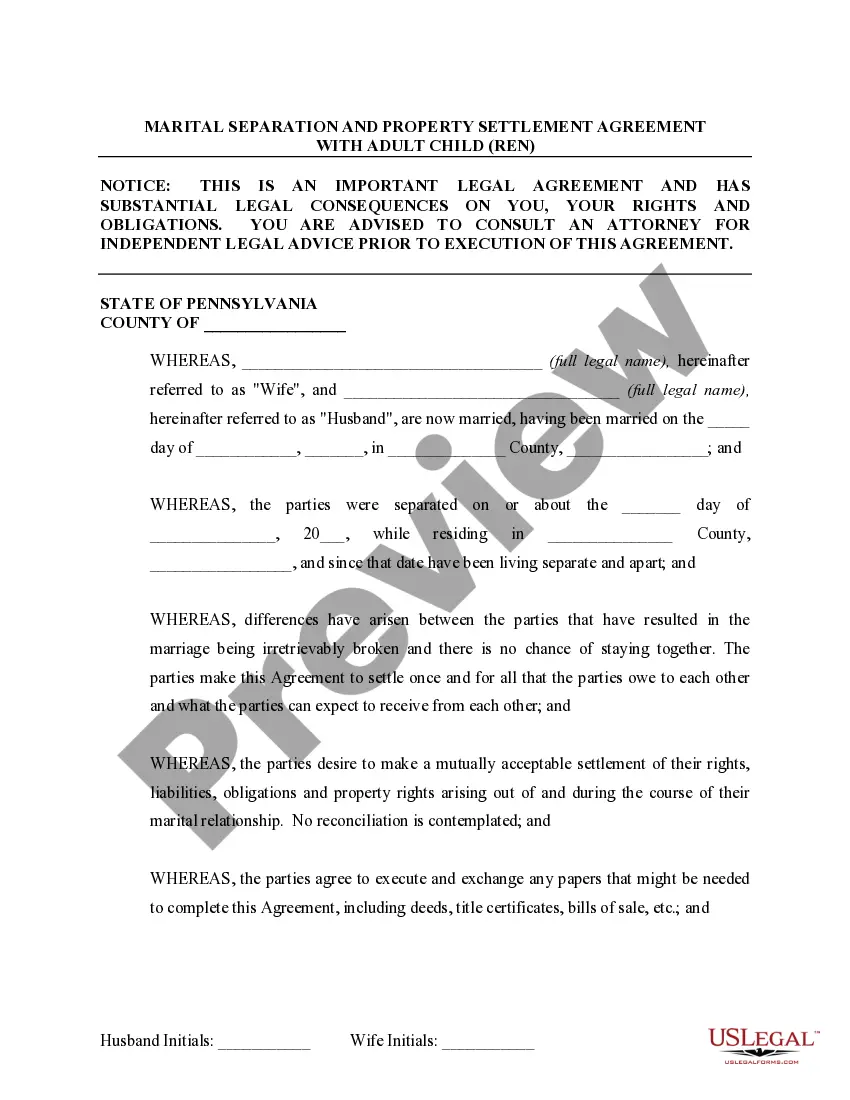
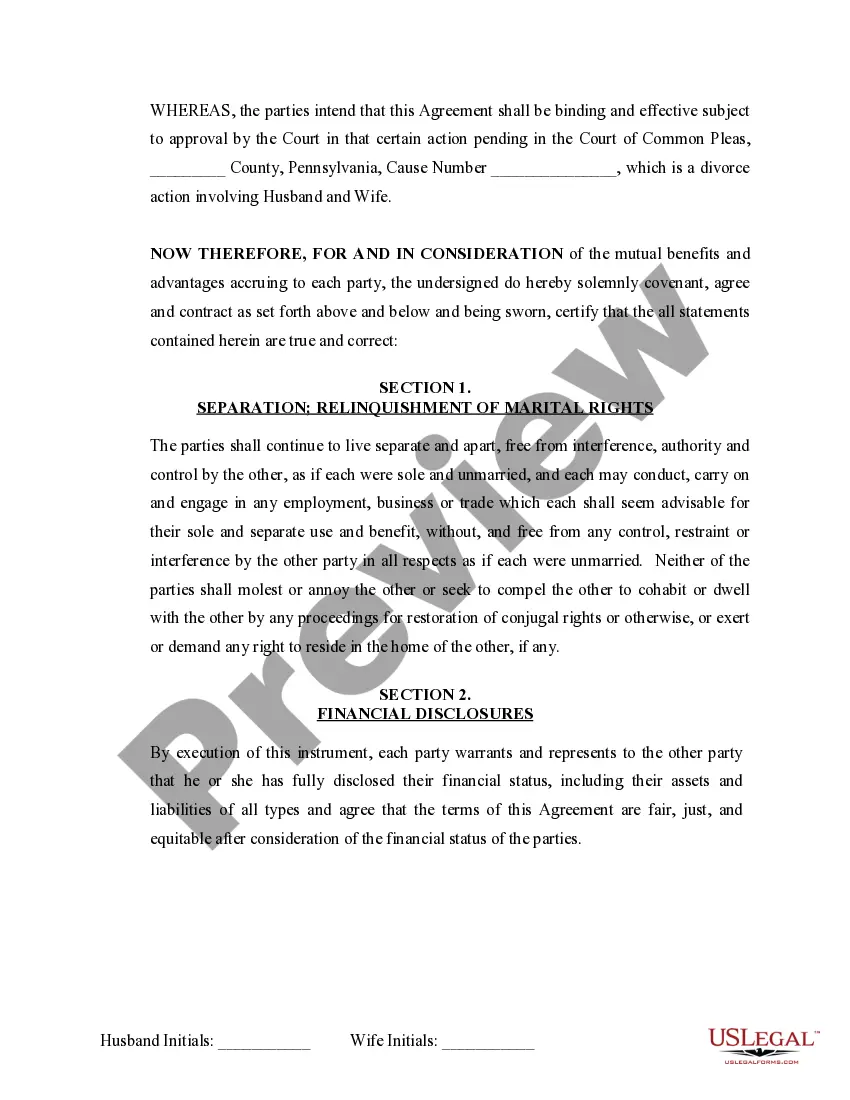
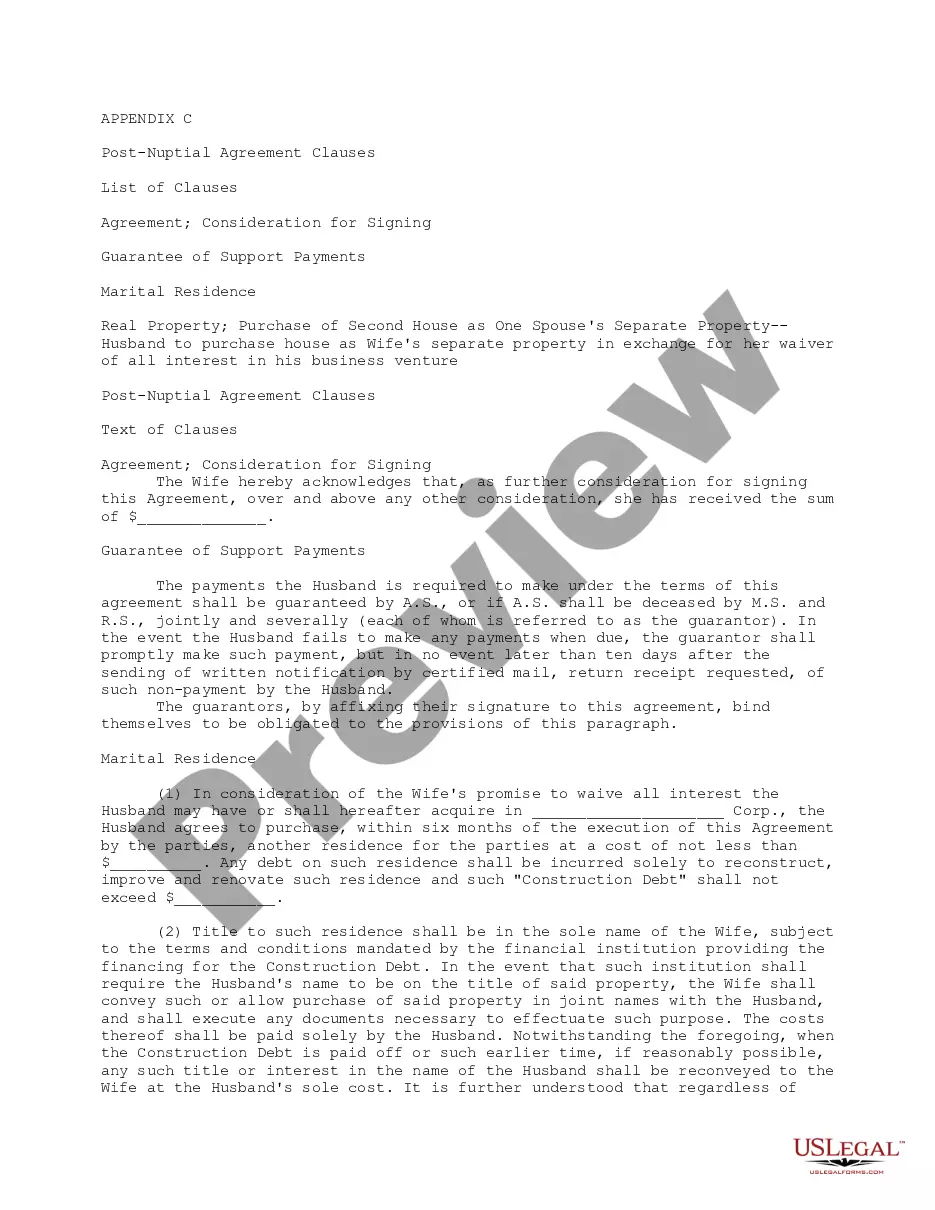
The Marital Domestic Separation and Property Settlement Agreement is a legal document designed for married couples with adult children who are going through a divorce. This form helps the parties to delineate their rights and responsibilities regarding joint property and debts. Unlike standard separation agreements, this form is specifically tailored to address circumstances involving adult children, aiming to provide a clear settlement framework during a divorce action.
Form components explained
- Identification of both parties and their marital status.
- Details regarding the separation date and acknowledgment of relationship breakdown.
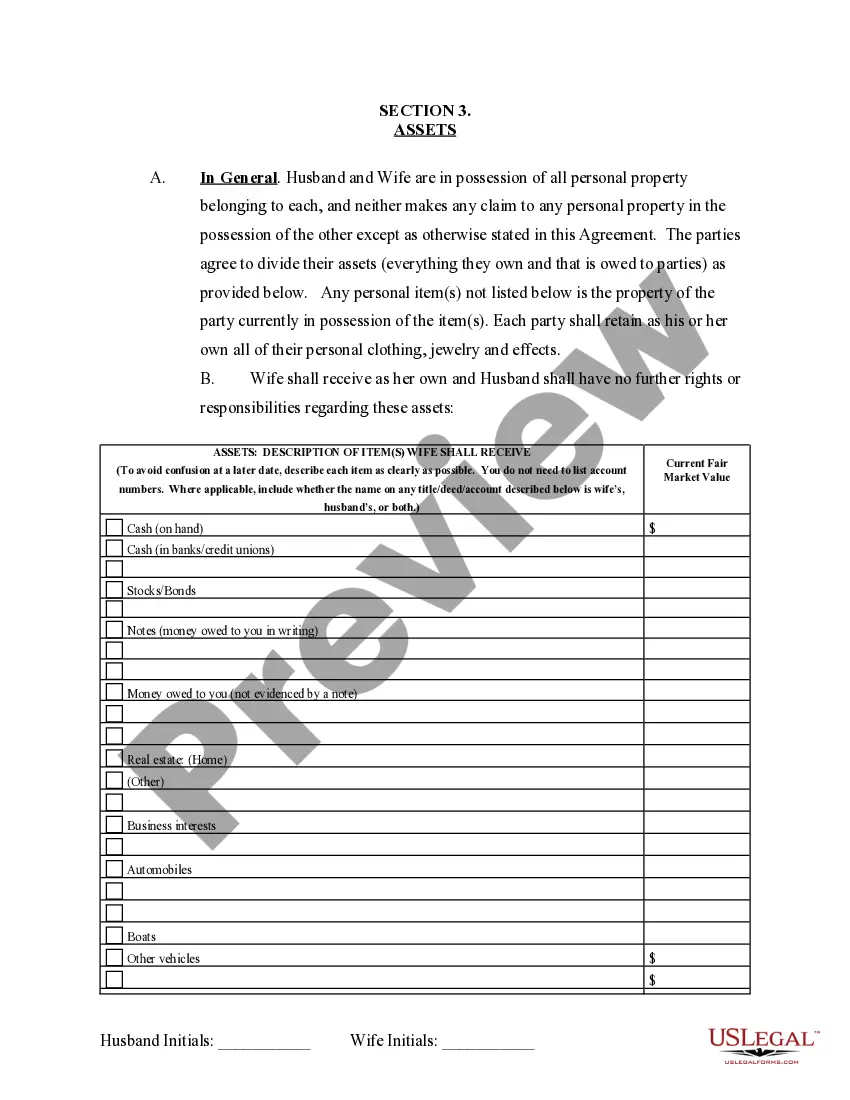
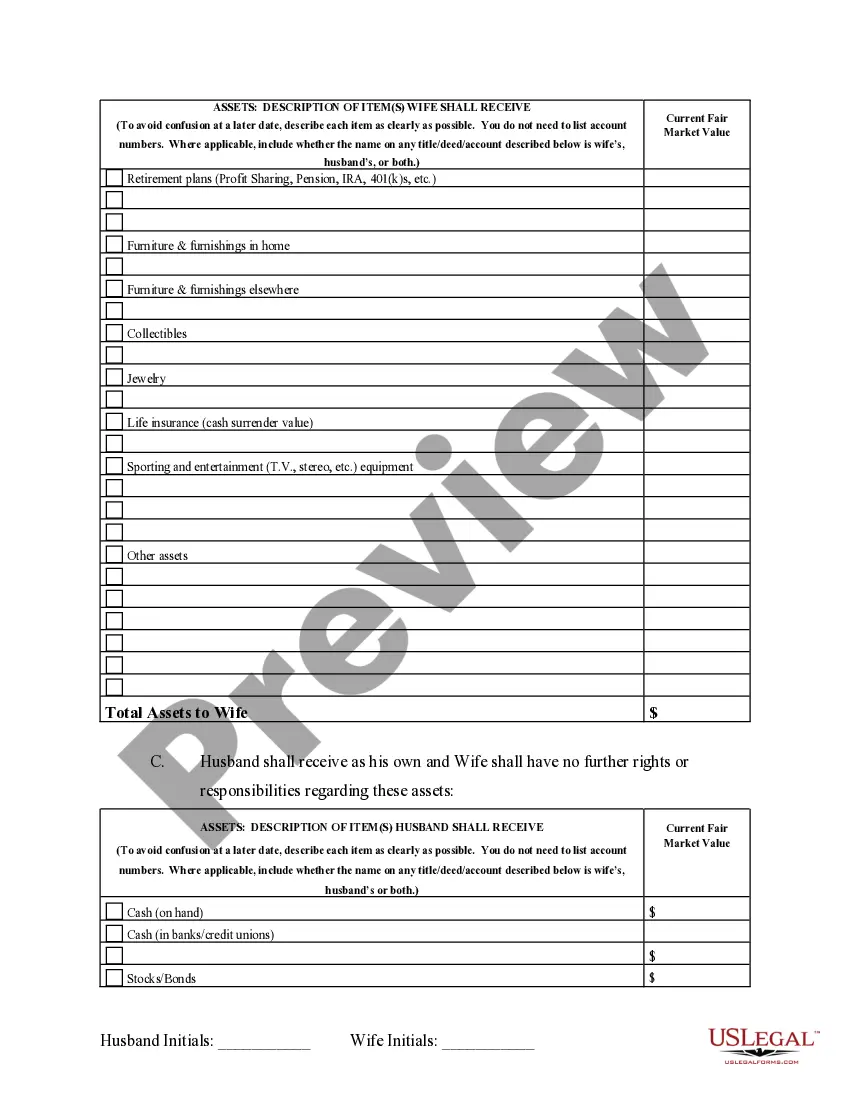
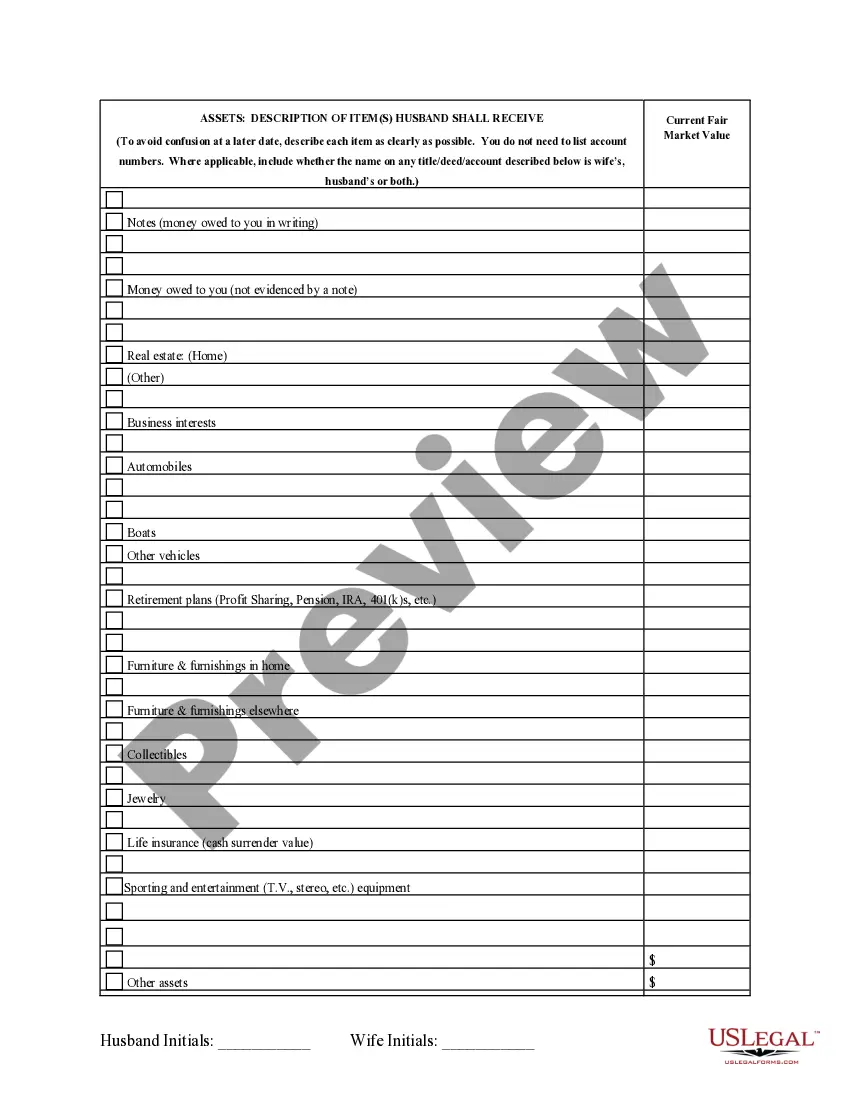
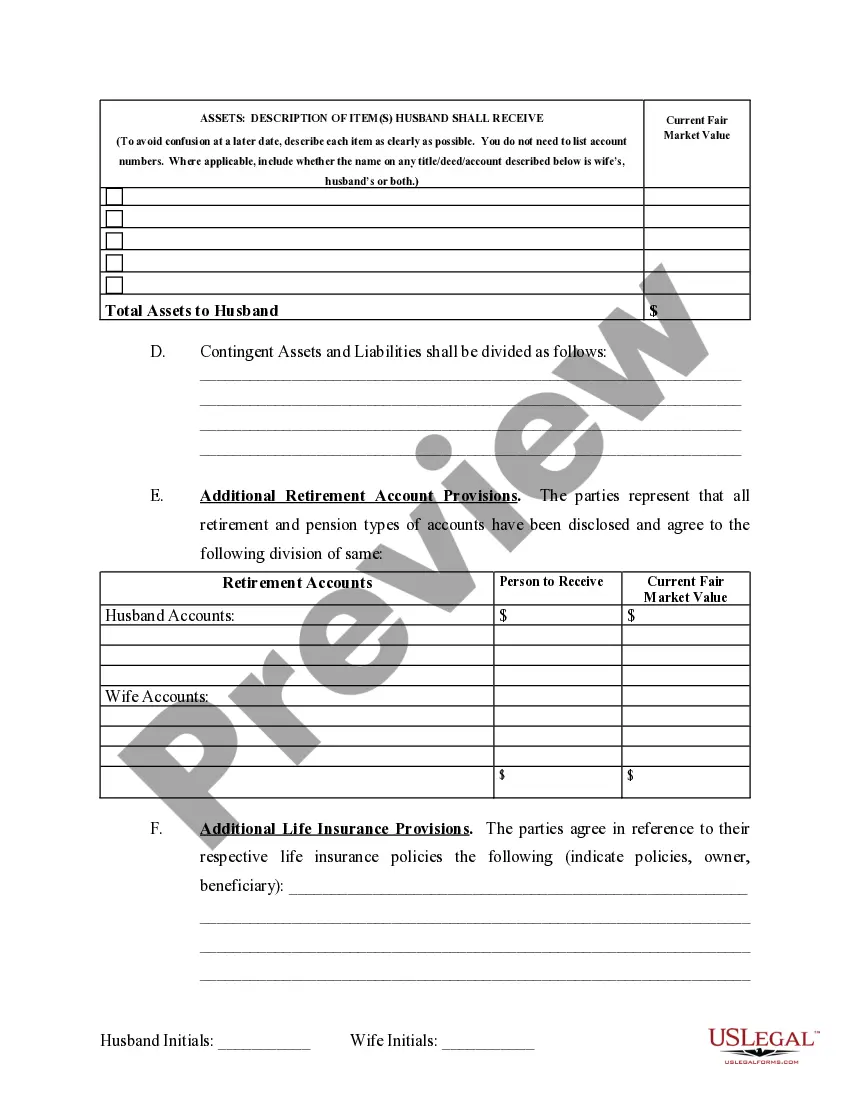
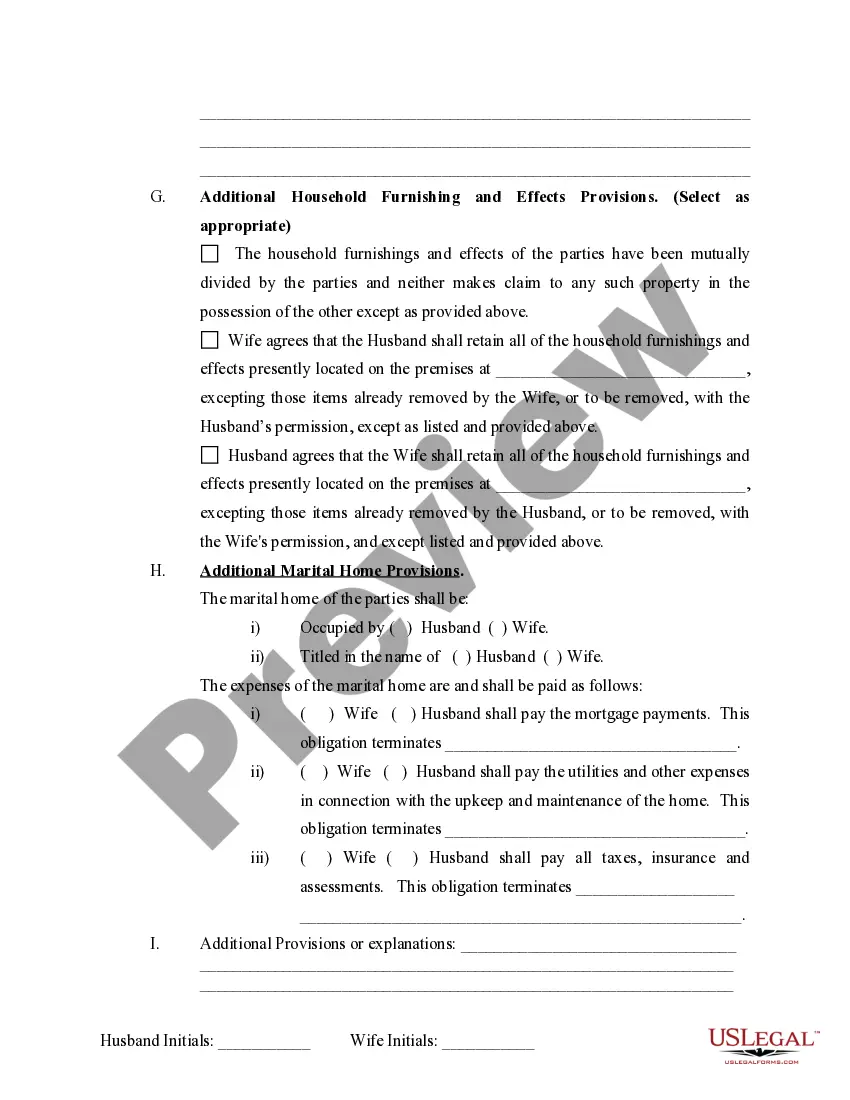
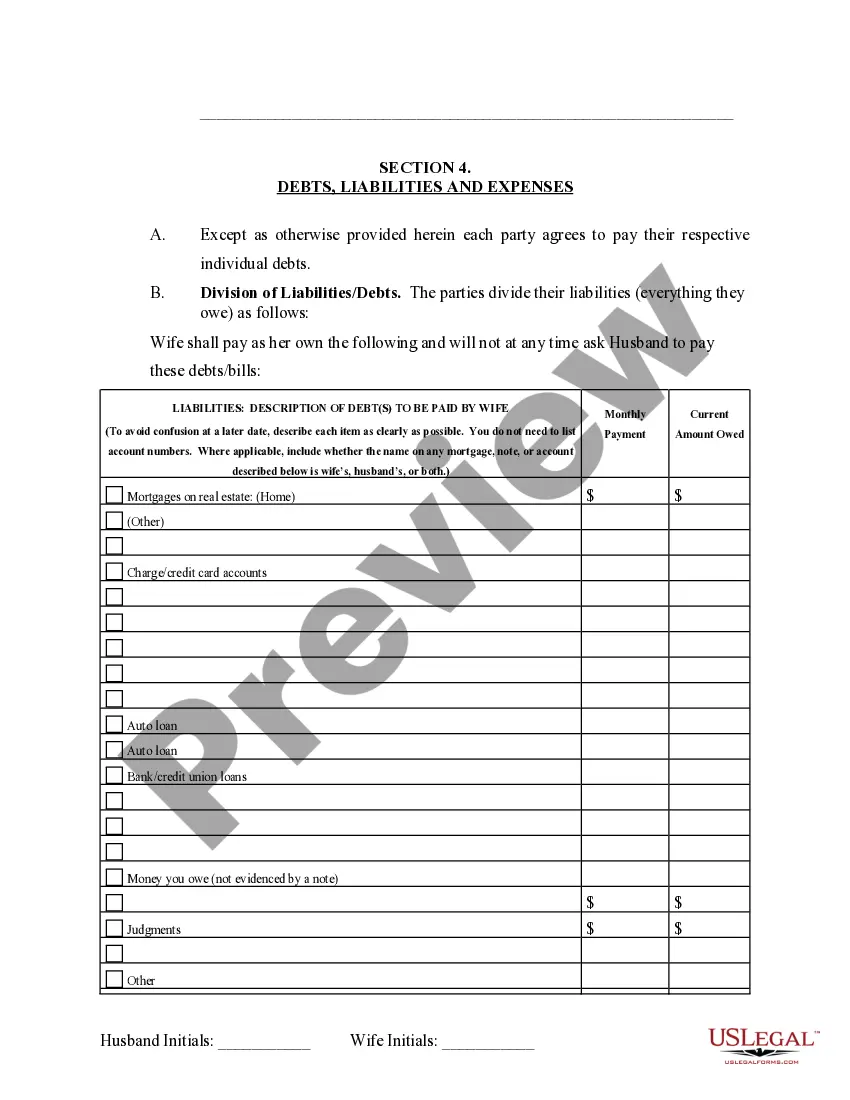
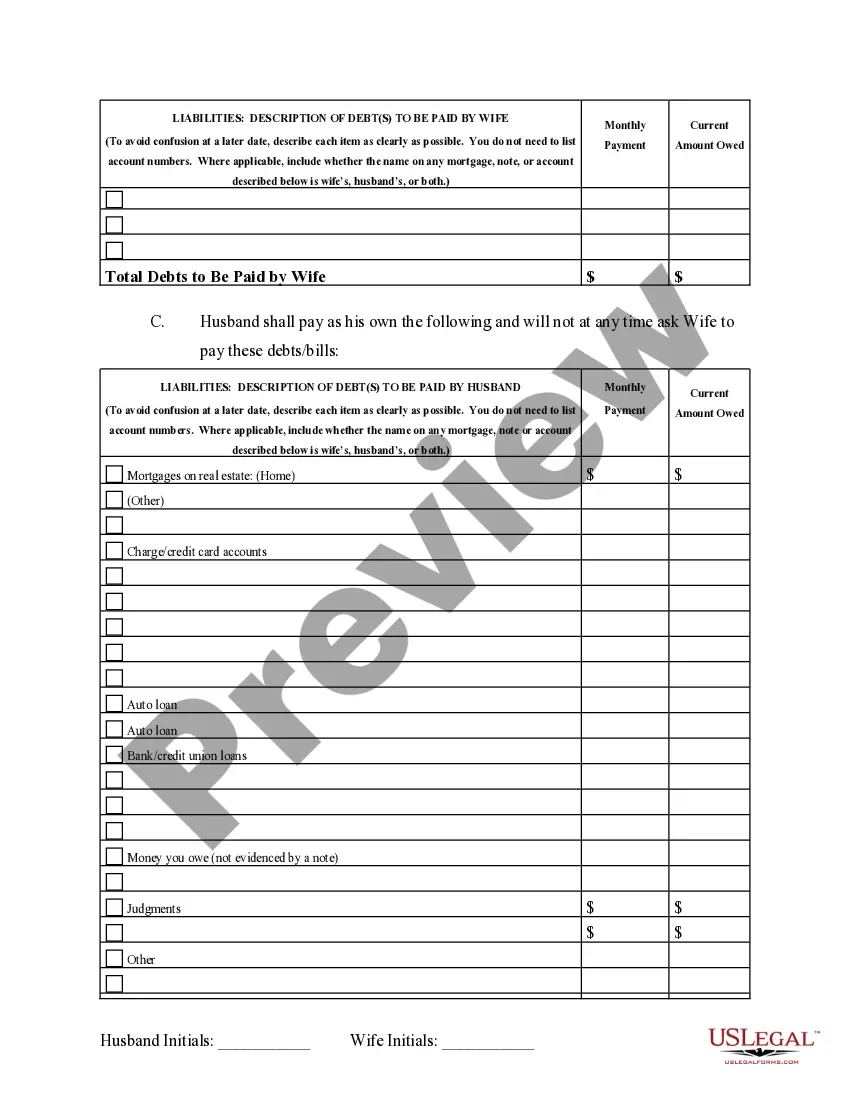
- Division of assets and liabilities, including comprehensive lists of property allocations.
- Provisions for spousal support, if applicable.
- Mutual indemnification clauses to protect against future claims related to debts.
- Statement of intent to file for divorce and court approval requirements.

When to use this document
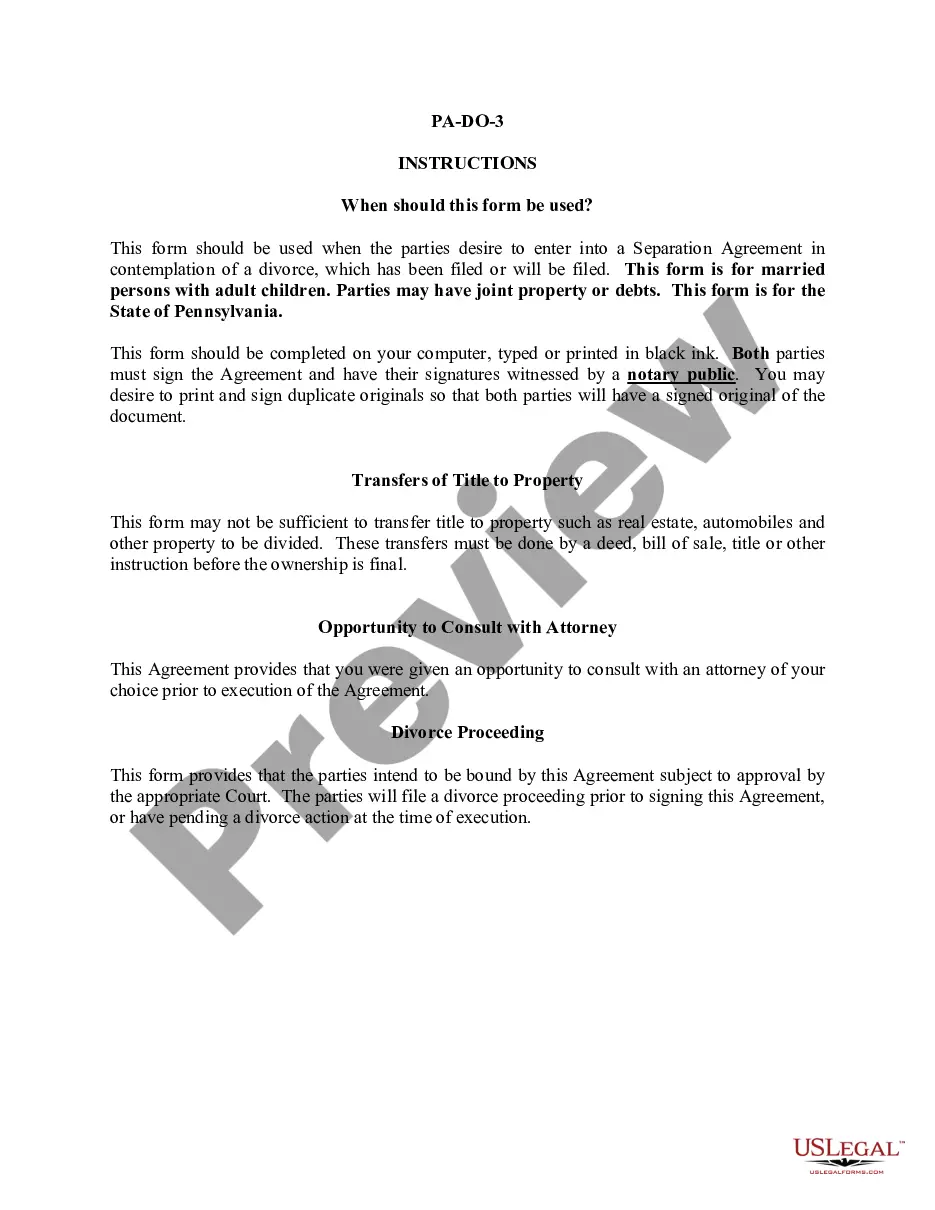
This form should be used when couples with adult children decide to enter a separation agreement in anticipation of divorce. It is essential when both parties own joint property or share debts and need to establish a clear framework for the division of assets and liabilities. Utilizing this form can help avoid disputes and ensure a smoother divorce process.
Who should use this form
- Married couples with adult children considering a divorce.
- Individuals seeking to establish a clear separation of financial responsibilities.
- Parties with joint property or debts that need to be divided fairly.
How to prepare this document
- Identify and clearly write the names of both parties involved in the agreement.
- Document the separation date and state the reasons for the separation clearly.
- List all joint assets and debts, specifying how each will be divided between the parties.
- Include any agreements on spousal support, specifying amounts and payment schedules, if applicable.
- Ensure both parties sign the agreement in the presence of a notary public.
- File the signed agreement with the appropriate court as part of the divorce proceedings.
Notarization guidance
This form needs to be notarized to ensure legal validity. US Legal Forms provides secure online notarization powered by Notarize, allowing you to complete the process through a verified video call, available anytime.
Get your form ready online
Our built-in tools help you complete, sign, share, and store your documents in one place.
Make edits, fill in missing information, and update formatting in US Legal Forms—just like you would in MS Word.
Download a copy, print it, send it by email, or mail it via USPS—whatever works best for your next step.
Sign and collect signatures with our SignNow integration. Send to multiple recipients, set reminders, and more. Go Premium to unlock E-Sign.
If this form requires notarization, complete it online through a secure video call—no need to meet a notary in person or wait for an appointment.
We protect your documents and personal data by following strict security and privacy standards.

Make edits, fill in missing information, and update formatting in US Legal Forms—just like you would in MS Word.

Download a copy, print it, send it by email, or mail it via USPS—whatever works best for your next step.

Sign and collect signatures with our SignNow integration. Send to multiple recipients, set reminders, and more. Go Premium to unlock E-Sign.

If this form requires notarization, complete it online through a secure video call—no need to meet a notary in person or wait for an appointment.

We protect your documents and personal data by following strict security and privacy standards.
Mistakes to watch out for
- Failing to include all joint assets and debts in the agreement.
- Not having the agreement notarized, leading to potential legal challenges.
- Omitting clear terms for spousal support or failing to specify the duration of payments.
- Neglecting to consult an attorney for legal advice before signing.
Why complete this form online
- Convenience of completing the form at your own pace without the need for in-person appointments.
- Editability allows for easy revisions if circumstances change.
- Access to legal forms drafted by licensed attorneys, ensuring reliability and adherence to legal standards.
Legal use & context
- This agreement is enforceable in the State of Pennsylvania once approved by the court.
- It sets clear expectations for the division of assets and responsibilities following separation.
- The terms outlined in this agreement should be thoroughly understood and discussed with a legal professional before signing.
Looking for another form?
Form popularity
FAQ
Is it okay to date when you're separated? It is okay, providing you do it right. If you start seeing someone else before you and your spouse decide to divorce or before you physically separate, it is considered adultery.
In most divorces, the marital home is a couple's biggest asset. It's also the center of family life and often serves as an anchor for families with minor children. If a judge determines that the marital home is one spouse's separate property, the solution is simple: the spouse who owns it, gets it.
Marital Settlement Agreements, reached between the parties in writing and signed by the parties, become legally binding when approved by the court at the time of the final court hearing.Once approved by the court, such post judgment stipulations do become legally binding and enforceable between the parties.
Your divorce settlement agreement should cover everything that is important to you, including custody of your children, child support payments, alimony, and the separation of your property, such as your family home, vehicles, and other assets.
If both parties want to keep the marital home, or they individually cannot afford the home by themselves, the home can be sold. The proceeds from the sale will be split based on the agreement the parties have reached in their divorce settlement, or the manner ordered by the court.
A fair settlement should include ample parenting time for each parent. An equitable visitation agreement may not give parents equal custodial time, but it should provide for frequent and continuing contact with each parent.
There are many factors to consider, including assets, incomes, living expenses, inflation, alimony, child support, taxes, retirement plans, investments, medical expenses and health insurance costs, and child-related expenses such as education.
A spouse is entitled to alimony only if the court decides that alimony is necessary. To decide whether alimony is necessary, how much should be paid, and how long it should be paid, the court must consider many factors including but not limited to the relative income and earning capacities of the parties, the ages
#1. Start with the Basics. #2. Include the Details. #3. Confirm Your Agreement. #4. Identify and Divide Assets and Debts. #5. Create a Parenting Plan for Custody and Visitation. #6. Agree on Child Support and Spousal Support (Alimony) #7. Polishing Your Agreement. Conclusion.