Pennsylvania Standby Temporary Guardian Legal Documents Package
What is this form package?
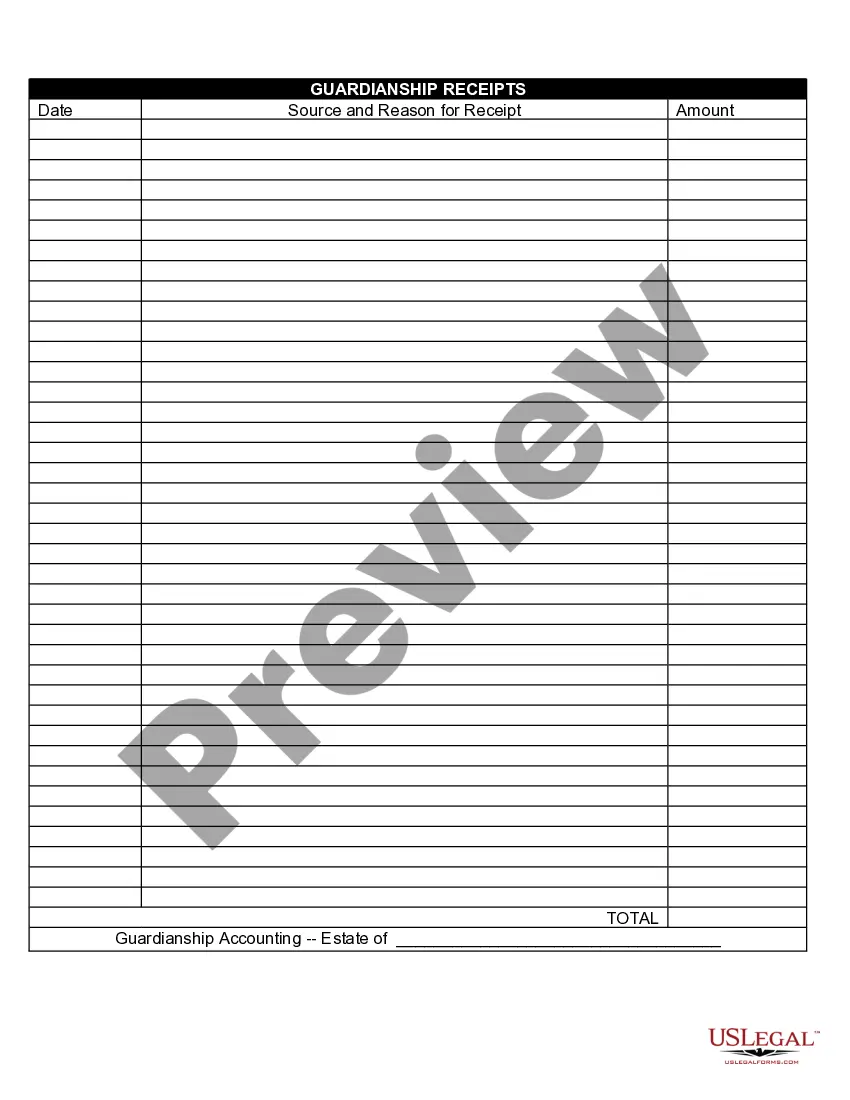
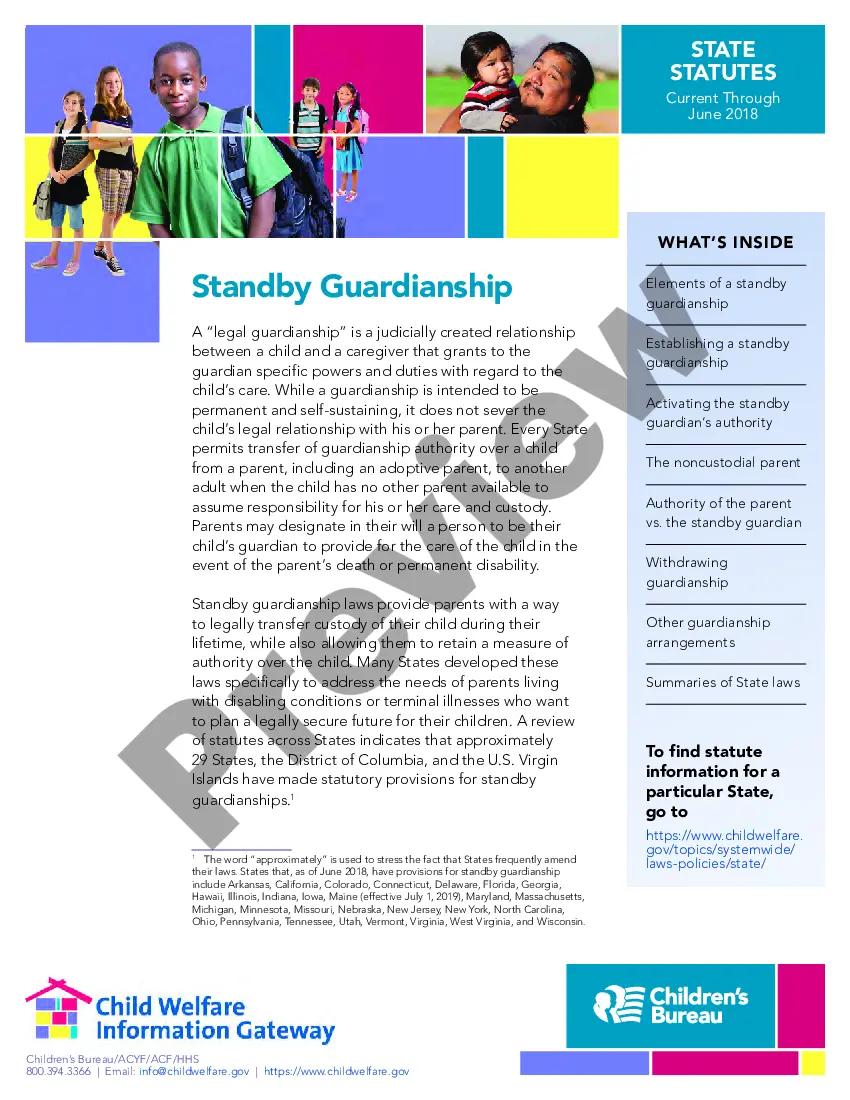
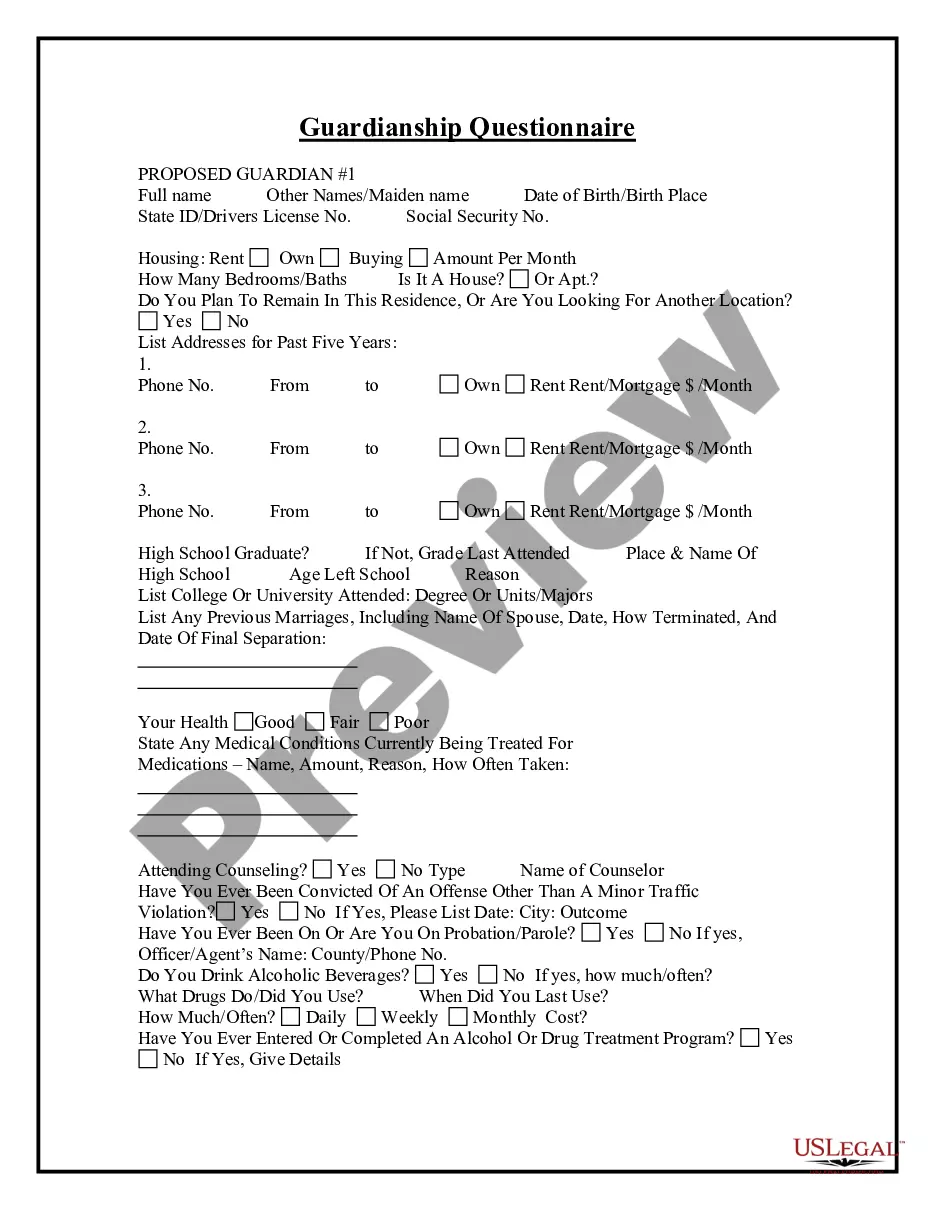
The Pennsylvania Standby Temporary Guardian Legal Documents Package provides essential legal forms and information for appointing a standby guardian for a minor child. This package is designed to help parents ensure that their children are cared for by a trusted individual if they are unable to do so themselves. Unlike other guardianship packages, this one specifically addresses the nuances of standby guardianship laws in Pennsylvania and includes resources to navigate the legal landscape effectively.
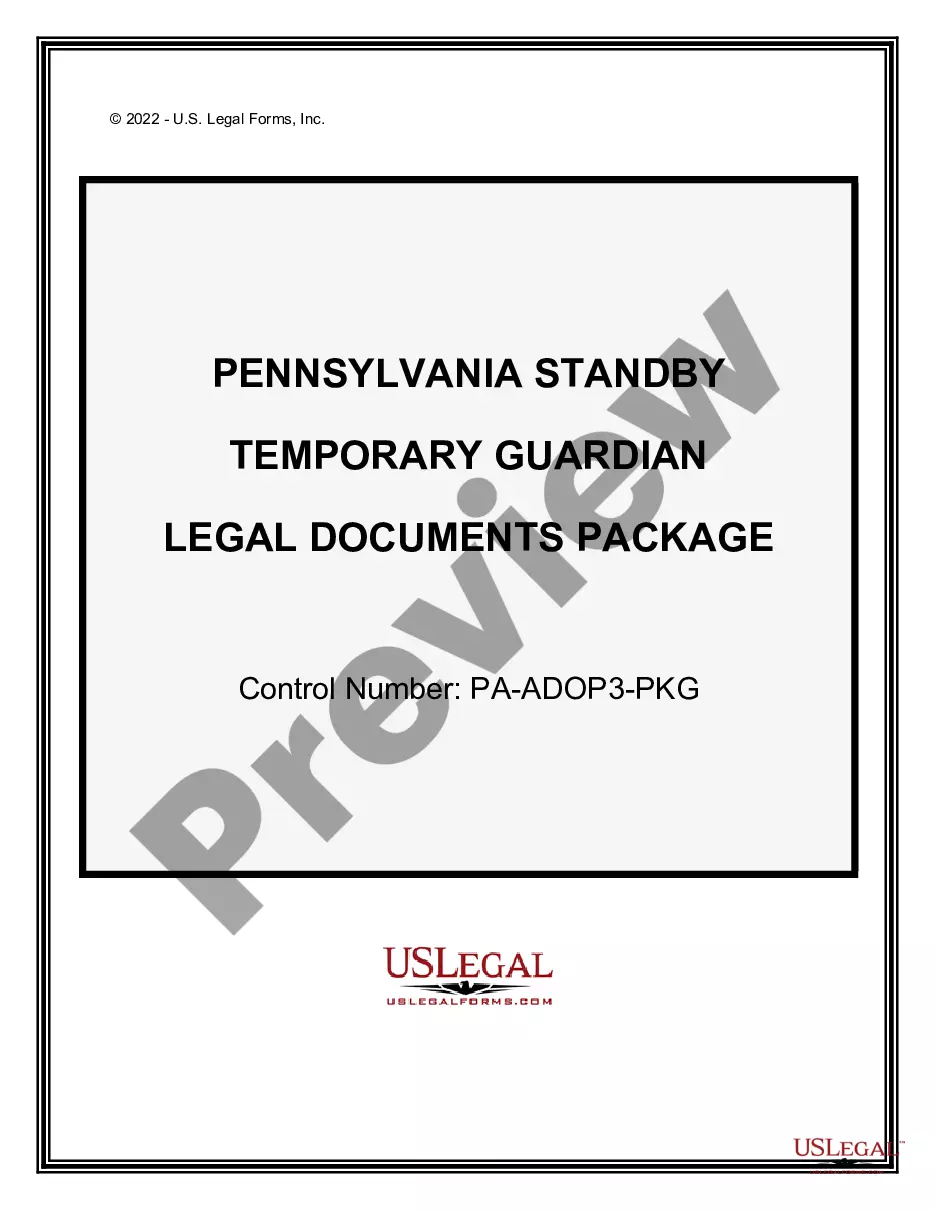
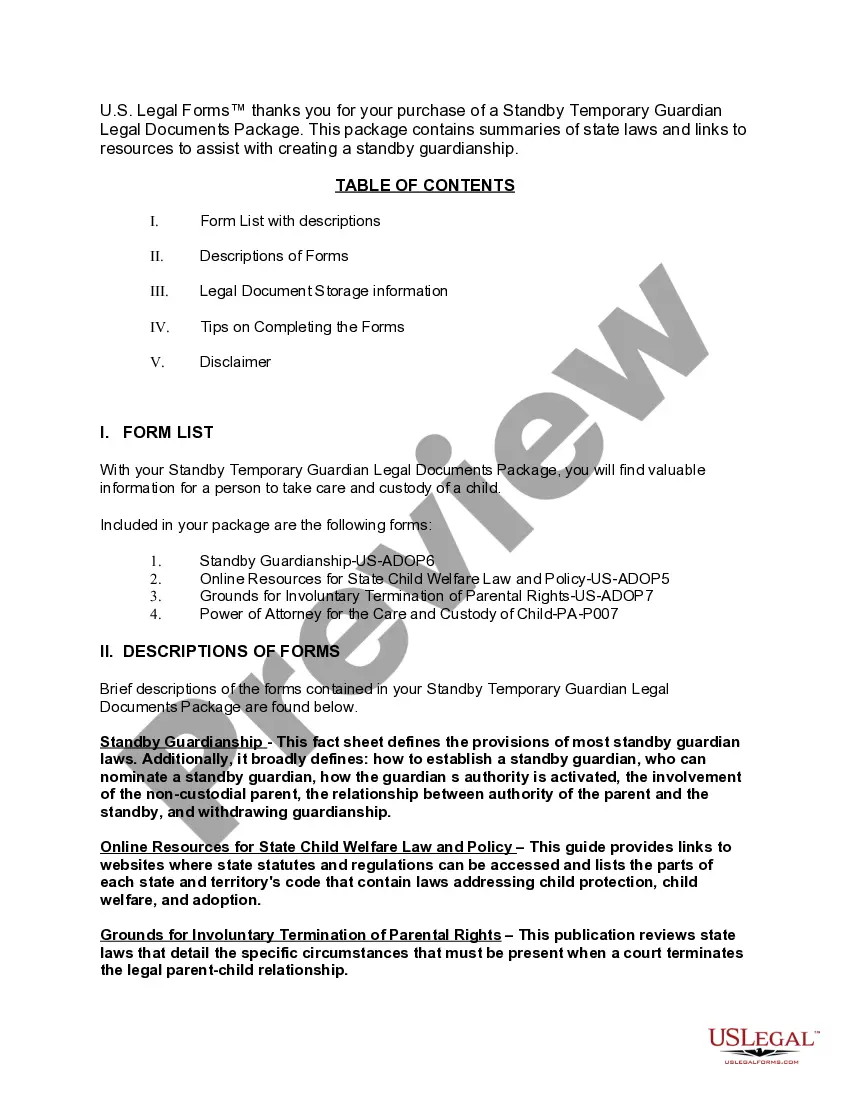
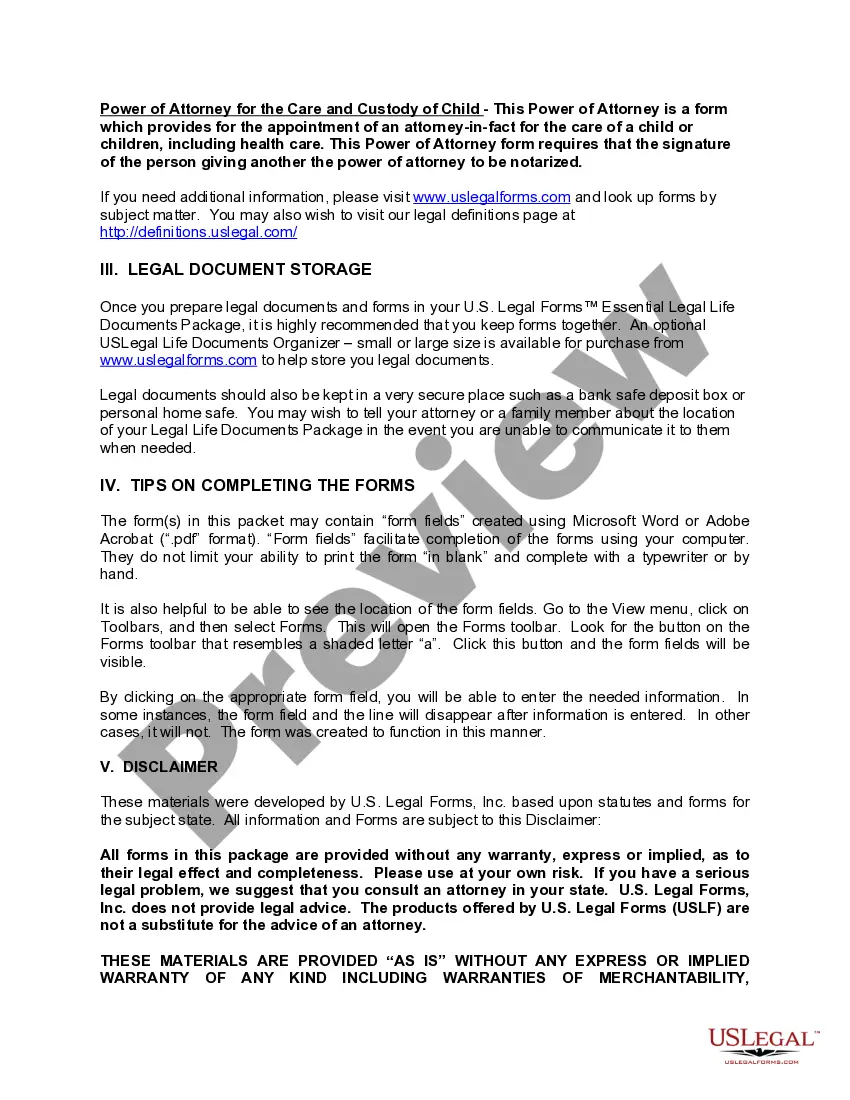
What’s included in this form package


When to use this document
This package should be used when a parent wishes to establish a standby guardian for their child. Common scenarios include:
- If a parent is facing health issues or incapacitation and wants to ensure their child is cared for.
- When a parent is planning for their unforeseen absence, such as deployment for military service.
- If a parent is experiencing significant life changes, such as a severe personal crisis.
- To formally document a trusted individual who can step in to care for the child when the parent is unavailable.
Who can use this document
- Parents or legal guardians of minor children.
- Individuals who wish to ensure the immediate care of a minor child in their absence.
- Family members or friends nominated as standby guardians.
- Anyone looking to understand their rights and responsibilities under Pennsylvania's standby guardianship laws.
Completing these forms step by step
- Review the included forms to understand the requirements for standby guardianship.
- Identify the person you wish to appoint as standby guardian.
- Fill out the Power of Attorney for the Care and Custody of Child form, ensuring accurate details.
- Complete the Standby Guardianship form according to the guidelines provided.
- Have the forms reviewed by a trusted advisor or legal professional for accuracy.
- Sign the forms in the presence of a notary, if required, to ensure legal validity.
Do forms in this package need to be notarized?
Some forms in this package require notarization to be legally valid. US Legal Forms provides secure online notarization powered by Notarize, allowing you to complete the process through a verified video call, available 24/7.
Get your form ready online
Our built-in tools help you complete, sign, share, and store your documents in one place.
Make edits, fill in missing information, and update formatting in US Legal Forms—just like you would in MS Word.
Download a copy, print it, send it by email, or mail it via USPS—whatever works best for your next step.
Sign and collect signatures with our SignNow integration. Send to multiple recipients, set reminders, and more. Go Premium to unlock E-Sign.
If this form requires notarization, complete it online through a secure video call—no need to meet a notary in person or wait for an appointment.
We protect your documents and personal data by following strict security and privacy standards.

Make edits, fill in missing information, and update formatting in US Legal Forms—just like you would in MS Word.

Download a copy, print it, send it by email, or mail it via USPS—whatever works best for your next step.

Sign and collect signatures with our SignNow integration. Send to multiple recipients, set reminders, and more. Go Premium to unlock E-Sign.

If this form requires notarization, complete it online through a secure video call—no need to meet a notary in person or wait for an appointment.

We protect your documents and personal data by following strict security and privacy standards.
Common mistakes to avoid
- Failing to specify the circumstances under which the standby guardian's authority is activated.
- Not including the signatures of all necessary parties in the forms.
- Overlooking the requirement for notarization of certain forms.
- Using outdated forms that may not comply with current Pennsylvania laws.
Advantages of online completion
- Convenience of downloading and printing forms from home at any time.
- Editable forms that can be completed digitally before printing.
- Access to current legal standards and guidelines, ensuring compliance with state laws.
- Ability to consult additional resources for further assistance in the guardianship process.
Legal use & context
- Standby guardianship is a legally recognized arrangement in Pennsylvania aimed at protecting the welfare of children.
- Failure to complete the forms correctly may lead to legal disputes regarding guardianship.
Main things to remember
- Establishing a standby guardianship is essential for parents who are concerned about their children's future care.
- This package provides all necessary forms and guidance to ensure proper legal procedures are followed.
- Notarization is a critical step in validating your standby guardian arrangements.
Looking for another form?




Form popularity
FAQ
The legal guardianship document is a formal declaration to the court system that another party is responsible for the well-being of the minors. No one can predict when an accident or other disaster may occur. Some include a legal guardianship document in their wills to determine who will raise their children.
The names of the forms are usually: Petition for Appointment of Guardian (or Petition for Appointment of Guardian of Minor) Petition for Conservatorship (when dealing with an incompetent adult) Order Appointing Guardian.
You can establish guardianship of a child by filing papers in court. Initially, file a petition stating your interest in obtaining guardianship along with a filing fee. You'll also want to file a letter of consent from the child's parents.
Temporary guardianship refers to formally turning over the care of your children to another adult for a specific period of time.Also, the guardian would be responsible for making decisions and handling situations with the child's school.
A Guardian usually signs legal documents on behalf of the Ward, chooses an appropriate living situation for the Ward, and grants, withholds, and withdraws consent to medical treatment. In most situations, it is necessary to disclose the Guardian/Ward relationship.
The main difference between custody and guardianship is the child's parents - custody is provided to the child's biological parents while guardianship is given to a non-biological parent.
What Is Temporary Custody? Temporary custody is the legal decision by the court to award physical and legal custody of a minor child to an adult who may or may not be the child's legal parent.
The temporary guardian serves as both a legal substitution of parents as well as a guardian angel of your children and your love of them. Temporary guardians have legal custody over the children, are legally responsible for them, and have the right to make any medical, educational, or financial decisions.
The main difference between custody and guardianship is the child's parents - custody is provided to the child's biological parents while guardianship is given to a non-biological parent.