Pennsylvania Landlord Tenant Closing Statement to Reconcile Security Deposit
Understanding this form
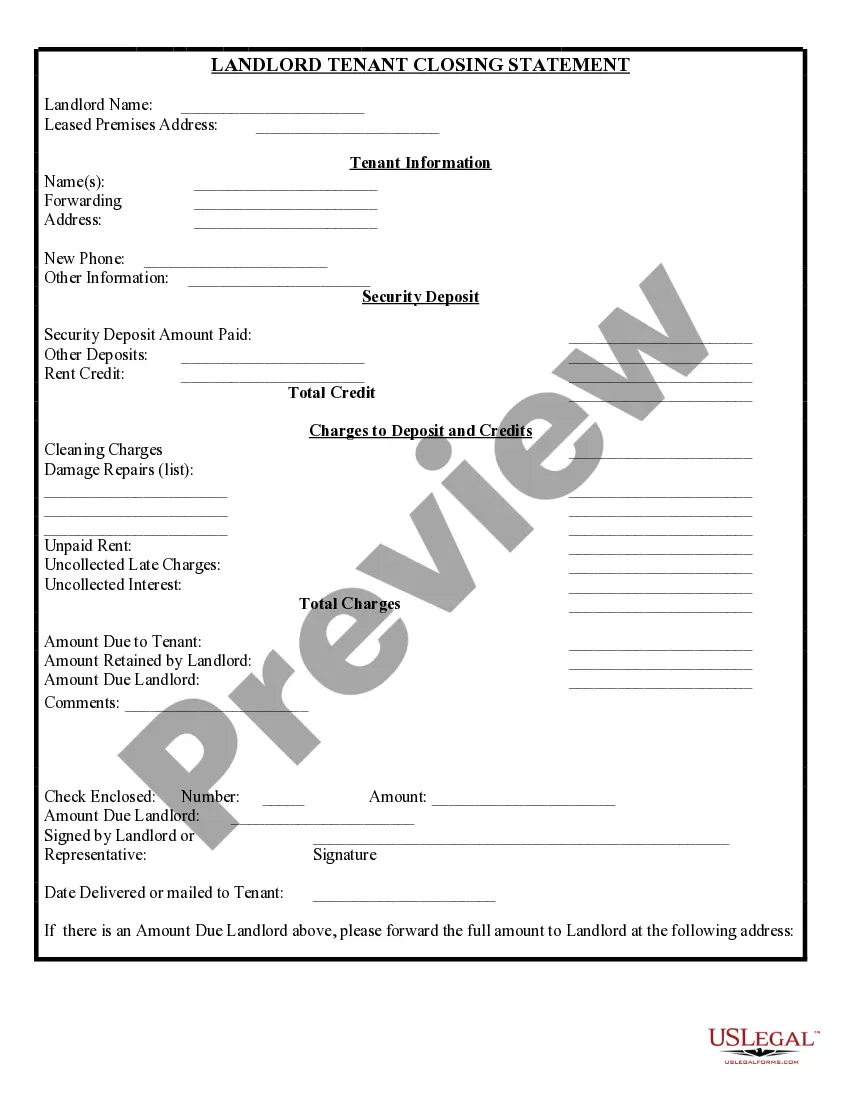
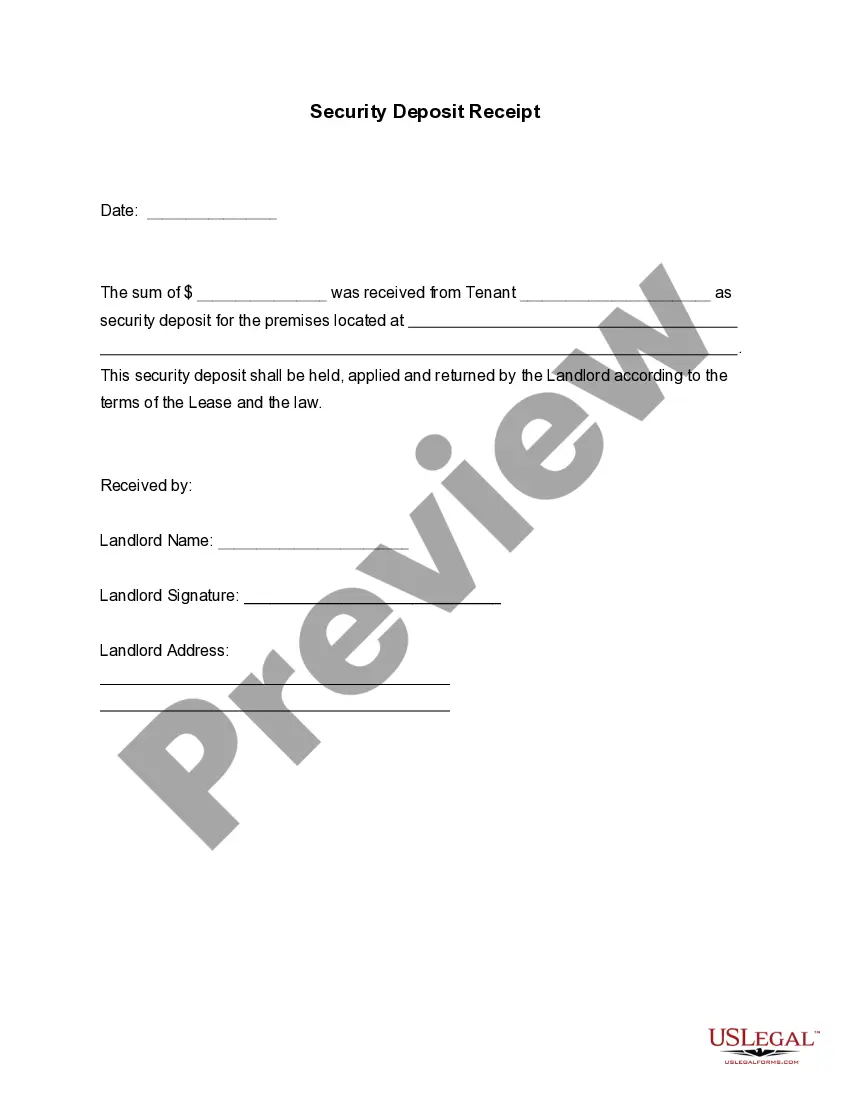
The Landlord Tenant Closing Statement to Reconcile Security Deposit is a legal document that helps landlords and tenants clearly understand the financial aspects related to the security deposit. This form records the amount of the security deposit, lists any applicable deductions, and specifies the credits owed to the tenant, ensuring that both parties have a transparent account of the funds held. Unlike a rental agreement, this closing statement specifically focuses on reconciling the security deposit at the end of a tenancy.
Form components explained
- Identification of the landlord and tenant.
- Details of the security deposit amount collected.
- List of deductions for repairs or damages beyond normal wear and tear.
- Credits that may be applied against the security deposit.
- Final balance to be returned or owed after deductions.
- Signature lines for both parties, indicating agreement with the closing statement.
When to use this form
This form should be used at the conclusion of a rental agreement when a tenant vacates the premises. It is essential for reconciling the security deposit, especially if there are deductions for damages or unpaid rent. Using this form helps prevent disputes over the amount to be returned to the tenant and provides clear documentation that both parties can refer to.
Intended users of this form
- Landlords looking to document the reconciliation of a security deposit.
- Tenants who want a clear account of funds held and deductions made against their security deposit.
- Property managers acting on behalf of landlords to finalize tenant accounts.
Completing this form step by step
- Identify the landlord and tenant by entering their names and contact information.
- Specify the amount of the security deposit collected at the start of the lease.
- Detail any deductions for repairs, including descriptions of the damages and associated costs.
- List any credits to be applied to the security deposit, such as unpaid rent or fees.
- Calculate the final balance and specify the amount to be returned to the tenant or owed by them.
- Obtain signatures from both the landlord and tenant to finalize the statement.
Notarization requirements for this form
This form does not typically require notarization unless specified by local law. It's advisable to check your state regulations to ensure compliance.
Get your form ready online
Our built-in tools help you complete, sign, share, and store your documents in one place.
Make edits, fill in missing information, and update formatting in US Legal Forms—just like you would in MS Word.
Download a copy, print it, send it by email, or mail it via USPS—whatever works best for your next step.
Sign and collect signatures with our SignNow integration. Send to multiple recipients, set reminders, and more. Go Premium to unlock E-Sign.
If this form requires notarization, complete it online through a secure video call—no need to meet a notary in person or wait for an appointment.
We protect your documents and personal data by following strict security and privacy standards.

Make edits, fill in missing information, and update formatting in US Legal Forms—just like you would in MS Word.

Download a copy, print it, send it by email, or mail it via USPS—whatever works best for your next step.

Sign and collect signatures with our SignNow integration. Send to multiple recipients, set reminders, and more. Go Premium to unlock E-Sign.

If this form requires notarization, complete it online through a secure video call—no need to meet a notary in person or wait for an appointment.

We protect your documents and personal data by following strict security and privacy standards.
Common mistakes
- Failing to provide accurate descriptions of damages or repairs.
- Not including all relevant expenses or deductions from the security deposit.
- Neglecting to have both parties sign the document, leading to potential disputes.
- Using outdated forms that do not comply with current state laws.
Benefits of using this form online
- Convenient: Downloadable and easy to access any time.
- Editability: Customize the form to fit your specific situation without hassle.
- Reliability: Created by licensed attorneys to ensure legal compliance.
Legal use & context
- The form serves as a legal record of security deposit reconciliation.
- Helps prevent disputes between landlords and tenants regarding funds.
- Adhering to state laws enhances enforceability of the document.
What to keep in mind
- The Landlord Tenant Closing Statement ensures transparency in the handling of security deposits.
- It is crucial for documenting any deductions and final amounts due.
- Completing the form correctly can prevent disputes at the end of a tenancy.
Looking for another form?
Form popularity
FAQ
Generally, a landlord may retain all or part of the security deposit to pay for damages to the unit that occurred during the tenants' occupancy, except for those resulting from normal wear and tear. Usually, the landlord can deduct other costs, such as late fees, unpaid rent, and unpaid utility bills.
The landlord can deduct for damages to the premises. The landlord can also withhold the security deposit for unpaid rent and/or breach of the rental agreement. How Long for Return of Security Deposit? The landlord must return the security deposit within 30 days of the tenant moving out.
A landlord can charge tenants for cleaning and repairs to restore the rental unit to its original condition at the beginning of the tenancy. However, a landlord cannot charge a tenant for ordinary wear and tear.Issues regarding carpet cleaning should be addressed in the lease.
Tenant's name and new address, or address he gave for return of the security deposit. Commencement date of the lease and date it ended. Amount of the security deposit when the tenant moved in. Amount of interest accrued.
5 Times a Landlord Does Not Have to Return a Tenant's Security Deposit. Breaking or Terminating a Lease Early. Nonpayment of Rent. Damage to the Property. Cleaning Costs. Unpaid Utilities.
Dear Name: I am writing to provide notice of my request that you refund the security deposit paid in the amount of $1500.00 for the rental of Address, City, State Zip Code. I vacated the residence on 00/00/00 without any damages beyond oridnary wear and tear.
Under Pennsylvania law, a landlord may charge a tenant the equivalent of two months' rent for the security deposit for the first year of renting and the equivalent of one month's rent during all subsequent years of renting.
Pennsylvania law places a limit on the amount of a security deposit that a landlord may require.The landlord does not have to pay interest to the tenant during the first two years of the lease. A landlord may put up a bond instead of depositing security deposits in an escrow account.
Security Deposit Received: $1,000. Interest on Deposit (if required by lease or law): $N/A. TOTAL CREDIT (sum of lines 1 and 2): $1,000. Itemized Repairs and Related Losses: Necessary Cleaning: Total Cleaning & Repair (sum of lines 4 and 5) $400. Amount Owed (line 3 minus the sum of line 6)