Pennsylvania Conditional Waiver and Release of Claim of Lien Upon Final Payment
Overview of this form
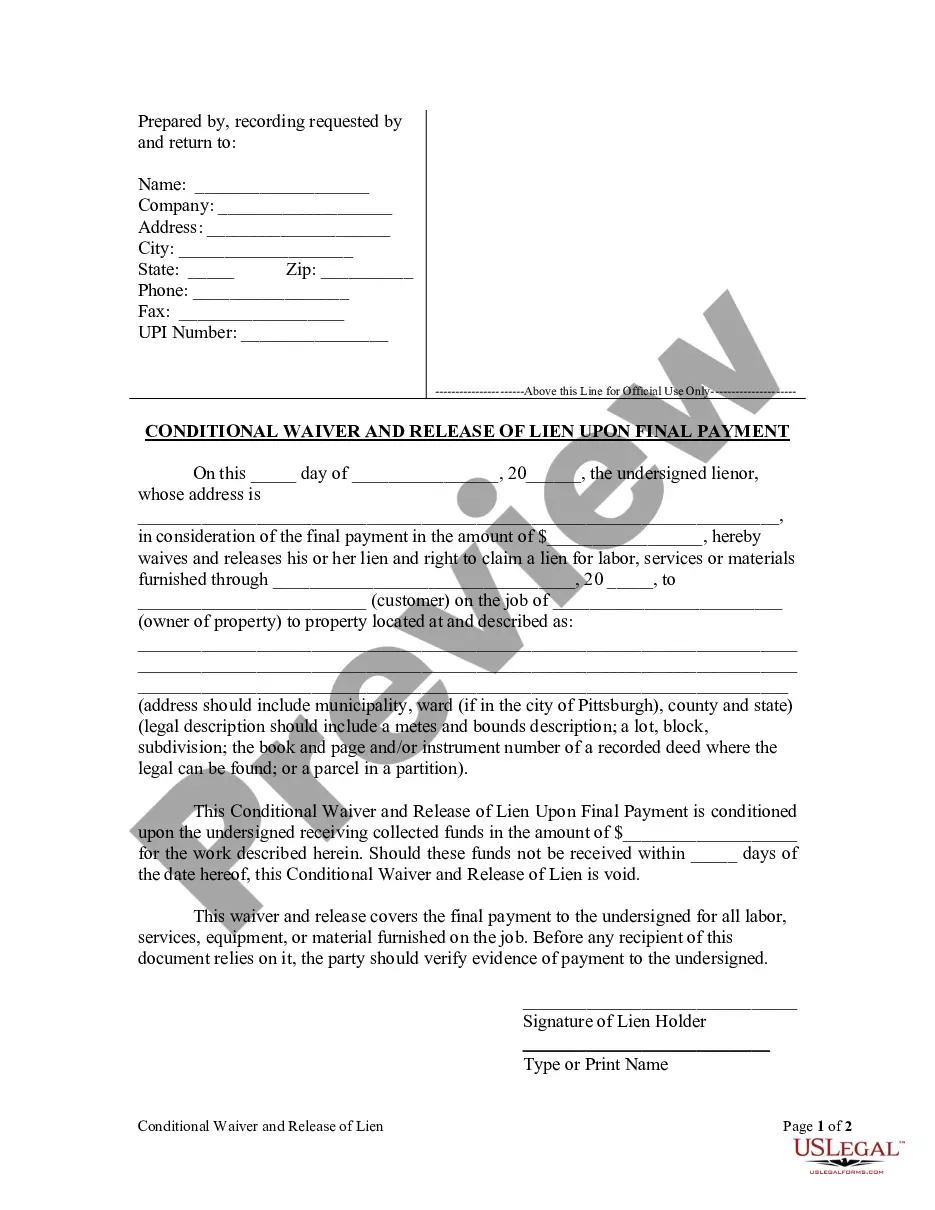
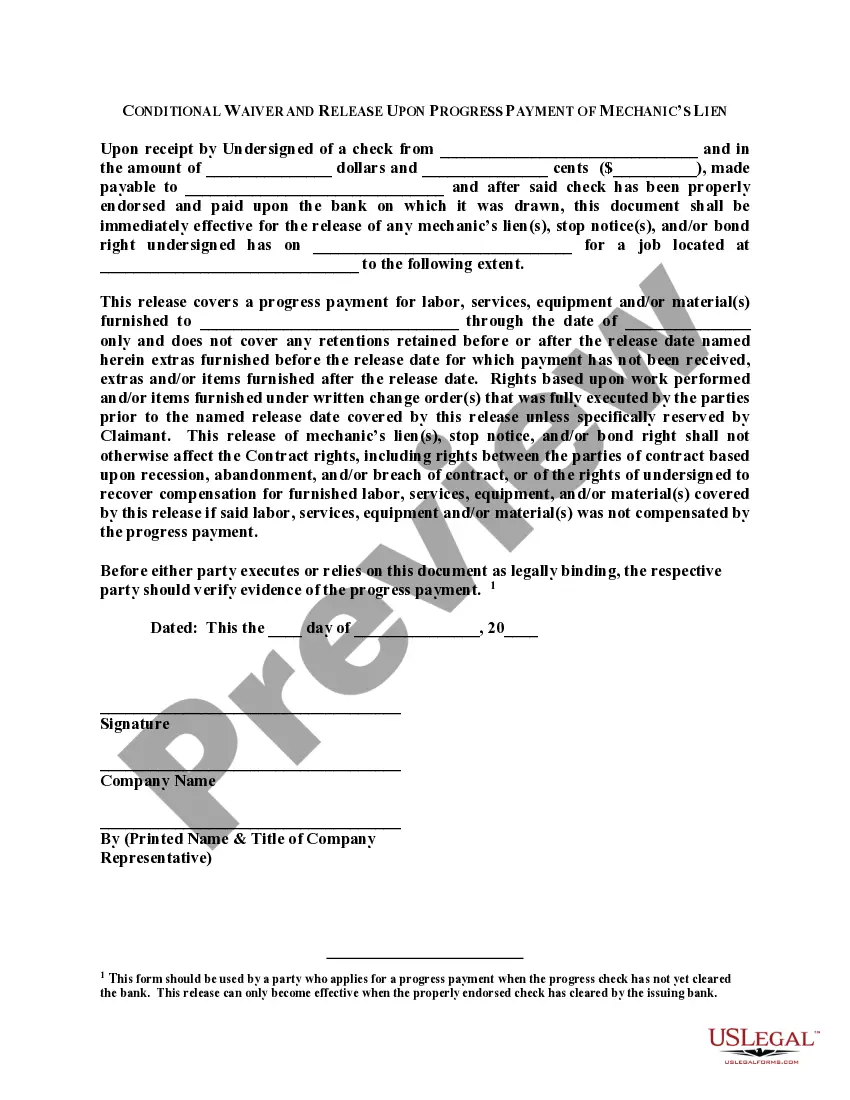
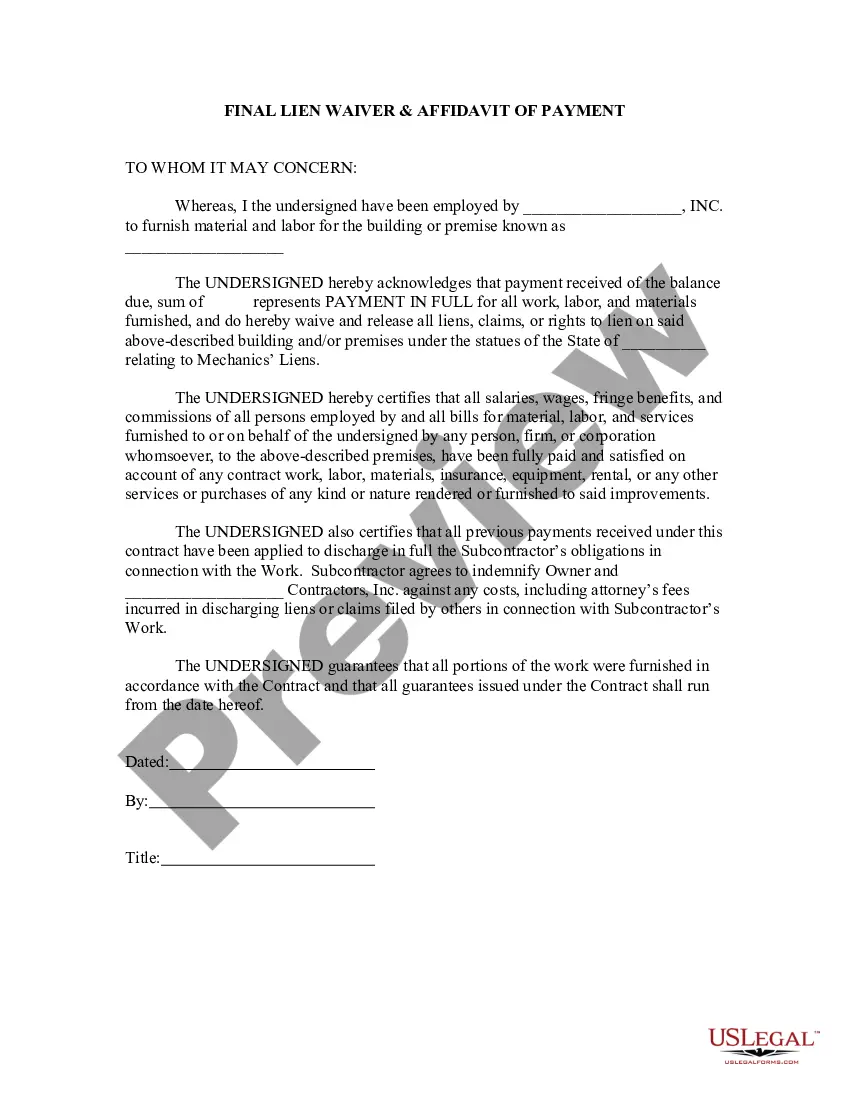
The Conditional Waiver and Release of Claim of Lien Upon Final Payment is a legal document used by a lienor (such as a contractor or subcontractor) to waive their right to claim a lien against a property in exchange for final payment. This form is specific to situations where labor, services, or materials were provided through a specific date and is only valid if the lienor has received the final payment. Unlike other lien forms, this one is conditional upon payment being received, making it important for parties involved in the construction industry.
What’s included in this form
- Date of the waiver and release.
- Name and address of the lienor.
- Amount of the final payment.
- Description of the property and work completed.
- Condition for the waiver to be valid, including the timeline for receiving payment.
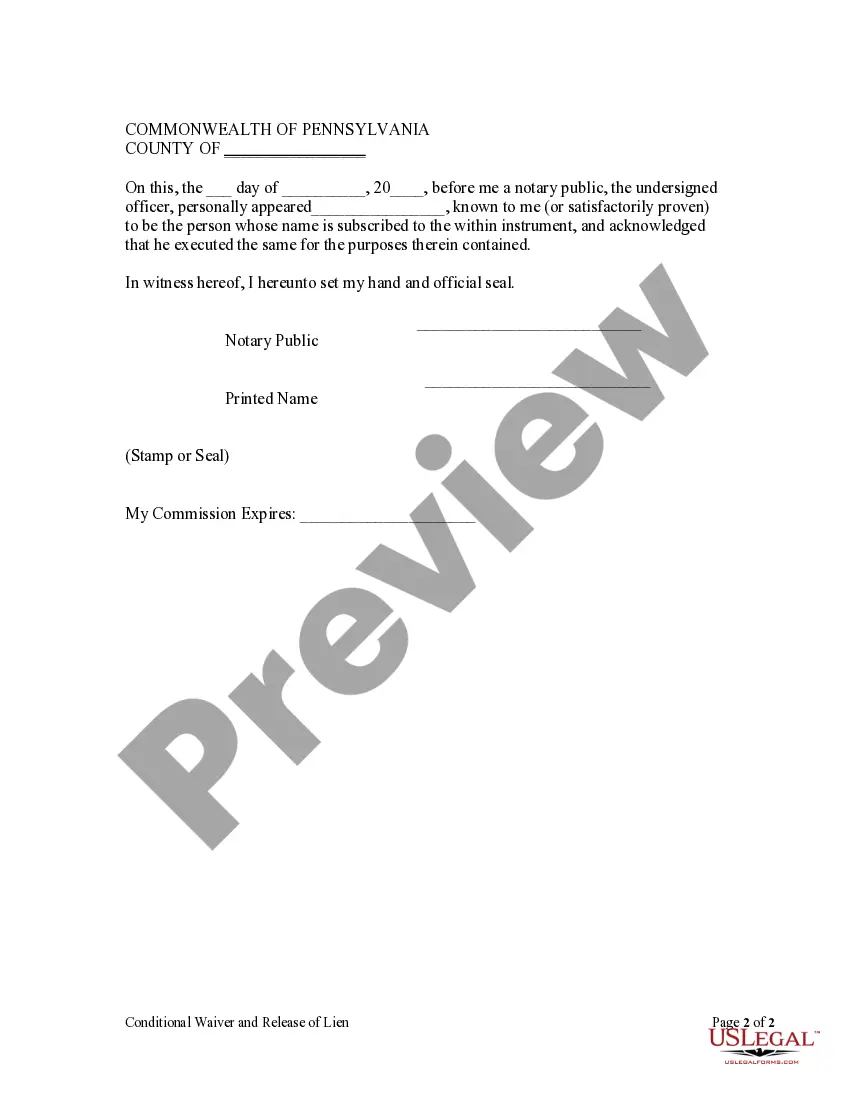
- Signature of the lien holder and notarization section.
When to use this form
This form should be used when a lienor has provided labor, materials, or services for a project and has reached the final payment stage. If you're a contractor or subcontractor and are about to receive your final payment, you would use this form to formally waive any claims to a lien on the property, ensuring that the owner or general contractor can complete their payment without the risk of lien claims against the property.
Who should use this form
This form is suitable for:
- Contractors who have completed work on a property.
- Subcontractors or suppliers of materials who provided services through a specified date.
- Property owners or general contractors needing to finalize payments while mitigating lien risks.
Steps to complete this form
- Identify the date of completion for the waiver and release.
- Fill out the name and address of the lienor.
- Specify the amount of the final payment being waived.
- Describe the property and the work completed with full details.
- Ensure that conditions regarding payment are included and that the lienor signs the document.
- Complete the notarization section as required for legal validation.
Does this document require notarization?
This document requires notarization to meet legal standards. US Legal Forms provides secure online notarization powered by Notarize, allowing you to complete the process through a verified video call, available 24/7.
Get your form ready online
Our built-in tools help you complete, sign, share, and store your documents in one place.
Make edits, fill in missing information, and update formatting in US Legal Forms—just like you would in MS Word.
Download a copy, print it, send it by email, or mail it via USPS—whatever works best for your next step.
Sign and collect signatures with our SignNow integration. Send to multiple recipients, set reminders, and more. Go Premium to unlock E-Sign.
If this form requires notarization, complete it online through a secure video call—no need to meet a notary in person or wait for an appointment.
We protect your documents and personal data by following strict security and privacy standards.

Make edits, fill in missing information, and update formatting in US Legal Forms—just like you would in MS Word.

Download a copy, print it, send it by email, or mail it via USPS—whatever works best for your next step.

Sign and collect signatures with our SignNow integration. Send to multiple recipients, set reminders, and more. Go Premium to unlock E-Sign.

If this form requires notarization, complete it online through a secure video call—no need to meet a notary in person or wait for an appointment.

We protect your documents and personal data by following strict security and privacy standards.
Typical mistakes to avoid
- Failing to include the proper property description, which can invalidate the waiver.
- Not entering the correct amount for the final payment.
- Leaving out the timeline for payment, making the waiver unenforceable if payment is not received.
- Not obtaining the necessary notarization if required.
Why use this form online
- Immediate access to properly drafted legal forms that meet common legal standards.
- Ability to download and customize the form according to specific needs without waiting for manual processing.
- Secure format ensuring that all information is accurately captured and retained.
Legal use & context
- This form serves to limit liability by providing proof of payment and waiver of lien claims.
- Failure to comply with the conditions outlined in the form may lead to disputes or legal challenges.
- Understanding local lien laws is crucial as they can vary significantly from one state to another.
Main things to remember
- The Conditional Waiver and Release of Claim of Lien Upon Final Payment is essential for lienors to finalize payments without the risk of future claims.
- Accurate and complete information is critical for the validity of the waiver.
- Notarization is necessary to enforce the conditions of this waiver.
Looking for another form?
Form popularity
FAQ
The undersigned makes this Waiver specifically for the benefit of the Owner and the Owner's lender, and any other person or entity with a legal or equitable interest in the Property.
A lien waiver is quite common in the construction business. Essentially, it is a document from a contractor, subcontractor, supplier, or another party who holds a mechanic's lien that states they have been paid in full and waive future lien rights to the disputed property.
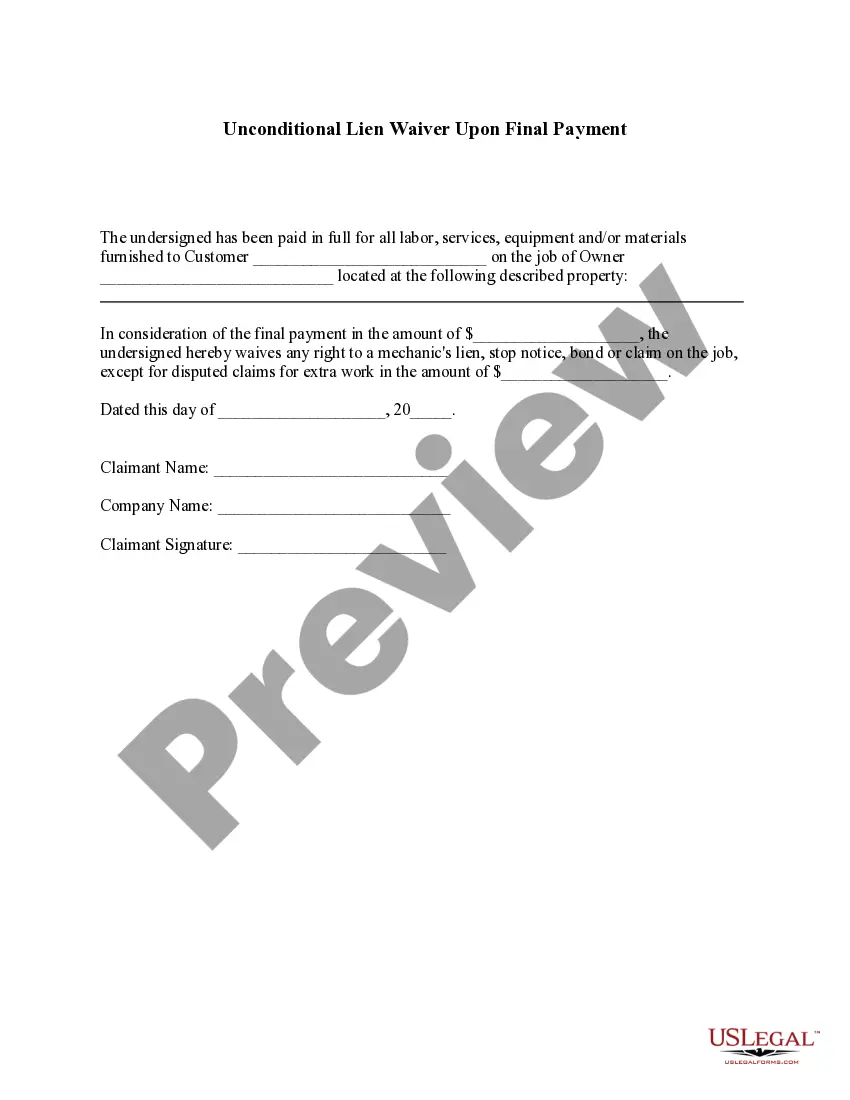
An unconditional mechanic's lien waiver states the contractor has in fact been paid in full for the stated work. Write the name of the maker of the check in the space provided on the mechanic's lien release form. Fill in the amount of the payment. Write the name of contractor the payment is being made to.
An "Unconditional Waiver and Release Upon Final Payment" extinguishes all claimant rights upon receipt of the payment. A "Conditional Waiver and Release Upon Final Payment" extinguishes all claimant rights upon receipt of the final payment with certain provisions.
A waiver is a legally binding provision where either party in a contract agrees to voluntarily forfeit a claim without the other party being liable.Examples of waivers include the waiving of parental rights, waiving liability, tangible goods waivers, and waiver for grounds of inadmissibility.
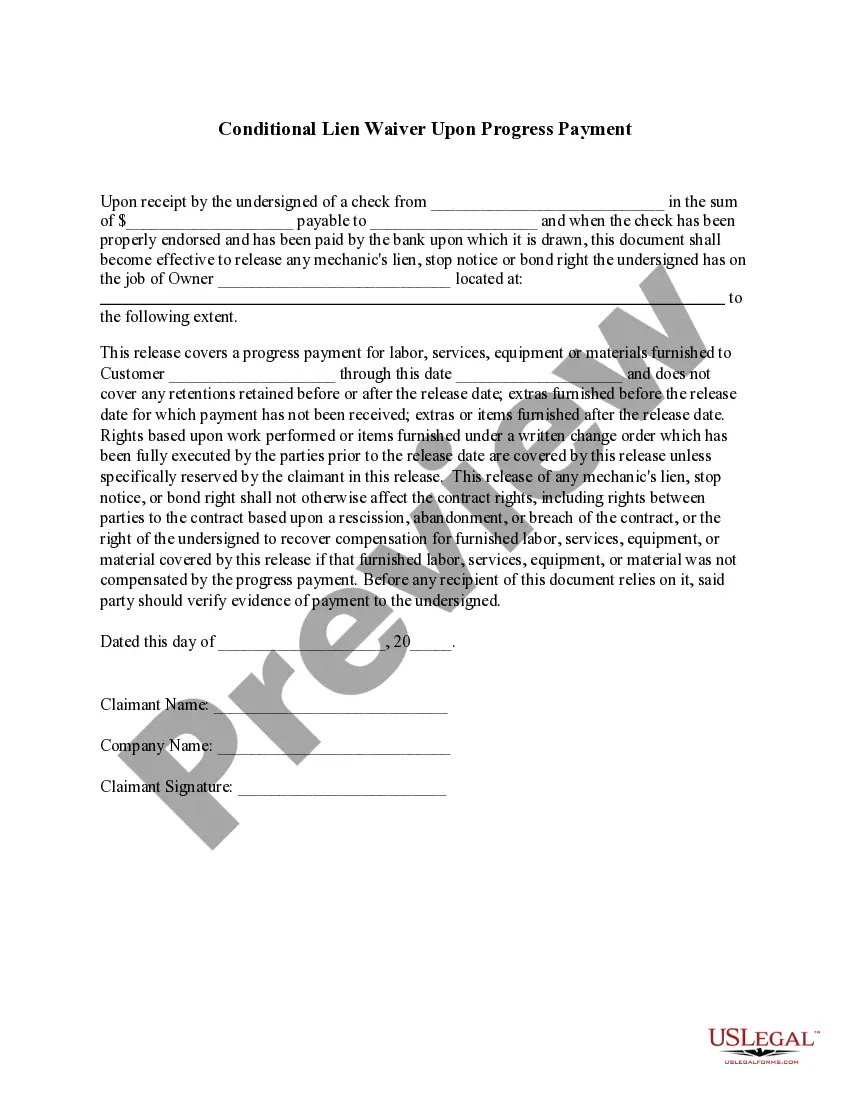
Name of Claimant. This is the name the party to be paid, and the party who will be signing the lien waiver document. Name of Customer. Job Location. Owner. Amount of the Check. Check Payable To. Exceptions. Claimant's Signature.
Conditional lien waivers are conditioned upon something (typically the receipt of payment).The party receiving payment maintains its right to file a lien until the check is actually cashed; the party making payment will never face double payment (paying the party they hired and also being faced with a lien).
A lien waiver is quite common in the construction business. Essentially, it is a document from a contractor, subcontractor, supplier, or another party who holds a mechanic's lien that states they have been paid in full and waive future lien rights to the disputed property.
Signing an unconditional lien waiver is enforceable even before you get paid. This means that if you sign an unconditional lien waiver before receiving the money and the property owner ends up not paying up, you have already waived your lien rights because you signed the unconditional lien waiver.