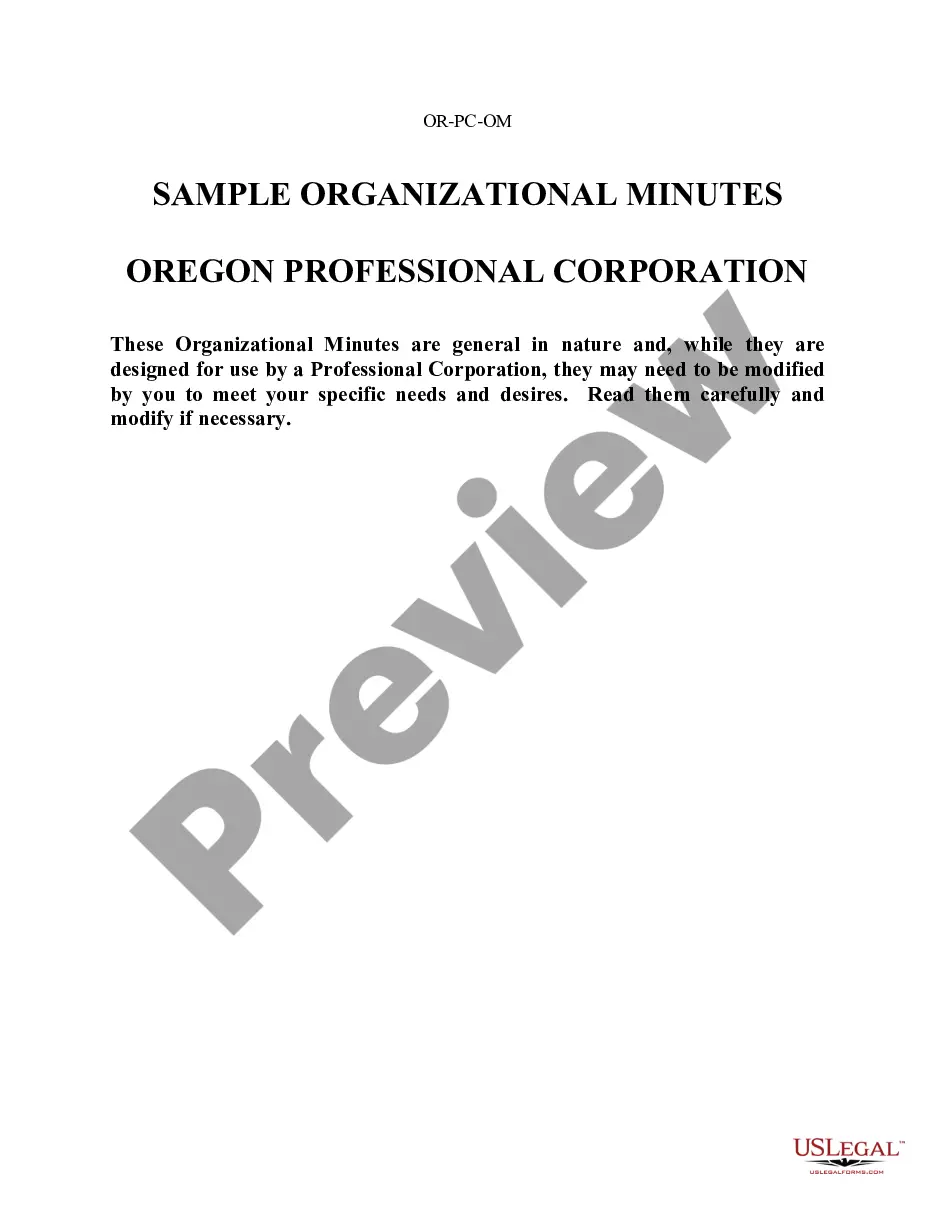
Annual Minutes for an Oregon Professional Corporation
Understanding this form
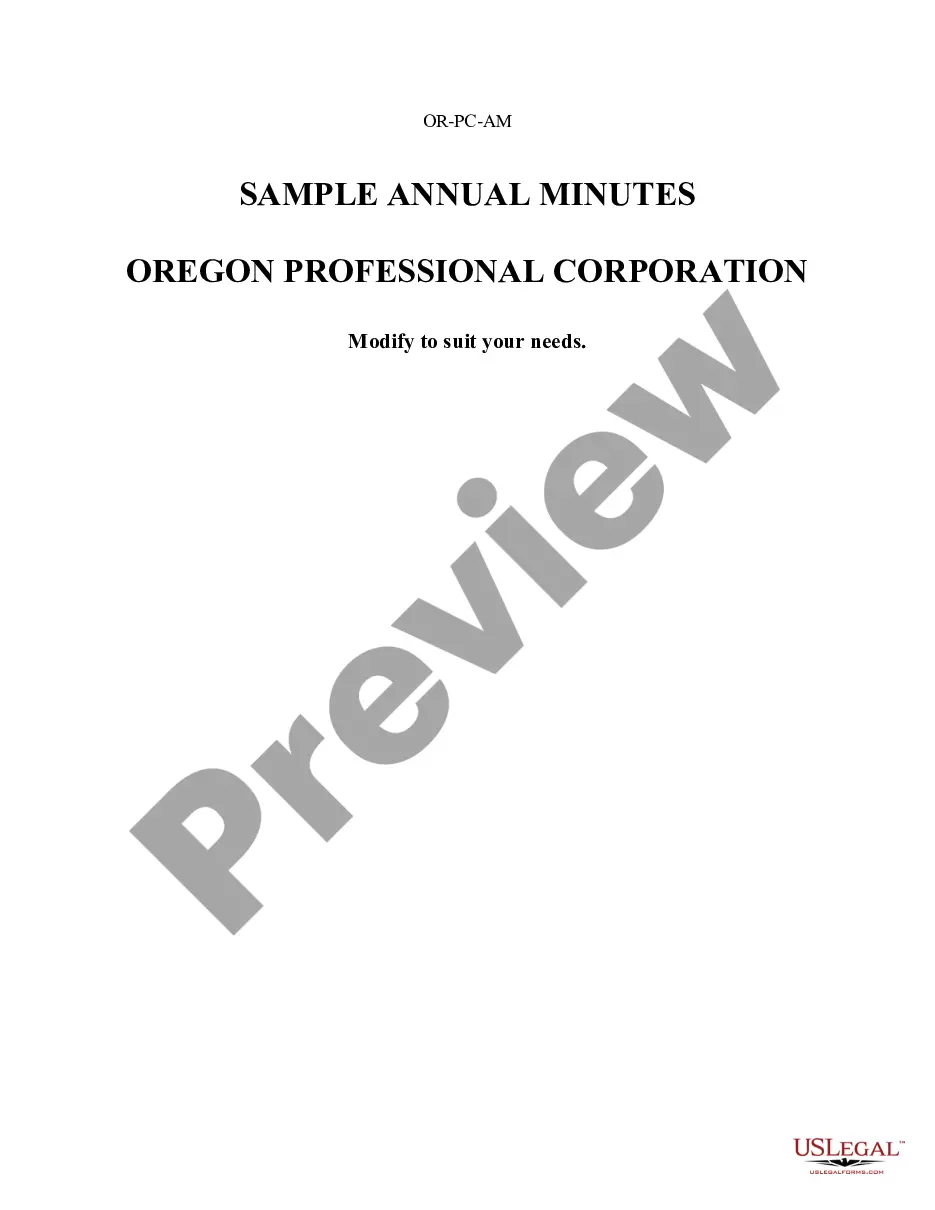
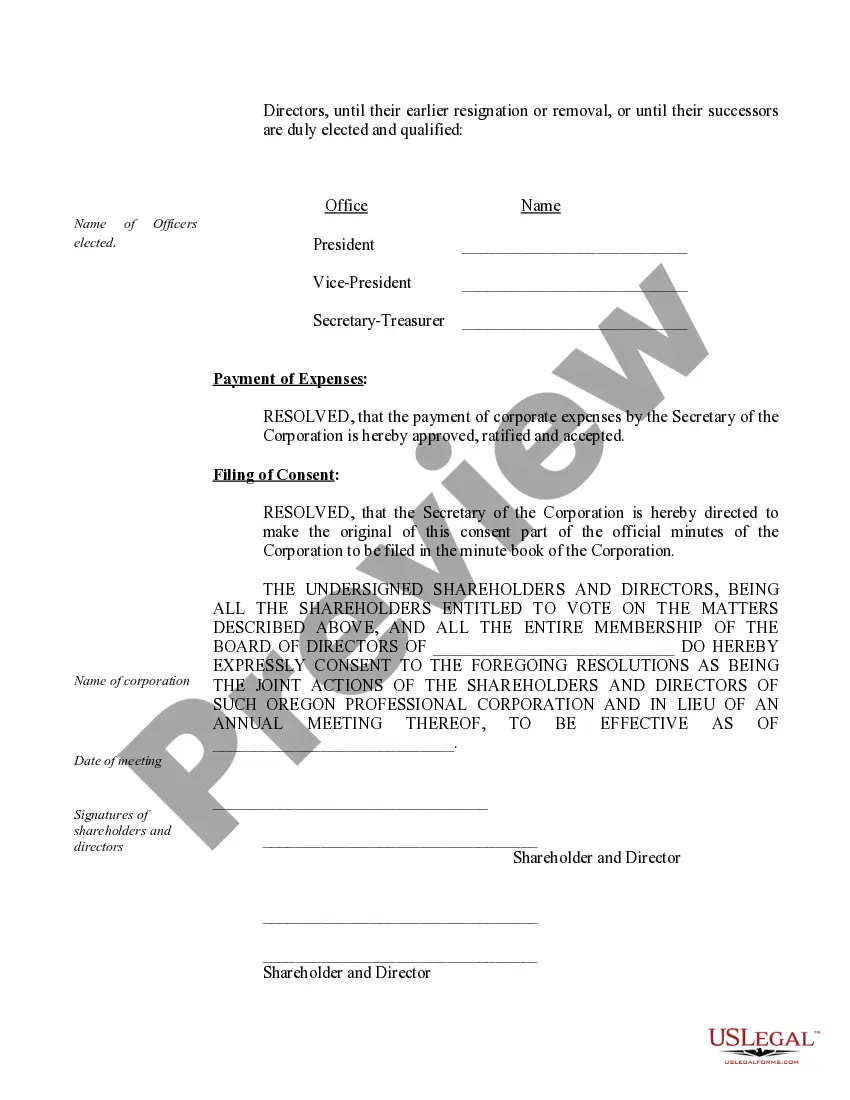
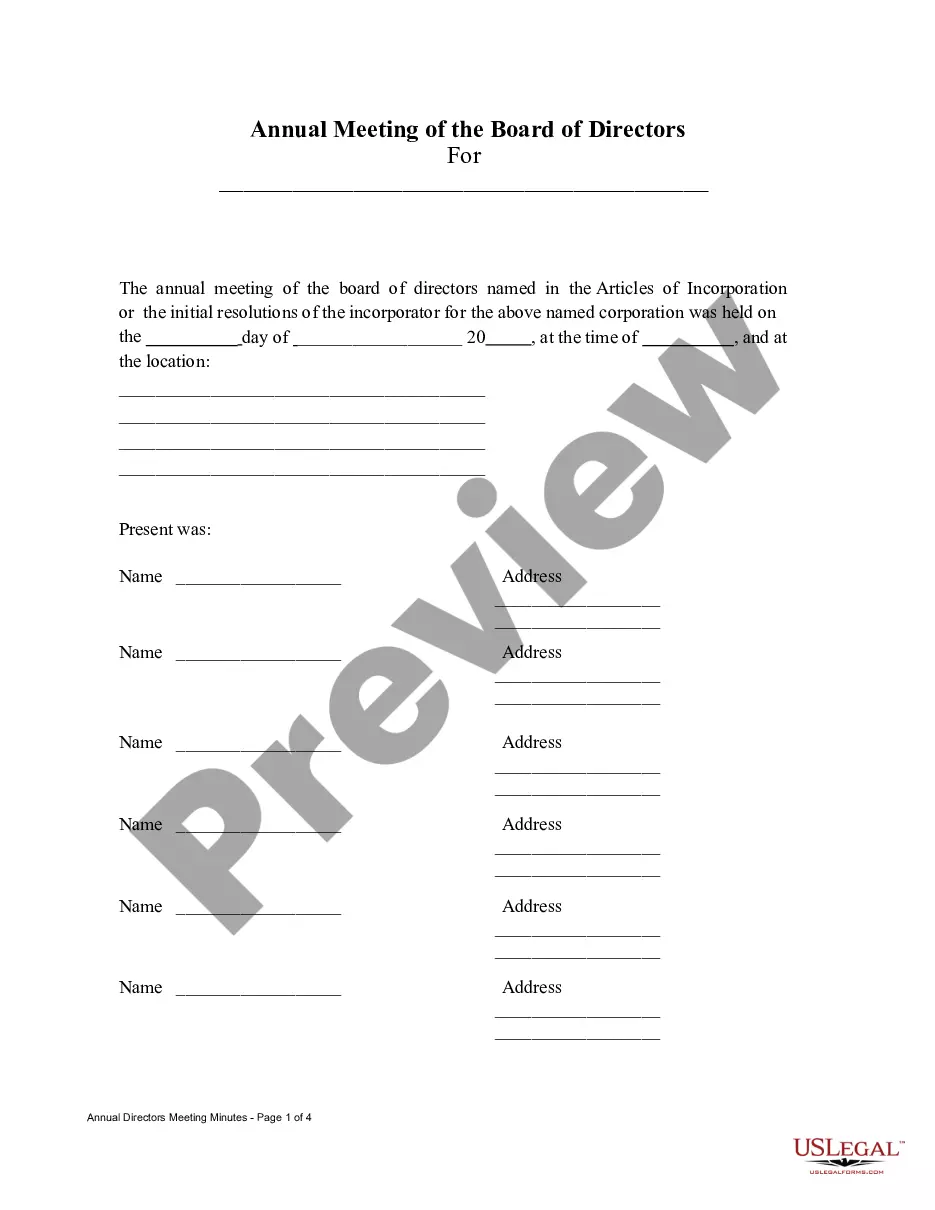
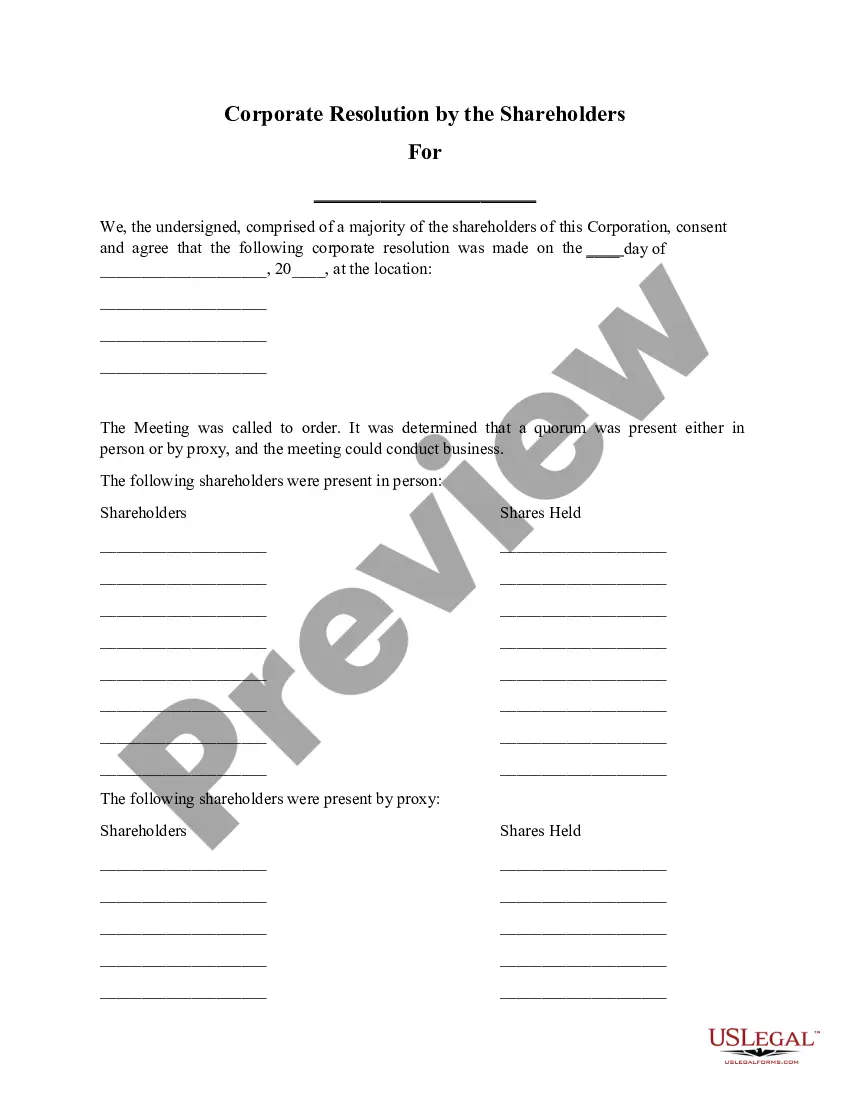
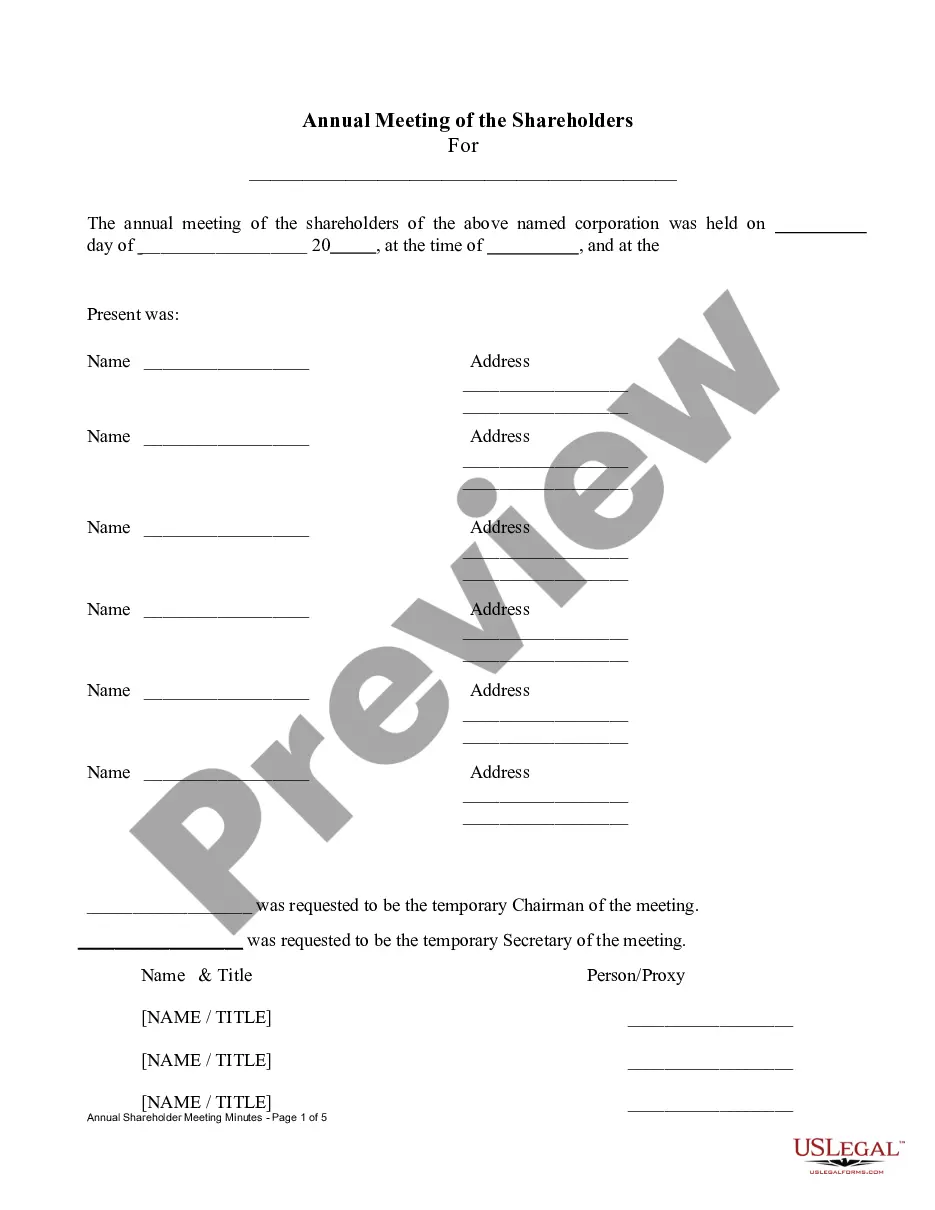
The Annual Minutes for an Oregon Professional Corporation is a document that records any changes or organizational activities of a professional corporation throughout the year. This form serves to formalize decisions made by shareholders and directors, ensuring compliance with the Oregon Business Corporation Act. It differs from other corporate forms as it specifically addresses annual actions taken without a formal meeting, making it streamlined for efficient corporate governance.
What’s included in this form
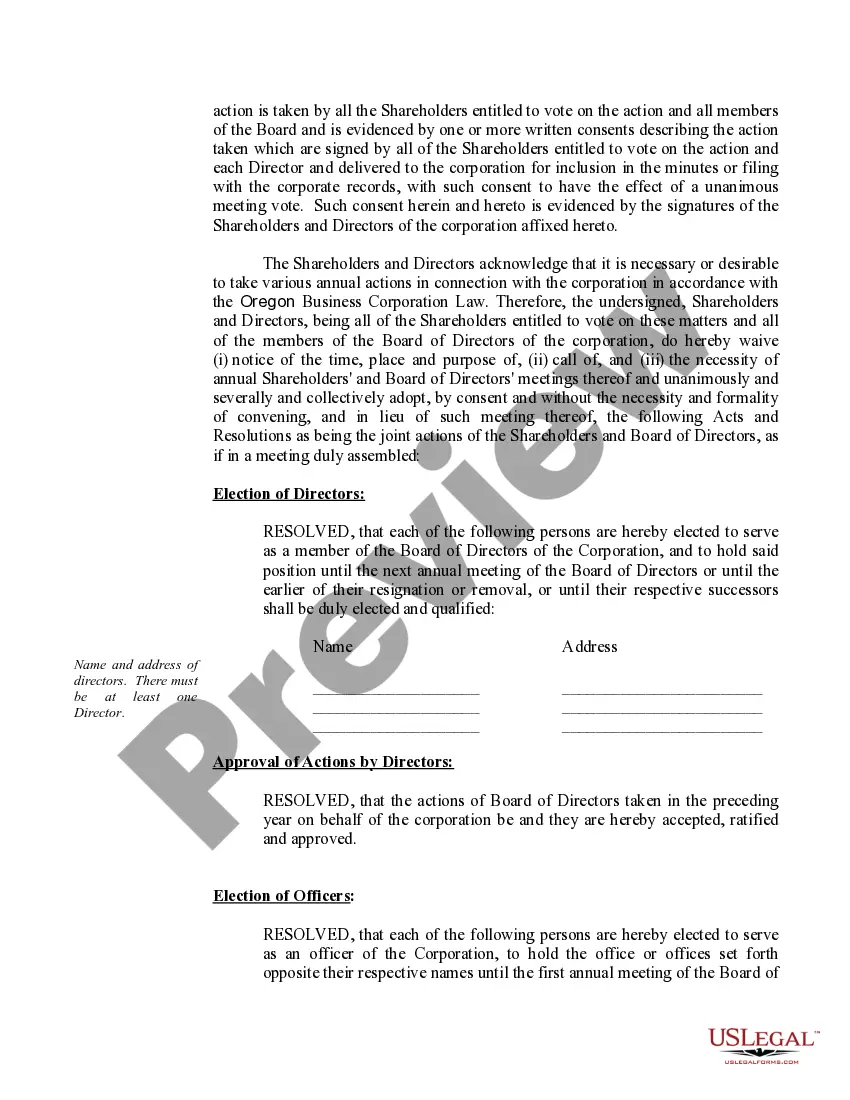
- Name of Corporation: Identifies the official name of the corporation.
- Directors and Officers: Includes names and addresses of elected directors and officers.
- Date of Meeting: Documents the date on which the annual actions are consented to.
- Election of Directors: Records the election of directors to the board.
- Approval of Prior Actions: Accepts and ratifies actions taken by the board in the previous year.
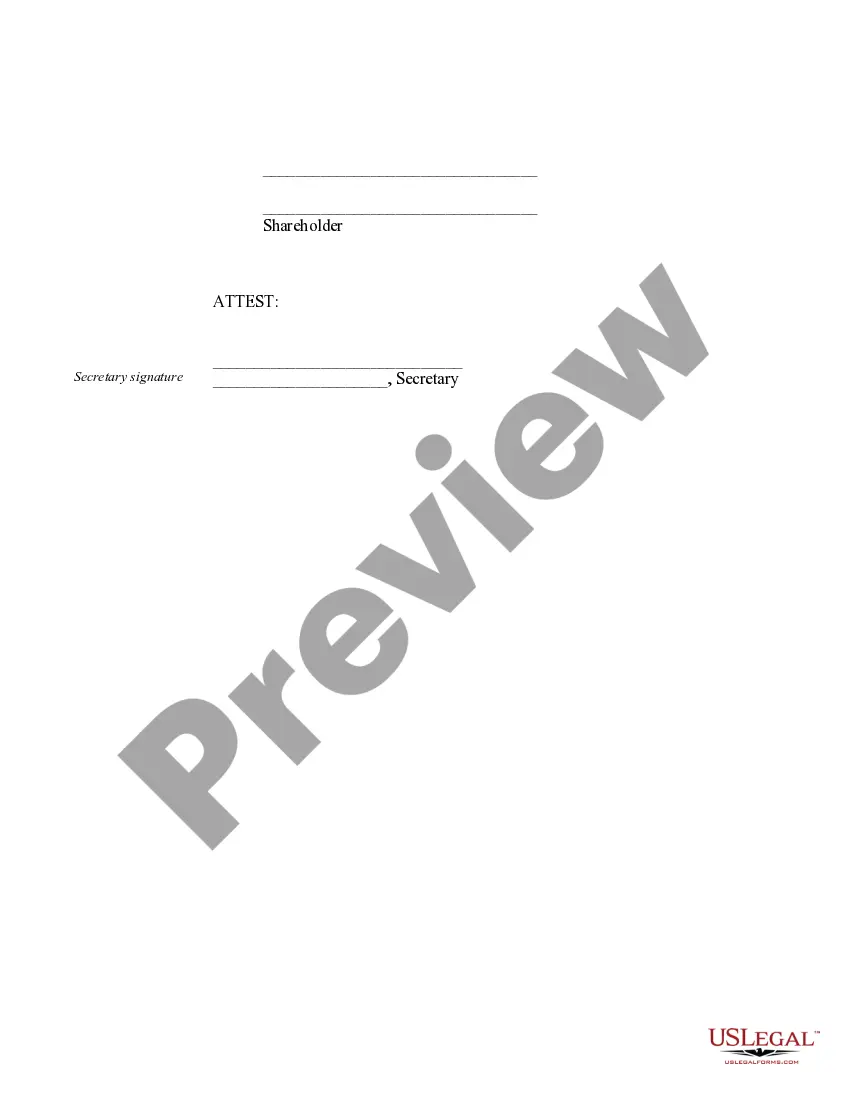
- Signatures: Requires signatures from shareholders and directors, verifying their consent.
Situations where this form applies
This form should be used annually by professional corporations operating in Oregon to document key actions taken by the shareholders and the board of directors. It is appropriate when there is a need to record elections of directors, approval of actions from the prior year, or when consent for actions is required without holding a formal meeting. Use this form to maintain proper corporate records and ensure compliance with state regulations.
Who needs this form
This form is intended for:
- Shareholders of Oregon professional corporations.
- Members of the board of directors of these corporations.
- Secretaries or officers responsible for maintaining corporate records.
- Any corporation seeking to fulfill annual meeting requirements without convening.
How to complete this form
- Identify the corporation's name and provide relevant contact information.
- List the names and addresses of the directors and officers elected during the meeting.
- Enter the date of the meeting or consent actions.
- Document the resolutions for the election of directors and approval of prior actions.
- Complete the signature section by having all shareholders and directors sign.
Is notarization required?
This form usually doesn’t need to be notarized. However, local laws or specific transactions may require it. Our online notarization service, powered by Notarize, lets you complete it remotely through a secure video session, available 24/7.
Get your form ready online
Our built-in tools help you complete, sign, share, and store your documents in one place.
Make edits, fill in missing information, and update formatting in US Legal Forms—just like you would in MS Word.
Download a copy, print it, send it by email, or mail it via USPS—whatever works best for your next step.
Sign and collect signatures with our SignNow integration. Send to multiple recipients, set reminders, and more. Go Premium to unlock E-Sign.
If this form requires notarization, complete it online through a secure video call—no need to meet a notary in person or wait for an appointment.
We protect your documents and personal data by following strict security and privacy standards.
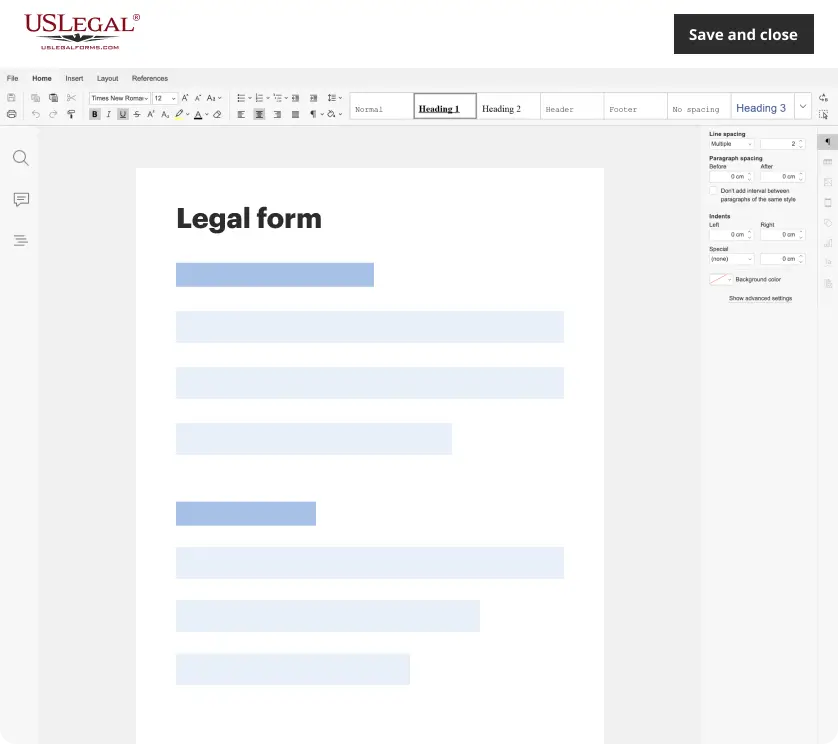
Make edits, fill in missing information, and update formatting in US Legal Forms—just like you would in MS Word.
Download a copy, print it, send it by email, or mail it via USPS—whatever works best for your next step.
Sign and collect signatures with our SignNow integration. Send to multiple recipients, set reminders, and more. Go Premium to unlock E-Sign.

If this form requires notarization, complete it online through a secure video call—no need to meet a notary in person or wait for an appointment.
We protect your documents and personal data by following strict security and privacy standards.
Typical mistakes to avoid
- Failing to include all required signatures from shareholders and directors.
- Missing the name of the corporation or incorrectly filling out the name.
- Not providing the date on which the resolutions are adopted.
- Neglecting to record the election of officers properly.
Advantages of online completion
- Convenience: Download and complete the form at your pace without scheduling conflicts.
- Editability: Tailor the document to fit the specific needs of your corporation.
- Reliability: Forms are drafted by licensed attorneys, ensuring they meet legal standards.
What to keep in mind
- Annual Minutes are essential for documenting corporate governance for Oregon professional corporations.
- All shareholders and directors must consent to the actions recorded.
- This form helps ensure compliance with state corporate laws.
- The form should be retained in the corporate records for future reference.
Looking for another form?
Form popularity
FAQ
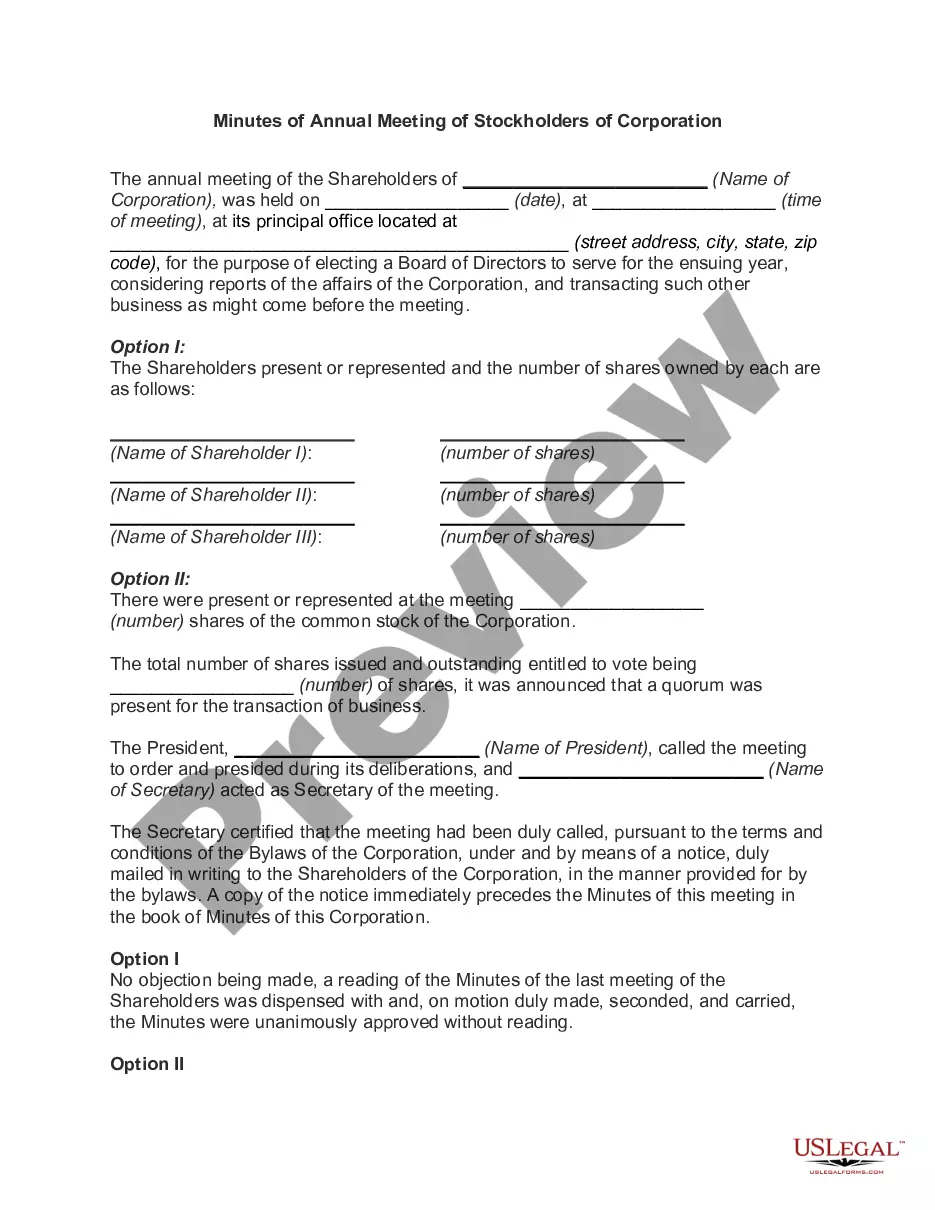
Not only are corporations required provincially and federally to maintain certain records, but they are also required by law to keep them up to date. When a business is incorporated, no matter how large or small it is, an annual shareholder meeting must be held and documented in the corporate minute book.
Basic Corporate Information. The bylaws should include your corporation's formal name and the address of its main place of business. Board of Directors. Officers. Shareholders. Committees. Meetings. Conflicts of Interest. Amendment.
Every corporation must have a President, Secretary and Treasurer/Chief Financial Officer. Any other officers (such as Vice-President or Chief Operating Officer) are optional. One person may hold every office.The same person can be a shareholder, director and officer of a corporation.
Unlike corporations, limited liability companies (LLCs) are not required by state law to hold meetings or record minutes of the meetings they do hold. Though they are not required by law, it is helpful for LLCs to keep minutes to help protect their business. Thus, many LLCs self-impose meeting and minute requirements.
Basic Corporate Information. The bylaws should include your corporation's formal name and the address of its main place of business. Board of Directors. Officers. Shareholders. Committees. Meetings. Conflicts of Interest. Amendment.
An entity is defined as something that exists as a particular and discrete unit . In terms of identity management, an entity is the logical relationship between two or more records.An entity is also called a linkage set . There can be an unlimited number of records in an entity or linkage set.
If you run an S corporation, you are not required by law to keep meeting minutes. However, they can be a good way to record the progress your company makes toward meeting corporate objectives. Minutes can also be useful as a legal record of corporate activities in the event of a lawsuit or tax audit.
A business should keep its minutes for at least seven years, and make them available to members of the corporation (e.g., shareholders, directors, and officers) who make a reasonable request to review them. There is no requirement to file annual stockholder meeting minutes with the state or other government agency.
Taking Meeting Notes. Type Meeting Notes - Type up a full version of the meeting minutes. Circulate a Draft - Follow your corporation's policy about who must review the draft notes. Distribute Minutes to Board - Usually in advance of the next meeting.