Oregon Amendment of Residential Lease
About this form
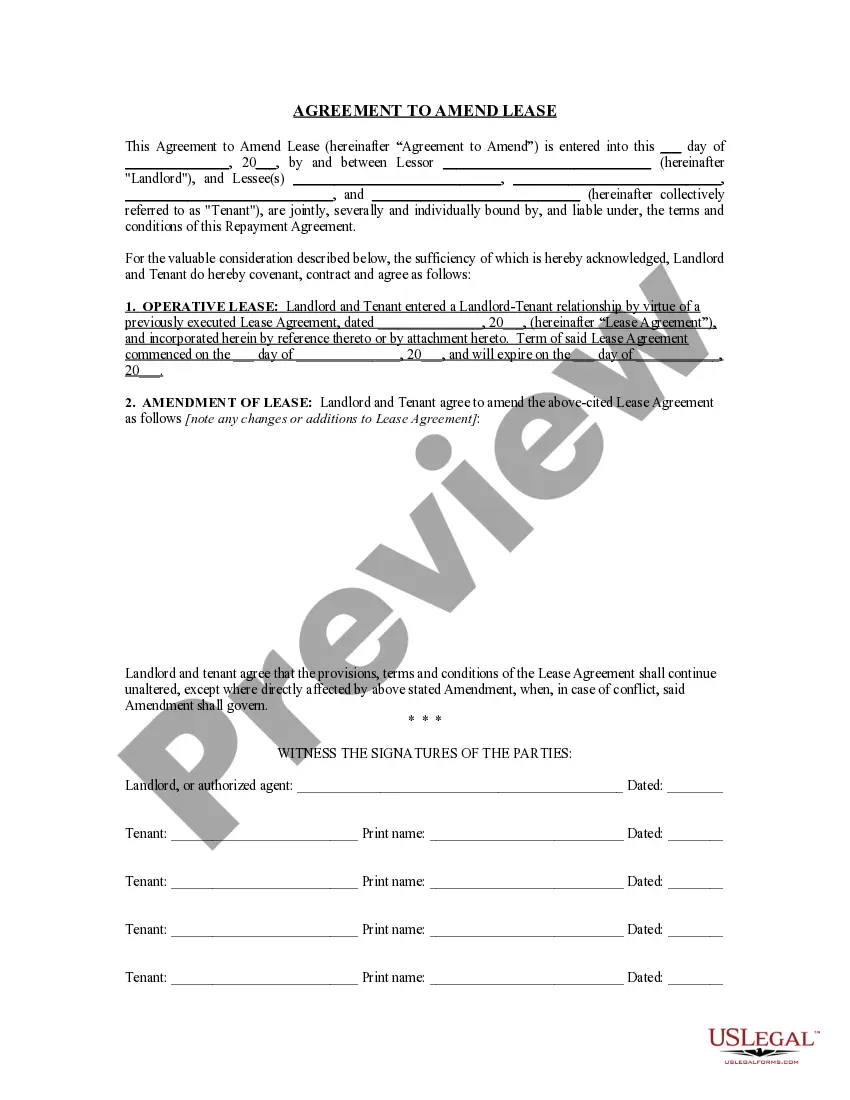
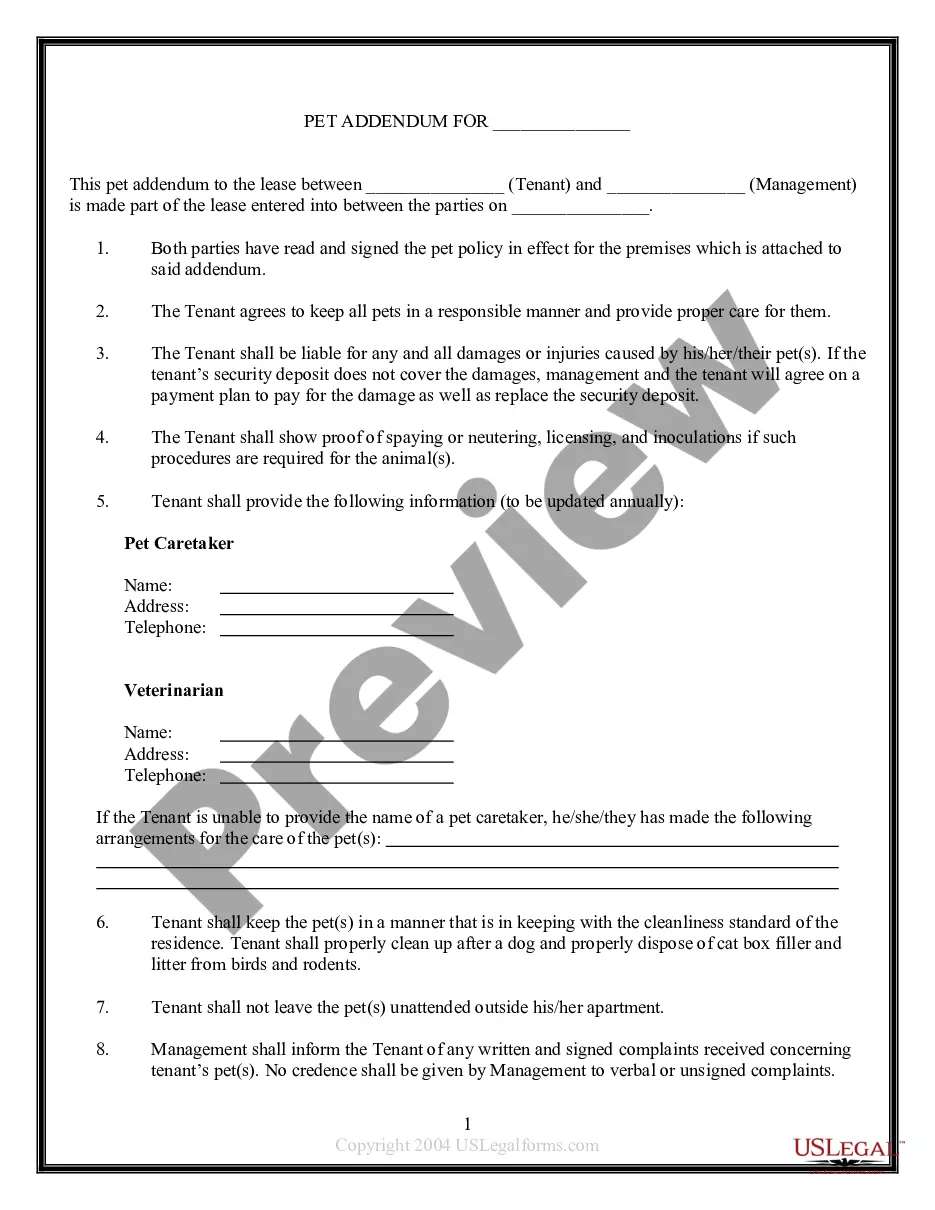
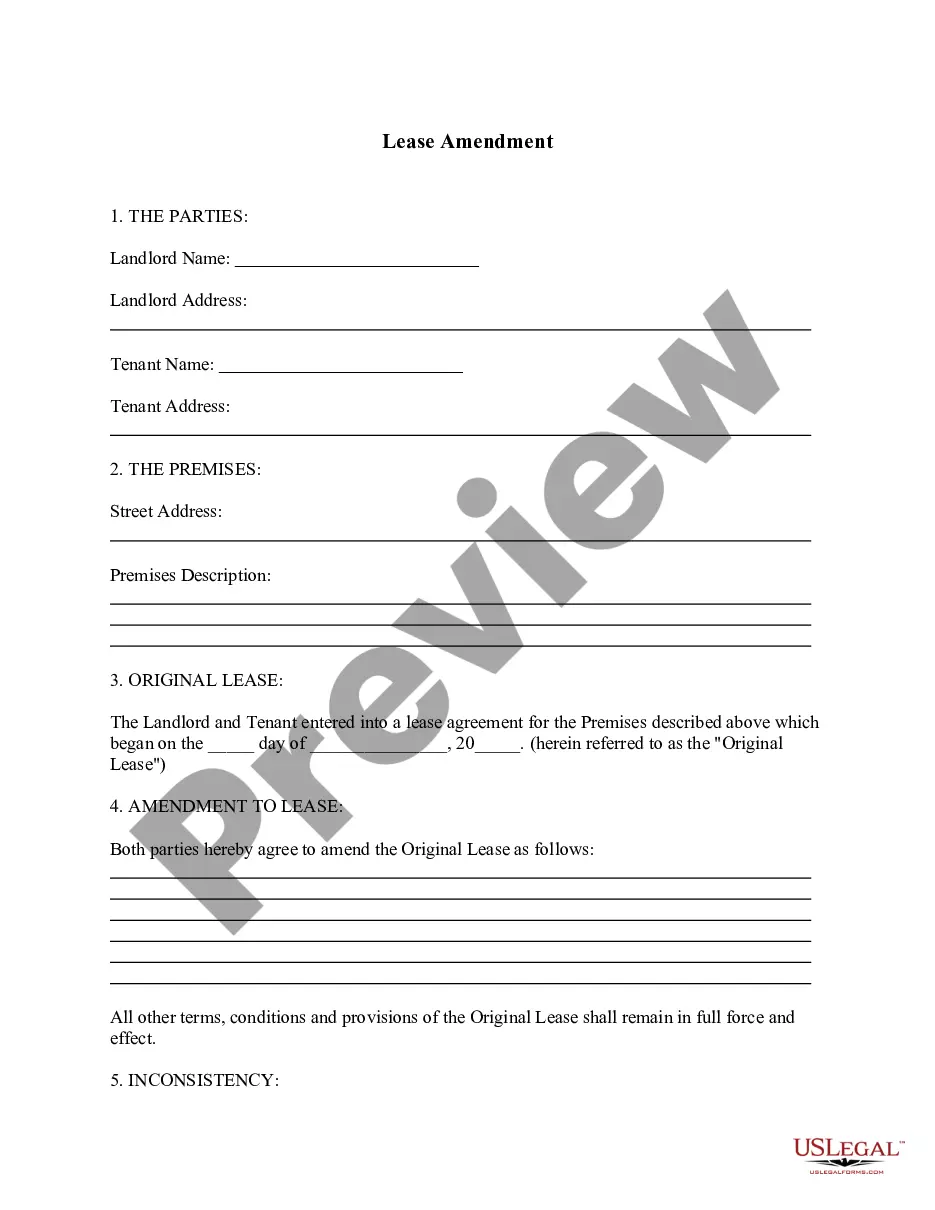
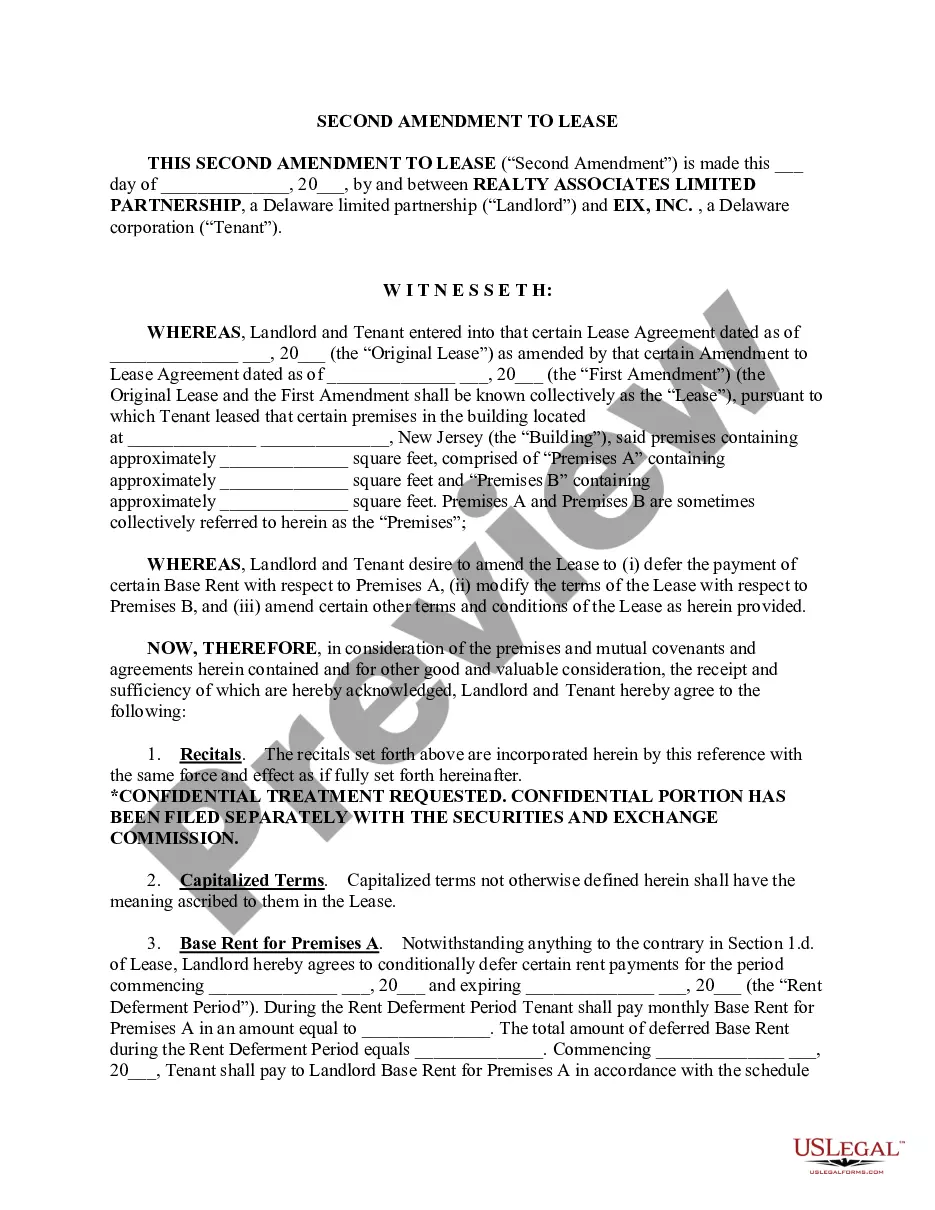
The Amendment of Residential Lease is a legal document that allows landlords and tenants to modify existing lease agreements. Unlike standard lease documents, this amendment specifically addresses changes to terms already set forth in a rental agreement, ensuring that these changes are officially documented and legally enforceable. This form is tailored to comply with state statutes, making it ideal for clearing up any potential misunderstandings about amendments made to a lease.
Key components of this form
- Identification of the landlord and tenant(s) involved
- Reference to the original lease agreement with its start and end dates
- A detailed section for specifying what amendments are being made
- Signatures of all parties involved, confirming their agreement to the changes
- Space for the date of signing to track when changes were made
When to use this document
This form is used when either the landlord or tenant wants to make modifications to an existing lease agreement. It is particularly useful in situations such as updating rental terms, adjusting the duration of the lease, or adding new tenants. For example, if a tenant requests a rent reduction or if the landlord wants to extend the lease for an additional year, this amendment can document those changes formally.
Who can use this document
- Landlords looking to modify lease terms with their tenants
- Tenants who need to propose changes to their rental agreement
- Property management professionals managing rental properties
- Anyone involved in a rental agreement wanting to ensure that all modifications are legally recorded
How to complete this form
- Identify all parties involved by filling in names for the landlord and tenants.
- Refer to the original lease agreement by entering its start and end dates.
- Specify the exact amendments being made, detailing any changes to terms.
- Ensure all parties sign the document to indicate their consent to the amendments.
- Date the agreement to document when the changes take effect.
Notarization requirements for this form
Notarization is not commonly needed for this form. However, certain documents or local rules may make it necessary. Our notarization service, powered by Notarize, allows you to finalize it securely online anytime, day or night.
Get your form ready online
Our built-in tools help you complete, sign, share, and store your documents in one place.
Make edits, fill in missing information, and update formatting in US Legal Forms—just like you would in MS Word.
Download a copy, print it, send it by email, or mail it via USPS—whatever works best for your next step.
Sign and collect signatures with our SignNow integration. Send to multiple recipients, set reminders, and more. Go Premium to unlock E-Sign.
If this form requires notarization, complete it online through a secure video call—no need to meet a notary in person or wait for an appointment.
We protect your documents and personal data by following strict security and privacy standards.

Make edits, fill in missing information, and update formatting in US Legal Forms—just like you would in MS Word.

Download a copy, print it, send it by email, or mail it via USPS—whatever works best for your next step.

Sign and collect signatures with our SignNow integration. Send to multiple recipients, set reminders, and more. Go Premium to unlock E-Sign.

If this form requires notarization, complete it online through a secure video call—no need to meet a notary in person or wait for an appointment.

We protect your documents and personal data by following strict security and privacy standards.
Avoid these common issues
- Failing to include all tenant names in the agreement.
- Not dating the amendment, leaving it open to disputes about its validity.
- Neglecting to specify the changes clearly, leading to misunderstandings later.
Advantages of online completion
- Convenience of accessing a comprehensive amendment form anytime, anywhere.
- Editability allows users to customize the language to suit specific needs.
- Reliable access to forms that comply with current state laws, ensuring legal validity.
Looking for another form?
Form popularity
FAQ
The tenant must give the landlord notice of their intention to move out within 90 days of the event causing the need to move. The notice must be given to the landlord at least 14 days before the tenant intends to move out.
You can help the situation a lot by providing as much notice as possible and writing a sincere letter to your landlord explaining why you need to leave early. Ideally you can offer your landlord a qualified replacement tenant, someone with good credit and excellent references, to sign a new lease with your landlord.
Tenants also have certain rights under federal, state, and some local laws. These include the right to not be discriminated against, the right to a habitable home, and the right to not be charged more for a security deposit than is allowed by state law, to name just a few.
When a landlord and tenant sign a lease agreement it forms a legally binding contract. The lease cannot be altered except through another written agreement signed by both parties unless the original lease specifically gives a party the power to change something on their own.
For 2020, the maximum rent increase is 9.9%. Between tenants, there is no limit to how much the rent can go up (except if a short-term tenant was just evicted from the unit, a provision that discourages a revolving door of tenants for rent increases.)
Oregon Rent RulesOregon has a statewide rent control law that limits the amount of rent increases, bars landlords from raising rent more than once in any 12-month period, and requires landlords to give tenants proper notice before raising rent.
Notice Requirements for Oregon TenantsOregon tenants who want to get out of a month-to-month rental agreement must provide at least 30 days' written notice. One exception is if the landlord doesn't provide an exit from each bedroom in the unit, the tenant can give the landlord a 72-hour notice.