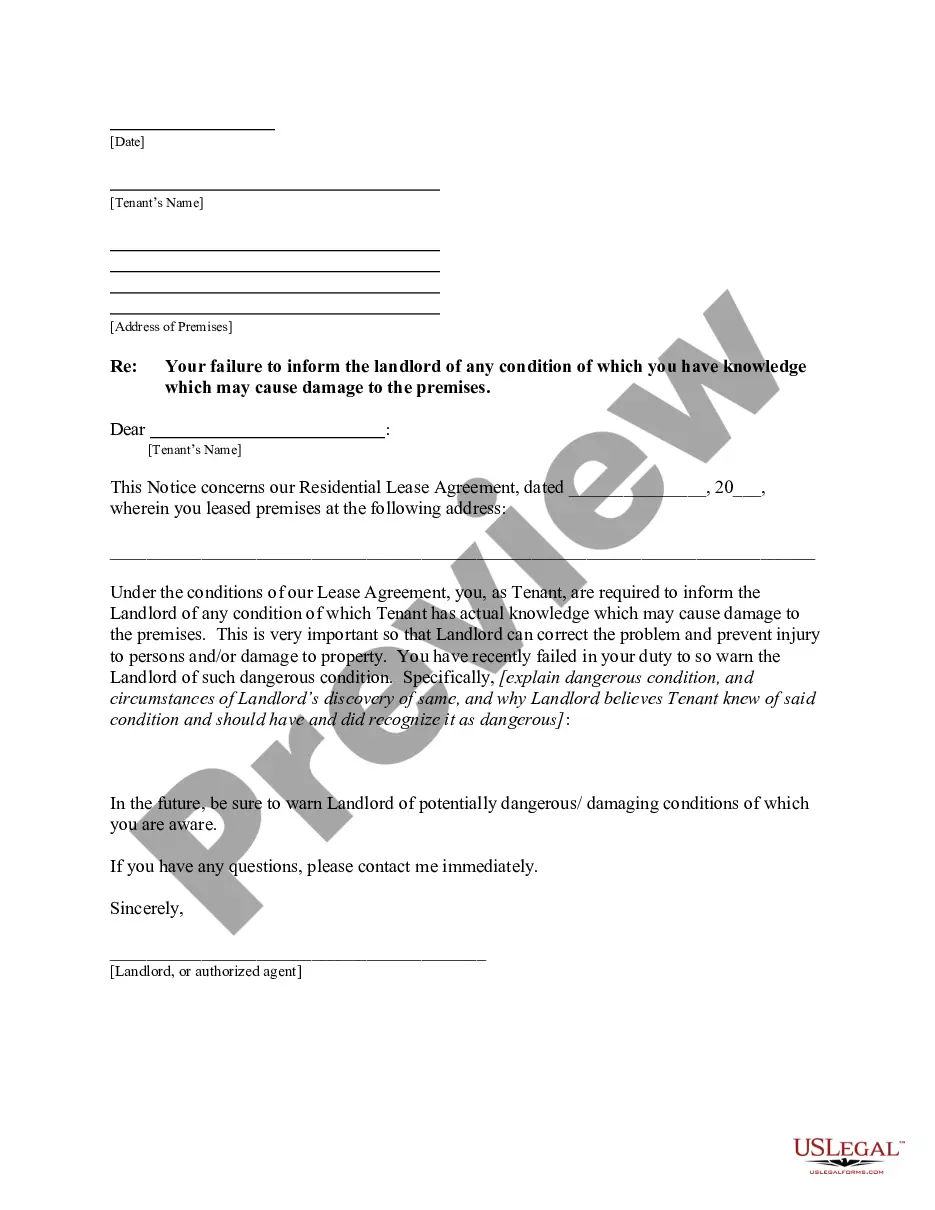
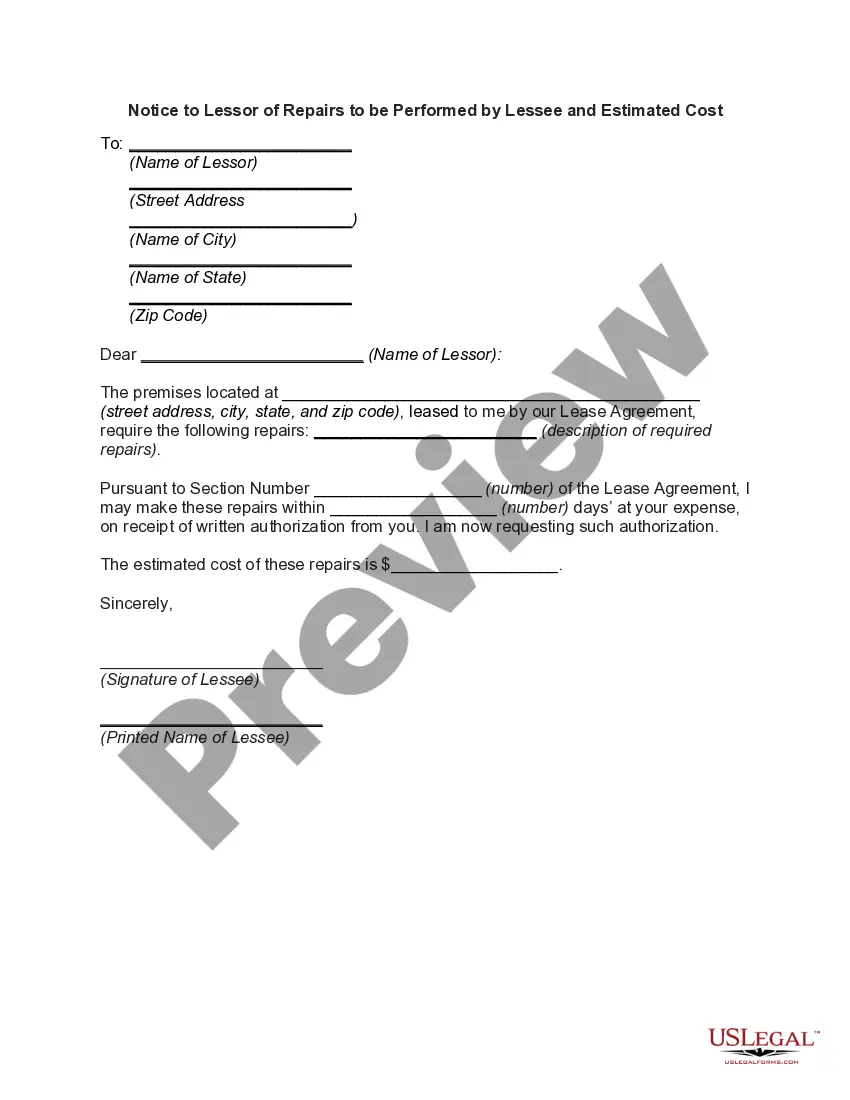
Oklahoma Letter from Landlord to Tenant as Notice to tenant to inform landlord of tenant's knowledge of condition causing damage to premises
About this form
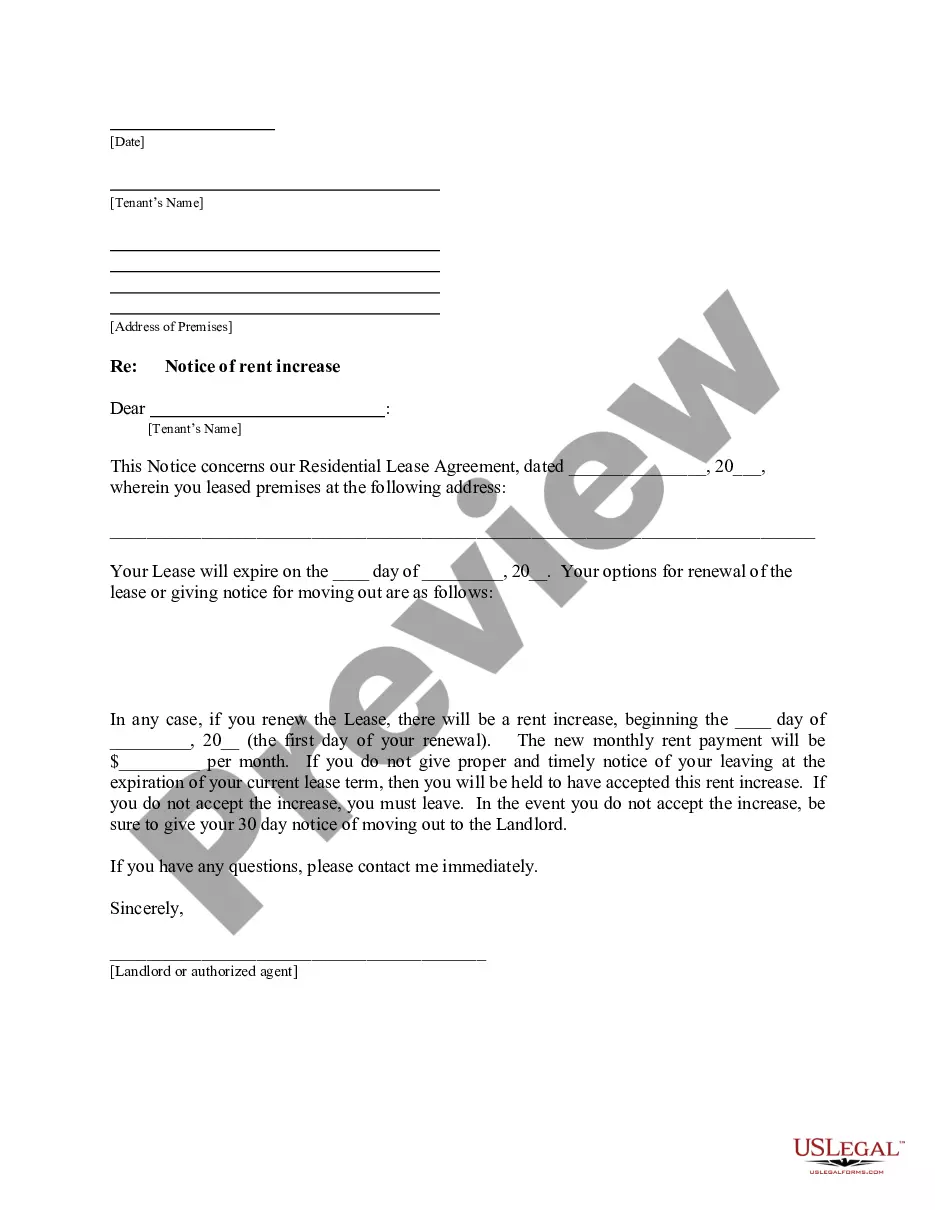
This letter from landlord to tenant serves as a notice to the tenant regarding their obligation to inform the landlord of any conditions that could potentially cause damage to the premises. By using this form, landlords ensure compliance with lease agreements and take proactive measures to prevent injury or further damage to property. This form differs from general tenant notices as it specifically addresses conditions known to the tenant that may impact the propertyâs integrity.
Key components of this form
- Identification of the landlord and tenant.
- Details of the lease agreement reference.
- Statement of the tenant's responsibility to notify the landlord of damaging conditions.
- Instructions for proper notification and provision for proof of delivery.
- Landlord's signature line for formal authorization.


When this form is needed
This form should be used whenever a landlord needs to remind the tenant of their duty to report conditions that may lead to property damage. For instance, if the tenant notices leaks, mold, or structural issues, this letter informs them of their responsibility to communicate these issues to the landlord promptly.
Who needs this form
- Landlords seeking to fulfill their legal obligations to maintain property.
- Property managers responsible for communicating with tenants.
- Tenants who have observed conditions affecting the premises.
Instructions for completing this form
- Identify and enter the names and addresses of both the landlord and tenant.
- Reference the specific lease agreement that governs the rental property.
- Clearly state the condition(s) known to the tenant that could cause damage.
- Specify the method of delivery for the notice.
- Sign the letter to validate the notice from the landlord's end.
Does this document require notarization?
Notarization is not commonly needed for this form. However, certain documents or local rules may make it necessary. Our notarization service, powered by Notarize, allows you to finalize it securely online anytime, day or night.
Get your form ready online
Our built-in tools help you complete, sign, share, and store your documents in one place.
Make edits, fill in missing information, and update formatting in US Legal Forms—just like you would in MS Word.
Download a copy, print it, send it by email, or mail it via USPS—whatever works best for your next step.
Sign and collect signatures with our SignNow integration. Send to multiple recipients, set reminders, and more. Go Premium to unlock E-Sign.
If this form requires notarization, complete it online through a secure video call—no need to meet a notary in person or wait for an appointment.
We protect your documents and personal data by following strict security and privacy standards.
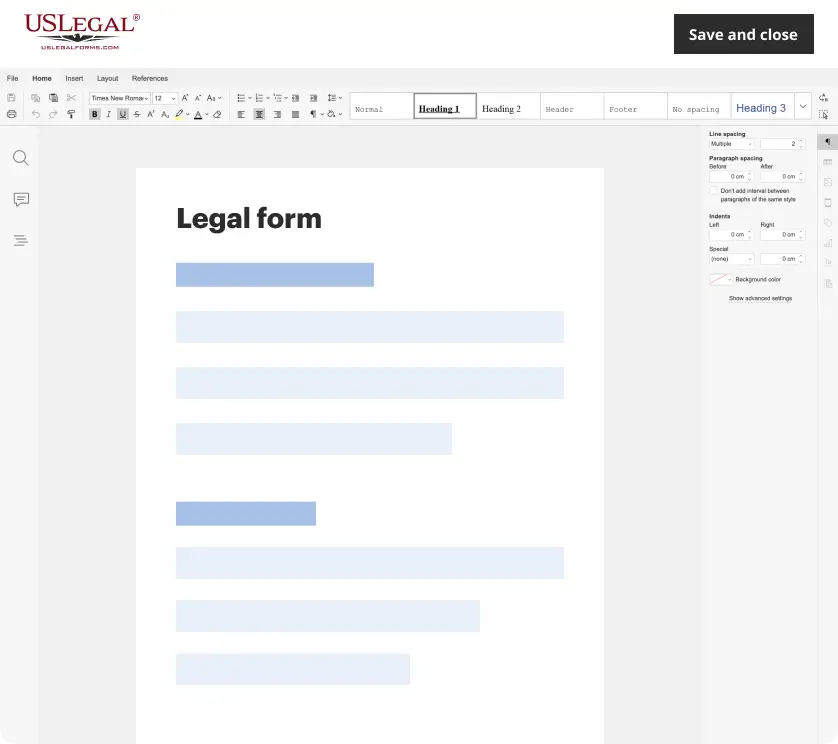
Make edits, fill in missing information, and update formatting in US Legal Forms—just like you would in MS Word.
Download a copy, print it, send it by email, or mail it via USPS—whatever works best for your next step.
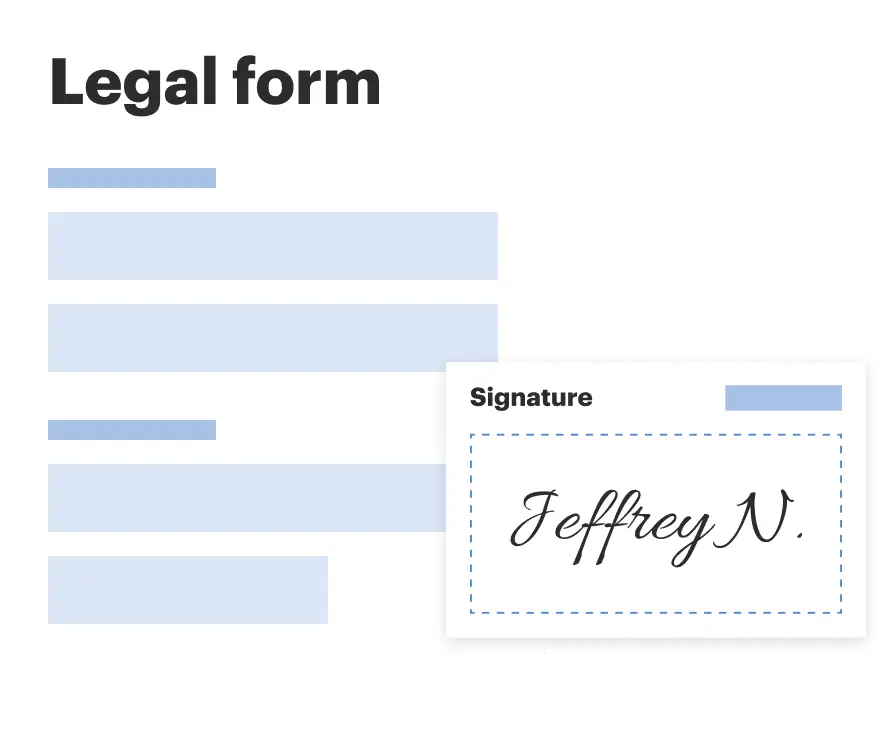
Sign and collect signatures with our SignNow integration. Send to multiple recipients, set reminders, and more. Go Premium to unlock E-Sign.
If this form requires notarization, complete it online through a secure video call—no need to meet a notary in person or wait for an appointment.
We protect your documents and personal data by following strict security and privacy standards.
Avoid these common issues
- Failing to include specific details about the damaging conditions.
- Not properly documenting the method of delivery.
- Sending the notice without a signature, which may invalidate it.
- Neglecting to reference the lease agreement in the letter.
Benefits of using this form online
- Convenient access to legal templates that are ready for download.
- Customizable fields to accurately reflect your situation.
- Reliability, as the forms are drafted by licensed attorneys.
Legal use & context
- This form reinforces the tenant's responsibility under the lease agreement.
- It serves as a protective measure for landlords, promoting tenant compliance and property upkeep.
Quick recap
- This letter serves to remind tenants of their obligation to report damages.
- Landlords can prevent further problems by addressing conditions early.
- Tenants benefit from clear communication regarding their responsibilities.
Looking for another form?
Form popularity
FAQ
A landlord can not, as a condition of renting or providing any service to a tenant, ask for consent to collect, use or disclose personal information beyond what is necessary to provide tenancy or any service section 7(2).
As per law tenant can not claim any right over the property, as you renew the agreement with him after every 11 month hence no need to worry, tenant can not do any act against you or your property.If the tenant stops paying the rent then you may file a suit for his eviction.
As a tenant in a private rented property, your tenancy agreement (which should be co-signed by you and your landlord before you move in) provides you with a number of rights: The right to live in a property that's safe and in a good state of repair.The right to be protected from unfair rent and unfair eviction.
Quiet enjoyment You are paying rent to the landlord for exclusive use as the property as your home and as such you have the right to decide who enters it and when. If a landlord enters your home without permission they are, technically, trespassing, unless they have a court order to allow them otherwise.
Although renters must abide by the Homeowners' Association rules, they still have rights under the law. The property owner must also follow their home state's Landlord-Tenant Laws that include the Fair Housing Act and Fair Credit Reporting Act.
Laws About a Renters Right to Privacy Once a tenant has possession of a property, the landlord may not interfere with this right. It's, therefore, the landlord's responsibility to ensure he or she does not enter the rental unit without proper notice (usually 24 48 hours, except in emergencies).
Landlords and Rental Complaints In Federal Housing: To report a landlord, call toll-free 1-800-685-8470 / TTY 1-800-432-2209.
The big take-away is that in most circumstances a landlord cannot enter a property without agreement from the tenant. And If the landlord ignores the law and enters the property without permission, the tenant may be able to claim damages or gain an injunction to prevent the landlord doing it again.
A landlord cannot evict a tenant without an adequately obtained eviction notice and sufficient time. A landlord cannot retaliate against a tenant for a complaint. A landlord cannot forego completing necessary repairs or force a tenant to do their own repairs.A landlord cannot remove a tenant's personal belongings.