Oklahoma Painting Contract for Contractor
What is this form?
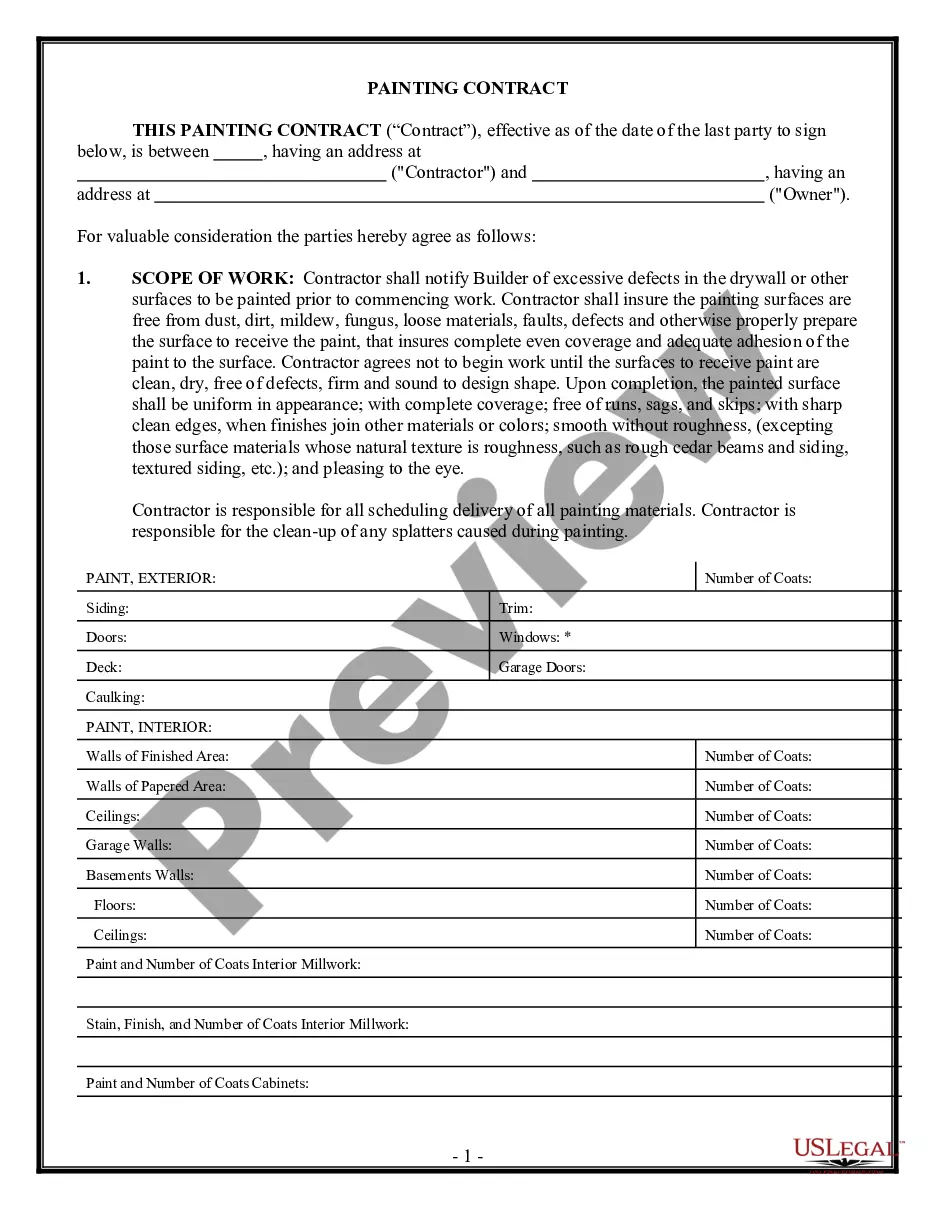
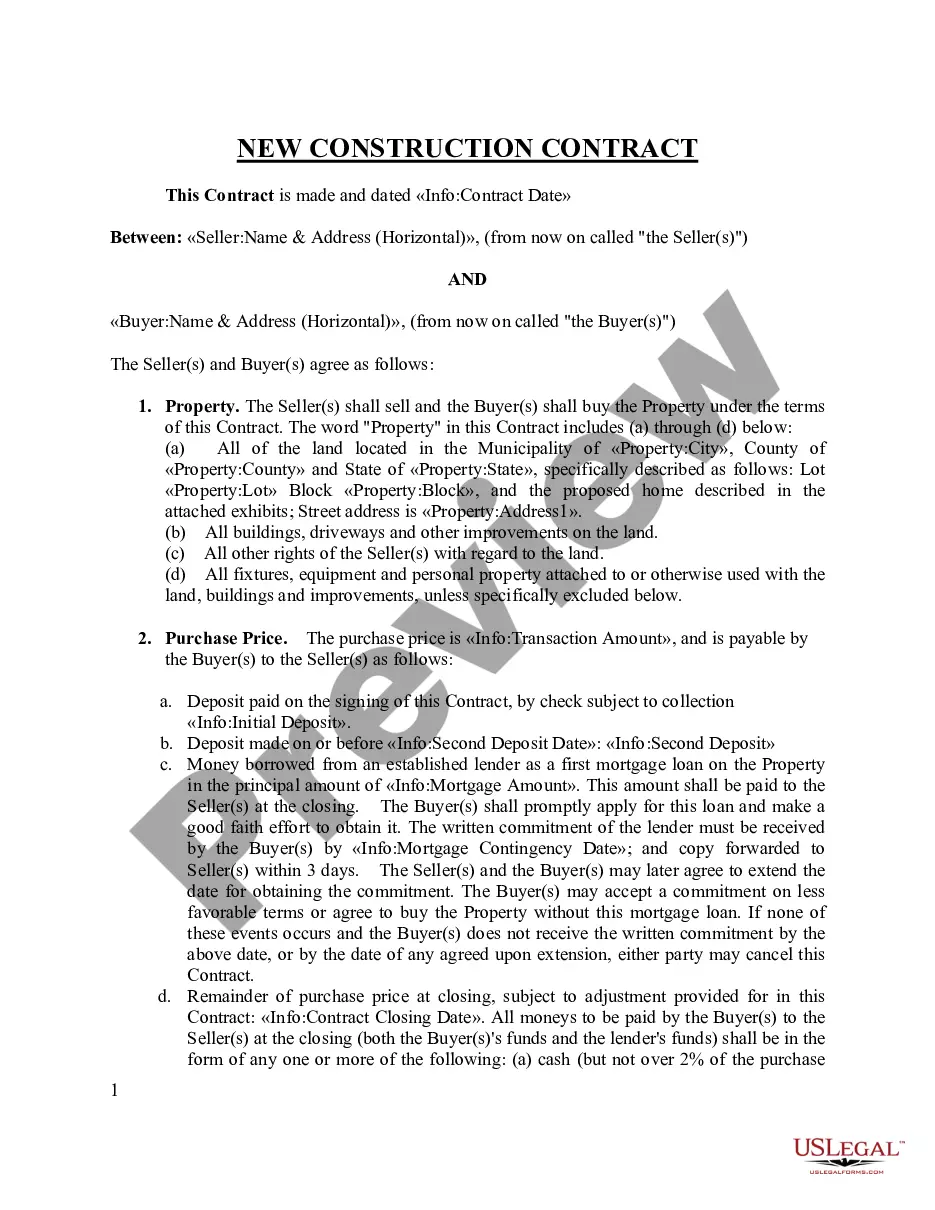
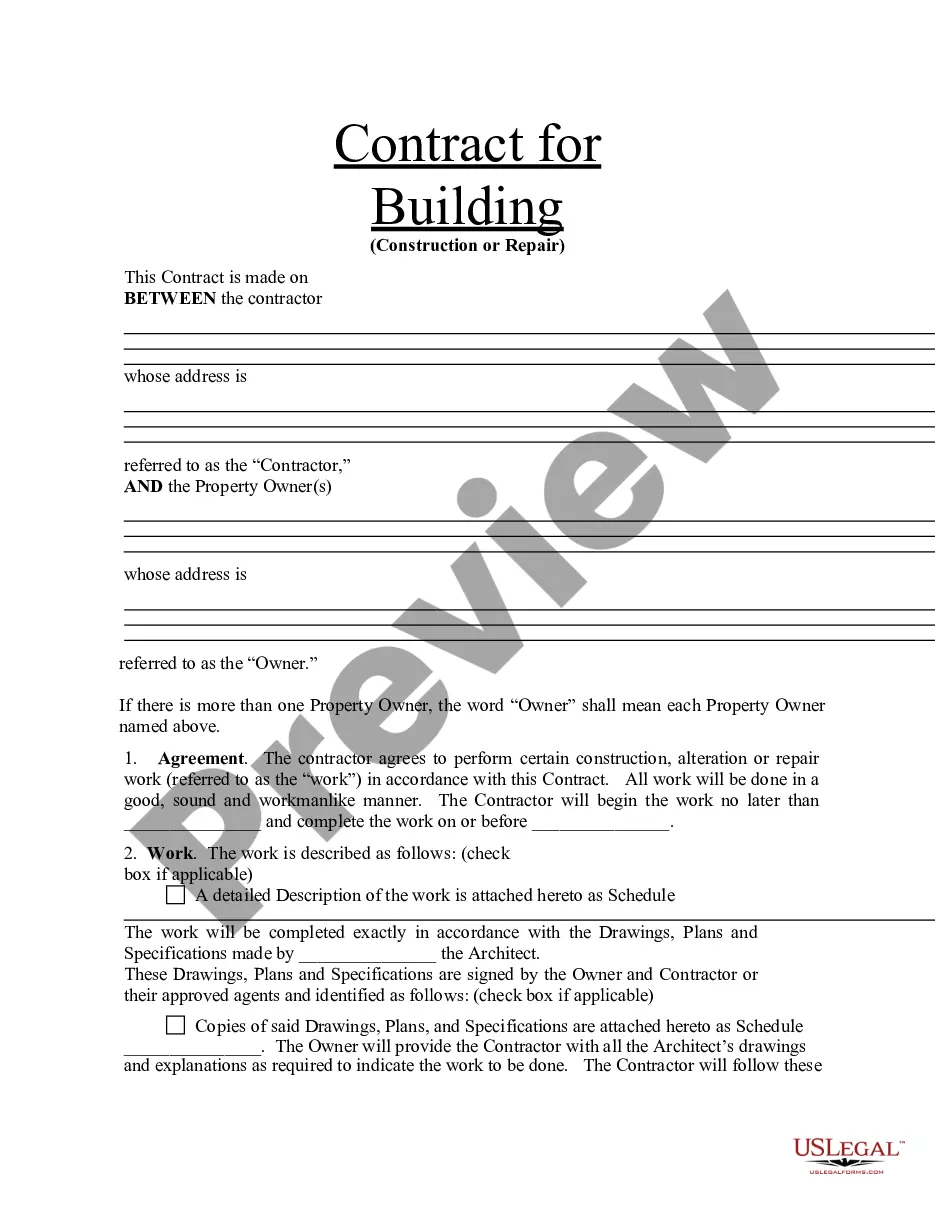
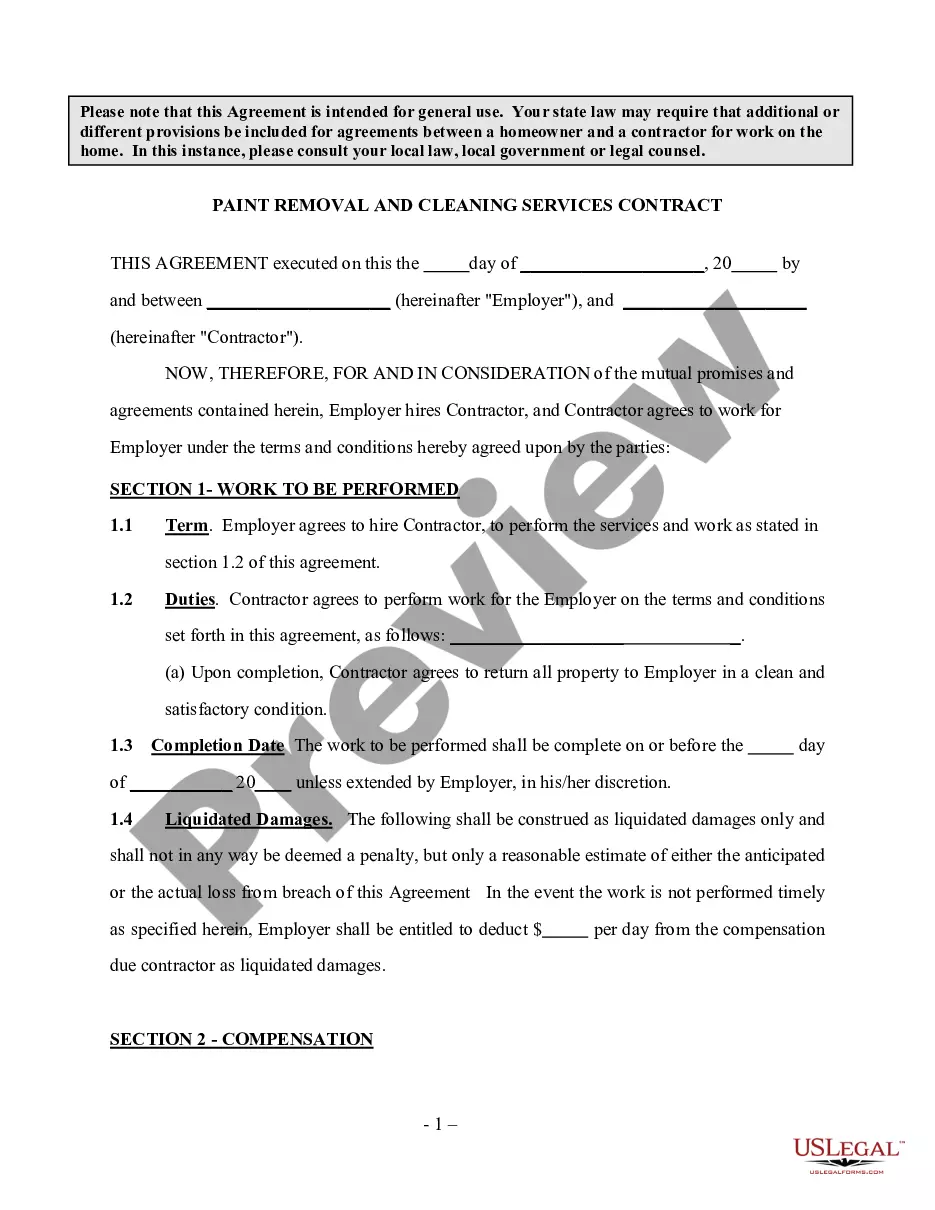
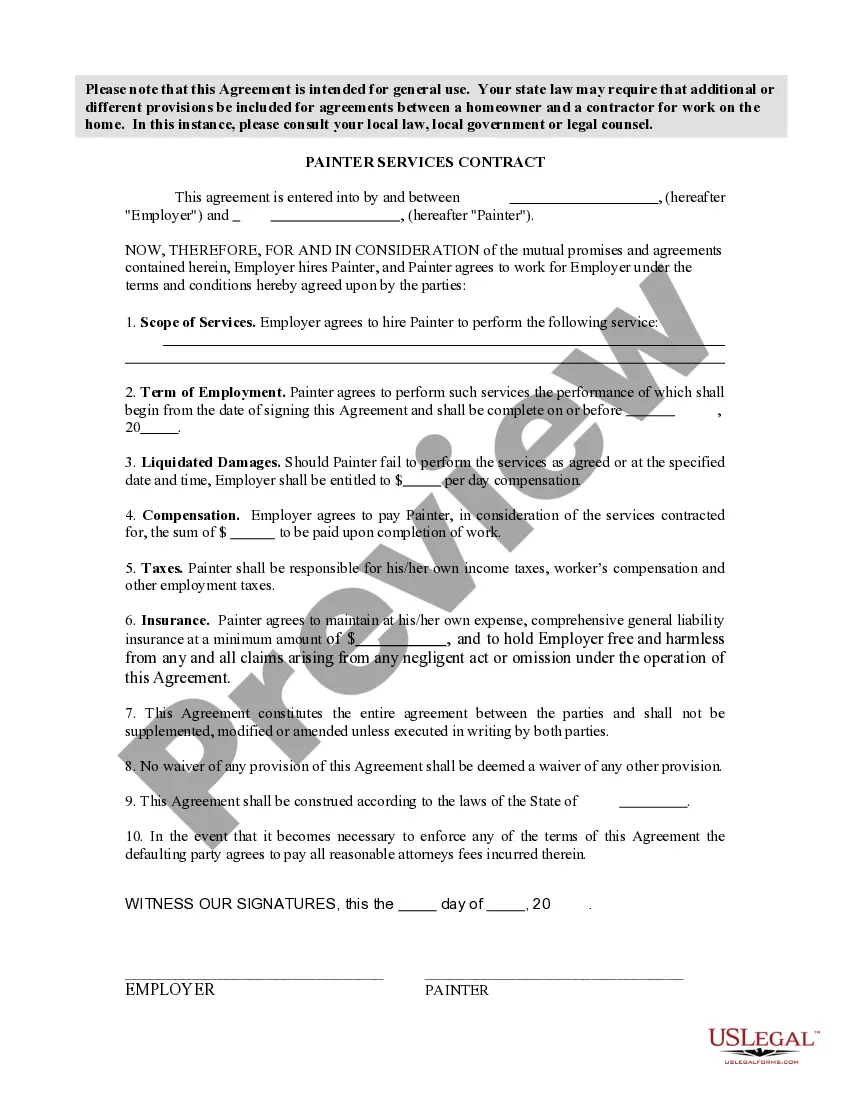
The Painting Contract for Contractor is a legal document used to formalize an agreement between painting contractors and property owners. This contract outlines the terms of work, including payment arrangements, responsibilities related to materials and cleanup, and procedures for changes in the scope of work. It is specifically designed to meet the legal requirements of the State of Oklahoma, making it distinct from similar contracts that may not adhere to state regulations.
What’s included in this form
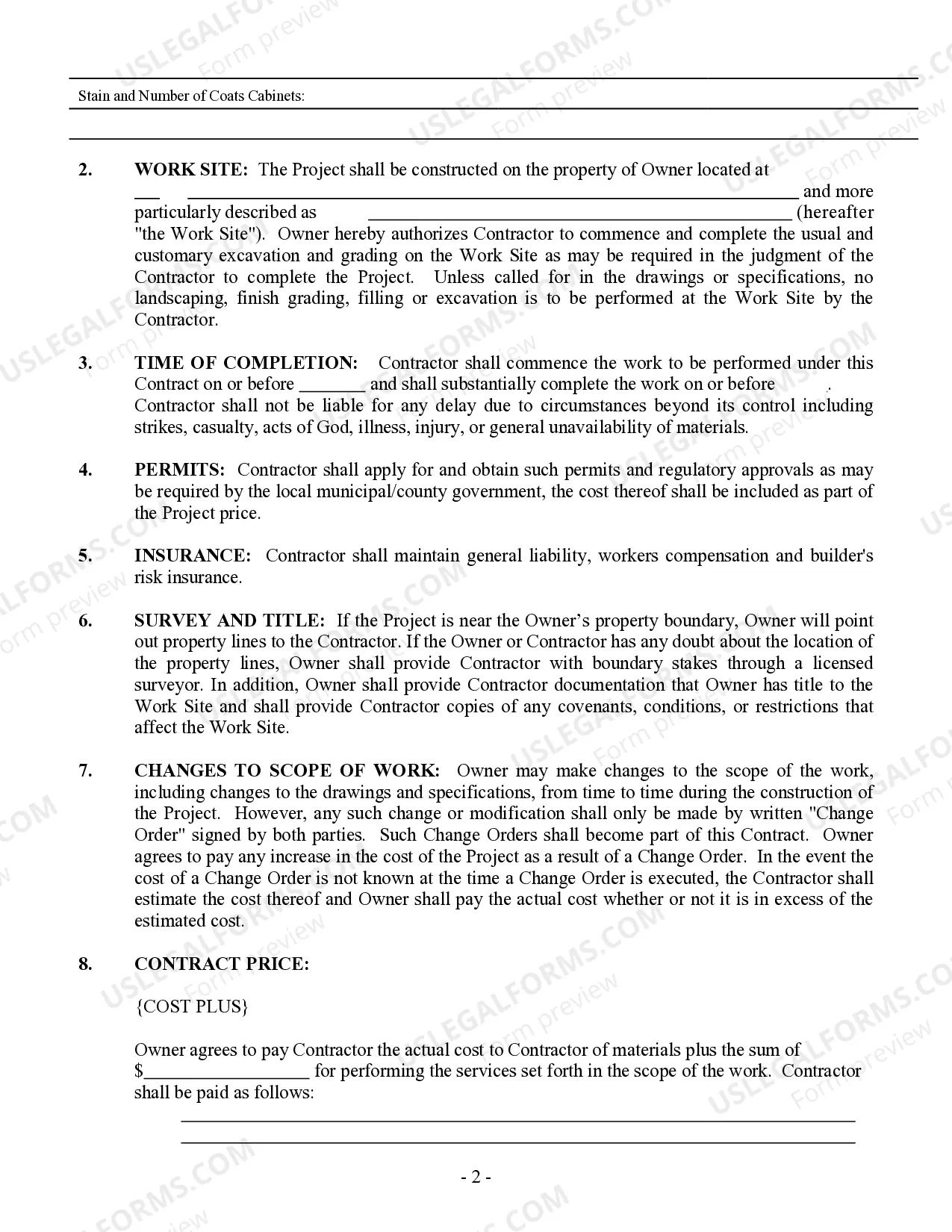
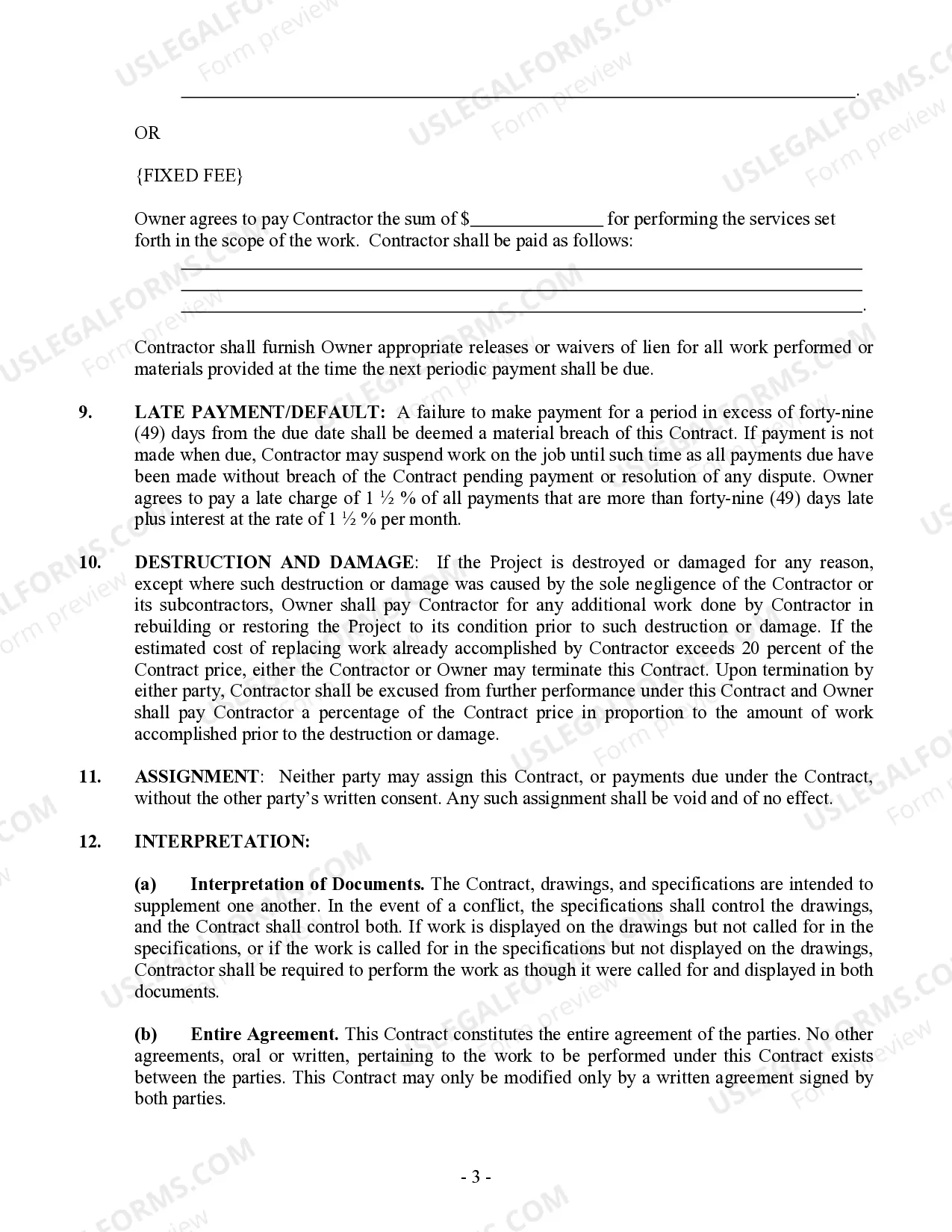
- Payment structure: outlines cost-plus or fixed fee arrangements.
- Responsibilities for scheduling and cleanup of painting materials.
- Requirements for permits and insurance to ensure legal compliance.
- Rights to change the scope of work via written change orders.
- Procedures for handling destruction or damage during the project.
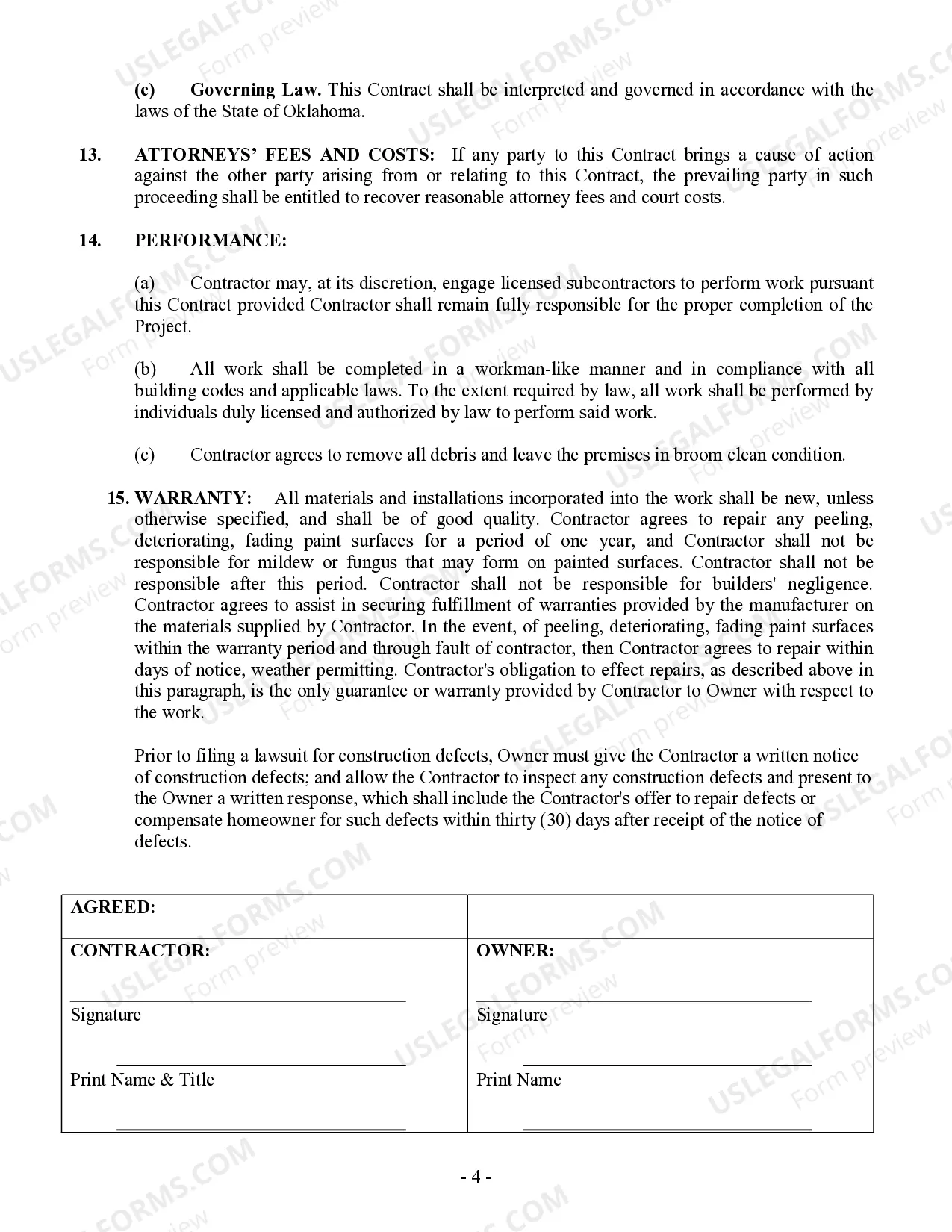
- Governing law stipulating that Oklahoma laws apply to the contract.
Situations where this form applies
This form is necessary when a property owner hires a painting contractor for a project. It is particularly useful in cases where specific payment arrangements are required, or when the scope of work might change during the project. It ensures both parties are on the same page regarding responsibilities, insurance requirements, and any necessary permits.
Intended users of this form
- Painting contractors looking to establish a clear, formal agreement with clients.
- Property owners hiring contractors for residential or commercial painting projects.
- Both parties needing legal clarity and documentation regarding terms and obligations.
How to prepare this document
- Identify the parties: Enter the names and contact information of both the contractor and the property owner.
- Specify the project details: Describe the scope of work, including locations and materials to be used.
- Agree on payment terms: Indicate whether the payment will be cost-plus or a fixed fee, and clarify any deposit requirements.
- Discuss change orders: Establish a procedure for any modifications to the scope of work that requires mutual agreement.
- Review and sign: Both parties should read the contract thoroughly and sign it to signify their agreement.
Notarization guidance
Notarization is not commonly needed for this form. However, certain documents or local rules may make it necessary. Our notarization service, powered by Notarize, allows you to finalize it securely online anytime, day or night.
Get your form ready online
Our built-in tools help you complete, sign, share, and store your documents in one place.
Make edits, fill in missing information, and update formatting in US Legal Forms—just like you would in MS Word.
Download a copy, print it, send it by email, or mail it via USPS—whatever works best for your next step.
Sign and collect signatures with our SignNow integration. Send to multiple recipients, set reminders, and more. Go Premium to unlock E-Sign.
If this form requires notarization, complete it online through a secure video call—no need to meet a notary in person or wait for an appointment.
We protect your documents and personal data by following strict security and privacy standards.

Make edits, fill in missing information, and update formatting in US Legal Forms—just like you would in MS Word.

Download a copy, print it, send it by email, or mail it via USPS—whatever works best for your next step.

Sign and collect signatures with our SignNow integration. Send to multiple recipients, set reminders, and more. Go Premium to unlock E-Sign.

If this form requires notarization, complete it online through a secure video call—no need to meet a notary in person or wait for an appointment.

We protect your documents and personal data by following strict security and privacy standards.
Avoid these common issues
- Not detailing the scope of work sufficiently, leading to misunderstandings.
- Failing to specify payment terms clearly, which can result in disputes later.
- Overlooking necessary permits that could delay the project.
- Neglecting to document change orders properly, which can affect project costs.
Advantages of online completion
- Convenience: Download and complete the form at your own pace without the need for a physical meeting.
- Editability: Customize the contract terms as needed to suit your specific project requirements.
- Reliability: Access professionally drafted legal forms that meet state regulations, ensuring compliance.
Looking for another form?


Form popularity
FAQ
Identifying/Contact Information. Title and Description of the Project. Projected Timeline and Completion Date. Cost Estimate and Payment Schedule. Stop Work Clause and Stop Payment Clause. Act of God Clause. Change Order Agreement. Warranty.
What should be in a Painting Contract?Generally, the contract should contain the name of the customer, the name of the person or business doing the work as well as the address of each. Additionally, the contract should also have a full description of the work to be completed as well as a breakdown of costs.
Name of contractor and contact information. Name of homeowner and contact information. Describe property in legal terms. List attachments to the contract. The cost. Failure of homeowner to obtain financing. Description of the work and the completion date. Right to stop the project.
Timeframe or key milestones of the project; hours of work; deliverables of the project; and. way the business will pay the contractor for their services.
Painting contractors are usually small outfits, ranging from the solo painting pro to the small company of 15-20 painters. They mainly focus on painting, but some specialize in other areas like staining, wallpapering, and drywall repair.
Do you have a list of customers who would be willing to verify the quality of your work? Do you cover all of your employees with Workman's Compensation Insurance? How will my house be prepped for painting? What grade of paint will be used? How many painters will be on the job and how long will the job take?
The client and contractor's name and information. An area describing the scope of work, which will detail all of the services that will be provided. The cost of both the supplies as well as the labor to paint the house.
Get it in writing. Keep it simple. Deal with the right person. Identify each party correctly. Spell out all of the details. Specify payment obligations. Agree on circumstances that terminate the contract. Agree on a way to resolve disputes.