Ohio Last Will for a Widow or Widower with no Children
Understanding this form
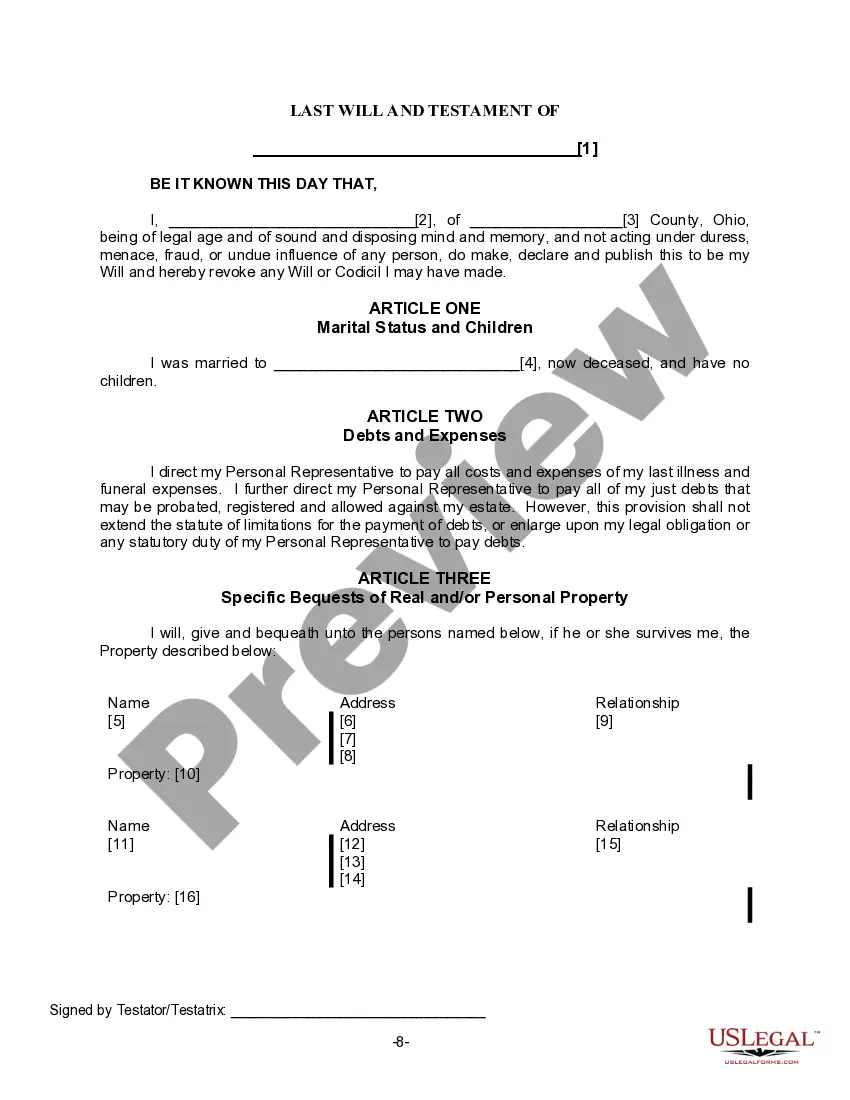
This Last Will for a Widow or Widower with No Children allows individuals without children to legally dictate the distribution of their assets after death. It is specifically designed for those who have lost a spouse and want to ensure their wishes are clearly stated regarding who will inherit their property. This Will differs from other last wills by focusing on the unique situation of a widow or widower, particularly regarding the appointment of an executor and specific bequests.
What’s included in this form
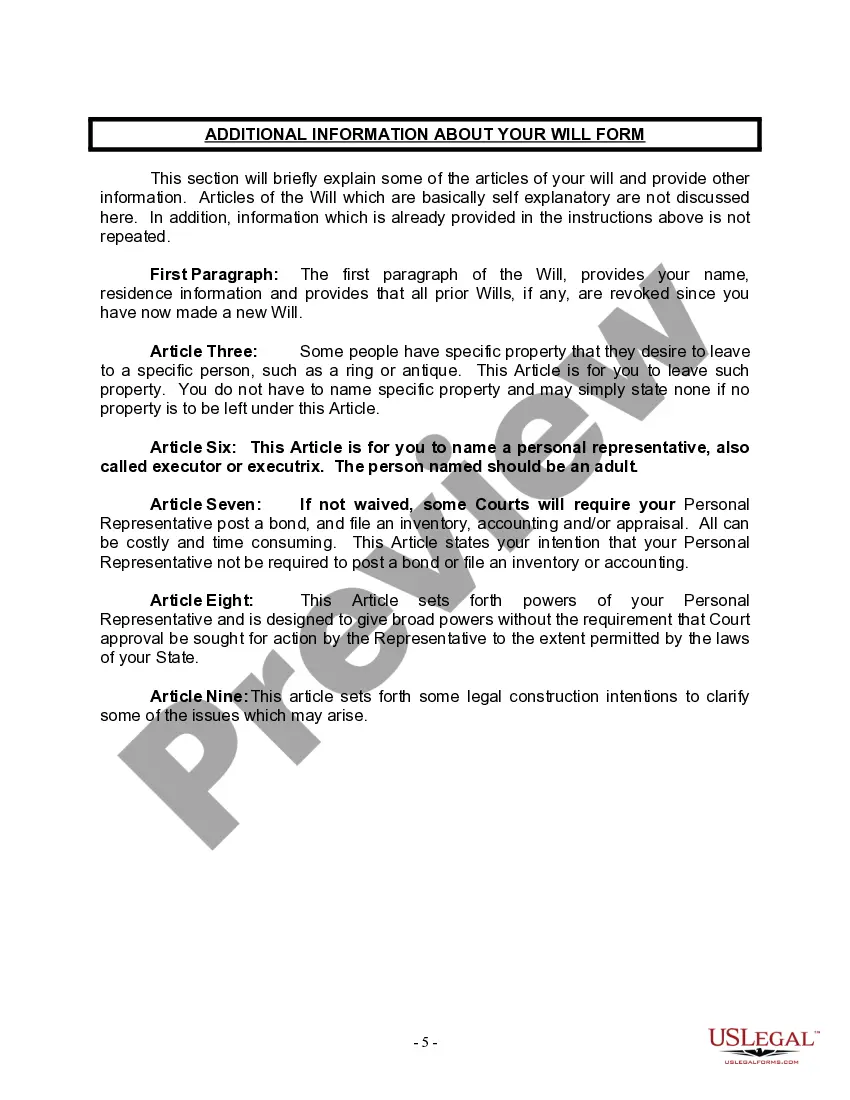
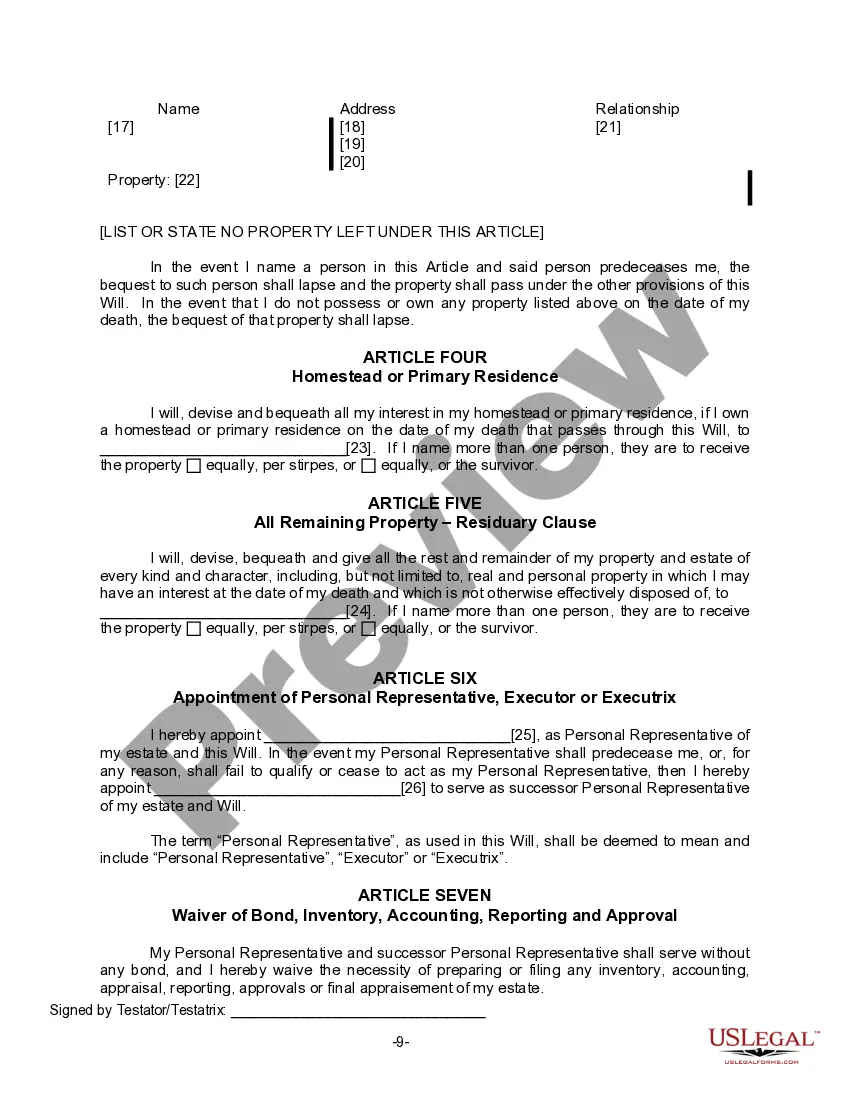
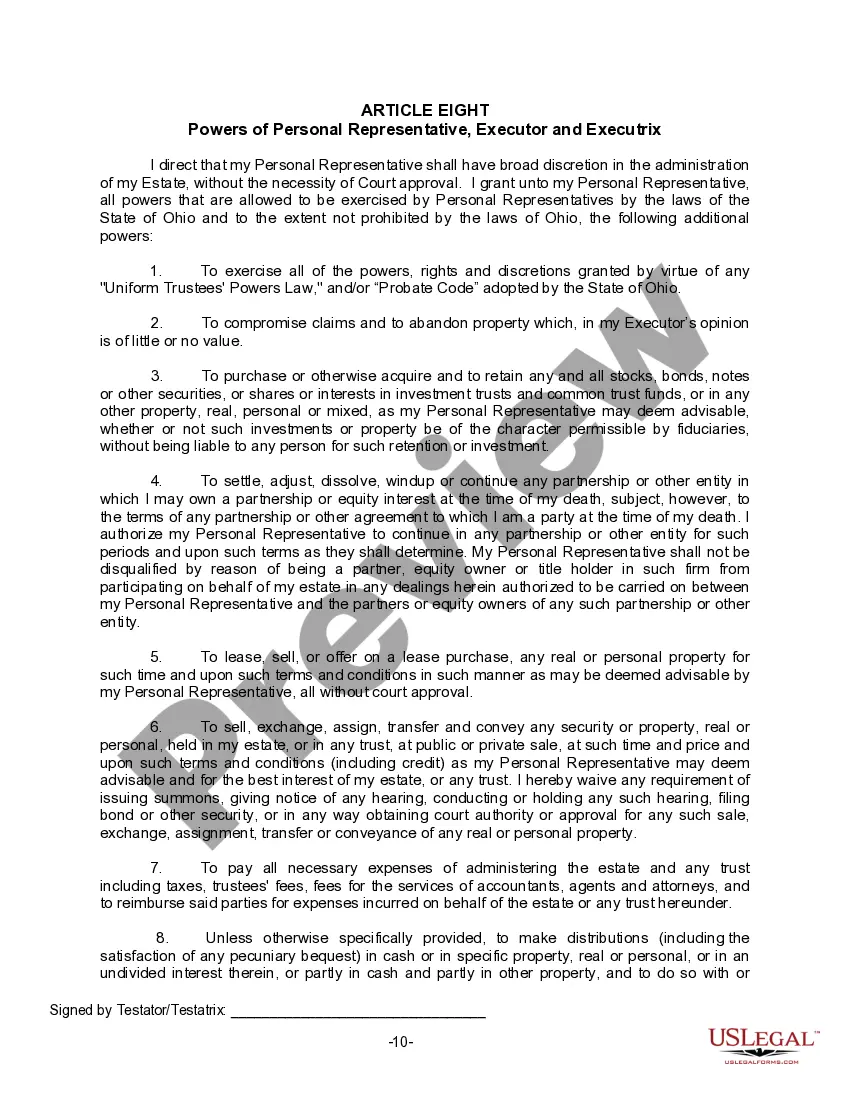
- Appointment of a personal representative or executor to manage the estate.
- Specification of beneficiaries who will receive the estate's assets.
- Provisions for any specific property bequests to named individuals.
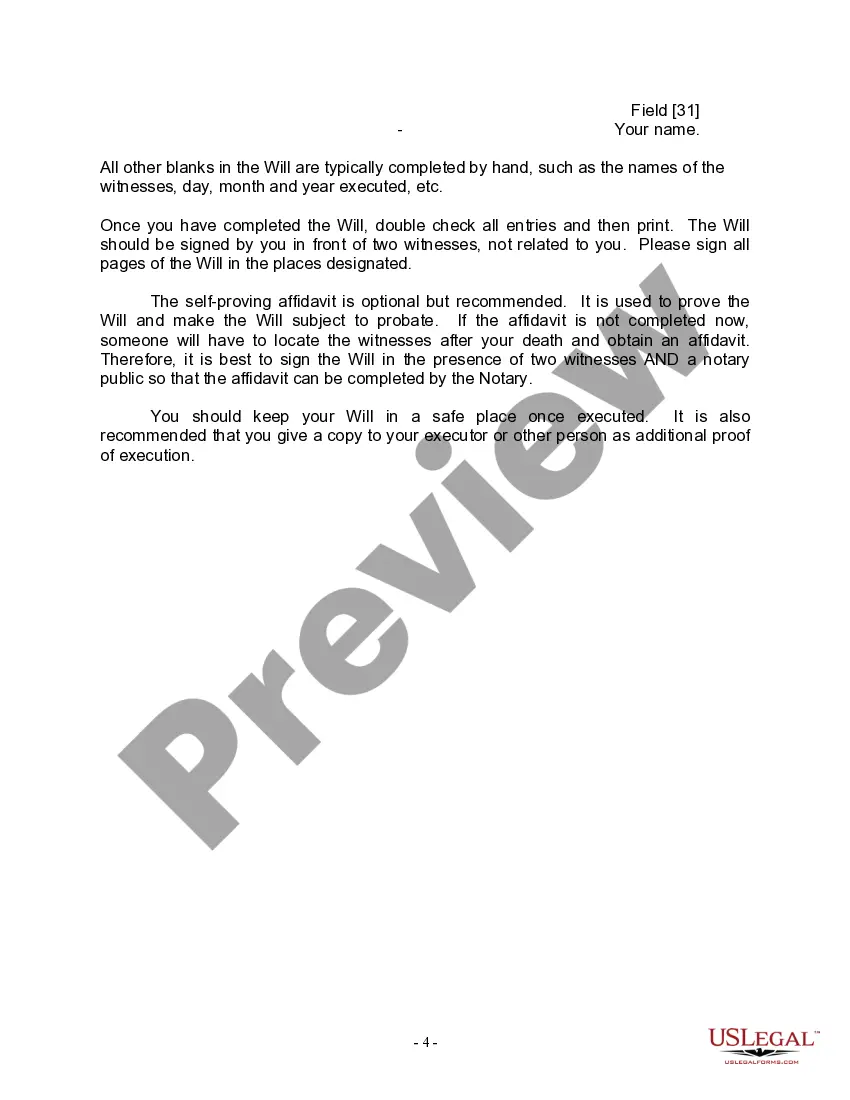
- Instructions for signing the Will in front of two unrelated witnesses.
- Inclusion of a self-proving affidavit to simplify the probate process.



Common use cases
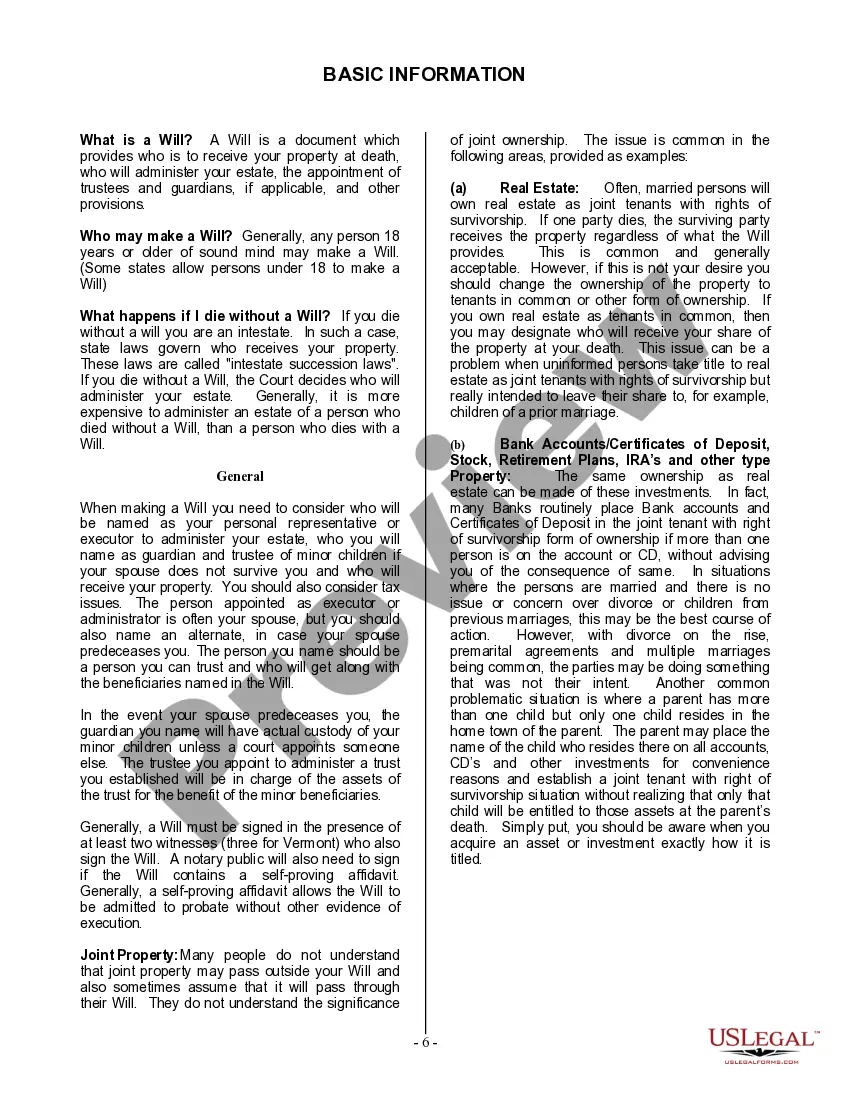
This form is needed when a widow or widower without children wishes to arrange their estate after death. It is suitable in situations where the individual wants to specify who will inherit their property, name a personal representative, and ensure any debts and funeral expenses are addressed. This Will helps eliminate ambiguity and provides clear directions for asset distribution.
Who can use this document
Eligibility for this form includes:
- Widows or widowers who have lost their spouse.
- Individuals without children who wish to outline their estate distribution.
- Anyone seeking to create a legally binding document to clarify their wishes.
How to complete this form
To complete this form, follow these steps:
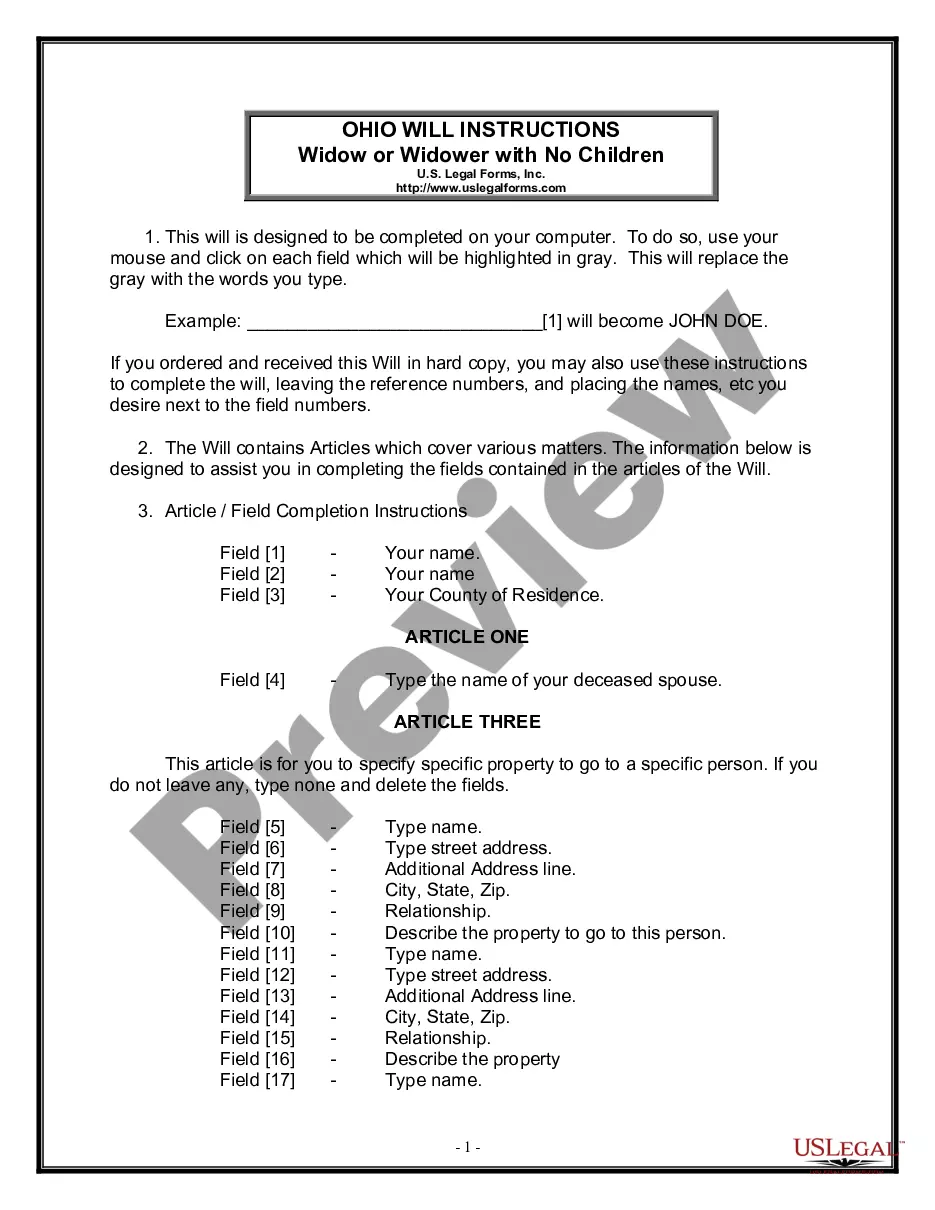
- Enter your name and county of residence.
- Specify the name of your deceased spouse.
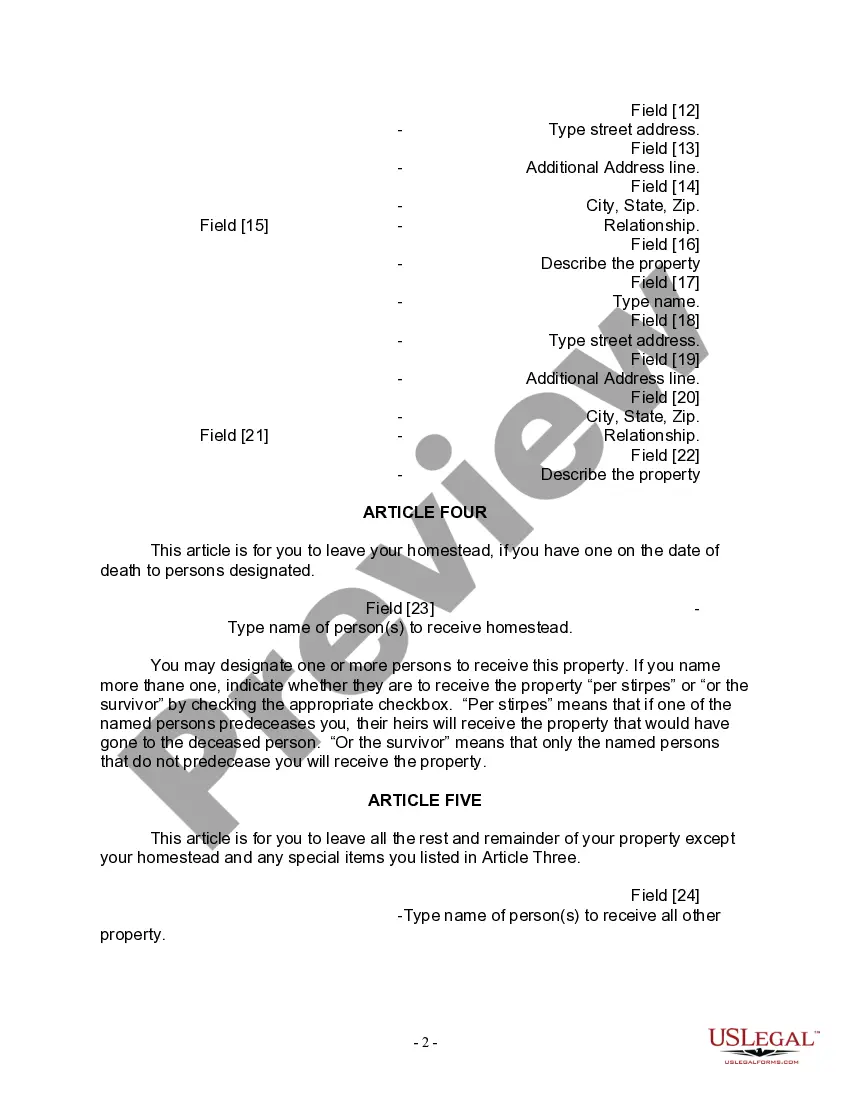
- Designate beneficiaries by providing their names and relationships to you.
- Indicate any specific items or property you wish to leave to particular individuals.
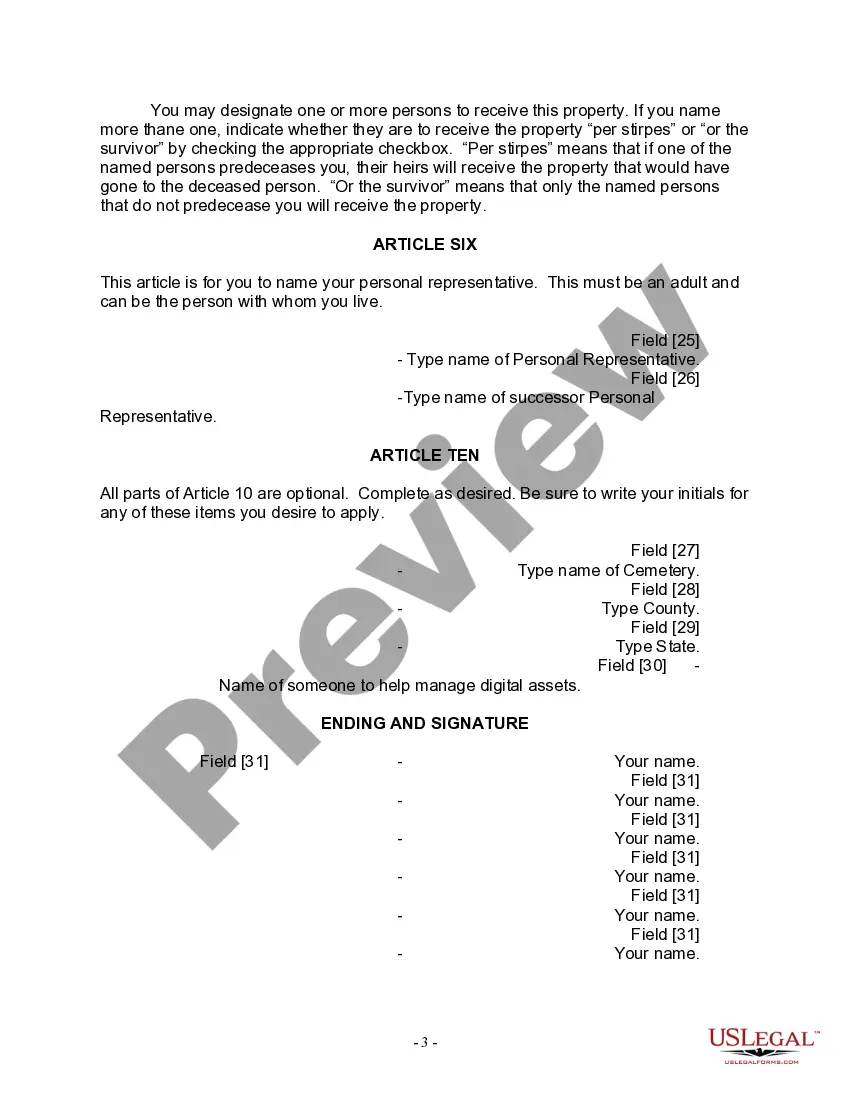
- Sign the Will in the presence of two witnesses, and consider including a notary for a self-proving affidavit.
Notarization guidance
This form must be notarized to be legally valid. It includes provisions for a self-proving affidavit, which simplifies the probate process by confirming the Will's validity. You can easily complete online notarization with US Legal Forms; it offers a secure video call option available 24/7, providing legal equivalence without the need for travel.
Get your form ready online
Our built-in tools help you complete, sign, share, and store your documents in one place.
Make edits, fill in missing information, and update formatting in US Legal Forms—just like you would in MS Word.
Download a copy, print it, send it by email, or mail it via USPS—whatever works best for your next step.
Sign and collect signatures with our SignNow integration. Send to multiple recipients, set reminders, and more. Go Premium to unlock E-Sign.
If this form requires notarization, complete it online through a secure video call—no need to meet a notary in person or wait for an appointment.
We protect your documents and personal data by following strict security and privacy standards.

Make edits, fill in missing information, and update formatting in US Legal Forms—just like you would in MS Word.

Download a copy, print it, send it by email, or mail it via USPS—whatever works best for your next step.

Sign and collect signatures with our SignNow integration. Send to multiple recipients, set reminders, and more. Go Premium to unlock E-Sign.

If this form requires notarization, complete it online through a secure video call—no need to meet a notary in person or wait for an appointment.

We protect your documents and personal data by following strict security and privacy standards.
Common mistakes
- Failing to have the Will signed in front of two unrelated witnesses.
- Not including a self-proving affidavit if desired, which can complicate the probate process.
- Overlooking state-specific requirements that may affect the validity of the will.
Advantages of online completion
- Convenience of creating a legally binding document online, which you can edit and download at your convenience.
- Access to professionally drafted forms by licensed attorneys, ensuring legal compliance.
- Immediate availability of the form for customization and printing.
Quick recap
- This Last Will is specifically designed for widows and widowers with no children.
- It allows for the clear designation of assets and a personal representative.
- Legal compliance is crucial; this form may require notarization based on local laws.
- Proper execution is essential to avoid disputes during the probate process.
Looking for another form?

Form popularity
FAQ
Probate is the legal process of administering certain property of a person who has died. Probate will be required any time there is property owned in the sole name of the deceased person, also known as the decedent.Probate is required regardless of the value of the estate.
Ohio Probate & Wills: Rights of Disinherited Spouse If your spouse dies, and leaves you out of his or her will, the law says you are "disinherited". Fortunately, Ohio law provides protections for a spouse disinherited in a will. You can choose to take under the Will, or elect against the Will in probate court.
In Ohio, you can make a living trust to avoid probate for virtually any asset you ownreal estate, bank accounts, vehicles, and so on. You need to create a trust document (it's similar to a will), naming someone to take over as trustee after your death (called a successor trustee).
Is there a time limit on applying for probate? Though there is no time limit on the probate application itself, there are aspects of the process which do have time scales. Inheritance tax for example, is a very important part of attaining probate in the first place and must be done within 6 months of date of death.
Most straightforward probate cases can be wrapped up within about nine months after the executor or administrator is appointed. Creditors have six months to file a claim, so probate must last at least that long. If the estate owes state or federal estate tax, it's likely to take a year or more.
No. You can make your own will in Ohio, using Nolo's do-it-yourself will software or online will programs. However, you may want to consult a lawyer in some situations. For example, if you think that your will might be contested or if you want to disinherit your spouse, you should talk with an attorney.
A widow's will must meet her state's standards in order to be considered legally valid. Typically, this means the will must be in writing and signed. States generally require the signatures of two neutral witnesses who watch the widow sign the document, and a notary may also be required.
Summary Release from Administration Avoids probate entirely if either: The estate's worth less than $45,000 and the surviving spouse is the sole heir. The estate's worth less than $5,000 and/or the decedent's final expenses total no more than $5,000.
A handwritten will, sometimes referred to as a holographic will, is lawful in a majority of states, including Ohio.As with typewritten wills, the will must be signed by the person making the will (the testator) or by some other person in the testator's conscious presence and at the testator's express direction.