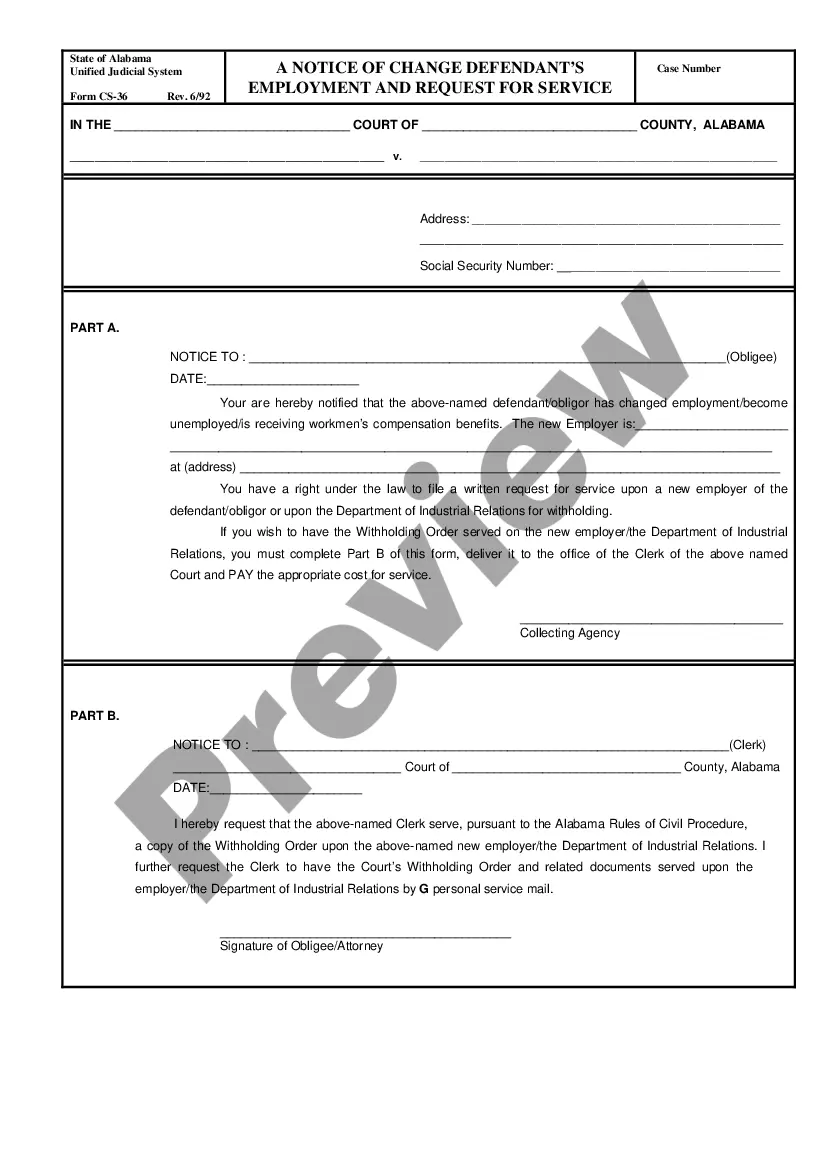
Ohio Limited Power of Attorney where you Specify Powers with Sample Powers Included
Understanding this form
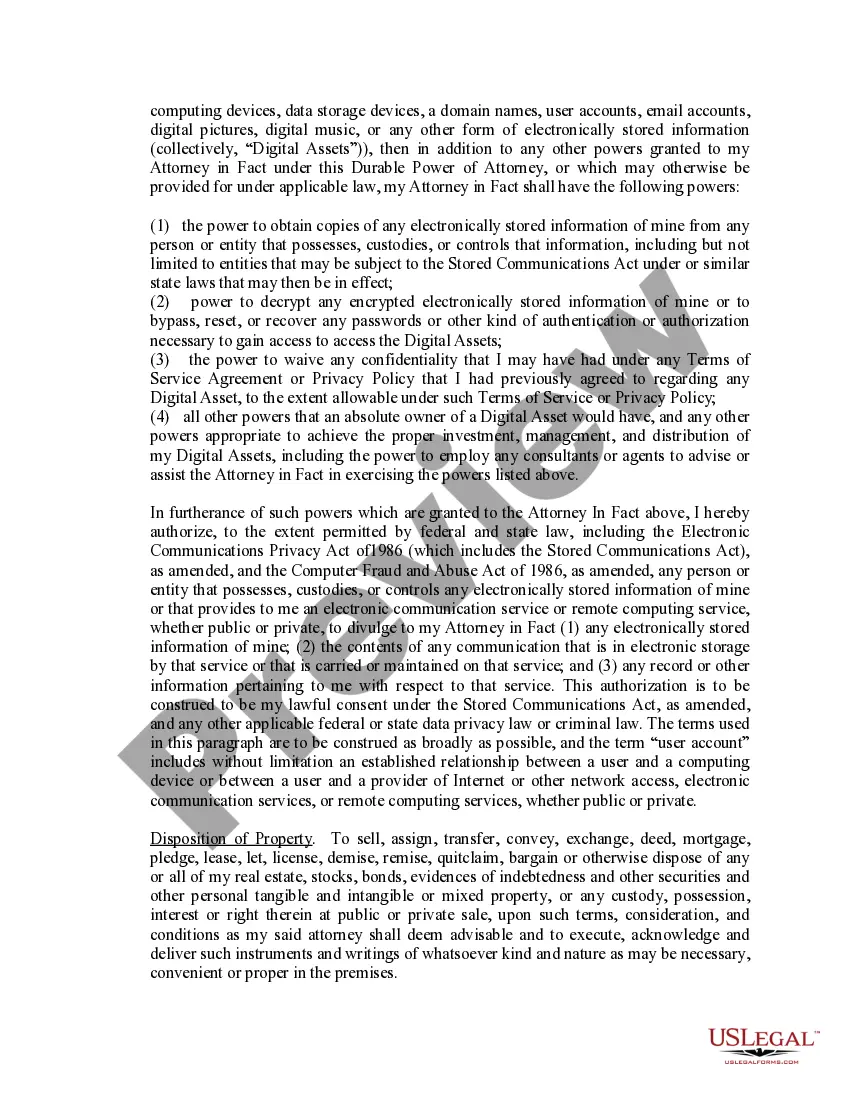
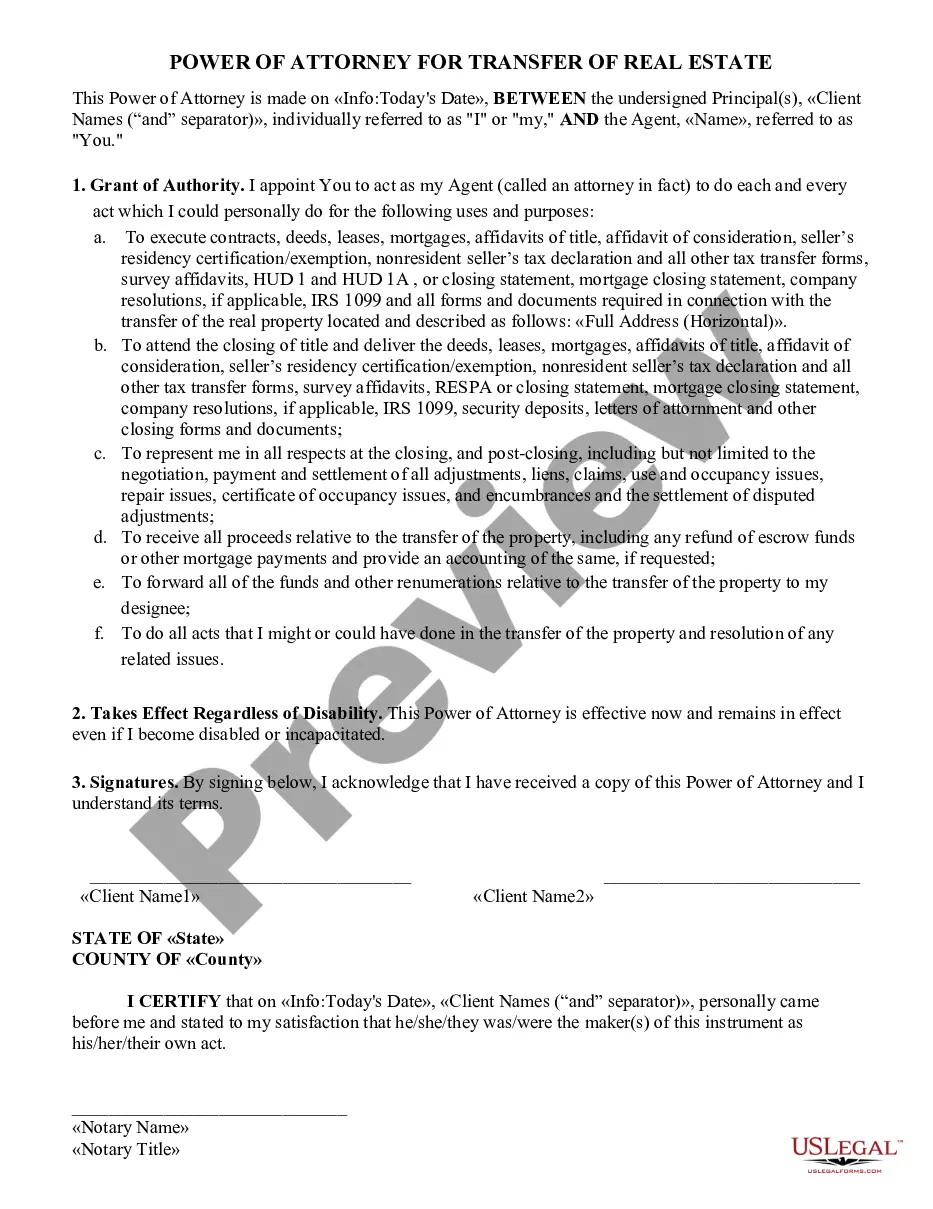
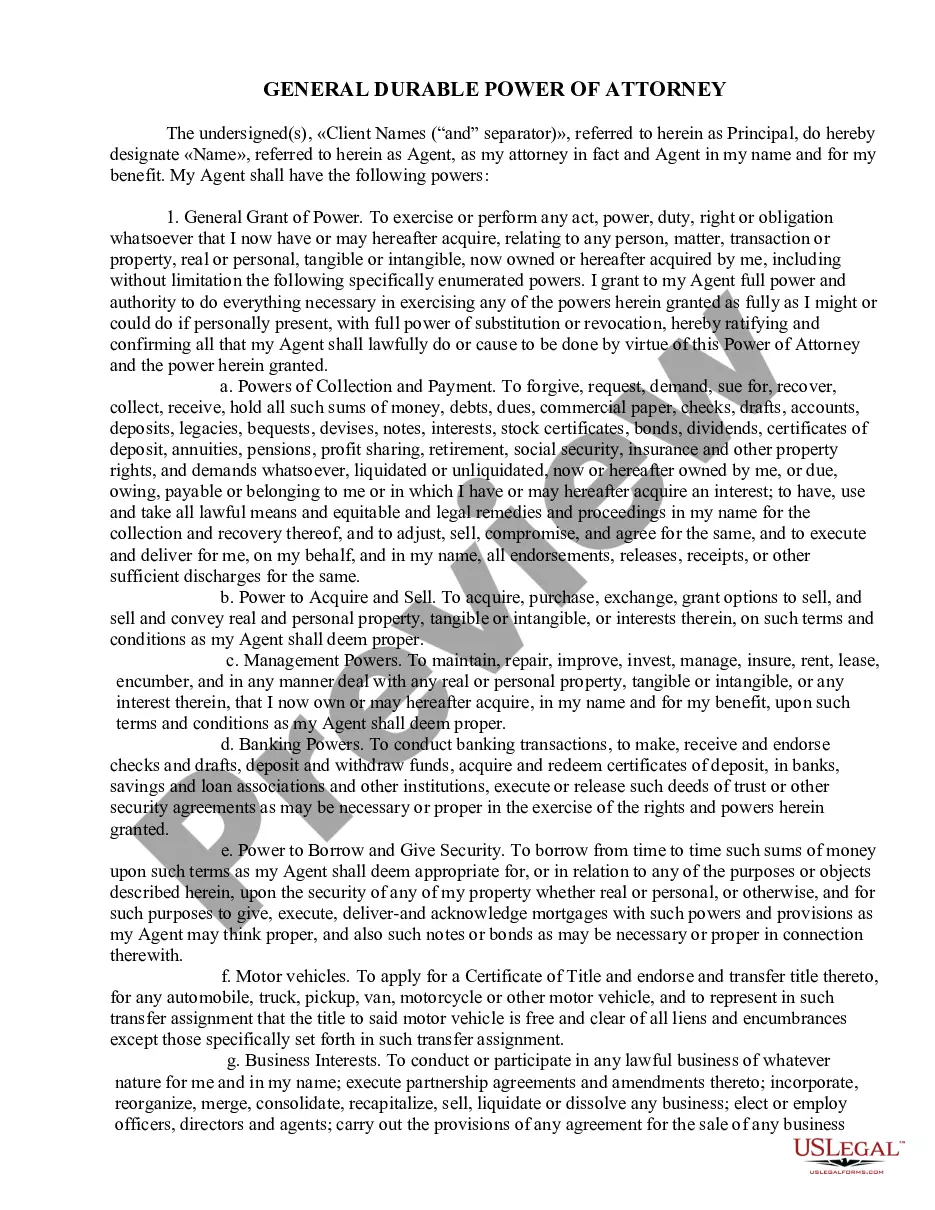
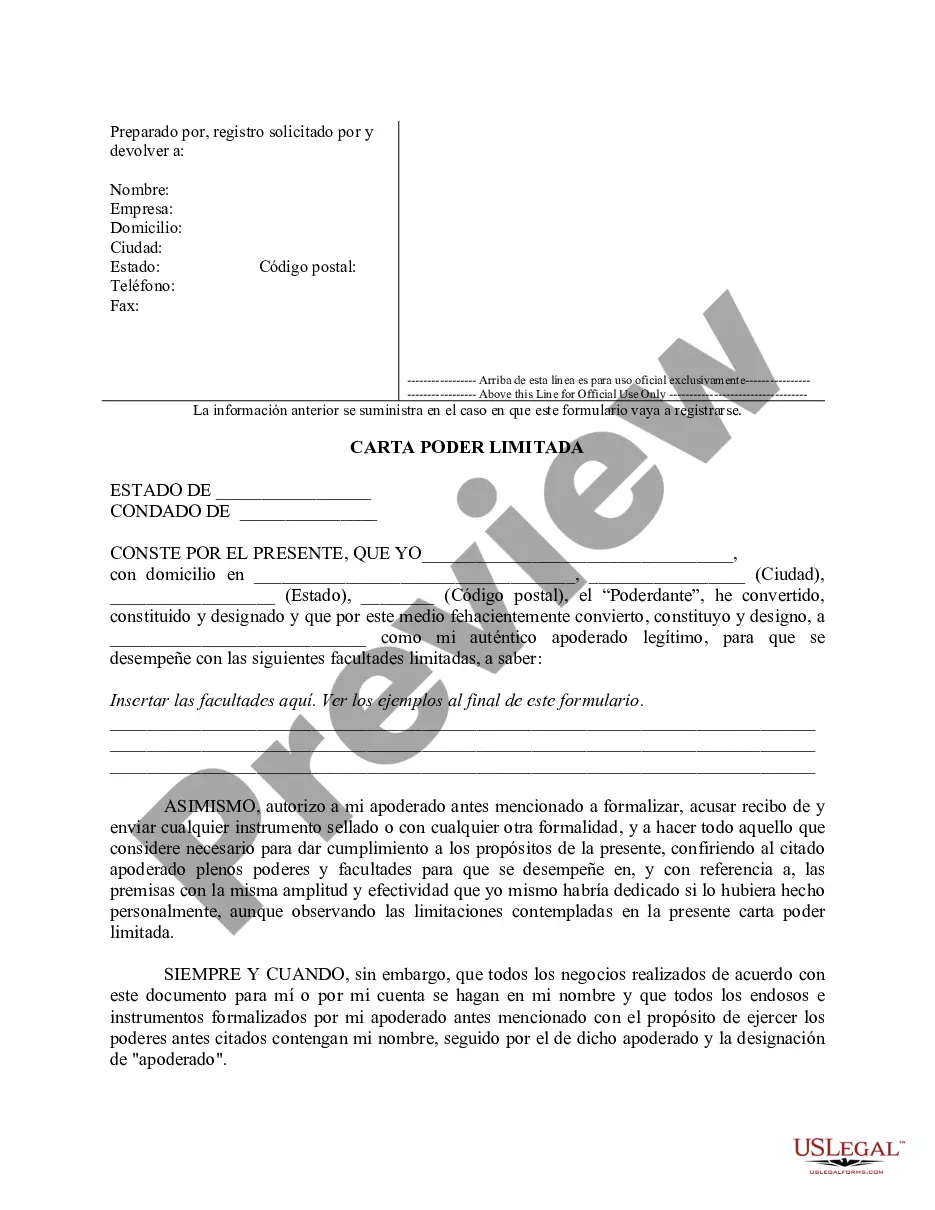
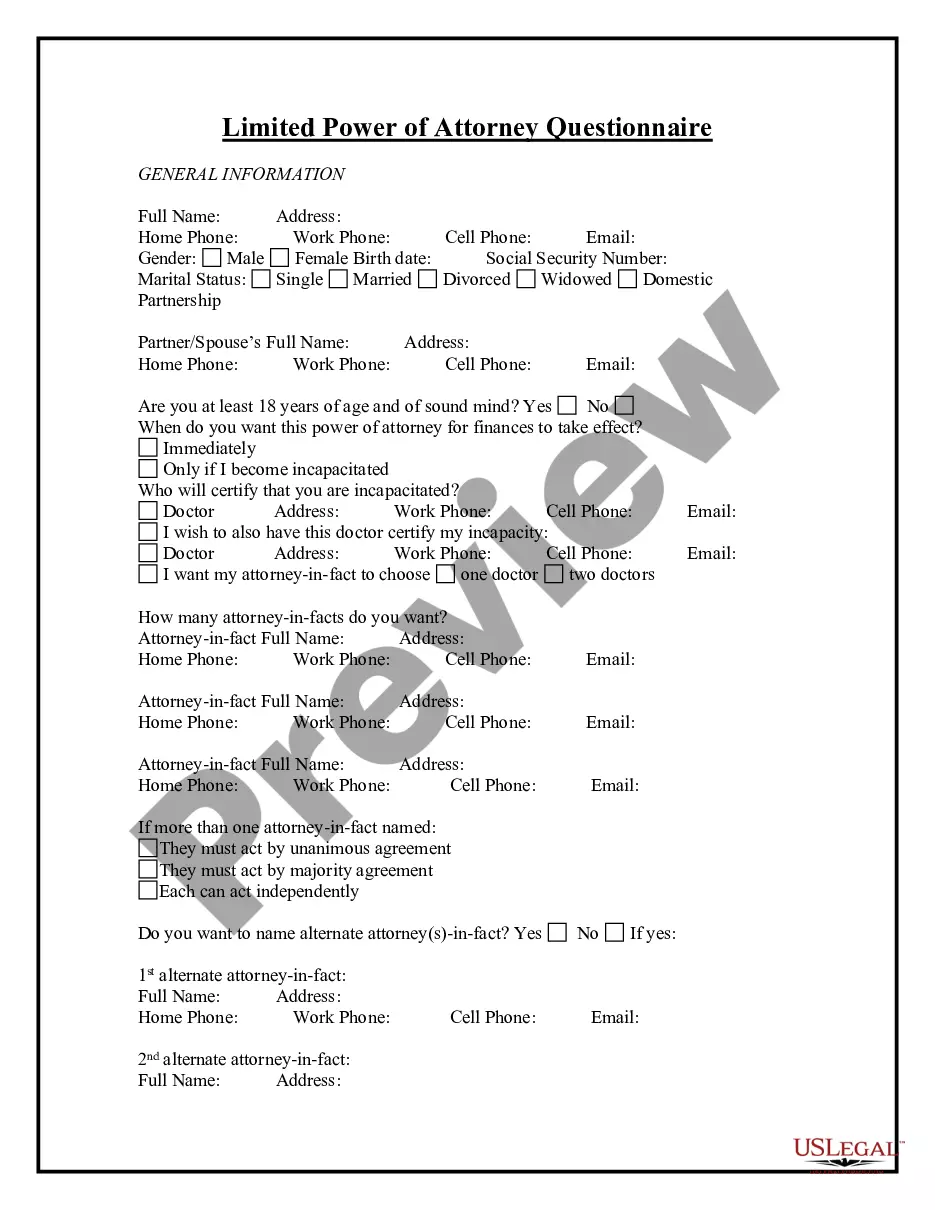
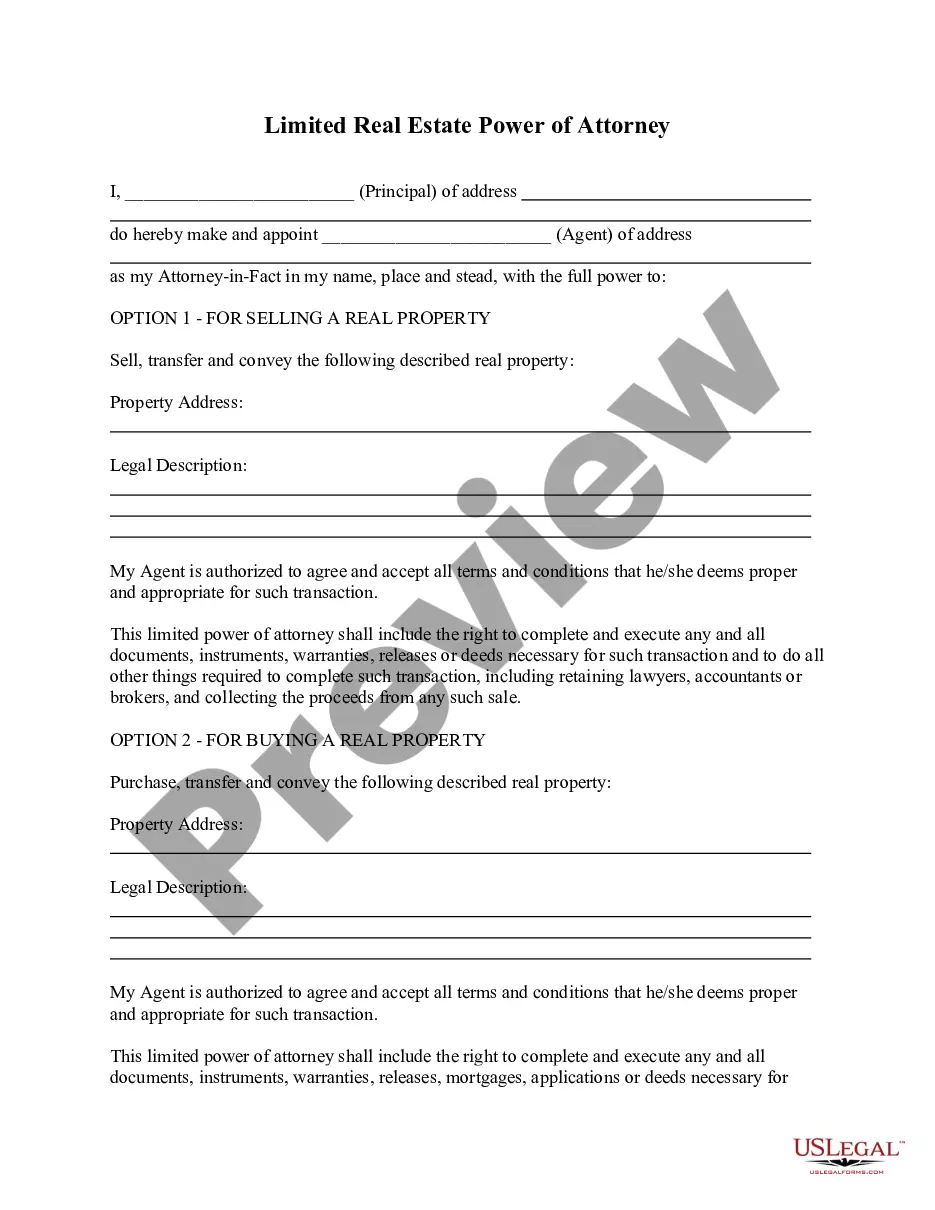
This Limited Power of Attorney allows you to specify the powers you grant to your agent in the state of Ohio. Unlike a general power of attorney, this form is designed for specific tasks or decisions, making it ideal when you want to retain control over particular aspects of your affairs. Sample powers are included for reference, but they should be modified according to your needs before finalizing the document.
Main sections of this form
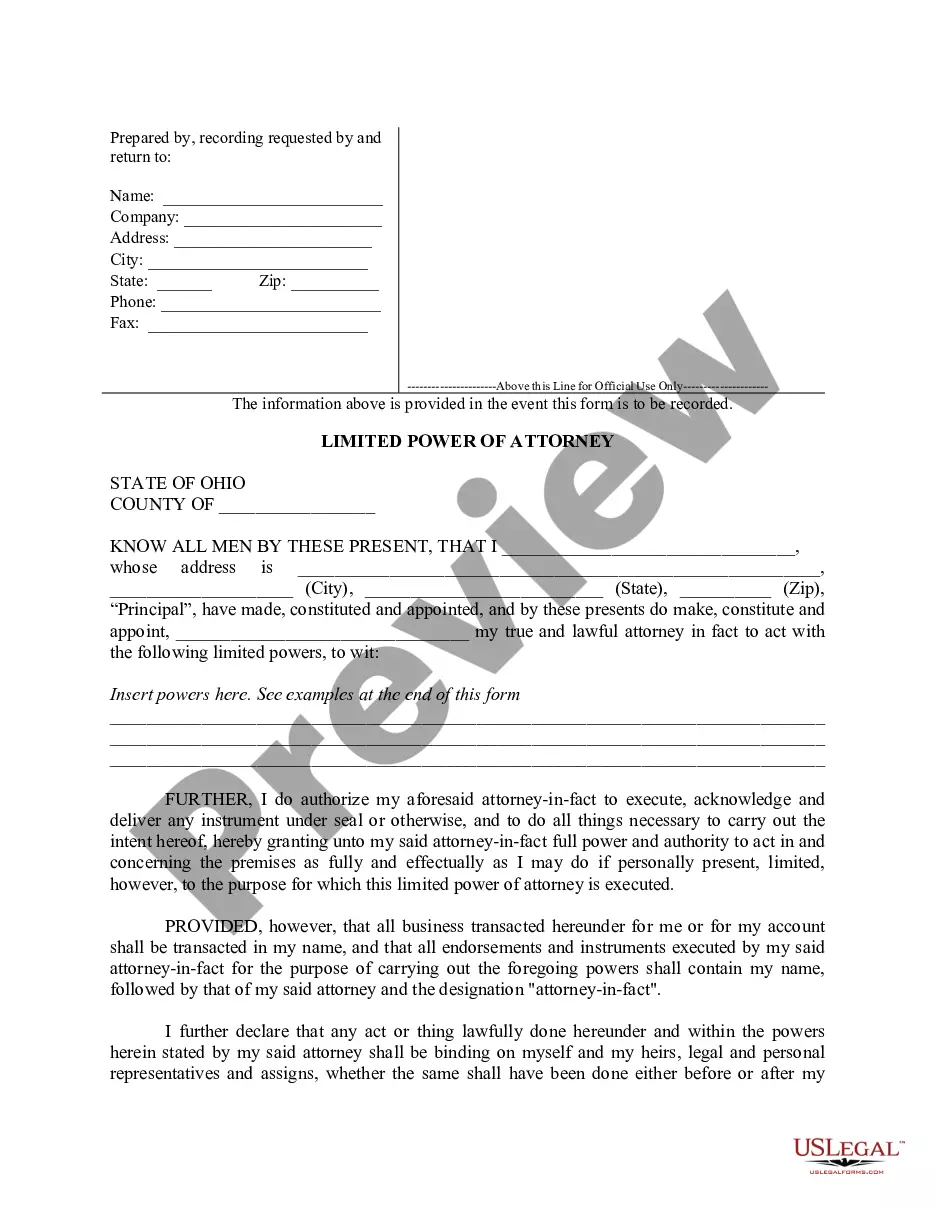
- Principal's name and address: Identifies the person granting the powers.
- Agent's name: Names the attorney-in-fact who will act on behalf of the principal.
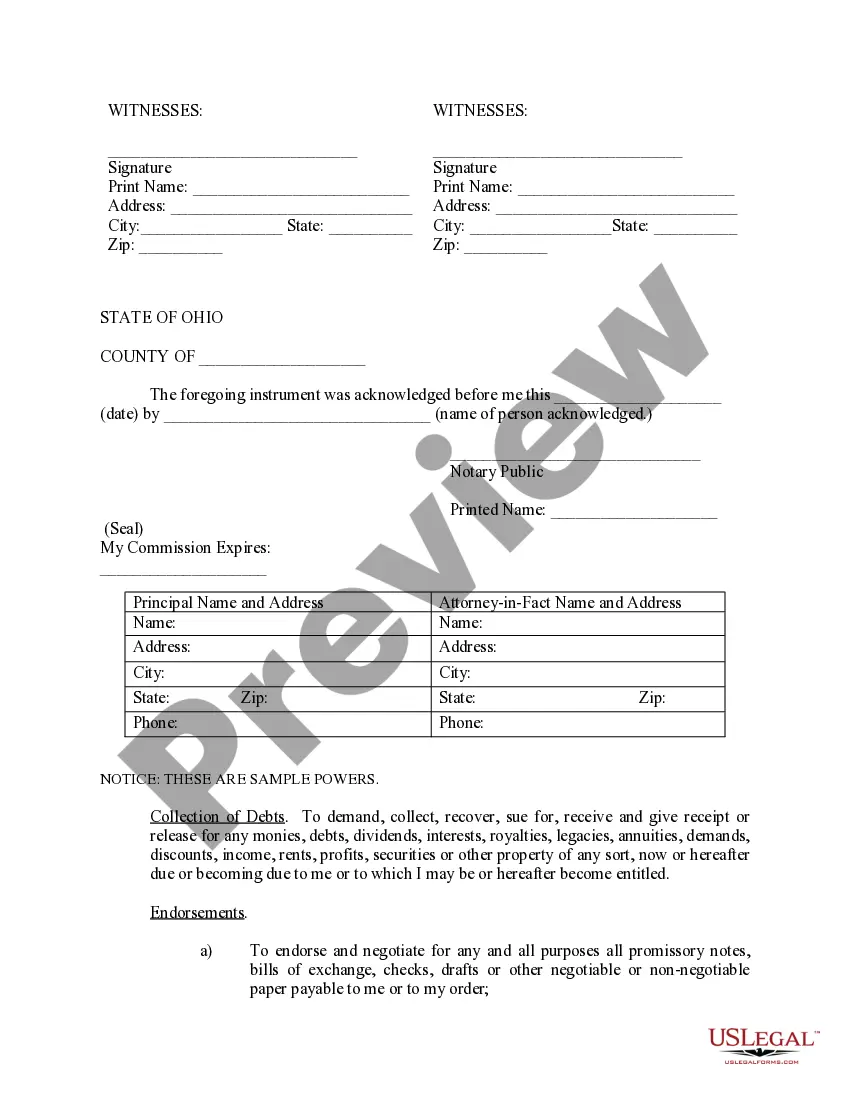
- Specified powers: A section to detail the specific powers granted, including sample powers.
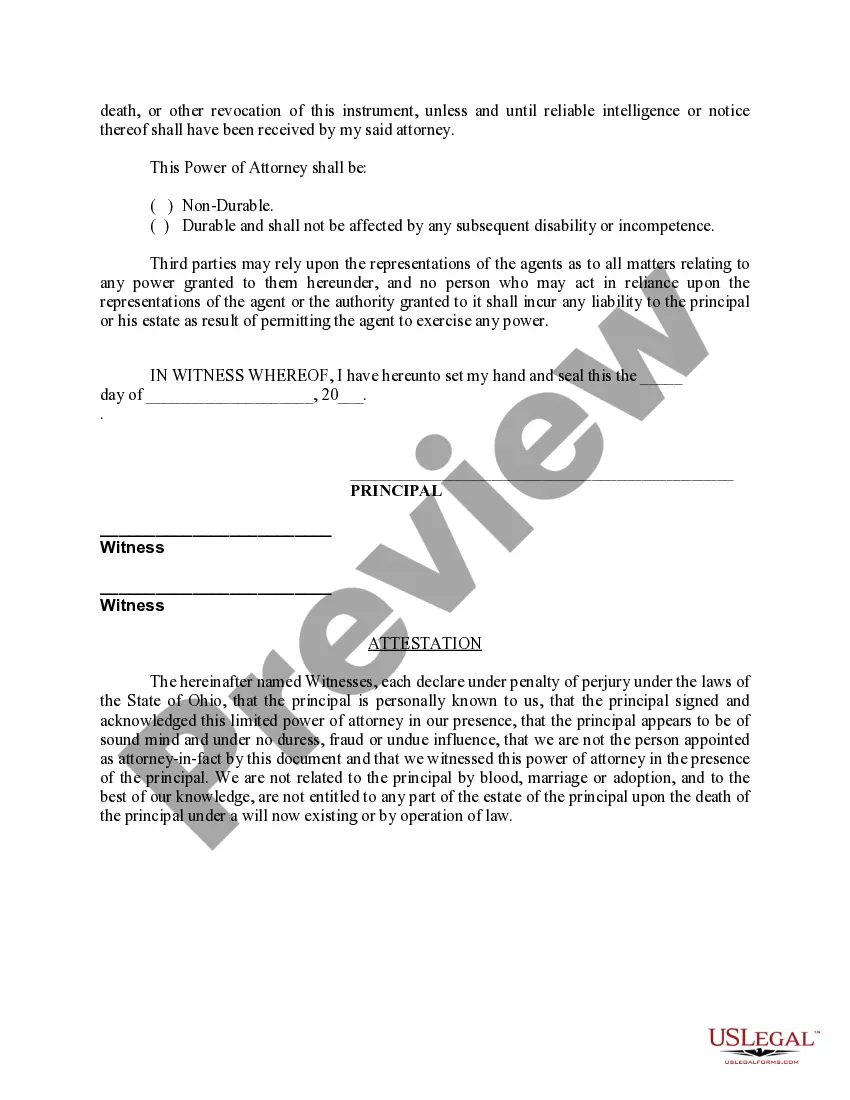
- Non-Durable or Durable designation: Indicates if the power remains in effect during incapacitation.
- Witness and notarization requirements: Specifies the need for witnesses and notary public acknowledgment.


Common use cases
This form is useful in situations where you need someone to handle specific financial or legal matters on your behalf, such as selling property, managing investments, or dealing with government agencies when you are unavailable. It is also appropriate when you want to limit the agent's authority to designated tasks while retaining control over other aspects of your affairs.
Who should use this form
- Individuals requiring assistance with specific financial transactions.
- People traveling or temporarily residing in another location who need someone to act on their behalf.
- Those who want to ensure clarity in the powers granted to an agent without relinquishing overall control.
How to prepare this document
- Identify the principal's and agent's names and addresses.
- Clearly specify the powers you wish to grant to the agent in the designated section.
- Choose whether the power of attorney will be durable or non-durable.
- Have two witnesses sign, confirming they understand the principal is of sound mind.
- Obtain a notary public's acknowledgment, if required, to make the document legally valid.
Does this form need to be notarized?
This form needs to be notarized to ensure legal validity. US Legal Forms provides secure online notarization powered by Notarize, allowing you to complete the process through a verified video call, available anytime.
Get your form ready online
Our built-in tools help you complete, sign, share, and store your documents in one place.
Make edits, fill in missing information, and update formatting in US Legal Forms—just like you would in MS Word.
Download a copy, print it, send it by email, or mail it via USPS—whatever works best for your next step.
Sign and collect signatures with our SignNow integration. Send to multiple recipients, set reminders, and more. Go Premium to unlock E-Sign.
If this form requires notarization, complete it online through a secure video call—no need to meet a notary in person or wait for an appointment.
We protect your documents and personal data by following strict security and privacy standards.

Make edits, fill in missing information, and update formatting in US Legal Forms—just like you would in MS Word.

Download a copy, print it, send it by email, or mail it via USPS—whatever works best for your next step.

Sign and collect signatures with our SignNow integration. Send to multiple recipients, set reminders, and more. Go Premium to unlock E-Sign.

If this form requires notarization, complete it online through a secure video call—no need to meet a notary in person or wait for an appointment.

We protect your documents and personal data by following strict security and privacy standards.
Common mistakes
- Failing to clearly specify the powers granted to the agent.
- Not having the form properly witnessed as required by Ohio law.
- Neglecting to have the document notarized when necessary.
- Leaving out essential information, such as the principal's and agent's contact details.
Why use this form online
- Convenience: Download and complete the form from the comfort of your home.
- Editability: Easily customize the document to fit your needs.
- Secure storage: Keep your completed forms safe and accessible when needed.
- Expertise: All forms are drafted by licensed attorneys to ensure legality.
Key takeaways
- This Limited Power of Attorney allows you to grant specific powers to an agent in Ohio.
- It is crucial to clearly define the powers you wish to give to avoid ambiguity.
- Ensure the form is signed by two witnesses and notarized to be enforceable.
- This form can help you manage specific tasks while maintaining control over your personal affairs.
Looking for another form?
Form popularity
FAQ
Signature Requirements In all states, the principal must sign the document and have it notarized. Some states also mandate two witnesses to the signature. As of 2018, some 23 states have adopted the Uniform Power of Attorney Act, which requires neither witnesses nor the agent's signature.
Choose the limited power of attorney made for your state. Input personal information about both the principal and the agent or attorney-in-fact. Explain the powers of the agent. Include the date the limited power of attorney expires or will be revoked.
Limited Power of Attorney (LPOA) is an authorization that permits a portfolio manager to perform specific functions on behalf of the account owner.Before signing an LPOA, the client should be aware of the specific functions they have delegated to the portfolio manager, as the client remains liable for the decisions.
Draft a list of special powers. Decide what powers are springing. Pick an agent and a successor agent. Note the expiration date. Compile the information into one document. Execute the power of attorney letter.
A Power of Attorney is a legal document which appoints a person (the Attorney-in-Fact, AIF) to act on your behalf. A durable Power of Attorney authorizes your AIF to act on your behalf even if you become incapacitated and unable to handle matters on your own.
Download the form. In just a few minutes, you can locate appropriate power of attorney forms from reputable sources. Appoint an agent. Your agent is the person you authorize to act on your behalf. Draft a statement of authority. Set time limits. Sign and date the form.
Choose the limited power of attorney made for your state. Input personal information about both the principal and the agent or attorney-in-fact. Explain the powers of the agent. Include the date the limited power of attorney expires or will be revoked.
When you give someone the POA, there are important limitations to the power the agent has. First, your agent must make decisions within the terms of the legal document and can't make decisions that break the agreement, and the agent can be held liable for any fraud or negligence.
The Ohio legislature has not approved a form for a healthcare POA but has established some requirements. It must be dated, signed by the principal at the end of the document, either signed by two witnesses or notarized, and include a specified statement regarding who can be an attorney in fact.