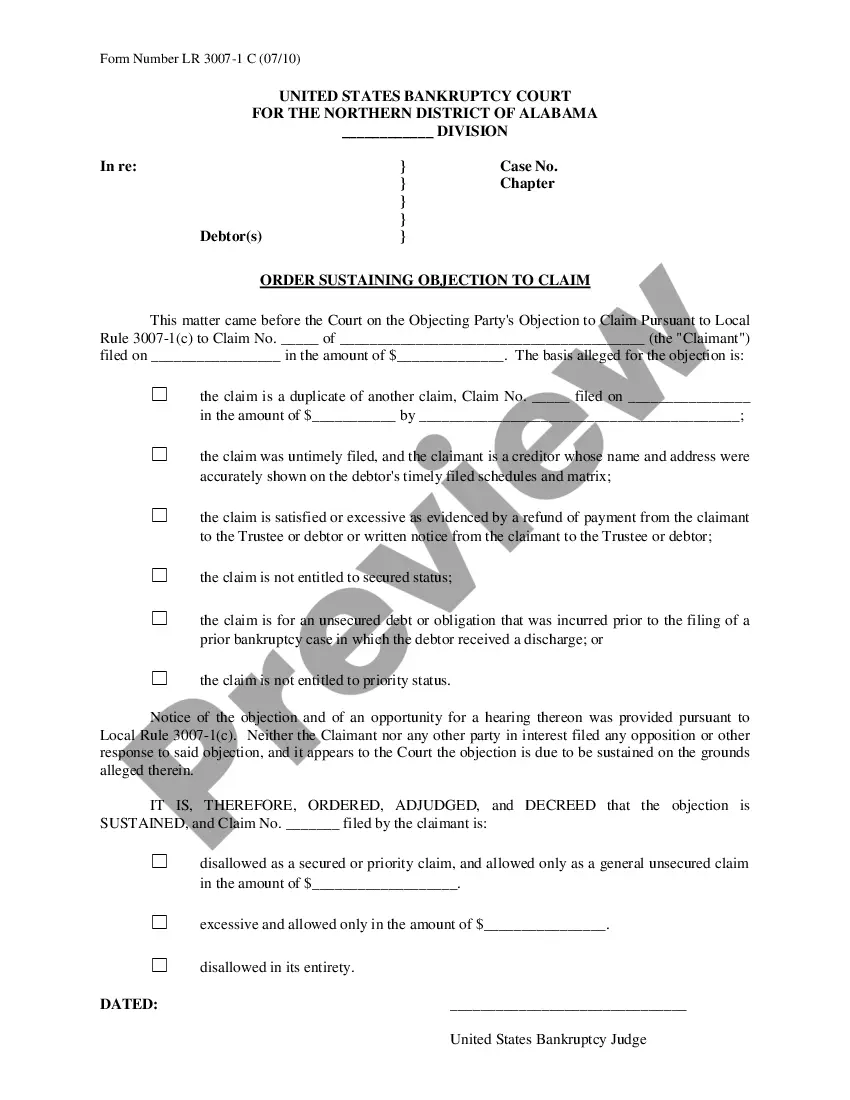
Ohio General Power of Attorney for Care and Custody of Child or Children - Grandparent as Designated Attorney-in-Fact
What this document covers
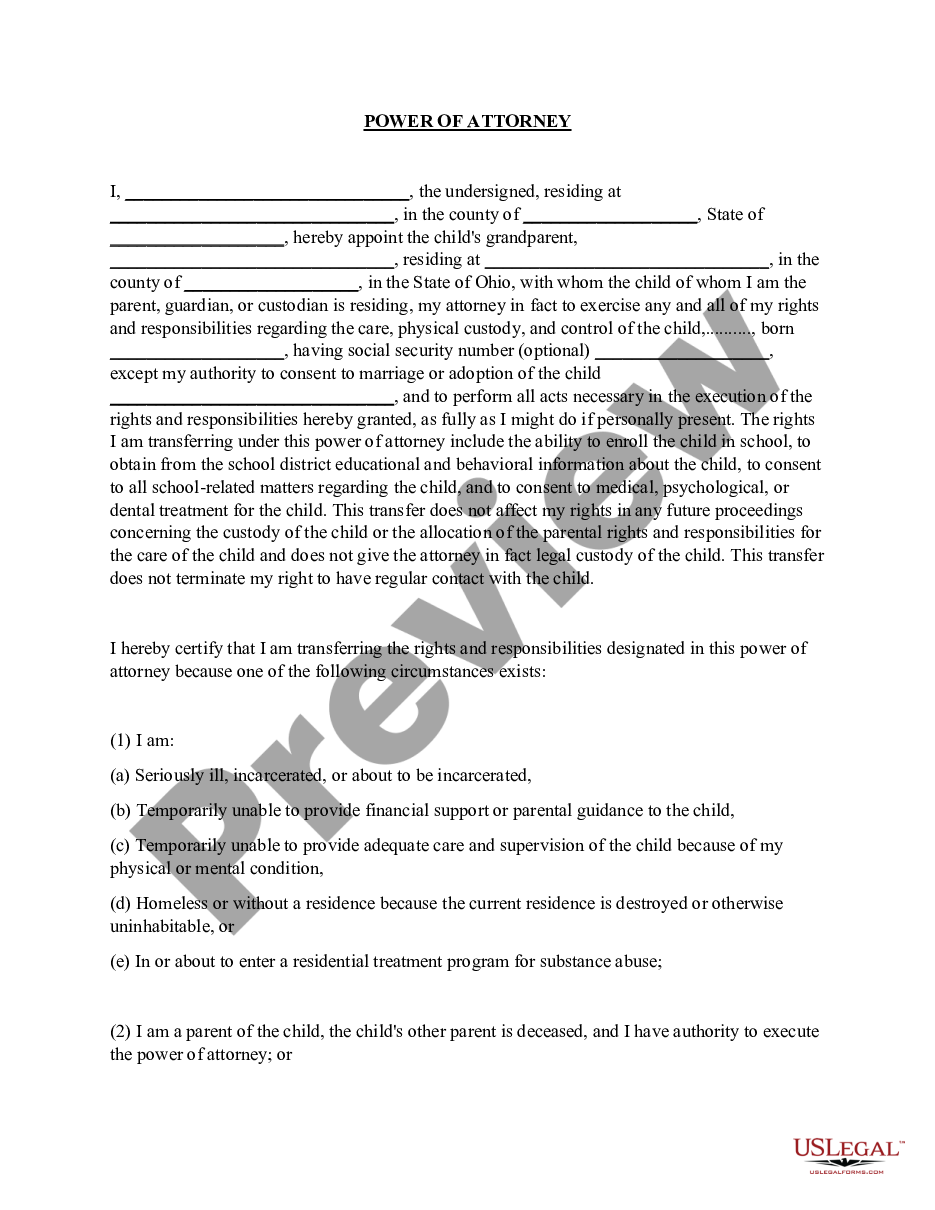
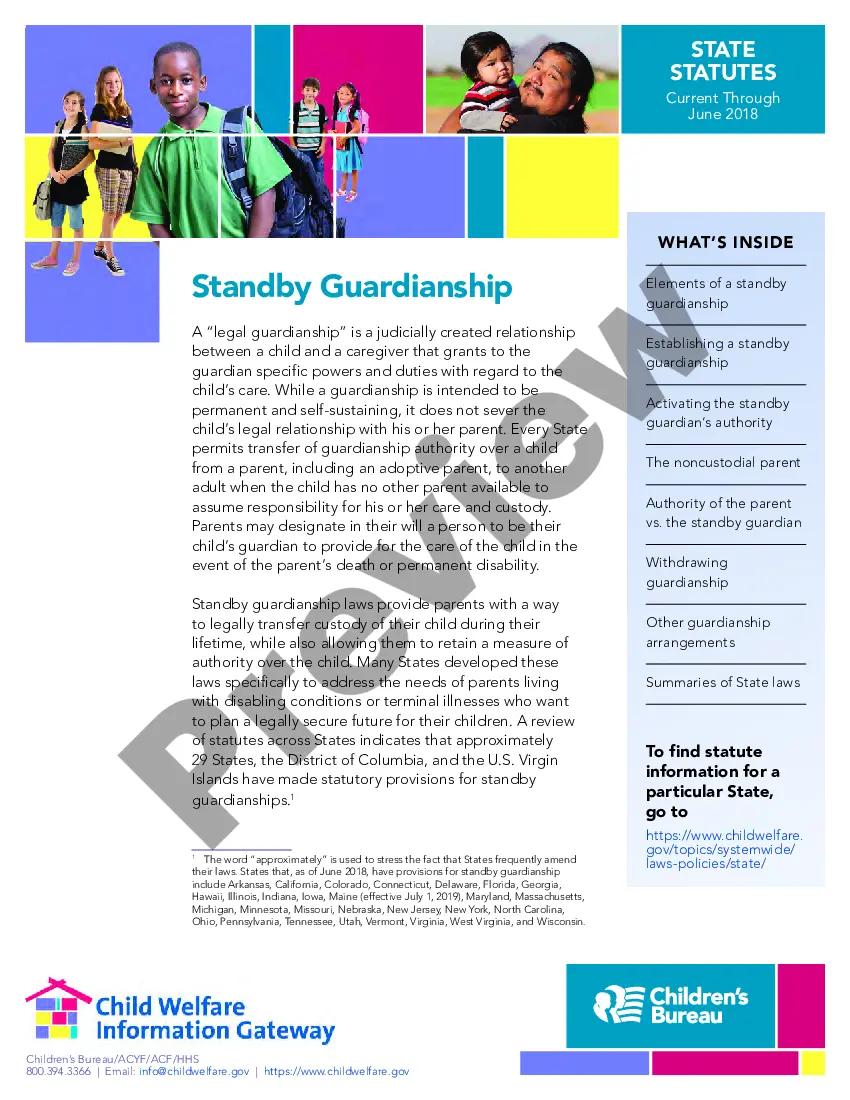
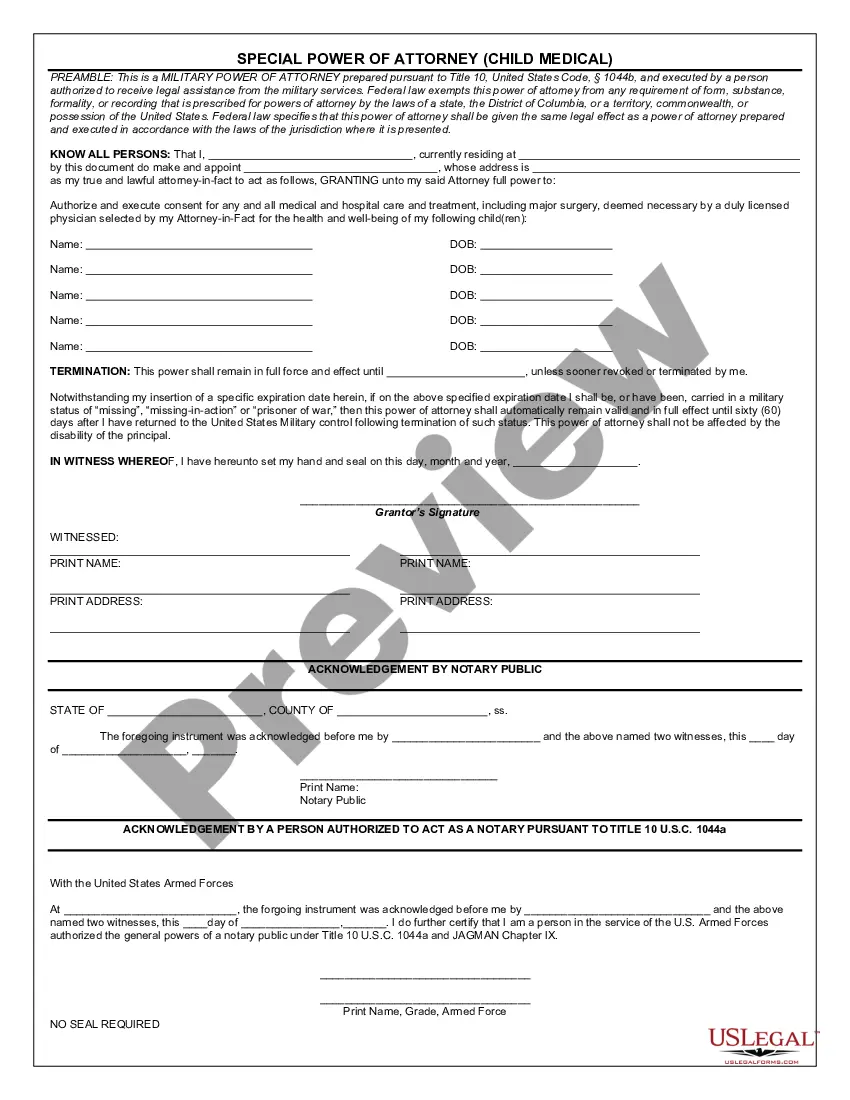
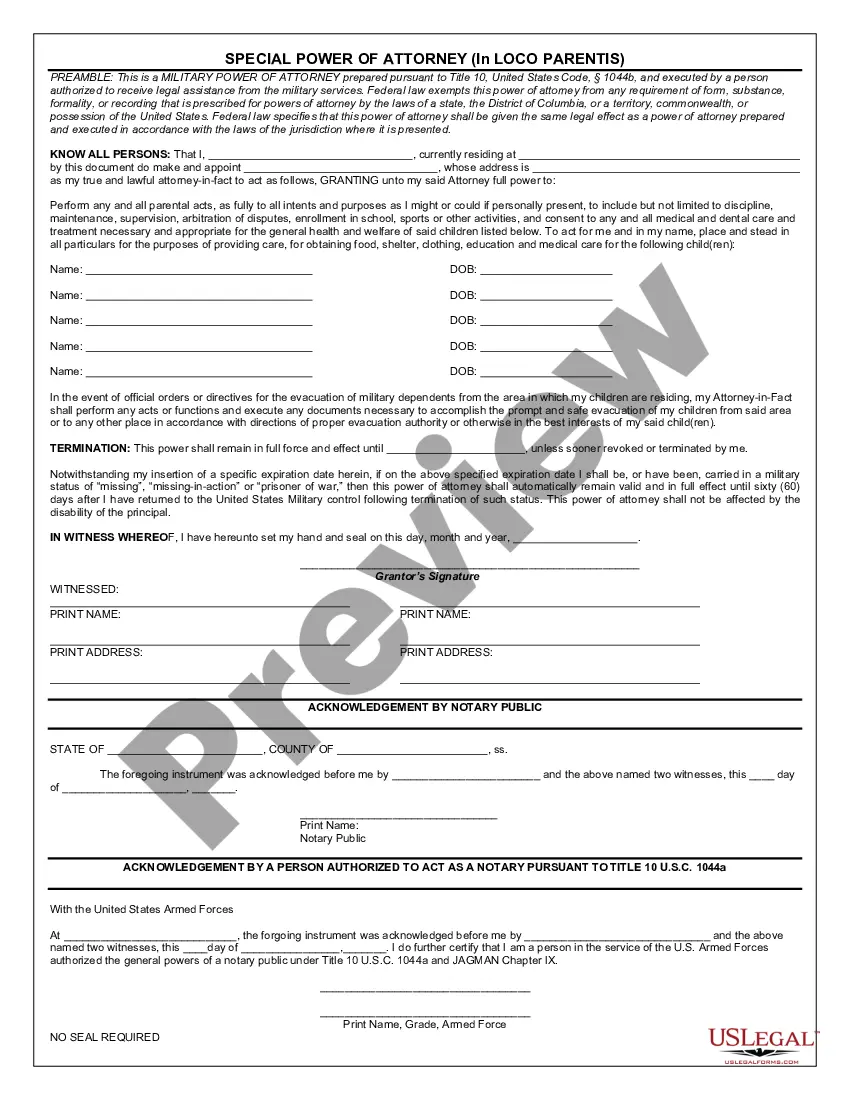
The General Power of Attorney for Care and Custody of Child or Children is a legal document that allows a grandparent to make decisions regarding the care and custody of a child. This form grants the grandparent, designated as the attorney-in-fact, authority to manage aspects such as education and health care, while clarifying that it does not confer legal custody. This form is distinct from regular powers of attorney as it is specifically intended for the care of children and involves the grandparent in the decision-making process.
Main sections of this form
- Personal information of the parent and grandparent.
- Details of the child or children covered under the power of attorney.
- Specific rights and responsibilities transferred to the grandparent.
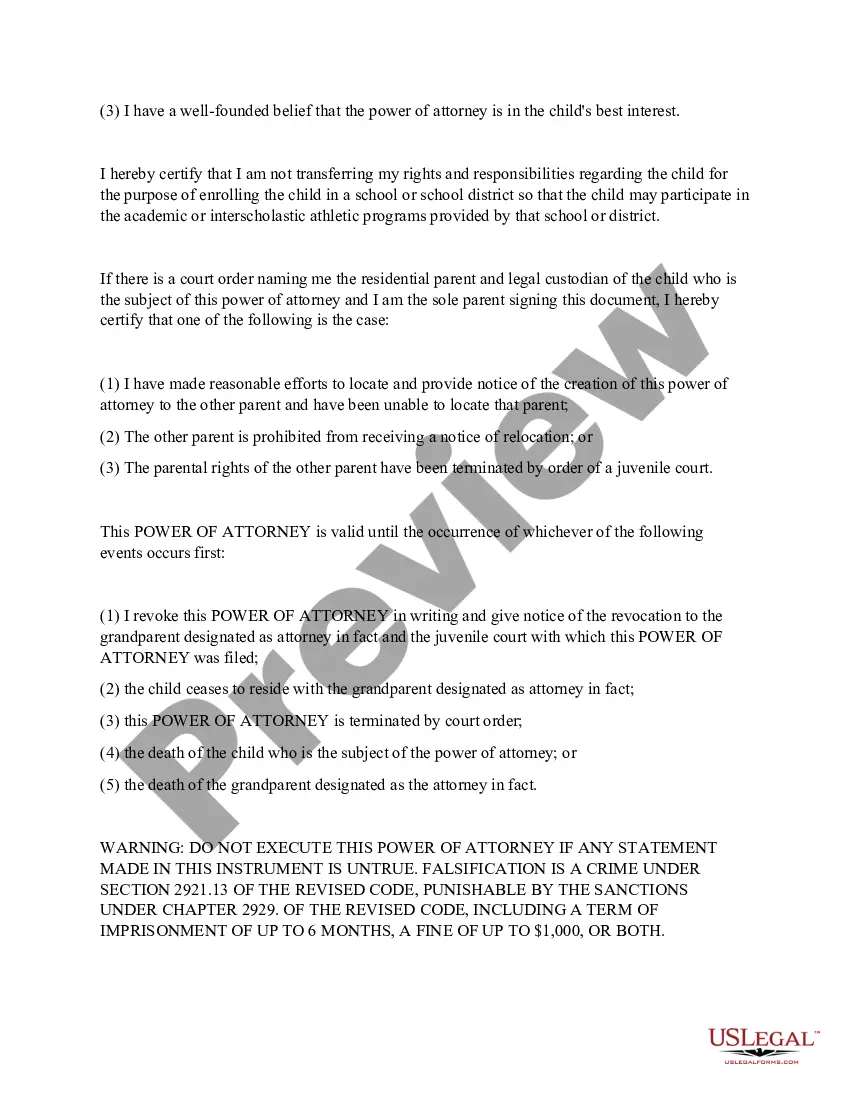
- Conditions under which the power of attorney is valid.
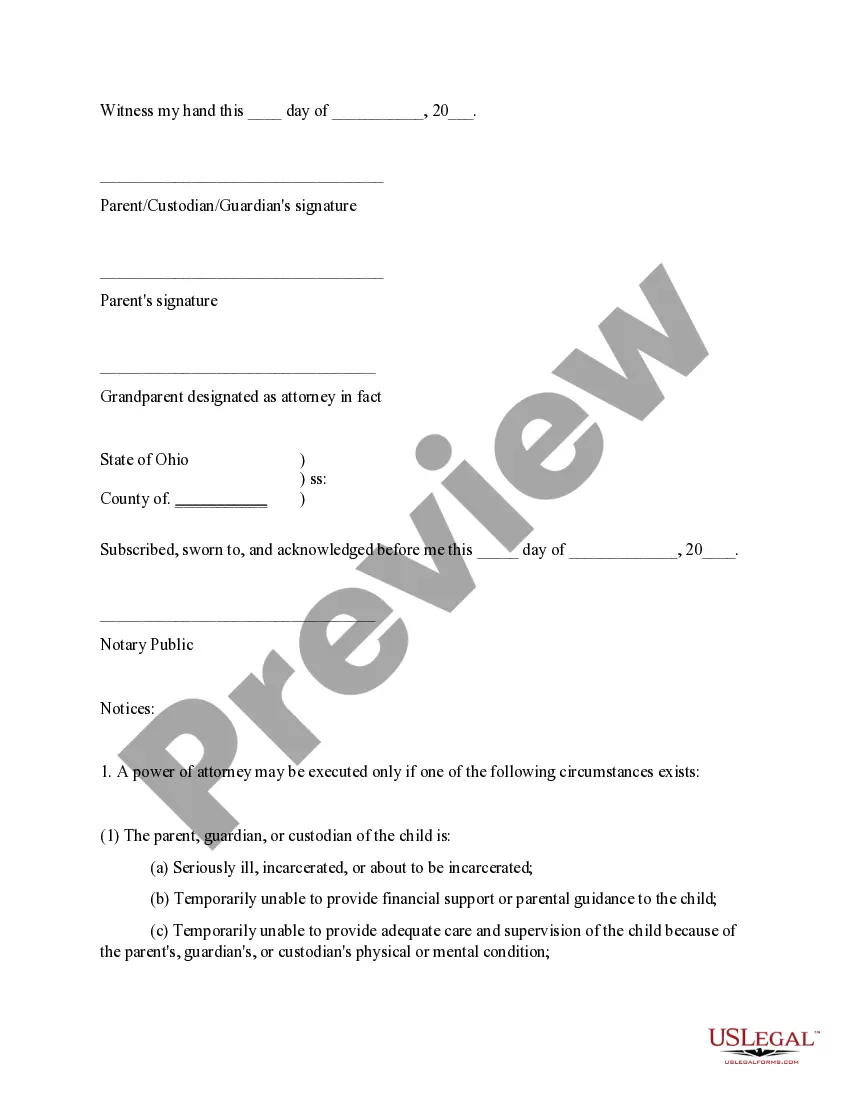
- Notarization section for valid execution.
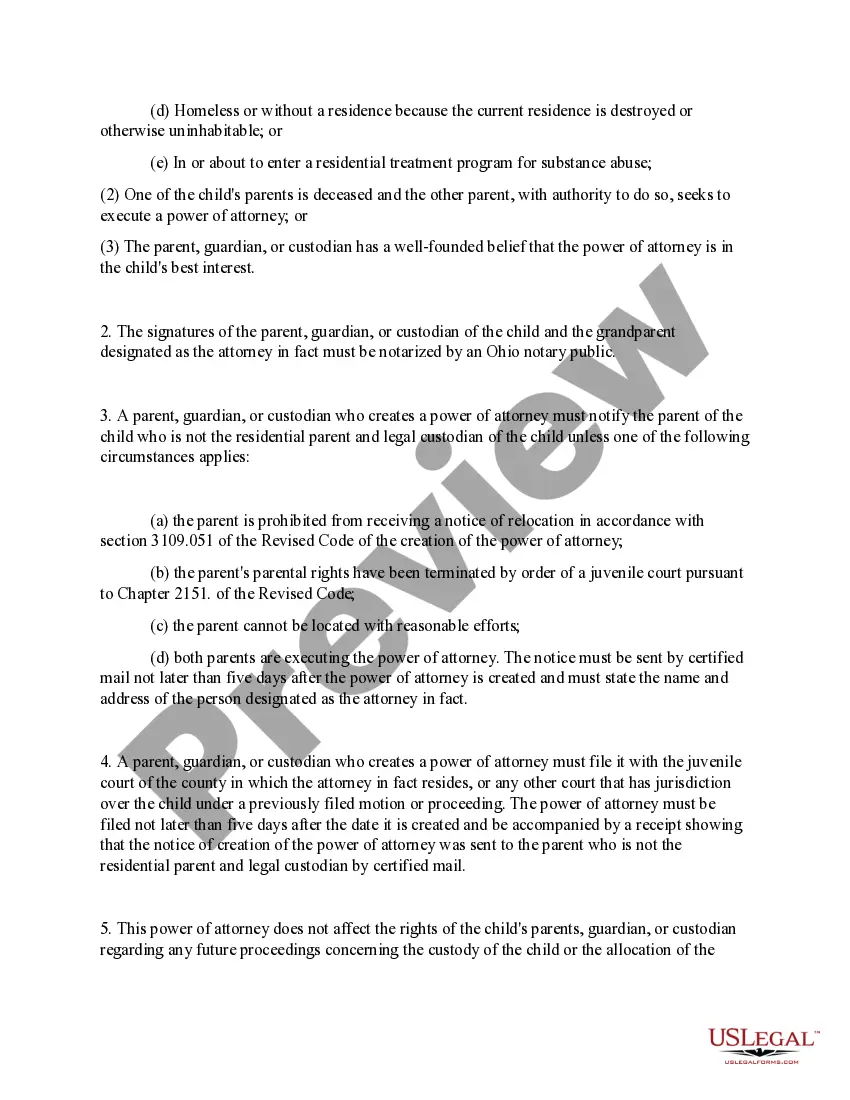
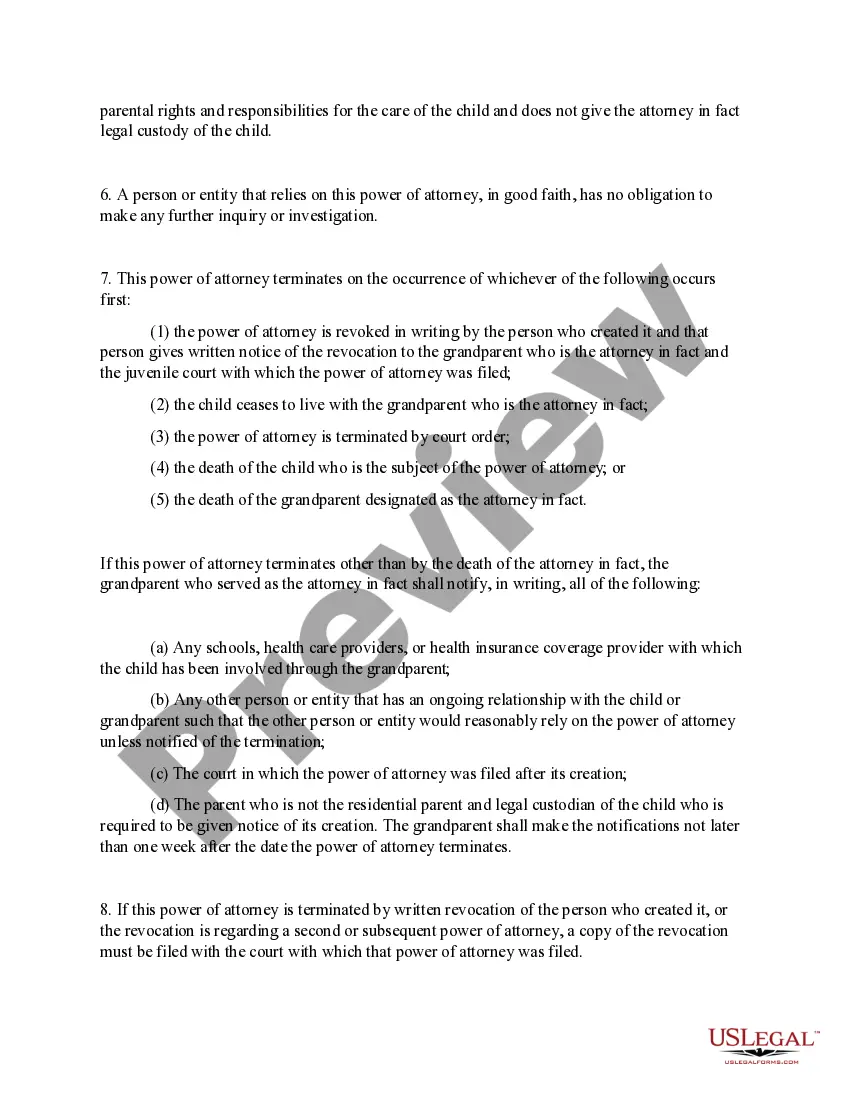
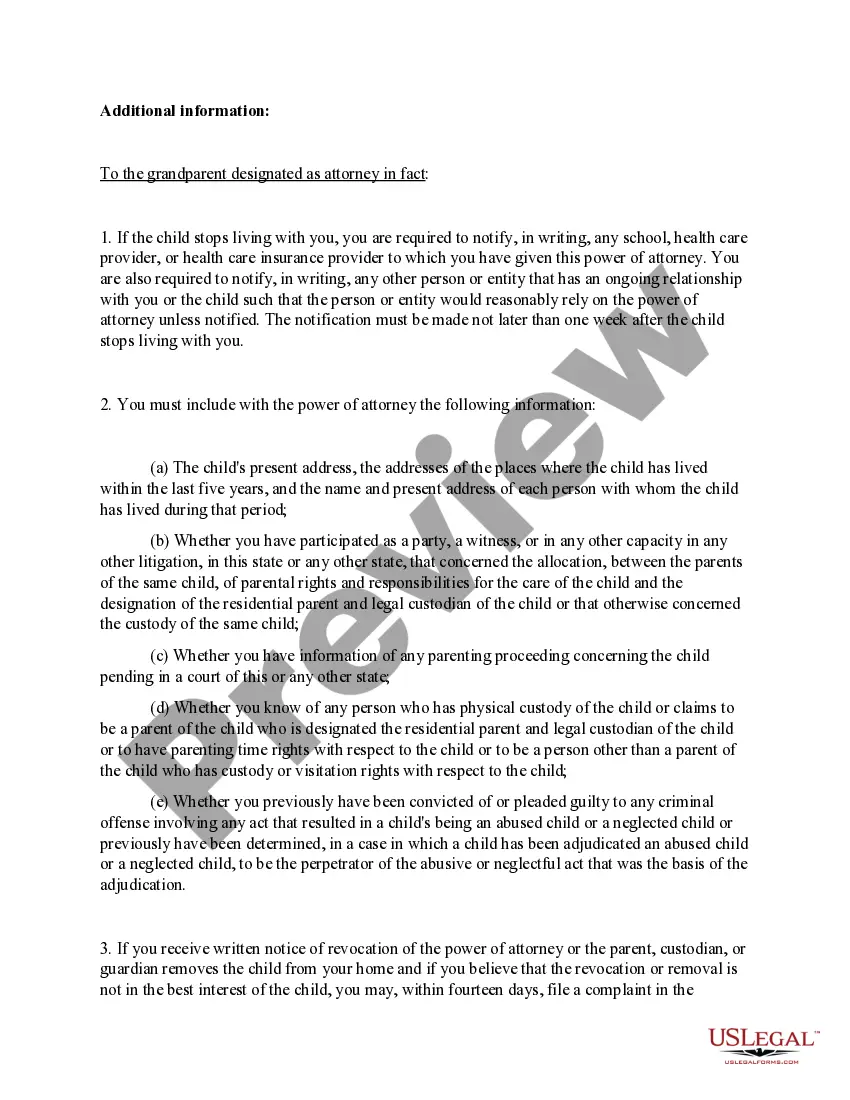
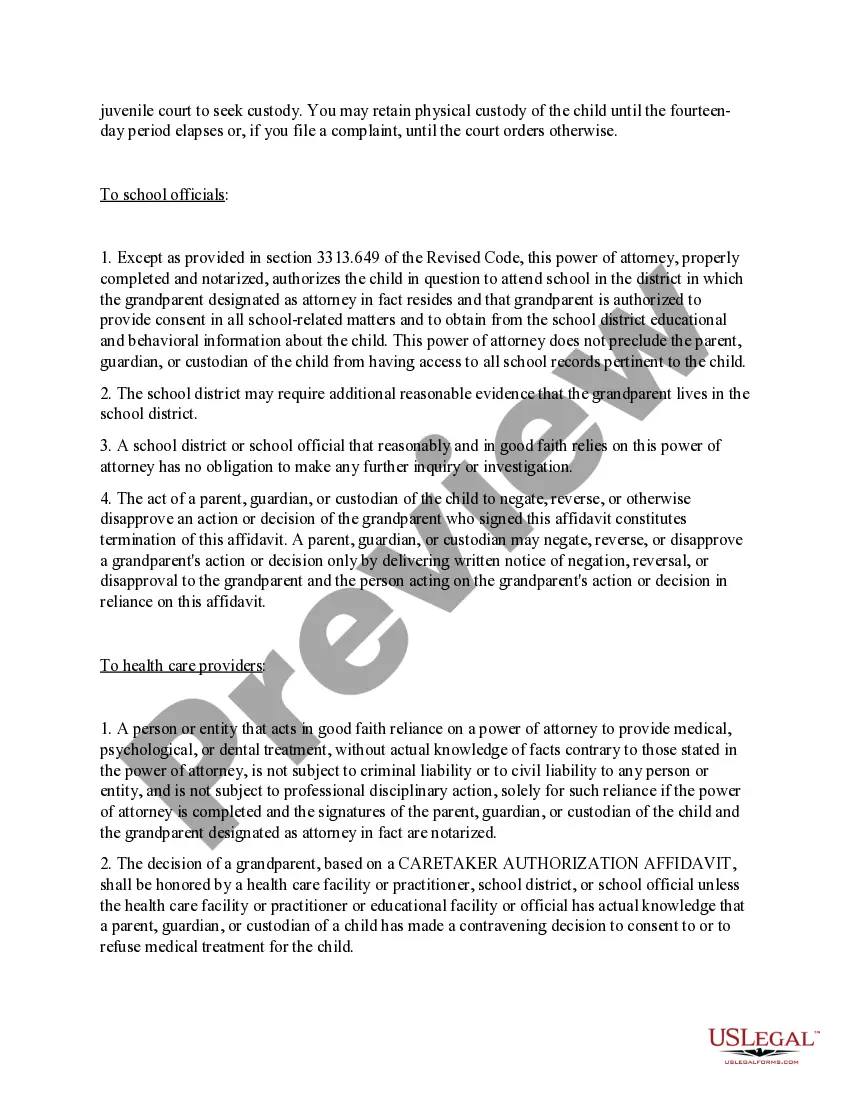


Situations where this form applies
This form is useful in situations where a parent is unable to provide care due to illness, incarceration, or other significant circumstances. It is appropriate for parents who need temporary assistance in managing their childâs daily needs or who are unable to look after the child due to physical or mental conditions. This form also serves to ensure that the childâs care is consistent and secure during the parent's absence.
Who needs this form
This form is intended for:
- Parents or legal guardians of a child who seek to appoint a grandparent as attorney-in-fact.
- Grandparents who are designated to assume responsibility for the care of a child in specific situations.
- Those needing to ensure that a childâs daily needs, including healthcare and education, are met during a parent's absence.
Completing this form step by step
- Fill in the personal details of the parent, grandparent, and child.
- Clearly outline the specific rights and responsibilities being transferred to the grandparent.
- Indicate the circumstances validating the power of attorney.
- Ensure both the parentâs and grandparentâs signatures are notarized.
- File the completed form with the appropriate public children services agency.
Notarization guidance
Yes, this form must be notarized to be legally valid. This ensures that the signatures are authentic and that the document can be trusted in legal situations. US Legal Forms offers integrated online notarization services that are available 24/7, allowing you to complete the process securely and conveniently from anywhere.
Get your form ready online
Our built-in tools help you complete, sign, share, and store your documents in one place.
Make edits, fill in missing information, and update formatting in US Legal Forms—just like you would in MS Word.
Download a copy, print it, send it by email, or mail it via USPS—whatever works best for your next step.
Sign and collect signatures with our SignNow integration. Send to multiple recipients, set reminders, and more. Go Premium to unlock E-Sign.
If this form requires notarization, complete it online through a secure video call—no need to meet a notary in person or wait for an appointment.
We protect your documents and personal data by following strict security and privacy standards.

Make edits, fill in missing information, and update formatting in US Legal Forms—just like you would in MS Word.

Download a copy, print it, send it by email, or mail it via USPS—whatever works best for your next step.

Sign and collect signatures with our SignNow integration. Send to multiple recipients, set reminders, and more. Go Premium to unlock E-Sign.

If this form requires notarization, complete it online through a secure video call—no need to meet a notary in person or wait for an appointment.

We protect your documents and personal data by following strict security and privacy standards.
Common mistakes
- Failing to have the signatures notarized, which invalidates the form.
- Not specifying the rights transferred, leading to confusion regarding the grandparent's authority.
- Neglecting to notify the non-residential parent when required.
- Using outdated versions of the form that may not comply with current laws.
Why use this form online
- Convenience of accessing the form anytime without the need for physical visits.
- Editability, allowing users to customize the form to match specific situations.
- Reliable templates drafted by licensed attorneys, ensuring legal compliance.
What to keep in mind
- The form allows grandparents to assume care responsibilities when parents are unable to do so.
- It is specifically tailored to comply with Ohio law and requires notarization.
- Filing the form with the local authorities is crucial for its validity and enforcement.
Looking for another form?

Form popularity
FAQ
Grandparents should get a power of attorney, also called a POA, granting them the legal authority to address the child's medical and other needs, particularly in an emergency when the child's parents can't be reached. This can be as simple as having the parent sign a notarized form and submitting it to the court.
Do Grandparents Need a Power of Attorney to Take Grandchildren to the Doctor?While you may not have legal guardianship or permanent custody of your grandchild, a medical power of attorney or other legal consent form, as appropriate in your state, gives you legal authority to make health-related decisions for them.
In general, a grandparent seeking full care and custody of a grandchild may file a petition for custody with the court.The child's parents have been deemed unfit to retain custody. The child's parents consent to grandparent custody. The child has lived with a grandparent or grandparents for a year or more.
This may include step-parents, grandparents and childminders. You can rely on their consent if they are authorised by the parents.So while there is no specific agreement between parents and a third party in any given situation, the third party can give consent providing it is in the child's best interests.
Aging parents or parents with significant health issues should have a durable power of attorney, recommends Somita Basu, an estate planning lawyer in Santa Clara, California.
The names, addresses, and phone numbers of the parent(s) or guardian signing the document. The names and addresses of the agent (and any alternative agent). The name and date of birth of each child covered by the document.
In general, a grandparent seeking full care and custody of a grandchild may file a petition for custody with the court. Because most courts prefer that children live with their parents, a grandparent's right to obtain custody is typically limited to the following situations: The child's parents are deceased.
A power of attorney over a child is a document signed and notarized by a parent giving a non- parent authority to make decisions for a minor child.It can be used to authorize the person to obtain medical treatment for a child or sign up a child for an activity or for other significant decisions.
Most states offer simple forms to help you create a power of attorney for finances. Generally, the document must be signed, witnessed and notarized by an adult. If your agent will have to deal with real estate assets, some states require you to put the document on file in the local land records office.