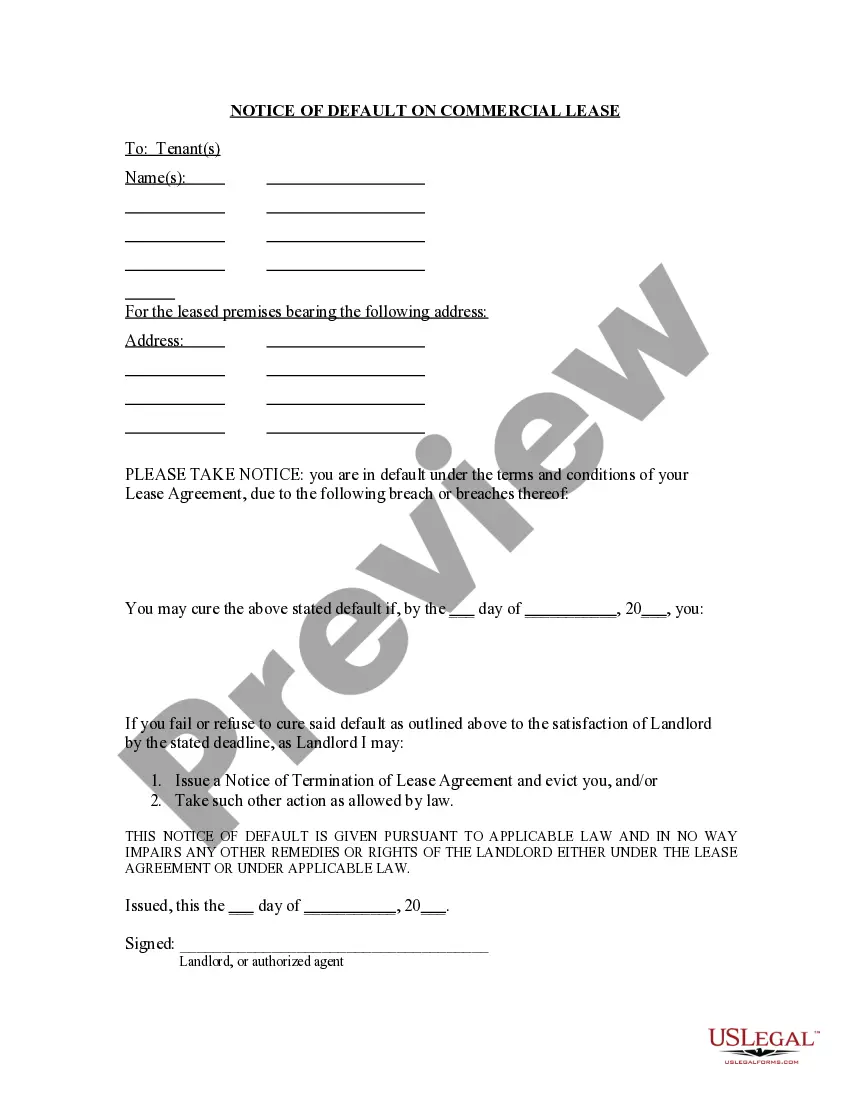
Ohio Letter from Landlord to Tenant as Notice of Default on Commercial Lease
Overview of this form
This form is a Letter from Landlord to Tenant as Notice of Default on Commercial Lease. It serves as an official notification to the tenant regarding specific breaches of the lease agreement, alongside a deadline for rectifying these issues. This notice is vital for landlords looking to protect their rights before taking further action, such as eviction. Unlike other notices, this document explicitly details the defaults and outlines the tenant's options to remedy the situation.
What’s included in this form
- Identification of the parties: Includes the names of the landlord and tenant.
- Details of the default: Specifies the breaches of the lease agreement.
- Deadline for cure: States the time frame the tenant has to address the default.
- Consequences of inaction: Outlines the landlord's rights if the tenant fails to cure the default.
- Signature line: Space for the landlord or authorized agent to sign.

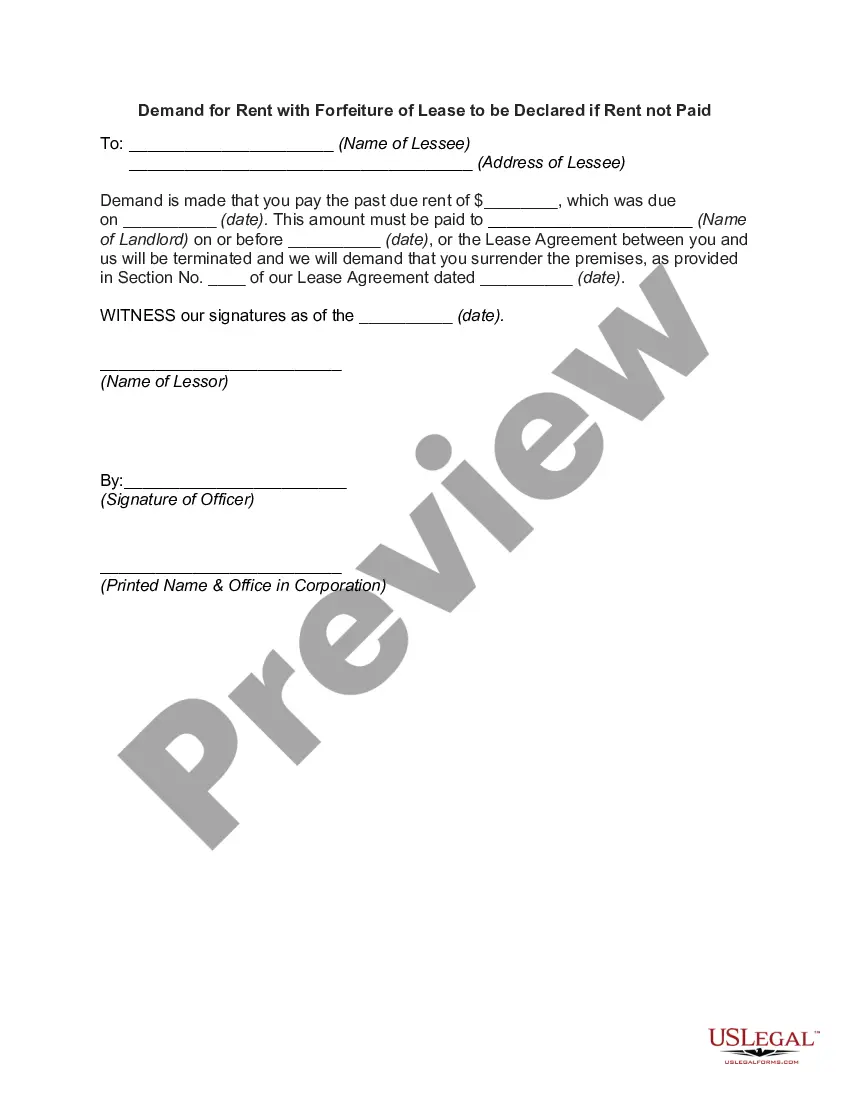
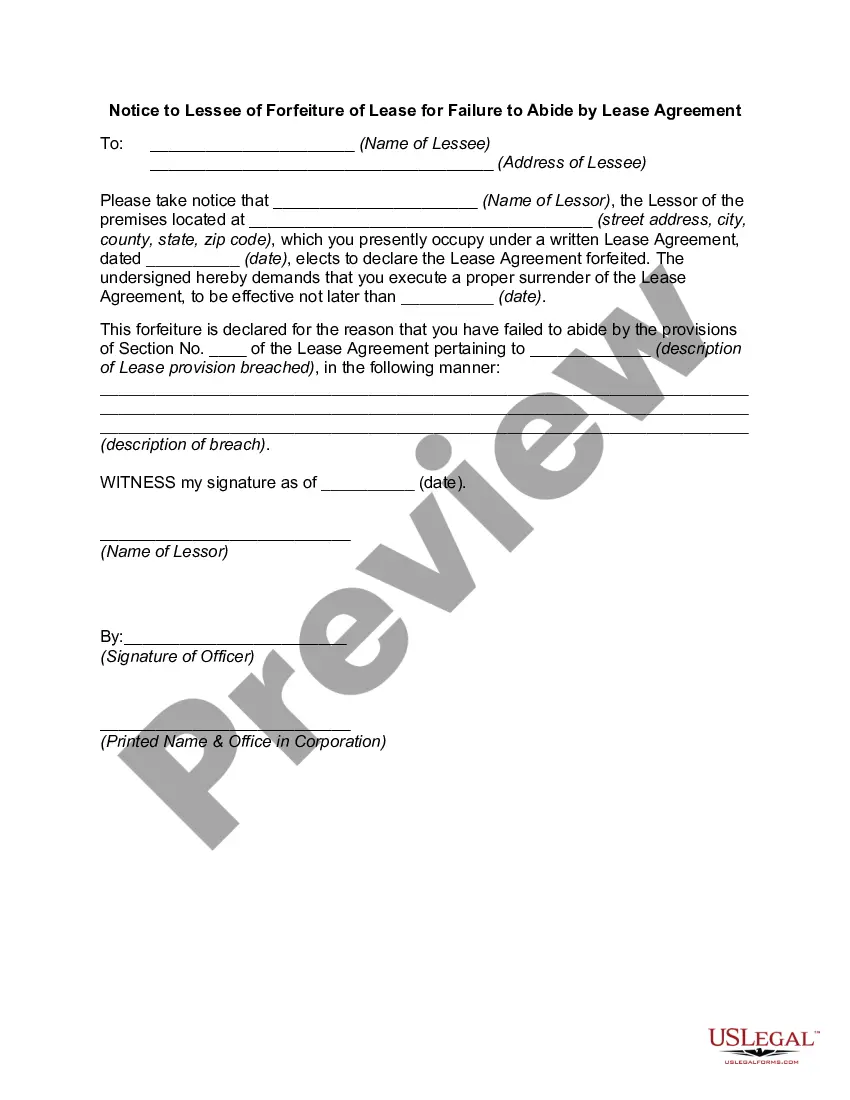

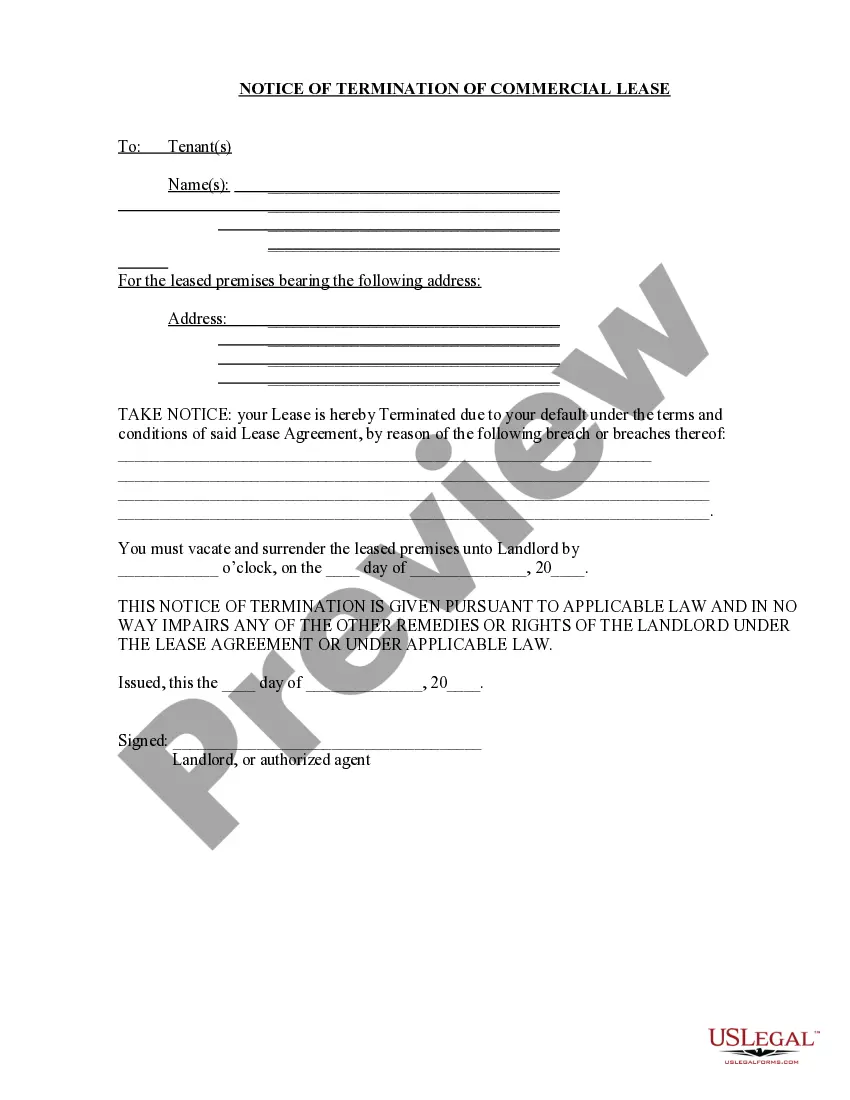
When this form is needed
Who needs this form
This notice is intended for:
- Commercial landlords addressing lease violations by their tenants.
- Property managers acting on behalf of landlords who need to initiate a formal notice of default.
- Legal representatives working with landlords in lease enforcement matters.
Instructions for completing this form
- Identify the parties: Fill in the names of the landlord and tenant.
- Specify the breach: Clearly state the defaulting actions or omissions by the tenant.
- Set a cure deadline: Indicate the date by which the tenant must correct the breach.
- Detail potential consequences: Outline the landlord's rights if the tenant fails to remedy the default.
- Sign the form: The landlord or an authorized agent should sign and date the document.
Is notarization required?
In most cases, this form does not require notarization. However, some jurisdictions or signing circumstances might. US Legal Forms offers online notarization powered by Notarize, accessible 24/7 for a quick, remote process.
Get your form ready online
Our built-in tools help you complete, sign, share, and store your documents in one place.
Make edits, fill in missing information, and update formatting in US Legal Forms—just like you would in MS Word.
Download a copy, print it, send it by email, or mail it via USPS—whatever works best for your next step.
Sign and collect signatures with our SignNow integration. Send to multiple recipients, set reminders, and more. Go Premium to unlock E-Sign.
If this form requires notarization, complete it online through a secure video call—no need to meet a notary in person or wait for an appointment.
We protect your documents and personal data by following strict security and privacy standards.

Make edits, fill in missing information, and update formatting in US Legal Forms—just like you would in MS Word.

Download a copy, print it, send it by email, or mail it via USPS—whatever works best for your next step.

Sign and collect signatures with our SignNow integration. Send to multiple recipients, set reminders, and more. Go Premium to unlock E-Sign.

If this form requires notarization, complete it online through a secure video call—no need to meet a notary in person or wait for an appointment.

We protect your documents and personal data by following strict security and privacy standards.
Mistakes to watch out for
- Failing to provide specific details about the breach.
- Not including a clear deadline for the tenant to cure the default.
- Omitting the signature of the landlord or authorized agent.
- Not adhering to state-specific rules regarding notice requirements.
Why complete this form online
- Convenient download: Access the form instantly, without lengthy waits.
- Editability: Make necessary adjustments to fit your specific situation.
- Reliability: Use a form drafted by licensed attorneys to ensure compliance with legal standards.
Legal use & context
- This notice is legally required in many jurisdictions to formally declare a tenant in default.
- Using this form appropriately can help landlords document their actions and protect their rights.
Quick recap
- The notice of default is a critical step for landlords in addressing tenant breaches.
- Timely and precise communication can prevent further legal action.
- Ensure compliance with state-specific laws to enhance enforceability.
Looking for another form?

Form popularity
FAQ
A lease is automatically void when it is against the law, such as a lease for an illegal purpose. In other circumstances, like fraud or duress, a lease can be declared void at the request of one party but not the other.
Paying the remainder of the rent still owed on the lease in full; Paying a specified amount of liquidated damages as outlined in the contract terms; Paying an additional amount of punitive damages, dependent on local state laws; and/or.
Before selling the tenant's property, the landlord must give the tenant five days' notice. Unless the lease requires the landlord to give the tenant notice, the landlord may be able to terminate the lease and evict the tenant if the tenant does not pay the rent on time.
Break rights can only be exercised on reasonable prior written notice and usually a minimum of 6 months' notice is required.It is therefore prudent for a landlord or tenant to ask its professional advisors to serve a break notice on its behalf and to review the validity of any such notice served by the other party.
CALGARY -- The province says commercial landlords will no longer be allowed to evict business tenants without first applying for rental relief from the government.
A break-early fee is a lump sum payment. The amount of the break-early fee will vary greatly depending upon the commercial tenant's specific circumstances. In exchange for the break-early fee, the landlord will agree to release the commercial tenant from all of its obligations under the commercial lease.
If you're an assured tenant or a protected tenant Your landlord will have to give you notice if they want you to leave. They have to give the reasons why they want to evict you - for example, if you have rent arrears or you've damaged the property. Your landlord will have to go to court and get a court order.
One option for getting out of your commercial lease early is to approach your landlord and request to surrender the lease. A surrender of lease is when both you and the landlord agree to end the lease.However, if the landlord agrees to surrender your lease, you will often have to pay their legal costs.
For example, the lease may provide that in case of default, the landlord can recover late fees and interest. If the lease is a net lease, it may provide for the landlord to recover such things as property taxes, insurance, utilities, maintenance and repairs.