Ohio Buyer's Home Inspection Checklist
Overview of this form
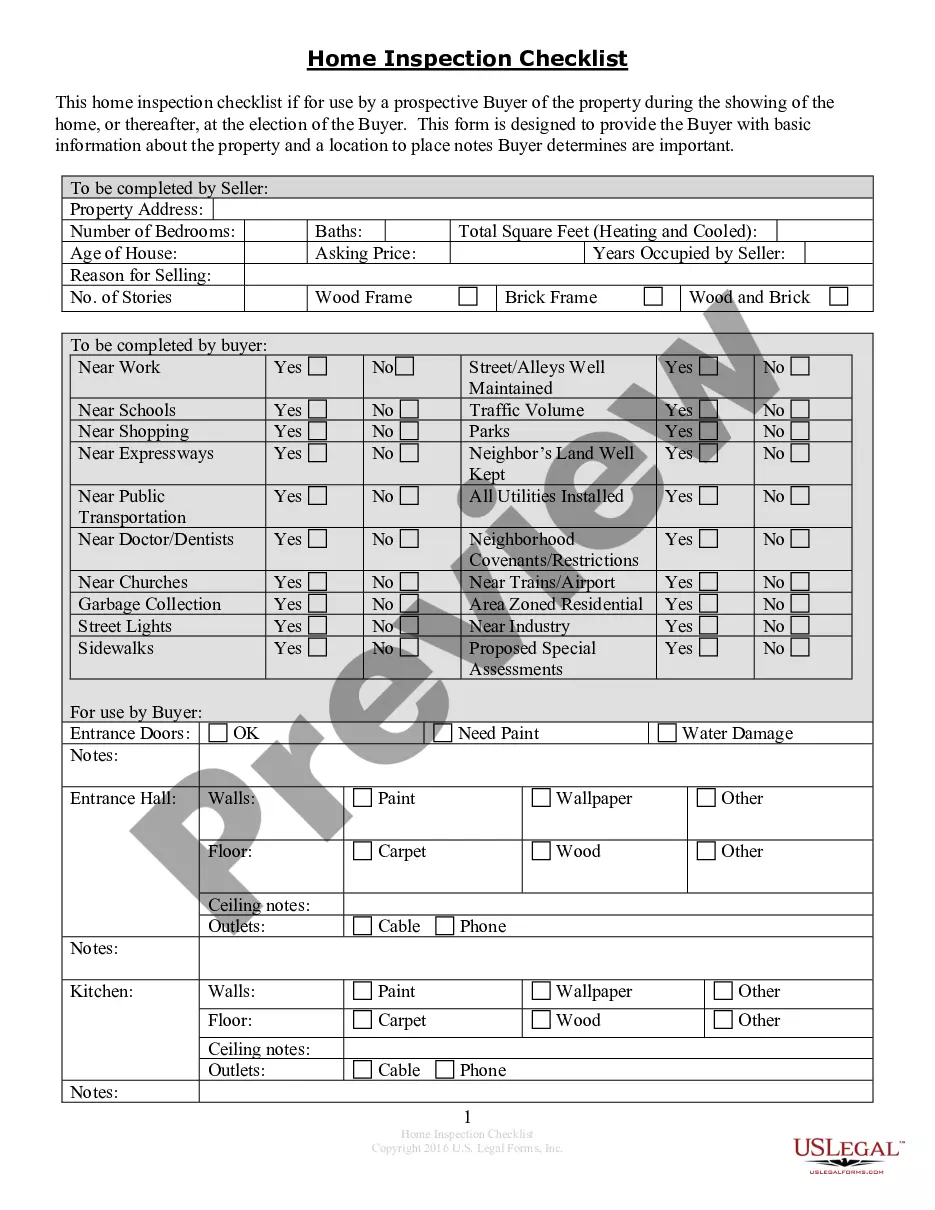
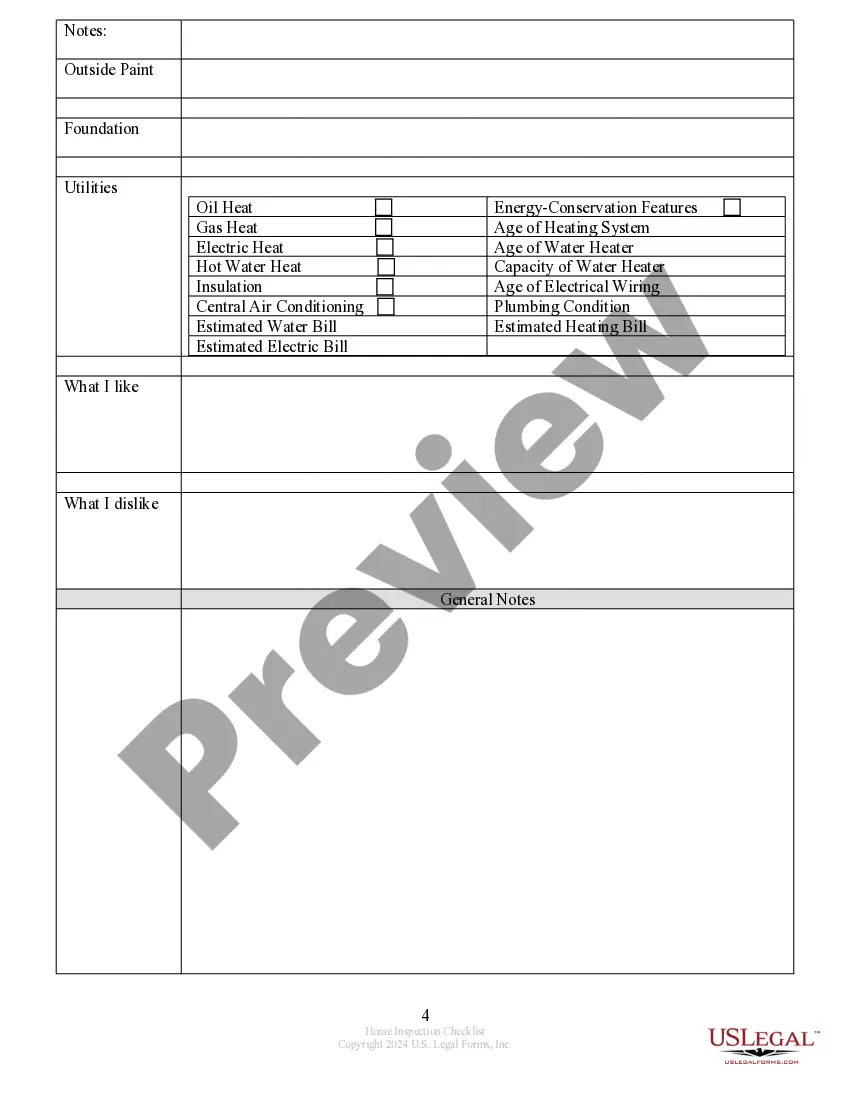
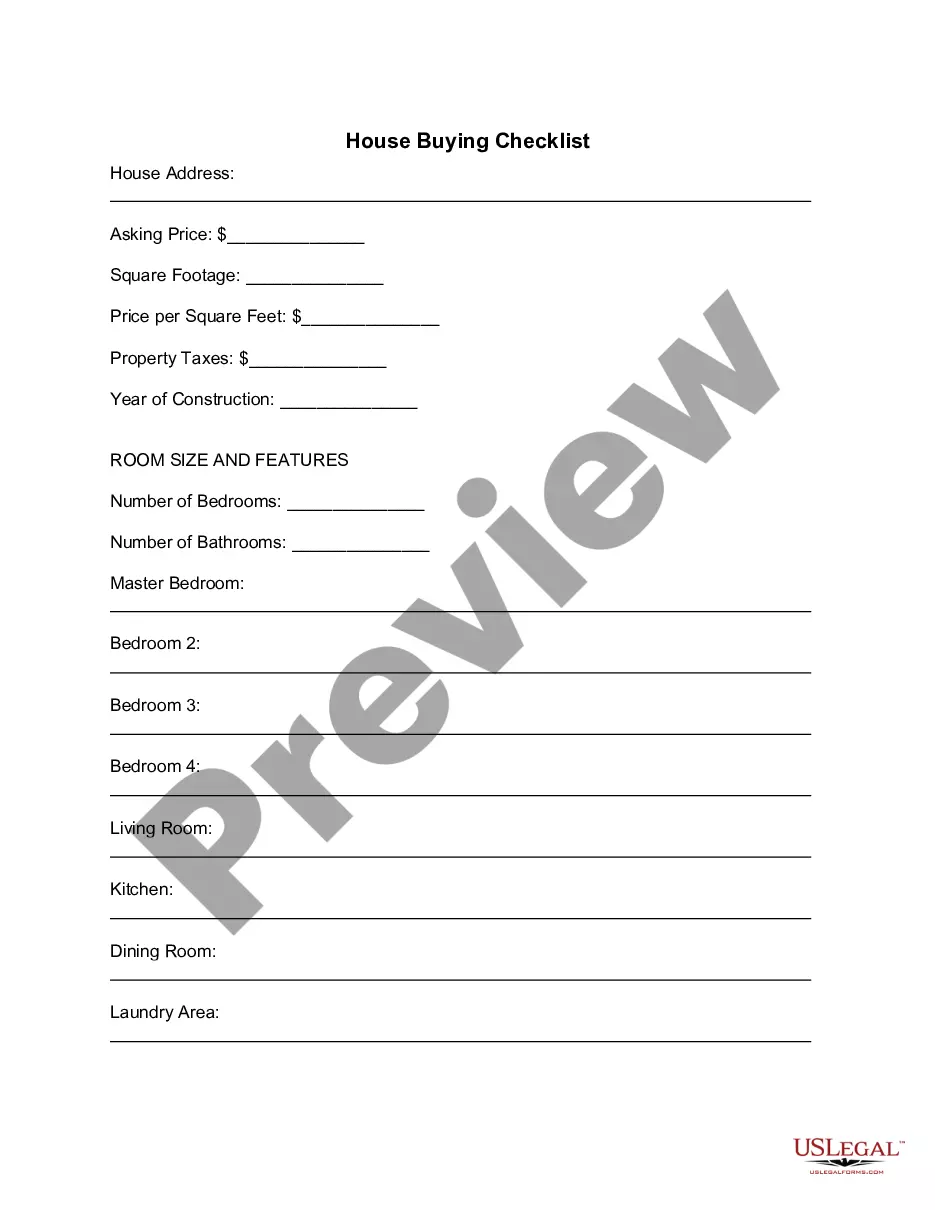
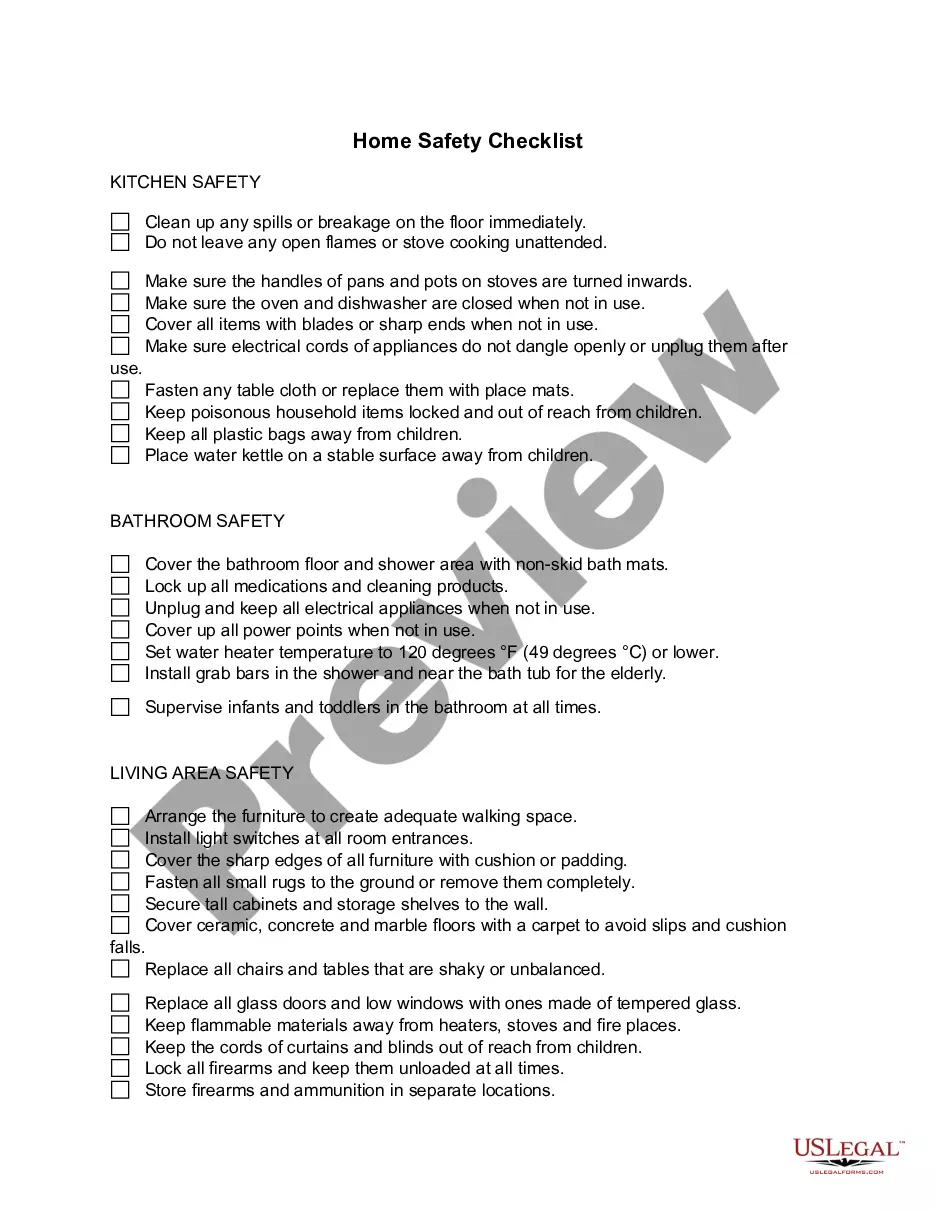
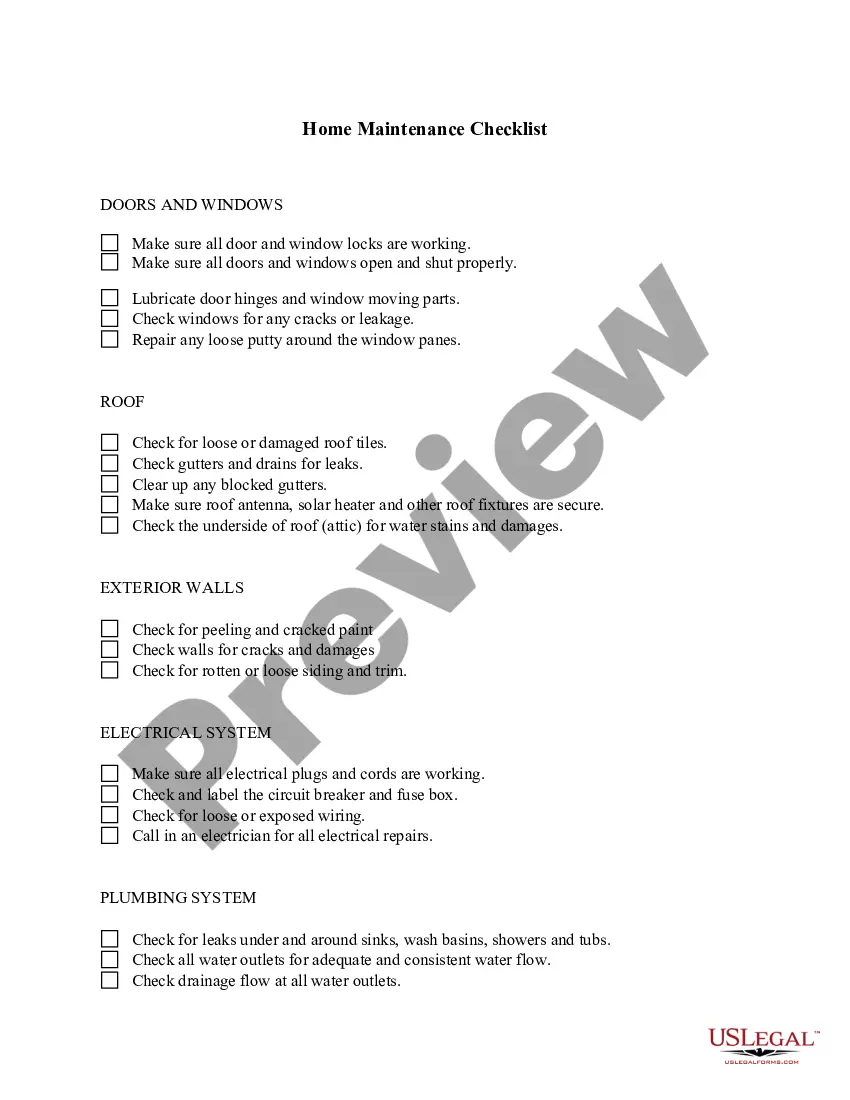
The Buyer's Home Inspection Checklist is a useful tool for prospective homebuyers in Ohio. This form provides a systematic approach to evaluate essential elements of a property during initial viewings. Unlike standard inspection forms, this checklist includes considerations for location and neighborhood features, helping buyers make informed decisions before making an offer.
Key components of this form
- Property location details: Evaluating streets, alleys, and nearby amenities.
- Neighborhood assessment: Information about surrounding services and community features.
- Utilities and zoning: Confirmation of utility installations and residential zoning.
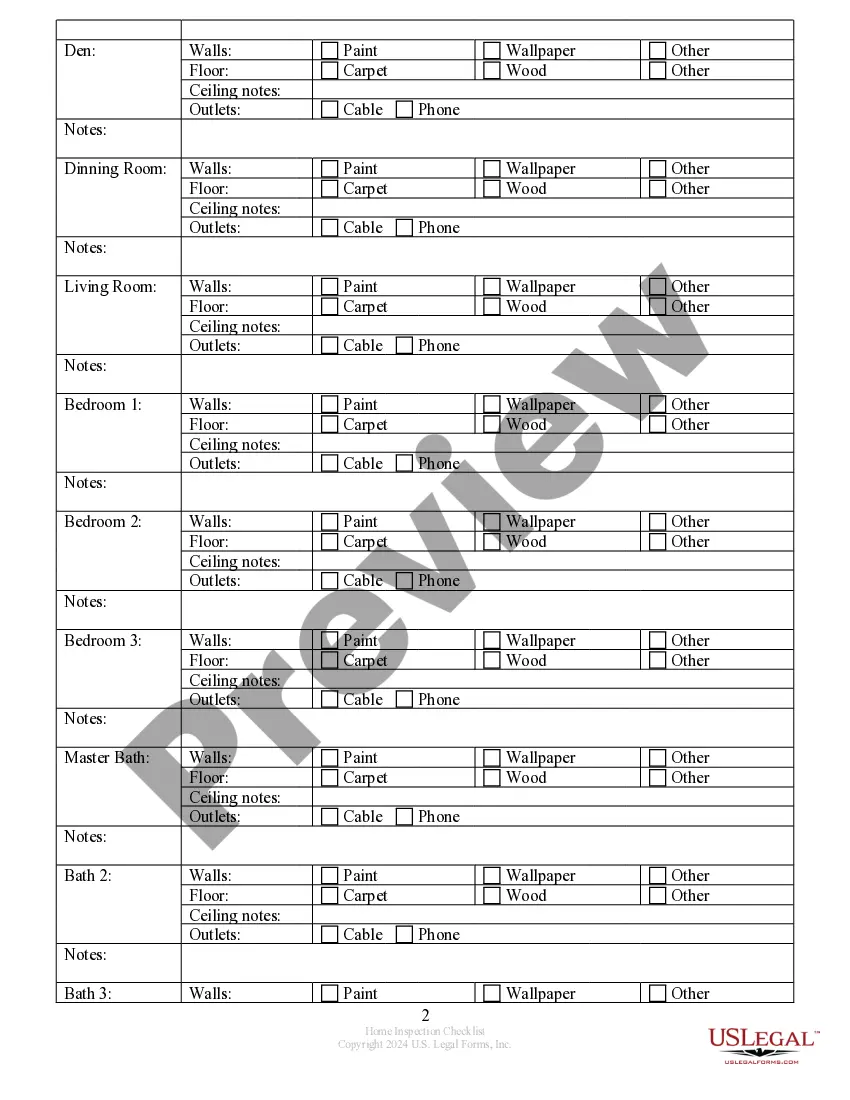
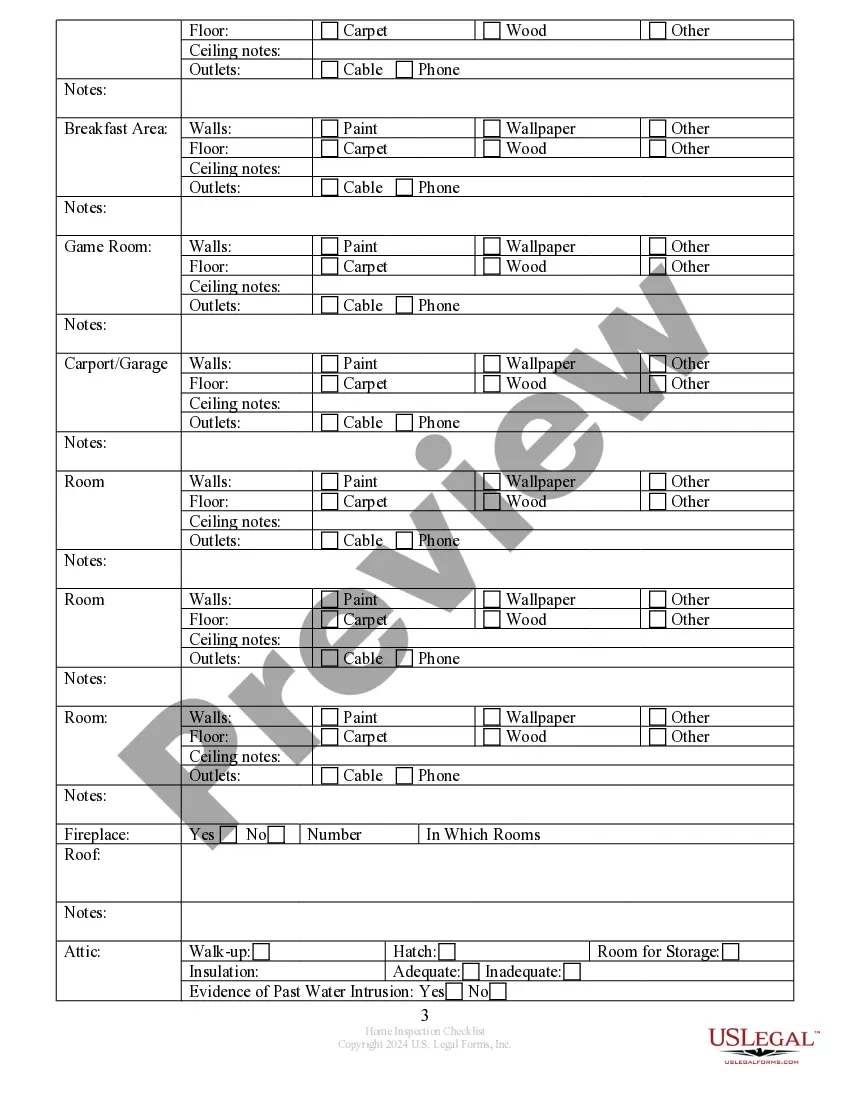
- Notes section: Space for buyers to jot down important observations.
- Condition checks: Areas to indicate maintenance status and potential concerns.
When to use this document
This checklist is ideal for potential buyers who are viewing properties for sale. Use it during or after home viewings to compile observations about key features, ask questions to the seller, and ensure that no important details are overlooked before making an offer.
Intended users of this form
- First-time homebuyers looking for a comprehensive assessment tool.
- Experienced buyers wanting to streamline their home-viewing process.
- Realtors assisting clients in evaluating properties effectively.
- Investors needing to analyze potential purchases before making offers.
How to prepare this document
- Begin by entering the property address and date of the viewing.
- Systematically evaluate the listed items by checking "Yes" or "No" based on your observations.
- Use the notes section to record any additional comments or inquiries about the property.
- Consult with the seller regarding any concerns noted on your checklist.
- Keep the completed checklist for reference when making an offer or crafting negotiations.
Is notarization required?
This form usually doesn’t need to be notarized. However, local laws or specific transactions may require it. Our online notarization service, powered by Notarize, lets you complete it remotely through a secure video session, available 24/7.
Get your form ready online
Our built-in tools help you complete, sign, share, and store your documents in one place.
Make edits, fill in missing information, and update formatting in US Legal Forms—just like you would in MS Word.
Download a copy, print it, send it by email, or mail it via USPS—whatever works best for your next step.
Sign and collect signatures with our SignNow integration. Send to multiple recipients, set reminders, and more. Go Premium to unlock E-Sign.
If this form requires notarization, complete it online through a secure video call—no need to meet a notary in person or wait for an appointment.
We protect your documents and personal data by following strict security and privacy standards.

Make edits, fill in missing information, and update formatting in US Legal Forms—just like you would in MS Word.

Download a copy, print it, send it by email, or mail it via USPS—whatever works best for your next step.

Sign and collect signatures with our SignNow integration. Send to multiple recipients, set reminders, and more. Go Premium to unlock E-Sign.

If this form requires notarization, complete it online through a secure video call—no need to meet a notary in person or wait for an appointment.

We protect your documents and personal data by following strict security and privacy standards.
Common mistakes to avoid
- Not reviewing the checklist thoroughly prior to the viewing.
- Failing to ask critical questions to the seller while viewing.
- Overlooking notes from previous properties that could inform decisions.
- Neglecting to follow up on concerns noted after the viewing.
Advantages of online completion
- Immediate access to a ready-made checklist that can be downloaded and printed.
- Edit the checklist as necessary to suit personal preferences or specific properties.
- Reliable resource drafted by licensed attorneys, ensuring completeness and legal accuracy.
- Convenience of having the form available for any home viewing situation.
Looking for another form?

Form popularity
FAQ
Chimney Inspections. Electrical Inspections. Lead-Based Paint. Heating and Air Conditioning. Wood Damage. Foundation Inspections. Pool and Spa Inspections. Roof Inspections.
A home inspector will look at things like a home's foundation, structural components, roof, HVAC, plumbing, and electrical systems, then provide a written home inspection report with results.Buyers should attend the inspection so they can explore their new home in detail and ask questions during the process.
A buyer and seller's real estate agents will be able to fill them in on the laws in their particular state, but in general a seller is responsible for paying to fix severe water damage or mold issues, to replace missing or broken smoke detectors, and to remedy building code violations, among other things.
Sellers have a legal obligation to either repair or disclose serious issues with the home. If the repair request is a big oneand it's not a surprise to themthey're almost always going to be required to spring for the cost or lose the sale.
It's a good idea for the buyer to attend the home inspection because it'll be the perfect chance to ask the inspector how the home's various systems work and hear about maintenance. I always encourage the buyer at the beginning of the inspection to share anything that they have questions about, Pretty says.
Which repairs are mandatory? How much will repairs cost? Do you have to hire a professional or can you DIY the repairs? How much credit will you have to offer if you don't opt to do the repairs before closing?
Ask the seller to make the repairs themselves. Ask for credits toward your closing costs. Ask the seller to reduce the sales price to make up for the repairs. Back out of the transaction (if you have an inspection contingency in place) Move forward with the deal.