New York Letter from Tenant to Landlord with Demand that landlord repair plumbing problem
Understanding this form
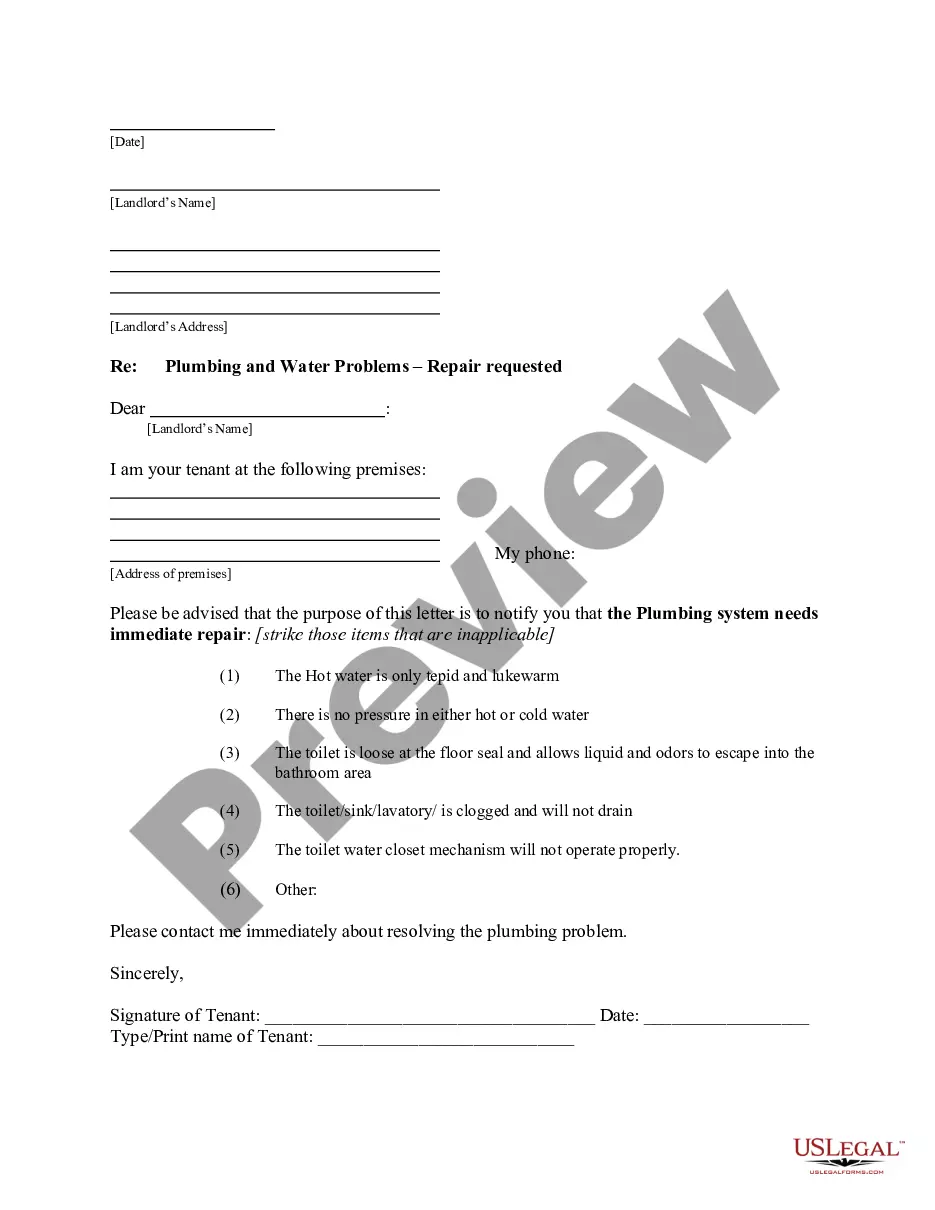
This form is a Letter from Tenant to Landlord with Demand that landlord repair plumbing problem. It serves as a formal notice for tenants to inform their landlord of specific plumbing issues within the rental property. This notification emphasizes the landlord's legal obligation to maintain the property's habitability and demands prompt repairs, typically within ten days. This form is essential for tenants seeking to document their request for necessary repairs and to ensure compliance with local tenant laws.
What’s included in this form
- A description of the plumbing issues: including lack of hot water, low pressure, and clogged fixtures.
- A statement of the landlord's legal duty to maintain the property.
- A demand for repairs to be completed within ten days.
- Tenant's contact information for further correspondence.
- Signature line for the tenant to formally initiate the request.

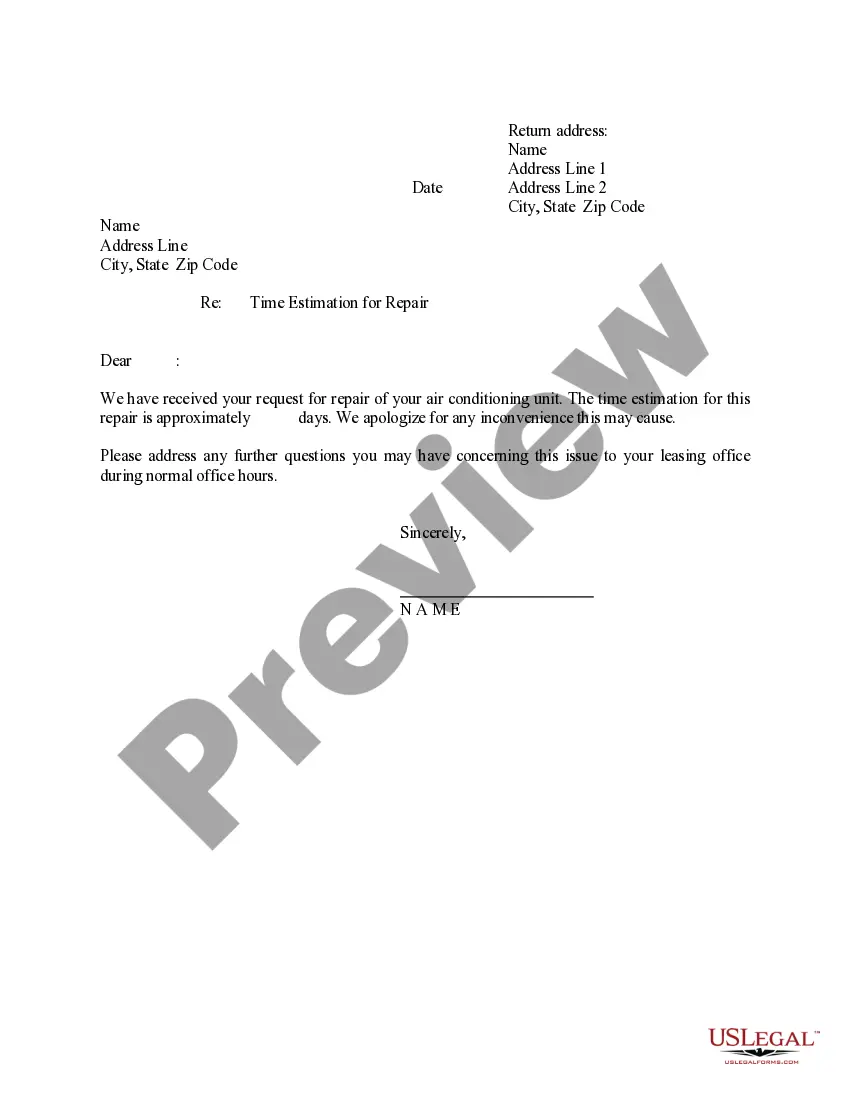
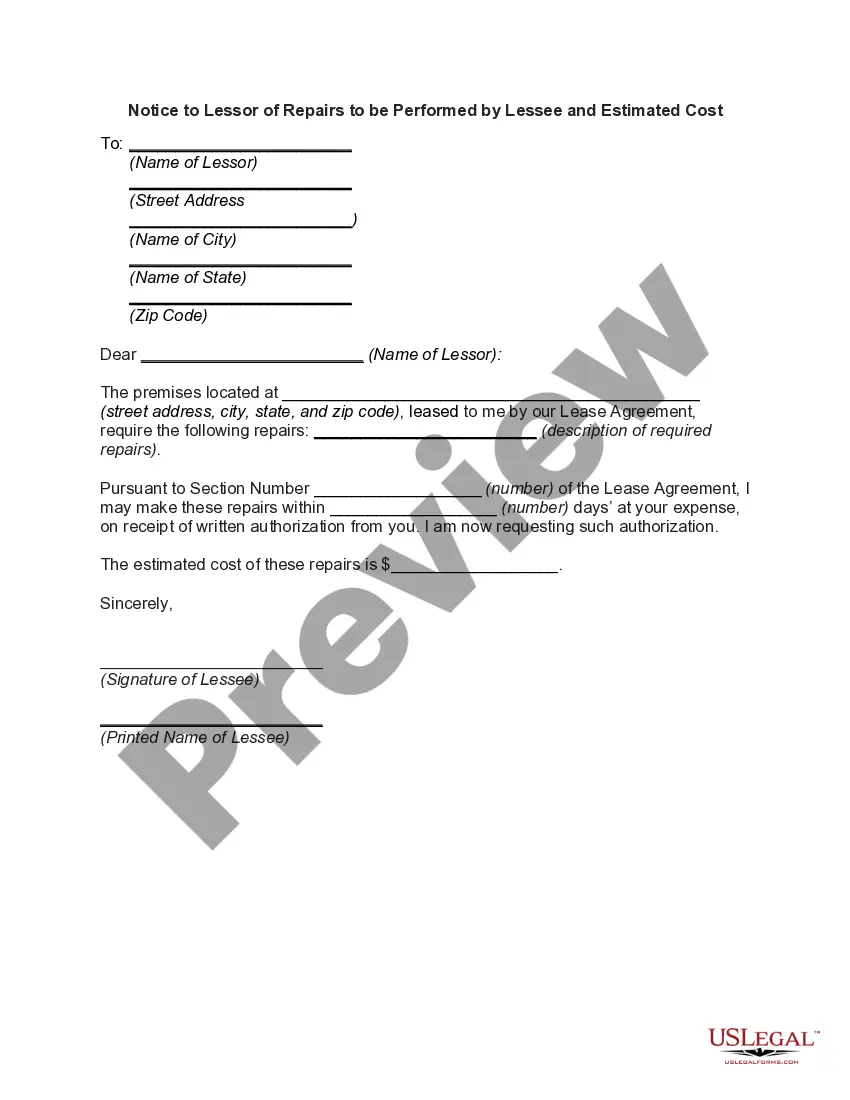

Situations where this form applies
This form should be used when a tenant experiences plumbing issues in their rental unit, such as insufficient hot water, low water pressure, or a malfunctioning toilet or sink. It is particularly necessary when these problems are not resolved promptly by the landlord, prompting the tenant to formally notify the landlord of the need for repairs. Using this form helps tenants document their request and fulfill their legal obligations before potentially pursuing further action.
Who needs this form
- Tenants facing ongoing plumbing issues in their rental property.
- Individuals who have notified their landlord verbally but received no response.
- Renters who wish to document issues formally for legal purposes.
- People residing in properties where plumbing problems affect habitability.
Instructions for completing this form
- Identify the rental property and lease details, including the address.
- Clearly list the specific plumbing issues you are experiencing.
- Mention the landlord's obligation to maintain the property in a habitable condition.
- Set a deadline for repairs, specifying ten days for action.
- Provide your contact information for the landlord to respond.
- Sign and date the letter to validate your request.
Notarization guidance
In most cases, this form does not require notarization. However, some jurisdictions or signing circumstances might. US Legal Forms offers online notarization powered by Notarize, accessible 24/7 for a quick, remote process.
Get your form ready online
Our built-in tools help you complete, sign, share, and store your documents in one place.
Make edits, fill in missing information, and update formatting in US Legal Forms—just like you would in MS Word.
Download a copy, print it, send it by email, or mail it via USPS—whatever works best for your next step.
Sign and collect signatures with our SignNow integration. Send to multiple recipients, set reminders, and more. Go Premium to unlock E-Sign.
If this form requires notarization, complete it online through a secure video call—no need to meet a notary in person or wait for an appointment.
We protect your documents and personal data by following strict security and privacy standards.

Make edits, fill in missing information, and update formatting in US Legal Forms—just like you would in MS Word.

Download a copy, print it, send it by email, or mail it via USPS—whatever works best for your next step.

Sign and collect signatures with our SignNow integration. Send to multiple recipients, set reminders, and more. Go Premium to unlock E-Sign.

If this form requires notarization, complete it online through a secure video call—no need to meet a notary in person or wait for an appointment.

We protect your documents and personal data by following strict security and privacy standards.
Avoid these common issues
- Failing to provide a detailed description of the plumbing issues.
- Not specifying a reasonable time frame for repairs.
- Sending the letter via an informal method, like text or email, instead of certified mail.
- Not keeping a copy of the letter for personal records.
Advantages of online completion
- Convenient access to legal forms drafted by licensed attorneys.
- Easy to complete and customize to fit your specific situation.
- Immediate download allows for quick action on urgent repairs.
What to keep in mind
- The letter formalizes a tenant's request for essential plumbing repairs.
- It serves as documentation for landlord communication.
- Prompt action from the landlord is mandated by law, enhancing tenant rights.
Looking for another form?
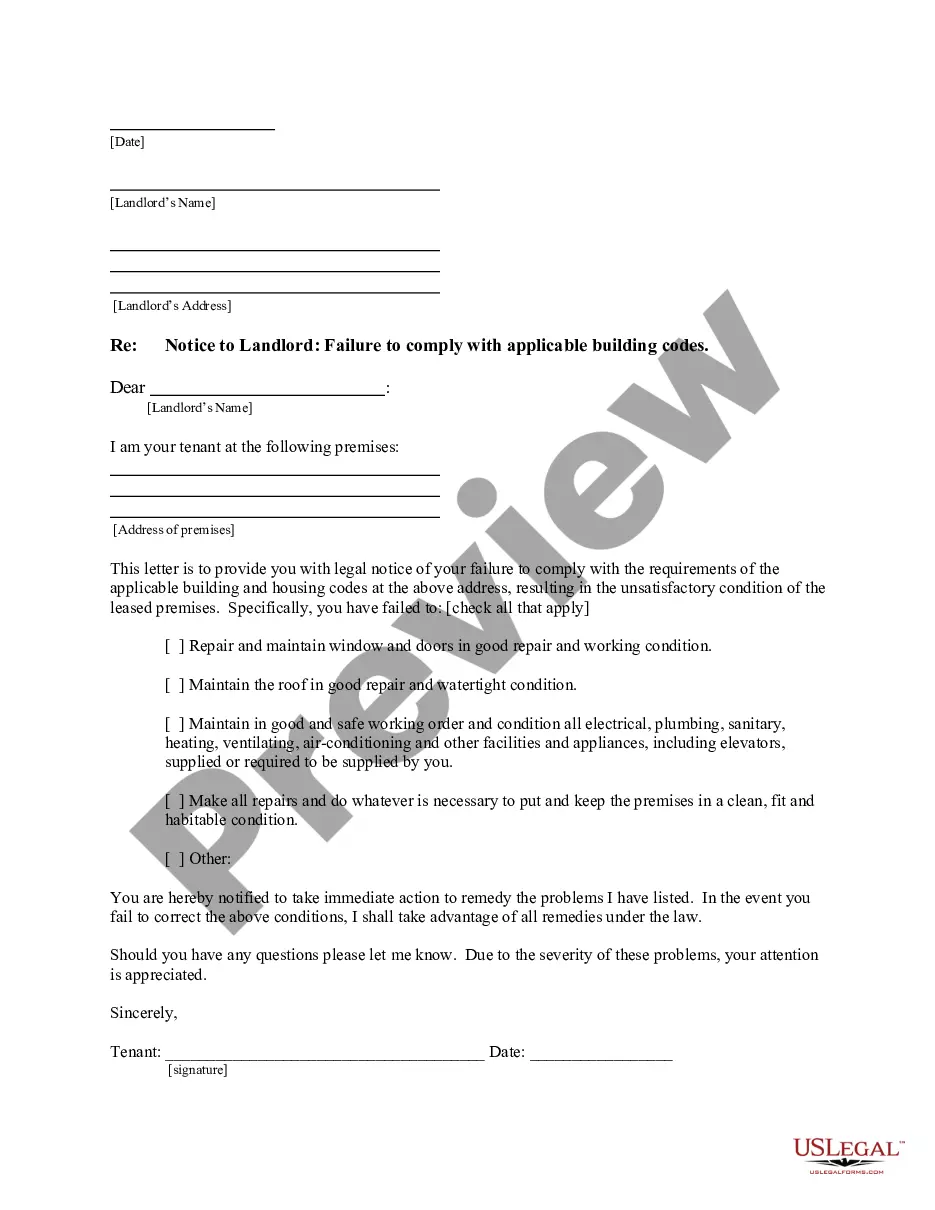
Form popularity
FAQ
As stated in the Landlord and Tennant Act 1985, it is the landlord's responsibility to maintain their drainage, pipes and other areas of plumbing. If a drain becomes blocked through tenant misuse however, then the tenant is liable for the cost of repairs.
When you rent, your landlord is responsible for maintaining the functional aspects of your home such as plumbing, electricity, and heating. Landlords must also generally take action when flooding, a clogged pipe, pest infestation, or other problems occur.
Clearly, state what you demand to be repaired by the person. Mention the period since it has been causing a problem and that it is high time. Without being too harsh, the letter is written as a warning to the person. Address the person well.
Make sure the repair is actually your landlord's responsibility. Document the problem thoroughly. Ask your landlord in writing to make the repair. Send your landlord a letter with return receipt requested. Wait for your landlord to respond.
If there is a problem, such as a burst pipe resulting from the landlord's failure to maintain the property, the tenant cannot be held responsible. If a tenant has detected a problem and reported it to the landlord, it is the owner's responsibility to fix them.
Dear (Name of landlord or manager), I am writing to request repairs to the (appliance, heating/air conditioning, plumbing issue be specific!) due to (reason for repair; this could include things such as broken handle, leaky sink hose, even normal wear-and-tear that would necessitate replacement).
The NSW tenant factsheet states that urgent repairs, including blocked toilets, are the responsibility of the landlord. When urgent repairs are required, the tenant must notify the landlord as soon as possible - preferably in writing.
Uninhabitable conditions can include dangerous ones, such as holes in the floor, unsafe or exposed wiring, or non-working air conditioning in dangerously hot summer months. Gross infestations of roaches, fleas or other pests are also uninhabitable conditions.