Nevada Letter from Tenant to Landlord containing Notice to landlord to withdraw improper rent increase due to violation of rent control ordinance
What this document covers
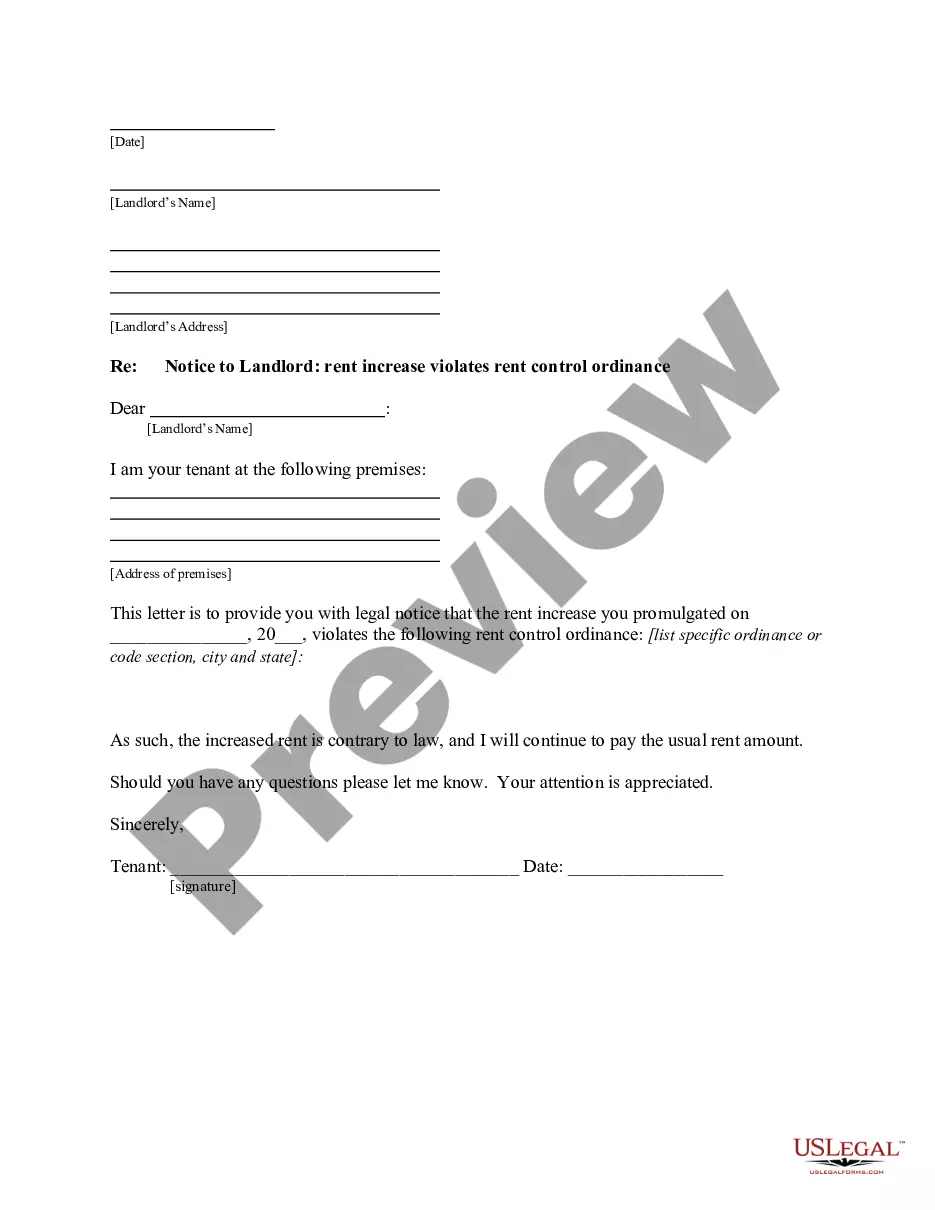
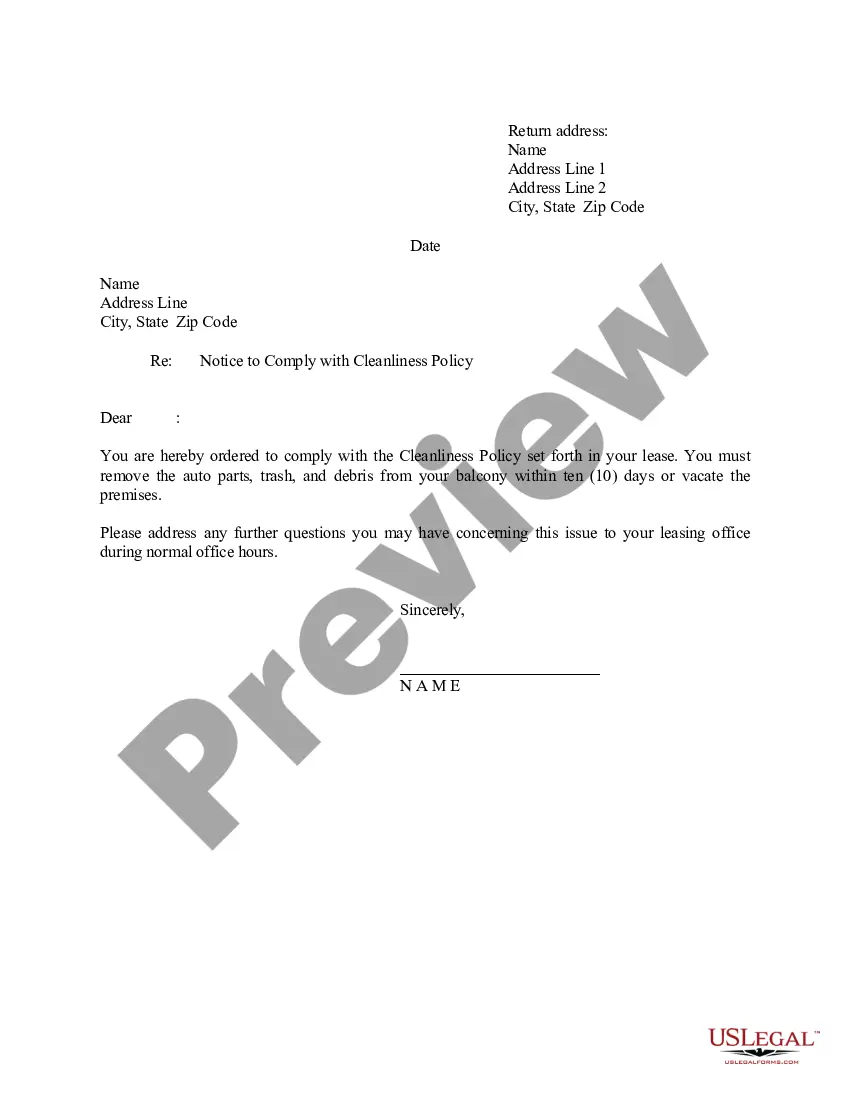
This form is a letter from a tenant to a landlord, notifying the landlord of an improper rent increase that potentially violates rent control ordinances. This notice is crucial as it informs the landlord that their increase in rent may be unlawful, offering protection to the tenant under applicable housing laws. By utilizing this letter, tenants can formally address and dispute any rent hikes that do not comply with local regulations, ensuring their rights are upheld.
Key components of this form
- Tenant's contact information: Includes the tenant's name and address.
- Landlord's contact information: Clearly states the name and address of the landlord.
- Specific notice of the rent increase: Details the amount of the rent increase being disputed.
- Reference to applicable rent control ordinance: Cites the specific law being violated by the rent increase.
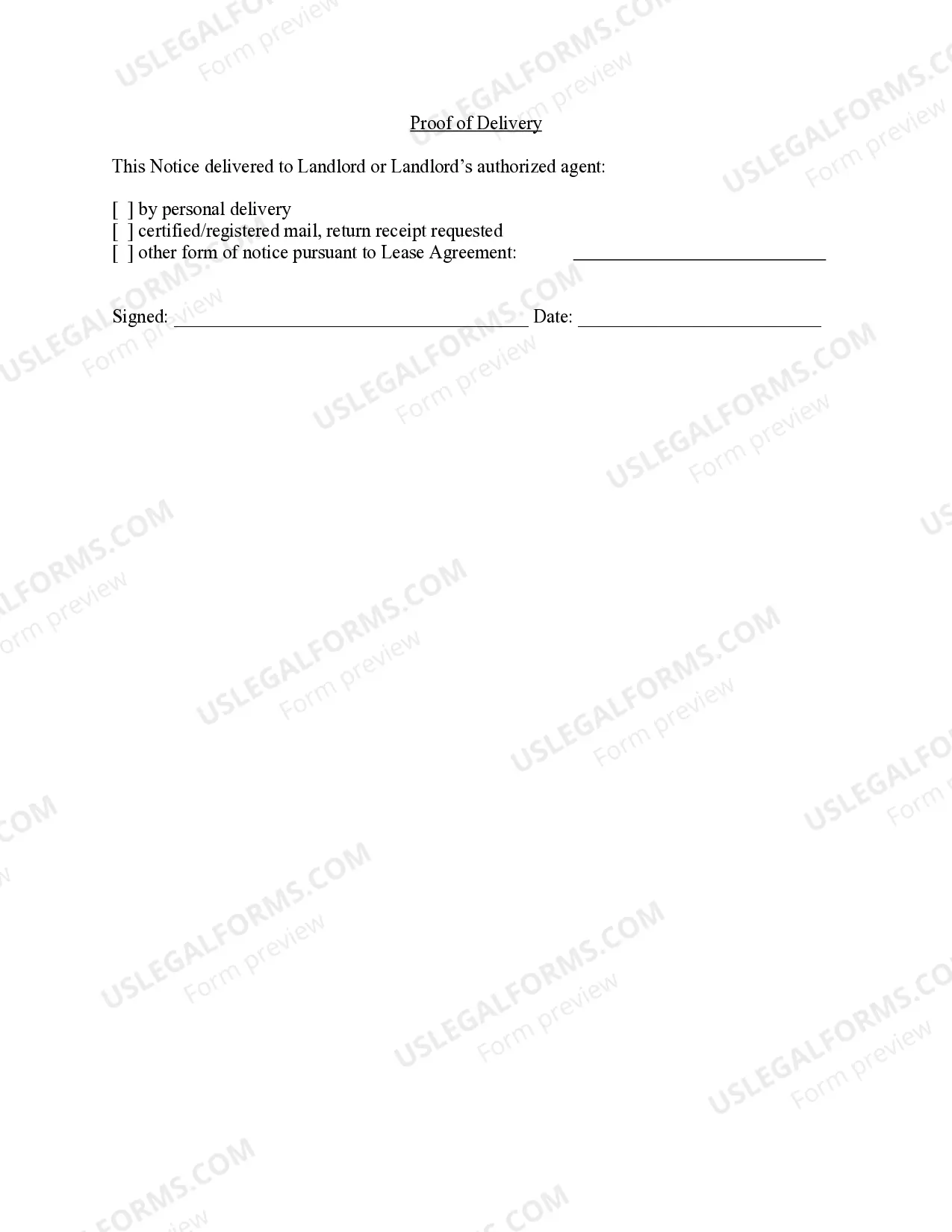
- Proof of delivery: Provides methods of delivering the notice to ensure receipt.

When to use this form
This letter should be used when a tenant receives a notice of a rent increase that seems to violate local rent control laws. It is an essential step for tenants who want to formally challenge the increase and protect themselves legally. This form is particularly relevant during disputes involving rent increases in cities with strong rent control measures, where tenants need to assert their rights and prevent unlawful charges.
Who can use this document
- Tenants experiencing a rent increase they believe is illegal.
- Individuals living in a rent-controlled area.
- Tenants seeking to formally notify their landlord of legal violations.
- Residents looking to protect their rights under local housing laws.
How to prepare this document
- Identify the tenant: Enter your full name and address at the top of the letter.
- Provide landlord details: Clearly state the name and address of the landlord or the landlord's representative.
- Specify the rent increase: Write down the specifics of the rent increase you are disputing, including the amount and date it was communicated.
- Reference the ordinance: Cite the rent control ordinance that supports your position against the increase.
- Sign and date the letter: Ensure you sign the letter and include the date of completion for your records.
- Deliver the notice: Use one of the specified methods to deliver this notice to the landlord or their agent.
Notarization requirements for this form
This form usually doesn’t need to be notarized. However, local laws or specific transactions may require it. Our online notarization service, powered by Notarize, lets you complete it remotely through a secure video session, available 24/7.
Get your form ready online
Our built-in tools help you complete, sign, share, and store your documents in one place.
Make edits, fill in missing information, and update formatting in US Legal Forms—just like you would in MS Word.
Download a copy, print it, send it by email, or mail it via USPS—whatever works best for your next step.
Sign and collect signatures with our SignNow integration. Send to multiple recipients, set reminders, and more. Go Premium to unlock E-Sign.
If this form requires notarization, complete it online through a secure video call—no need to meet a notary in person or wait for an appointment.
We protect your documents and personal data by following strict security and privacy standards.

Make edits, fill in missing information, and update formatting in US Legal Forms—just like you would in MS Word.

Download a copy, print it, send it by email, or mail it via USPS—whatever works best for your next step.

Sign and collect signatures with our SignNow integration. Send to multiple recipients, set reminders, and more. Go Premium to unlock E-Sign.

If this form requires notarization, complete it online through a secure video call—no need to meet a notary in person or wait for an appointment.

We protect your documents and personal data by following strict security and privacy standards.
Typical mistakes to avoid
- Failing to include complete contact information for both the tenant and landlord.
- Not referencing the specific rent control ordinance being violated.
- Inadequately documenting the method of delivery.
- Forgetting to sign and date the letter before sending it.
Why use this form online
- Convenient access to legal form templates anytime, anywhere.
- Editable format allows for easy customization to your specific situation.
- Ensures compliance with legal standards, drafted by licensed attorneys.
- Saves time by streamlining the process of notifying landlords.
Legal use & context
- This letter serves as official documentation of the tenant's dispute regarding rent increase.
- It can be used in negotiations or legal proceedings if necessary.
- Understanding local laws is essential to leveraging this notice effectively.
Quick recap
- This form is essential for tenants disputing rent increases that may violate local laws.
- Ensure all information is accurate and specific to the situation and jurisdiction.
- Claiming rights through formal notice can provide protection under the law.
Looking for another form?
Form popularity
FAQ
In California, when a tenant becomes what is often loosely defined as a nuisance, the landlord has the right to oust them from the property upon serving up a 3-day notice for eviction. This action is legally called Termination of Tenancy Based on Nuisance.
If you're seeking damages for emotional distress caused by a landlord's discrimination, or punitive damages for especially blatant and intentional discrimination, a lawsuit may well be your best bet. Understand what's involved in suing your landlord. You may file a lawsuit in either federal or state court.
Nevada Revised Statutes require a seven-day notice to the tenant, instructing the tenant to either pay the rent or "quit" (leave) the rental property. To evict a tenant for nonpayment of rent, the landlord must "serve" (deliver) a Seven-Day Notice to Pay Rent or Quit to the tenant.
Reference local laws. Most localities have ordinances against loud activity for a set period of time every night. Post the hours in a common area. Create penalties. Get everyone's side of the story. Set firm expectations. Keep your cool. Keep record of all interactions. Protect your tenants' right to quiet enjoyment.
In California, habitability includes the following specific warranties: A dwelling also may be considered uninhabitable (unlivable) if it substantially lacks any of the following: Effective waterproofing and weather protection of roof and exterior walls, including unbroken windows and doors.
Nevada Revised Statutes require a seven-day notice to the tenant, instructing the tenant to either pay the rent or "quit" (leave) the rental property. To evict a tenant for nonpayment of rent, the landlord must "serve" (deliver) a Seven-Day Notice to Pay Rent or Quit to the tenant.
Uninhabitable conditions can include dangerous ones, such as holes in the floor, unsafe or exposed wiring, or non-working air conditioning in dangerously hot summer months. Gross infestations of roaches, fleas or other pests are also uninhabitable conditions.
If the noisy neighbour is a tenant, you can make a complaint to the landlord. Most tenancy agreements require tenants not to do anything that would constitute a nuisance to neighbours. The landlord can use the tenancy agreement to deal with the problem if it persists, with eviction as the last resort.
: something (as an act, object, or practice) that invades or interferes with another's rights or interests (as the use or enjoyment of property) by being offensive, annoying, dangerous, obstructive, or unhealthful. attractive nuisance.