Nevada Buyer's Request for Accounting from Seller under Contract for Deed
Overview of this form
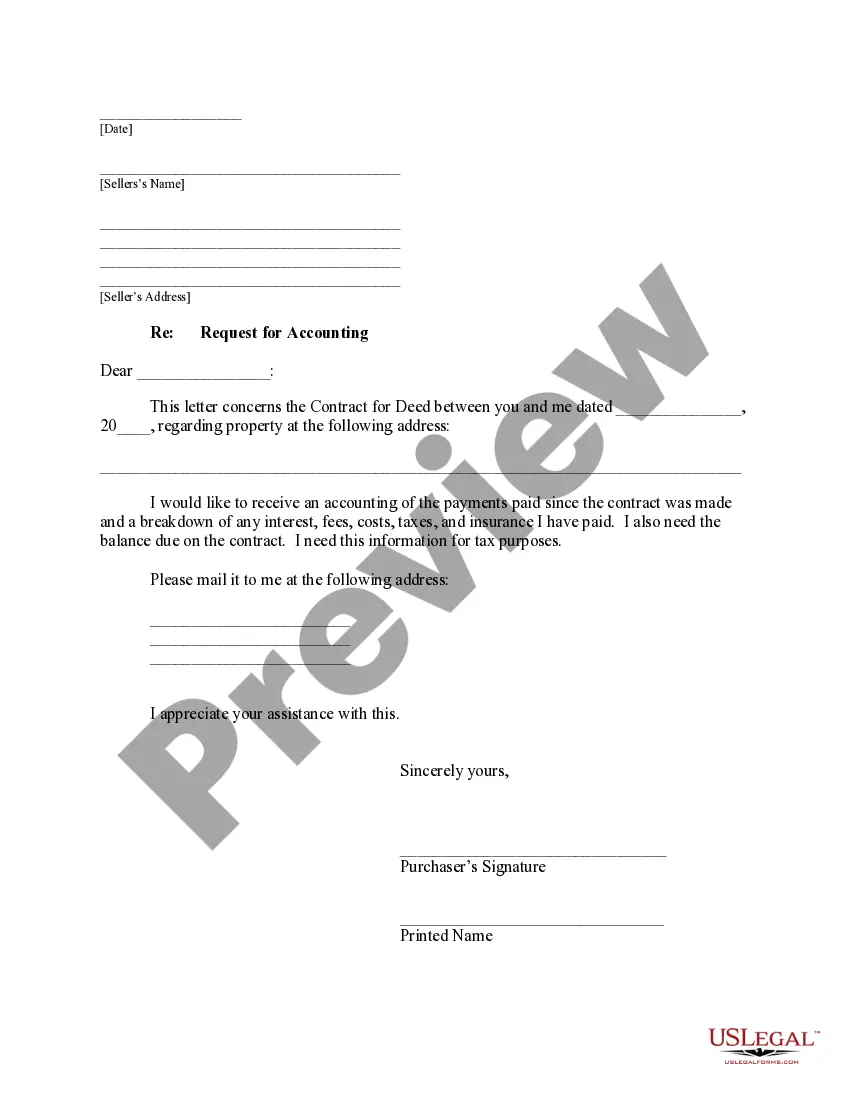
The Buyer's Request for Accounting from Seller under Contract for Deed is a formal document used by purchasers to obtain a detailed accounting statement from the seller. This request includes all payments made since the contract was initiated and provides a breakdown of any interest, fees, costs, taxes, and insurance incurred. The primary purpose of this form is to ensure transparency in financial transactions under a contract for deed and to confirm the outstanding balance of the agreement.
Key parts of this document
- Request for an accounting of all payments made to date.
- Details on any accrued interest, additional fees, costs, taxes, and insurance.
- Statement of the remaining balance due on the contract.
- Space to provide the requestor's mailing address.
- Signature and printed name of the purchaser making the request.
Situations where this form applies
This form should be used when a buyer under a contract for deed wishes to formally request an accounting from the seller. It is particularly important in situations where the buyer needs clarity on previous payments for personal records, tax purposes, or when considering future transactions. The form ensures that the buyer receives an accurate account of all financial obligations and payments made throughout the duration of the contract.
Who can use this document
- Individuals who are buyers under a contract for deed.
- Purchasers needing a clear financial summary for tax documentation.
- Anyone seeking to confirm payment histories and outstanding balances with the seller.
Completing this form step by step
- Enter your request for payment accounting clearly at the top of the form.
- List the address where you want the information sent.
- Sign the form to authenticate your request.
- Print your name beneath your signature for clarity.
- Keep a copy of the completed form for your records.
Notarization requirements for this form
This form does not typically require notarization unless specified by local law. It is advisable to consult local regulations to ensure compliance with any additional requirements.
Get your form ready online
Our built-in tools help you complete, sign, share, and store your documents in one place.
Make edits, fill in missing information, and update formatting in US Legal Forms—just like you would in MS Word.
Download a copy, print it, send it by email, or mail it via USPS—whatever works best for your next step.
Sign and collect signatures with our SignNow integration. Send to multiple recipients, set reminders, and more. Go Premium to unlock E-Sign.
If this form requires notarization, complete it online through a secure video call—no need to meet a notary in person or wait for an appointment.
We protect your documents and personal data by following strict security and privacy standards.

Make edits, fill in missing information, and update formatting in US Legal Forms—just like you would in MS Word.

Download a copy, print it, send it by email, or mail it via USPS—whatever works best for your next step.

Sign and collect signatures with our SignNow integration. Send to multiple recipients, set reminders, and more. Go Premium to unlock E-Sign.

If this form requires notarization, complete it online through a secure video call—no need to meet a notary in person or wait for an appointment.

We protect your documents and personal data by following strict security and privacy standards.
Avoid these common issues
- Not including the correct mailing address for the seller's response.
- Failing to sign the form, which invalidates the request.
- Leaving out specific details regarding payments, which can delay processing.
Benefits of completing this form online
- Convenience of downloading and completing the form at your own pace.
- Easy to edit and customize based on your specific needs.
- Access to legal form templates drafted by licensed attorneys, ensuring compliance.
Quick recap
- The buyer's request is essential for transparency in financial arrangements under a contract for deed.
- A detailed accounting aids in proper tax filings and dispute resolution.
- Completing the form accurately is crucial to receiving the necessary information.
- This form is applicable across various states but check local laws for requirements.
Looking for another form?
Form popularity
FAQ
The buyer must record the contract for deed with the county recorder where the land is located within four months after the contract is signed. Contracts for deed must provide the legal name of the buyer and the buyer's address.
But unlike buyers, sellers can't back out and forfeit their earnest deposit money (usually 1-3 percent of the offer price). If you decide to cancel a deal when the home is already under contract, you can be either legally forced to close anyway or sued for financial damages.
Contact the other party and ask whether they are willing to negotiate the cancellation of the contract. Offer the other party an incentive to cancel the contract for deed.
The buyer should record the contract for deed with the county recorder where the land is located and does so normally within four months after the contract is signed, though the time may vary depending on state law.
A home owner can cancel the home equity or refinancing contract for any reason within three business days after signing the contract. The right of rescission does not apply to contracts pertaining to the sale or purchase or a house.
Other benefits include: no loan qualifying, low or flexible down payment, favorable interest rates and flexible terms, and a quicker settlement. The biggest risk when buying a home contract for deed is that you really don?t have a legal claim to the property until you have paid off the entire purchase price.
Act fastthe sooner you back out, the more options you have. If you are having cold feet about buying a home, don't waste too much time before you speak up. See if your contract gives you an out. Be prepared to pay for backing out. Be nice to the sellerand they may return the favor.
If you want out of a real estate contract and don't have any contingencies available, you can breach the contract.The seller could also decide to sue you for breach of contract. Some real estate contracts have a liquidated damages clause that states the maximum the seller can keep if the buyers breach the contract.
The majority of real estate contracts require that buyers provide an earnest deposit to the seller which goes towards the purchase price of the home.If the buyer backs out of the deal with no contingency in the contract that allows them to do so without penalty, you may be able to keep that deposit.