New Mexico Letter from Tenant to Landlord containing Notice to Cease Unjustified Nonacceptance of Rent
What this document covers
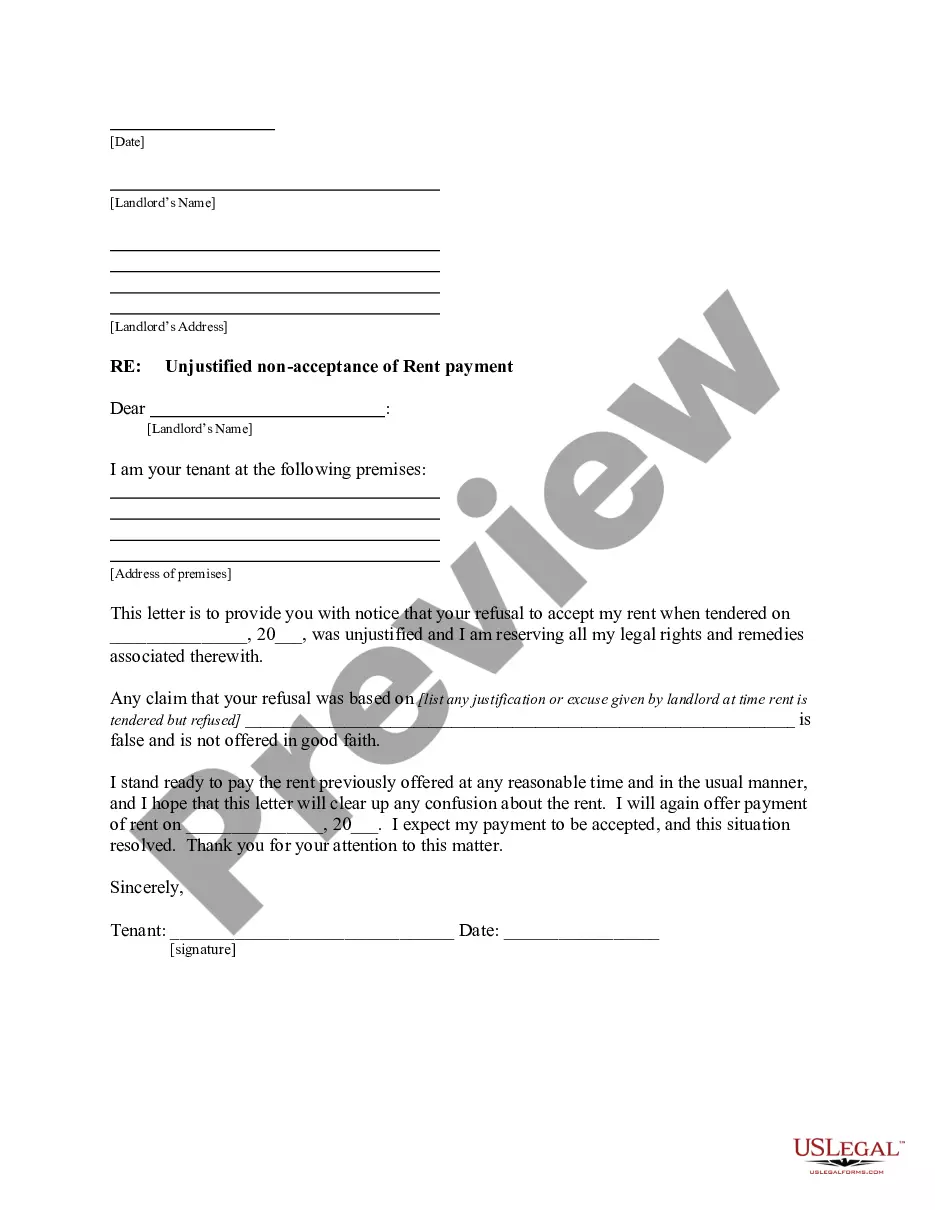
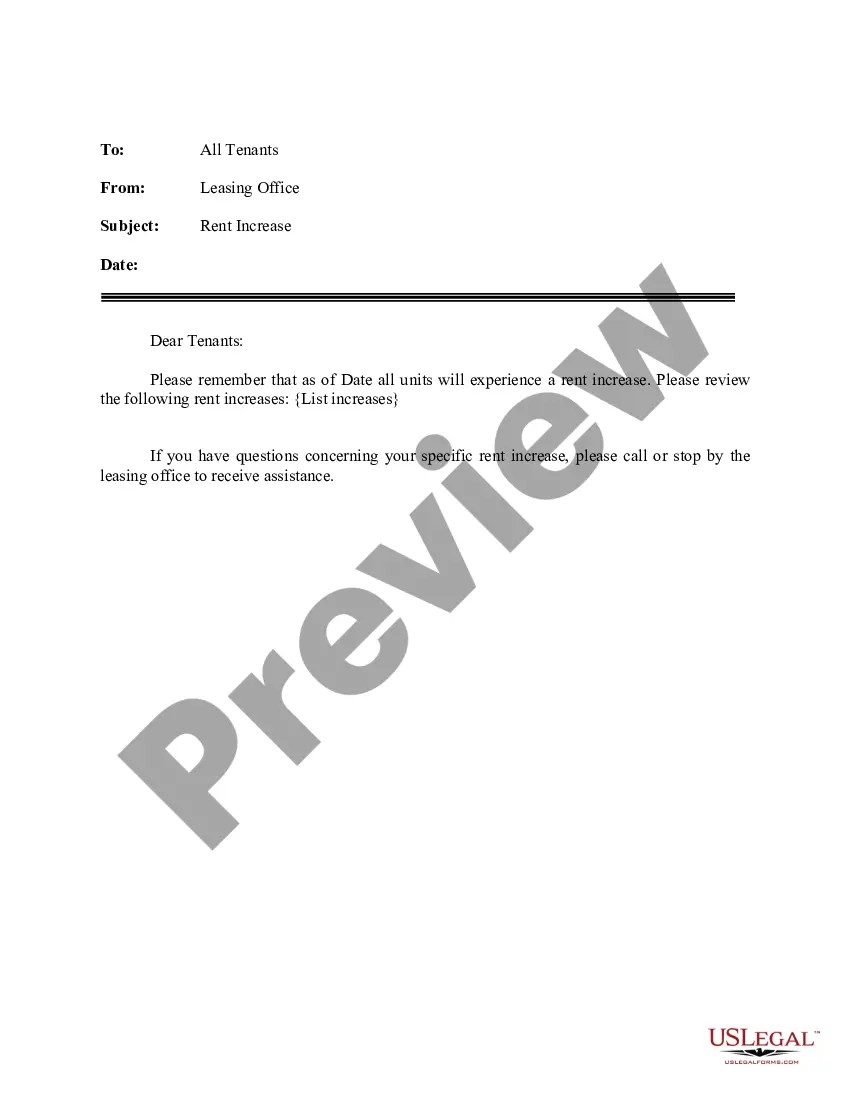
This form, known as a Letter from Tenant to Landlord containing Notice to Cease Unjustified Nonacceptance of Rent, is used by tenants to formally notify landlords that their refusal to accept rent payments is not justified. It serves to assert the tenant's rights and clarify their intention to pay rent, ensuring that the landlord understands the tenant's position and preserves their legal remedies.
What’s included in this form
- Tenant's statement of readiness to pay rent.
- Reference to the landlord's unjustified refusal to accept payment.
- Specific dates for the next offer of payment.
- Tenant's signature and date for record-keeping.
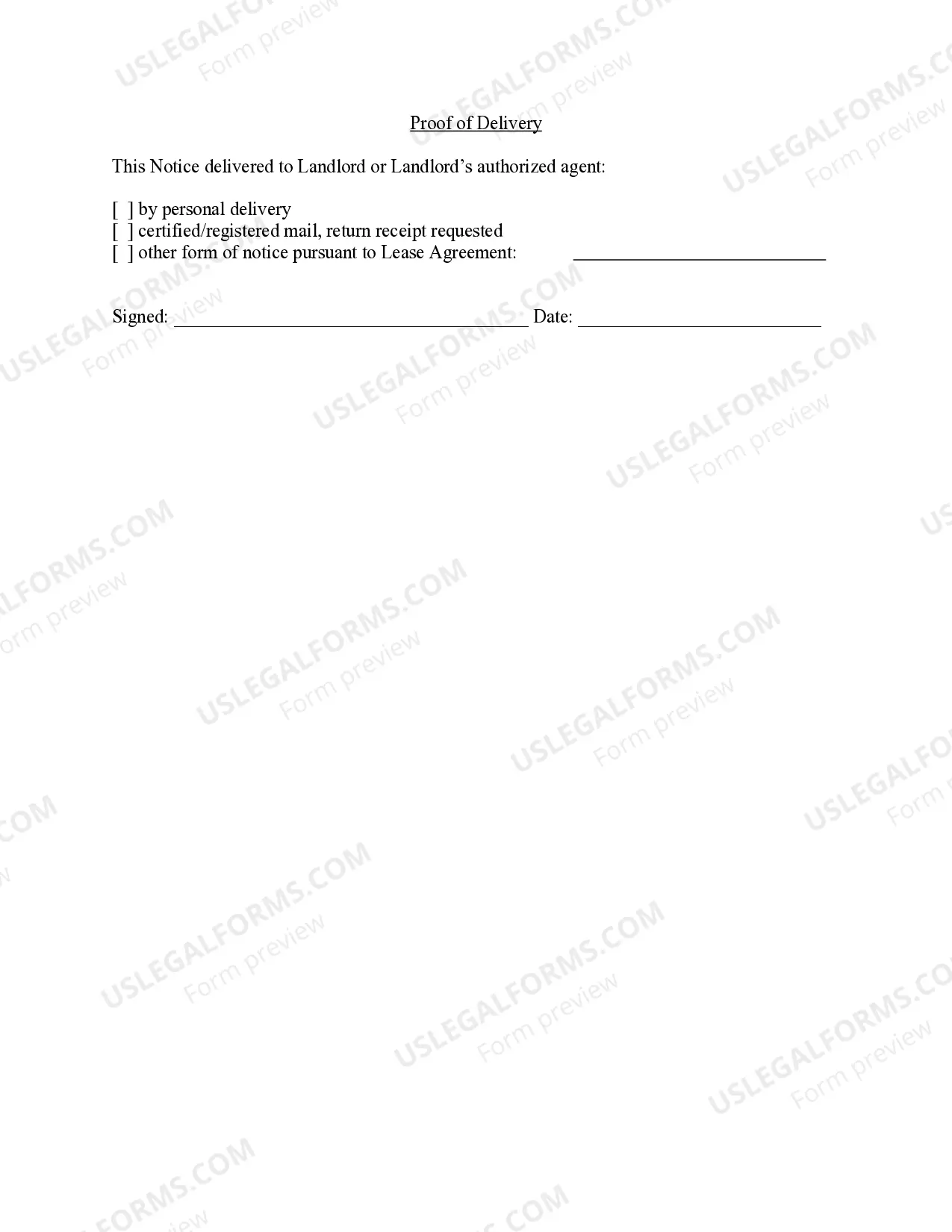
- Proof of delivery section to confirm notice has been given.


When to use this document
This form is useful in situations where a landlord has refused to accept rent payments without valid reason. For instance, if a tenant delivers rent and the landlord claims there are issues with the payment method or amount, this letter can help document the tenant's position and intent to fulfill their obligation to pay rent.
Who can use this document
- Tenants who have had their rent payment unjustly refused by their landlord.
- Individuals seeking to protect their rights under lease agreements.
- Anyone needing to formally communicate with their landlord regarding payment disputes.
How to prepare this document
- Identify the parties involved: write your name as the tenant and the landlord's name.
- State the date when the letter is being sent.
- Include the specific dates you intend to offer rent payment.
- Clearly detail the reasons you believe the landlord's refusal is unjustified.
- Sign the letter to validate your claims and maintain a record of communication.
- Deliver the letter personally to ensure proof of receipt.
Notarization guidance
This form does not typically require notarization unless specified by local law. Ensure that you check your stateâs requirements regarding formal notices to landlords.
Get your form ready online
Our built-in tools help you complete, sign, share, and store your documents in one place.
Make edits, fill in missing information, and update formatting in US Legal Forms—just like you would in MS Word.
Download a copy, print it, send it by email, or mail it via USPS—whatever works best for your next step.
Sign and collect signatures with our SignNow integration. Send to multiple recipients, set reminders, and more. Go Premium to unlock E-Sign.
If this form requires notarization, complete it online through a secure video call—no need to meet a notary in person or wait for an appointment.
We protect your documents and personal data by following strict security and privacy standards.
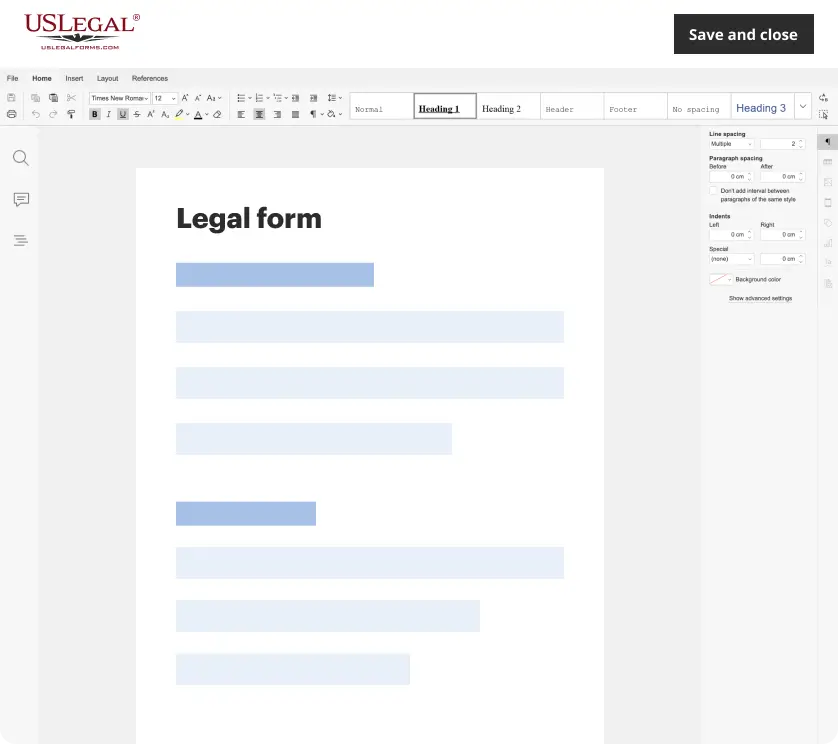
Make edits, fill in missing information, and update formatting in US Legal Forms—just like you would in MS Word.
Download a copy, print it, send it by email, or mail it via USPS—whatever works best for your next step.
Sign and collect signatures with our SignNow integration. Send to multiple recipients, set reminders, and more. Go Premium to unlock E-Sign.
If this form requires notarization, complete it online through a secure video call—no need to meet a notary in person or wait for an appointment.
We protect your documents and personal data by following strict security and privacy standards.
Avoid these common issues
- Failing to specify the exact reasons for the landlord's refusal.
- Not providing adequate notice that you intend to pay rent again.
- Neglecting to keep a copy of the letter for personal records.
Why complete this form online
- Convenience of immediate access and download from any location.
- Editability to customize the form according to specific situations.
- Reliability as each template is drafted by licensed attorneys for legal compliance.
Legal use & context
- This letter serves as a formal record of the tenant's offer and the landlord's refusal.
- It can be used as evidence in potential legal disputes over tenant rights.
- Understanding the local laws surrounding rent acceptance is crucial to enforceability.
Looking for another form?
Form popularity
FAQ
Before breaking the lease, you must provide your landlord with a 30-day notice. You may also need to show the deployment letter. After the landlord receives the notice, the tenancy will automatically end 30 days after the date that the next rent payment is due.
Step 1: make a formal complaint. You can make a formal complaint by writing a letter to your landlord. Step 2: complain to your local council. If making a formal complaint to your landlord doesn't solve your problem you might be able to complain to your local council.
New Mexico does not limit by how much landlords can raise rent, but landlords are required to give notice commensurate to how frequently a tenant pays rent. Rent-related fees. The state limits late fees to 10% of the price of rent for that period.
1-800-340-9771. Se habla espanol. Hours: a.m. to p.m. Landlord & Tenant Hotline.
Renters' Rights in New Mexico Landlord/tenant laws are in place to protect the rights of tenants in New Mexico and every other state. These rights cover discrimination, security deposits, rent disclosure, and notice before landlord entry. Some minor variances can exist between states, however.
Tenants may be able to file their complaints with their city or county rent control board, local tenant association, rental housing association, district attorney's office and consumer protection agency. California residents can find the appropriate agencies based on the nature of their complaint by contacting the
Injury at Rental Property: You could have a case for a lawsuit against your landlord if you are injured at the rental property due to a landlord's neglect. Filing an Illegal Eviction: You can countersue your landlord if you feel your landlord is trying to evict you illegally.
In most states, a landlord must give tenants notice at least 30 days before they'll enforce a rent increase. However, in other states like California, the notice can increase to 60 days' notice if the increase is more than 10% of the current rent rate.