New Mexico Warranty Deed from Husband and Wife to Husband and Wife
Understanding this form
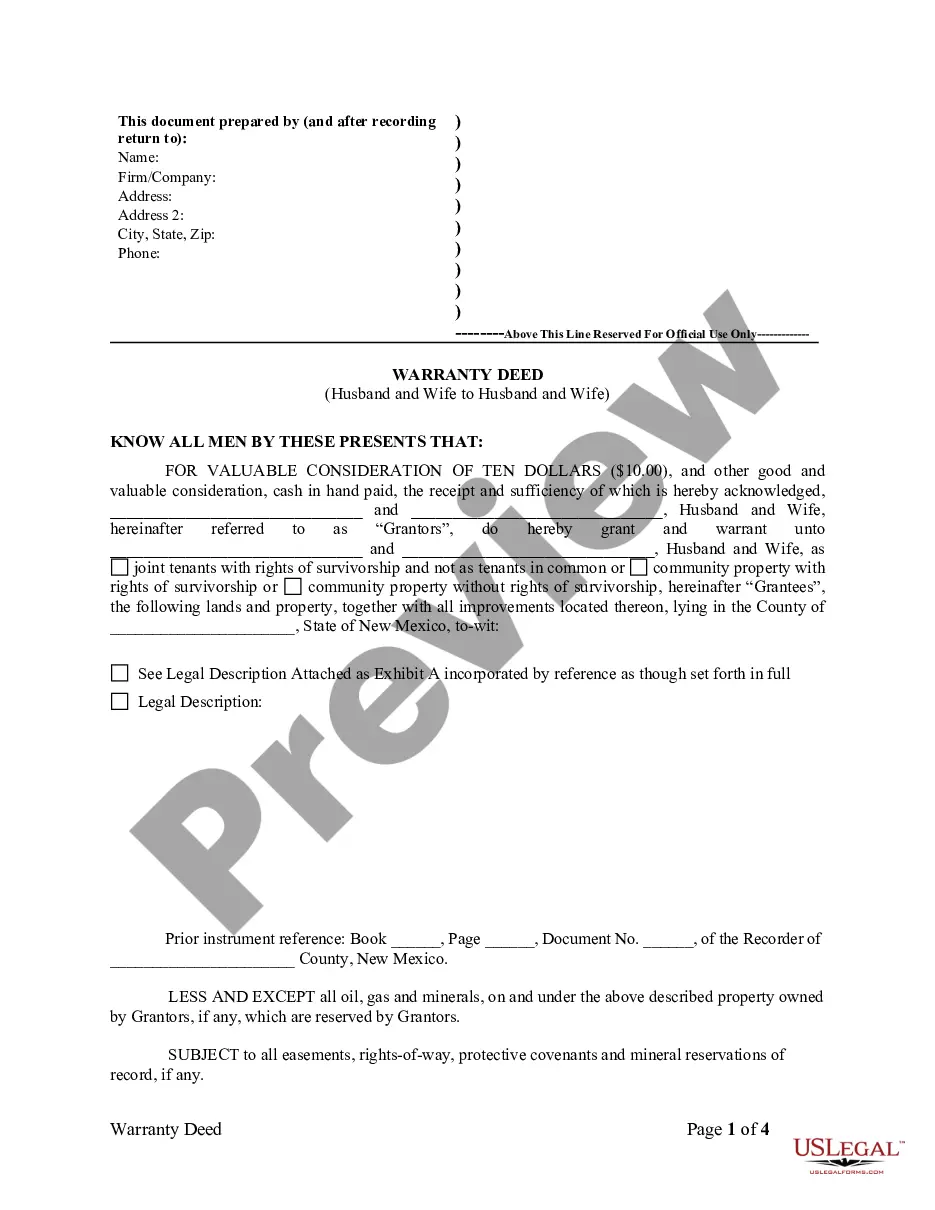
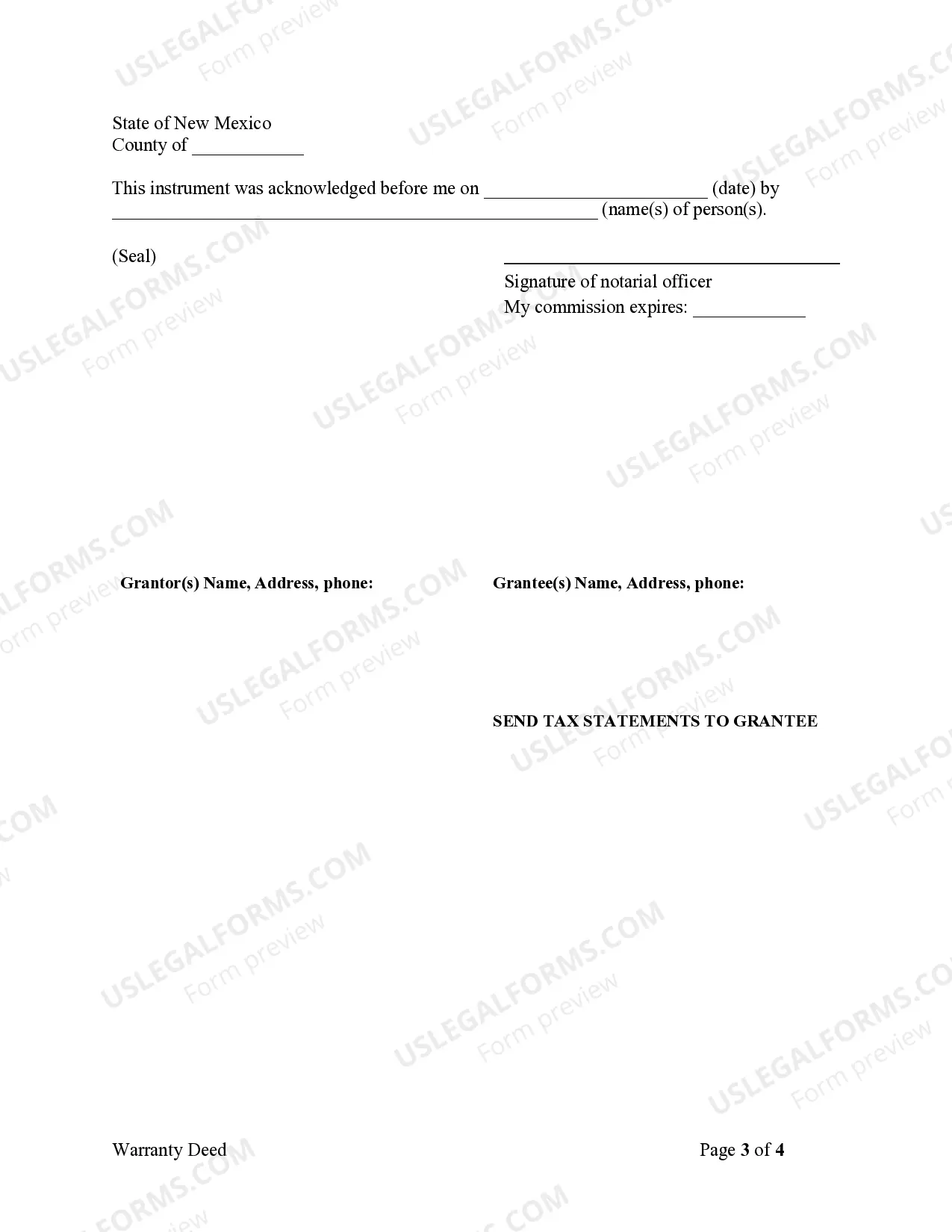
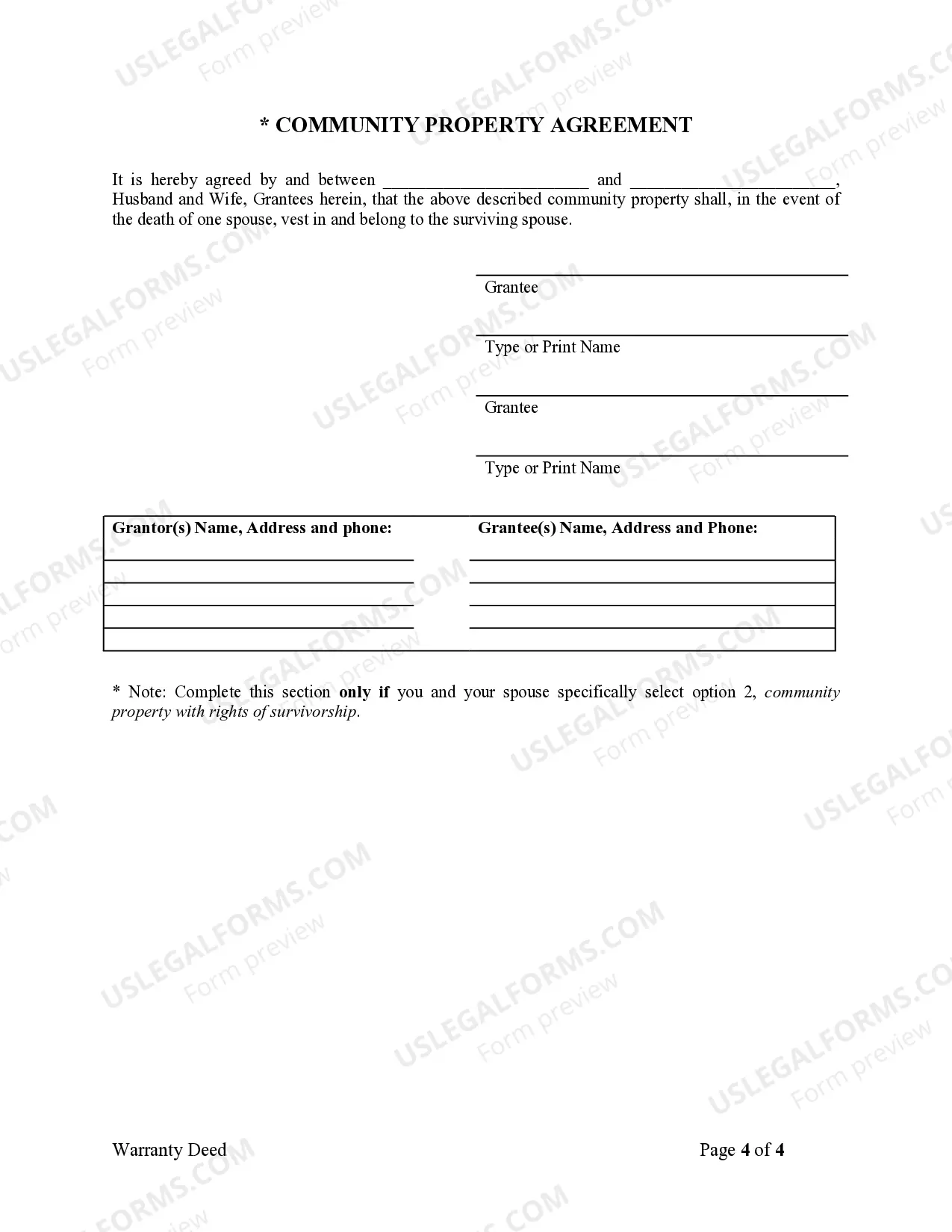
A Warranty Deed from Husband and Wife to Husband and Wife is a legal document used to transfer property ownership between spouses. This form ensures that both parties, as grantors and grantees, convey and warrant the property while explicitly reserving any mineral rights. It serves to protect the interests of both spouses and provides clear evidence of the transaction's validity, adhering to state statutory laws.
Main sections of this form
- Legal description of the property being transferred.
- Confirmation of the grantors' ownership and assurance of no encumbrances, unless otherwise stated.
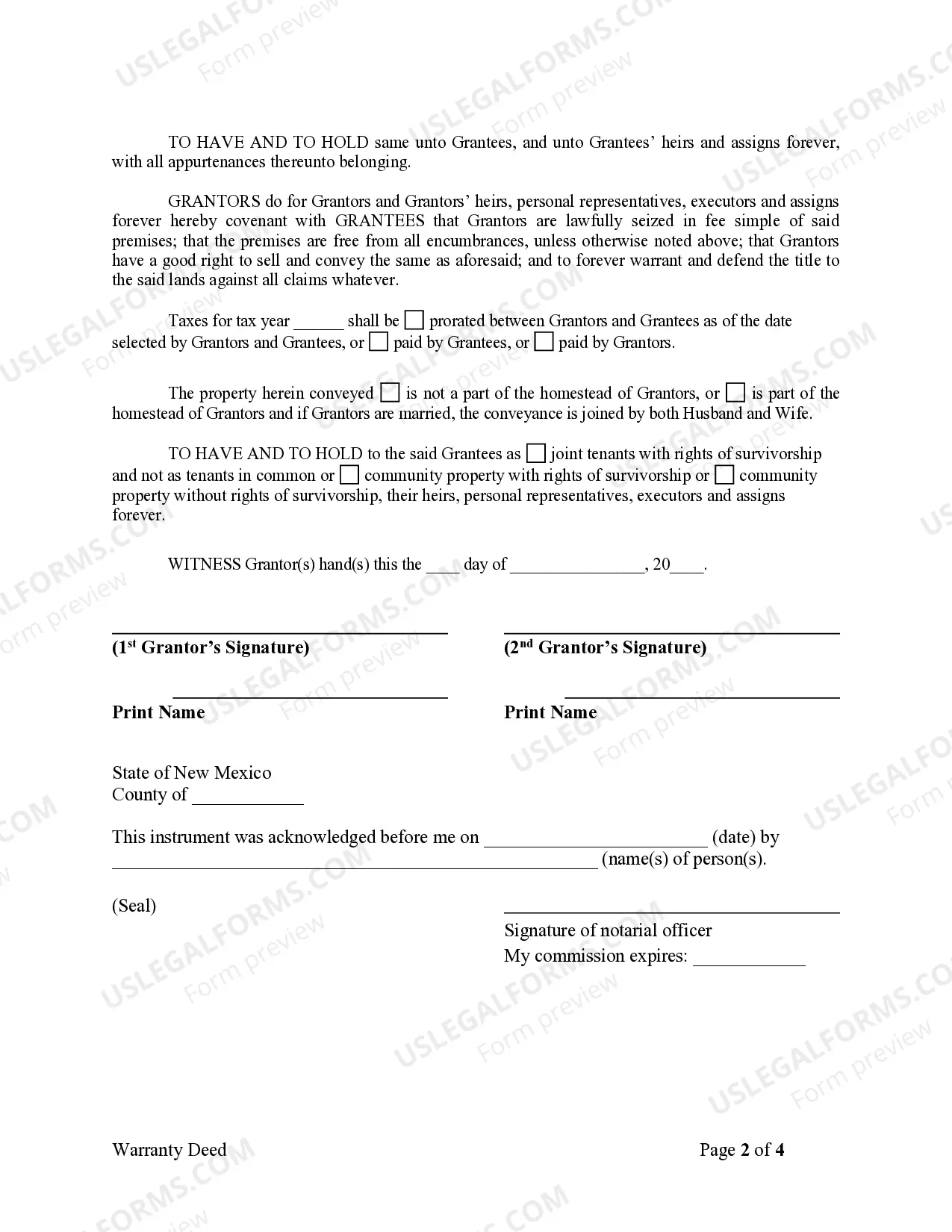
- Provisions for tax proration for the year indicated.
- Indication of whether the property is part of the homestead.
- Statement that the grantors are both married and involved in the transaction.





Common use cases
This form is typically used when a married couple wishes to transfer property ownership to themselves, often occurring during estate planning, asset management, or when clarifying ownership of shared property. It is also relevant in situations where one spouse wants to ensure that both partners have equal rights to the property being held.
Who can use this document
- Married couples transferring property ownership between themselves.
- Spouses seeking to clarify ownership rights in jointly held property.
- Couples involved in estate planning and wish to document property transfers.
How to complete this form
- Identify the parties involved, specifically the names of the husband and wife as grantors and grantees.
- Specify the legal description of the property in the appropriate section.
- Indicate any reserved rights, such as mineral rights, if applicable.
- Fill in any relevant dates and the tax proration details for the specified year.
- Ensure signatures from both parties where required, and consider notarization based on your state's laws.
Notarization guidance
Notarization is required for this form to take effect. Our online notarization service, powered by Notarize, lets you verify and sign documents remotely through an encrypted video session, available 24/7.
Get your form ready online
Our built-in tools help you complete, sign, share, and store your documents in one place.
Make edits, fill in missing information, and update formatting in US Legal Forms—just like you would in MS Word.
Download a copy, print it, send it by email, or mail it via USPS—whatever works best for your next step.
Sign and collect signatures with our SignNow integration. Send to multiple recipients, set reminders, and more. Go Premium to unlock E-Sign.
If this form requires notarization, complete it online through a secure video call—no need to meet a notary in person or wait for an appointment.
We protect your documents and personal data by following strict security and privacy standards.

Make edits, fill in missing information, and update formatting in US Legal Forms—just like you would in MS Word.

Download a copy, print it, send it by email, or mail it via USPS—whatever works best for your next step.

Sign and collect signatures with our SignNow integration. Send to multiple recipients, set reminders, and more. Go Premium to unlock E-Sign.

If this form requires notarization, complete it online through a secure video call—no need to meet a notary in person or wait for an appointment.

We protect your documents and personal data by following strict security and privacy standards.
Typical mistakes to avoid
- Failing to include the complete legal description of the property.
- Not indicating whether the property is part of the homestead.
- Leaving out the necessary signatures from both grantors.
- Overlooking any special conditions, like mineral rights.
Why use this form online
- The ability to access and fill out the form anytime from the comfort of home.
- Editable templates allow for easy customization to fit specific needs.
- Access to legal advice and support to ensure correct usage and compliance.
Looking for another form?
Form popularity
FAQ
The New Mexico special warranty deed is a legal document used to convey real estate.A special warranty includes a guarantee from the grantor that there are no hidden interests or encumbrances on the property that arose while he or she owned the property.
Retrieve your original deed. Get the appropriate deed form. Draft the deed. Sign the deed before a notary. Record the deed with the county recorder. Obtain the new original deed.
General Warranty Deed (with Survivorship Rights) Couples who hold title to property as unmarried, but wish to have Survivorship Rights. Each party has a full ownership interest in the property. The property will pass instantly to the survivor upon the death of the other without probate.
Contrary to normal expectations, the Deed DOES NOT have to be recorded to be effective or to show delivery, and because of that, the Deed DOES NOT have to be signed in front of a Notary Public. However, if you plan to record it, then it does have to be notarized as that is a County Recorder requirement.
In California, all property bought during the marriage with income that was earned during the marriage is deemed "community property." The law implies that both spouses own this property equally, regardless of which name is on the title deed.
Fill out the "grantor" section of the warranty deed. The grantors are the givers, or current owners, of the property. Use the legal name of each grantor and insert current addresses after each grantor's name.
Step 1 Write in the name of the grantor or seller. Step 2 Fill in the name and address of the grantee or buyer. Step 3 Specify the property information including county, lot, block and recording information. Step 4 Sign and date in the presence of a notary public.
With a Survivorship Deed in place, when one of the parties in a joint tenancy dies, the other party (or parties) takes over the deceased party's interest in the property instead of it passing to the deceased's heirs or beneficiaries.
Joint Tenancy Two or more people, including spouses, may hold title to their jointly owned real estate as joint tenants. There is a so-called right of survivorship, which means that when one dies, the property automatically transfers to the survivor without the necessity of probating the estate.