New Jersey Agreement for Payment of Unpaid Rent
What is this form?
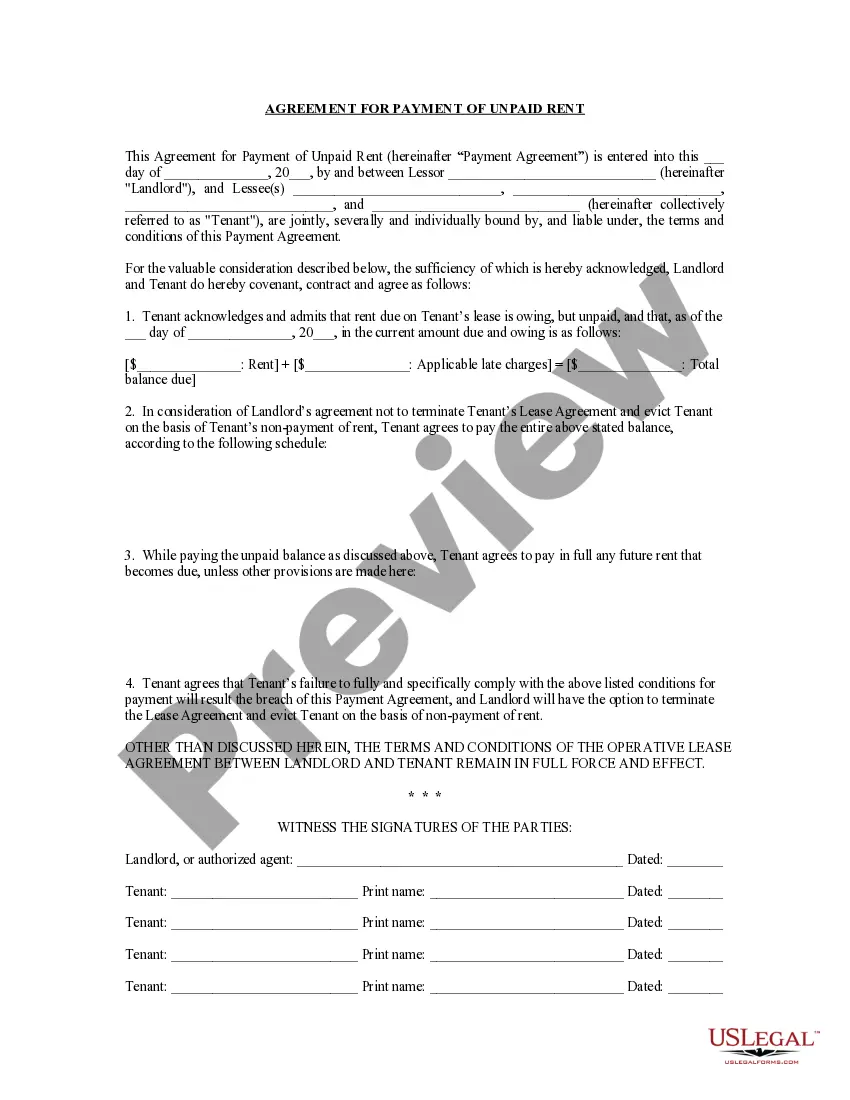
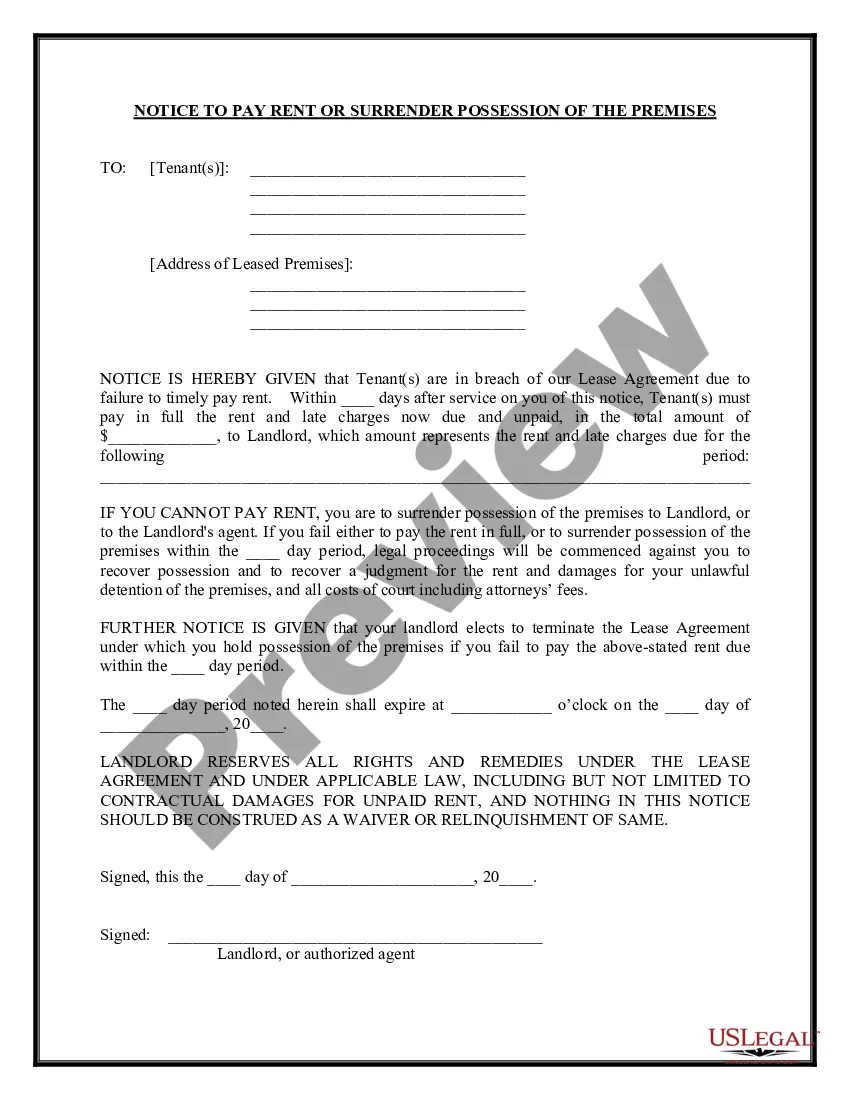
The Agreement for Payment of Unpaid Rent is a legal document that formalizes an agreement between a landlord and tenant. This payment agreement details the structured plan and deadlines for the payment of overdue rent, allowing the tenant to avoid eviction while they repay the outstanding amount. It offers a clear and legally binding approach to managing unpaid rent, distinguishing it from other rental agreements or notices. This form meets the necessary state law specifications, ensuring its enforceability and validity.
Key parts of this document
- Parties Involved: Identifies the landlord and tenant(s) and clarifies their obligations.
- Rent Details: Specifies the amount of unpaid rent, any applicable late charges, and the total balance due.
- Agreement Terms: Outlines the conditions under which the landlord agrees not to evict the tenant while payments are being made.
- Signature Lines: Provides spaces for all parties to sign and date the agreement, making it legally binding.
When this form is needed
This form is essential when a tenant is unable to pay rent on time and needs to negotiate a repayment plan with their landlord. It is particularly useful in situations where the tenant wishes to avoid eviction and establish clear terms for paying back overdue rent. This agreement can also be used when the landlord wants to outline expectations and timelines for payments before taking further action.
Who should use this form
- Landlords seeking to formalize a repayment agreement with a tenant.
- Tenants who have fallen behind on rent payments and need a structured repayment plan.
- Property managers who handle negotiations between landlords and tenants regarding overdue rent.
Instructions for completing this form
- Identify the parties: Fill in the names of the landlord and tenant(s) involved.
- Specify the rent details: Enter the amount of unpaid rent, any late charges, and the total balance due.
- Define the terms: Clearly specify the payment deadlines and any conditions related to the agreement.
- Collect signatures: Ensure all parties sign and date the agreement to make it legally valid.
Is notarization required?
Notarization is not commonly needed for this form. However, certain documents or local rules may make it necessary. Our notarization service, powered by Notarize, allows you to finalize it securely online anytime, day or night.
Get your form ready online
Our built-in tools help you complete, sign, share, and store your documents in one place.
Make edits, fill in missing information, and update formatting in US Legal Forms—just like you would in MS Word.
Download a copy, print it, send it by email, or mail it via USPS—whatever works best for your next step.
Sign and collect signatures with our SignNow integration. Send to multiple recipients, set reminders, and more. Go Premium to unlock E-Sign.
If this form requires notarization, complete it online through a secure video call—no need to meet a notary in person or wait for an appointment.
We protect your documents and personal data by following strict security and privacy standards.

Make edits, fill in missing information, and update formatting in US Legal Forms—just like you would in MS Word.

Download a copy, print it, send it by email, or mail it via USPS—whatever works best for your next step.

Sign and collect signatures with our SignNow integration. Send to multiple recipients, set reminders, and more. Go Premium to unlock E-Sign.

If this form requires notarization, complete it online through a secure video call—no need to meet a notary in person or wait for an appointment.

We protect your documents and personal data by following strict security and privacy standards.
Avoid these common issues
- Failing to accurately state the total balance due, including late fees.
- Not having all parties sign the agreement, which can render it unenforceable.
- Leaving out critical payment terms, making expectations unclear.
Why use this form online
- Convenience: Easily download the form and complete it at your own pace.
- Editability: Customize the agreement to meet your specific situation without having to start from scratch.
- Reliability: Access forms drafted by licensed attorneys, ensuring legal compliance and protection.
Quick recap
- This Agreement for Payment of Unpaid Rent helps landlords and tenants manage overdue rent payments effectively.
- It protects tenants from eviction while they fulfill their obligations.
- Clear, documented agreements are crucial for resolving rental disputes smoothly.
Looking for another form?
Form popularity
FAQ
The eviction process can take anywhere from two weeks to several months, depending on where you live. Once the landlord has obtained an eviction order from the court, you typically have around five days to move out.
These records should include the moving-in date, the amount of rent they paid and whether they paid on time. The letter should include the length of time the tenant has lived in the property and when the lease expires. If the landlord is a real estate company, the letter should be written on letterhead.
A typical New Jersey eviction process will take anywhere from 6 weeks to 6 months but they can drag on for much longer if you aren't careful. Below is a broad overview of what you can expect in the NJ eviction process.
If the tenant fails to pay rent when it is due, the landlord can go directly to court and file an eviction lawsuit against the tenant, thus ending the tenancy (see New Jersey Stat. Ann. § 2A:18-61.2). Three-Day Notice to Quit: In certain situations, the landlord can give the tenant a three-day notice to quit.
Notice to Terminate the Lease A month-to-month tenant must give written notice of lease termination at least one full month prior to moving. Most yearly leases require a 60 to 90 day notice from the tenants in order to terminate the lease.
If you do not vacate by the day in the notice, the landlord can then apply to the NSW Civil and Administrative Tribunal (NCAT) for a termination order. A termination order ends the tenancy and specifies the day by which you must give vacant possession.
Offer An Alternative Payment Method. Set Up A New Collection Date (And Stick To It) Sit-Down Conversation. Set Up Rental Payment Reminders. Offer A Prompt Payment Discount.
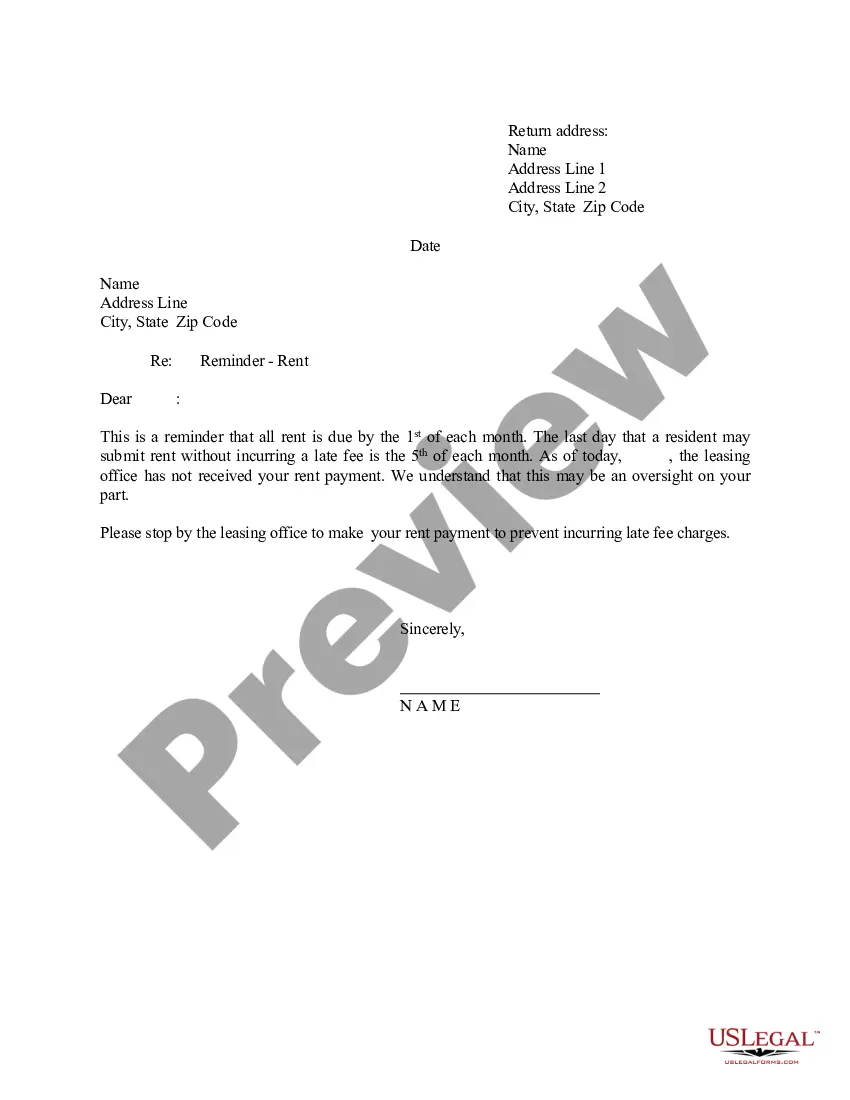
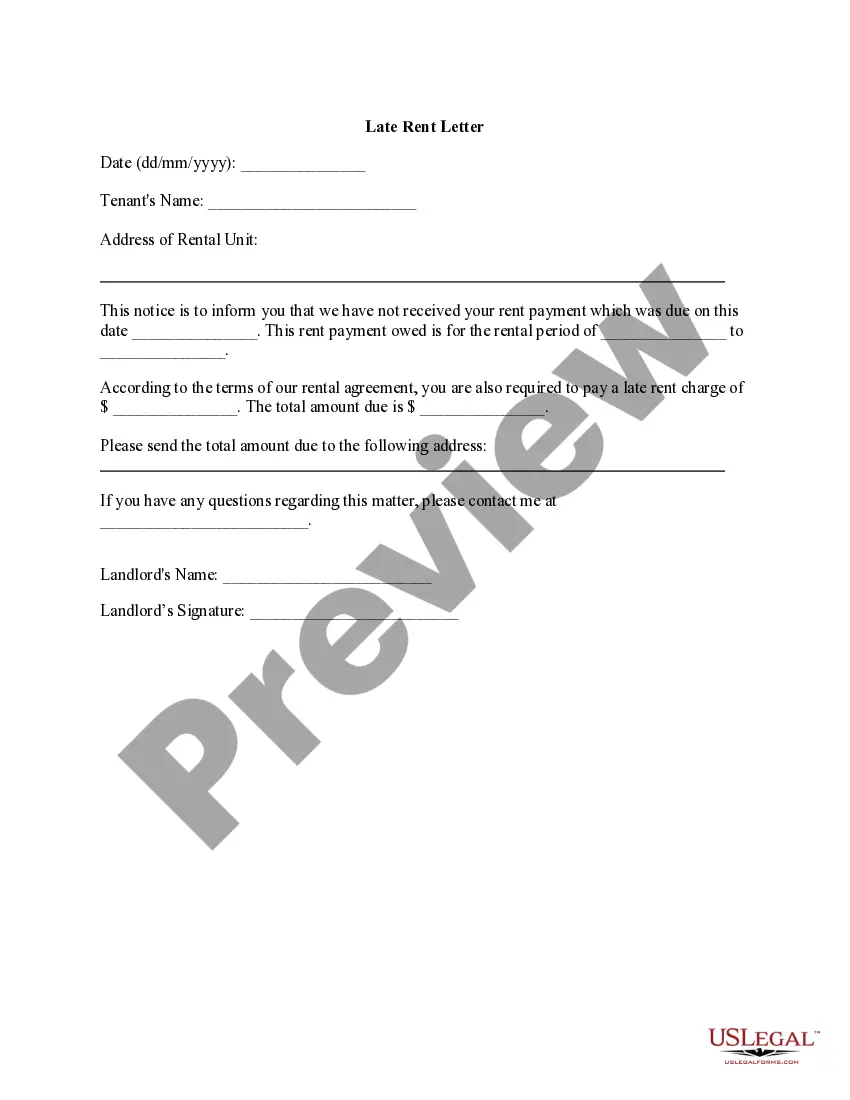
Dear Name of Tenant: This letter is to inform you that as of the date of this notice, I have not received your rental payment that was due on DATE. Because rent is due on the first of the month and will cover the rental unit for the dates of DATE through DATE, you are living in a unit you have not paid for.
If the tenant intentionally fails to pay the rent amount (stated in the rental agreement) for more than 15 days after the due date, you can file the eviction suit. If the tenant has sublet an already rented house/flat/property to another person without your consent or acknowledgment.