New Jersey Informal Bid Proposal Form
About this form
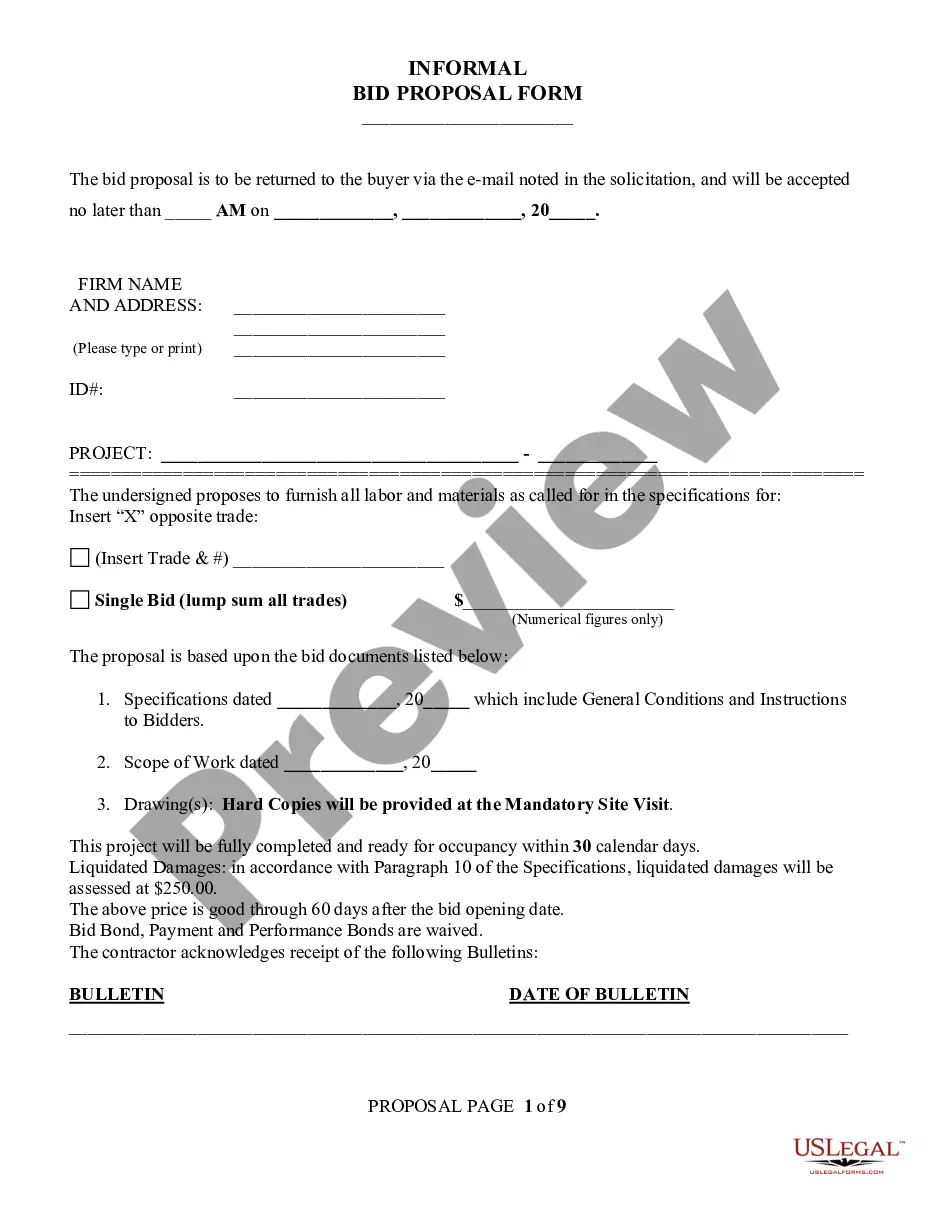
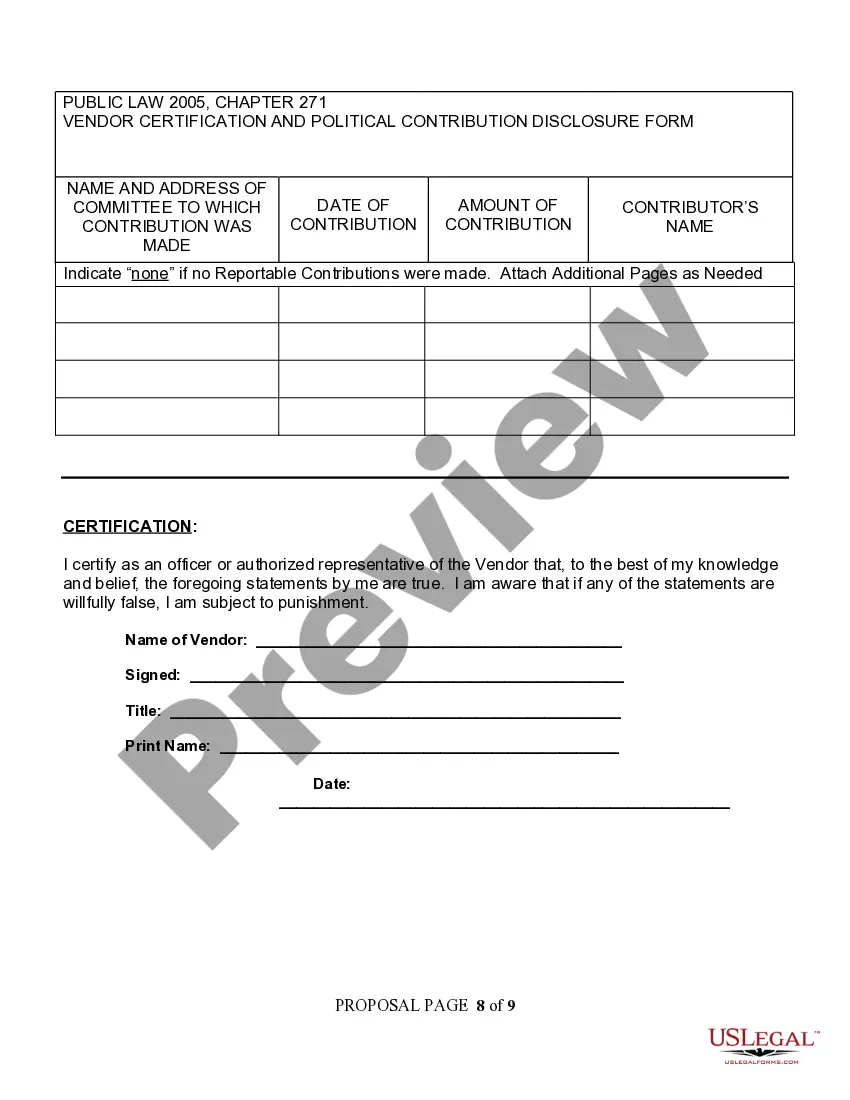
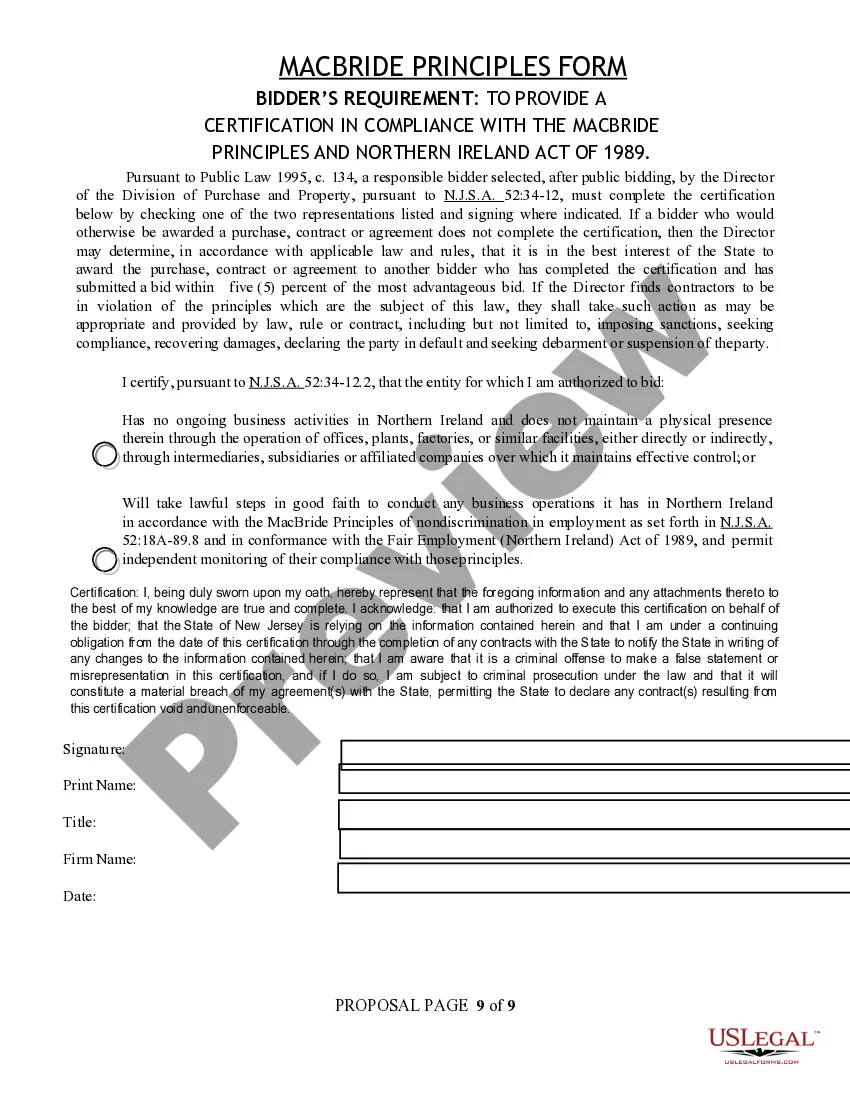
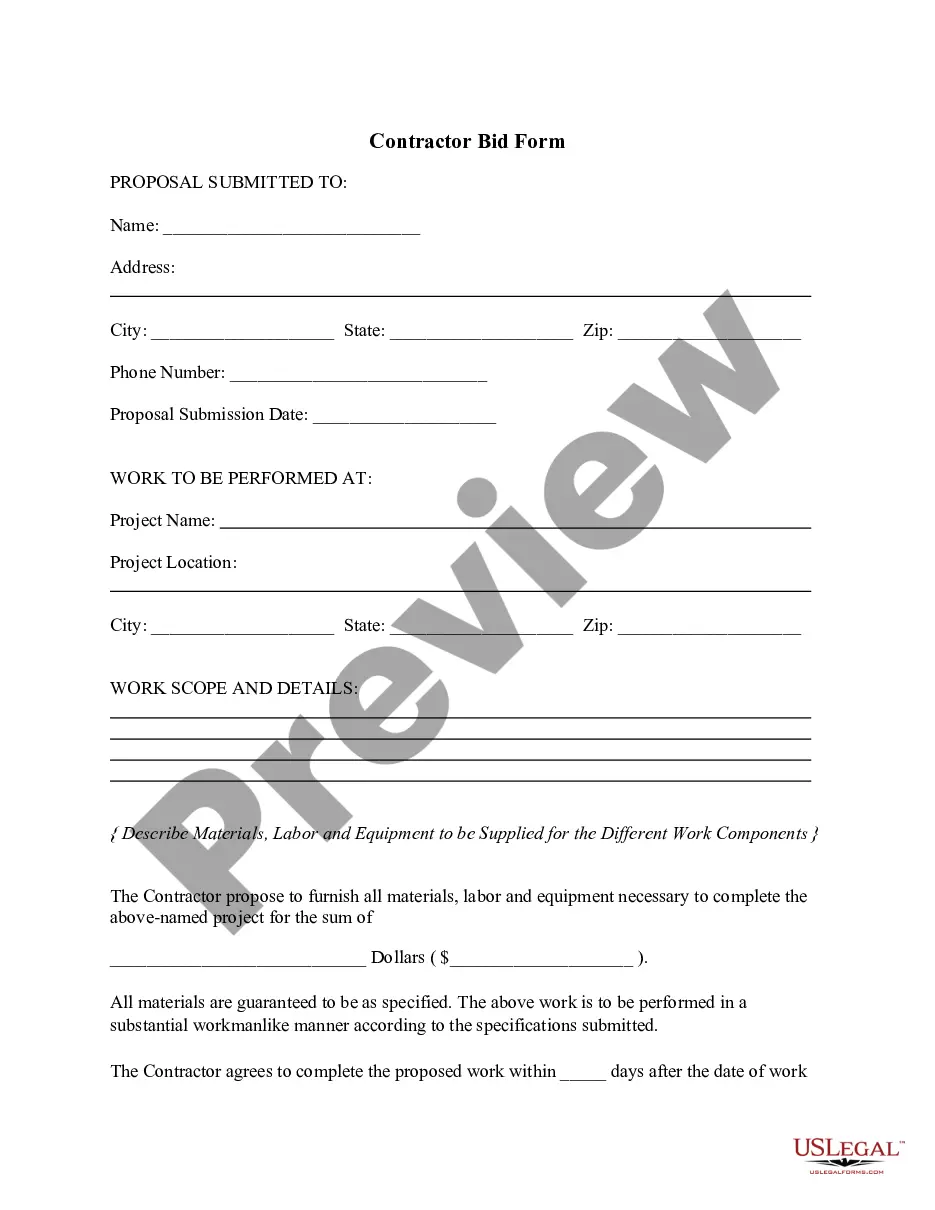
The Informal Bid Proposal Form is a legal document used in the bidding process for projects with the Department of Transportation. This form outlines the contractor's proposal, including costs for labor and materials, along with a list of subcontractors. It also includes necessary certifications, such as a non-collusion affidavit and compliance with regulations regarding political contributions and the Macbride Principles. This form is essential for contractors seeking to submit bids efficiently and in compliance with legal requirements.
Main sections of this form
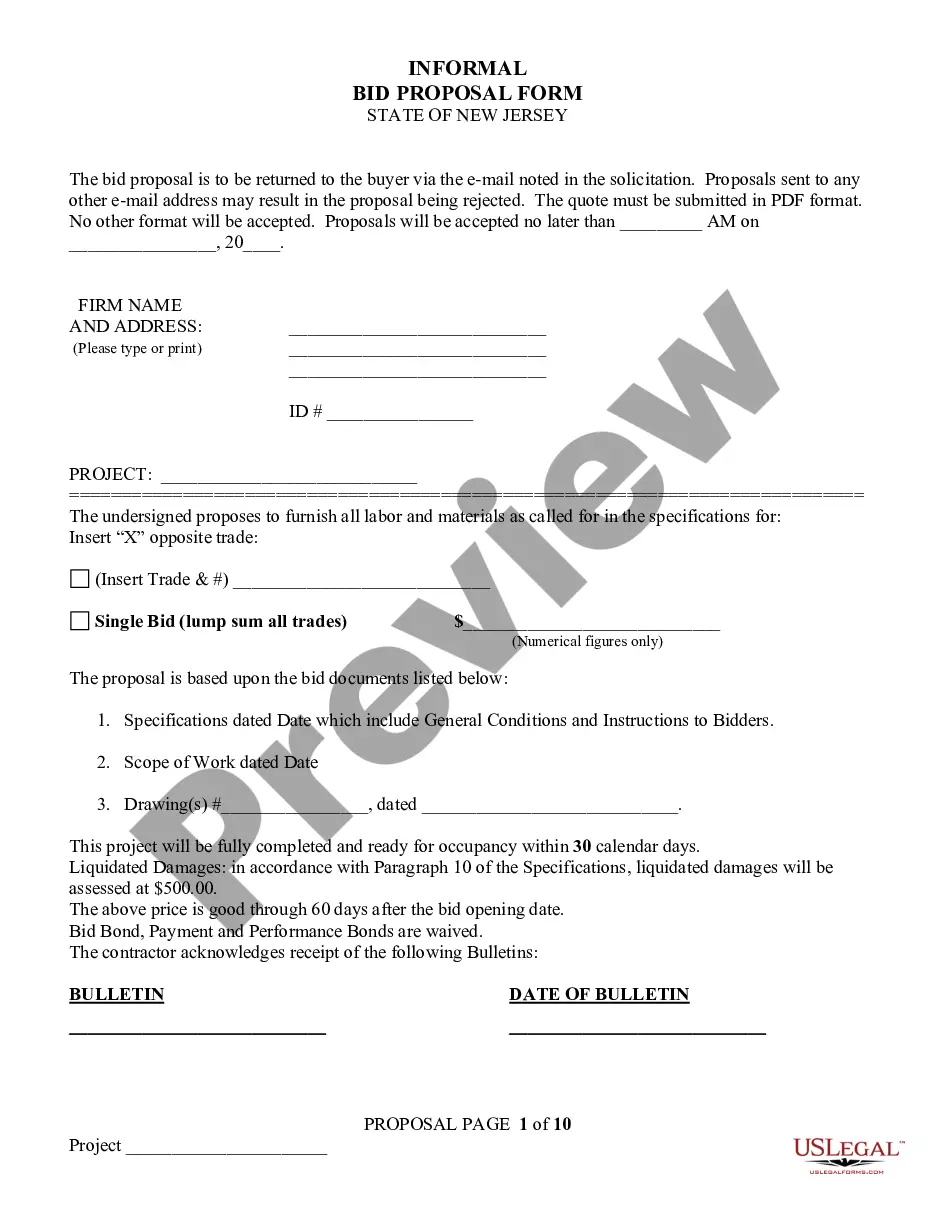
- Firm name and address along with the project details.
- Specific trade and lump-sum bid amount being proposed.
- Acknowledgment of receipt of project bulletins and compliance requirements.
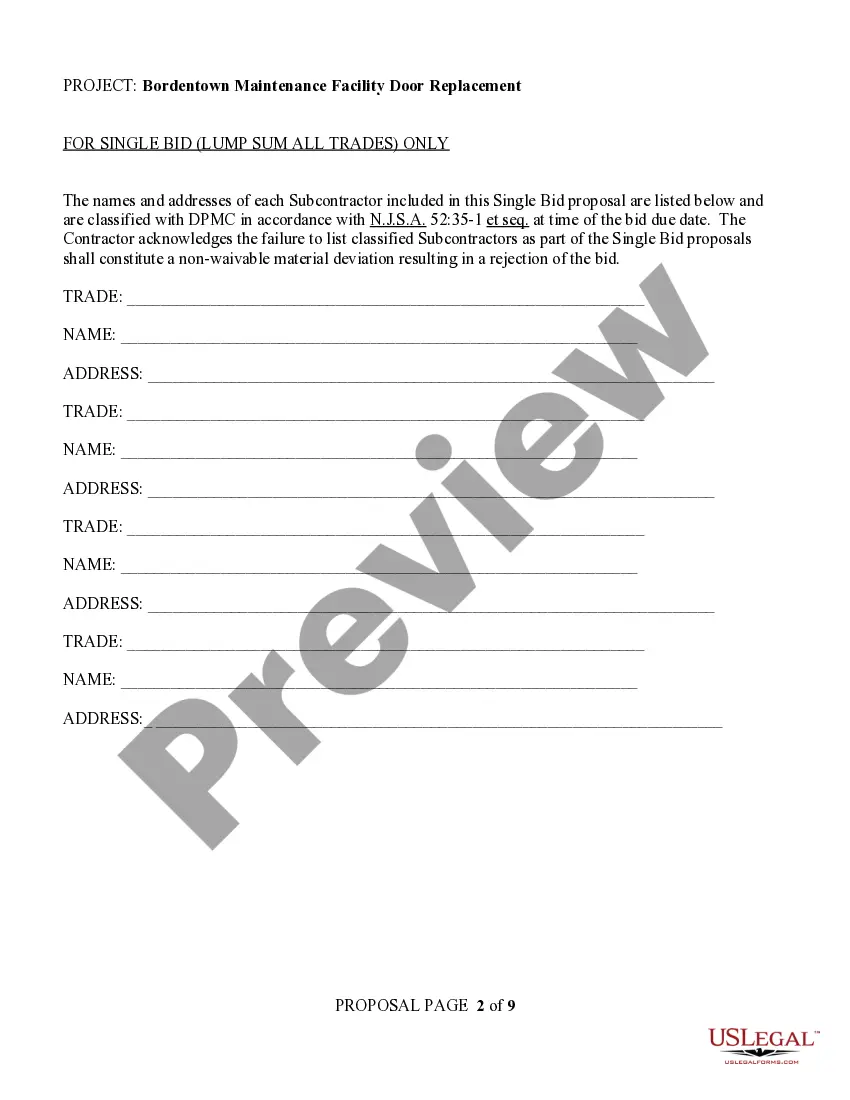
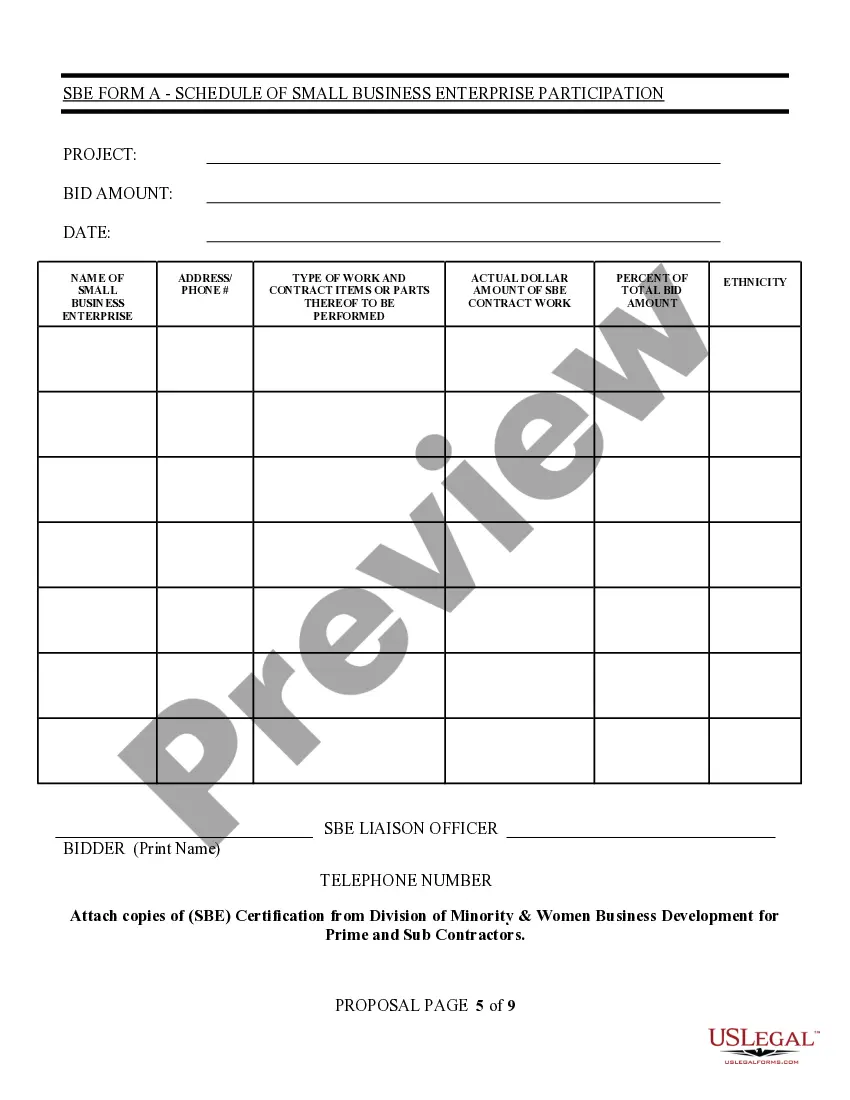
- List of subcontractors involved in the bid with classifications.
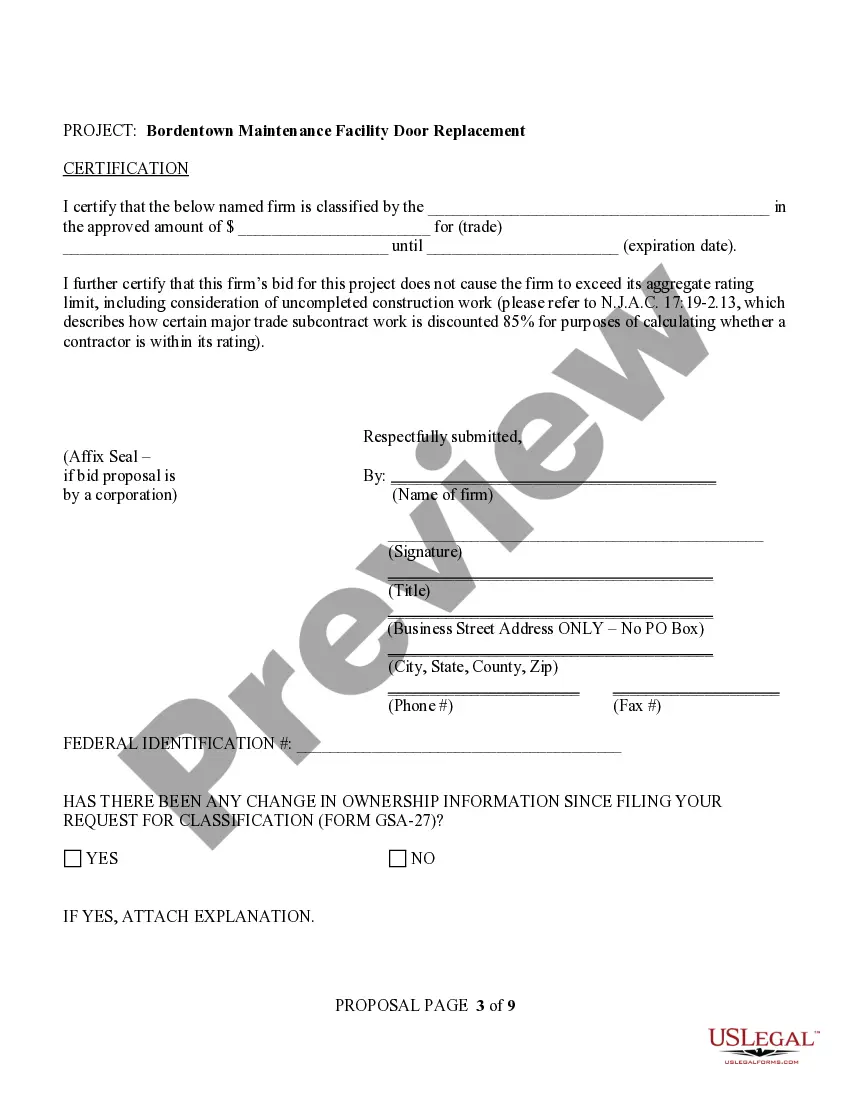
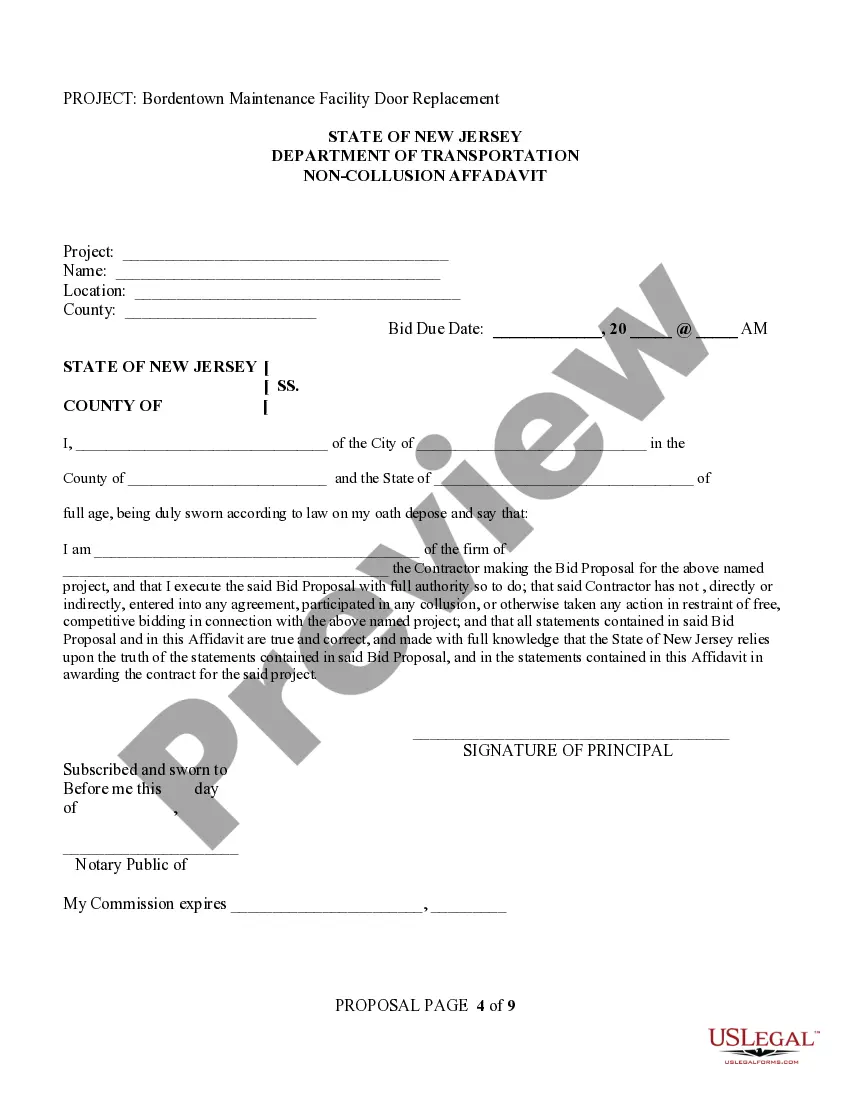
- Non-collusion affidavit to ensure fair bidding practices.
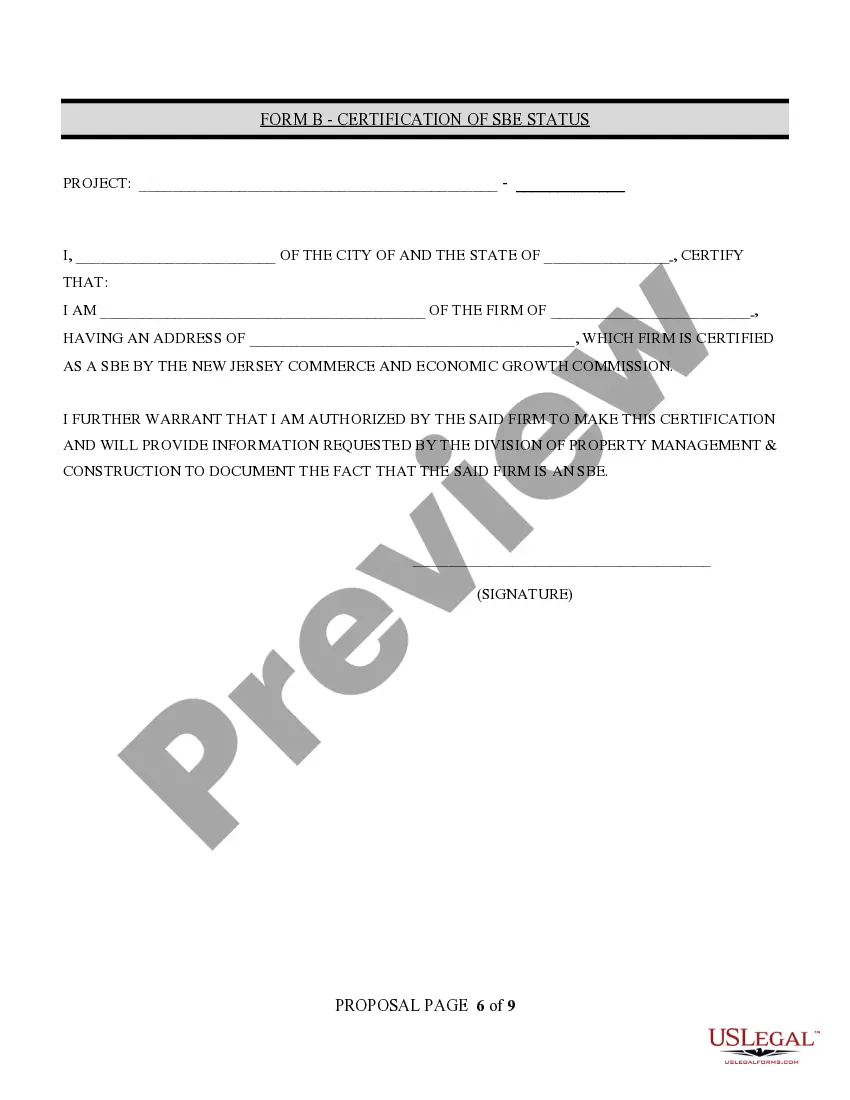
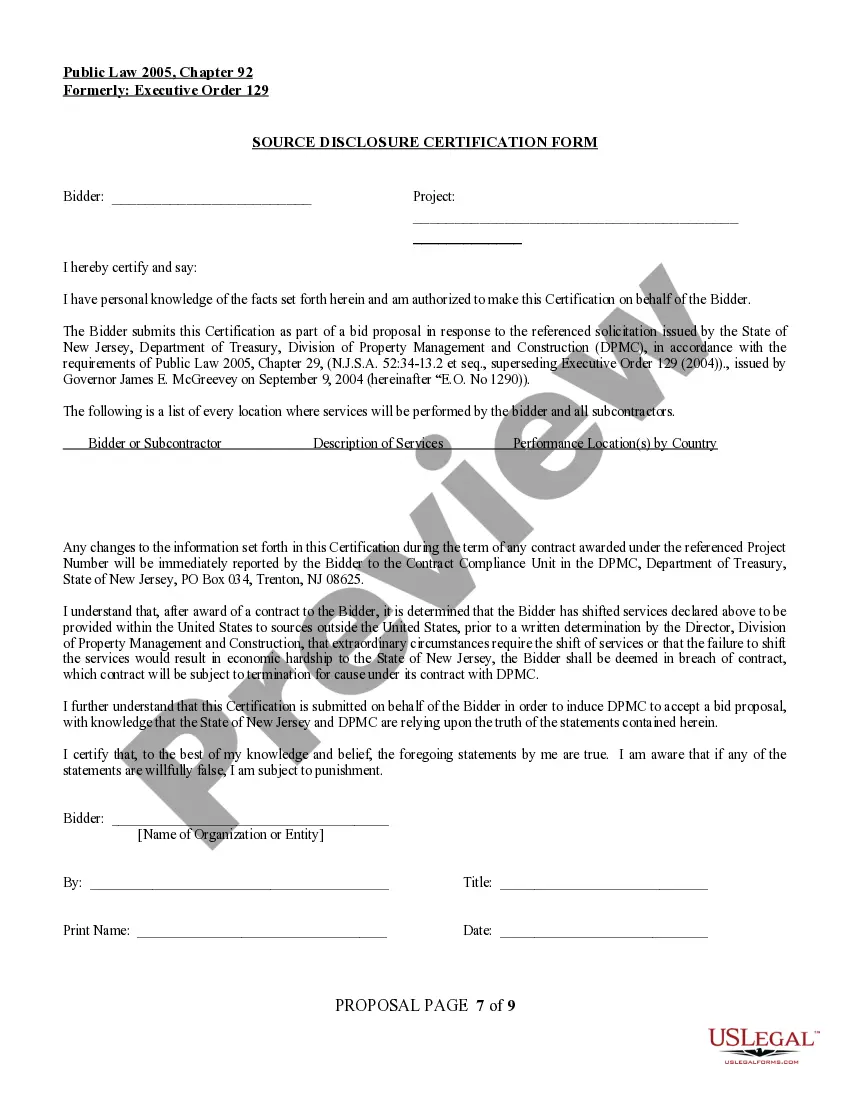
- Certifications related to political contributions and compliance with relevant laws.


When to use this form
You should use the Informal Bid Proposal Form when you are submitting a bid for a project under the Department of Transportation. This form is particularly necessary for small to medium-sized projects that require detailed cost breakdowns and subcontractor listings, ensuring transparency and compliance with legal bidding practices.
Who should use this form
- Contractors bidding for projects with the Department of Transportation.
- Subcontractors that need to be listed as part of a contractor's bid.
- Businesses seeking to demonstrate compliance with legal and regulatory requirements during the bidding process.
Steps to complete this form
- Fill in your firm name, address, and ID number at the top of the form.
- Specify the project and trade for which you are bidding, along with the proposed lump-sum amount.
- List all subcontractors involved in the project, ensuring they are classified correctly.
- Sign the non-collusion affidavit, certifying fair bidding practices.
- Complete all certification sections as required, including political contributions and Macbride Principles compliance.
Is notarization required?
This form does not typically require notarization unless specified by local law. Ensure that all signatures are completed as required for submission.
Get your form ready online
Our built-in tools help you complete, sign, share, and store your documents in one place.
Make edits, fill in missing information, and update formatting in US Legal Forms—just like you would in MS Word.
Download a copy, print it, send it by email, or mail it via USPS—whatever works best for your next step.
Sign and collect signatures with our SignNow integration. Send to multiple recipients, set reminders, and more. Go Premium to unlock E-Sign.
If this form requires notarization, complete it online through a secure video call—no need to meet a notary in person or wait for an appointment.
We protect your documents and personal data by following strict security and privacy standards.

Make edits, fill in missing information, and update formatting in US Legal Forms—just like you would in MS Word.

Download a copy, print it, send it by email, or mail it via USPS—whatever works best for your next step.

Sign and collect signatures with our SignNow integration. Send to multiple recipients, set reminders, and more. Go Premium to unlock E-Sign.

If this form requires notarization, complete it online through a secure video call—no need to meet a notary in person or wait for an appointment.

We protect your documents and personal data by following strict security and privacy standards.
Common mistakes to avoid
- Failing to list all subcontractors, which can lead to bid rejection.
- Inaccurate costs or omissions in the bid proposal.
- Not signing the non-collusion affidavit or other required certifications.
Why complete this form online
- Convenience of downloading and filling out the form at your own pace.
- Editability allows you to make quick changes without reprinting the entire document.
- Ensures compliance with legal requirements, reducing errors in submission.
Looking for another form?
Form popularity
FAQ
Formal Bids are those that are obtained by written solicitation. The bids are received in writing by a set date and time. The bids are publicly opened by the Purchasing Department. The written bids and bid summary are maintained by the Purchasing Department.
How to write a bid proposal. Client's name and contact information. Your business name and contact information. A detailed project description. Services or products provided. Pricing estimate. Terms and conditions. Estimated timeline.
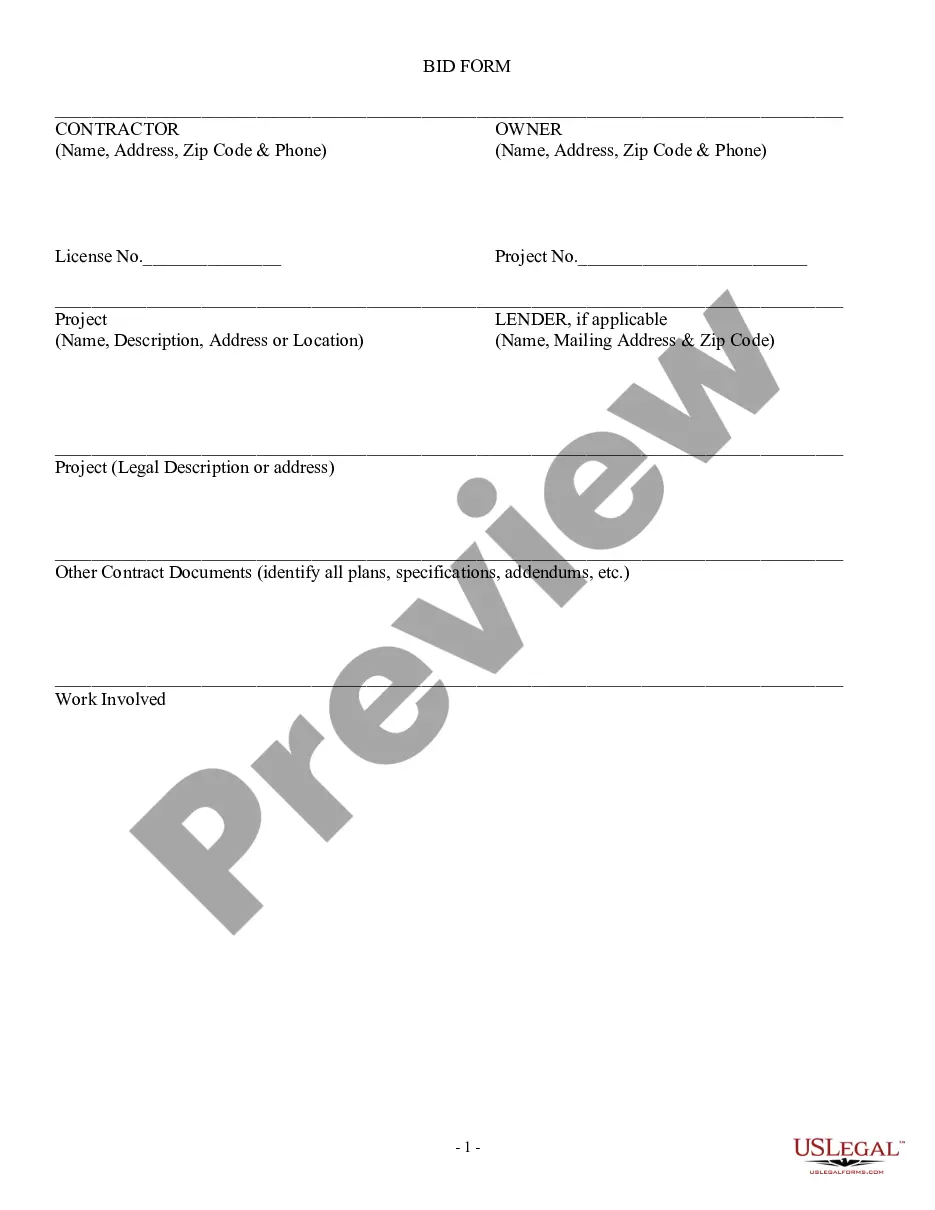
What does a Bid Form do? Project owners and contractors can use Bid Forms to outline all the terms and conditions of a bid on a construction project. Project owners can create blank Bid Forms for all applicants to fill out, or contractors can create their own when placing a bid.
Unlike an RFP, an IFB requires a sealed bid process to ensure a level playing field for vendors. This also means that there can't be any negotiations about price or services required by the contract. Evaluating an IFB is not complex like an RFP, since the only criteria that an agency has to look at is pricing.
An RFP should be used by a business when they need to evaluate various factors about a product or service in addition to the price. An RFP essentially evaluates the overall value that a vendor can offer so a business can decide which vendor they should purchase from.
Bids offer more detail than estimates and quotes, and are common in the construction industry. Companies will bid for projects by specifying how much it will cost to complete them. Proposals usually provide the most detail and focus on showcasing value. Each has its place.
There are two primary forms of formal procurement: Invitation for Bid (IFB) Request for Proposal (RFP)
Unlike with an RFP, sealed bids are generally used to find the vendor with the lowest price. On the other hand, RFP responses allow for a discussion to take place between buyers and vendors. There are two types of sealed bidding to choose from: one-step sealed bidding and two-step sealed bidding.