New Hampshire Satisfaction of Judgment
About this form
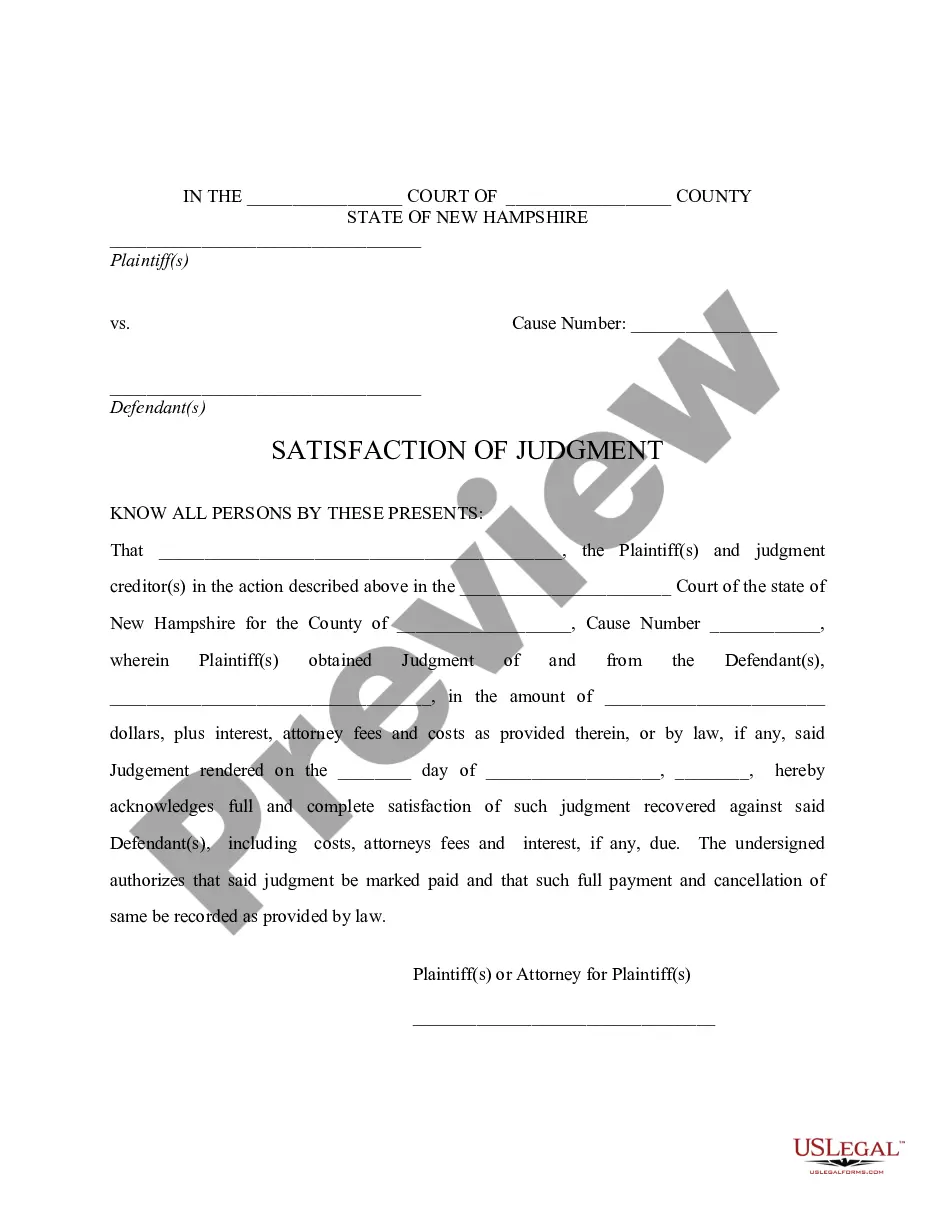
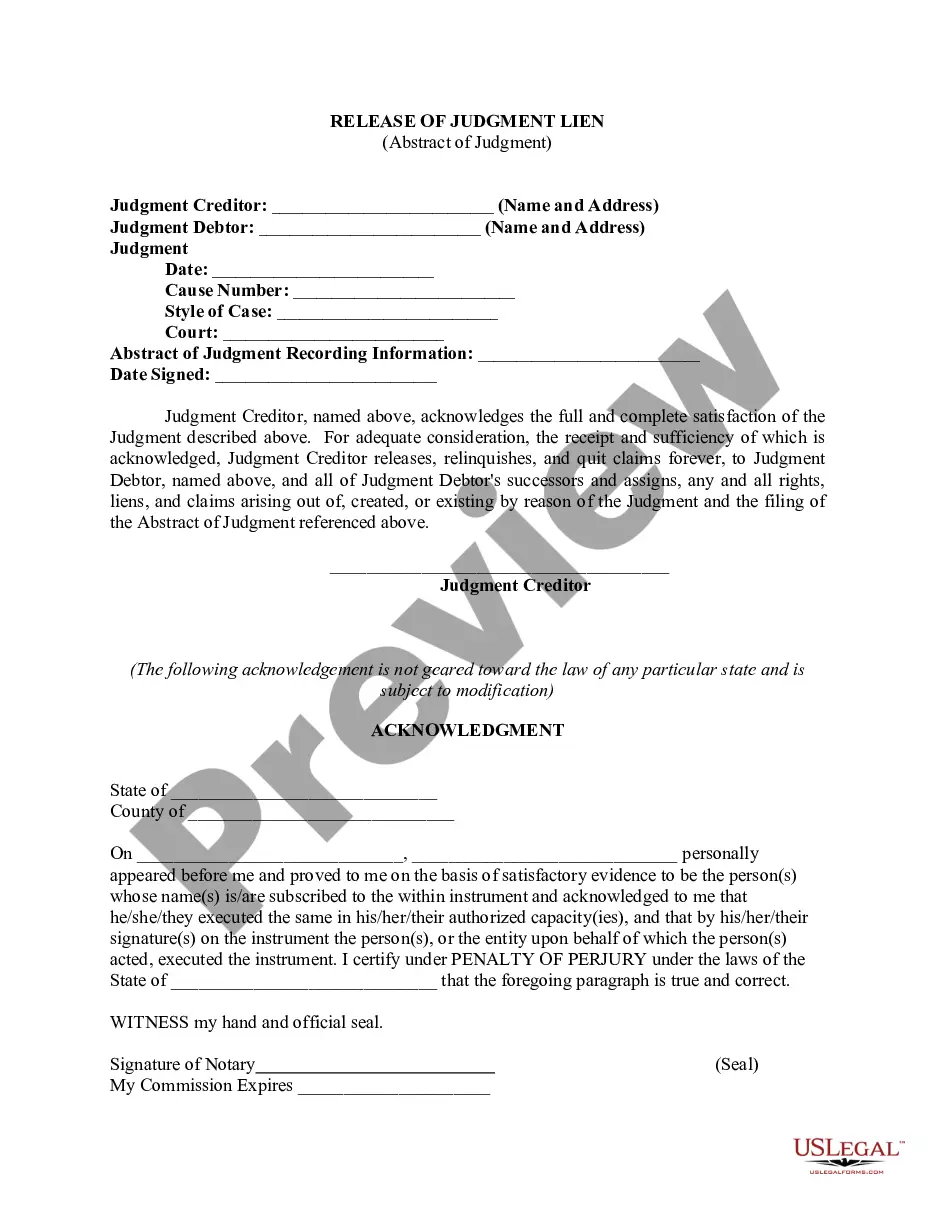
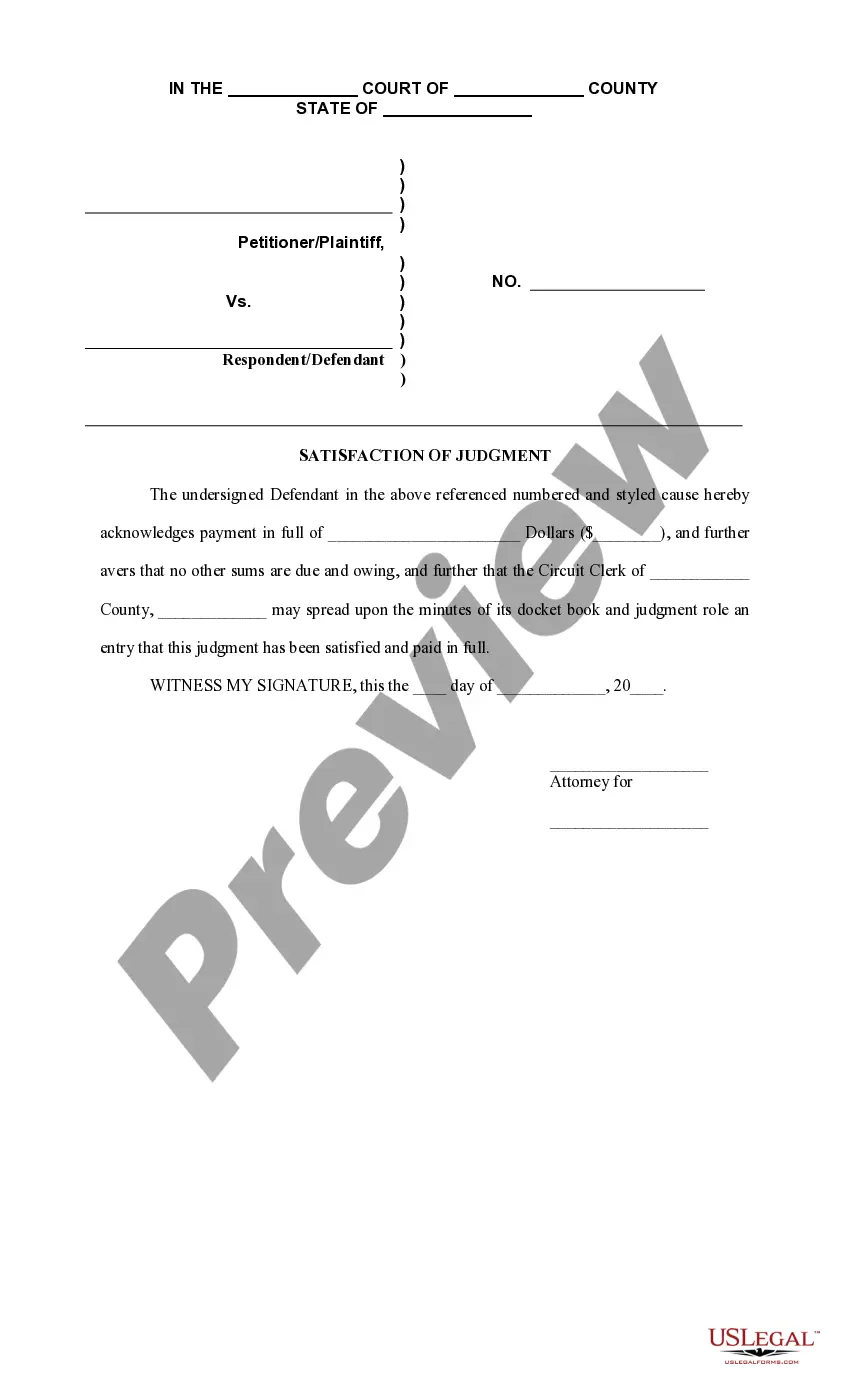
The New Hampshire Satisfaction of Judgment is a legal document that confirms a judgment has been paid in full, including any associated fees, costs, and interest. This form serves to officially acknowledge the complete satisfaction of a judgment and instructs the court to mark it as paid. It is primarily used to ensure that all parties involved recognize that the debt has been settled, differentiating it from other legal forms.
What’s included in this form
- Identifying information about the court, county, and case number.
- Names of the plaintiff(s) and defendant(s) involved in the judgment.
- Acknowledgment of the full payment and satisfaction of the judgment.
- Authorization for the judgment to be recorded as paid.
- Signature lines for the plaintiff(s) or their attorney.
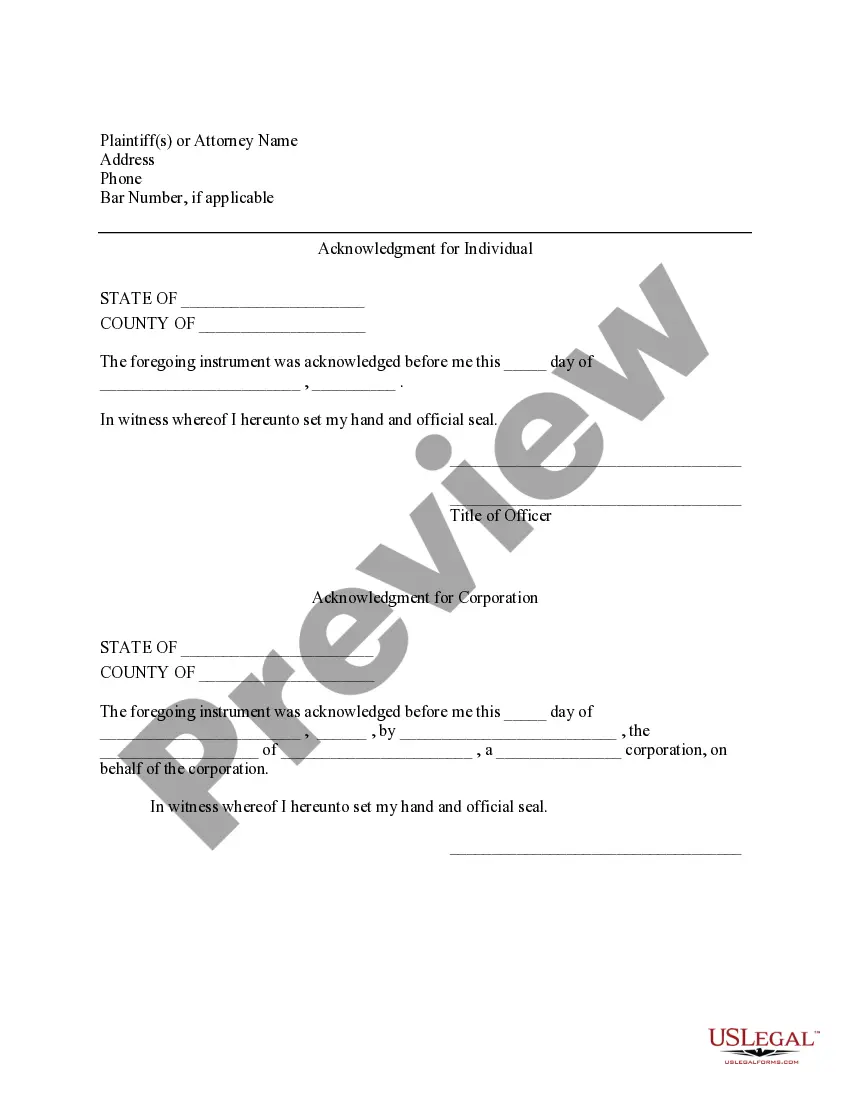
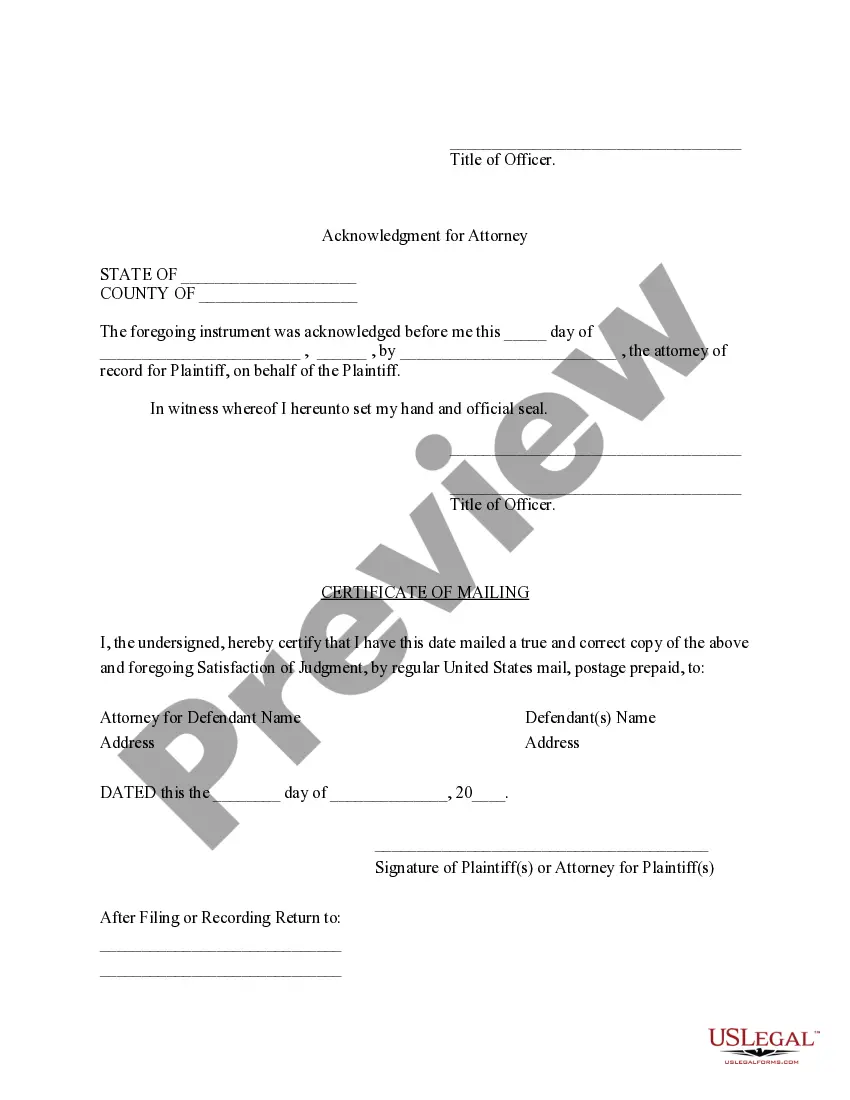
- Notary acknowledgment sections for individual and corporate signatories.


Situations where this form applies
This form should be used when a plaintiff has fully paid a judgment against a defendant, including all fees, costs, and interest. It is necessary to formally notify the court that the judgment is satisfied, which may be required for credit clearance or to prevent further collection actions. Using this form helps ensure that the legal record accurately reflects the current status of the debt.
Who can use this document
- Individuals or businesses that have received a judgment against a defendant in New Hampshire.
- Plaintiffs who have received payment in full for the judgment.
- Attorneys representing plaintiffs in the process of clearing a judgment.
Instructions for completing this form
- Fill in the names of the plaintiff(s) and defendant(s), along with the court and county information.
- Enter the cause number and the total amount of the judgment.
- Specify the date on which the judgment was rendered.
- Sign the form as a plaintiff or provide the signature of your attorney, if applicable.
- Have the signature acknowledged by a notary public.
Notarization guidance
Yes, this form must be notarized to be legally valid. The notarization confirms the identity of the signatories and the authenticity of the document. US Legal Forms offers integrated online notarization services that are available 24/7, ensuring a secure video call with a notary, making the process convenient without the need for travel.
Get your form ready online
Our built-in tools help you complete, sign, share, and store your documents in one place.
Make edits, fill in missing information, and update formatting in US Legal Forms—just like you would in MS Word.
Download a copy, print it, send it by email, or mail it via USPS—whatever works best for your next step.
Sign and collect signatures with our SignNow integration. Send to multiple recipients, set reminders, and more. Go Premium to unlock E-Sign.
If this form requires notarization, complete it online through a secure video call—no need to meet a notary in person or wait for an appointment.
We protect your documents and personal data by following strict security and privacy standards.

Make edits, fill in missing information, and update formatting in US Legal Forms—just like you would in MS Word.

Download a copy, print it, send it by email, or mail it via USPS—whatever works best for your next step.

Sign and collect signatures with our SignNow integration. Send to multiple recipients, set reminders, and more. Go Premium to unlock E-Sign.

If this form requires notarization, complete it online through a secure video call—no need to meet a notary in person or wait for an appointment.

We protect your documents and personal data by following strict security and privacy standards.
Typical mistakes to avoid
- Failing to enter the correct court and case details.
- Not obtaining a notary acknowledgment when required.
- Missing the signature of all necessary parties.
- Not sending a copy of the form to the defendant's attorney, if applicable.
Why use this form online
- Quick access to a professionally drafted Satisfaction of Judgment template.
- Ease of modification to fit specific case details.
- Convenience of downloading and printing at your convenience.
- Reliable legal language that adheres to New Hampshire state requirements.
Looking for another form?


Form popularity
FAQ
Contracts and open accounts: 3 years, (RSA 508:4). Notes secured by a mortgage: 20 years and applies even if the mortgage has been foreclosed, (RSA 508:6).
The Superior Court of California. Documents maintained in court case files are public records and subject to public inspection. California Rules of Court, Rule 2.400(a) states that all papers in the court files may be inspected by the public in the office of the clerk.all court records are presumed open.
In New Hampshire, judgments are valid for twenty (20) years, so the plaintiff will have twenty (20) years to collect the money he or she is owed.
To obtain access to those records, researchers must contact the appropriate federal court. Online access to case and docket information is provided for a fee by the Administrative Office of the U.S. Courts through PACER. The court may refer you to a Federal Records Center to obtain copies.
You can obtain a PACER login on-line or by calling (800) 676-6856. If you have a PACER account, you may login to the court's electronic case files. You may also view the court's electronic case files free of charge at the public terminals in the clerk's office.
Renew the judgment Money judgments automatically expire (run out) after 10 years.If the judgment is not renewed, it will not be enforceable any longer and you will not have to pay any remaining amount of the debt. Once a judgment has been renewed, it cannot be renewed again until 5 years later.
Are criminal records available to the public in New Hampshire? Anyone is able to view and inspect criminal records in New Hampshire and in all of America. This is due to the New Hampshire Right to Know law, which states that governmental information concerning citizens should be publicly available.
In order to have a mechanics lien in New Hampshire, the lien claimant must file an Ex Parte Petition to Secure Mechanics Lien with the court. This may be done without notice of this action to the owner or other parties (Notice of Attempt to Lien must be given previously if lien claimant is not the general contractor).