North Carolina Identity Theft Prevention Package
What is this form package?
The North Carolina Identity Theft Prevention Package contains essential forms designed to help individuals protect their identifying information and reduce the risk of identity theft. This package stands out by offering a comprehensive set of tools specifically tailored for North Carolina residents, allowing them to safeguard their credit, financial assets, and job opportunities, as well as prevent the misuse of benefits and other fraudulent activities. The package includes practical documents to help you take proactive steps against identity theft.
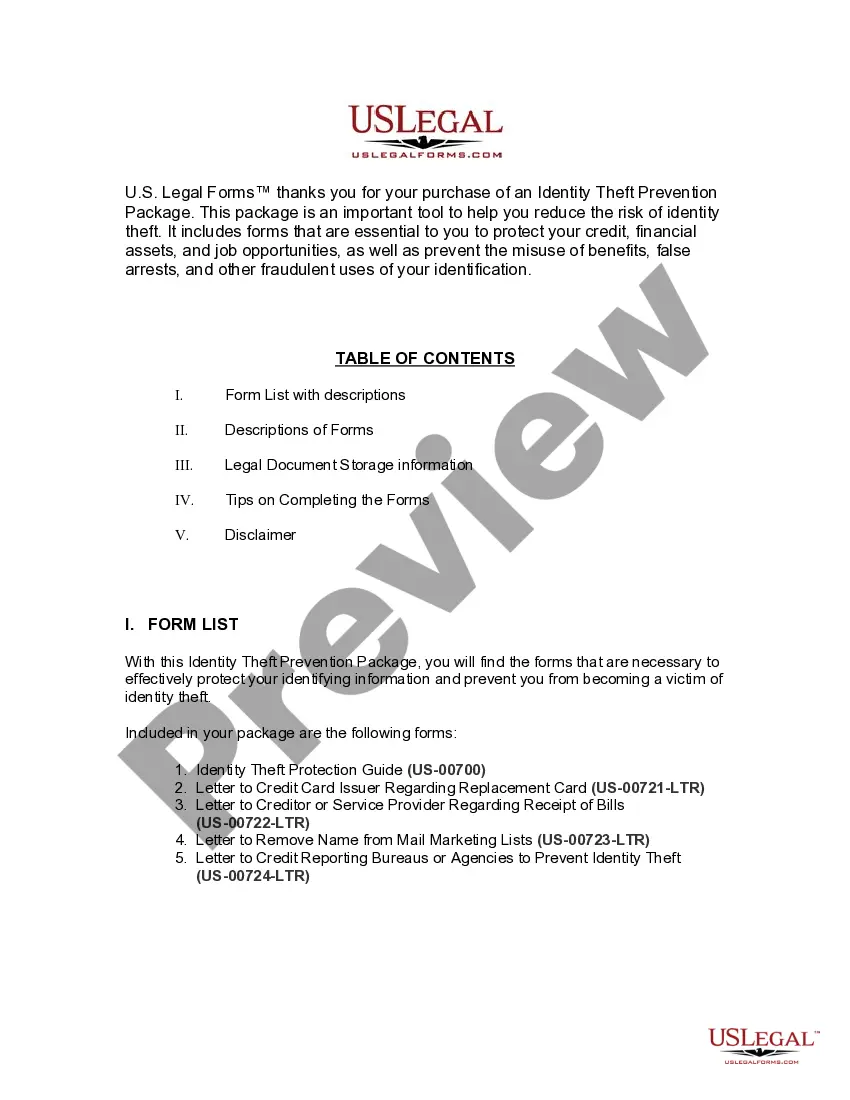
What’s included in this form package
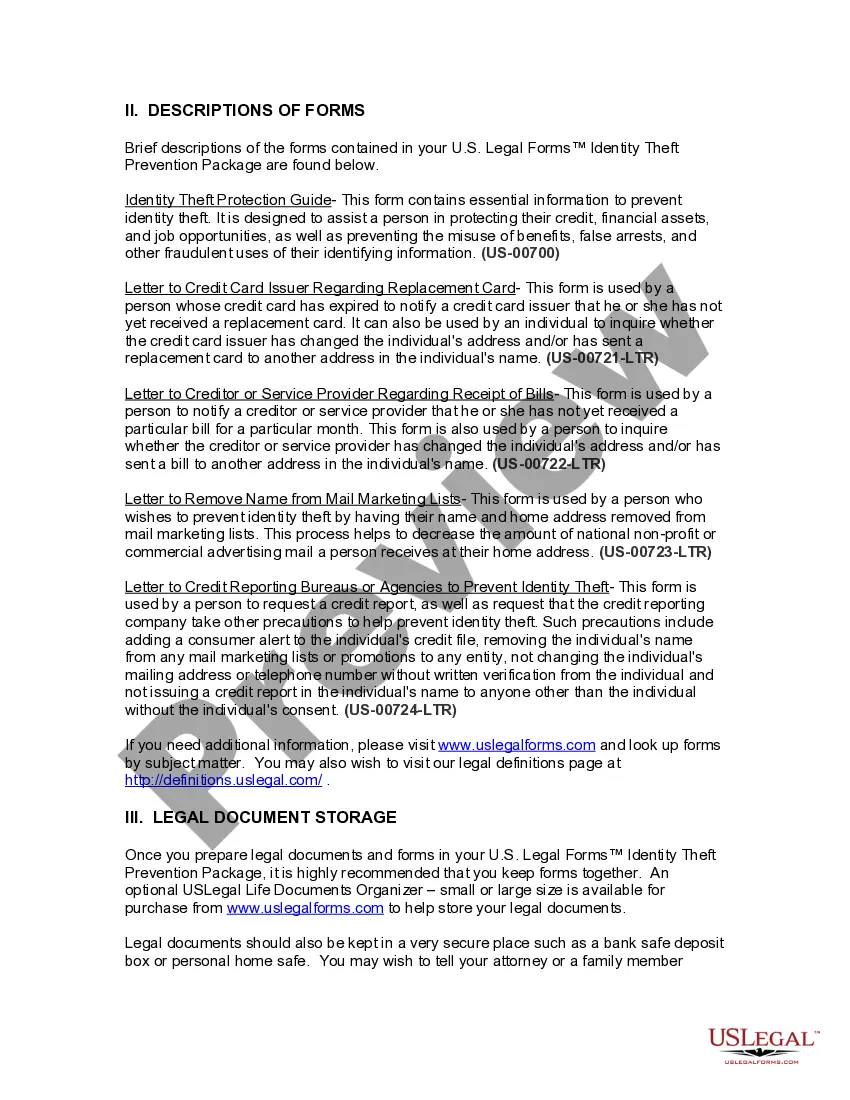
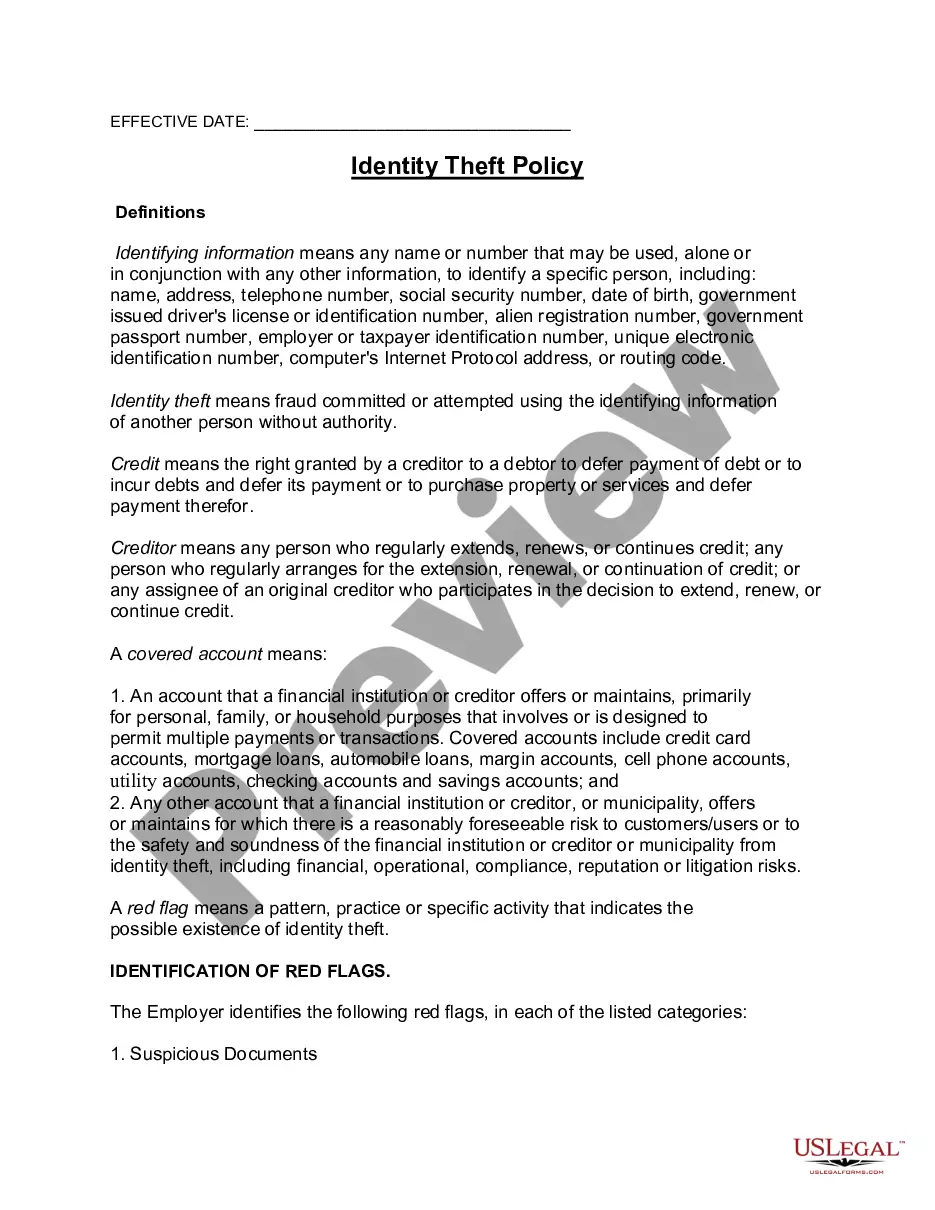
- Identity Theft Protection Guide
- Sample Letter to Credit Card Issuer Regarding Replacement Card
- Sample Letter to Creditor or Service Provider Regarding Receipt of Bills
- Sample Letter to Remove Name from Mail Marketing Lists
- Sample Letter to Credit Reporting Bureau or Agency to Help Prevent Identity Theft
When to use this form package
This form package is useful in various situations, including:
- If you suspect that your personal information has been compromised.
- When you want to limit the amount of unsolicited marketing mail you receive.
- If you have not received a replacement credit card after an expiration or loss.
- When you need to communicate with credit reporting agencies about potential identity theft.
Who this form package is for
- Individuals concerned about identity theft.
- Those who have experienced unauthorized transactions or credit inquiries.
- Anyone wishing to safeguard personal information from potential misuse.
- North Carolina residents seeking to manage their credit and identification security.
Completing these forms step by step
- Review the Identity Theft Protection Guide for an overview of steps to take.
- Complete the relevant letters by filling in your personal information and details specific to your concerns.
- Ensure all forms are signed where indicated.
- Make copies of completed forms for your records.
- Send the letters to the appropriate recipients as instructed.
Notarization details for included forms
Notarization is not commonly needed for forms in this package. However, if your state’s laws require it, our notarization service, powered by Notarize, allows you to finalize documents online 24/7 without in-person visits.
Get your form ready online
Our built-in tools help you complete, sign, share, and store your documents in one place.
Make edits, fill in missing information, and update formatting in US Legal Forms—just like you would in MS Word.
Download a copy, print it, send it by email, or mail it via USPS—whatever works best for your next step.
Sign and collect signatures with our SignNow integration. Send to multiple recipients, set reminders, and more. Go Premium to unlock E-Sign.
If this form requires notarization, complete it online through a secure video call—no need to meet a notary in person or wait for an appointment.
We protect your documents and personal data by following strict security and privacy standards.

Make edits, fill in missing information, and update formatting in US Legal Forms—just like you would in MS Word.

Download a copy, print it, send it by email, or mail it via USPS—whatever works best for your next step.

Sign and collect signatures with our SignNow integration. Send to multiple recipients, set reminders, and more. Go Premium to unlock E-Sign.

If this form requires notarization, complete it online through a secure video call—no need to meet a notary in person or wait for an appointment.

We protect your documents and personal data by following strict security and privacy standards.
Mistakes to watch out for
- Failing to update personal information before sending letters.
- Omitting signatures on letters where required.
- Not keeping copies of sent documents for personal records.
- Ignoring specific instructions for each agency or creditor.
Why complete this package online
- Convenient access to all necessary forms in one package.
- Editable forms that can be filled out digitally before printing.
- Carefully drafted by licensed attorneys to ensure compliance with North Carolina law.
- Cost-effective option that allows you to save money compared to purchasing forms separately.
Legal use & context
- The forms provided in this package help establish a documented process for preventing identity theft.
- Properly completed forms can aid in disputing fraudulent charges or claims.
- Using these forms demonstrates proactive efforts to safeguard personal information, which may have legal implications in case of identity theft.
What to keep in mind
- The North Carolina Identity Theft Prevention Package offers critical forms to protect your identity.
- Understanding when and how to use these documents is essential for effective prevention.
- Completion of these forms ensures you are taking the necessary steps to secure your personal information from identity theft.
Looking for another form?
Form popularity
FAQ
Financial Identity Theft. Financial identity theft is by far the most common type of identity theft. Medical Identity Theft. Criminal Identity Theft. Child Identity Theft. Identity Cloning & Concealment. Synthetic Identity Theft. Mitigate Your Risk.
Go to your local police office with: Tell the police someone stole your identity and you need to file a report.
The four types of identity theft include medical, criminal, financial and child identity theft.
Password-Protect Your Devices. Use a Password Manager. Watch Out for Phishing Attempts. Never Give Out Personal Information Over the Phone. Regularly Check Your Credit Reports. Protect Your Personal Documents. Limit Your Exposure.
Password-Protect Your Devices. Use a Password Manager. Watch Out for Phishing Attempts. Never Give Out Personal Information Over the Phone. Regularly Check Your Credit Reports. Protect Your Personal Documents. Limit Your Exposure.
69 percent reported feelings of fear related to personal financial safety. 60 percent reported anxiety. 42 percent reported fearing for the financial security of family members. 8 percent reported feeling suicidal.
Skimmer devices. Thieves can copy your credit card information using a hand held device called a skimmer. Dumpster diving. Printed documents that state private information should be shredded before being thrown away. Mail theft. Internet. Phishing. Pretext Calling. Shoulder Surfing. Card Verification Value Code Requests.
Account Takeover Fraud. Debit Card Fraud or Credit Card Fraud. Driver's License Identity Theft. Mail Identity Theft. Online Shopping Fraud. Social Security Number Identity Theft. Senior Identity Theft and Scams. Child Identity Theft.
You may be able to have your identity theft charges dropped if: You didn't obtain use a person's information unlawfully If you did not obtain or use someone else's personal information unlawfully, you are not guilty of identity theft.