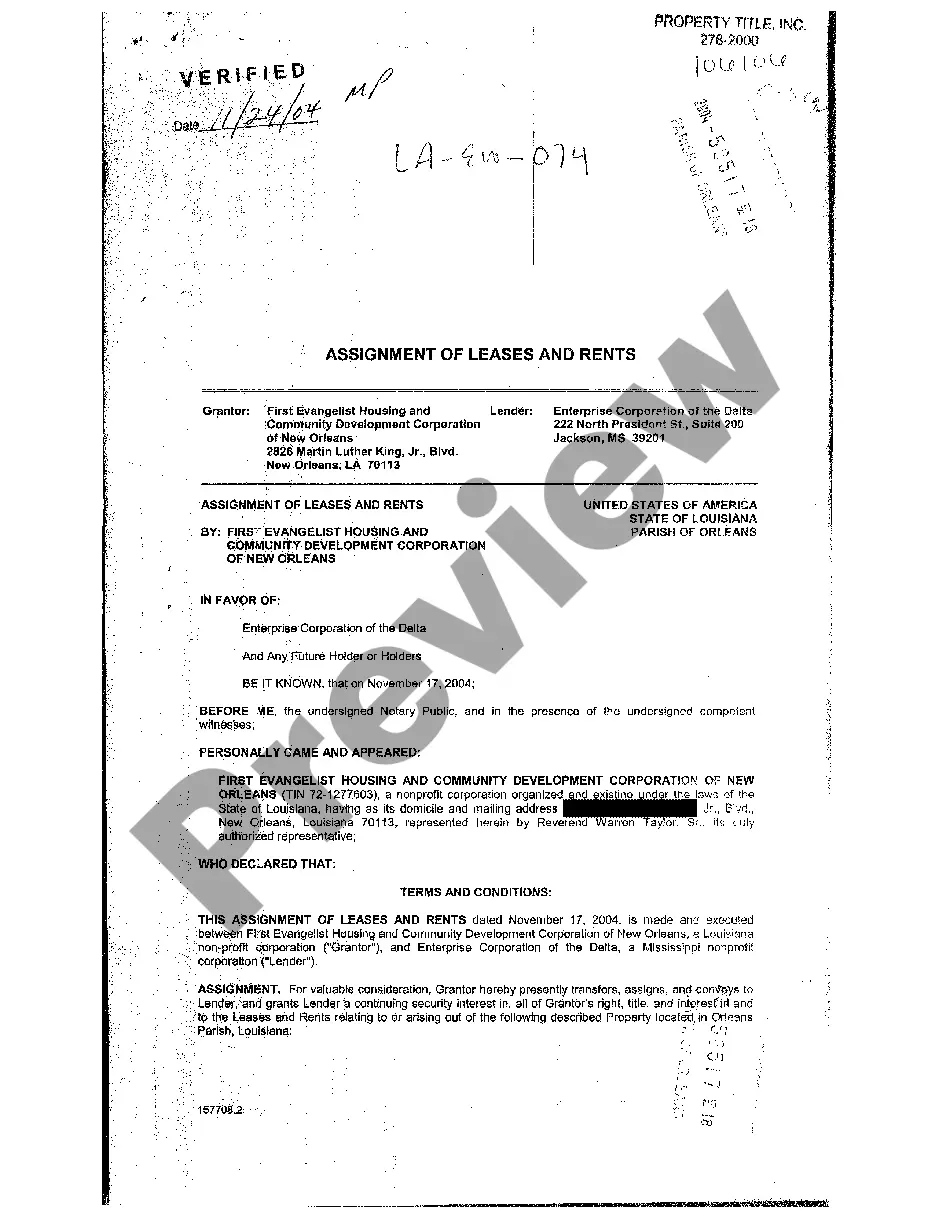
North Carolina Owner's or Seller's Affidavit of No Liens
What is this form?
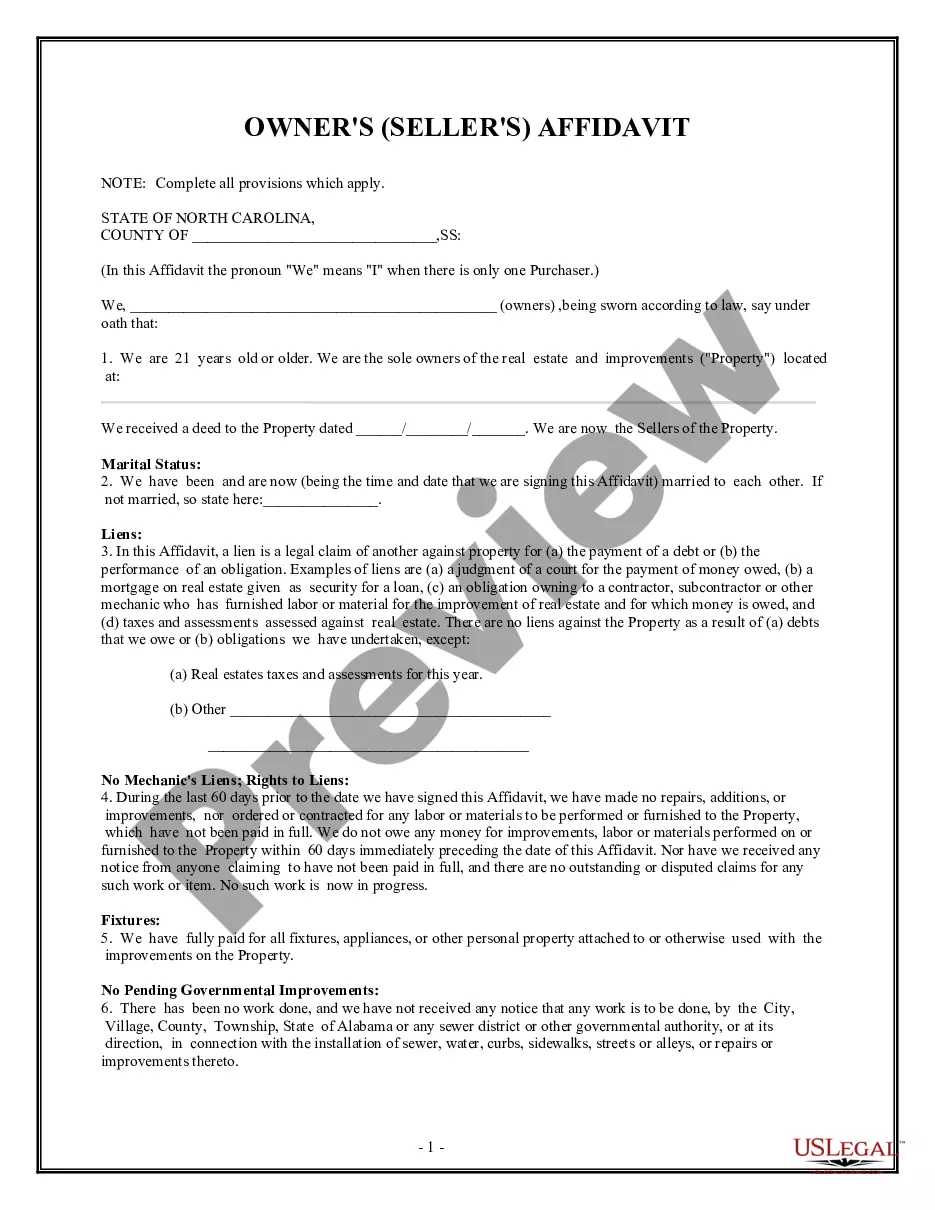
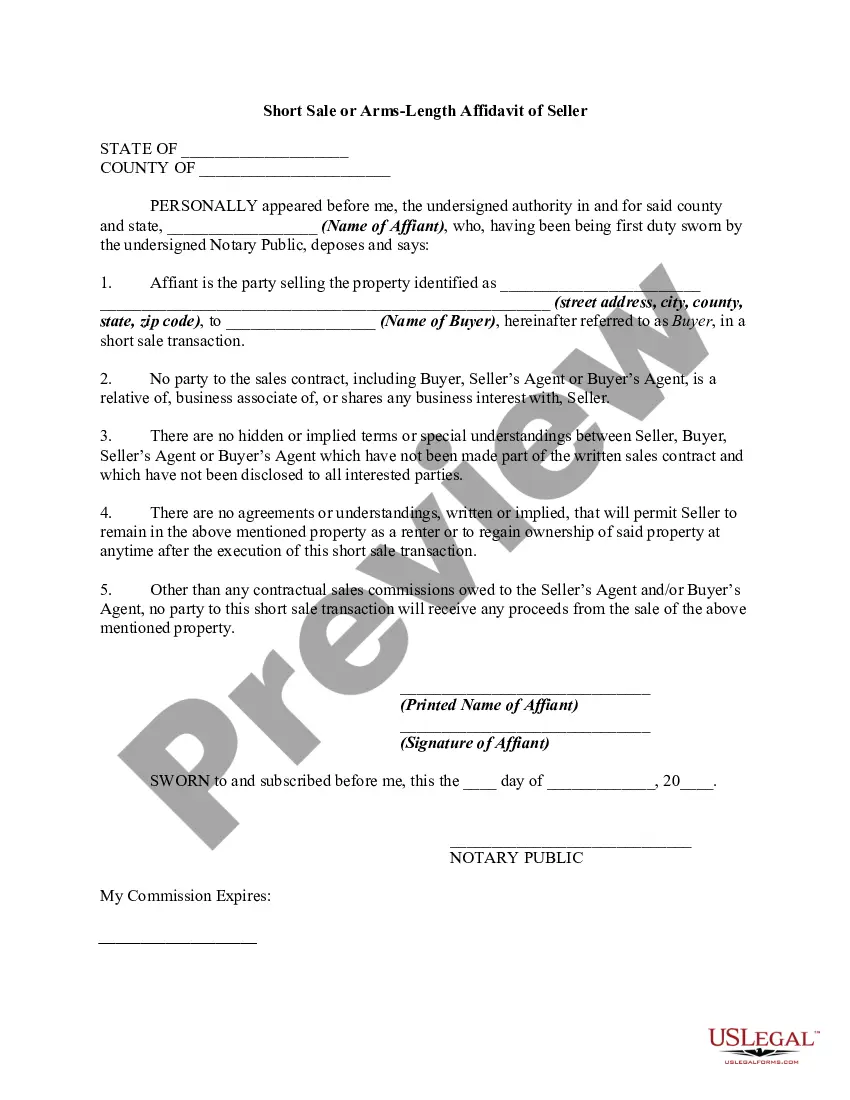
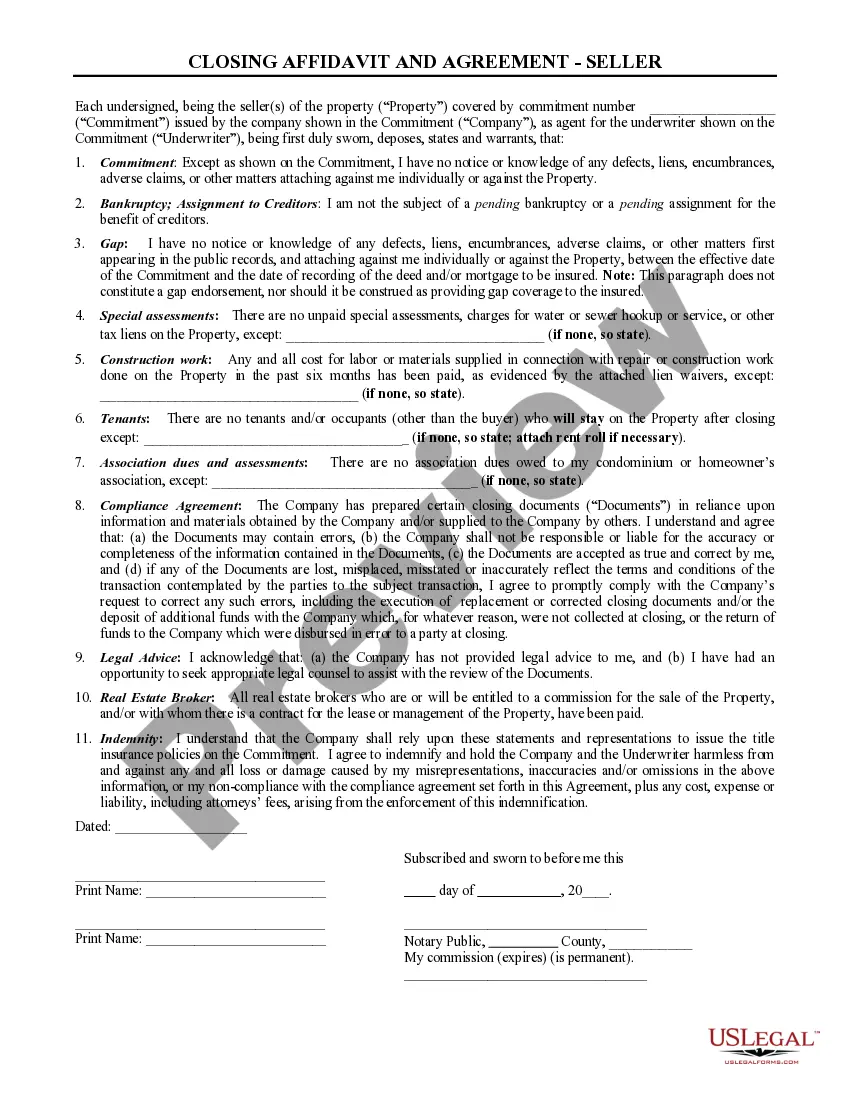
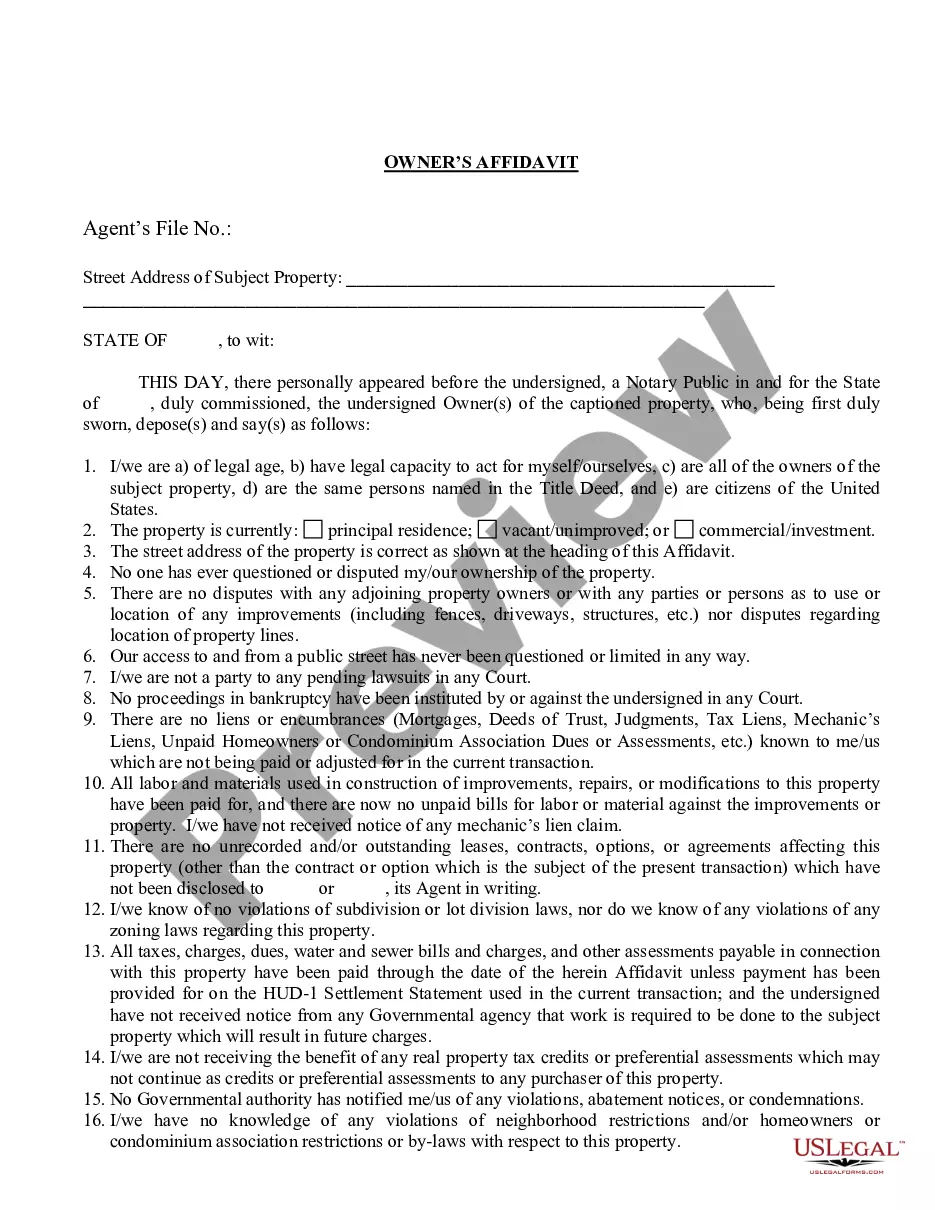
The Owner's or Seller's Affidavit of No Liens is a legal document used during the sale of real estate. This form certifies that the seller is the rightful owner of the property and confirms that there are no liens or legal claims on the property being sold. This affidavit is critical in ensuring potential buyers are aware of the property's legal status, providing them with peace of mind, and facilitating a smooth closing process. Unlike other real estate documents, this form specifically focuses on affirming the absence of any financial obligations against the property.
Key components of this form
- Identification of the owners and property being sold.
- Confirmation of the owners' marital status.
- Declaration of no outstanding liens related to debts or obligations.
- Affirmation of no mechanic's liens from unpaid labor or materials.
- Statement regarding full payment of any attached fixtures or appliances.
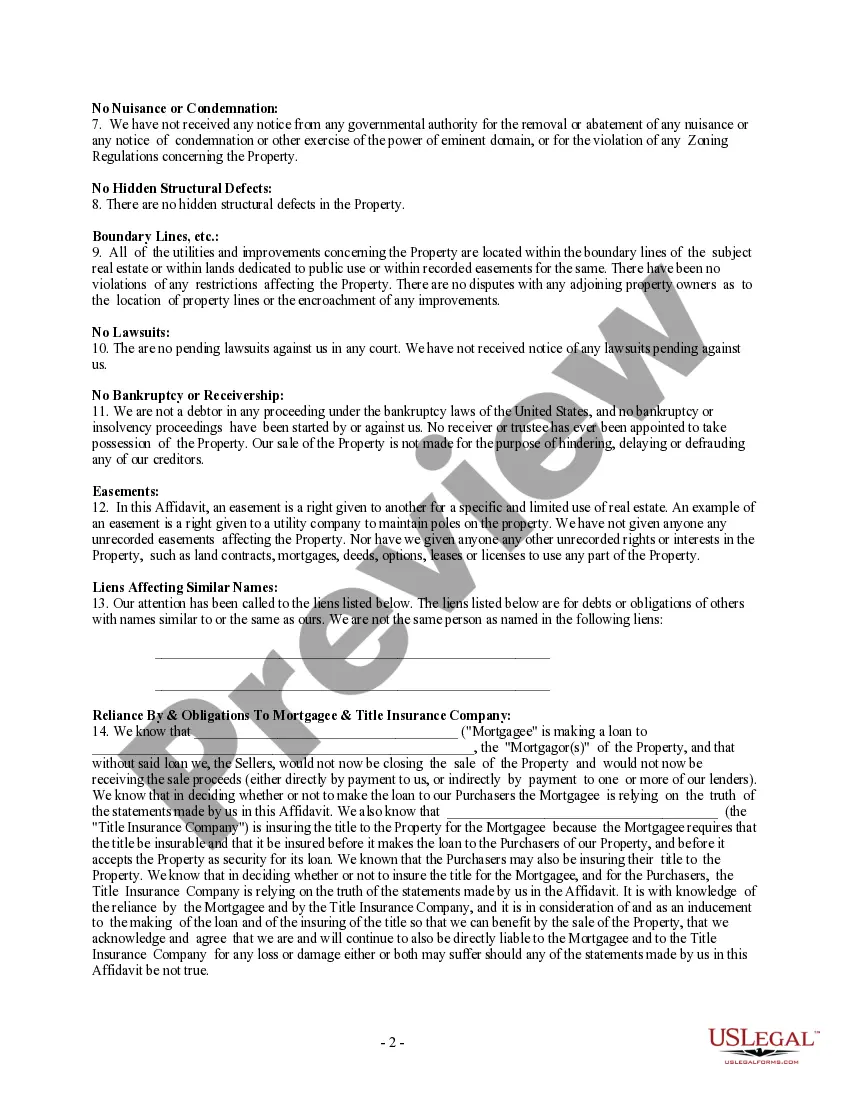
- Certification that there are no pending governmental improvements or tax assessments affecting the property.
- Disclosure of any unrecorded easements or rights concerning the property.

When this form is needed
This affidavit is typically used at the closing of a property sale. Sellers should complete this form when they are finalizing the transfer of ownership to confirm their legal ownership and the absence of any liens. It is crucial during real estate transactions to ensure that buyers are not inheriting any undisclosed financial obligations or claims associated with the property.
Who this form is for
- Property owners who are selling their real estate.
- Individuals who are closing a real estate transaction.
- Sellers looking to assure buyers of the property's clear title.
Completing this form step by step
- Identify the property details including the owners' names and address.
- State your marital status and confirm ownership of the property.
- Declare any existing liens and specifically state if none exist.
- Certify that all improvements, repairs, and labor have been paid in full.
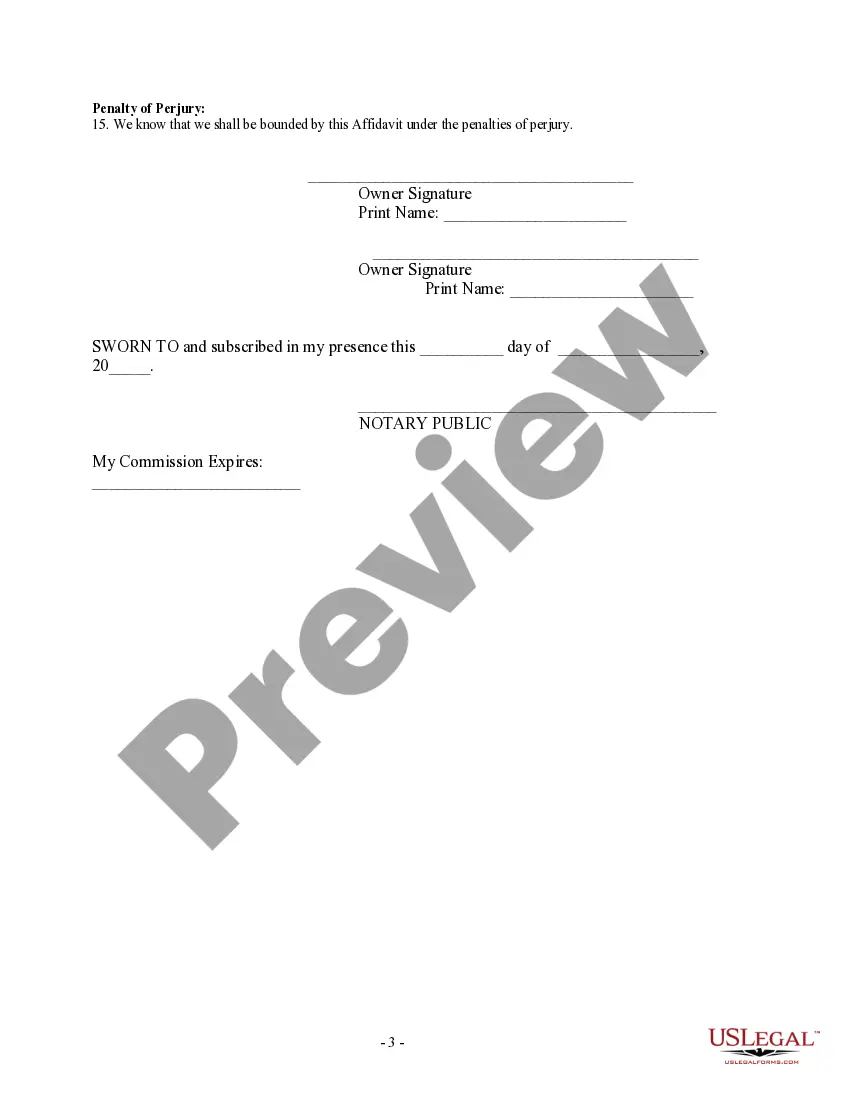
- Sign the affidavit in the presence of a notary public.
Is notarization required?
This document requires notarization to meet legal standards. US Legal Forms provides secure online notarization powered by Notarize, allowing you to complete the process through a verified video call, available 24/7.
Get your form ready online
Our built-in tools help you complete, sign, share, and store your documents in one place.
Make edits, fill in missing information, and update formatting in US Legal Forms—just like you would in MS Word.
Download a copy, print it, send it by email, or mail it via USPS—whatever works best for your next step.
Sign and collect signatures with our SignNow integration. Send to multiple recipients, set reminders, and more. Go Premium to unlock E-Sign.
If this form requires notarization, complete it online through a secure video call—no need to meet a notary in person or wait for an appointment.
We protect your documents and personal data by following strict security and privacy standards.
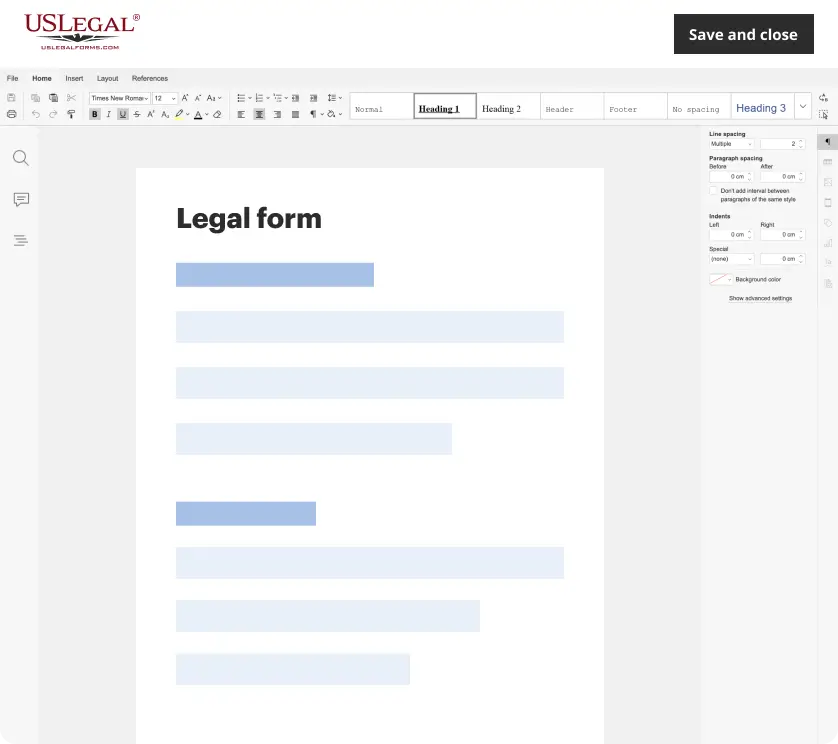
Make edits, fill in missing information, and update formatting in US Legal Forms—just like you would in MS Word.
Download a copy, print it, send it by email, or mail it via USPS—whatever works best for your next step.
Sign and collect signatures with our SignNow integration. Send to multiple recipients, set reminders, and more. Go Premium to unlock E-Sign.
If this form requires notarization, complete it online through a secure video call—no need to meet a notary in person or wait for an appointment.
We protect your documents and personal data by following strict security and privacy standards.
Common mistakes to avoid
- Failing to disclose existing liens or obligations.
- Not including all property details or information about improvements.
- Omitting signatures from all necessary owners.
- Not having the affidavit notarized properly.
Why complete this form online
- Convenience of downloading the form instantly, saving time.
- Editable fields to personalize the document for your needs.
- Access to templates drafted by licensed attorneys for accuracy.
- Ability to store and manage legal forms digitally.
Main things to remember
- The Owner's or Seller's Affidavit of No Liens confirms ownership and absence of liens.
- This form is crucial for a transparent property sale process.
- Notarization is required for legal validation of this affidavit.
- Utilize this form to protect both seller and buyer interests during real estate transactions.
Looking for another form?
Form popularity
FAQ
The general warranty deed is the standard instrument for home sales. Your notarized warranty deed is proof of ownership, and that the grantor transferred complete and clear title to you. A quitclaim deed also proves full land ownershipif the person who conveyed the interest to you had full ownership.
Negotiate with the contractor who placed the lien (the "lienor" to remove it. Obtain a lien bond to discharge the lien, or. File a lawsuit to vacate the lien.
In most states, you can typically search by address with the county recorder, clerk, or assessor's office online. The search for liens is free, though you may have to pay a small fee for a copy of the report, which will vary by county.
Most states now have additional tools available for free property title searches. You can find these on your state government sites under "county assessor." You will have to select your county, and you can then search through the listed properties.
The title search performed in the prelim title discovers whether or not there are any liens against the title, which would typically be placed by a lender on the property. They also may have you sign a document stating that there are no liens that are not recorded. If there are not, just sign it. Bingo.
A statement showing that your balance is paid in full. Your canceled promissory note. A certificate of satisfaction. Your canceled mortgage or deed of trust.
A lien waiver is quite common in the construction business. Essentially, it is a document from a contractor, subcontractor, supplier, or another party who holds a mechanic's lien that states they have been paid in full and waive future lien rights to the disputed property.
In the mechanics lien process, a lien waiver is a document from a contractor, subcontractor, materials supplier, equipment lessor or other party to the construction project (the claimant) stating they have received payment and waive any future lien rights to the property (of the owner) for the amount paid.
In the event that the contract is breached and payment is not received, an affidavit for mechanics' lien may be filed to place a lien on the project.