North Carolina Paternity Law and Procedure Handbook
What is this form?
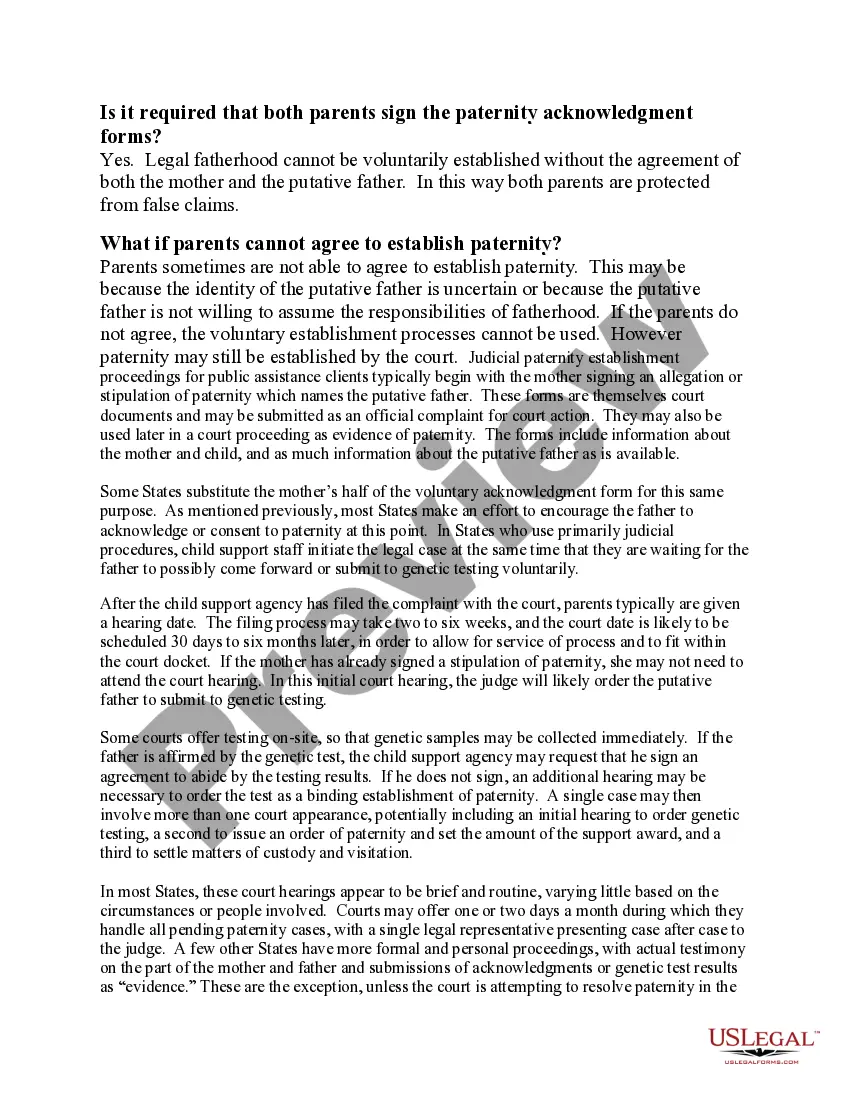
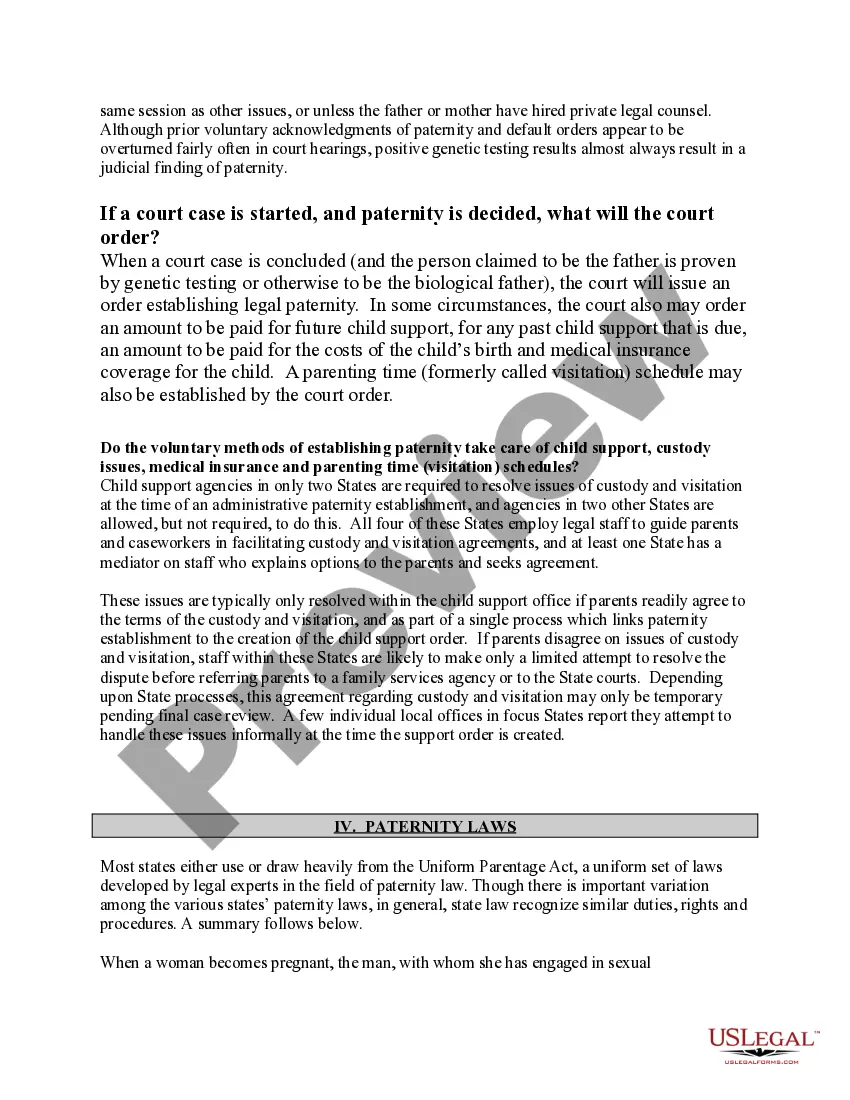
The Paternity Law and Procedure Handbook is a comprehensive guide designed to help individuals understand the laws and procedures surrounding the establishment of paternity. This handbook outlines the rights and responsibilities of both parents, providing detailed state-specific resources and legal frameworks. Unlike other forms that may focus only on a single aspect of paternity, this handbook covers a wide range of topics, including voluntary paternity establishment, court actions, and genetic testing procedures, making it an invaluable resource for unmarried parents navigating the complexities of paternity law.
Form components explained
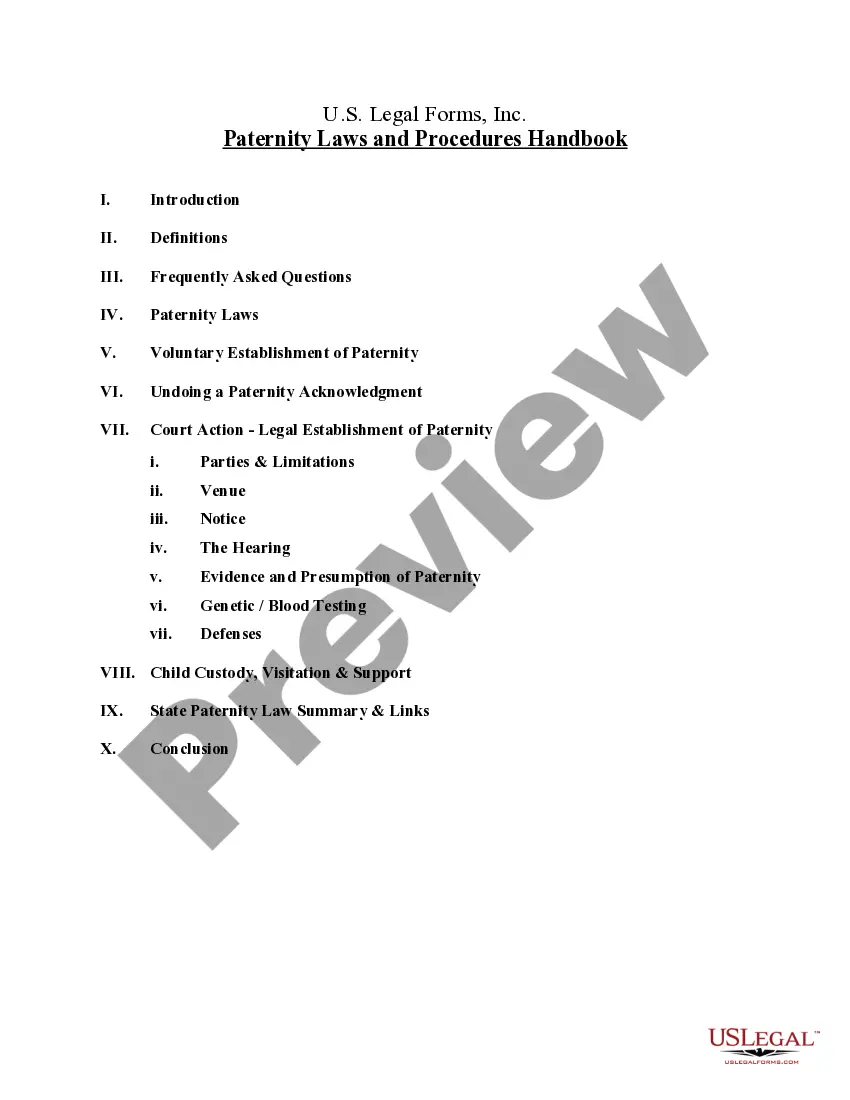
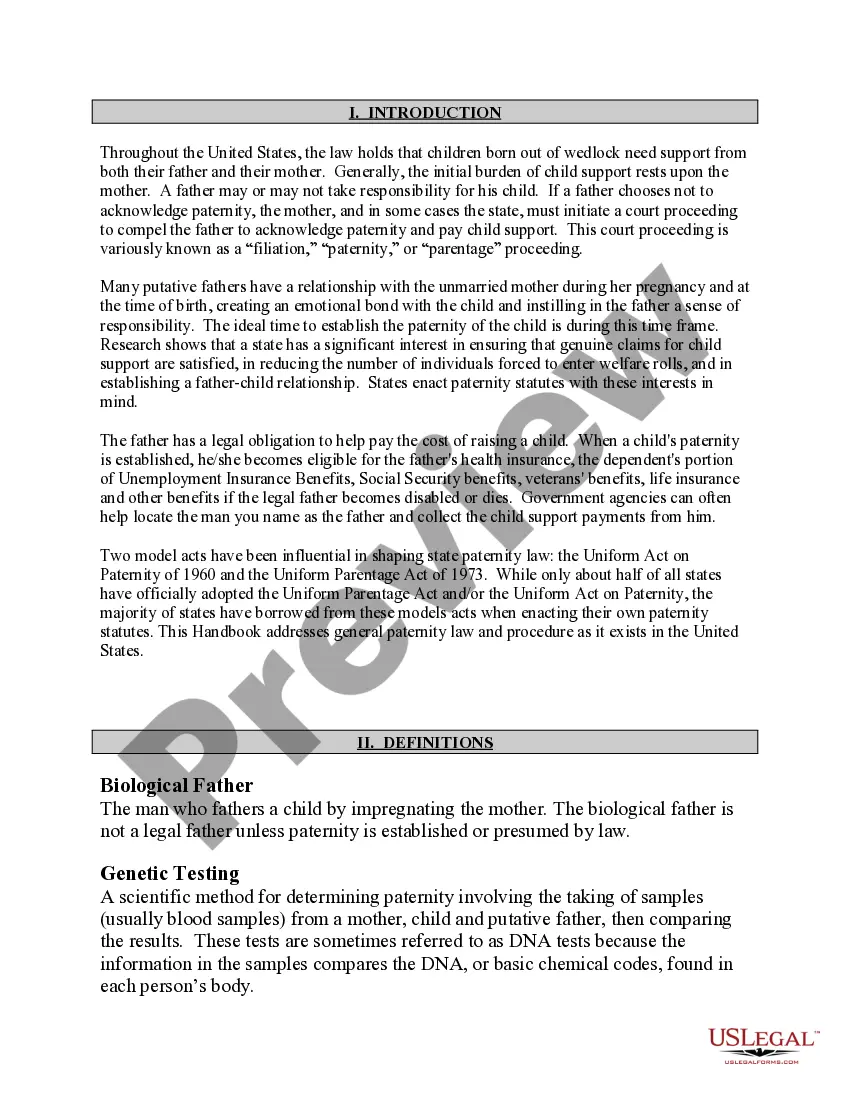
- Introduction and overview of paternity law
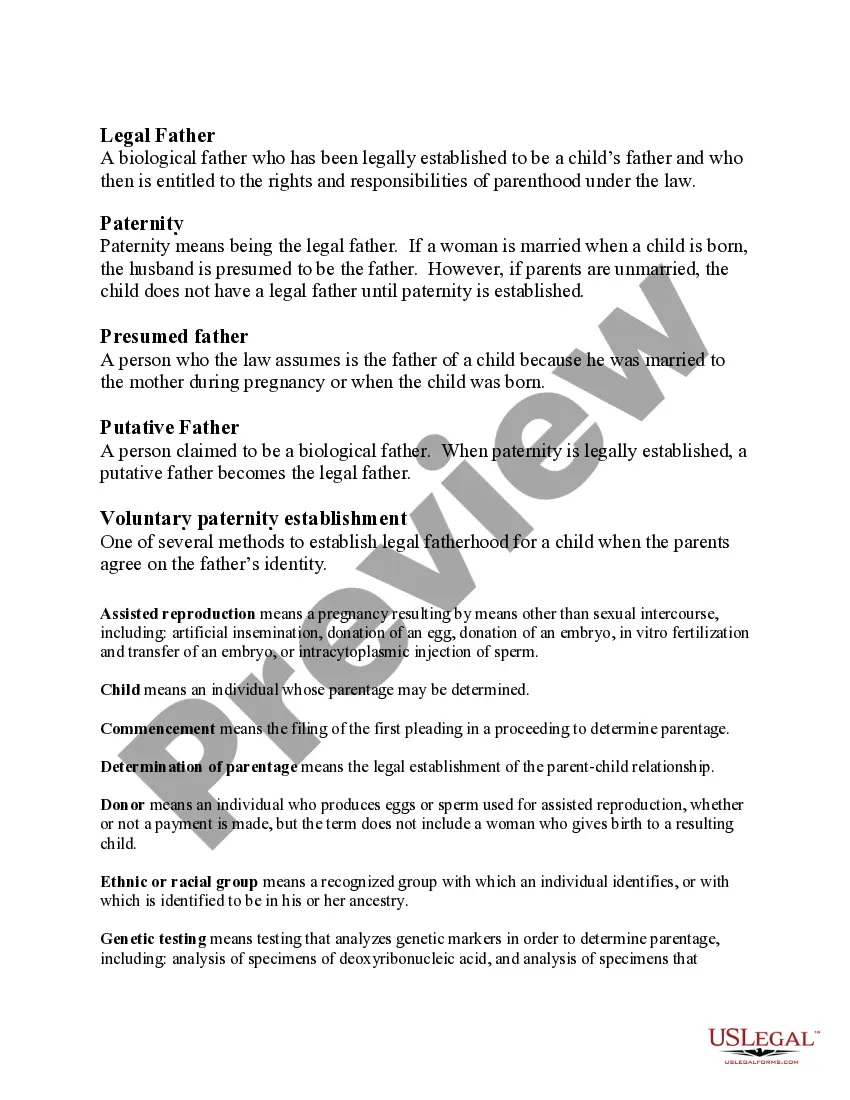
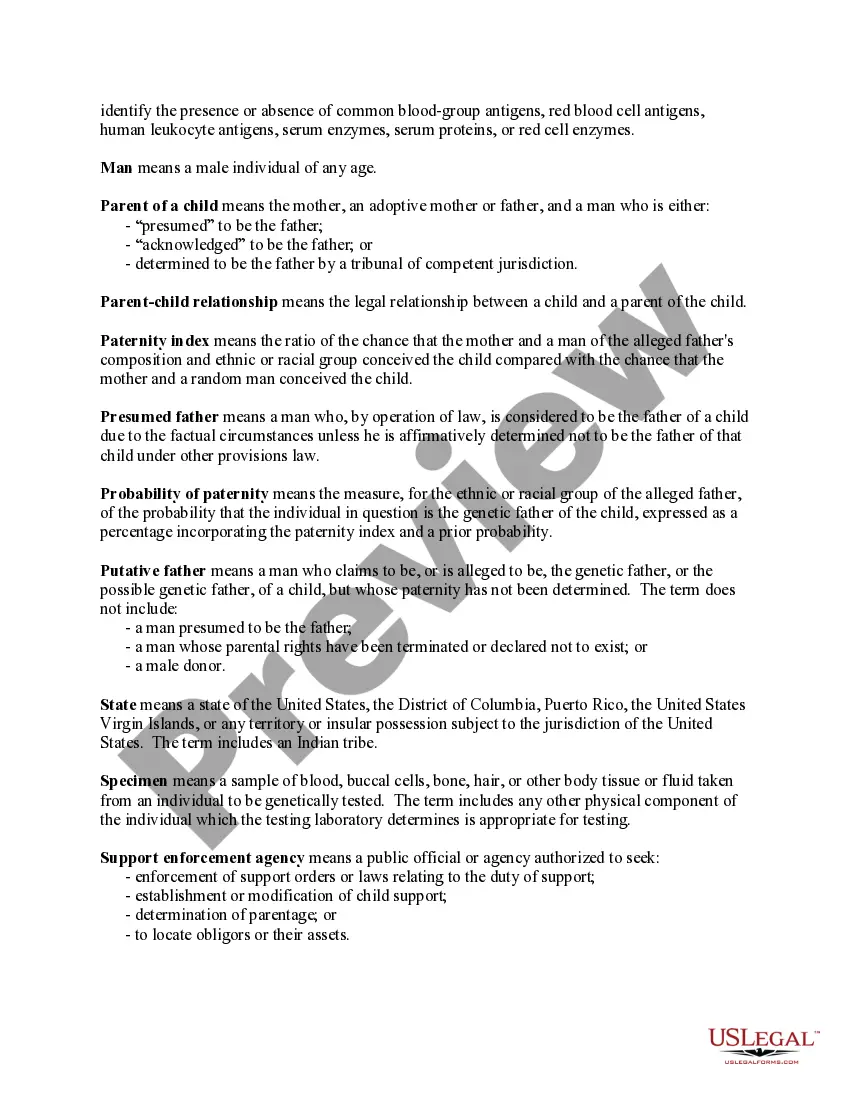
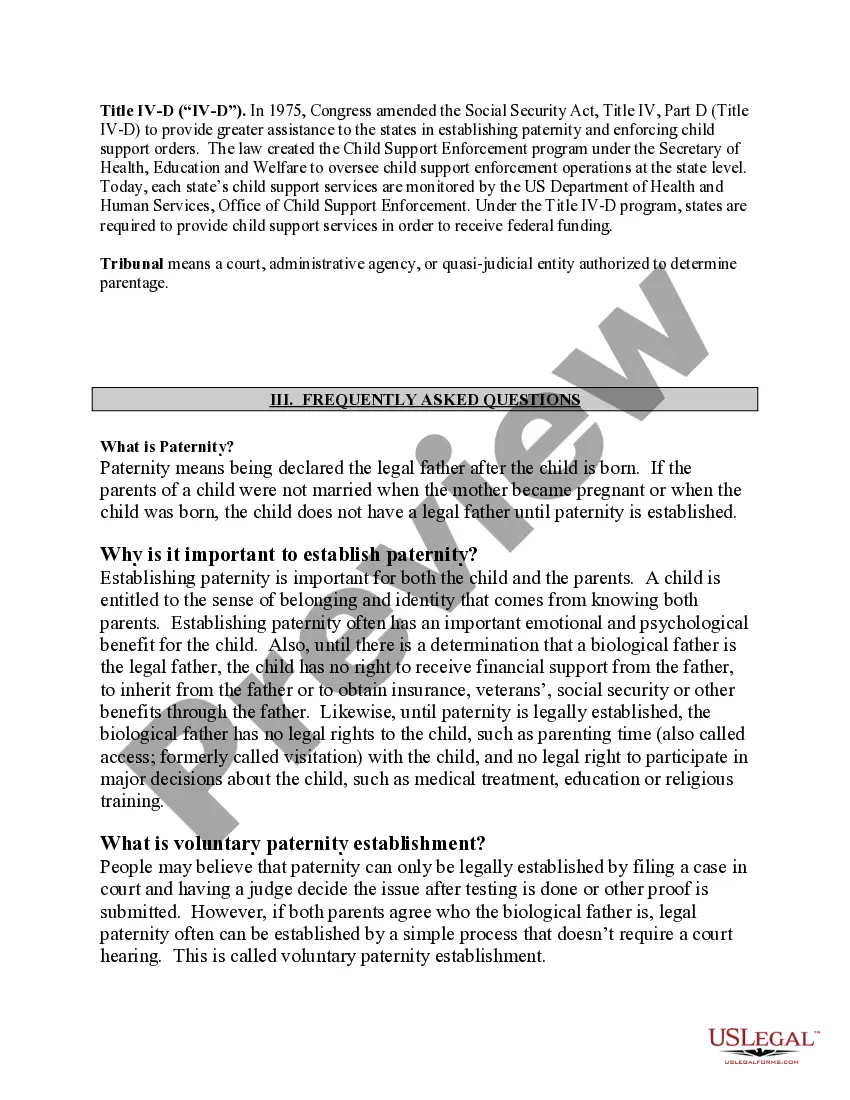
- Definitions of key terms related to paternity
- Frequently asked questions addressing common concerns
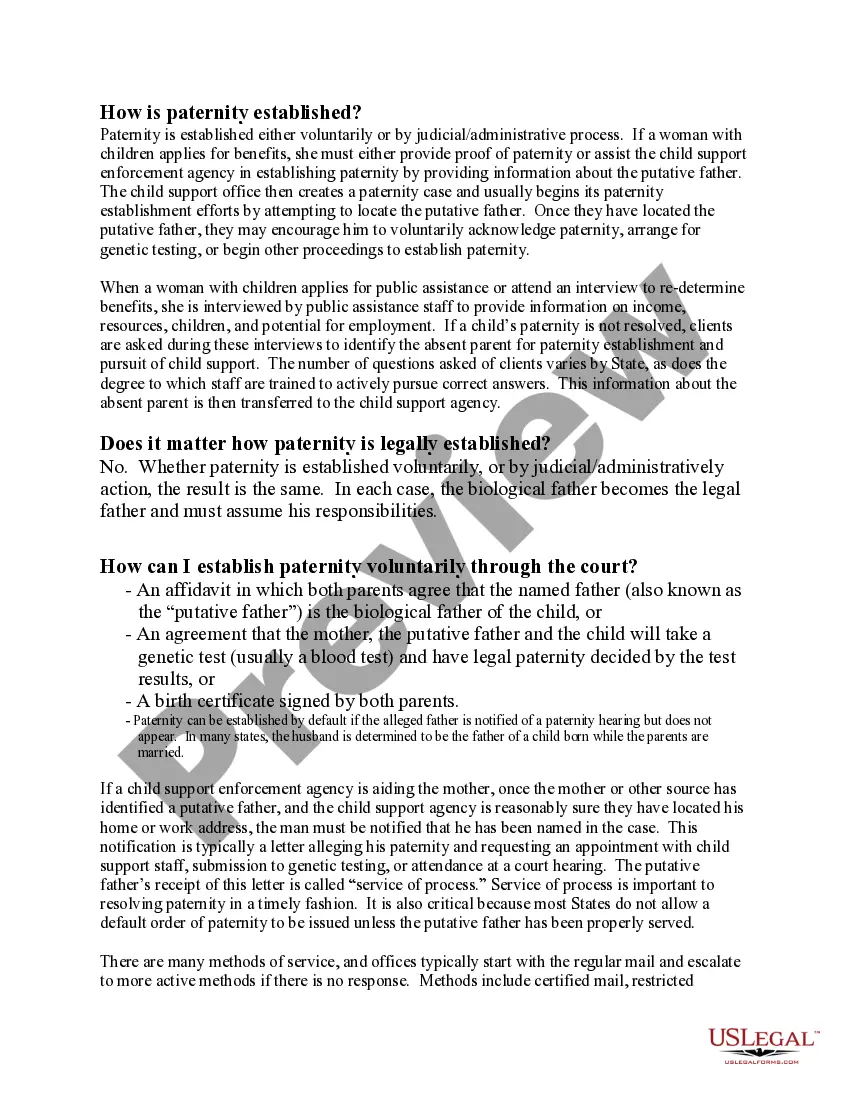
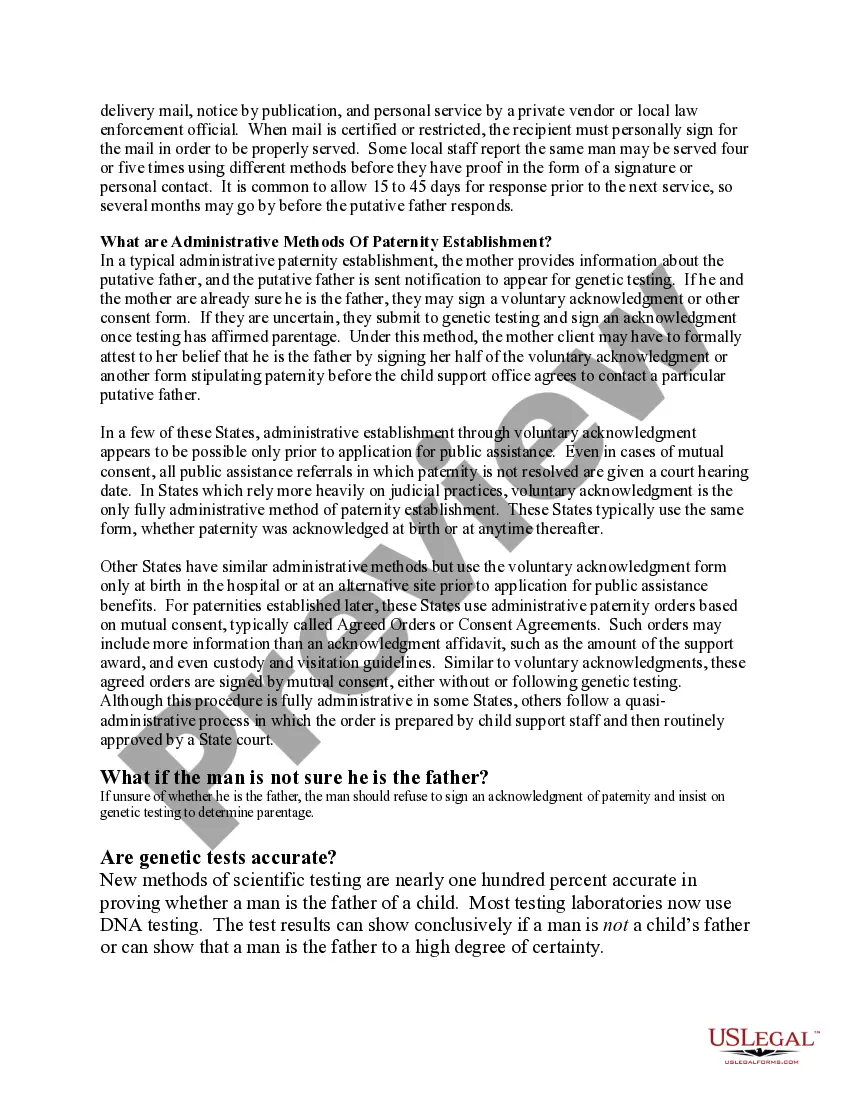
- Detailed procedures for both voluntary and judicial paternity establishment
- Information about genetic testing and its implications
- State-specific summaries of paternity laws


When to use this document
This handbook is essential when you need to establish paternity for a child born out of wedlock. It is particularly useful in scenarios such as when a father wishes to acknowledge his paternity voluntarily, when a mother needs to seek child support, or when there are disputes regarding a child's parentage. Additionally, it provides guidance for those unsure about their rights and responsibilities under paternity law.
Who this form is for
- Unmarried parents seeking to establish legal fatherhood
- Individuals involved in child support cases
- Legal professionals looking for a clear understanding of paternity law
- Social services workers assisting clients with paternity issues
- Anyone interested in understanding their rights and responsibilities regarding paternity
Completing this form step by step
- Read the introduction to understand the significance of paternity establishment.
- Familiarize yourself with the definitions of key terms related to paternity.
- Address specific questions using the frequently asked questions section to clarify your concerns.
- Follow the guidelines for voluntary establishment or court actions as applicable to your situation.
- Utilize the state-specific law summary to understand local requirements and procedures.
Does this document require notarization?
This form usually doesn’t need to be notarized. However, local laws or specific transactions may require it. Our online notarization service, powered by Notarize, lets you complete it remotely through a secure video session, available 24/7.
Get your form ready online
Our built-in tools help you complete, sign, share, and store your documents in one place.
Make edits, fill in missing information, and update formatting in US Legal Forms—just like you would in MS Word.
Download a copy, print it, send it by email, or mail it via USPS—whatever works best for your next step.
Sign and collect signatures with our SignNow integration. Send to multiple recipients, set reminders, and more. Go Premium to unlock E-Sign.
If this form requires notarization, complete it online through a secure video call—no need to meet a notary in person or wait for an appointment.
We protect your documents and personal data by following strict security and privacy standards.

Make edits, fill in missing information, and update formatting in US Legal Forms—just like you would in MS Word.

Download a copy, print it, send it by email, or mail it via USPS—whatever works best for your next step.

Sign and collect signatures with our SignNow integration. Send to multiple recipients, set reminders, and more. Go Premium to unlock E-Sign.

If this form requires notarization, complete it online through a secure video call—no need to meet a notary in person or wait for an appointment.

We protect your documents and personal data by following strict security and privacy standards.
Common mistakes to avoid
- Not seeking legal advice when unsure of paternity rights and responsibilities.
- Delaying the establishment of paternity, which can affect parental rights and support obligations.
- Overlooking state-specific laws that may require different procedures for paternity establishment.
Benefits of using this form online
- Immediate access to important legal information without the need for an in-person consultation.
- Easy navigation through complex legal terms and procedures.
- The ability to download and print the handbook for personal use and reference.
Legal use & context
- This handbook serves as a practical guide to establishing paternity and is based on existing laws in the United States.
- It is not a substitute for legal advice but provides a strong foundation for understanding paternity law.
- Users are encouraged to consult with legal professionals when seeking to apply the information contained within the handbook.
Quick recap
- Establishing paternity is crucial for the child's rights to support and identity.
- There are both voluntary and judicial processes for paternity establishment.
- Understanding local laws can streamline the paternity establishment process.
- Consulting legal resources or professionals can provide valuable guidance.
Looking for another form?
Form popularity
FAQ
If a man seeking to establish paternity does not attend the paternity test, the man is in contempt of the court order that required him to do so. The man may be held in contempt of court. In addition, if the man does not appear, the court may grant a default judgment against him.
Filing an answer with the Clerk of Court; Contacting the child support office to request genetic testing; Contacting the child support office to voluntarily acknowledge paternity by signing an affidavit and voluntary support agreement;
Once you have a child support attorney, you can petition the appropriate court to put a stop to your child support payments. You are going to have to attend a court hearing and prove that your obligation should end.
Under NC child custody law, an unmarried mother gets primary or natural right to custody following the birth of a child. This arrangement only applies when no father is named on the birth certificate or steps forward to make a custody claim.
(d) If the action to establish paternity is brought more than three years after birth of a child or is brought after the death of the putative father, paternity shall not be established in a contested case without evidence from a blood or genetic marker test.
In North Carolina, there are two ways to begin a child support case: in civil court or through a criminal action. You can file for child support on your own, with a lawyer that you retain, or the Division of Social Services (DSS) can file the child support case for you.
In North Carolina, NC Gen. Stat. §50-13.4 requires child support to be paid until a child is age 18 or graduates from high school, whichever is longer. Support may end sooner than that if a child becomes emancipated.
The North Carolina paternity law provides that the paternity of a child may be established at any time before the child turns eighteen. A paternity action can be brought to court by either of the parents.
Under North Carolina law there is no legal duty to pay any college expenses or to continue child support past age 18 if the child is enrolled in college. Please note that some states do require child support until age 21 if the child is enrolled in college.