North Carolina Claim of Lien by Corporation
Overview of this form
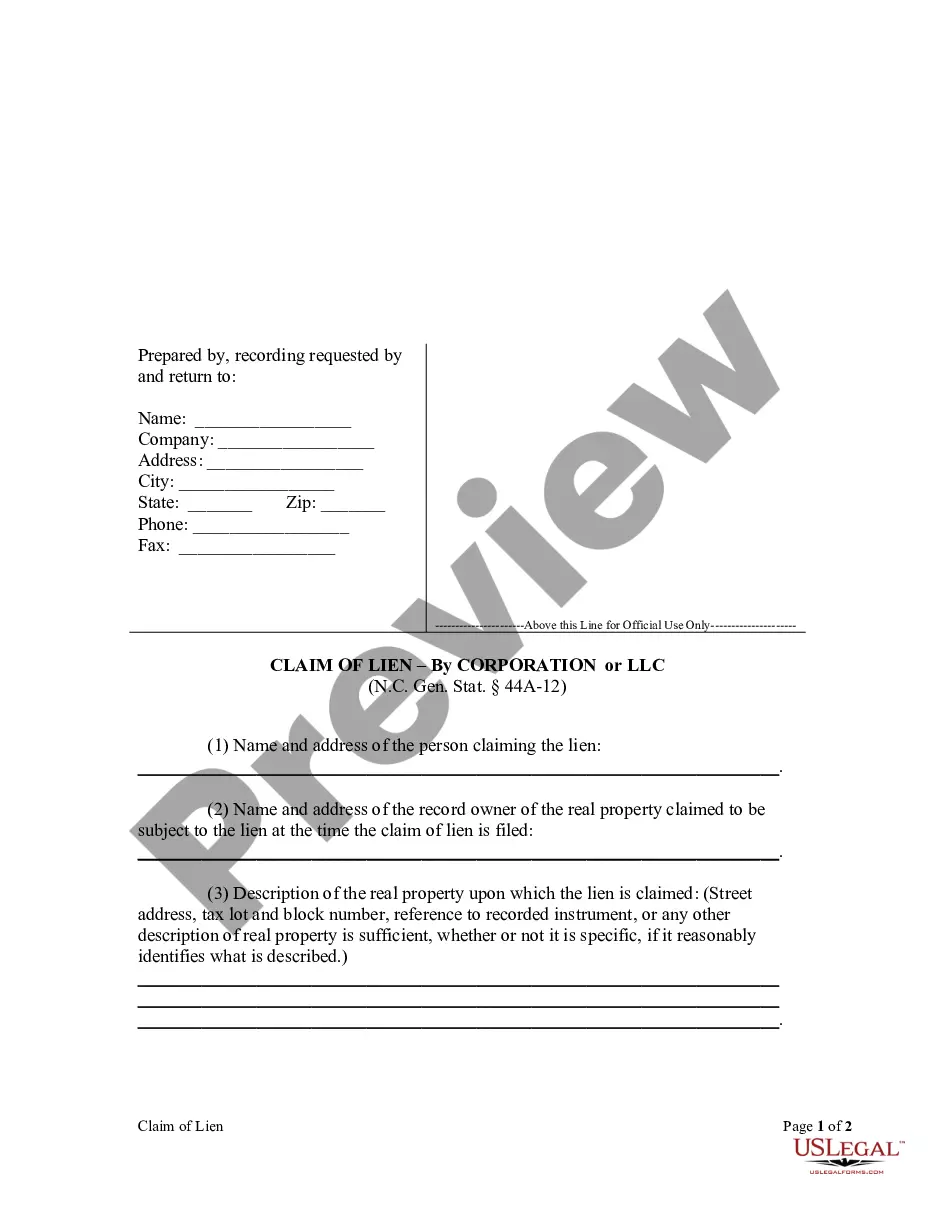
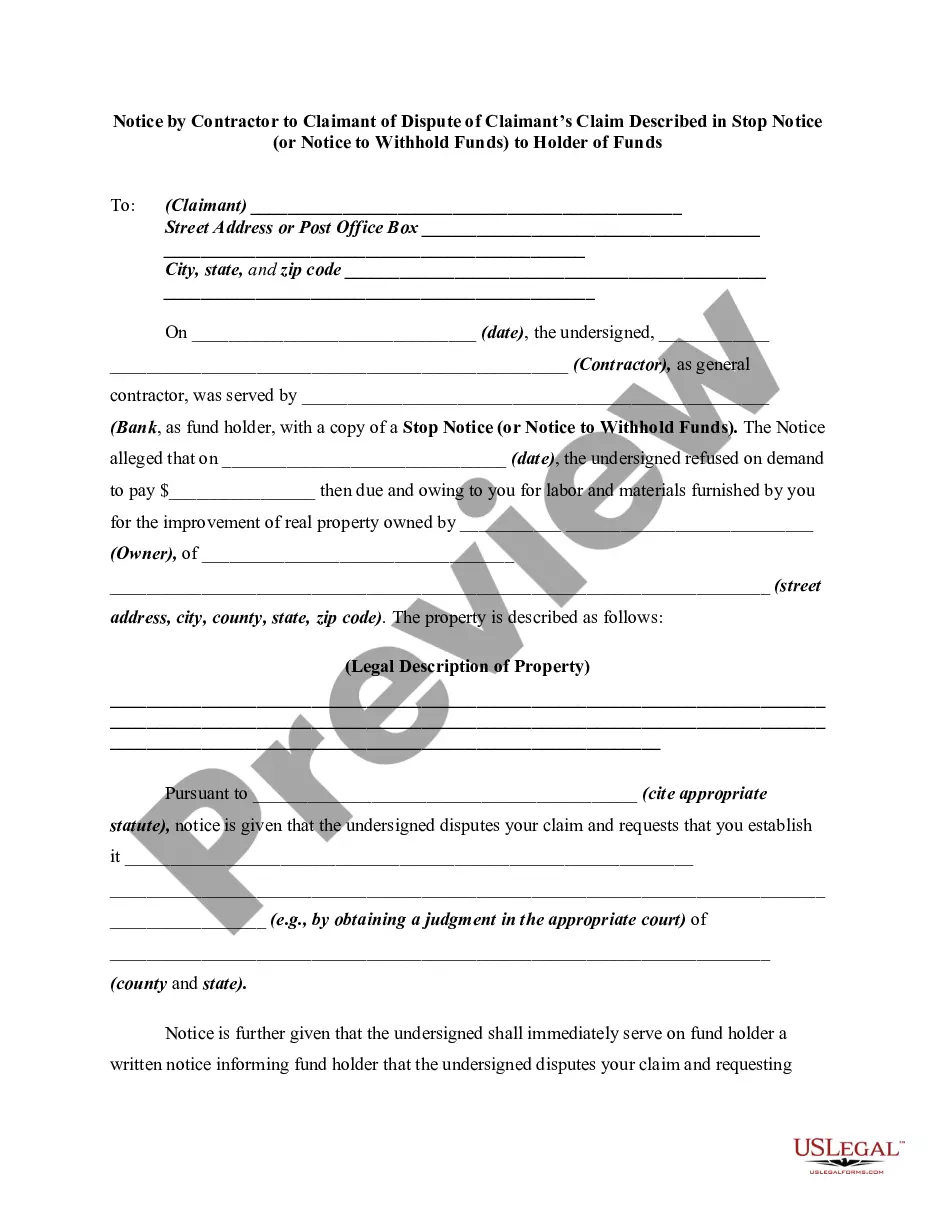
The Claim of Lien by Corporation is a legal document used by corporations to formally claim a lien on real property. This form is essential for securing payment when labor or materials have been provided but not compensated. It differs from similar forms by being specifically designed for corporations and takes into account the unique requirements of corporate entities in filing a lien under North Carolina General Statutes.
Key parts of this document
- Name and address of the person or corporation claiming the lien.
- Name and address of the record owner of the real property involved.
- Description of the real property being claimed.
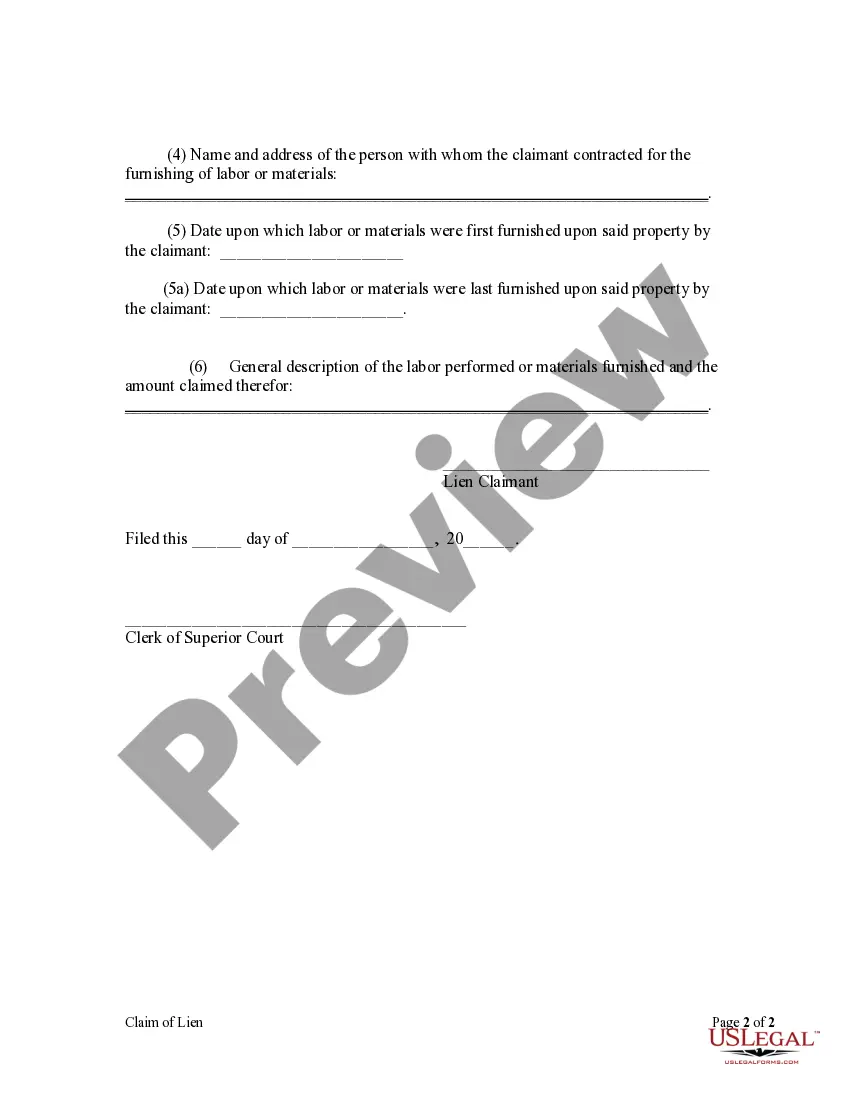
- Name and address of the contracting party with whom the lien claimant has worked.
- Dates outlining when labor or materials were first and last furnished.
- General description of the labor performed or materials provided, along with the claimed amount.
Situations where this form applies
This form should be used when a corporation has provided labor or materials for a construction or renovation project on real property but has not received payment. It is crucial to file this claim within one hundred and twenty days after the last provision of these services or materials to ensure the lien is enforceable.
Who this form is for
- Corporations that have furnished labor or materials on a project.
- Entities seeking to secure their right to payment for services rendered.
- Contractors or suppliers who wish to enforce a lien on real property.
How to prepare this document
- Identify the corporation claiming the lien, including the name and address.
- Provide the details of the property owner, including their name and address.
- Describe the real property accurately to ensure it is clearly identifiable.
- Enter details about the contract and specify the dates labor or materials were supplied.
- Provide a description of the labor or materials furnished and include the amount being claimed.
- Ensure the form is signed by an authorized officer of the corporation and notarized as required.
Notarization requirements for this form
Notarization is required for this form to take effect. Our online notarization service, powered by Notarize, lets you verify and sign documents remotely through an encrypted video session, available 24/7.
Get your form ready online
Our built-in tools help you complete, sign, share, and store your documents in one place.
Make edits, fill in missing information, and update formatting in US Legal Forms—just like you would in MS Word.
Download a copy, print it, send it by email, or mail it via USPS—whatever works best for your next step.
Sign and collect signatures with our SignNow integration. Send to multiple recipients, set reminders, and more. Go Premium to unlock E-Sign.
If this form requires notarization, complete it online through a secure video call—no need to meet a notary in person or wait for an appointment.
We protect your documents and personal data by following strict security and privacy standards.

Make edits, fill in missing information, and update formatting in US Legal Forms—just like you would in MS Word.

Download a copy, print it, send it by email, or mail it via USPS—whatever works best for your next step.

Sign and collect signatures with our SignNow integration. Send to multiple recipients, set reminders, and more. Go Premium to unlock E-Sign.

If this form requires notarization, complete it online through a secure video call—no need to meet a notary in person or wait for an appointment.

We protect your documents and personal data by following strict security and privacy standards.
Common mistakes
- Failing to file the form within the stipulated one hundred and twenty days.
- Inaccurate descriptions of the property or the work done.
- Not including all necessary details about the contracts and parties involved.
- Missing signatures or notarization, if required.
Why use this form online
- Convenient access to download and complete the form at any time.
- Editable format allowing for easy updates before submission.
- Reliable templates drafted by licensed attorneys ensure legal compliance.
- Secure storage options for personal records after completion.
Looking for another form?



Form popularity
FAQ
The people who can file mechanic's liens are identified by state law. A subcontractor or supplier to a subcontractor may not be able to file a lien. Also, unlicensed contractors are often barred from filing a mechanic's lien.
In North Carolina, a judgment is valid for ten years from the date it was awarded by the Court. The judgment can be renewed for another ten years, giving a judgment creditor additional time to try to collect the money owed.
A judgment lien in North Carolina will remain attached to the debtor's property (even if the property changes hands) for ten years.
Fill out a mechanics lien form that meets NC requirements. North Carolina law sets specific guidelines claimants must meet in order to file a lien. File the lien with the county recorder's office. Serve a copy of the lien on the property owner.
Fill out a mechanics lien form that meets NC requirements. North Carolina law sets specific guidelines claimants must meet in order to file a lien. File the lien with the county recorder's office. Serve a copy of the lien on the property owner.
First of all, you can sue your contractor for breach of contract, even without a written contract, and she can sue you as well.See Nolo's article, "Breach of Contract Cases in Small Claims Court," for more on this. However, an alleged oral contract does create difficult evidentiary questions for the judge.
A: The filing fee for an Appointment of Lien Agent is $30 for a 1-2 Family Dwelling and $58 for any Other property type.
The short answer is yes. North Carolina law allows a person or company who improves real estate to file a lien against the owner of the property if the owner will not or cannot pay for the work.If you do not owe the contractor, and prove it in court, the lien is dissolved.