North Carolina Bill of Sale of Automobile and Odometer Statement
Overview of this form
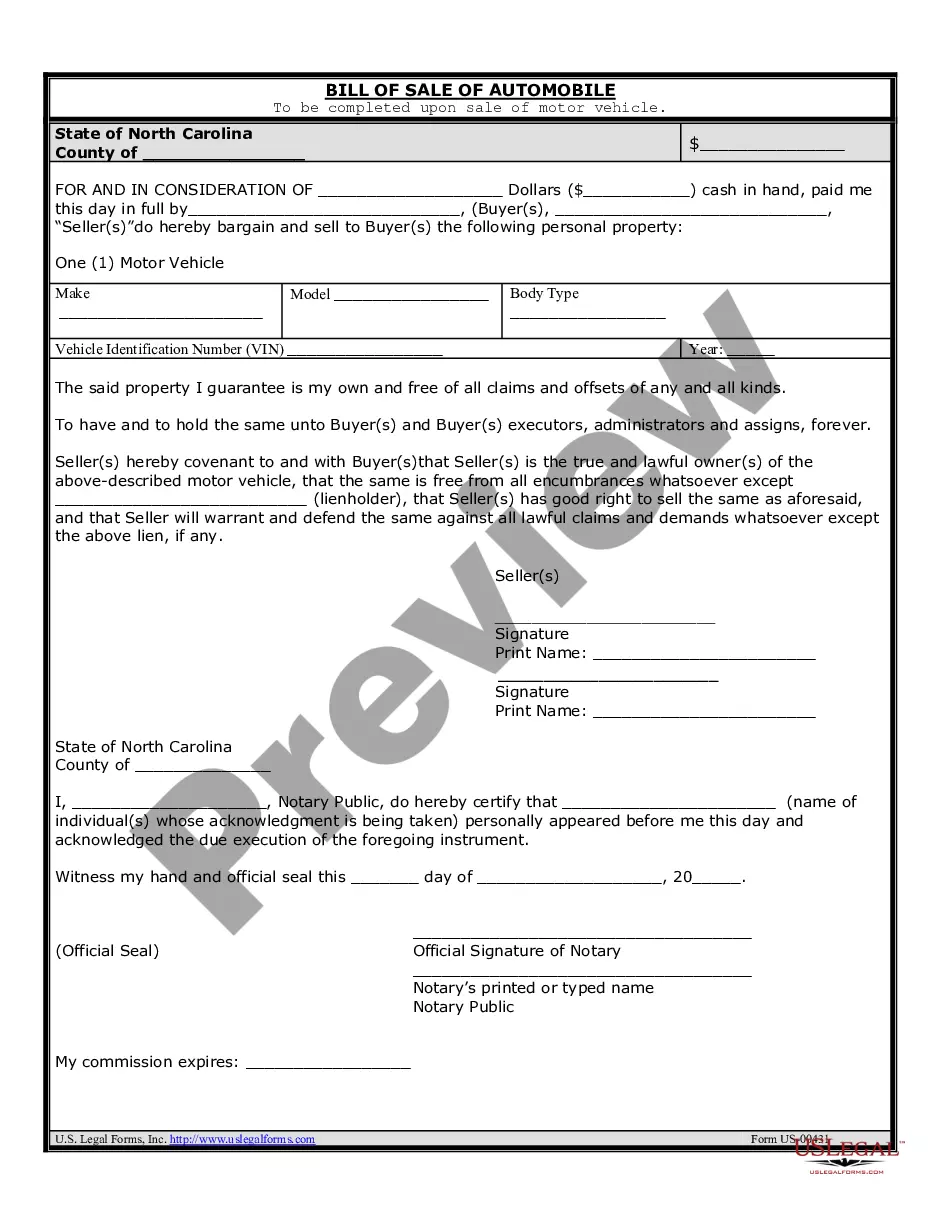
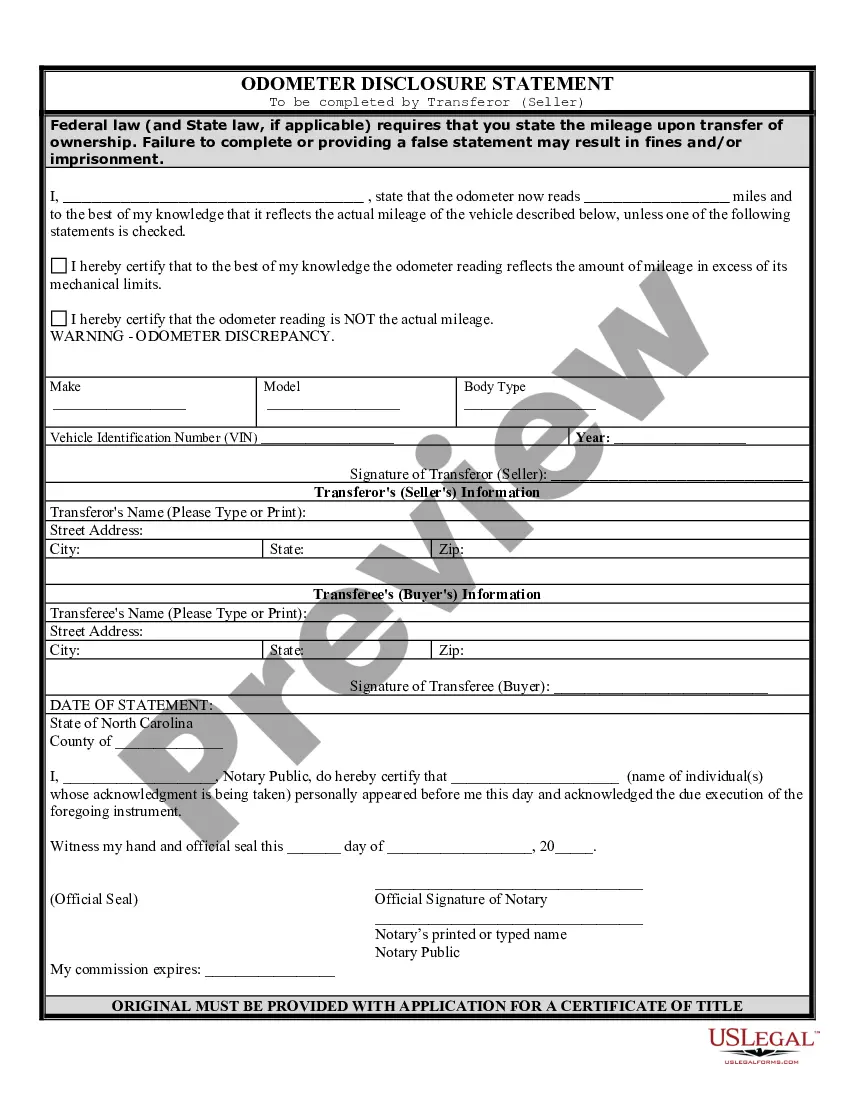
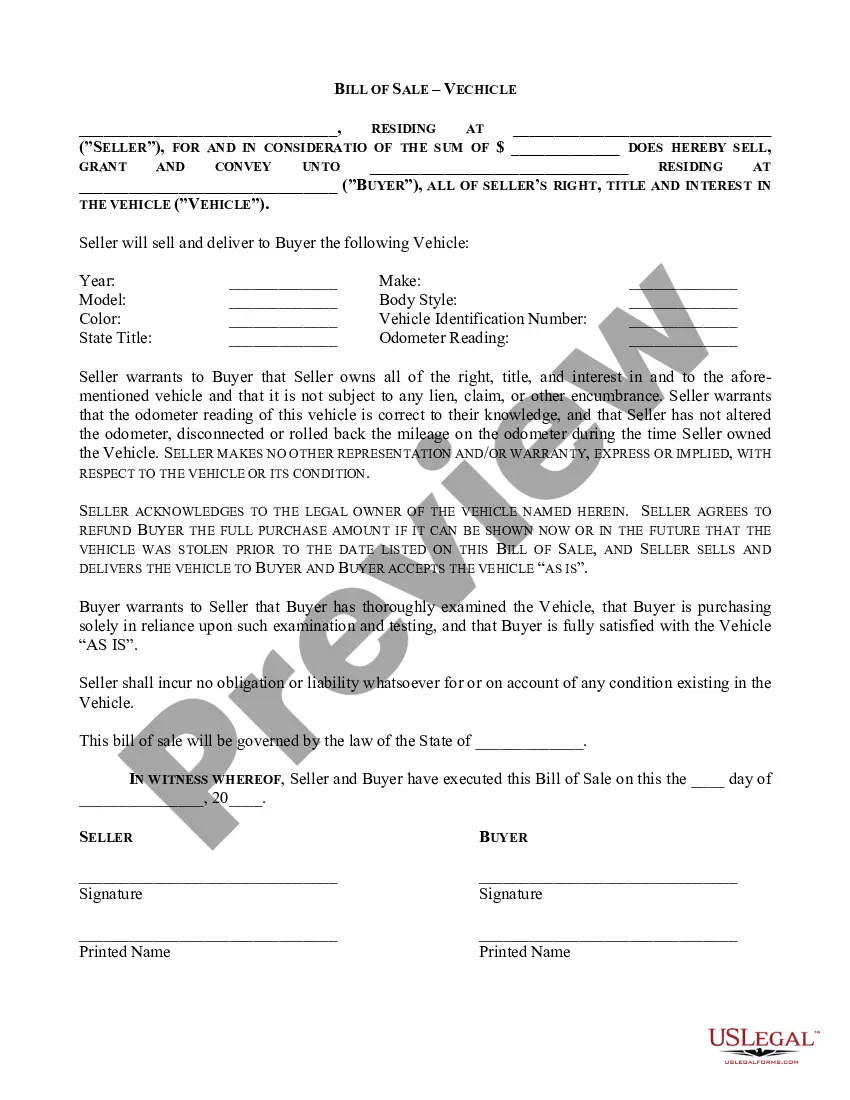
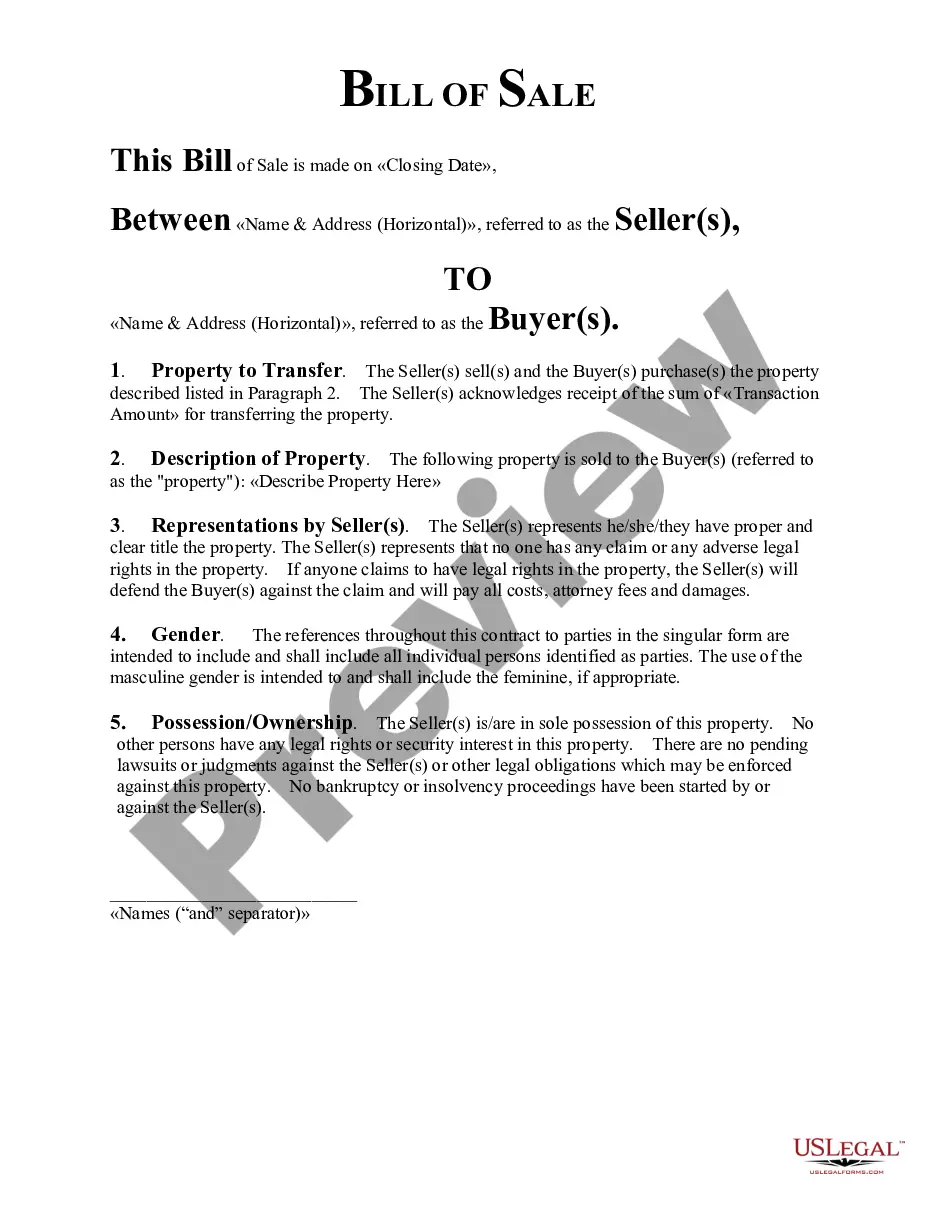
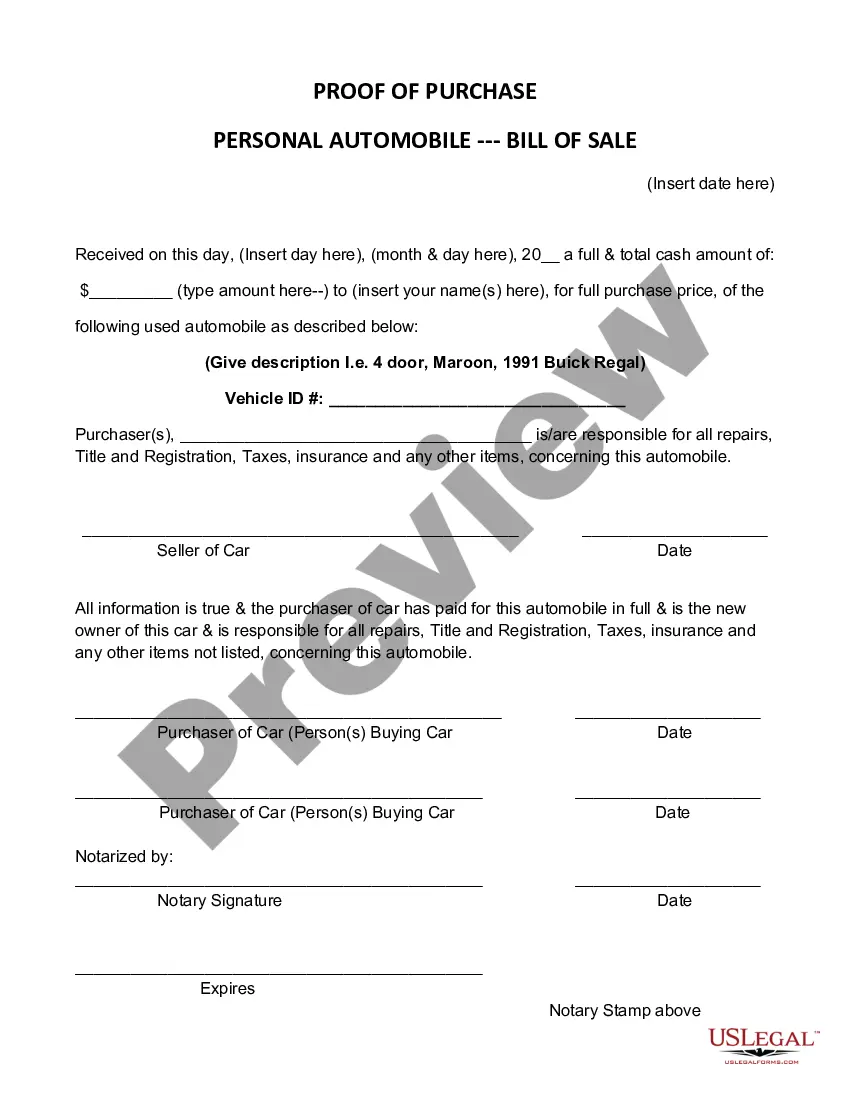
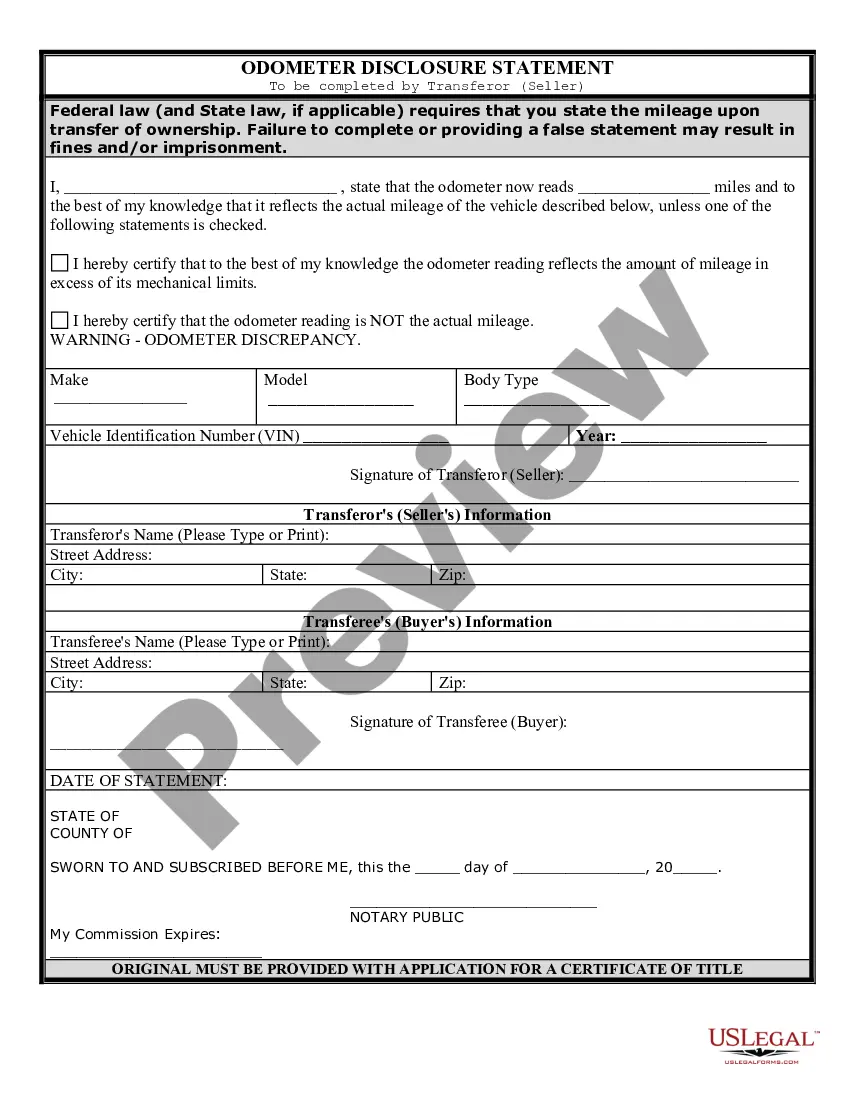
The Bill of Sale of Automobile and Odometer Statement is a legal document used to transfer ownership of a vehicle from one party to another. This form not only outlines the specifics of the automobile, such as its make, model, and VIN, but also includes an Odometer Disclosure Statement, which is required by both federal and state laws. This form differs from a simple receipt as it provides legal protections for both the seller and buyer, ensuring that the seller is the rightful owner and that there are no undisclosed claims against the vehicle.
Key parts of this document
- Make and model of the vehicle
- Vehicle Identification Number (VIN)
- Odometer Disclosure Statement detailing current mileage
- Seller's guarantees of ownership and freedom from encumbrances
- Signatures of both buyer and seller
- Notarization section for legal validation
When to use this form
This form is needed when an automobile is sold or transferred from one individual to another. It is particularly important when completing a private sale, as it formalizes the transaction and protects both parties involved. It also ensures compliance with legal requirements regarding odometer disclosures, making it essential for both buyers and sellers.
Who should use this form
- Individuals selling their personal vehicles
- Buyers purchasing a used car from a private seller
- Anyone in need of proof of the vehicle transfer for registration purposes
- Parties wanting to protect themselves legally during a vehicle sale
Completing this form step by step
- Identify and enter the names of the buyer(s) and seller(s).
- Specify the sale price of the vehicle in both numerals and words.
- Fill in the make, model, year, body type, and Vehicle Identification Number (VIN) of the automobile.
- Provide the odometer reading and indicate if the mileage is accurate.
- Both parties should sign the form in front of a notary public.
Does this form need to be notarized?
This form must be notarized to be legally valid. US Legal Forms provides secure online notarization powered by Notarize, allowing you to complete the process through a verified video call.
Get your form ready online
Our built-in tools help you complete, sign, share, and store your documents in one place.
Make edits, fill in missing information, and update formatting in US Legal Forms—just like you would in MS Word.
Download a copy, print it, send it by email, or mail it via USPS—whatever works best for your next step.
Sign and collect signatures with our SignNow integration. Send to multiple recipients, set reminders, and more. Go Premium to unlock E-Sign.
If this form requires notarization, complete it online through a secure video call—no need to meet a notary in person or wait for an appointment.
We protect your documents and personal data by following strict security and privacy standards.

Make edits, fill in missing information, and update formatting in US Legal Forms—just like you would in MS Word.

Download a copy, print it, send it by email, or mail it via USPS—whatever works best for your next step.

Sign and collect signatures with our SignNow integration. Send to multiple recipients, set reminders, and more. Go Premium to unlock E-Sign.

If this form requires notarization, complete it online through a secure video call—no need to meet a notary in person or wait for an appointment.

We protect your documents and personal data by following strict security and privacy standards.
Common mistakes
- Not accurately disclosing the odometer reading.
- Failing to notarize the document when required.
- Leaving sections incomplete or not signing the form.
- Using the form without verifying state-specific requirements.
Benefits of using this form online
- Easy access to a legally compliant document.
- Customizable to fit specific transaction details.
- Downloadable immediately for quick use.
- Drafted by licensed attorneys to ensure legality.
Key takeaways
- The Bill of Sale of Automobile and Odometer Statement is essential for the legal transfer of vehicle ownership.
- Accurate completion helps protect both buyers and sellers from future disputes.
- Notarization is a critical step that ensures the document's validity in some states like North Carolina.
- This form can be easily obtained online, providing convenience and legal assurance.
Looking for another form?
Form popularity
FAQ
You might be eligible for a NC Bonded Title in, but not limited to, any of these instances: You bought/received a car and never received the title. You bought/received a car and only received a bill of sale.You bought/received a car, received the title, but lost it before transferring it into your name
Many states require a DMV bill of sale document when titling and registering a vehicle in the state, but the NCDMV only requires this document when titling an automobile that was purchased from a dealership.The seller must warrant that the vehicle is free of any encumbrances or liens.
It means that it's exempt from federal odometer disclosure laws so no one has to legally guarantee them to be accurate due to the age and or class of vehicle, Over 10 years old is exempt.
The Federal odometer law, 49 U.S.C.If the odometer mileage is incorrect, the law requires a statement to that effect to be furnished on the title to the buyer. However, vehicles ten years old and older are exempt from the written disclosure requirements.
Typically, the Purchaser does not need to sign the Bill of Sale. However, some jurisdictions will require the Purchaser to sign the Bill of Sale for some or all forms of transactions. You should check your local laws to verify whether the Purchaser's signature is required for your specific sale.
A bill of sale is only legally required in North Carolina when you purchase your vehicle from a car dealership.Your bill of sale will also be needed when you go to title your vehicle, or if the vehicle's ownership becomes part of a trust.
In the State of North Carolina, a Bill of Sale Form is required when you purchase a vehicle from a dealership so make sure the dealership provides you with this form. In private vehicle transactions a Bill of Sale Form is not required in North Carolina.
A valid and current proof of identification. Current maintenance and vehicle records. The vehicle's original or replacement title. Lien Release, if liens are shown on the vehicle title. Odometer Disclosure Statement form MVR-180.