Montana Commercial Sublease
About this form
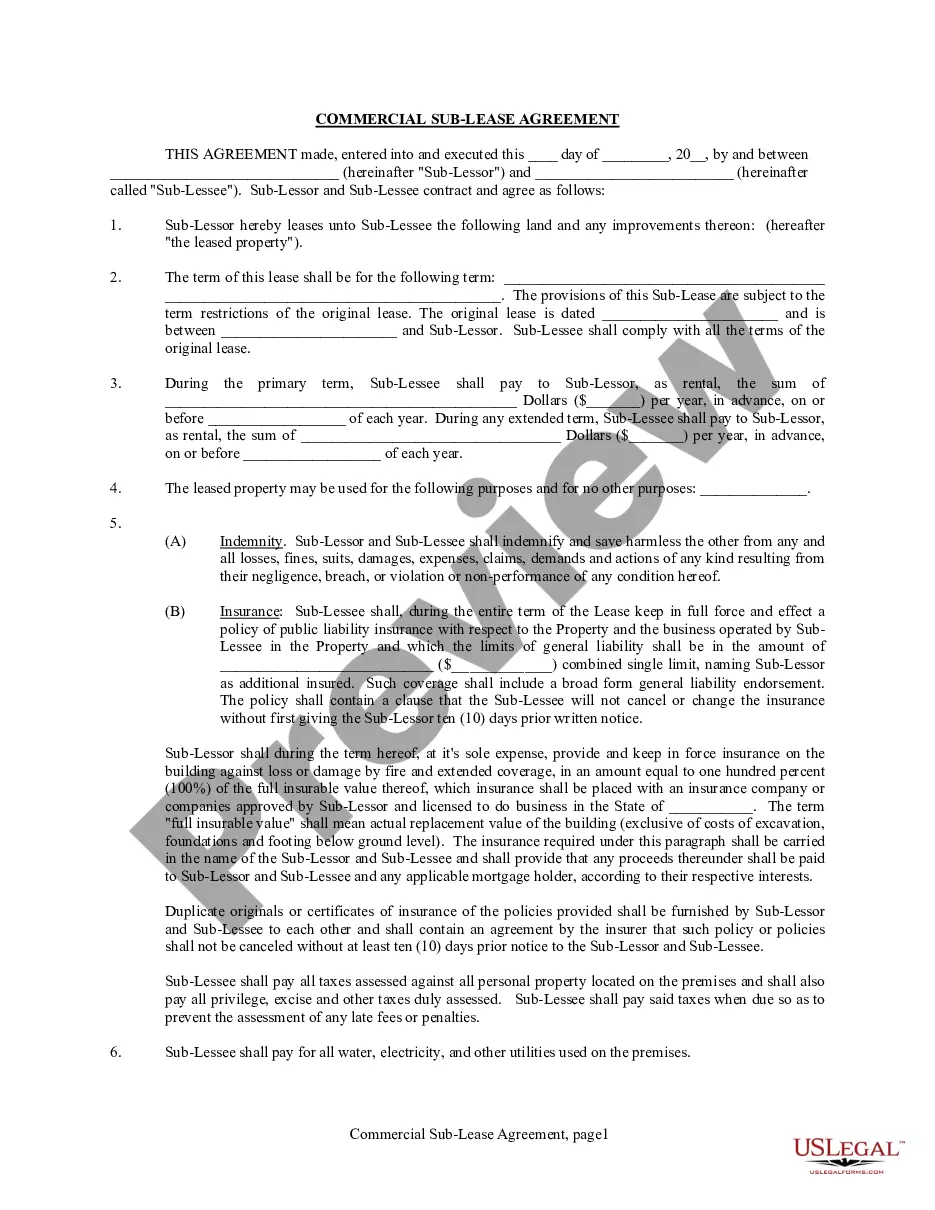
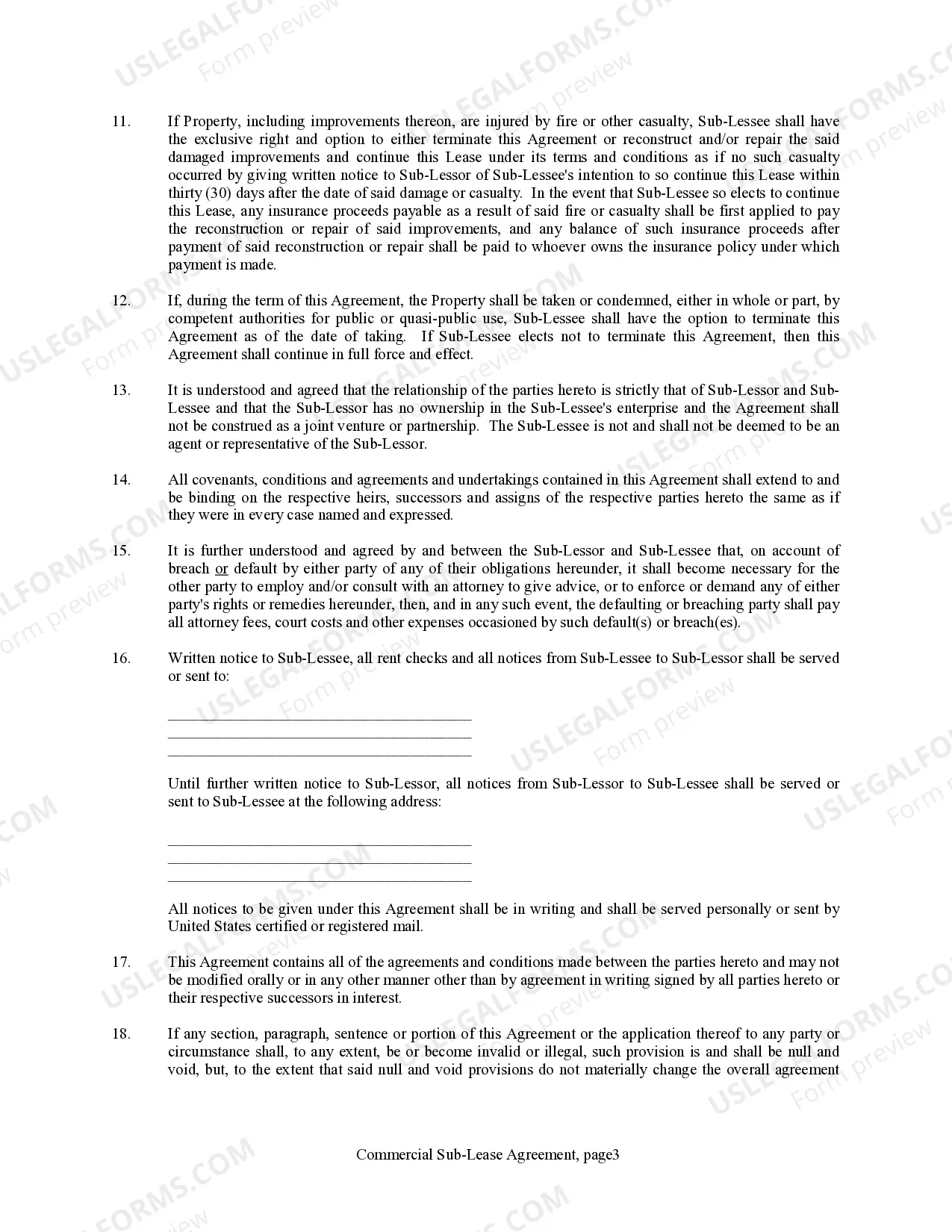
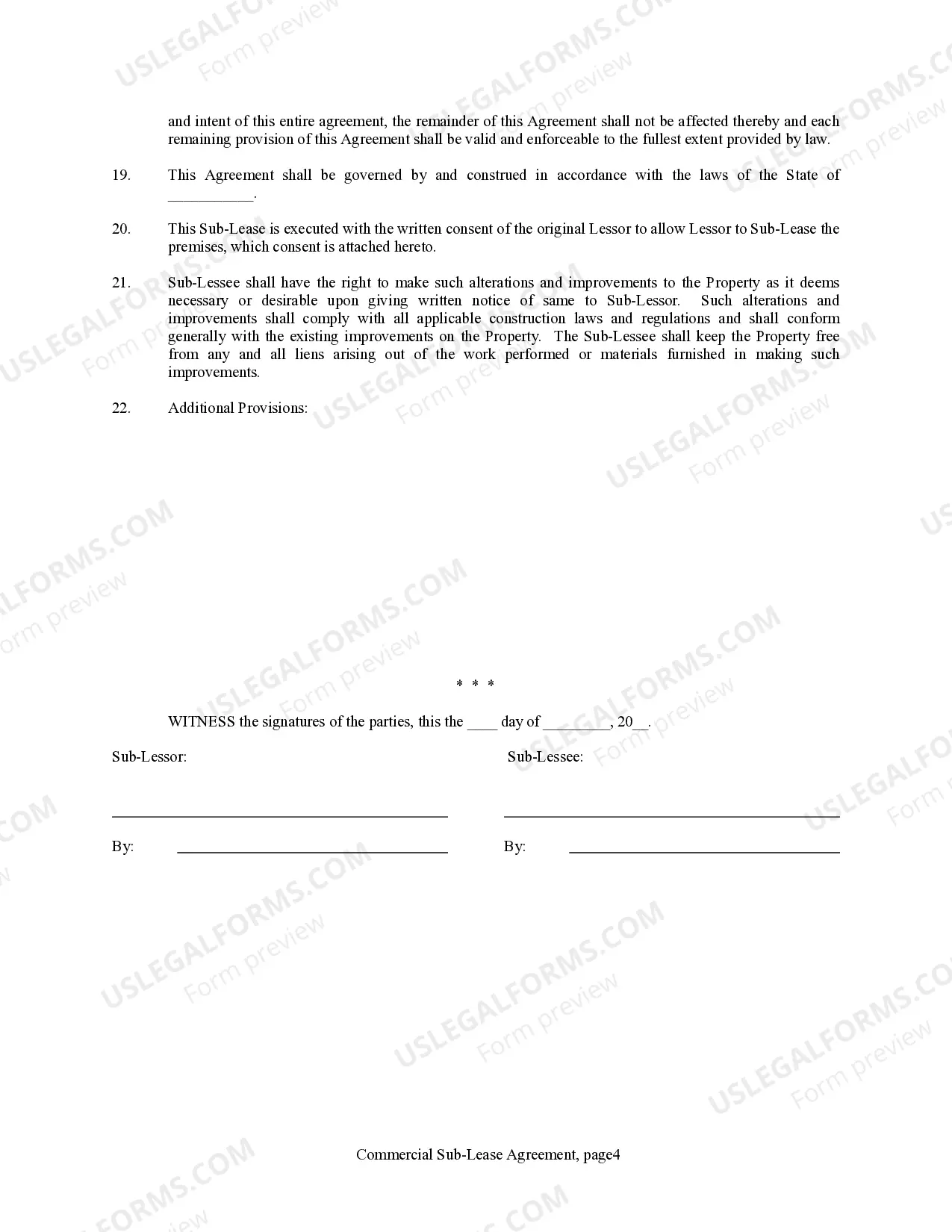
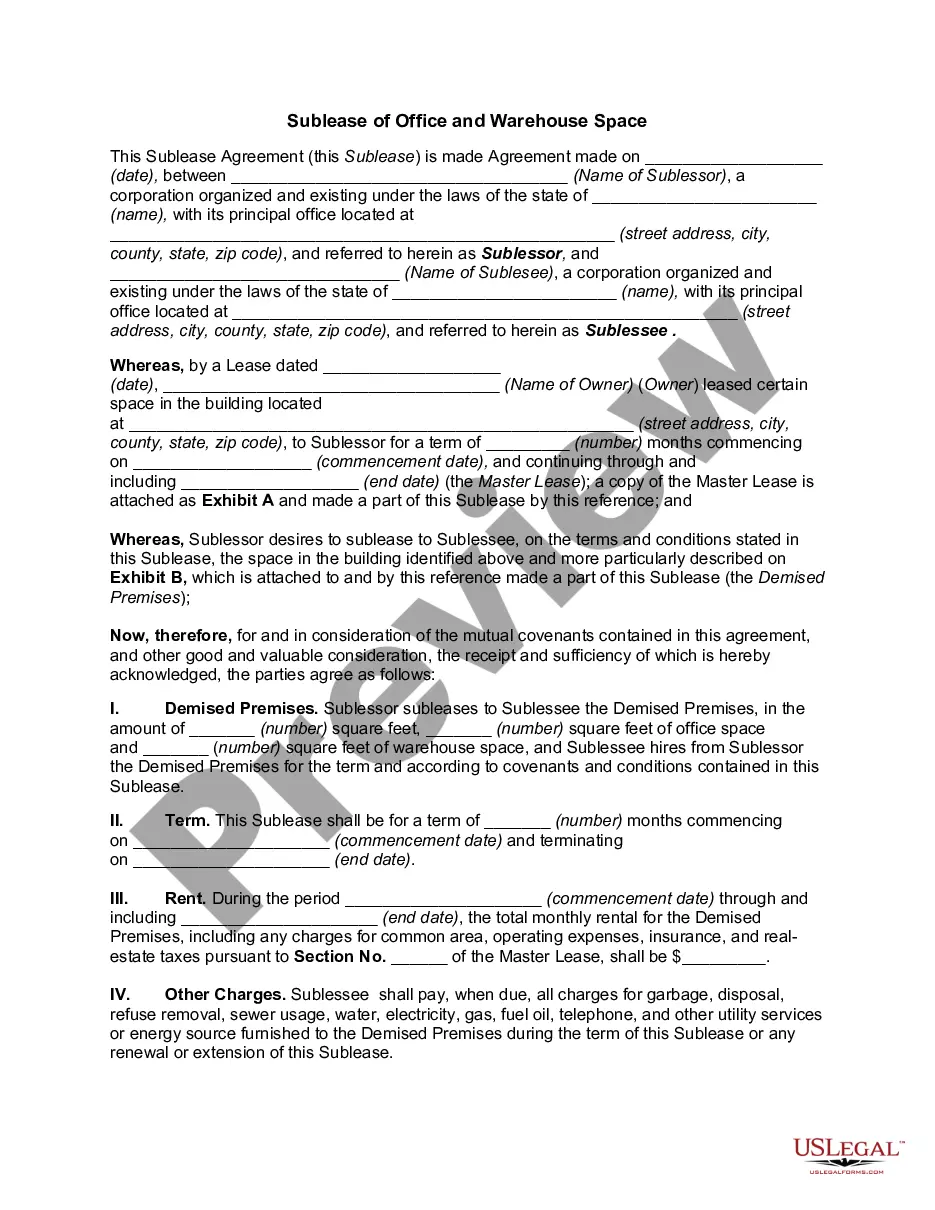
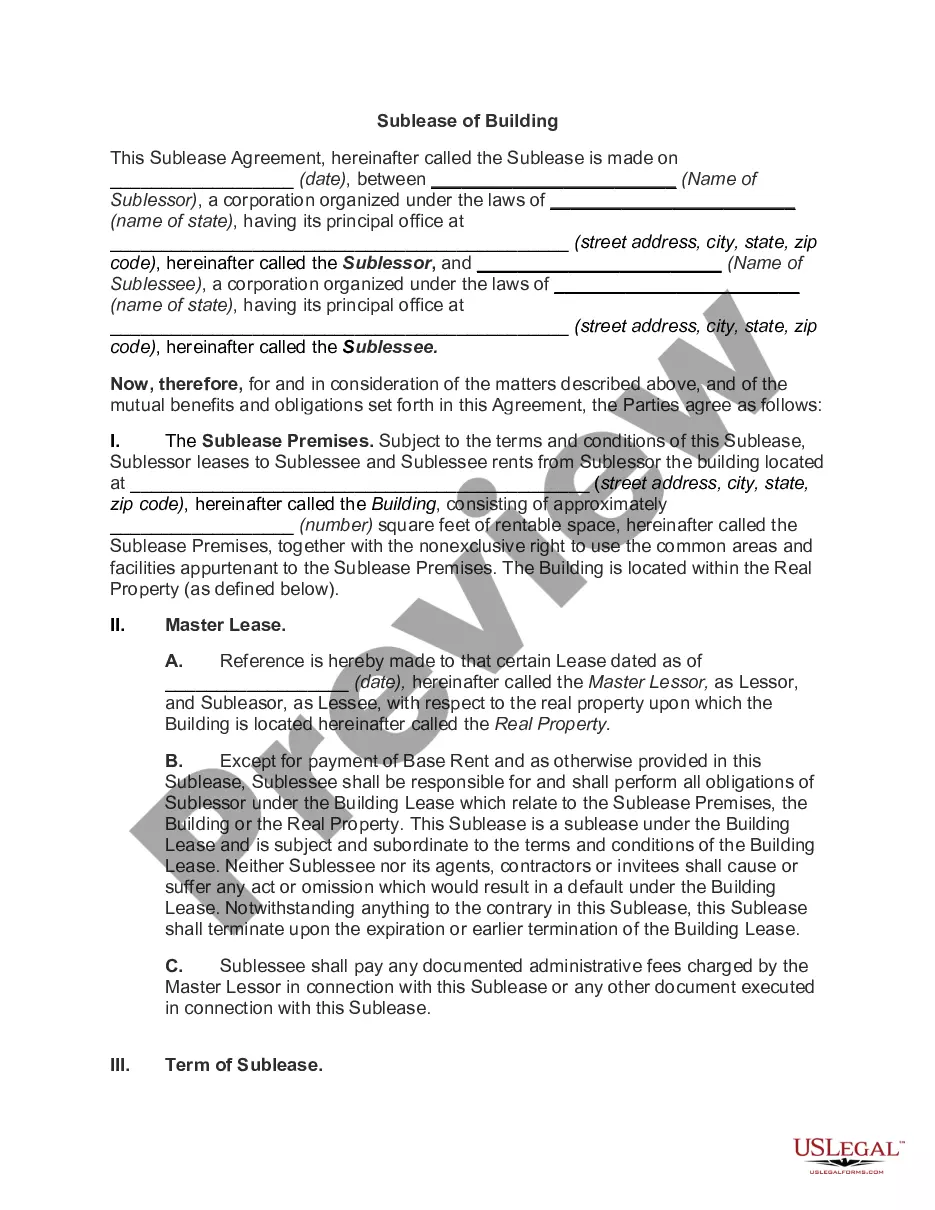
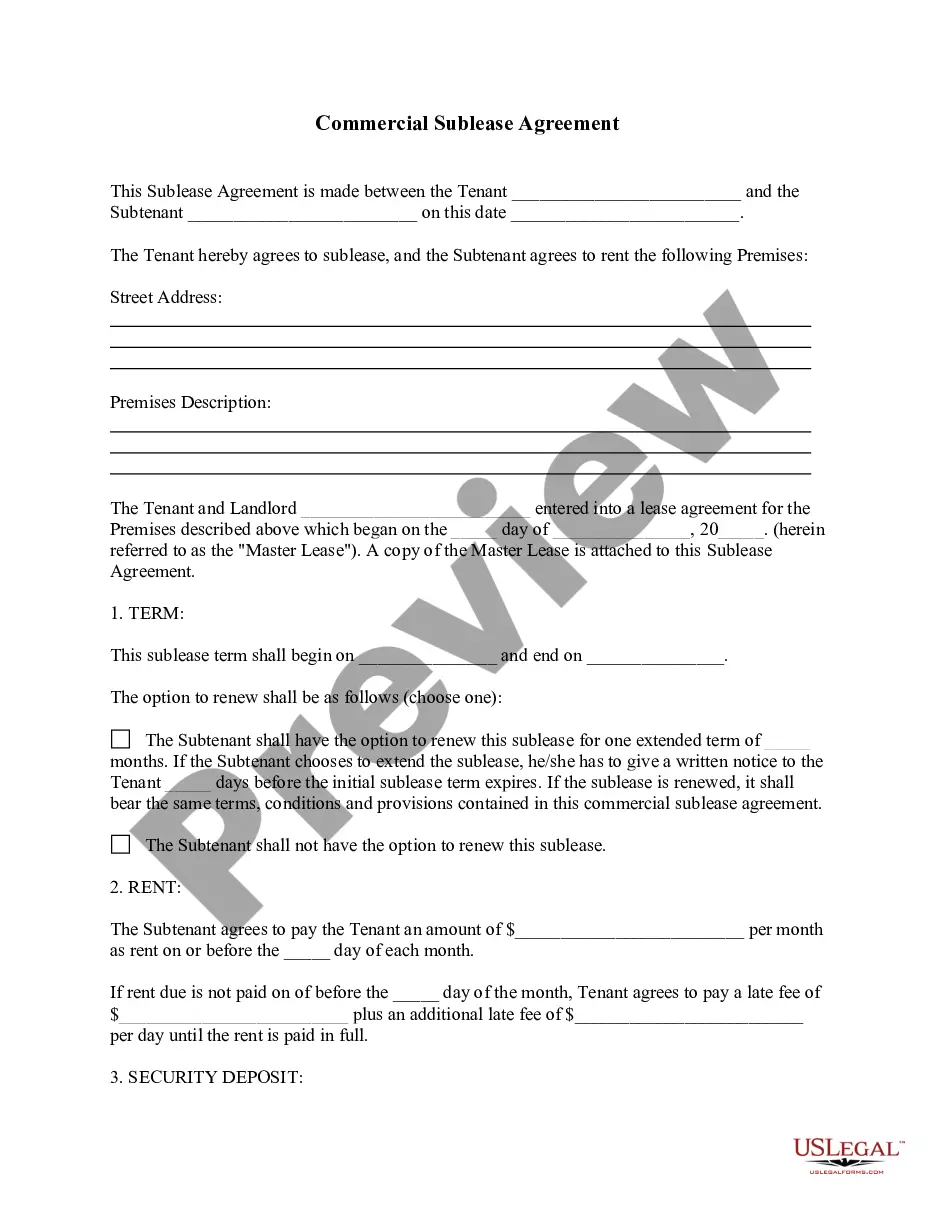
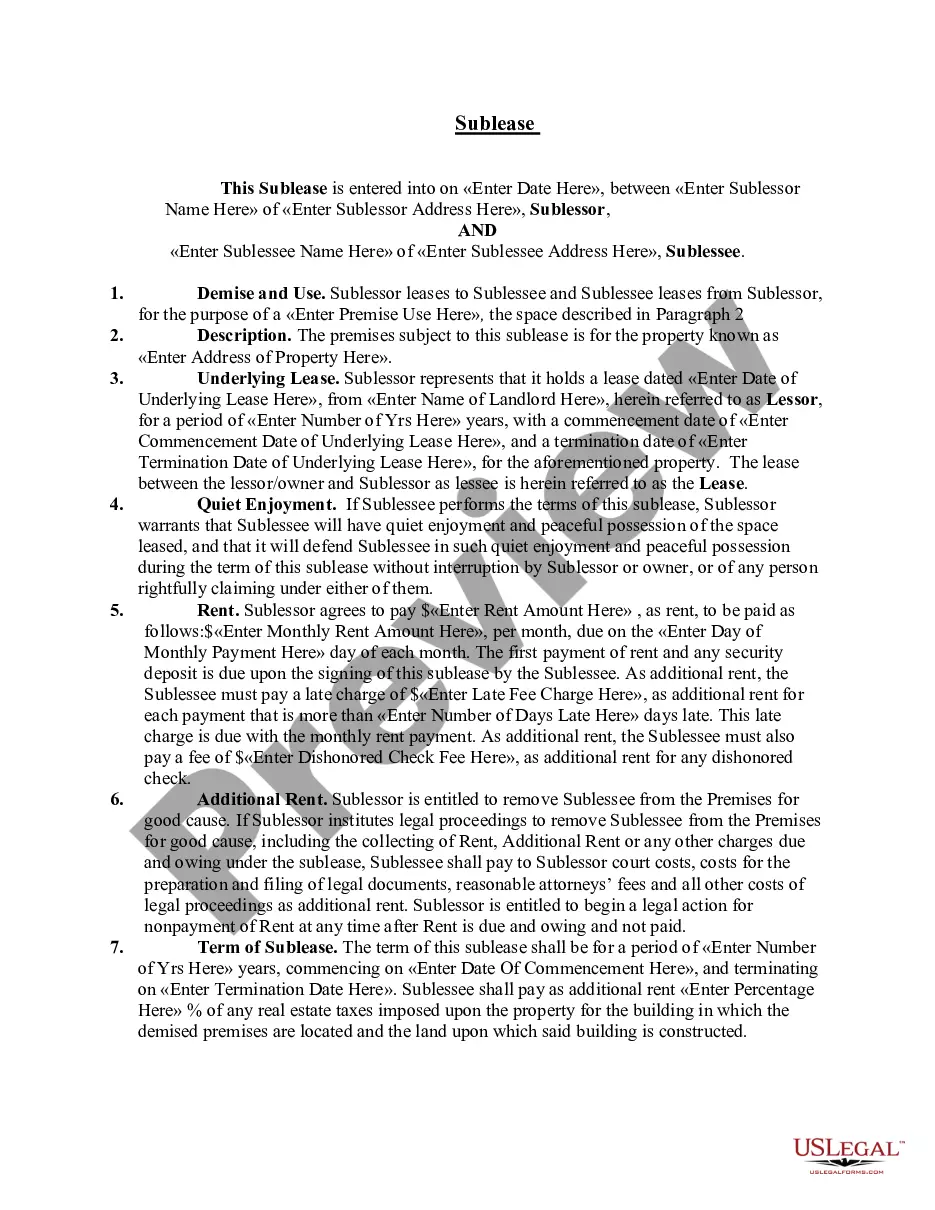
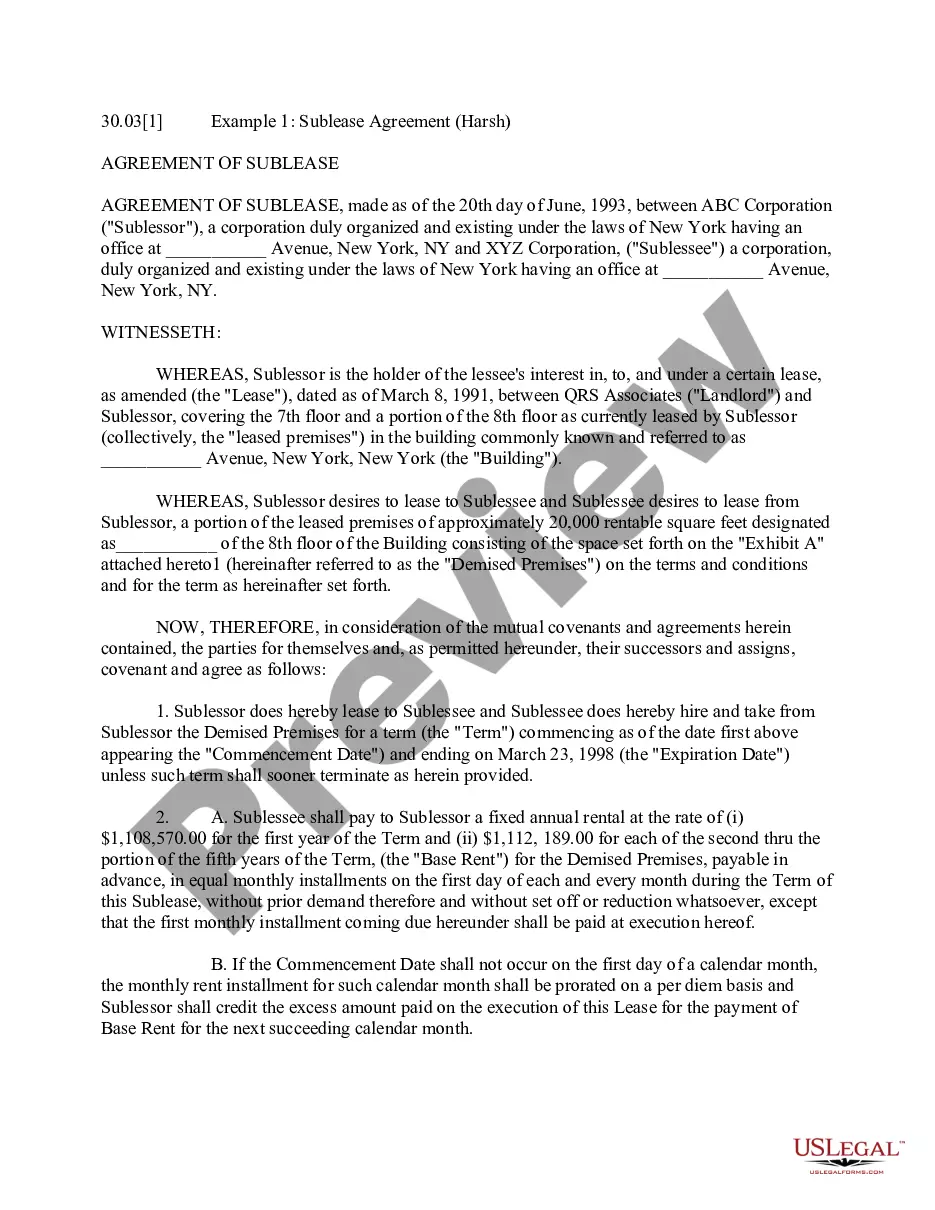
This Commercial Sublease form is a legal agreement allowing a tenant (the Sub-Lessor) to lease an entire property or part of it to a new tenant (the Sub-Lessee). This form ensures that the Sub-Lessee adheres to the terms of the original lease while specifying the conditions under which they can occupy the premises. Unlike a standard lease, a sublease allows the original tenant to transfer their rental rights temporarily, making it essential for landlords and tenants dealing with commercial properties.
Key parts of this document
- Parties involved: Identifies the Sub-Lessor and Sub-Lessee.
- Property details: Specifies the leased property and its intended use.
- Term of the lease: Defines the duration of the sublease agreement.
- Rental payments: Outlines the rental amount and payment schedule.
- Maintenance obligations: Details responsibilities for property repairs and upkeep.
- Legal compliance: Requires adherence to the original lease terms and local regulations.

Situations where this form applies
This form should be used when a business tenant wishes to sublease their rented commercial space to another party. Scenarios for usage include relocating temporarily, reallocating unused space to reduce costs, or needing a short-term arrangement while maintaining their lease obligations. This document ensures that both parties understand their rights and responsibilities during the subleasing period.
Who this form is for
This form is designed for:
- Current tenants of commercial properties seeking to sublease.
- Businesses looking for temporary space without committing to a new lease.
- Landlords requiring documentation of subleasing arrangements.
How to prepare this document
- Identify the parties involved by entering the names and contact information for the Sub-Lessor and Sub-Lessee.
- Specify the leased property, describing the exact location and any improvements included.
- Enter the term of the sublease by indicating the start and end dates of the lease.
- Outline the agreed rental payments, including the total amount and payment schedule.
- Clarify maintenance responsibilities and compliance with original lease terms.
Is notarization required?
Notarization is generally not required for this form. However, certain states or situations might demand it. You can complete notarization online through US Legal Forms, powered by Notarize, using a verified video call available anytime.
Get your form ready online
Our built-in tools help you complete, sign, share, and store your documents in one place.
Make edits, fill in missing information, and update formatting in US Legal Forms—just like you would in MS Word.
Download a copy, print it, send it by email, or mail it via USPS—whatever works best for your next step.
Sign and collect signatures with our SignNow integration. Send to multiple recipients, set reminders, and more. Go Premium to unlock E-Sign.
If this form requires notarization, complete it online through a secure video call—no need to meet a notary in person or wait for an appointment.
We protect your documents and personal data by following strict security and privacy standards.

Make edits, fill in missing information, and update formatting in US Legal Forms—just like you would in MS Word.

Download a copy, print it, send it by email, or mail it via USPS—whatever works best for your next step.

Sign and collect signatures with our SignNow integration. Send to multiple recipients, set reminders, and more. Go Premium to unlock E-Sign.

If this form requires notarization, complete it online through a secure video call—no need to meet a notary in person or wait for an appointment.

We protect your documents and personal data by following strict security and privacy standards.
Common mistakes
- Failing to obtain consent from the original landlord before subleasing.
- Not specifying details about the property improvements included in the lease.
- Omitting the rental payment schedule or amounts.
- Neglecting to comply with local regulations and original lease terms.
Benefits of using this form online
- Convenience: Download and complete the form at your convenience.
- Editability: Easily modify the form to fit your specific needs before printing.
- 24/7 access: Obtain the form any time, day or night.
- Legal assurance: Ensure that the document is drafted by licensed attorneys.
Looking for another form?
Form popularity
FAQ
Writing Your Sublease. State the name of the parties and the date of the contract. Identify the full names of each party and what their role is in the contract. The original leaseholder of the property is the Tenant and the person subletting the property is the Subtenant.
Under California law, a lease does have to be in writing to be enforceable, but only when the lease is for a period of more than a year.There is, however, an additional legal doctrine called partial performance which does make oral contracts enforceable even if they are covered by the Statute of Frauds.
Name the parties. A simple rental agreement form needs to name the parties signing the lease and where they live. Describe the premises. Define the term of the lease. Set how much rent is owed. Assign a security deposit amount. Finalize the lease.
As long as the contract spells out specific details and both parties have signed that they agree to the contract's terms, a handwritten contract is legally binding and enforceable in court.
The Introduction. The beginning of the lease agreement should contain the name of the landlord and tenant, as well as a statement of the agreement into which they are entering. Rent. Deposit. Taxes. Property Insurance. Utilities and Amenities. Remodeling and Improvements. Repairs and Maintenance.
A commercial sublease is an agreement between a tenant currently leasing a property, a new tenant looking for space, and the property owner. When you sublease your space you are the sublessor (or sublandlord) and your new tenant is the sublessee (or subtenant).
Writing Your Sublease. State the name of the parties and the date of the contract. Identify the full names of each party and what their role is in the contract. The original leaseholder of the property is the Tenant and the person subletting the property is the Subtenant.
Subleasing occurs when the tenant transfers a part of their legal tenancy to a third-party as a new tenant.That means that if a new subtenant does not pay rent for three months, the original tenant that subleased the property is liable to the landlord for the overdue rent amount and any late fees.
Check the over-lease. This refers to the lease that was signed by the tenant from whom you're sub-leasing. Note the condition of your room. Get in touch with the management company. Make all payments in person. Ask for a deposit receipt. Comments.