Montana Letter from Tenant to Landlord about Landlord's refusal to allow sublease is unreasonable
What this document covers
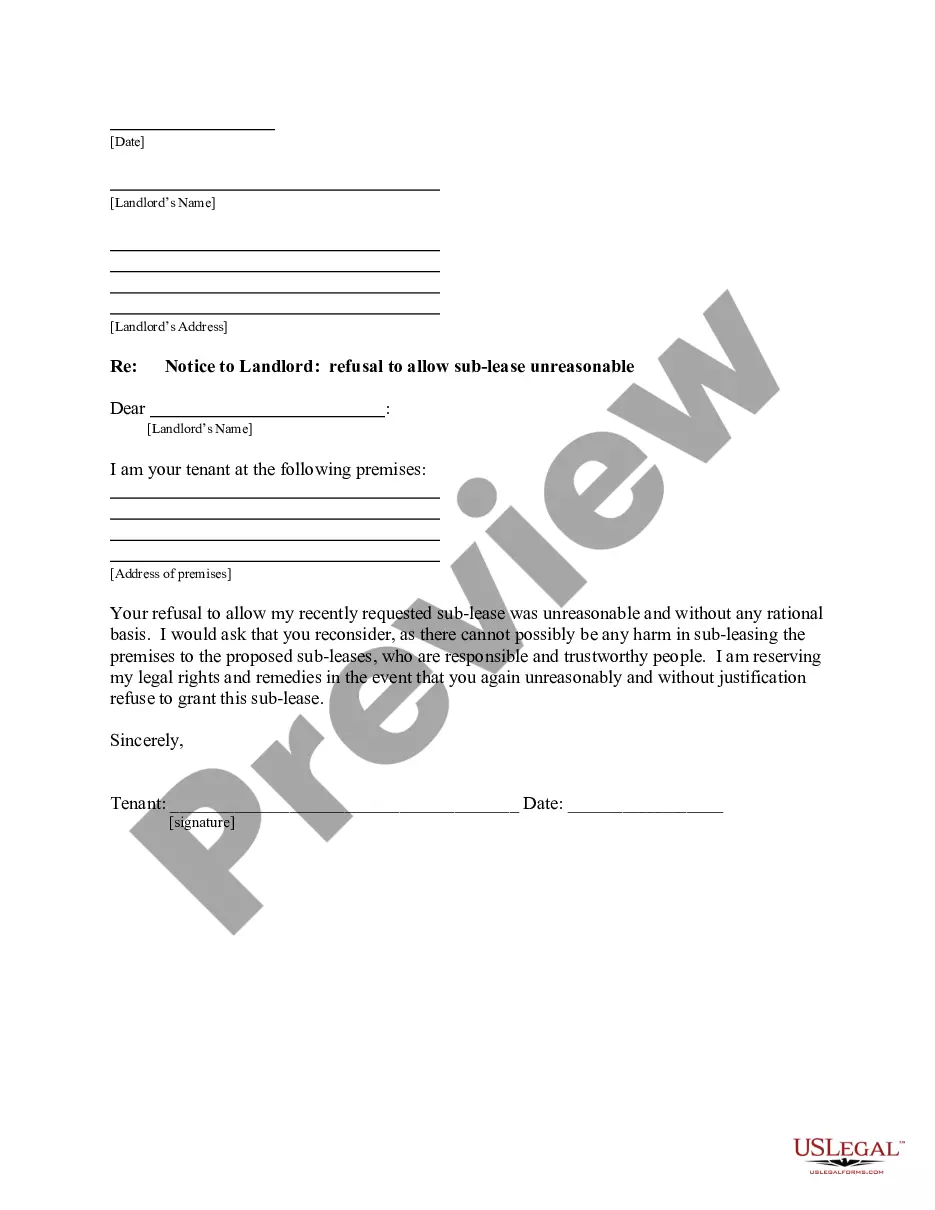
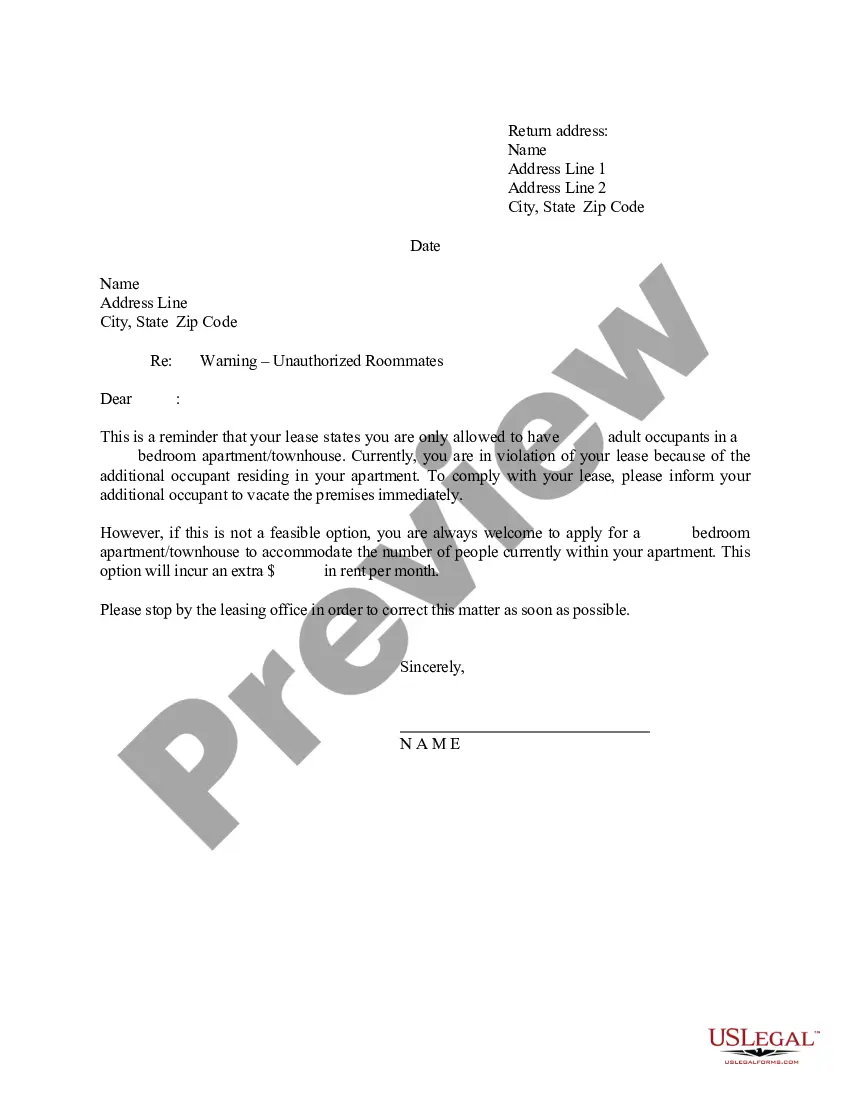
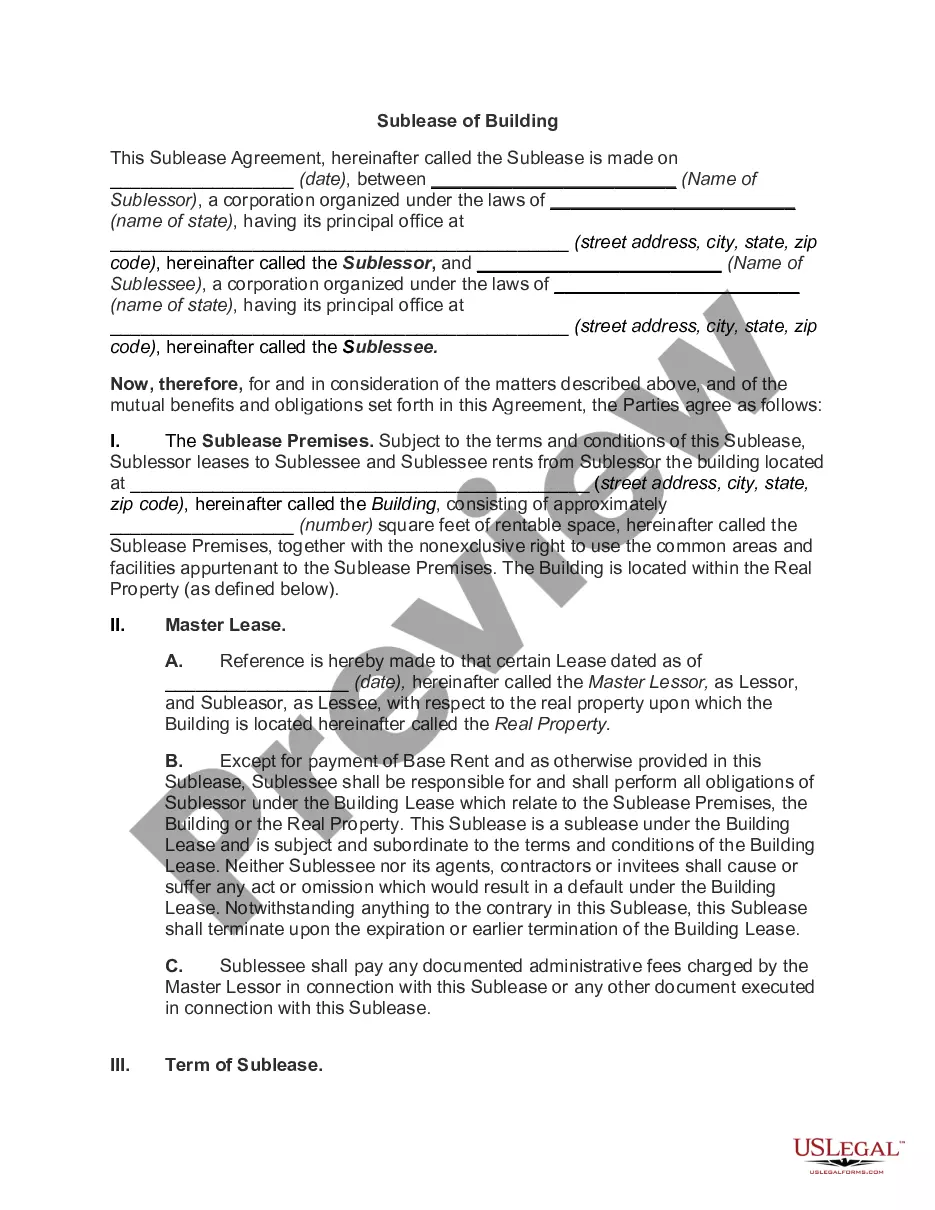
This form is a letter from a tenant to their landlord addressing the landlord's unreasonable refusal to allow a sublease. It is important for tenants who need to inform their landlord of their intent to sublease while reserving their legal rights should this refusal continue. This letter differs from other forms as it specifically targets situations where a landlord does not allow subletting, emphasizing the legal implications of such a refusal.
Key components of this form
- Tenant's name and contact information
- Landlord's name and contact information
- Date of the letter
- Statement of the landlord's refusal
- Notice of intent to reserve legal rights
- Signature of the tenant

When to use this document
This form should be used when a tenant wishes to sublease their rental property but has encountered a refusal from the landlord. It serves as a formal communication to assert the tenant's rights and document the landlord's unreasonable refusal, especially if the tenant anticipates further disputes regarding the subleasing arrangement.
Intended users of this form
- Current tenants who wish to sublease their property
- Tenants whose landlords have denied sublease requests
- Individuals seeking to assert their rights regarding lease agreements
How to complete this form
- Identify the parties involved by entering your name and the landlord's name.
- Clearly state the date of the letter.
- Detail the circumstances surrounding the landlord's refusal to allow subleasing.
- Indicate your intent to reserve your legal rights regarding the issue.
- Sign the letter to validate your claims and intentions.
Is notarization required?
This form usually doesn’t need to be notarized. However, local laws or specific transactions may require it. Our online notarization service, powered by Notarize, lets you complete it remotely through a secure video session, available 24/7.
Get your form ready online
Our built-in tools help you complete, sign, share, and store your documents in one place.
Make edits, fill in missing information, and update formatting in US Legal Forms—just like you would in MS Word.
Download a copy, print it, send it by email, or mail it via USPS—whatever works best for your next step.
Sign and collect signatures with our SignNow integration. Send to multiple recipients, set reminders, and more. Go Premium to unlock E-Sign.
If this form requires notarization, complete it online through a secure video call—no need to meet a notary in person or wait for an appointment.
We protect your documents and personal data by following strict security and privacy standards.
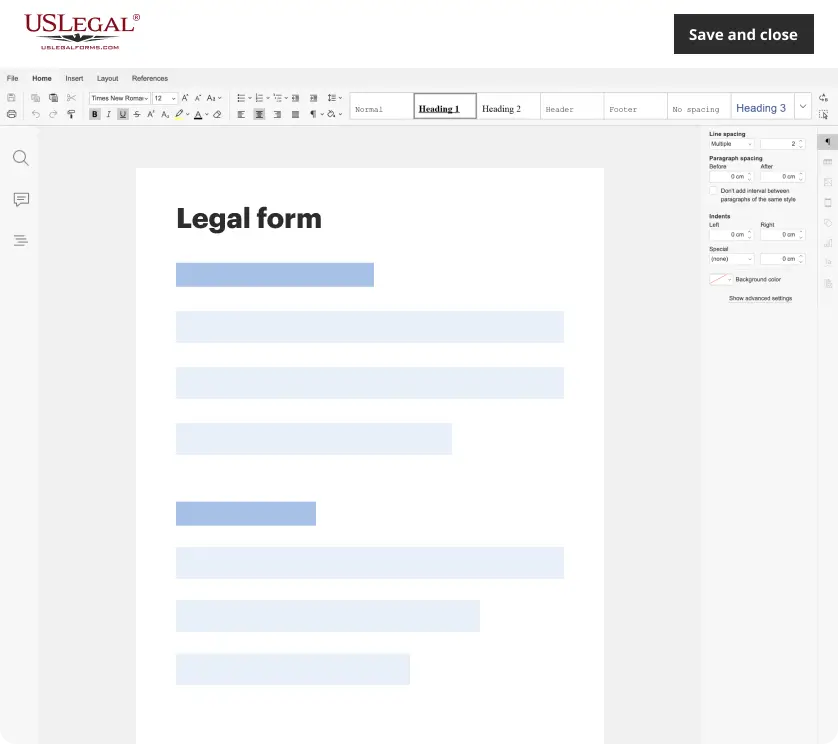
Make edits, fill in missing information, and update formatting in US Legal Forms—just like you would in MS Word.
Download a copy, print it, send it by email, or mail it via USPS—whatever works best for your next step.
Sign and collect signatures with our SignNow integration. Send to multiple recipients, set reminders, and more. Go Premium to unlock E-Sign.
If this form requires notarization, complete it online through a secure video call—no need to meet a notary in person or wait for an appointment.
We protect your documents and personal data by following strict security and privacy standards.
Common mistakes
- Failing to include the date of the letter.
- Not clearly stating the refusal of the landlord.
- Forgetting to sign the letter.
- Using vague language that might undermine the legal intent.
Benefits of using this form online
- Convenience of downloading and printing at your convenience.
- Access to templates created by licensed attorneys to ensure legal validity.
- Editability to customize the letter as necessary for your situation.
Legal use & context
- This form helps protect tenants' rights when subleasing arrangements are questioned.
- Letters of this nature may be used as documentation in potential disputes or legal actions.
- Understanding local laws is crucial, as landlord-tenant rights can vary by state.
Quick recap
- This form formalizes your request to sublease while addressing an unreasonable refusal from your landlord.
- It is crucial to include all relevant information and express your reserved rights clearly.
- Utilizing this form can help protect your legal rights regarding subletting your rental property.
Looking for another form?
Form popularity
FAQ
If the tenant refuses, you are permitted to send them a notice to agree or quit the property. The tenant refusing you access constitutes a breach in the lease agreement, so they could be evicted if they continue to deny access.
A subtenant is not a cotenant and does not have a direct relationship with your landlord. As their landlord, you can (and should) require them to pay rent directly to you and evict them if they fail to follow through. This differs from a cotenant, who can be evicted only by your landlord.
Yes, your tenant is within their rights to refuse you access to the property. In a lot of cases, tenants will refuse because the date and time isn't convenient for them and will suggest an alternative date or ask you to rearrange. However, some tenants will persistently try to obstruct you from entering the property.
If you refuse access, the landlord/agent can apply to the Tribunal for an order that authorises them or any other person to enter the premises.
The landlord cannot refuse the assignment or sublet unless there is a good reason, such as the proposed tenant's inability to pay the rent or problematic behavior of this tenant. This is the case no matter what your lease or the building rules say.
The landlord cannot unreasonably refuse to give consent. Usually, the only reason the landlord can refuse consent is if the sub-tenancy would result in overcrowding of the premises or a breach of the tenancy agreement with the head-tenant.
If a court finds you guilty of the first offence of unlawful subletting, you can be fined in the magistrates' court.At the magistrates' court, you can get up to six months in prison or a fine, or both. At the Crown Court the maximum penalty is imprisonment for two years or a fine, or both.
If a tenant is subletting without consent, it's likely they will have broken terms in their tenancy agreement. This breach of contract means that the landlord can take action to evict them from their home. Possession proceedings can be started quickly, but it's important to follow the correct legal process.
Be calm, objective, and rational. Keep written records of everything. Teach tenants how they should treat you. Try to get your tenants on your side. Ask the terrible tenants to leave. Begin the eviction process.