Montana Warranty Deed to Child Reserving a Life Estate in the Parents
About this form
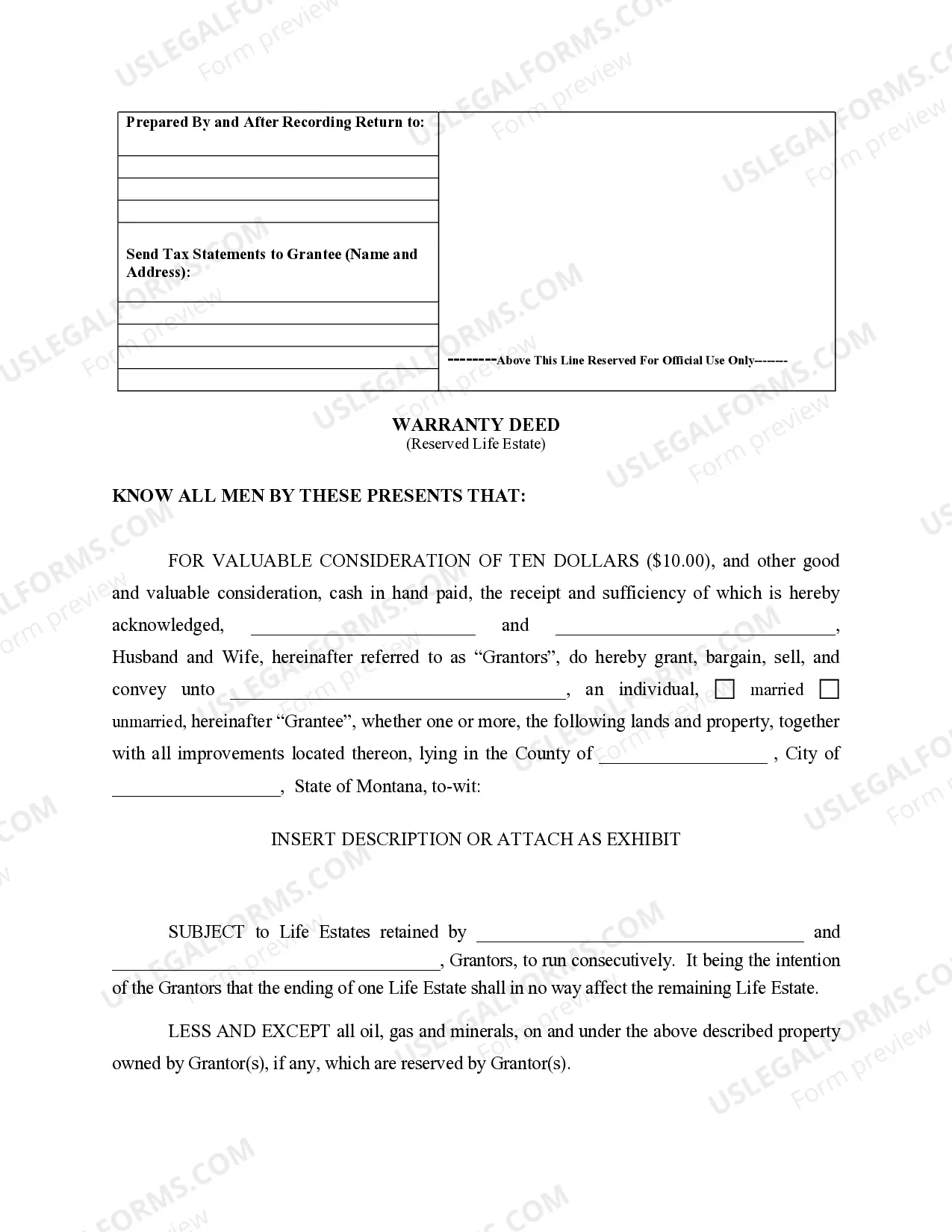
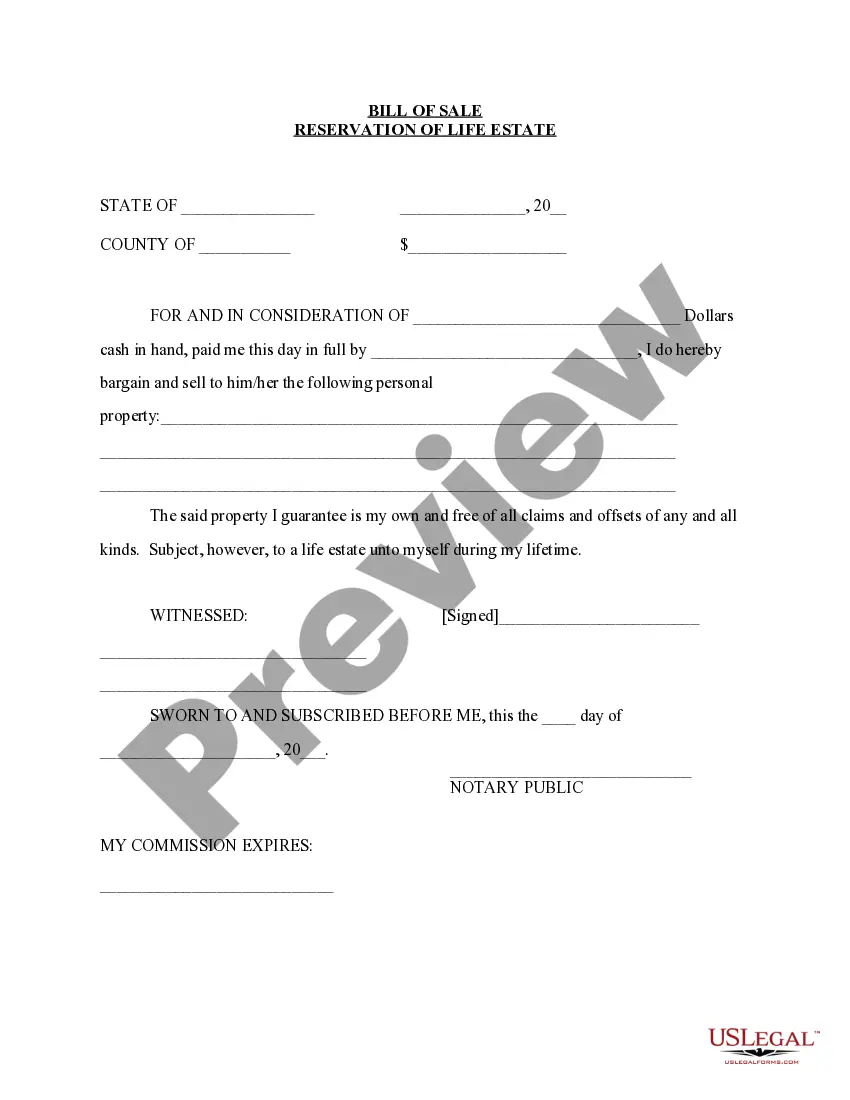
This Warranty Deed to Child Reserving a Life Estate in the Parents is a legal document that allows parents to transfer property ownership to their child while retaining the right to live on the property for the rest of their lives. This form is distinct from other property transfer documents because it includes a reservation of a life estate, meaning the parents maintain an interest in the property until their death. This allows for seamless transition of ownership while providing security and housing for the grantors during their lifetime.
Key components of this form
- Identification of grantors (parents) and grantee (child).
- Legal description of the property being transferred.
- Clauses that reserve a life estate for the grantors.
- Statement regarding the reservation of oil, gas, and mineral rights.
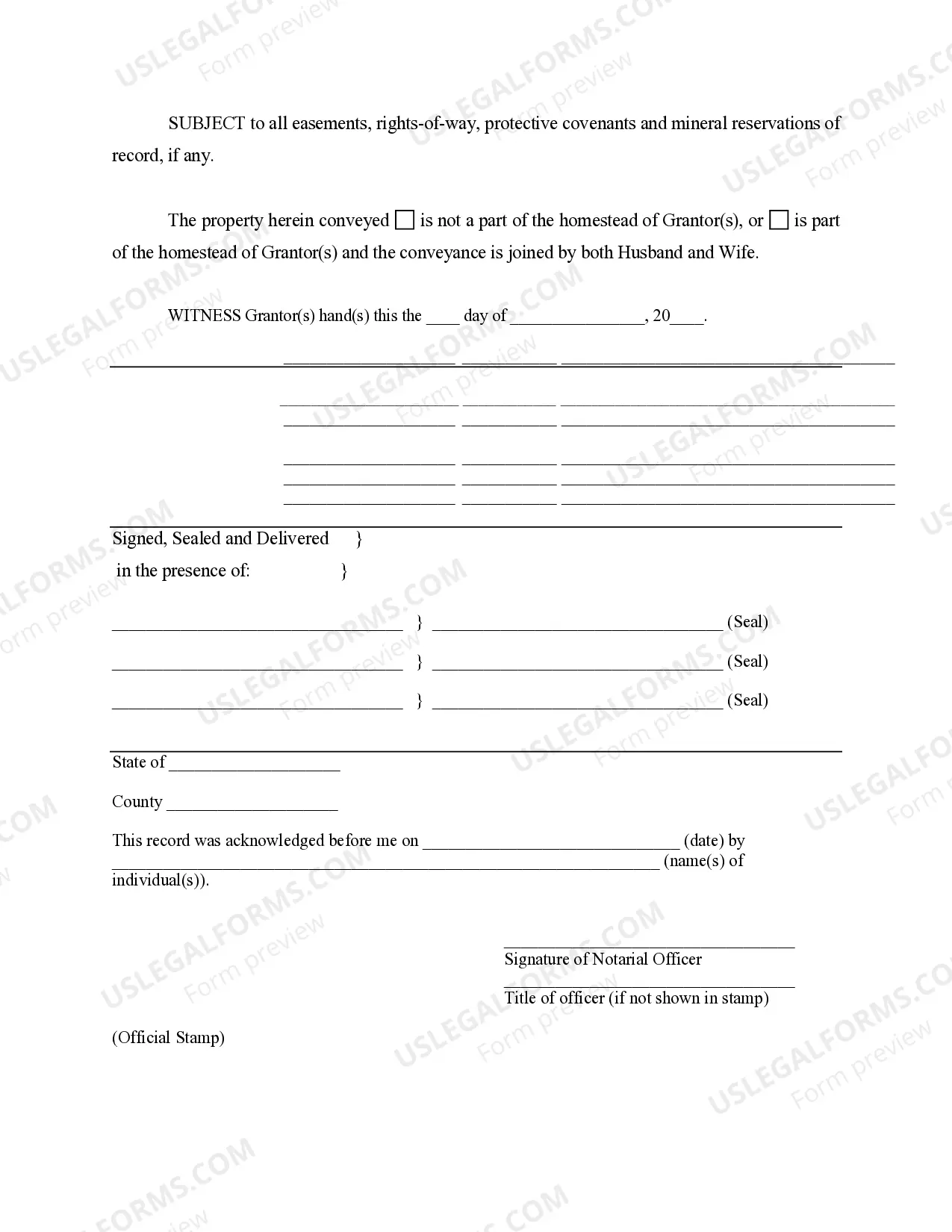
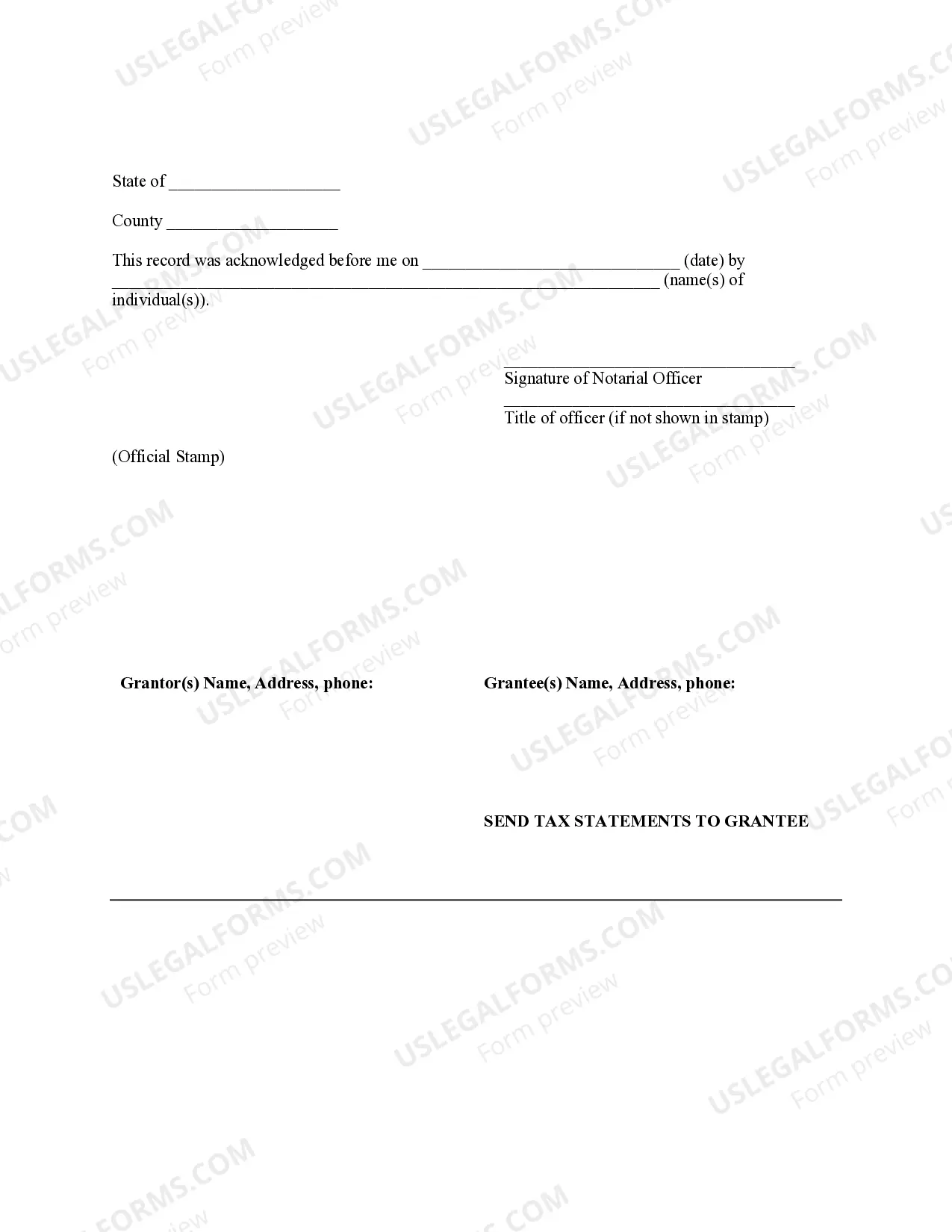
- Notary acknowledgment section for legal validation.



When to use this form
This form should be used when parents want to transfer their property to their child but wish to retain the right to occupy the property for their lifetime. It is particularly useful in estate planning, where parents want to avoid probate complications and ensure that their property is managed according to their wishes after their passing. This form can also be beneficial for tax planning purposes, allowing for a smooth transfer of ownership without immediate tax consequences.
Who should use this form
- Parents wishing to transfer property to their child while retaining a life estate.
- Individuals involved in estate planning who want to avoid probate.
- Homeowners looking to facilitate future property ownership transfer to family members.
- Anyone seeking to ensure housing stability for their lifetime while passing assets to heirs.
How to prepare this document
- Identify the parties involved: list the names of the parents (grantors) and the child (grantee).
- Provide the legal description of the property being transferred.
- Enter the reservation of life estate clause to denote the parents' rights.
- Include any relevant reservations for oil, gas, and minerals, if applicable.
- Sign and date the form in front of a notary public for legal validation.
Does this document require notarization?
This document requires notarization to meet legal standards. US Legal Forms provides secure online notarization powered by Notarize, allowing you to complete the process through a verified video call, available 24/7.
Get your form ready online
Our built-in tools help you complete, sign, share, and store your documents in one place.
Make edits, fill in missing information, and update formatting in US Legal Forms—just like you would in MS Word.
Download a copy, print it, send it by email, or mail it via USPS—whatever works best for your next step.
Sign and collect signatures with our SignNow integration. Send to multiple recipients, set reminders, and more. Go Premium to unlock E-Sign.
If this form requires notarization, complete it online through a secure video call—no need to meet a notary in person or wait for an appointment.
We protect your documents and personal data by following strict security and privacy standards.

Make edits, fill in missing information, and update formatting in US Legal Forms—just like you would in MS Word.

Download a copy, print it, send it by email, or mail it via USPS—whatever works best for your next step.

Sign and collect signatures with our SignNow integration. Send to multiple recipients, set reminders, and more. Go Premium to unlock E-Sign.

If this form requires notarization, complete it online through a secure video call—no need to meet a notary in person or wait for an appointment.

We protect your documents and personal data by following strict security and privacy standards.
Typical mistakes to avoid
- Failing to accurately describe the property, which can lead to disputes.
- Omitting the life estate reservation, resulting in unintended immediate transfer of full ownership.
- Not having the document notarized, which is required for the deed to be legally binding.
- Ignoring local laws or requirements specific to the jurisdiction in which the property is located.
Legal use & context
- This warranty deed is legally binding once executed and notarized.
- It allows for clear title transfer while maintaining the grantors' rights during their lifetime.
- The document protects the child's ownership by preventing the grantors from selling or transferring the property after the deed is recorded.
What to keep in mind
- The Warranty Deed to Child Reserving a Life Estate is essential for parents wishing to secure their housing while transferring property ownership to their child.
- Proper execution, including notarization, is required for validity.
- Pay attention to local laws and the property description to avoid complications later on.
Looking for another form?
Form popularity
FAQ
A person owns property in a life estate only throughout their lifetime. Beneficiaries cannot sell property in a life estate before the beneficiary's death. One benefit of a life estate is that property can pass when the life tenant dies without being part of the tenant's estate.
A life estate deed permits the property owner to have full use of their property until their death, at which point the ownership of the property is automatically transferred to the beneficiary.
The two types of life estates are the conventional and the legal life estate. the grantee, the life tenant. Following the termination of the estate, rights pass to a remainderman or revert to the previous owner.
A person owns property in a life estate only throughout their lifetime. Beneficiaries cannot sell property in a life estate before the beneficiary's death. One benefit of a life estate is that property can pass when the life tenant dies without being part of the tenant's estate.
A Life Estate may be created in real property or in personal property. It is a term used to describe ownership of an asset for the duration of the person's life. The owner of a Life Estate is called a 'life tenant'. The life tenant has the right to possession and enjoyment of the asset and its income until their death.