Mississippi Assignment of Deed of Trust by Individual Mortgage Holder
About this form
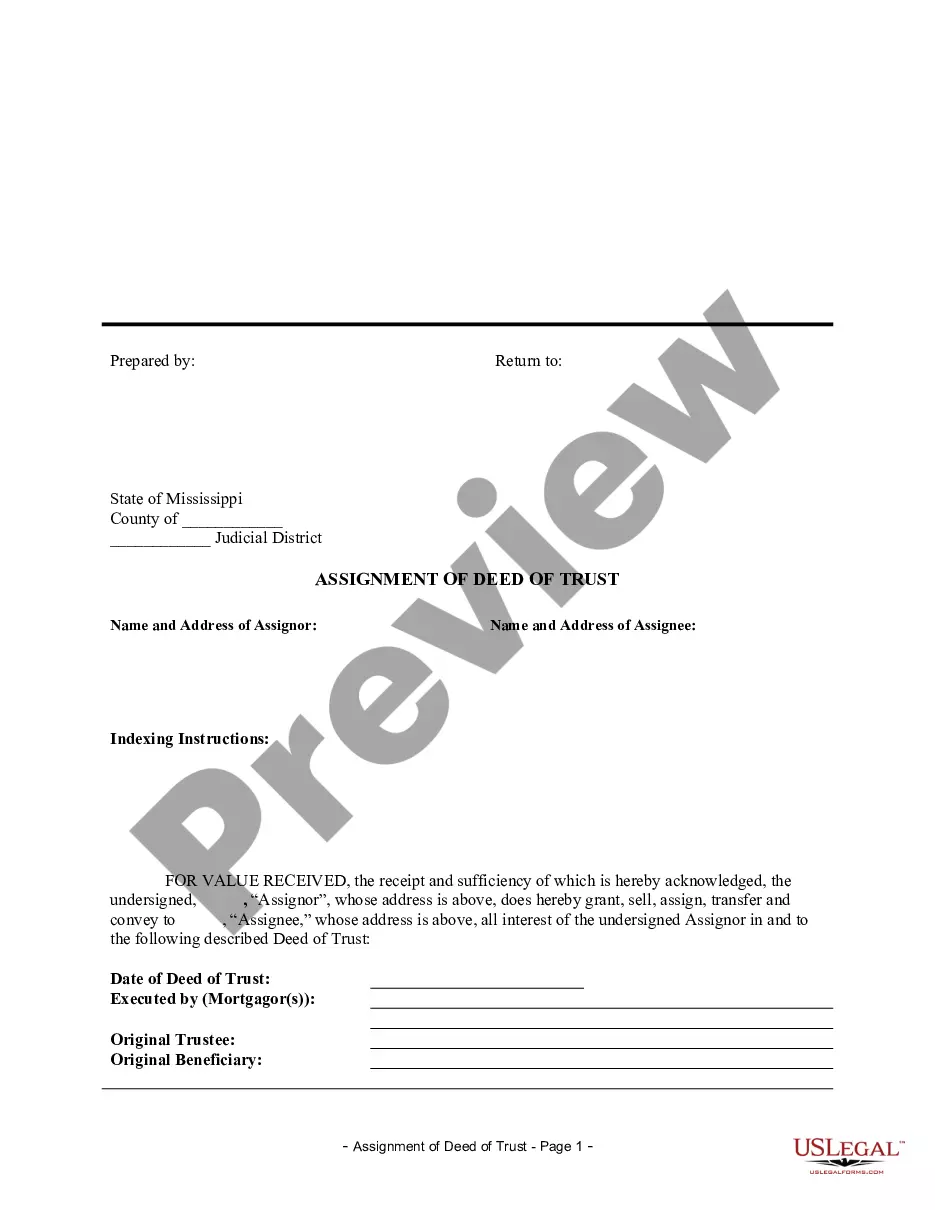
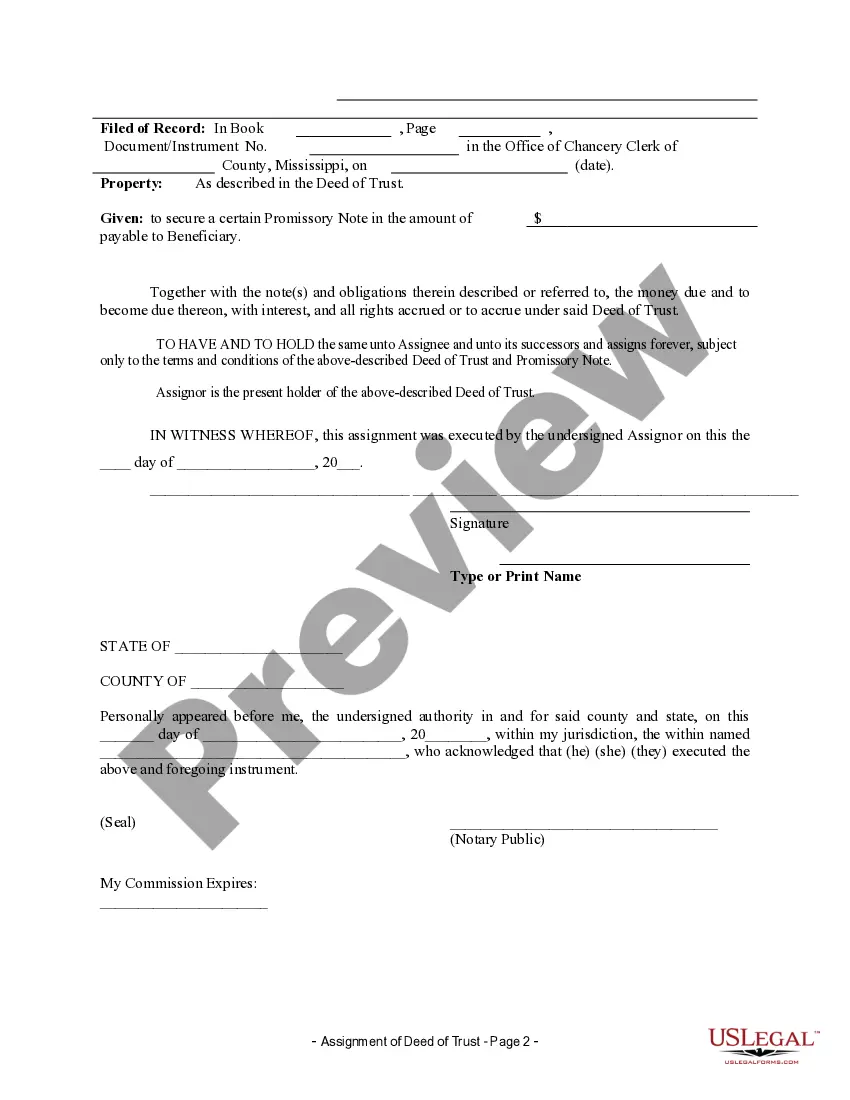
The Assignment of Deed of Trust by Individual Mortgage Holder is a legal document that allows the owner of a deed of trust or mortgage to transfer their rights and interests to a third party. This form is essential for ensuring that the new holder can act on the terms of the original mortgage agreement. Unlike other assignment forms, this one specifically addresses individual mortgage holders, making it tailored for personal rather than corporate transactions.
What’s included in this form
- Parties involved: Identifies the transferor (original holder) and the transferee (new holder).
- Description of the deed of trust: Includes details about the property and the original mortgage.
- Effective date: Indicates when the assignment becomes effective.
- Signatures: Requires signatures from the transferor and any necessary witnesses.
- Notarization section: Specifies whether a notarized signature is needed (varies by jurisdiction).



When to use this form
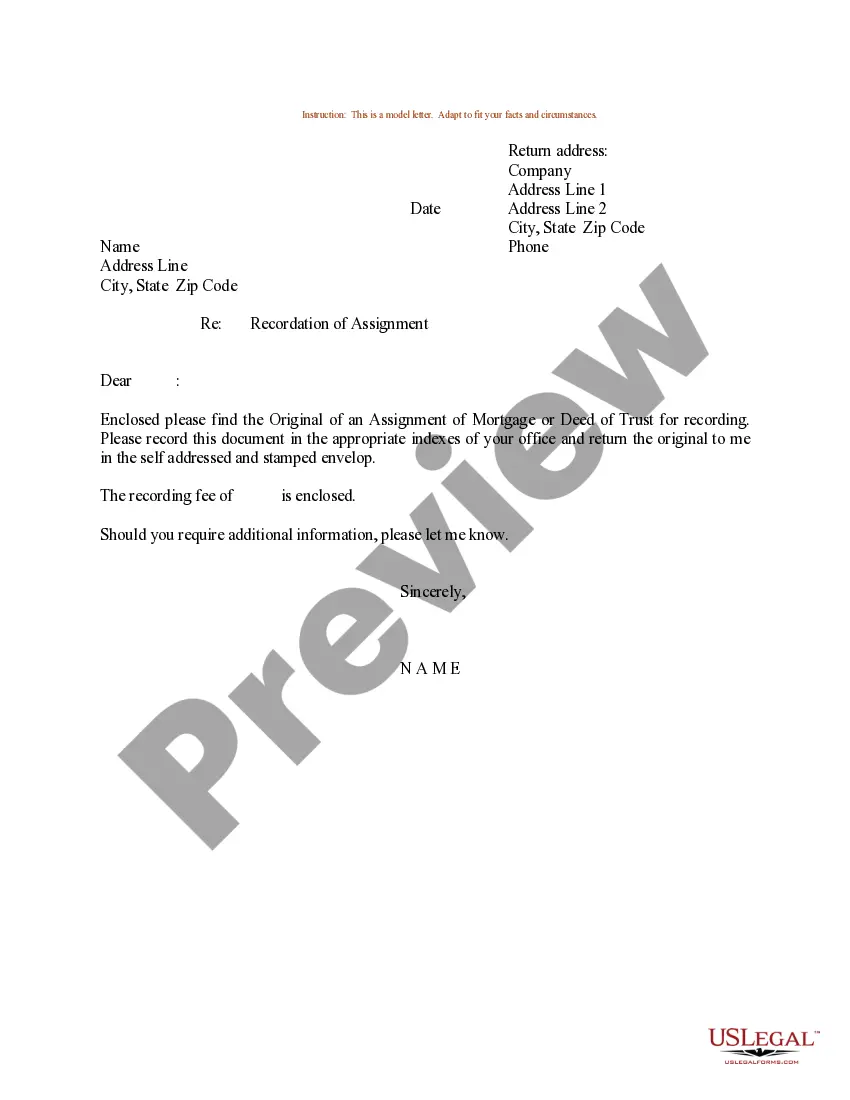
This form is useful in situations where an individual mortgage holder wishes to assign their mortgage rights to another party. Common scenarios include selling the mortgage to an investor or transferring it as part of an estate plan. It is essential to use this form when ownership of a mortgage needs to be legally recognized and documented to prevent disputes over ownership rights.
Who can use this document
- Individual mortgage holders looking to transfer their rights in a deed of trust.
- Homeowners involved in a structured settlement or financial transaction.
- Estate executors who need to assign a mortgage interest as part of estate management.
Completing this form step by step
- Identify the parties: Clearly state the names and addresses of the current holder and the new holder.
- Describe the property: Include the legal description of the property associated with the deed of trust.
- Enter the effective date: Specify the date on which the assignment will take effect.
- Gather signatures: Ensure that the original holder signs the document and any witnesses are present if required.
- Complete notarization (if required): If your jurisdiction requires notarization, arrange for a notary public to witness the signing of the document.
Notarization requirements for this form
This form must be notarized to be legally valid. US Legal Forms provides secure online notarization powered by Notarize, allowing you to complete the process through a verified video call.
Get your form ready online
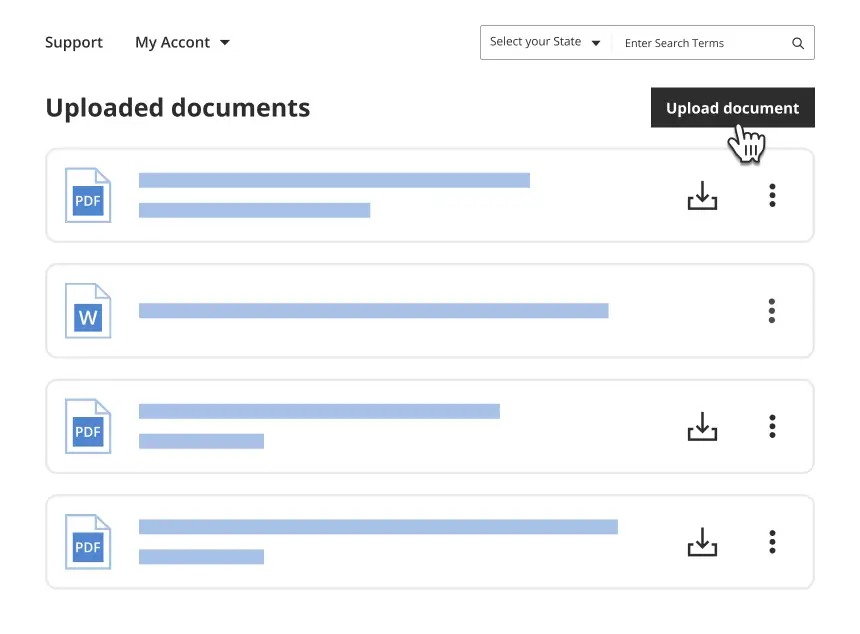
Our built-in tools help you complete, sign, share, and store your documents in one place.
Make edits, fill in missing information, and update formatting in US Legal Forms—just like you would in MS Word.
Download a copy, print it, send it by email, or mail it via USPS—whatever works best for your next step.
Sign and collect signatures with our SignNow integration. Send to multiple recipients, set reminders, and more. Go Premium to unlock E-Sign.
If this form requires notarization, complete it online through a secure video call—no need to meet a notary in person or wait for an appointment.
We protect your documents and personal data by following strict security and privacy standards.
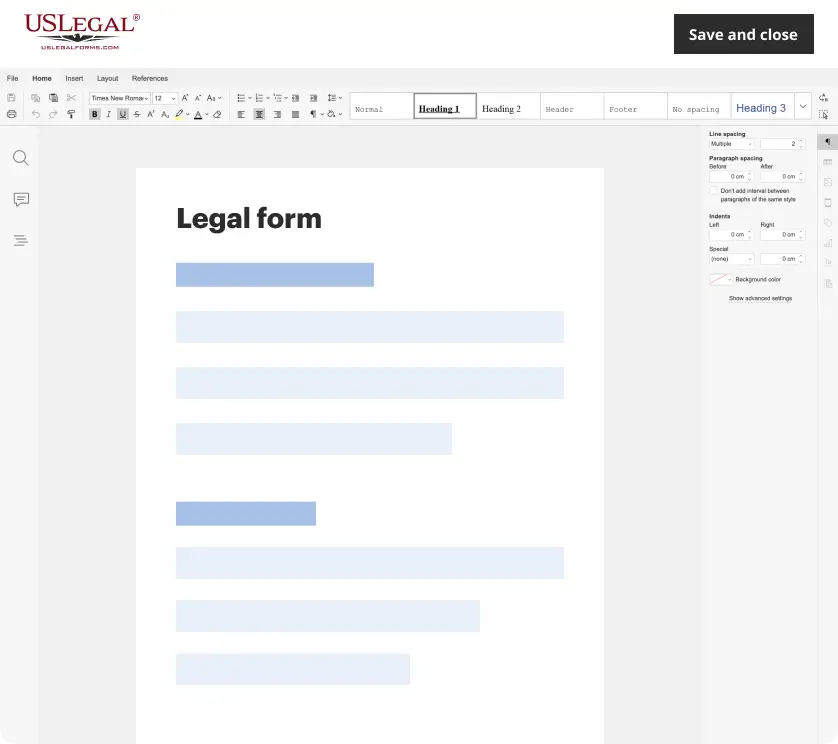
Make edits, fill in missing information, and update formatting in US Legal Forms—just like you would in MS Word.
Download a copy, print it, send it by email, or mail it via USPS—whatever works best for your next step.
Sign and collect signatures with our SignNow integration. Send to multiple recipients, set reminders, and more. Go Premium to unlock E-Sign.

If this form requires notarization, complete it online through a secure video call—no need to meet a notary in person or wait for an appointment.
We protect your documents and personal data by following strict security and privacy standards.
Common mistakes to avoid
- Failing to include a complete legal description of the property.
- Not obtaining required signatures from witnesses.
- Leaving the effective date blank or incorrectly filled.
- Not having the document notarized when necessary.
Why complete this form online
- Convenient access to legal forms from anywhere at any time.
- Editable documents allow for personalized entries and specifications.
- Reliability of documents drafted by licensed attorneys ensures legal validity.
Looking for another form?
Form popularity
FAQ
Whether you have a deed of trust or a mortgage, they both serve to assure that a loan is repaid, either to a lender or an individual person. A mortgage only involves two parties the borrower and the lender. A deed of trust adds an additional party, a trustee, who holds the home's title until the loan is repaid.
Can I make a declaration of trust myself? Some owners are put off using solicitors duke to the deed of trust cost. Individuals can write out their own, and use someone else as a witness. However, this may have errors or not be a legally binding document.
When your mortgage lender decides he wants to sell your mortgage loan to another lender, your mortgage lender will sign an assignment of deed of trust in favor of the new lender. This assignment gives the new lender the same lien on your property that your original lender had under the mortgage loan.
The following states use Deed of Trusts: Alaska, Arizona, California, District of Columbia, Georgia, Mississippi, Missouri, Nevada, North Carolina, and Virginia.
A deed of trust is a written instrument with three parties: The trustor, who is the borrower and homeowner. The beneficiary, who is the lender. The trustee, who is a third party such as an insurance company or escrow management agency that holds actual title to the property in trust for the beneficiary.
The person who owns the property usually signs a promissory note and a deed of trust. The deed of trust does not have to be recorded to be valid.
Deed: This is the document that proves ownership of a property. It transfers ownership of the property to the grantee, also known as the buyer.Mortgage: This is the document that gives the lender a security interest in the property until the Note is paid in full.
Some owners are put off using solicitors duke to the deed of trust cost. Individuals can write out their own, and use someone else as a witness. However, this may have errors or not be a legally binding document. The investment of getting a deed of trust when buying a property is often worth it in the long term.
Name of the trust. Address of the trust. Objects of the trust (Charitable or Religious) One settlor of the trust. Two trustees of the trust (minimum)